Covering every topic isn't the same as being able to use any of them under pressure.
Schools cover the whole GCSE specification. They have to. But "covered" and "understood" are different things, and the exam knows it. The harder marks come from problem-solving questions that combine topics and look nothing like the textbook example, and a student who learned each topic as a separate procedure has no way in.
So a hard-working student revises everything, sits the mock, and still lands a 4 or 5, baffled about why.
The other quiet grade-killer is method marks. Students lose marks they'd earned by not showing working, or by an old gap, a shaky bit of algebra or fractions, that surfaces inside a bigger question.
We fix all of it. We diagnose where the marks actually leak, repair the foundations the exam keeps testing, teach the reasoning the problem-solving questions need, and drill past-paper technique so the marks get banked.
GCSE Maths, June 2027 series: the dates that matter
GCSE Maths sits on the shared June 2027 timetable. No change to the maths specification was found for 2026-27, so the course is the one your child's school is already teaching.
| What | When | Where we read it |
|---|---|---|
| First exam on the common timetable | 10 May 2027 | JCQ, Key dates in the examination cycle, June 2027 series (read 22 Sep 2026) |
| Final GCSE exam on the common timetable | 18 June 2027 (contingency day 23 June 2027) | JCQ, Key dates in the examination cycle, June 2027 series (read 22 Sep 2026) |
| Entries deadline for the June 2027 series | 21 February 2027 (schools enter students; ask yours) | JCQ, Key dates in the examination cycle, June 2027 series (read 22 Sep 2026) |
| Paper dates for Maths (Foundation and Higher, Papers 1 to 3) | Set in each board's own timetable; no session moves for Maths in 2027 per the JCQ commentary | JCQ, Key dates in the examination cycle, June 2027 series (read 22 Sep 2026) |
| Specification | Unchanged for 2026-27 as far as the boards' pages showed | JCQ, Key dates in the examination cycle, June 2027 series (read 22 Sep 2026) |
Results days for 2027 are not published in the JCQ key-dates document, so none is stated here.
Understanding, then exam technique: in that order.
A grade plan built from your child's actual papers, not a generic revision list.
Diagnose where marks leak
We review a real paper and sort every lost mark into gap, method slip or timing. That map becomes the plan.
Rebuild the recurring foundations
Most lost marks trace back to a few weak areas, usually algebra, fractions or ratio. We make those automatic.
Teach the problem-solving questions
We coach how to break down the multi-topic "show that" and worded questions that decide the higher grades.
Drill past papers & method marks
We rehearse with your board's papers, training the working and timing that bank every available mark.
A higher-tier question: solved by reading, not panicking.
The question: "The product of two consecutive integers is 156. Find them." Students freeze because it doesn't look like the equations they practised. There's no x in sight.
How we do it. The skill the exam is testing is turning words into algebra. "Two consecutive integers" means a number and the next one: n and n+1. "Product is 156" means multiply them and set equal to 156. Now it's a quadratic you can solve:
n² + n − 156 = 0
factorise: (n + 13)(n − 12) = 0
so n = 12 (or −13) → the integers are 12 and 13 (check: 12 × 13 = 156 ✓)
Nothing here is beyond the specification, the difficulty was purely translating the words into an equation, then recognising a quadratic. That translation skill is what separates a grade 5 from a grade 7, and it's exactly what we train: not more formulas, but the habit of turning an unfamiliar question into something you already know how to solve.
Turning a worded problem into maths is exactly what programming trains.
Translate the problem
A coder turns a vague requirement into precise logic; a GCSE candidate turns words into an equation. Same skill, and it's the one that wins the harder marks.
Break it into steps
Multi-mark questions yield to decomposition, the same move that turns a big program into small functions.
Check your answer
"Does 12 × 13 actually make 156?" is a debugging habit. We make checking automatic, so careless marks stop slipping away.
We're Modern Age Coders. The reasoning that makes a strong programmer is the reasoning the toughest GCSE questions reward, which is why our students tend to handle the problem-solving parts that leave others stuck.
The whole GCSE specification, foundation and higher.
Mapped to your board, with the foundations rebuilt under each strand.
Number
Fractions, decimals, percentages, indices, standard form, surds and bounds, the bedrock the rest leans on.
Algebra
Expressions, equations, simultaneous equations, quadratics, inequalities, sequences, graphs and functions, the biggest part of the exam.
Ratio & proportion
Ratio, direct and inverse proportion, rates and compound measures, a top source of dropped marks.
Geometry & measures
Angles, Pythagoras, trigonometry, circle theorems, vectors, transformations, area and volume.
Probability & statistics
Probability, tree and Venn diagrams, averages, and interpreting data and graphs.
Exam technique
Foundation and higher strategy, method marks, problem-solving questions, calculator and non-calculator papers, and timing.
The right fit: and an honest word on what to expect.
This fits the student aiming for a secure grade 4 pass, the one stuck at a 5 who can't see why, and the strong student chasing a grade 8 or 9. Adults resitting GCSE maths are welcome too. We meet the current level and target the next realistic grade.
What's realistic. Real gains come from fixing the right gaps and practising between lessons, over a term or two, not from a fortnight of cramming. Your child's starting point, target and effort decide the result. We set an honest target and never quote a guaranteed grade, because no honest tutor can.
What we won't do
- Promise a specific grade on a timeline.
- Drill past papers without fixing the gaps underneath.
- Teach methods with no understanding behind them.
- Pretend a last-minute cram replaces real preparation.
A focused, trackable run to the exam.
1:1, live
One student, one tutor, real-time video with a shared whiteboard and live paper review.
8 lessons a month
Two each week, around 60 minutes, built around your board's past papers.
UK time
After-school, evening and weekend slots in GMT/BST, ramping up around mocks and GCSEs.
Progress tracking
Your tutor tracks scores and recurring errors so the plan keeps tightening.
One simple price. No contract.
1:1 Private Tuition
$150 / month
- 8 live one-to-one lessons a month (2 per week, 1 hour each)
- 4 live one-to-one lessons a month (1 per week, 1 hour each)
- The same tutor tracking progress to the exam
- Taught to your board & tier, with past papers
- A diagnostic-led plan · cancel any time
Small-Group Cohort
$100 / month
- 8 live small-group lessons a month (2 per week, 1 hour each)
- A few students at a similar grade and board
- Same teaching approach, lower price
- Good for classmates · cancel any time
Continuing to sixth form? See our A-Level Maths Tuition → page.
Tutors who know the boards and the maths beneath them.
Good GCSE coaching needs both a deep command of the maths and a precise knowledge of how each board marks. Our tutors have both. They can fix the algebra gap and tell your child the exact working a marker needs to award the method mark.
The same tutor stays through to the exam, watching the grades and recurring mistakes, so the plan is always aimed at the marks still on the table.
"My son struggled with math for years. Integrating it into coding projects has transformed his understanding and confidence. Highly recommended!"
Shewta Singh, mother of Ishan · verified Google review
How we differ from the alternatives.
| What matters | Modern Age Coders | Revision apps | A typical tutor |
|---|---|---|---|
| Diagnoses why marks are lost | Yes, every paper | No | Sometimes |
| Fixes the maths underneath | Yes | No | Varies |
| Coaches method marks & problem-solving | Yes | Limited | Varies |
| Same tutor to the exam | Yes | N/A | Often |
| Monthly price | $150 (1:1) / $100 (group) | A small monthly subscription | Charged by the hour |
Revision apps are useful for practice once gaps are known. We add the live diagnosis and the maths fix that turn revision into a higher grade.
Everything you might be wondering.
Which exam boards do you cover?
AQA, Edexcel and OCR, foundation and higher tier, working from your child's specification, scheme of work, mocks and homework.
Foundation or higher tier, which is right?
It depends on level and target grade (foundation 1–5, higher 4–9). We'll advise honestly after a diagnostic; sometimes a strong 5 on foundation beats scraping higher.
Can you help my child reach a grade 7, 8 or 9?
Yes, the top grades come from understanding plus problem-solving technique. We build both, with the result depending on starting point and effort.
My child needs a grade 4 'pass'. Can you focus on that?
Yes. We prioritise high-value foundation topics, fix the costly gaps, and drill technique so attainable marks are reliably banked.
How much does it cost?
A flat monthly fee, shown in your own currency in the pricing section of this page: private one-to-one with eight live lessons a month, two each week, or a small-group batch of 5 to 10 at a lower fee. No enrolment charge and no contract; stop at any month end.
Can we try a class before enrolling?
Yes. Book a Priority Demo: a full live class of about 45 to 60 minutes, today or tomorrow, with a mentor reserved for your child. After the class the mentor sends a written skill report and a personal learning roadmap on WhatsApp. If you enrol, the demo fee is adjusted against your first month's fee.
Will my child keep the same tutor?
Yes, one tutor tracking the specification, weak topics and mistakes through to the exam.
Do you use past papers?
Yes. Your board's papers and mark schemes, with every lost mark reviewed as gap, method slip or timing.
When should we start before the exam?
The earlier the better, but we help at any stage. We'll be honest about what's achievable in your timeline.
Are lessons live?
Yes, live, one-to-one, with a shared whiteboard.
Do you help adults resitting GCSE maths?
Yes. See our adult maths classes page for a route built around returning learners.
Do lessons fit around school and revision?
Yes, after-school, evening and weekend slots in UK time, ramping up around mocks and summer exams.
Do you teach KS3 maths (Years 7, 8 and 9) as well as GCSE?
Yes. KS3 maths tuition online runs on the same format as GCSE: live, one-to-one or a small batch, one tutor for the year, working from the school's scheme of work. Year 7 and Year 8 students build the number, algebra and ratio fluency the GCSE papers assume; Year 9 students start meeting GCSE-style questions before the course begins. See KS3 maths tuition online.
Can a Year 8 or Year 9 student start GCSE maths tuition early?
A Year 9 student can, and often should, because the foundation and higher tier decision is easier to make well with a year of evidence. A Year 8 student is usually better served by KS3 tuition that fixes gaps in fractions, negative numbers and early algebra, which is where most GCSE marks are lost two years later. The free first lesson tells you which applies to your child.
Book a free GCSE maths trial lesson.
Bring a recent paper or mock. We'll show you exactly where the marks are leaking and how we'd close the gap before the exam. No card needed.
More maths tuition from Modern Age Coders.
Real student projects
What our students actually build
Every one is a real, live project shipped by a Modern Age Coders student. Explore more in Student Labs.
 GamePalm Arcana: Summon the ElementsOpen your palms to the webcam and computer vision turns your gestures into real magic, the left palm throws a fireball, the right crackles with lightning. A wild blend of hand-tracking AI, creative coding and pure imagination, vibe-coded into a playable browser experience.by AarushOpen the live project ↗
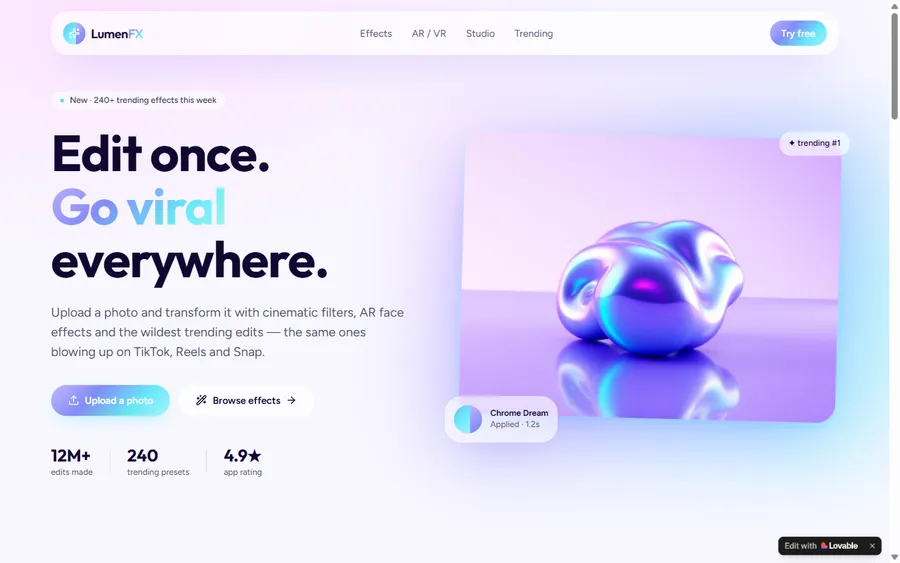 Web AppLumenFX: AR/VR Photo Effects StudioUpload a photo and transform it with cinematic filters, AR face effects and the wildest trending edits, the same looks blowing up on TikTok, Reels and Snap, with 240+ one-tap presets. Raayan vibe-coded the whole studio from an idea: prompted the concept, then built the effects engine and gallery UI by hand.by RaayanOpen the live project ↗
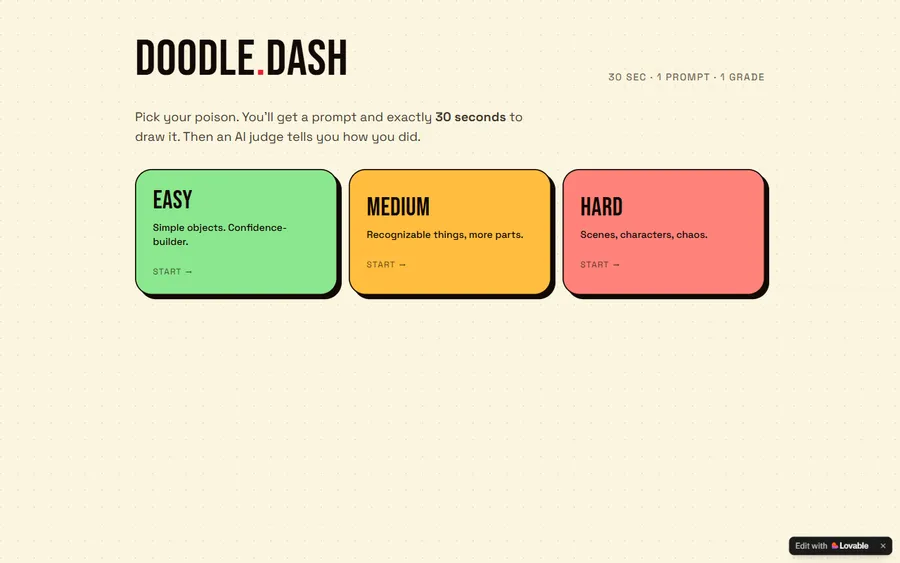 GameDoodle Dash: 30-Second Drawing ChallengePick a difficulty, get a prompt, and you have exactly 30 seconds to draw it, then an AI judge scores how close you got. Three modes from easy objects to chaotic scenes. Shubh vibe-coded it idea-first, wiring real AI image grading into a fast, addictive drawing game.by ShubhOpen the live project ↗