MKM / A1
GCSE maths
Foundation and Higher tier, AQA, Edexcel or OCR.
Open the syllabusMilton Keynes · Maths tutors for ages 6 to 67 · Live online lessons
Milton Keynes is laid out on a grid, and every child who grows up here learns that the H roads run one way and the V roads the other. A grid suggests right angles. So we measured them. Using the free OpenStreetMap data, we drew a straight line from end to end of each grid road and worked out its direction. The H roads head, on average, at a bearing of 060 degrees, not 090; the V roads at 323. The angle between those two average directions is 83.2 degrees. Close to a right angle, but not one. That small gap is a whole unit of school maths, and it is how we teach: real numbers first, then the method that explains them, from Year 2 sums to A level vectors.
A maths-only page · KS2, KS3, GCSE, A level and adults · We are independent of every Milton Keynes school
Maths tuition in Milton Keynes, in brief
Milton Keynes families and adults use Modern Age Coders as an online maths tutor, with live lessons for anyone from 6 to 67. Children prepare for the Year 6 SATs through KS2; teenagers move through KS3 into GCSE, taught for their board (AQA, Edexcel or OCR) and tier, or IGCSE; sixth formers take A level, with Further Maths topics for the keenest; and adults sit GCSE maths resits or rebuild confidence. Lessons run one to one or in groups of five to ten learners at the same level. Our Milton Keynes project tests whether the grid roads cross at right angles: the H roads average a bearing of 060 degrees and the V roads 323, which leaves 83.2 degrees between them. The opening lesson is free. After it, a group place is USD 100 a month and private tuition USD 150 a month.
Most requested in Milton Keynes
These are the three courses Milton Keynes families ask about most often. Every other course we teach is listed further down.
MK / 1
Foundation or Higher tier, matched to the board the school enters, with straight-line graphs taught on the grid roads.
Open the syllabus →
MK / 2
Calculus, vectors and statistics, with room for Further Maths ideas once the single-maths core is secure.
Open the syllabus →
MK / 3
The algebra, coordinates and graphs that GCSE quietly assumes a learner already owns.
Open the syllabus →From Year 1 to adult
Schools in Milton Keynes follow the national curriculum for England. These are the levels a learner passes through, and what an hour with us concentrates on at each one.
| Level | Usual age | Focus of our lessons |
|---|---|---|
| KS1 | 5 to 7 | Counting, place value, number bonds to 20, halves and quarters of shapes. |
| KS2 | 7 to 11 | Times tables for the Year 4 multiplication tables check, long multiplication, fractions, and the arithmetic and reasoning papers of the Year 6 SATs. |
| KS3 | 11 to 14 | Algebra, coordinates and straight-line graphs, ratio, angles and the first probability. |
| GCSE | 14 to 16 | Straight-line graphs, algebra and the rest of the course, at either tier, for AQA, Edexcel, OCR or IGCSE. |
| A level | 16 to 18 | Vectors, calculus, mechanics and statistics; Further Maths topics on request. |
| Adults | 18 to 67 | GCSE maths resits, the topics in Functional Skills maths, and confidence with numbers at work. |
At primary level we spend most of our time on number. A child who knows that 6 × 7 = 42 because 6 × 7 is 6 × 5 plus 6 × 2 can rebuild the fact under pressure, which matters for the Year 4 multiplication tables check and again in the Year 6 arithmetic paper.
The SATs reasoning papers reward a child who can explain. We ask for the reason as often as the answer, so that by spring of Year 6 explaining feels normal rather than frightening.
From Year 7 the centre of gravity moves to algebra and graphs. A GCSE maths tutor who skips this stage spends Year 11 patching it, so we build it properly. At GCSE we teach to the exact specification of the board, and at A level we keep pure, statistics and mechanics connected to real data.
Our national pages go further, stage by stage: KS2 maths, KS3 maths, GCSE maths, A level maths and Further Maths.
Each key stage is shown with the ages normally linked to it in English schools. Details of the multiplication tables check are on gov.uk.
The Milton Keynes project
A grid suggests squares. We tested the idea on every grid road in the city, using nothing but coordinates and a protractor of numbers.
On 1 October 2026 we asked OpenStreetMap for every road whose name begins with H1 to H10 or V1 to V11. That returned 1,943 mapped pieces, from H3 Monks Way to V11 Tongwell Street. For each road we found the two mapped points that lie furthest apart and joined them with a straight line, called a chord. The chord shows the overall direction of a road that bends a little along the way.
We then kept only the roads whose chord is at least 2 km long, because a short road can point almost anywhere. That leaves nine H roads, H2 to H10, and ten V roads, every V road except V9 Overstreet.
If the grid were perfectly square and lined up with north, every H road would point east, a bearing of 090 degrees, and every V road north, a bearing of 000. Neither is true. The H chords point between 051.3 degrees (H6 Childs Way) and 068.7 degrees (H10 Bletcham Way), and their average is 060.1. The V chords point between 304.1 degrees (V4 Watling Street) and 340.9 degrees (V10 Brickhill Street), with an average of 323.3.
So the whole grid is turned about 30 degrees from the compass. More interesting for a mathematician: the two average directions are 83.2 degrees apart, not 90.
| Road | Chord bearing | Gradient (north per east) | What a learner notices |
|---|---|---|---|
| H3 Monks Way | 060.1° | 0.575 | Almost exactly the H average. |
| H6 Childs Way | 051.3° | 0.801 | The H road furthest round towards north. |
| H8 Standing Way | 060.2° | 0.572 | The longest H chord, at almost 11 km. |
| H10 Bletcham Way | 068.7° | 0.391 | The flattest gradient of the H roads. |
| V4 Watling Street | 304.1° | −0.676 | The V road furthest from north. |
| V7 Saxon Street | 340.6° | −2.842 | Steep: nearly three north for each one west. |
| V8 Marlborough Street | 327.8° | −1.586 | Close to the V average. |
| V10 Brickhill Street | 340.9° | −2.881 | The steepest gradient on the grid. |
Data: OpenStreetMap contributors, one Overpass query on 1 October 2026. Bearings and gradients are Modern Age Coders calculations from chords between the furthest-apart mapped points of each road, with longitude converted to metres at the latitude of Milton Keynes. They describe the map, not the design drawings, and they change as volunteers edit the map.
Straight-line graphs, tested
GCSE asks learners to use y = mx + c to spot perpendicular lines. The grid roads give that rule a real job to do.
Put east along the x axis and north up the y axis. A road heading at a bearing of θ then has a gradient of tan(90° − θ). H5 Portway heads at 061.7°, so its gradient is tan(28.3°), about 0.539. V7 Saxon Street heads at 340.6°, giving a gradient of −2.842.
The DfE content for GCSE says learners should "use the form y = mx + c to identify parallel and perpendicular lines". Two lines are perpendicular when their gradients multiply to −1. Here 0.539 × −2.842 = −1.532. Not −1, so H5 and V7 are not at right angles; the acute angle between them is 81.1°.
Try the averages. The mean H gradient is 0.576 and the mean V gradient −1.342. Their product is −0.773. For a line to be perpendicular to the H average, its gradient would have to be −1/0.576, which is −1.737.
A sharp learner then spots something odd. H6 and V6 multiply to −1.145, further from −1 than H3 and V8 at −0.912, yet H6 and V6 meet at 86.3° while H3 and V8 meet at 87.7°. The product tells you whether lines are perpendicular; it is a poor ruler for how far from perpendicular they are. The angle is the honest measure.
| Pair | Gradients | Product | Acute angle |
|---|---|---|---|
| H2 Millers Way and V11 Tongwell Street | 0.451 and −2.176 | −0.981 | 89.6° |
| H3 Monks Way and V8 Marlborough Street | 0.575 and −1.586 | −0.912 | 87.7° |
| H6 Childs Way and V6 Grafton Street | 0.801 and −1.429 | −1.145 | 86.3° |
| H5 Portway and V7 Saxon Street | 0.539 and −2.842 | −1.532 | 81.1° |
| H8 Standing Way and V4 Watling Street | 0.572 and −0.676 | −0.387 | 63.8° |
| H10 Bletcham Way and V4 Watling Street | 0.391 and −0.676 | −0.264 | 55.4° |
Nine H roads and ten V roads make 90 pairs. The median angle between their chords is 79.0°, and 18 of the 90 pairs are within 5° of a right angle. The pair closest to square is H2 and V11 at 89.6°; the furthest is H10 and V4 at 55.4°.
Note what this does not say. Two chords are directions across the whole city; where two real roads meet at a roundabout, the angle there can be quite different.
A chord uses only two points. A second method uses all of them: average the direction of every short mapped piece, giving longer pieces more weight. That gives 059.6° for the H roads and 326.4° for the V roads, and an angle of 86.8° between them, against 83.2° by chords.
Neither number is wrong. They answer slightly different questions, and a good mathematician states which method was used. That habit is worth more than the rule about −1.
GCSE wording from DfE, GCSE mathematics subject content, read on 1 October 2026. All bearings, gradients, products and angles are Modern Age Coders calculations; the doubled-angle averaging in the second method is A level material, not GCSE.
Maths around Milton Keynes
Families sometimes ask what else is going on in the city for children who enjoy maths. Here is what we know. We run none of it.
The NCETM lists the Enigma Maths Hub as the hub for Milton Keynes schools, with Denbigh School, Milton Keynes as its lead school. Maths Hubs support teachers and schools; they do not tutor children.
Many secondary schools enter pupils for the UK Mathematics Trust challenges. Our maths challenges page and Junior Olympiad page describe how we prepare learners.
Milton Keynes has no grammar schools of its own, but neighbouring Buckinghamshire does. Families weighing that route can read our 11 plus maths in Buckinghamshire page.
For a learner who likes puzzles, the grid road question is a fair taste of competition maths. There is a clean method, but the interesting part is noticing that the method and the question do not quite match.
Our competitions calendar lists national challenges by age, and the olympiad page explains the harder rounds.
Because teaching happens over video, learners in Bletchley, Wolverton, Newport Pagnell and Kents Hill simply log in after school. Groups are formed by level, not postcode, so a classmate may be in Leeds or Cardiff.
A GCSE student in Shenley Church End and an adult in Stony Stratford can therefore work on the same grid road data in the same week, at very different depths.
Source: NCETM, Enigma Maths Hub, read on 1 October 2026. We are independent of the NCETM, every Maths Hub, the UKMT and every school in Milton Keynes and Buckinghamshire.
Grown-up maths
A good share of the people who contact us are adults. Some need a GCSE maths resit for a course or a job; others simply want the subject to make sense at last.
Adults retaking GCSE start with us wherever their confidence breaks down, and the content is covered at a pace that suits a working week. The exam itself is booked through a school, college or exam centre; we prepare you for it.
Percentages, measures, reading charts and handling money, taught as the Functional Skills maths qualifications expect. Our Functional Skills page says more.
Parents learn the methods their children meet now, from bar models to the grid method, so that homework help agrees with the classroom.
Adults usually enjoy the grid road project more than they expect. Most have driven the H and V roads for years, and the idea that the grid is turned 30 degrees from north surprises almost everyone. There is more on our adult maths page.
The order we teach in
A learner can start at any step. The free lesson tells us which one.
| Usually | Step | Secure when the learner can |
|---|---|---|
| Years 3 to 5 | 1. Coordinates | Plot and read points in all four quadrants without mixing up x and y |
| Years 6 to 8 | 2. Gradient | Find a gradient by counting up and across between two points |
| Years 9 to 11 | 3. y = mx + c | Write the equation of a line and spot parallel and perpendicular pairs |
| Years 12 and 13 | 4. Angles from vectors | Find the angle between two lines from their directions, not their gradients |
Plenty of learners come to us late in GCSE. We check the algebra underneath first, because a gradient question is really a fractions question in disguise.
If there is more to fix than time allows before the exam, we will say so at the free lesson.
Those who enjoyed this kind of work often take statistics and probability or maths through coding, where the grid road calculation becomes a short program.
Learners who like proof often look at Further Maths next.
All our maths courses
The courses UK families search for most come first: GCSE, A level, 11 plus and IGCSE. Each card opens the full syllabus.
MKM / A1
Foundation and Higher tier, AQA, Edexcel or OCR.
Open the syllabusMKM / A2
Pure, statistics and mechanics.
Open the syllabusMKM / A3
Speed and reasoning for selective-school papers.
Open the syllabusMKM / A4
For schools that enter the international papers.
Open the syllabusMKM / B1
Number sense and shape for the youngest.
Open the syllabusMKM / B2
Every primary topic through to the SATs.
Open the syllabusMKM / B3
Quick, reliable sums in the head.
Open the syllabusMKM / B4
Bead-frame arithmetic that moves into the head.
Open the syllabusMKM / C1
Algebra, graphs, ratio and geometry.
Open the syllabusMKM / C2
Algebra rebuilt from the beginning.
Open the syllabusMKM / C3
From averages to hypothesis tests.
Open the syllabusMKM / C4
UKMT-style problems for keen learners.
Open the syllabusMKM / D1
Calculus and linear algebra for adults and undergraduates.
Open the syllabusMKM / D2
Interest, percentages and risk.
Open the syllabusMKM / D3
The statistics behind data work.
Open the syllabusMKM / D4
Fast calculation shortcuts.
Open the syllabusWhen lessons run
Our teachers work from India. For most of the winter India is five and a half hours ahead of Milton Keynes, and four and a half during British Summer Time. You only ever see UK times.
Weekdays after school
Primary and KS3 learners.
Weekday evenings
GCSE, A level and adults.
Saturday mornings
Any age, any level.
The person who saw a mistake last week checks for it this week.
A short message after lessons on what landed and what needs another look.
Everyone working at the same level, so one explanation suits the room.
Grid road angles, timetables and census tables alongside exam questions.
For an exam close at hand or a particular gap.
Every method comes with the reason it works.
Student work
Learners who began with numbers like these went on to the projects below. The student labs hold many more.

AI and ML
An AI nutrition coach that reads what you eat and works you toward a target.

AI and ML
A chatbot that answers mathematics and programming questions, built and deployed by a student.

AI and ML
An assistant that helps a young person recognise unsafe situations online.
Web app
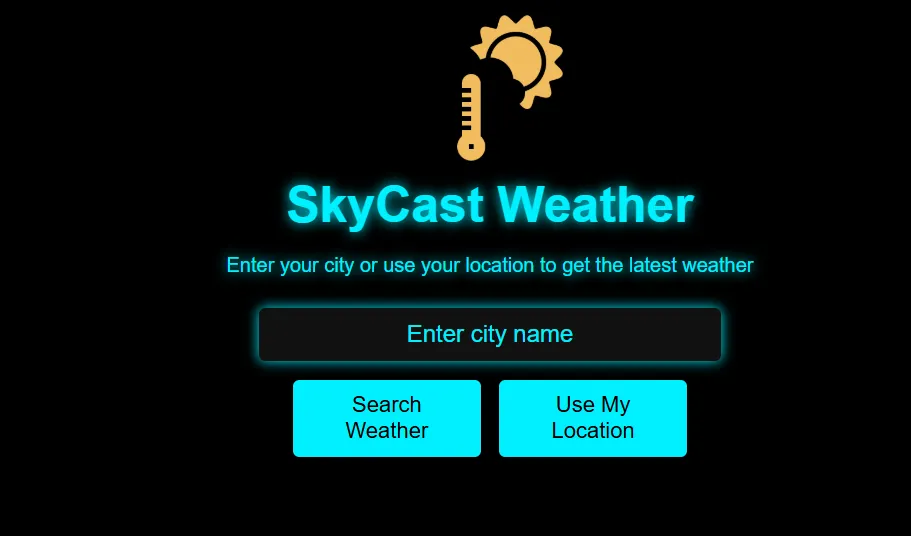
A weather forecasting site with live conditions for any location.
Fees
One monthly price in US dollars for every country outside India. No joining fee and no contract.
Free first class
USD 0
no card required
Group batch
USD 100
a month, billed in US dollars
One to one
USD 150
a month, billed in US dollars
What families say
Reviews families and learners left on our Google profile, reproduced word for word.
★★★★★
"The one step solution for my son. Modern Age Coders make learning coding so simple that kids love it. The teachers explain complex concepts clearly with practical exercises and interactive content."
Ria Mukherjee
Parent
★★★★★
"Modern Age Coders has been a game-changer for me. I struggled to grasp IT concepts and coding before joining, but their classes transformed everything. I can now confidently write complex programs with ease."
Samriddha Mondal
Student
★★★★★
"One of the most wonderful education centres out there. Education is not limited to school syllabus but focuses on skill development."
Vansh Agarwal
Student
★★★★★
"My child Dhairya is really enjoying the Modern Age Coders classes. This is his first online class and he eagerly looks forward to it. I can already see his improvement, and the teachers are very cooperative."
Sonam Oswal
Parent of Dhairya
★★★★★
"Modern Age Coders have wonderful teachers who teach in a clear, easy and practical way. The teacher boosts students' confidence and inspires them to learn without hesitation."
Sonu Goyal
Parent
★★★★★
"I highly recommend this computer coding class! The teachers are incredibly knowledgeable and passionate about coding."
Ritu Kedia
Parent
Milton Keynes maths questions
A gradient measures how steep a straight line is: how far it goes up for each one unit it goes across. A line through (0, 0) and (4, 2) has gradient 2 ÷ 4 = 0.5. Lines that slope down from left to right have negative gradients.
With us the first lesson is free. After that it is USD 100 a month for a place in a small group or USD 150 a month for one to one lessons, with no joining fee.
Yes. We teach Foundation and Higher tier to the specification of whichever board the school enters, and IGCSE for schools that sit it.
Yes, for teenagers and adults. We teach the content again from the weakest topic upwards. The exam entry itself is made through a school, college or exam centre.
Yes. We teach the KS2 curriculum, the times tables behind the Year 4 multiplication tables check, and the arithmetic and reasoning skills the Year 6 SATs assess.
Our A level course covers pure, statistics and mechanics and can stretch into Further Maths topics for students who want more. Tell us the board and the modules at the free lesson.
Learn the facts by building them from ones already known, then practise a little every day. A child who knows 8 × 5 = 40 can find 8 × 6 by adding one more 8.
No classroom: we teach only over live video, which means a learner in any MK postcode can join from a desk at home.
Yes, through our competition maths course, which works on the kind of problems the UK Mathematics Trust challenges set. Schools enter pupils for the challenges themselves.
No tutor honestly can, and we do not. We teach carefully and report progress plainly.
Related pages
National maths pages by stage, our coding page for the city, and nearby maths pages.
Foundation and Higher, every board.
Pure, statistics and mechanics.
Years 7 to 9, where algebra starts in earnest.
Our coding page for the city.
Another town in the same Maths Hub area.
Every nation, city, town and maths page we have.
Start here
Give us the school year or age and the topic that worries the learner most. The trial is a real lesson, followed by an honest view of where things stand.
Want to look around before booking? See the course list and our note on how we teach.
WhatsApp us · +91 91233 66161 · connect@modernagecoders.com
For the fastest answer, message us on WhatsApp. The number has an Indian code because our team is in India; we have no Milton Keynes office, and all lessons are online.
A priority demo is a full class of about 45 to 60 minutes. After the class the mentor sends a written skill report and a personal learning roadmap on WhatsApp. If you enrol, the demo fee is adjusted against your first month's fee. Share your demo Order ID with us on WhatsApp and we take it off.
Book a priority demo