KS2 is where the maths gaps that haunt secondary school quietly form.
KS2 is when maths gets serious, long division, fractions, multi-step problems. It's also when a class of thirty can't slow down for the child who didn't quite get place value, so they're handed methods to copy and moved along. The method works on the worksheet; the understanding never forms.
Those small unfilled gaps don't show up much in primary school. They surface brutally in Year 7, when secondary maths assumes a KS2 foundation that isn't fully there.
And the Year 6 SATs add pressure that can push schools and parents toward narrow drilling, which boosts a test score briefly but leaves the same gaps underneath.
We do it properly. We build genuine understanding of every KS2 idea, which both lifts SATs performance and gives your child the solid foundation that makes Year 7 and beyond far easier. One tutor, your child's pace, no gaps left behind.
Understanding first. The SATs score follows.
Every lesson is built so the maths makes sense, not just works.
Start from what they know
We anchor each new idea to one your child already understands, so KS2 maths feels like steady steps, not sudden leaps.
Build it visually
Number lines, bar models and pictures on the whiteboard make ideas like fractions and division something a child can see.
Grow reasoning, not just answers
We coach the "explain your thinking" skill the SATs reasoning papers test, asking "how do you know?" constantly.
Add SATs practice late
Once the understanding is solid, we add arithmetic-and-reasoning practice and gentle timing, so the papers feel familiar.
Long division: why the method works, not just how.
What often happens: children are taught the long-division ritual, "divide, multiply, subtract, bring down", as steps to copy. They follow it, make small slips, and have no idea what the digits actually mean, so they can't spot when an answer is wrong.
How we do it. Division is just sharing into equal groups, done one place value at a time. For 432 ÷ 3, we share out the hundreds, then the tens, then the ones, exactly what the written method records:
that leftover 100 becomes 10 tens, joining the 3 tens = 13 tens
share 13 tens into 3 → 4 each, 1 ten left over
that leftover 10 becomes 10 ones, joining the 2 ones = 12 ones
share 12 ones into 3 → 4 each
answer: 1 hundred, 4 tens, 4 ones = 144
The "bring down" step a child once copied blindly is just carrying a leftover into the next place value, exactly like sharing out money. Once a child sees this, long division stops being a fragile ritual they get wrong under pressure, and becomes something they understand and can check. That's the difference between a SATs score that holds up and one that's a coin-flip on the day.
The thinking that builds a strong coder is the thinking that builds a strong mathematician.
Follow the steps in order
A method like long division is an algorithm, a precise sequence of steps. Understanding why each step happens is exactly how a coder reads a program.
Spot the pattern
Seeing the repeat in a sequence or a times table is the same instinct that lets a programmer write a loop. We grow it early.
Check it makes sense
"Is 144 a sensible answer?" is debugging. We make checking a habit, so careless SATs marks stop slipping away.
We're Modern Age Coders. We've taught children to think like builders for years, and KS2 maths is where that thinking takes root. A child who learns maths as reasoning, not rituals, finds secondary maths, science and even coding far less daunting.
The whole of KS2, Years 3 to 6.
Mapped to the national curriculum, with Year 6 SATs preparation built in.
Number & place value
Reading and writing larger numbers, place value to millions and decimals, negative numbers, and rounding.
The four operations
Column methods, long multiplication and long division taught for understanding, plus the times-table fluency KS2 expects.
Fractions, decimals & percentages
Equivalence, the four operations with fractions, decimals and percentages, and the links between all three.
Reasoning & problem solving
The multi-step, explain-your-method questions that make up the SATs reasoning papers and trip up many children.
Measurement, geometry & statistics
Area and perimeter, angles, coordinates, units and conversions, and reading and drawing graphs.
Year 6 SATs preparation
The arithmetic paper and both reasoning papers, with gentle timing and confidence-building close to the tests.
The right fit: and an honest word on what to expect.
This fits the KS2 child quietly falling behind, the Year 6 child preparing for SATs, the child anxious about maths, and the able child who's bored and needs stretch. We meet your child where they are and teach across the whole range.
What changes, honestly. Confidence usually returns within a few weeks once the missing idea is fixed. SATs-level fluency and reasoning build over a term or two of steady, twice-weekly lessons. We won't promise an overnight jump, real understanding is built calmly, and it's what lasts.
What we won't do
- Drill SATs papers at the expense of understanding.
- Teach methods your child can't explain.
- Make a child feel small for a wrong answer.
- Promise a SATs result we can't honestly stand behind.
Simple, consistent, and built around your week.
1:1, live
One child, one tutor, real-time video with a shared whiteboard. No recordings, no autopilot.
8 lessons a month
Two each week, around 60 minutes, paced for steady progress without overload.
UK time
After-school, early-evening and weekend slots in GMT/BST.
You stay in the loop
A short note after each lesson and a progress summary every few weeks.
One simple price. No contract.
1:1 Private Tuition
$150 / month
- 8 live one-to-one lessons a month (2 per week, 1 hour each)
- 4 live one-to-one lessons a month (1 per week, 1 hour each)
- The same dedicated tutor throughout
- National curriculum & Year 6 SATs ready
- Notes after every lesson · cancel any time
Small-Group Cohort
$100 / month
- 8 live small-group lessons a month (2 per week, 1 hour each)
- A handful of children at the same level
- Same teaching approach, lower price
- A friendly first step · cancel any time
Sitting the 11+ as well? See our 11 Plus Maths Tuition → page.
Tutors chosen for patience as much as for maths.
Everyone we take on has to know primary maths deeply enough to explain it three different ways, and stay genuinely kind when a child is stuck for the fourth time. We test for both. A tutor who can't be patient with a nine-year-old doesn't teach for us.
Your child keeps the same tutor, so trust builds, and a child who trusts their tutor will say "I don't get it", which is where every breakthrough begins.
"My son struggled with math for years. Integrating it into coding projects has transformed his understanding and confidence. Highly recommended!"
Shewta Singh, mother of Ishan · verified Google review
How we differ from the alternatives.
| What matters | Modern Age Coders | SATs apps | A typical tutor |
|---|---|---|---|
| Teaches the reasoning | Always | Rarely | Sometimes |
| Notices quiet confusion | Yes, live, 1:1 | No | Usually |
| Same tutor each time | Yes | N/A | Often |
| Builds for secondary, not just SATs | Yes | No | Varies |
| Monthly price | $150 (1:1) / $100 (group) | A small monthly subscription | Charged by the hour |
SATs apps are fine for extra practice. They can't notice your child quietly guessing instead of understanding, which is precisely what we catch and fix.
Everything you might be wondering.
What year groups does KS2 cover?
Years 3 to 6 (ages 7–11). We teach all four years, placing each child by understanding, and prepare Year 6 for the SATs.
Can you prepare my child for the Year 6 SATs?
Yes, the arithmetic and both reasoning papers, by building genuine fluency and problem-solving rather than teaching narrowly to the test.
Is it aligned with the national curriculum?
Yes, all the KS2 strands, taught for the understanding underneath each.
My child has fallen behind in maths. Can you help them catch up?
Yes. We find the earlier missing idea and rebuild from there, so the current year stops feeling impossible.
How much does it cost?
The fees for private 1-on-1 and small-group classes are shown in your own currency in the pricing section of this page. Billing is monthly, there is no contract and you can cancel any time.
Can we try a class before enrolling?
Yes. Book a Priority Demo: a full live class of about 45 to 60 minutes, today or tomorrow, with a mentor reserved for your child. After the class the mentor sends a written skill report and a personal learning roadmap on WhatsApp. If you enrol, the demo fee is adjusted against your first month's fee.
Will my child have the same tutor?
Yes, one tutor throughout, so trust builds.
Are lessons live?
Yes, live, one-to-one, with a shared whiteboard.
Do lessons fit around school?
Yes, after-school, early-evening and weekend slots in UK time (GMT/BST).
How will I know my child is progressing?
A short note after each lesson and a plain-English summary every few weeks.
My child is ahead and bored at school. Can you stretch them?
Gladly, deeper reasoning, richer problems, and an early look at ideas that come later.
Can we start partway through the year?
Yes. We start wherever your child is.
Book a free KS2 maths trial lesson.
Meet the tutor in a full live class of about 45 to 60 minutes, see how we teach, and watch your child explain a piece of maths back to you. You get a written skill report afterwards, and the fee is adjusted against your first month if you enrol.
More maths tuition from Modern Age Coders.
Real student projects
What our students actually build
Every one is a real, live project shipped by a Modern Age Coders student. Explore more in Student Labs.
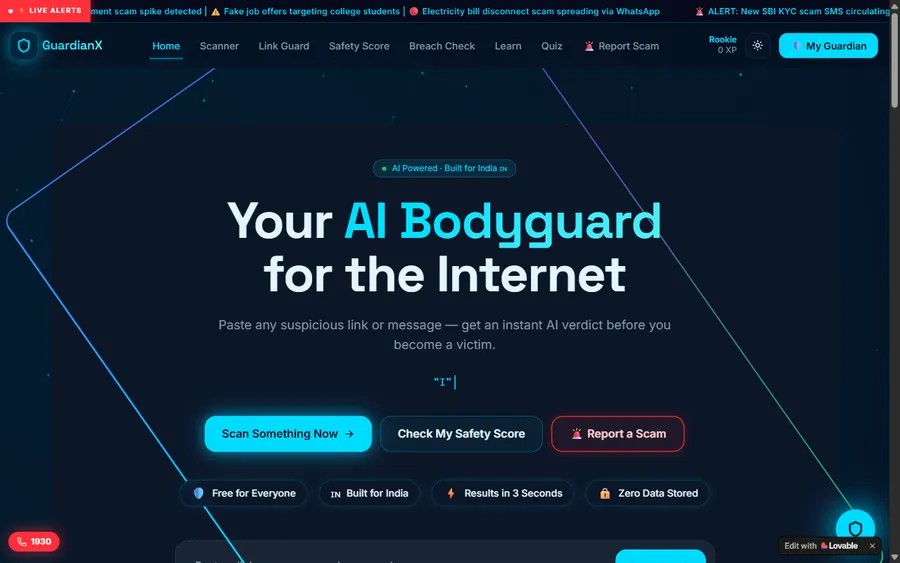 AI & MLGuardianX: AI Bodyguard for the InternetPaste any suspicious link or message and GuardianX returns an instant AI verdict before you become a victim, plus a link scanner, safety score, breach check and live scam alerts built for India. Vibe-coded from idea to working product through prompts, then refined until it genuinely understands how phishing and scams work.by VivaanOpen the live project ↗
 GamePalm Arcana: Summon the ElementsOpen your palms to the webcam and computer vision turns your gestures into real magic, the left palm throws a fireball, the right crackles with lightning. A wild blend of hand-tracking AI, creative coding and pure imagination, vibe-coded into a playable browser experience.by AarushOpen the live project ↗
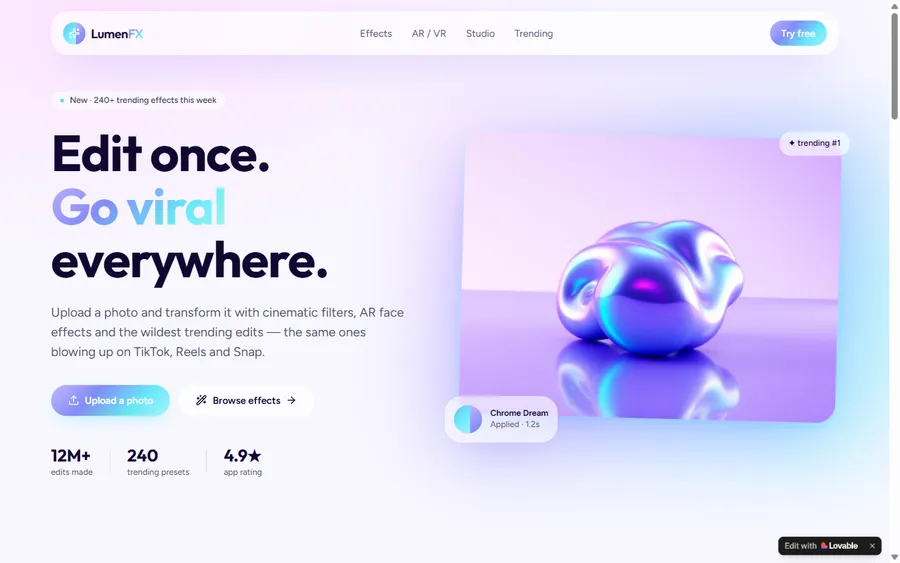 Web AppLumenFX: AR/VR Photo Effects StudioUpload a photo and transform it with cinematic filters, AR face effects and the wildest trending edits, the same looks blowing up on TikTok, Reels and Snap, with 240+ one-tap presets. Raayan vibe-coded the whole studio from an idea: prompted the concept, then built the effects engine and gallery UI by hand.by RaayanOpen the live project ↗