MTB / A1
GCSE
Either tier, any English board.
Open the syllabusBirmingham · Maths for ages 6 to 67 · Taught live online
Every Birmingham child hears it sooner or later: the city has more canals than Venice. The Canal & River Trust repeats it too. So we got out a map and measured. Inside the city boundary, the canal lines on OpenStreetMap add up to 64.20 kilometres, which is 39.89 miles. The canals of central Venice, measured the same way inside a rectangle we drew round the historic city, come to 49.62 kilometres. So Birmingham wins? Only if you count length. Count names instead, and that rectangle holds 165 differently named Venetian canals against 11 canal names inside Birmingham. Whether the saying is true depends entirely on what you decide to measure, and deciding what to measure is where real maths starts. That is how we teach maths in Birmingham, from first number bonds to A level calculus.
Maths only on this page · Every stage from Year 1 to adult · Independent of every Birmingham school and the university
Maths tuition in Birmingham, in brief
Modern Age Coders is an online maths tutor for Birmingham learners aged 6 to 67: KS2 number, times tables and the Year 6 SATs, 11 plus maths, Key Stage 3, GCSE maths at either tier for AQA, Edexcel or OCR, IGCSE, A level Maths and Further Maths, and adults sitting a GCSE maths resit, brushing up for work or helping their children. Classes are matched by level and hold five to ten learners, or a learner can have a teacher to themselves. We follow the national curriculum and the exam specifications, and we build lessons on real measurements. Our Birmingham example: canal lines inside the city boundary measure 64.20 km on OpenStreetMap, against 49.62 km for the named canals of central Venice, yet Venice has far more separate canals. The first lesson is on us; afterwards a seat in a class is USD 100 per month and a private teacher USD 150 per month.
Most Birmingham families start here
The three courses Birmingham families ask about most. Primary, KS3 and adult courses sit in the full list below.
BRUM / 1
Either tier, any English board, with rounding, bounds and error intervals treated as skills in their own right.
Open the syllabus →
BRUM / 2
Pure maths, mechanics and statistics, with proper attention to why a method works.
Open the syllabus →
BRUM / 3
Quick, accurate arithmetic and problem solving for children heading for a grammar school test in Year 6.
Open the syllabus →From Year 1 to adult
Birmingham schools prepare children for the same Year 6 tests and the same GCSE and A level exams as the rest of England, so these are the levels we teach to.
| Level | School years | The skill at the centre |
|---|---|---|
| Early primary | Years 1 and 2 | Number bonds to 20, counting in 2s, 5s and 10s, halves and quarters. |
| Upper primary | Years 3 to 6 | Times tables, long multiplication and division, fractions, and converting between units of length. |
| Lower secondary | Years 7 to 9 | Letters standing for numbers, proportional reasoning, angles and area. |
| GCSE | Years 10 and 11 | Either tier, with accuracy, rounding and bounds treated as skills in their own right. |
| Sixth form | Years 12 and 13 | A level Maths, and Further Maths for those heading towards maths, physics or engineering. |
| Adults | Any age to 67 | Whatever was missed first time, explained slowly and with real examples. |
Measurement is where primary maths meets the world, and Birmingham is a good city to measure. A Year 4 child can follow a canal on a map with a piece of string, read the scale, and say roughly how far the towpath runs. A Year 5 child can convert that to miles, and a Year 6 child can say how sure they are of the answer.
For families preparing for the grammar school test, our separate page on 11 plus maths in Birmingham covers that test. This page is about maths at every age, for everyone.
GCSE asks students to round sensibly, write error intervals and reason with upper and lower bounds. Students often find these fiddly because textbook examples are made up. The canal numbers below are real, so the question of how accurate they are actually matters.
Deeper pages for each stage: Key Stage 3, GCSE, A level, Further Maths and maths for adults.
The Birmingham project
The Canal & River Trust writes that "Most people know that Birmingham has more canals than Venice". We tested the saying with a map, a formula and some care about definitions.
On 1 October 2026 we asked OpenStreetMap, the volunteer-built world map, for every line tagged as a canal inside the Birmingham city boundary. It returned 275 pieces of canal drawn through 2,049 points. Adding the straight steps between neighbouring points gives 64.20 kilometres. At 1.609344 kilometres to the mile, that is 39.89 miles.
The Trust itself gives a different number: "the Birmingham Canal Navigations extend to just over 100 miles". Both can be right, because they measure different things. The Trust counts one named network of canals, wherever it runs; we counted every canal line inside the city boundary, whichever network it belongs to. Different definition, different total.
For Venice we ran the same query. The whole municipality of Venice, which stretches across the lagoon to the mainland, has 491.29 kilometres of mapped canal. Most of that lies well away from the historic city. So we drew a rectangle round the historic city and kept only the lines named Rio, Rielo or Canal Grande: 49.62 kilometres, or 30.83 miles.
On length, then, Birmingham's 64.20 kilometres beats central Venice's 49.62. But widen the Venice rectangle to every mapped canal line inside it, including wide channels such as the Canale della Giudecca, and Venice reaches 77.41 kilometres. Count names instead of length and the rectangle holds 165 named Venetian canals against Birmingham's 11 canal names. The saying is true, false or both, depending on the question.
| What was measured | Kilometres | Miles |
|---|---|---|
| Birmingham, all canal lines inside the city boundary | 64.20 | 39.89 |
| Birmingham, the same without tunnels | 60.42 | 37.54 |
| Venice, Rio, Rielo and Canal Grande in our rectangle | 49.62 | 30.83 |
| Venice, every canal line in our rectangle | 77.41 | 48.10 |
| Venice, the Venezia-Murano-Burano municipality area | 317.56 | 197.32 |
| Venice, the whole municipality, lagoon included | 491.29 | 305.27 |
| Canal | Kilometres inside the city |
|---|---|
| Birmingham and Fazeley Canal | 14.25 |
| Grand Union Canal | 13.91 |
| Worcester and Birmingham Canal | 10.12 |
| Stratford-upon-Avon Canal | 6.37 |
| Tame Valley Canal | 6.05 |
Data: OpenStreetMap contributors, ways tagged as canals, one Overpass query on 1 October 2026; lengths are great-circle sums calculated by Modern Age Coders. The Venice rectangle (45.4245 to 45.4475 N, 12.300 to 12.370 E) is our own choice. Quotes: Canal & River Trust, fascinating facts about canals and rivers, read on 1 October 2026.
Accuracy, at GCSE and A level
A measured length is never exact. The canal data shows two separate reasons why, and each one is on the syllabus.
The DfE subject content asks GCSE students to "use inequality notation to specify simple error intervals due to truncation or rounding" and to "apply and interpret limits of accuracy, including upper and lower bounds". Our total, 64.20 km, is given to 2 decimal places, so the true sum of our steps lies in 64.195 ≤ L < 64.205.
The Trust's "just over 100 miles" is a different kind of statement. It is not rounded to a stated accuracy, so no error interval can be written for it. Students who can tell those two kinds of number apart are reading statistics the way a careful adult should.
The second reason is deeper. A canal bends, but the map stores it as points joined by straight steps, and a straight step is always a little shorter than the bend it replaces. Use fewer points and the total shrinks.
We tested that by keeping only every second, fourth, eighth or sixteenth point. The total fell from 64.20 km to 62.75 km. Joining only the two ends of each piece gives 59.73 km. True length is what the steps approach as they get shorter, which is exactly the idea behind arc length in A level calculus.
| Points kept | Total length, km | Shortfall against all points, km |
|---|---|---|
| Every point | 64.20 | 0.00 |
| Every 2nd point | 64.15 | 0.05 |
| Every 4th point | 63.93 | 0.27 |
| Every 8th point | 63.59 | 0.61 |
| Every 16th point | 62.75 | 1.45 |
| End points only | 59.73 | 4.47 |
Definitions move the answer further than either kind of error. The two spillways in the data add 596.9 metres, the named basins and wharves 914.6 metres, and the tunnels 3.78 kilometres. Whether a tunnel counts as canal is a choice, not a calculation, and we ask students to state their choice before they add anything up.
GCSE wording: DfE, GCSE mathematics subject content, number items 15 and 16. The thinning experiment and its figures are Modern Age Coders' own work on the OpenStreetMap download.
Maths in the city
Birmingham has plenty of maths outside school that a curious learner can find. We describe it for families; it belongs to others, and we have no part in it.
According to the NCETM, the lead school for the Central Maths Hub is Bishop Challoner Catholic College in Birmingham, and the hub works with schools in Birmingham, Dudley and Sandwell. Its work is with teachers, so families meet it through their child's school.
The University of Birmingham's School of Mathematics, in the Watson Building at Edgbaston, runs the Birmingham Popular Maths Lectures. The school says "The lecturers cater to individuals studying A Level Mathematics and advanced GCSE students", and the lectures are free, in person or on Zoom.
The same school runs the Maths Big Quiz for Year 10, "allowing each school to bring a maximum of 24 students organised into teams of 4". Entry is through schools, so an interested student should ask a maths teacher.
The school also says it "hosts the regional office of the Advanced Mathematics Support Programme" and frequently organises events for students and teachers at the university. A sixth former thinking about Further Maths can ask their school about those events.
For competitions open to individual learners, our UK competitions calendar lists the UKMT challenges and others by age.
Our own lessons happen on video, so a learner in Erdington, Selly Oak or Hall Green joins from the kitchen table after school. Classmates are chosen by level, and they may be in Birmingham, Manchester or Glasgow.
A good first lesson for a curious teenager is the canal project above. It starts with a saying everyone has heard and ends with arc length, and nobody has to be told the answer is interesting.
Sources: NCETM, Central Maths Hub; University of Birmingham, School of Mathematics outreach and its about page. Read on 1 October 2026. Modern Age Coders is separate from the NCETM, every Maths Hub, the University of Birmingham and all Birmingham schools.
Adult learners
Adults come to us for many reasons, and almost none of them is an exam.
Percentages, ratios and fractions, rebuilt from the beginning, with time to ask the questions nobody answered at school.
Short courses on how primary and secondary schools teach methods today, so a parent can help without confusing anyone.
Estimating, checking and presenting figures, and knowing when a total is precise and when it is only roughly right. Our Functional Skills page covers the qualification route.
The canal project works well for adults too. Anyone who has walked a stretch of city-centre towpath has a feel for the distances, and comparing that feel with a measurement is a good way back into maths for someone who left it behind years ago.
How a learner progresses
A learner can start at any rung. The free lesson shows us where.
| Typically | Rung | We know it is secure when |
|---|---|---|
| Years 1 to 3 | 1. Number | They can partition 47 into 40 and 7 and use it to add and subtract |
| Years 4 to 6 | 2. Measure | They convert between kilometres and metres, and estimate before they calculate |
| Years 7 to 11 | 3. Accuracy | They write an error interval and explain what it says about a measurement |
| Years 12 and 13 | 4. Limits | They see why shorter steps along a curve approach its true length |
Students who arrive in Year 10 or 11 usually need a few foundations repaired before exam practice is worth doing. We say how many weeks that is likely to take at the first lesson.
Bounds and error intervals are a common weak spot, and they are best fixed with a short, focused run of lessons.
After an exam, some learners carry on with statistics and probability; others try maths through coding and write the canal calculation as a program.
Learners who like hard problems for their own sake are welcome in our competition maths groups.
The full list
The four courses UK families search for most, GCSE, A level, 11 plus and IGCSE, lead the list; the rest follow by stage. Open any card for the syllabus.
MTB / A1
Either tier, any English board.
Open the syllabusMTB / A2
Pure, mechanics and statistics.
Open the syllabusMTB / A3
Maths for the Birmingham grammar school test and others.
Open the syllabusMTB / A4
For schools that enter the international exam.
Open the syllabusMTB / B1
Counting, shapes and patterns with objects to hand.
Open the syllabusMTB / B2
Years 1 to 6, topic by topic, for understanding.
Open the syllabusMTB / B3
Calculating in the head, quickly and correctly.
Open the syllabusMTB / B4
Beads on a frame, then beads in the mind.
Open the syllabusMTB / C1
The algebra, ratio and geometry GCSE builds on.
Open the syllabusMTB / C2
For a learner who lost the thread of algebra.
Open the syllabusMTB / C3
Data, probability and testing ideas.
Open the syllabusMTB / C4
Hard problems, no recipes, UKMT style.
Open the syllabusMTB / D1
Calculus and linear algebra in depth.
Open the syllabusMTB / D2
Interest, growth and risk, with worked cases.
Open the syllabusMTB / D3
The statistics and algebra under data work.
Open the syllabusMTB / D4
Vedic methods once the foundations are firm.
Open the syllabusScheduling
The teachers are in India, which keeps one time all year. Birmingham is five and a half hours behind India in winter and four and a half in summer, and we arrange everything in UK time so families never need to convert.
Straight after school
Primary and lower secondary.
Later evenings
GCSE, A level and working adults.
Saturday or Sunday
For a calmer, unhurried lesson.
One person follows the learner from week to week and remembers what went wrong.
Parents get a brief, honest note on progress.
Matched by level so nobody is left behind or held back.
Canals, maps and timetables alongside the usual exercises.
One teacher, one learner, for a gap or a deadline.
Learners explain a method before they practise it.
Student work
Four things built by students who began with exactly this kind of number work. There are more in the student labs.
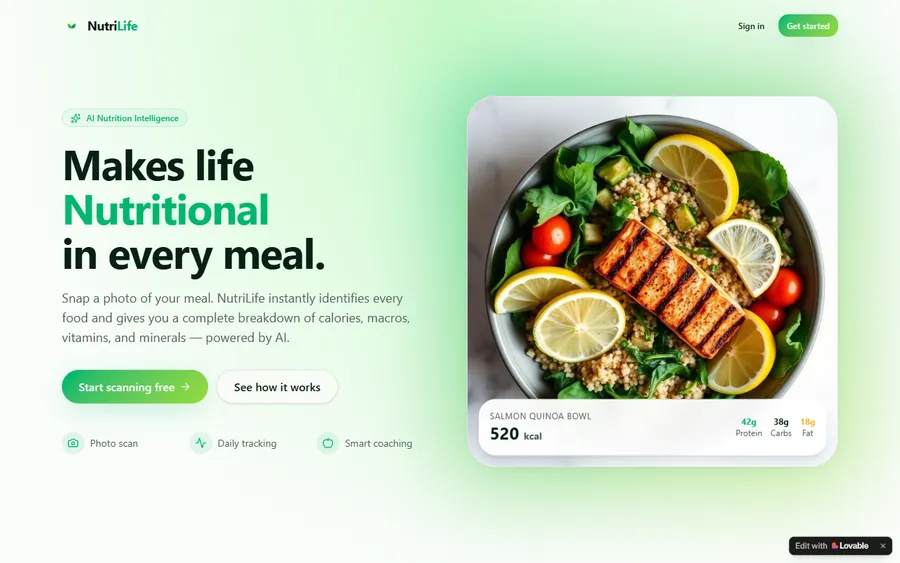
AI and ML
An AI nutrition coach that reads what you eat and works you toward a target.
AI and ML
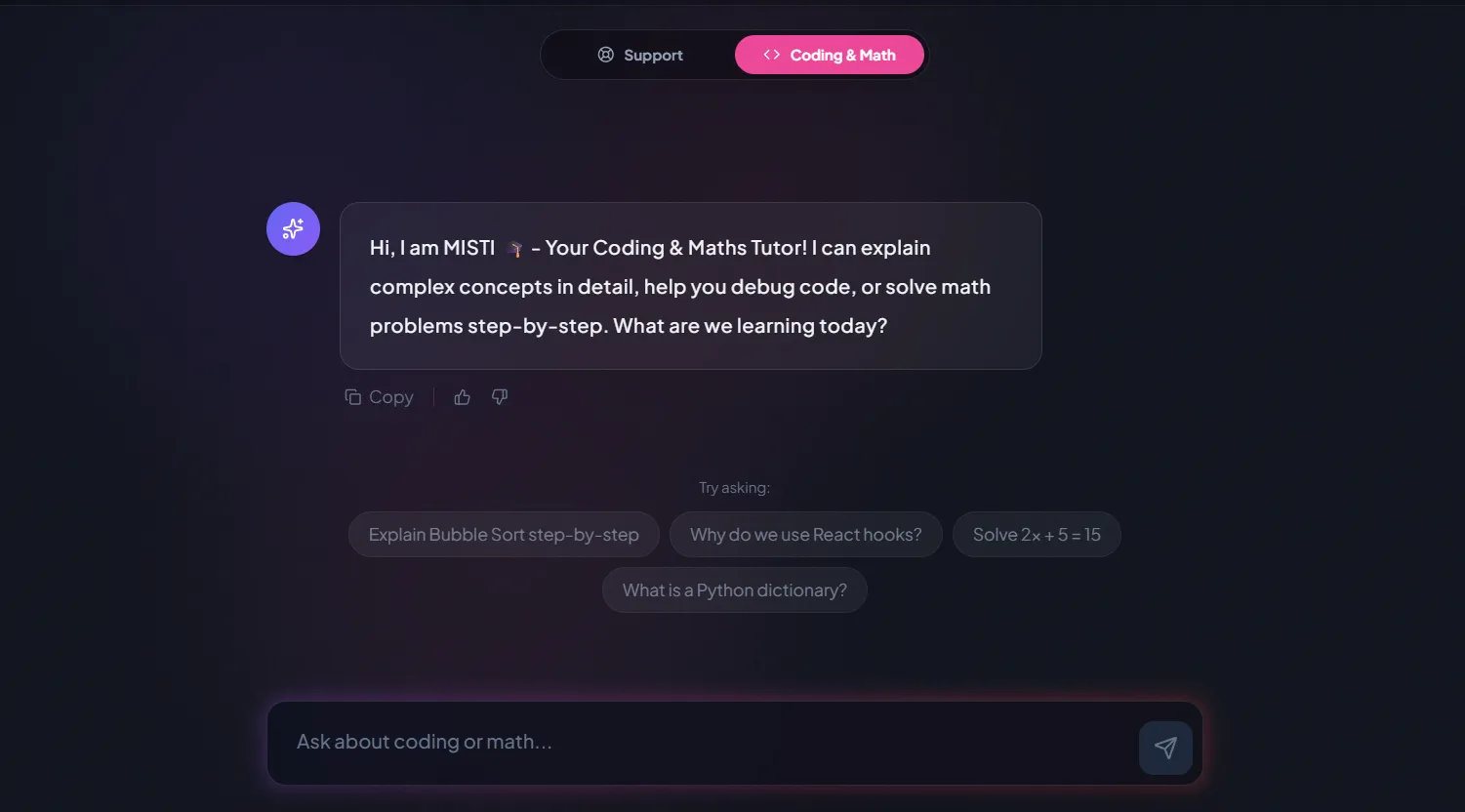
A chatbot that answers mathematics and programming questions, built and deployed by a student.

AI and ML
An assistant that helps a young person recognise unsafe situations online.
Web app
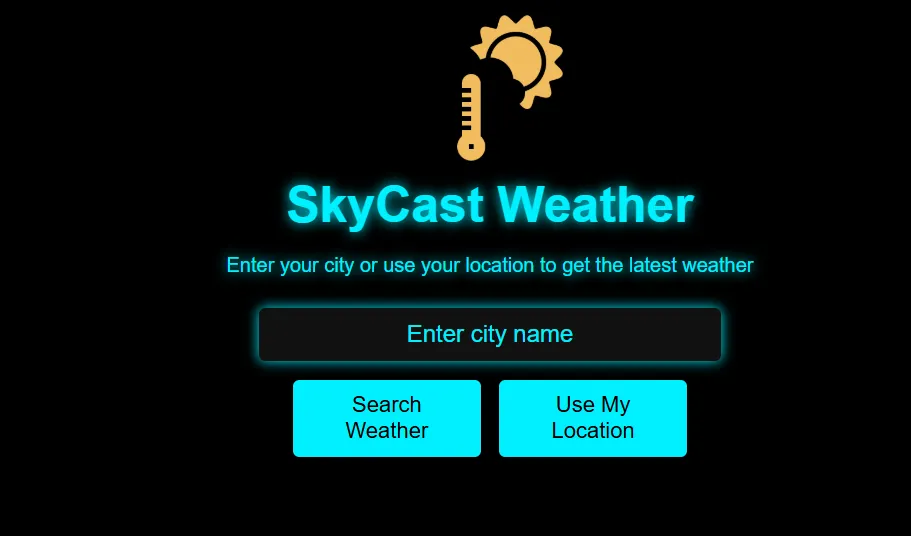
A weather forecasting site with live conditions for any location.
Fees
A flat monthly fee in US dollars for every family outside India. There is no sign-up charge and no fixed term to commit to.
Free first class
USD 0
no card required
Group batch
USD 100
a month, billed in US dollars
One to one
USD 150
a month, billed in US dollars
What families say
Straight from our Google profile, as families and learners wrote them.
★★★★★
"The one step solution for my son. Modern Age Coders make learning coding so simple that kids love it. The teachers explain complex concepts clearly with practical exercises and interactive content."
Ria Mukherjee
Parent
★★★★★
"Modern Age Coders has been a game-changer for me. I struggled to grasp IT concepts and coding before joining, but their classes transformed everything. I can now confidently write complex programs with ease."
Samriddha Mondal
Student
★★★★★
"One of the most wonderful education centres out there. Education is not limited to school syllabus but focuses on skill development."
Vansh Agarwal
Student
★★★★★
"My child Dhairya is really enjoying the Modern Age Coders classes. This is his first online class and he eagerly looks forward to it. I can already see his improvement, and the teachers are very cooperative."
Sonam Oswal
Parent of Dhairya
★★★★★
"Modern Age Coders have wonderful teachers who teach in a clear, easy and practical way. The teacher boosts students' confidence and inspires them to learn without hesitation."
Sonu Goyal
Parent
★★★★★
"I highly recommend this computer coding class! The teachers are incredibly knowledgeable and passionate about coding."
Ritu Kedia
Parent
Birmingham maths questions
Regular live lessons with one teacher, either in a level-matched class of five to ten or privately. The teacher finds what a learner has missed, teaches it properly and checks it has stuck, from KS2 number work and the SATs to GCSE for AQA, Edexcel or OCR and A level.
An error interval is the range a measurement could really lie in, given how it was rounded. A length of 64.20 km to 2 decimal places is at least 64.195 km and less than 64.205 km. GCSE asks students to write this with inequality signs.
By our measurement, Birmingham has more length of canal inside its boundary (64.20 km) than the named canals of central Venice (49.62 km). But Venice has many more separate canals, and widening the area changes the answer, so the saying depends on what you count.
Yes, on a separate page about the Birmingham grammar schools test. This page covers maths for everyone, from Year 1 to adult.
Yes. We teach A level Maths across pure, mechanics and statistics, and Further Maths for students who want more.
No. Every lesson is live on video, so learners join from home anywhere in the city.
Yes. Many adults come to us for exactly that, and others simply want the explanations they missed. We teach adults up to 67 at their pace; for a resit, the entry is made through a college or exam centre.
No. We teach well and tell you honestly how things are going, but we never promise grades.
Yes, through our olympiad maths course, which works on problems in the UKMT style. Schools enter pupils themselves, and we have no connection with the UKMT, the NCETM, any Maths Hub, the university or any school.
The first lesson is free. Then it is USD 100 per month for a class place or USD 150 per month for private lessons, with no joining fee and no minimum term.
Also useful
National maths pages by stage, the city 11 plus page and our Birmingham coding page.
Our national GCSE maths page.
For sixth formers who want more maths.
Years 7 to 9, the bridge to GCSE.
Our coding page for the city.
The same approach, built on the Metrolink.
Nations, cities, towns and maths, in one list.
Start here
Let us know the learner's age or year and what is going wrong, or right, in maths at the moment. We teach a full lesson and then give you a straight assessment.
Want to look first? See all our courses or how we approach teaching.
WhatsApp us · +91 91233 66161 · connect@modernagecoders.com
The quickest reply comes on WhatsApp. You will see an Indian number, since our team works from India; we have no UK premises and teach only online.
A priority demo is a full class of about 45 to 60 minutes. After the class the mentor sends a written skill report and a personal learning roadmap on WhatsApp. If you enrol, the demo fee is adjusted against your first month's fee. Share your demo Order ID with us on WhatsApp and we take it off.
Book a priority demo