MSH / A1
Primary maths
All of KS1 and KS2, with SATs reasoning.
Open the syllabusSheffield · Maths tutor, ages 6 to 67 · Live online, in small groups or one to one
Stand at the Cathedral tram stop with a compass and the Supertram network fans out around you. Middlewood lies on a bearing of 323.7 degrees, Meadowhall Interchange on 043.9, Halfway on 125.9. Join two of those ends to the Cathedral and you have a triangle whose third side you can find without ever measuring it: the cosine rule gives 6,430.9 metres from Middlewood to Meadowhall, and the direct distance worked out from the map agrees to a tenth of a metre. Bearings, the cosine rule, the sine rule and triangle area are all GCSE topics, and this page uses the Supertram to show how our online maths tutors teach Sheffield learners, from the Year 4 multiplication check to A level, Further Maths and adult maths.
A Sheffield maths page · Primary, secondary, sixth form and adults · Not connected with any Sheffield school or university
What does maths tuition in Sheffield with us look like?
Learners across Sheffield, the youngest six and the oldest 67, join our maths lessons by live video, either as one of five to ten classmates working at one level or alone with their tutor. Younger pupils get KS2 maths with tables practice ahead of the Year 4 check and reasoning practice ahead of Year 6 SATs maths. Teenagers get KS3 maths and then GCSE (AQA, Edexcel or OCR, either tier) or IGCSE, followed by A level Maths with optional Further Maths. Adults get anything from Functional Skills maths to a GCSE resit. Lessons combine exam practice with real problems. In Sheffield that means measuring bearings from the Cathedral tram stop to each end of the Supertram and solving the triangles they make. The first lesson is free; afterwards a group place costs USD 100 a month and private lessons USD 150 a month.
Where Sheffield learners usually start
Most requests from Sheffield are for GCSE, A level or primary maths. The full list is further down.
SHF / 1
Foundation or higher tier for AQA, Edexcel or OCR, with bearings and trigonometry practised on real maps.
Open the syllabus →
SHF / 2
Year 12 and 13 maths, where bearings grow into vectors, radians and the trigonometry of mechanics.
Open the syllabus →
SHF / 3
Times tables, angles and turns, fractions, and the reasoning the Year 6 SATs papers look for.
Open the syllabus →Year 1 to adult
Sheffield schools follow the national curriculum for England, so the stages below are the ones every Sheffield learner passes through. Adults start from wherever they left off.
| Stage | Years | What we concentrate on |
|---|---|---|
| KS1 | 1 and 2 | Counting, number bonds, simple shapes and quarter and half turns. |
| KS2 | 3 to 6 | Times tables before the Year 4 check, angles in degrees, compass directions and the reasoning of Year 6 SATs. |
| KS3 | 7 to 9 | Angle facts, scale drawings, first bearings and Pythagoras. |
| GCSE | 10 and 11 | Foundation or higher tier: bearings, trigonometry, and at higher tier the sine and cosine rules. |
| A level | 12 and 13 | Pure maths, statistics and mechanics, with vectors and radians; Further Maths for those who want more. |
| Adults | Any | Functional Skills maths, GCSE maths resits, and practical maths for work. |
Children at state-funded schools in England sit the multiplication tables check in Year 4. We teach the tables as a network: 7 × 9 is 7 × 10 take away one seven, and a child who sees that never has to panic over a forgotten fact.
Angles arrive in KS2 as turns, then as degrees. A child who knows that a quarter turn is 90 degrees and a full turn 360 is already halfway to understanding bearings, and we build that link on purpose.
Our GCSE tutors teach to the learner's board and tier. Bearings appear at both tiers; the sine rule, the cosine rule and the area formula ½ab sin C are higher tier, and all of them appear in the Supertram project below.
For more on each stage see our national pages: KS2 maths, KS3 maths, GCSE maths, A level maths and Further Maths.
The Year 4 check is described on gov.uk (read 1 October 2026). Key stage years are the standard ones for England.
The Sheffield project
A bearing is a direction given as an angle measured clockwise from north, always written with three figures. The Supertram, with lines spreading out from the city centre, is an ideal place to practise them.
On 1 October 2026 we downloaded the tram routes from OpenStreetMap. Four services are mapped, each in both directions: the Yellow route between Middlewood and Meadowhall Interchange, the Blue route between Halfway and Malin Bridge, the Purple route between Herdings Park and Cathedral, and the Tram-Train between Rotherham Parkgate and Cathedral.
For every stop we took the average position of its mapped platforms. Then, from the Cathedral stop, we calculated the bearing and the straight-line distance to each of the six outer ends of the network.
A learner with a protractor and a paper map would get close to these numbers; we used the exact formulas for a curved Earth so that the answers can be trusted to a tenth of a degree. On a map this small the curvature barely matters, but it shows up in one interesting place, explained below the table.
Every figure here is our own calculation from the open map. The distances are straight lines, not distances along the track, so they are shorter than any tram journey.
| End of the line | Bearing from Cathedral | Distance | Bearing back to Cathedral |
|---|---|---|---|
| Malin Bridge | 307.8° | 3,287 m | 127.8° |
| Middlewood | 323.7° | 4,596 m | 143.6° |
| Herdings Park | 156.1° | 4,876 m | 336.1° |
| Meadowhall Interchange | 043.9° | 5,342 m | 224.0° |
| Halfway | 125.9° | 10,231 m | 306.0° |
| Rotherham Parkgate | 051.1° | 10,700 m | 231.2° |
GCSE students learn that a back bearing is the forward bearing plus or minus 180 degrees. Check the table: Middlewood is 323.7 degrees from Cathedral, and Cathedral is 143.6 degrees from Middlewood. The rule predicts 143.7.
That tenth of a degree is real. North points in very slightly different directions at two places on a curved Earth, so over ten kilometres the back bearing drifts a little from the flat-map rule. For Halfway the rule gives 305.9 and the true back bearing is 306.0.
Malin Bridge is on 307.8 degrees and Halfway on 125.9 degrees, ends of the same Blue route. The difference is 178.1 degrees, so the two ends and the Cathedral stop lie within two degrees of a straight line through the city centre.
That makes a lovely KS3 question: if the angle were exactly 180 degrees, what would the distance from Malin Bridge to Halfway be? Simply 3,287 + 10,231 metres. The cosine rule, for the real angle, gives a total only a few metres shorter.
Data: OpenStreetMap contributors, Supertram route relations and stops, one Overpass query on 1 October 2026. Bearings and distances are Modern Age Coders' calculations and are not published by the tram operator. GCSE wording: DfE, GCSE mathematics subject content, which includes "interpreting maps and scale drawings and use of bearings".
Higher tier trigonometry
Take the Cathedral stop, Middlewood and Meadowhall Interchange as the three corners of a triangle. Two sides and the angle between them come straight from the bearings table; everything else follows.
| Step | Working | Result |
|---|---|---|
| Angle at Cathedral | 043.9° − 323.7° + 360° | 80.26° |
| Third side, cosine rule | √(4,596.4² + 5,341.8² − 2 × 4,596.4 × 5,341.8 × cos 80.26°) | 6,430.9 m |
| Direct distance from the map | Great-circle formula between the two ends | 6,430.9 m |
| Angle at Middlewood, sine rule | sin⁻¹(5,341.8 × sin 80.26° ÷ 6,430.9) | 54.95° |
| Angle at Meadowhall | 180° − 80.26° − 54.95° | 44.78° |
| Area, ½ab sin C | ½ × 4,596.4 × 5,341.8 × sin 80.26° | 12.10 km² |
The cosine rule, working only from the two distances and the angle at Cathedral, gives 6,430.9 metres from Middlewood to Meadowhall Interchange. Calculating the same distance directly from the map coordinates gives 6,430.9 metres too.
Agreement to a tenth of a metre is a satisfying check for a GCSE student, and it shows why the cosine rule works on maps: over a few kilometres the Earth is flat enough for school trigonometry to be exact in practice.
The sine rule tells you that sin of the angle at Middlewood is about 0.819. Two angles below 180 degrees have that sine: 54.95 degrees and 125.05 degrees. Which is right?
Add 125.05 to the 80.26 degrees already at Cathedral and you pass 180, which no triangle allows, so the angle must be 54.95. Higher tier students who learn to ask that question avoid one of the commonest traps in the exam.
Different stages use the same triangle differently. KS2 children estimate the angles with a protractor on a printed map. KS3 learners draw it to scale. GCSE students use the cosine and sine rules as above, and A level students turn the bearings into vectors and find the bearing from Middlewood to Meadowhall, which is 088.7 degrees.
All values are Modern Age Coders' calculations from the OpenStreetMap stop positions. The sine and cosine rules and the area formula appear in the DfE GCSE subject content, geometry and measures.
Maths in South Yorkshire
Sheffield schools belong to a regional maths network that most families never hear about. Here is what its public page says. We have no part in it.
The NCETM page for the South Yorkshire Maths Hub names Notre Dame High School, Sheffield, as its lead school.
The same page lists the areas the hub works with: Barnsley, Doncaster, Rotherham and Sheffield.
Maths Hubs support schools and teachers through development work. Families see the effect in lessons rather than dealing with a hub directly.
For learners who enjoy problems like the Supertram triangle, competition maths is the natural next step. Schools enter pupils for the UK Mathematics Trust challenges, and our UKMT maths challenge page sets out how we coach for each level.
The UK competitions calendar lists dates for maths and coding competitions by age.
Our lessons are online, so a learner in Walkley, Crookes or Gleadless joins from home. We group by level rather than by area, so a Sheffield learner may share a class with someone in London or Leicester.
We do not run an 11 plus page for Sheffield. Families preparing for a selective school test elsewhere can use our 11 plus maths course.
Source: NCETM, South Yorkshire Maths Hub, read 1 October 2026. Modern Age Coders is independent of all of them, and of every school and university in the city.
Adult learners
Adults are a large part of our Sheffield intake. Some need a qualification, some want to support their children, and some want to use numbers at work without a knot in the stomach.
Adults retaking the exam sit in our GCSE course. A short diagnostic comes first, so lesson time goes where the marks are.
Applied maths for jobs, apprenticeships and further study. Our Functional Skills maths page describes the course.
Fractions, percentages, angles and statistics, rebuilt at an adult pace. See our maths classes for adults.
Adults who once found trigonometry baffling often enjoy the Supertram triangle. They know the places, they can picture the map, and seeing the cosine rule reproduce a distance they could check for themselves makes the formula feel like a tool rather than a test.
Progression
The four steps below build towards the trigonometry on this page. A new learner can join at any step; the free lesson shows which.
| Usually | Step | The learner can |
|---|---|---|
| Years 3 to 5 | 1. Turns and degrees | Describe turns in degrees and use the eight compass points |
| Years 6 to 8 | 2. Angle facts | Find missing angles on lines, around points and in triangles |
| Years 8 to 10 | 3. Bearings and scale | Measure and draw three-figure bearings on a scale map |
| Years 10 to 13 | 4. Any triangle | Choose between the sine and cosine rules and check the ambiguous case |
Learners who join late in GCSE can still make real gains, provided algebra and angle facts are put right first.
If there is not enough time to close the gap before the exam, we say so honestly after the free lesson.
Many continue to A level Maths, and some add Further Maths. Learners who prefer data move to our statistics and probability course.
Others recreate the bearings table in Python with maths through coding.
All courses
Arranged by stage, from early number to university mathematics.
MSH / A1
All of KS1 and KS2, with SATs reasoning.
Open the syllabusMSH / A2
Counting, shape and pattern for young children.
Open the syllabusMSH / A3
Arithmetic with a bead frame, then in the head.
Open the syllabusMSH / A4
Quick, confident calculation.
Open the syllabusMSH / B1
Lower secondary: angles, equations, ratio.
Open the syllabusMSH / B2
Any board, either tier, resits included.
Open the syllabusMSH / B3
Cambridge and Edexcel international routes.
Open the syllabusMSH / B4
Practice for selective school tests.
Open the syllabusMSH / C1
Sixth form maths across all three strands.
Open the syllabusMSH / C2
UKMT challenges and olympiad problems.
Open the syllabusMSH / C3
Calculus, linear algebra, proof.
Open the syllabusMSH / C4
For anyone whose algebra needs a reset.
Open the syllabusMSH / D1
From averages to inference.
Open the syllabusMSH / D2
Percentages, loans and forecasts in context.
Open the syllabusMSH / D3
The statistics behind analysis.
Open the syllabusMSH / D4
Trigonometry and data in Python.
Open the syllabusLesson times
Our tutors keep Indian Standard Time, which has no summer change. That puts India four and a half hours ahead of Sheffield in summer and five and a half in winter; we quote every slot in UK time.
Weekdays after school
Children and teenagers, straight from class.
Weekday evenings
For A level students and adults.
Weekend mornings
For anyone who prefers a weekend lesson.
The tutor who saw last week's slip checks for it again this week.
Families get a brief note on progress after lessons.
Five to ten learners at one level, so the pace suits everyone.
Tram networks and local data alongside past papers.
For a specific weakness or the weeks before an exam.
Learners say why a rule works before they drill it.
Student work
Students who began with problems like the Supertram triangle went on to make the projects below. More are in the student labs.
AI and ML
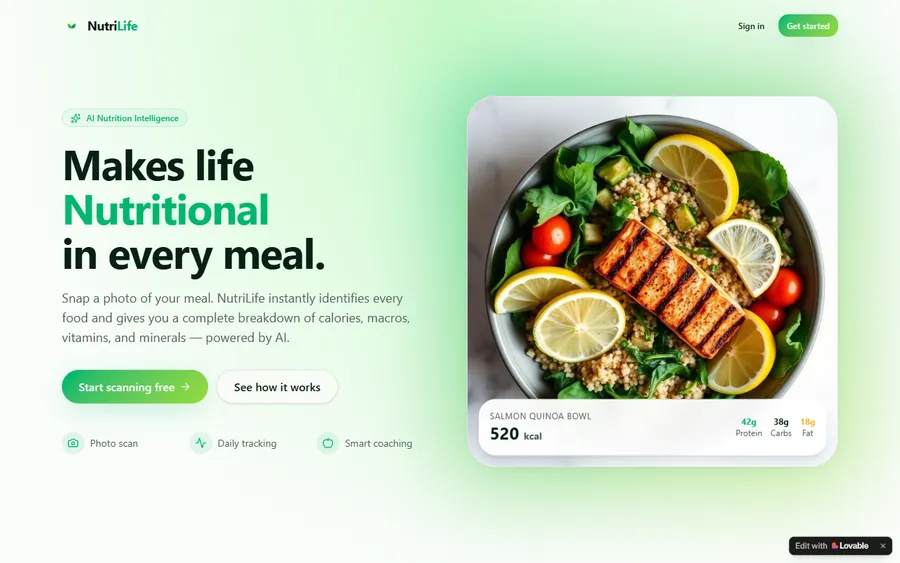
An AI nutrition coach that reads what you eat and works you toward a target.
AI and ML
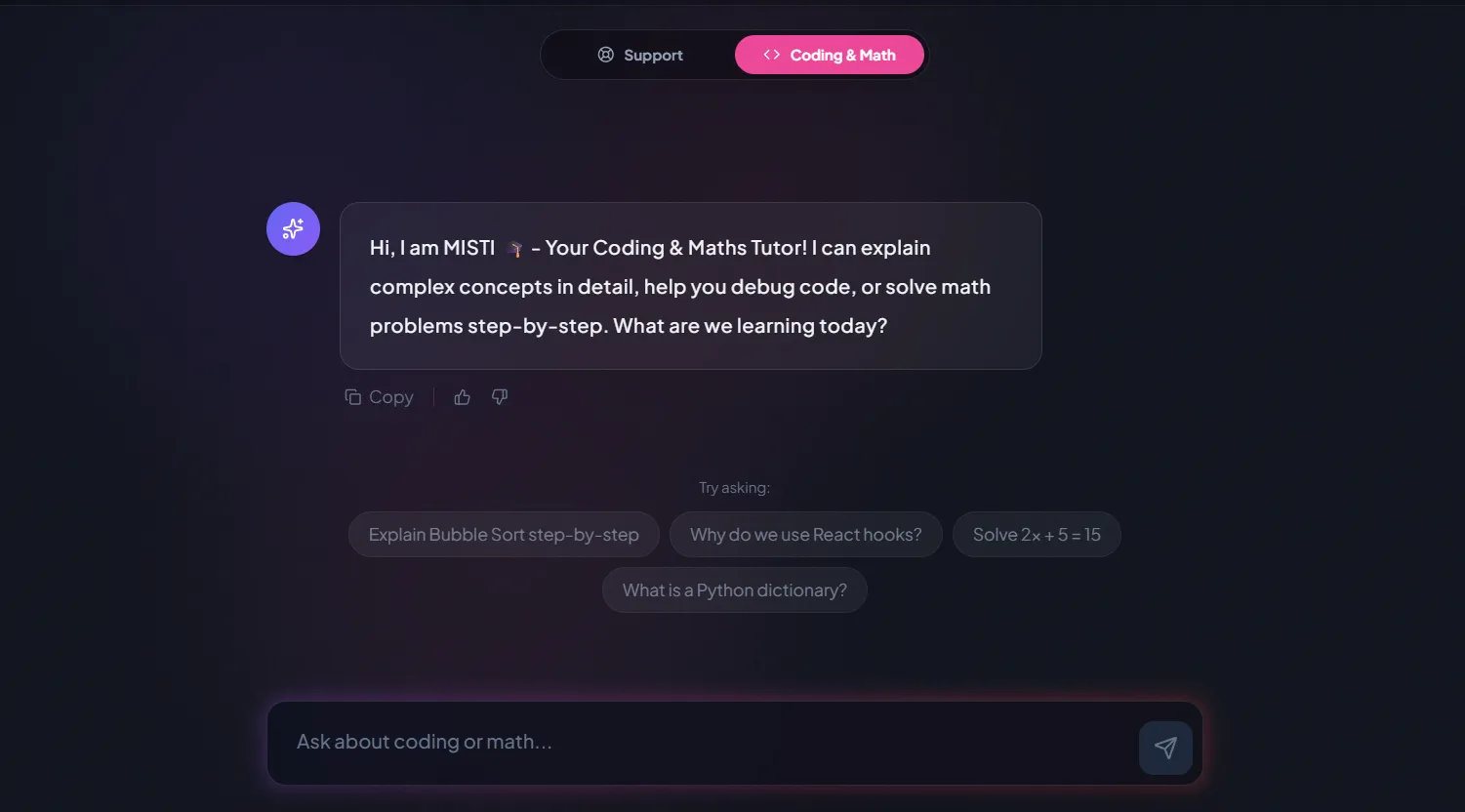
A chatbot that answers mathematics and programming questions, built and deployed by a student.

AI and ML
An assistant that helps a young person recognise unsafe situations online.
Web app
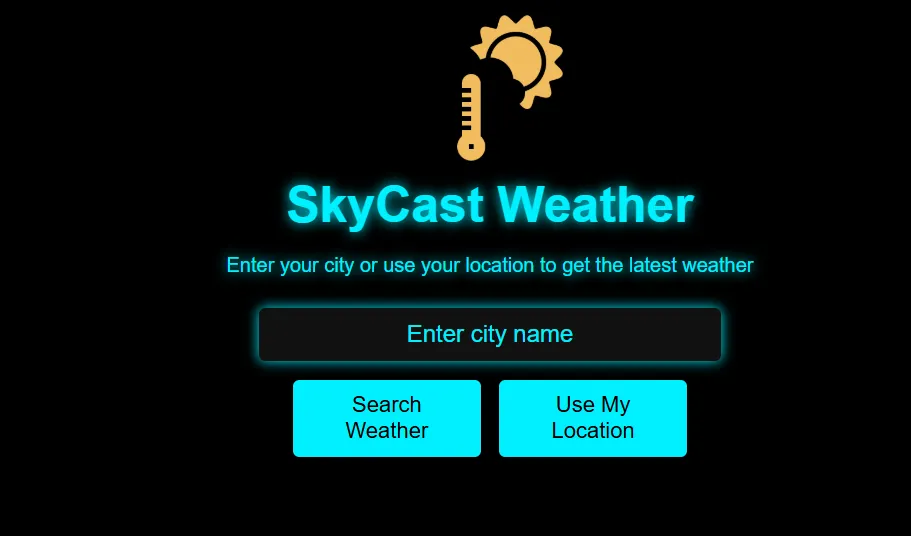
A weather forecasting site with live conditions for any location.
Fees
Paid monthly in US dollars, one rate for all countries except India, with no joining fee and no contract.
Free first class
USD 0
no card required
Group batch
USD 100
a month, billed in US dollars
One to one
USD 150
a month, billed in US dollars
What families say
Google reviews from families and learners, exactly as written.
★★★★★
"The one step solution for my son. Modern Age Coders make learning coding so simple that kids love it. The teachers explain complex concepts clearly with practical exercises and interactive content."
Ria Mukherjee
Parent
★★★★★
"Modern Age Coders has been a game-changer for me. I struggled to grasp IT concepts and coding before joining, but their classes transformed everything. I can now confidently write complex programs with ease."
Samriddha Mondal
Student
★★★★★
"One of the most wonderful education centres out there. Education is not limited to school syllabus but focuses on skill development."
Vansh Agarwal
Student
★★★★★
"My child Dhairya is really enjoying the Modern Age Coders classes. This is his first online class and he eagerly looks forward to it. I can already see his improvement, and the teachers are very cooperative."
Sonam Oswal
Parent of Dhairya
★★★★★
"Modern Age Coders have wonderful teachers who teach in a clear, easy and practical way. The teacher boosts students' confidence and inspires them to learn without hesitation."
Sonu Goyal
Parent
★★★★★
"I highly recommend this computer coding class! The teachers are incredibly knowledgeable and passionate about coding."
Ritu Kedia
Parent
Sheffield maths questions
Your trial costs nothing. A seat in a Sheffield-friendly class of five to ten is then USD 100 per month, and a private tutor is USD 150 per month; there is no sign-up charge and you can leave whenever you wish.
A three-figure bearing is a direction measured clockwise from north, written with three digits, so east is 090 degrees and south-west is 225 degrees. From the Sheffield Cathedral tram stop, Meadowhall Interchange lies on a bearing of 043.9 degrees.
In our experience it helps just as much when the lesson is live and the tutor can follow each line of working. Ours write and watch on a shared board, so an error in the second line never survives to the tenth.
Yes. Learners of any age join our GCSE course for a resit. We find out which topics are already secure, then spend the time where it will raise the mark most.
AQA, Edexcel and OCR at foundation and higher tier, and the IGCSE for learners whose schools use it.
Yes. Primary lessons follow the whole of Key Stage 2, so a child practises multiplication facts in time for Year 4 and written explanations in time for the Year 6 papers.
It is. Sixth formers studying Further Maths next to A level Maths can take the extra modules with us online.
Learn when to use each one before memorising them: the cosine rule for two sides and the angle between them, or three sides; the sine rule for a side and its opposite angle. Then practise on real triangles, like the Supertram one, and always check the ambiguous case.
No. We describe what its public page says so that families know it exists. We have no link with the NCETM, the hub or any Sheffield school or university.
No. Honest teaching and honest progress reports are what we offer; a grade depends on the learner and the day, and nobody can promise one.
Related
Stage-by-stage maths guides, coding in Sheffield, and maths pages for nearby cities.
Tiers, boards and how we teach them.
Sixth form maths in depth.
Years 7 to 9, where the groundwork is laid.
Our Sheffield page for coding and AI.
Our Leeds maths page and its hill gradients project.
Every UK page we publish.
Start here
Tell us the learner's age or year group, the exam board if there is one, and which topic feels hardest. The first lesson is a real lesson, and we give you a frank view of where things stand afterwards.
Would you rather browse first? Visit our course pages or read about the way we teach.
WhatsApp us · +91 91233 66161 · connect@modernagecoders.com
WhatsApp is quickest. The number carries India's country code because that is where the team works; there is no Sheffield office and every lesson happens online.
A priority demo is a full class of about 45 to 60 minutes. After the class the mentor sends a written skill report and a personal learning roadmap on WhatsApp. If you enrol, the demo fee is adjusted against your first month's fee. Share your demo Order ID with us on WhatsApp and we take it off.
Book a priority demo