The step up from GCSE is brutal: and it's not about working harder.
Every year, students who breezed through GCSE maths hit a wall in the first term of A-Level. It's bewildering and demoralising, and it has a clear cause: A-Level stops rewarding the memorise-and-repeat approach that worked at GCSE. It demands algebraic fluency so automatic it costs no thought, and the confidence to attack a question with no obvious method.
Working harder at the old approach doesn't fix it. It just produces more frustration.
The questions that decide A and A* grades are deliberately unfamiliar: they combine topics, hide the method, and reward genuine reasoning. Past-paper drilling alone can't prepare you, because the next paper will look different again.
We bridge the gap directly. We rebuild the fluency A-Level assumes, teach each concept from where it comes from, and train the problem-solving and exam technique that turn understanding into the grade you're aiming for.
Fluency, understanding, then exam technique.
Worked from your specification, toward the unseen questions that decide your grade.
Rebuild GCSE-to-A-Level fluency
The algebra A-Level assumes is automatic. We make yours automatic too, so it never eats your time on harder work.
Derive, don't memorise
We show where each result comes from, why integration reverses differentiation, why a vector equation describes a line, so you can rebuild and adapt it.
Train unseen problem-solving
We coach how to start a question with no obvious method, the exact skill the top-mark questions test.
Drill papers & technique
Using your board's papers, we build the working, notation and timing that bank every available mark.
Why integration reverses differentiation.
What gets memorised: "to integrate, add one to the power and divide by the new power, the opposite of differentiating." Students apply it correctly and never see why the two operations are linked, so problems mixing the two feel like a trick.
How we do it. Differentiation finds the rate of change; integration adds up tiny changes to find the total. If F is a function whose rate of change is f, then summing up all those tiny changes of F across an interval just rebuilds the overall change in F. That's the Fundamental Theorem of Calculus:
then ∫ f(x) dx = F(x) + c (integrating undoes differentiating)
and ∫ ₐᵇ f(x) dx = F(b) − F(a) (the total change in F)
The "add one to the power" rule is simply the reverse of the differentiation rule, and it works because integration and differentiation are inverse processes, not by coincidence. Once a student sees this, the whole of A-Level calculus connects: areas, volumes, differential equations and kinematics stop being separate recipes and become one idea. That coherence is what carries a student to the top grades and straight into university maths.
A-Level maths and computer science are the same kind of thinking.
Build from primitives
A-Level constructs complex results from a few definitions, exactly as a program builds features from primitives. We teach that constructive habit.
Reason, don't recall
The unseen questions reward working a problem out from what you understand, the same instinct that lets a programmer solve a problem they've never met.
Precision & proof
A clear mathematical argument and correct code share one discipline: every step justified, nothing assumed.
We're Modern Age Coders. A-Level maths underpins computer science, engineering, physics and economics, and the precise, constructive reasoning we teach for programming is exactly what makes it click, which is why our students carry it straight into their degrees.
The full A-Level, all three strands.
Taught to your board, with the foundations rebuilt under each topic.
Pure: algebra & functions
Indices, surds, partial fractions, the binomial expansion, functions, transformations and modelling.
Pure: calculus
Differentiation and integration from first principles, chain/product/quotient rules, parametric and implicit methods, and differential equations.
Pure: trigonometry & vectors
Radians, identities, the addition and double-angle formulae, and vectors in two and three dimensions.
Statistics
Data, probability, the binomial and normal distributions, hypothesis testing and the large data set.
Mechanics
Kinematics, forces and Newton's laws, moments, and projectiles, the applied topics where many lose marks.
Exam technique
"Show that" and proof questions, unseen problem-solving, calculator skills, and the timing the papers demand.
The right fit: and an honest word on what to expect.
This fits the year-12 student floored by the GCSE-to-A-Level jump, the year-13 student chasing an A or A*, the AS or resit candidate, and the student targeting a competitive maths or STEM degree. We meet your level and aim at the next realistic grade.
What's realistic. Most students feel the difference within a few weeks as fluency returns and questions stop feeling impossible. A grade turnaround tracks the year and the work you do between lessons. We'll be honest about what's achievable and never quote a guaranteed grade.
What we won't do
- Complete coursework or assessed work for you.
- Teach methods with no concept beneath them.
- Drill past papers without fixing the fluency gap.
- Promise a grade we can't honestly support.
Built around college and exam season.
1:1, live
One student, one tutor, real-time video and a shared whiteboard for working pure, mechanics and stats together.
8 lessons a month
Two each week, around an hour, worked from your specification and past papers.
UK time
Evening and weekend slots in GMT/BST that fit around college.
Exam ramp
Targeted revision before mocks and the summer exams.
One simple price. No contract.
1:1 Private Tuition
$150 / month
- 8 live one-to-one lessons a month (2 per week, 1 hour each)
- 4 live one-to-one lessons a month (1 per week, 1 hour each)
- The same tutor through to the exam
- Taught to your board across pure, mechanics & stats
- Past papers & technique · cancel any time
Small-Group Cohort
$100 / month
- 8 live small-group lessons a month (2 per week, 1 hour each)
- A few students on the same board
- Same teaching approach, lower price
- Good for classmates · cancel any time
Taking Further Maths too? See our Further Maths Tuition → page.
Tutors who know A-Level maths cold: and how it's marked.
Our A-Level tutors have strong mathematical backgrounds and a precise knowledge of each board's papers. They can explain why a result is true and show you the exact working a marker needs, and they remember how punishing the GCSE-to-A-Level jump feels.
You keep the same tutor through the year, so they know your modules, your weak spots and how you think, and aim every lesson at the marks still on the table.
"My son struggled with math for years. Integrating it into coding projects has transformed his understanding and confidence. Highly recommended!"
Shewta Singh, mother of Ishan · verified Google review
How we differ from the alternatives.
| What matters | Modern Age Coders | Revision videos | A typical tutor |
|---|---|---|---|
| Rebuilds the fluency gap | Yes | No | Sometimes |
| Teaches unseen problem-solving | Yes | Rarely | Varies |
| Covers pure, mechanics & stats | All three | Usually pure | Varies |
| Same tutor to the exam | Yes | N/A | Often |
| Monthly price | $150 (1:1) / $100 (group) | Free, or a small fee | Charged by the hour |
Revision videos are a useful supplement. They can't watch you attempt an unseen question and coach the reasoning in real time, which is what moves an A-Level grade.
Everything you might be wondering.
Which exam boards and modules do you cover?
Edexcel, AQA and OCR (including OCR MEI), across pure, mechanics and statistics, taught to your specification and past papers.
The jump from GCSE to A-Level maths floored me. Is that normal?
Completely, the steepest step in school maths. We rebuild the algebraic fluency A-Level assumes and teach the new abstraction properly.
Can you help me get an A or A*?
The top grades come from understanding plus fluency under time pressure on unseen questions. We build both; the result depends on starting point and effort.
I'm doing AS or resitting. Can you help?
Yes: AS, full A-Level and resit candidates, with a plan built around exactly where you are.
How much does it cost?
The fees for private 1-on-1 and small-group classes are shown in your own currency in the pricing section of this page. Billing is monthly, there is no contract and you can cancel any time.
Can we try a class before enrolling?
Yes. Book a Priority Demo: a full live class of about 45 to 60 minutes, today or tomorrow, with a mentor reserved for your child. After the class the mentor sends a written skill report and a personal learning roadmap on WhatsApp. If you enrol, the demo fee is adjusted against your first month's fee.
Will I keep the same tutor?
Yes, one tutor across the year who ramps into revision before the exams.
Can you cover mechanics and statistics, not just pure?
Yes, all three. We make the applied content as solid as the pure.
Do you prepare for STEP, MAT or university maths?
Yes: STEP and MAT-style problem solving alongside A-Level. See our college and sixth-form page.
Are lessons live?
Yes, live, one-to-one, with a shared whiteboard.
When should I start?
Year 12 for strong foundations; Year 13 for consolidation and technique. We help at any stage with an honest view of what's achievable.
Do lessons fit around college and exam season?
Yes, evening and weekend slots in UK time, ramping up around mocks and summer exams.
Book a free A-Level maths trial lesson.
Bring your specification and the topic that's giving you trouble. We'll show you how we'd teach it and how we'd close the gap to your target grade. No card needed.
More maths tuition from Modern Age Coders.
Real student projects
What our students actually build
Every one is a real, live project shipped by a Modern Age Coders student. Explore more in Student Labs.
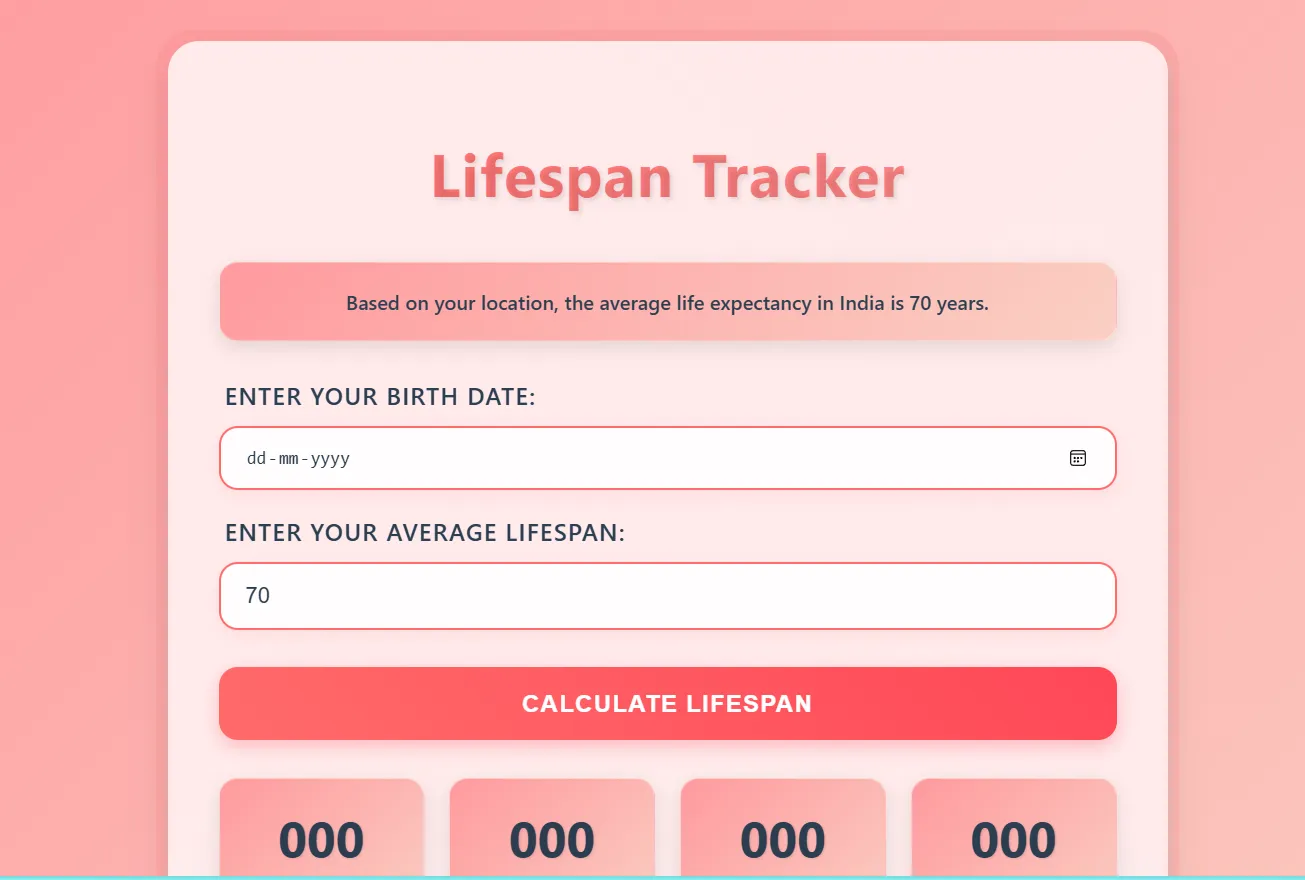 ToolLife Span TrackerAn interactive web tool that calculates expected lifespan, shows days, months and years lived, and visualises remaining time to motivate better habits.by ManayOpen the live project ↗
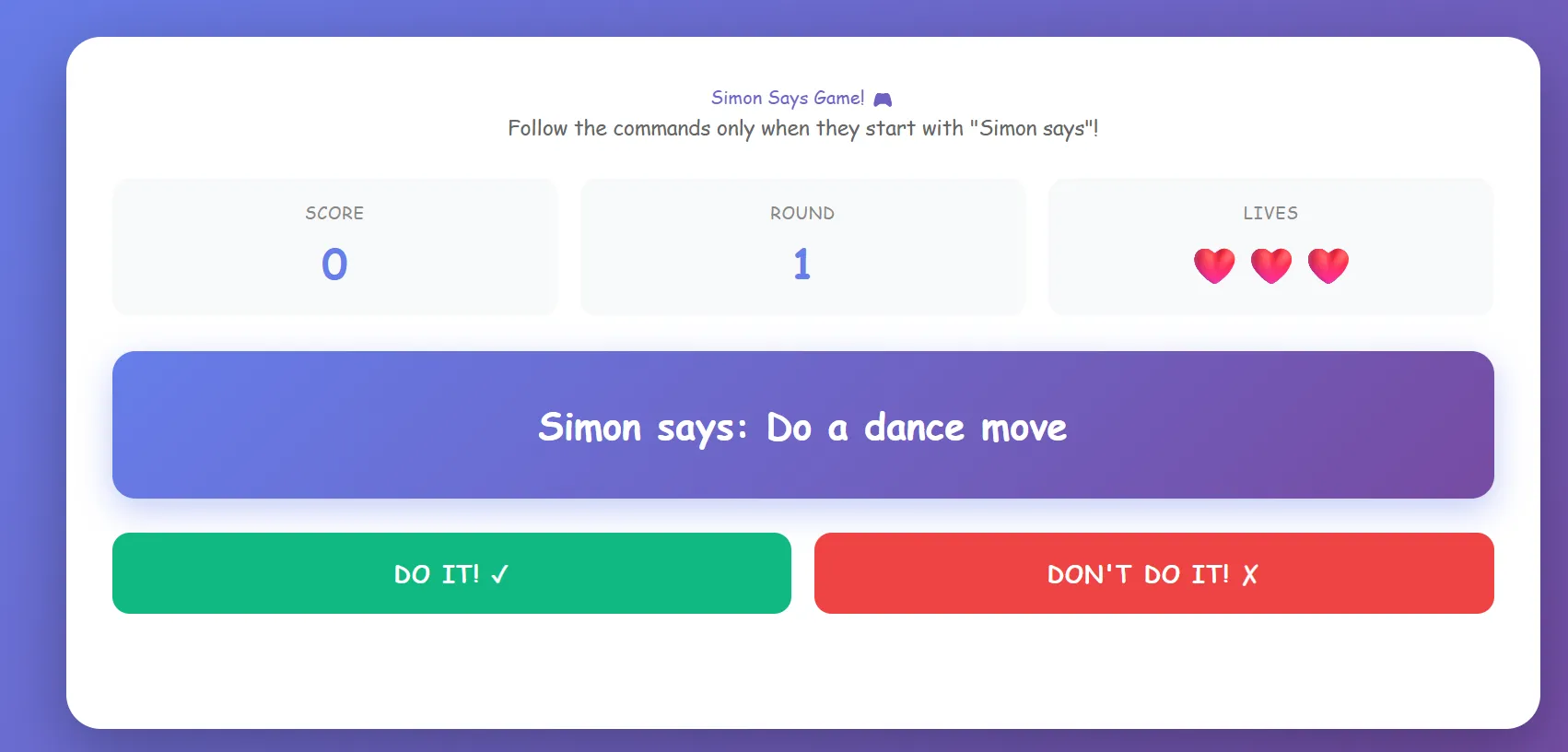 GameSimon GameA fun memory-based game where players repeat colour and sound sequences. Each level adds a new challenge, brain-boosting for kids learning logic and focus.by YashaswiOpen the live project ↗
 ToolImage Slider WebsiteA visually appealing site with a smooth image carousel, auto or manual navigation, responsive layout and beautiful transition effects.by SomrajOpen the live project ↗