MBS / A1
Primary maths
KS1 and KS2, through to SATs reasoning.
Open the syllabusBristol · Online maths tutor, ages 6 to 67 · Small live classes or private lessons
Split Bristol into its 57 census neighbourhoods and plot each one: distance from Bristol Bridge along the bottom, share of commuters who walk up the side. The points fall in a clear downhill band, with a correlation of minus 0.82. Draw the trend line and it makes a confident prediction for the furthest neighbourhood, 7.44 km out: minus 1.43% of people walk to work. In reality 12.4% do. A line that fits well in the middle can talk nonsense at the edges, and learning to notice that is a large part of GCSE statistics. This page explains how our online maths tutors teach Bristol learners, from the Year 4 times tables check through GCSE and A level to adult maths, using the city's own commuting data.
A maths page for Bristol · Children, teenagers and adults · Independent of every Bristol school and university
What do Bristol learners get from our maths tuition?
Bristol learners aged 6 to 67 take live maths lessons with us online, either in a class of five to ten people working at the same level or one to one. Young children build times tables for the Year 4 check and the reasoning needed for Year 6 SATs maths. Older pupils move through KS3 maths into GCSE, foundation or higher, for AQA, Edexcel or OCR, or into IGCSE. Sixth formers study A level Maths, with Further Maths if they want it, and adults come for Functional Skills maths, GCSE maths resits or simply to feel confident with numbers again. Our Bristol example plots Census 2021 commuting data for 57 neighbourhoods and shows where a trend line can and cannot be trusted. Your first lesson is free; ongoing lessons are USD 100 a month in a class or USD 150 a month one to one.
Popular with Bristol families
GCSE, A level and primary maths come up in most Bristol enquiries. The complete list is further down.
BRS / 1
Every board, either tier, resits welcome; scatter graphs and correlation practised on real Bristol data.
Open the syllabus →
BRS / 2
Pure, statistics and mechanics, with correlation and regression taught as tools rather than recipes.
Open the syllabus →
BRS / 3
Number facts, fractions and the explaining that the Year 6 SATs reasoning papers expect.
Open the syllabus →Primary to adult
Bristol schools teach the national curriculum for England, so a Bristol learner works through the same key stages and exams as learners elsewhere in England. Adults can join at any point.
| Stage | Years | Emphasis in our lessons |
|---|---|---|
| KS1 | Years 1 and 2 | Counting, number bonds, early multiplication and reading simple charts. |
| KS2 | Years 3 to 6 | Times tables for the Year 4 check, written methods, fractions, line graphs and SATs reasoning. |
| KS3 | Years 7 to 9 | Algebra, ratio, coordinates and straight-line graphs, the foundation for every scatter graph. |
| GCSE | Years 10 and 11 | Foundation or higher on AQA, Edexcel or OCR, including correlation and trend lines. |
| A level | Years 12 and 13 | Pure, statistics and mechanics, with correlation coefficients and hypothesis tests; Further Maths if wanted. |
| Adults | Any age | Functional Skills maths, GCSE resits and confident everyday numbers. |
In Year 4, children at state-funded schools in England take the multiplication tables check. We teach tables as related facts so that a forgotten one can be rebuilt: 4 × 9 is double 2 × 9, and 2 × 9 is easy.
Line graphs and simple charts appear in KS2 too. We use them to plant the habit that every graph has a story and a scale, which is exactly what learners need years later in front of a scatter graph.
Our GCSE maths tutors match the learner's board and tier. Scatter graphs, correlation and trend lines are on every GCSE specification, and the Bristol project below covers the whole topic using real neighbourhoods.
National pages go further on each stage: KS2, KS3, GCSE, IGCSE, A level and Further Maths.
Tables check: gov.uk, read on 1 October 2026. Year groups follow the usual pattern in English schools.
The Bristol project
The 2021 census counted how every working Bristol resident travels to work, neighbourhood by neighbourhood. Put that next to distance from the centre and you have four scatter graphs with four very different stories.
Census 2021 splits Bristol into 57 middle-sized neighbourhoods, which the Office for National Statistics names Bristol 001, Bristol 002 and so on. For each one we took the residents in work who travel, leaving out those who work mainly from home, and found the share who cycle, walk, drive or take the bus.
For the distance we used each neighbourhood's population-weighted centre, published by the ONS, and measured in a straight line to a point at Bristol Bridge that we chose as the city centre. The nearest neighbourhood is 0.50 km away and the furthest 7.44 km.
Then we drew the four scatter graphs and fitted a least-squares line to each. The correlation coefficient, r, measures how tightly the points hug their line: near 1 or minus 1 means very tight, near 0 means no straight-line pattern at all.
Distance explains driving and walking well, explains cycling only partly, and explains bus use not at all. The same city, the same distances and the same census, yet four quite different answers.
| Method | Least-squares line | r | Lowest and highest share |
|---|---|---|---|
| Driving a car or van | 30.296 + 6.489 × distance | 0.846 | 26.4% to 77.3% |
| On foot | 37.693 − 5.262 × distance | −0.822 | 6.7% to 47.1% |
| Bicycle | 13.871 − 1.465 × distance | −0.599 | 2.2% to 18.0% |
| Bus, minibus or coach | 10.208 − 0.129 × distance | −0.075 | 3.5% to 16.9% |
Cycling falls with distance, but loosely. Bristol 058, 1.67 km out, has the highest cycling share at 18.0%, and Bristol 020, at 1.93 km, is close behind with 17.9%. At the far end Bristol 052, 5.57 km out, has just 2.2%.
Yet Bristol 054, only 0.56 km from the bridge, has a cycling share of 6.4%, almost seven points below its line. Points like that, far from the line, are residuals, and they are often the most interesting part of a scatter graph.
The DfE content for GCSE asks learners to "recognise correlation and know that it does not indicate causation". Distance does not cause anyone to drive. Neighbourhoods further out may differ in many other ways, from hills and bus routes to the kinds of jobs people do, and the census table cannot separate them.
Averaged without weighting, the 24 neighbourhoods within 3 km have a cycling share of 11.9% and the 33 further out 6.3%. A student who says "distance makes people cycle less" has gone further than the data allows; one who says "cycling is less common further out" has not.
Data: Nomis, Census 2021 table TS061, method used to travel to work, Bristol MSOAs; ONS Open Geography Portal, MSOA 2021 population weighted centroids. Both read 1 October 2026; Office for National Statistics, Open Government Licence. Shares, distances, lines and correlations are Modern Age Coders' calculations.
Prediction, with a warning
The same DfE statement asks learners to "interpolate and extrapolate apparent trends whilst knowing the dangers of so doing". The walking graph shows those dangers in a single number.
| Neighbourhood | Distance | Line predicts | Census shows |
|---|---|---|---|
| Bristol 061, nearest | 0.50 km | 35.1% | 42.9% |
| Bristol 058 | 1.67 km | 28.9% | 28.1% |
| Bristol 052 | 5.57 km | 8.4% | 6.9% |
| Bristol 008, furthest | 7.44 km | −1.43% | 12.4% |
Inside the range of the data, the walking line does a reasonable job: for Bristol 058 it predicts 28.9% against a true 28.1%. Using a line inside the range like this is interpolation, and it is usually safe when the correlation is strong.
Near the ends it starts to strain. The line crosses zero at 7.16 km, so for the furthest neighbourhood it predicts a negative share of walkers, which is impossible. The real figure there is 12.4%, higher than several neighbourhoods much closer in.
Push the line beyond the data and it gets worse. The cycling line reaches zero at 9.47 km, so it would predict that nobody cycles to work from anywhere ten kilometres out. That is extrapolation, and the line has no evidence for it at all.
At A level we go further: a share has to stay between 0% and 100%, so a straight line can never be the right model across the whole range. Learners who meet that problem with real data understand why statisticians reach for other curves.
Every learner meets this project at their own level. Primary children read off the highest and lowest values. KS3 learners plot the points and describe the pattern. GCSE learners draw the line by eye, compare it with ours and talk about correlation. A level learners calculate r themselves and test whether the cycling correlation could have arisen by chance.
Predictions use the least-squares lines in the previous table; all values are Modern Age Coders' calculations. GCSE wording: DfE, GCSE mathematics subject content.
Maths around the city
Bristol has its own maths network for schools and a large university maths department. We describe their public pages here; we are not part of either.
The NCETM names Bristol Metropolitan Academy, part of the Cabot Learning Federation, as the lead school of the Boolean Maths Hub, which covers Bristol, Bath and North East Somerset, North Somerset, Somerset and South Gloucestershire.
The University of Bristol's School of Mathematics says: "We recently moved into our new home at the heart of campus, the fully refurbished Grade II-listed Fry Building."
The university's faculty outreach page lists the Numbercrunch book, "Maths Toolkit for Making Sense of Your World", among its resources for young people.
Maths Hubs work with teachers and schools rather than with families, so most parents never see them directly. Their work shows up in how maths is taught in the classroom, for example through teacher development groups.
Competition maths runs through schools too. Our UKMT maths challenge page explains how we prepare learners for the Junior, Intermediate and Senior challenges, and our competitions calendar lists the dates.
Some Bristol families also look at selective schools. Our 11 plus maths page for Gloucestershire covers the test used there, and our 11 plus maths course works for most test formats.
All our lessons are online, so a learner in Bedminster, Fishponds or Southmead joins from home. Classes are grouped by level, which means a Bristol learner may sit alongside someone in Sheffield or Coventry.
Sources: NCETM, Boolean Maths Hub; University of Bristol, School of Mathematics, About; University of Bristol, faculty outreach activities. All read 1 October 2026. We have no link with the NCETM, the hub, the University of Bristol or any Bristol school.
For adults
Plenty of our Bristol learners are adults. Some need a maths qualification for work or college, some want to help with homework, and some simply want numbers to stop feeling like a test.
Adults resitting GCSE maths join our GCSE course. Early lessons map what is already secure, so the time goes on the topics that will move the mark.
Maths for jobs, apprenticeships and further study, with real contexts throughout. See our Functional Skills maths page.
Percentages, graphs and statistics in the news and at work. Our adult maths classes page explains more.
Adults often take to this project quickly, because most of them commute and many have argued about whether more cycle lanes would change their own journey. The scatter graphs give them a careful way to have that argument, and the causation warning gives them a reason to be modest about the answer.
Route
These are the steps that lead to the statistics on this page. The free lesson shows where a new learner should start.
| Usually | Step | Secure when the learner |
|---|---|---|
| Years 3 and 4 | 1. Facts and charts | Knows the tables and reads values from a bar chart or line graph |
| Years 5 to 7 | 2. Coordinates | Plots points accurately in all four quadrants |
| Years 8 to 10 | 3. Straight lines | Finds a gradient and an intercept and explains what each means |
| Years 10 to 13 | 4. Correlation | Describes a scatter graph and says where its line can be trusted |
Learners who start in Year 11 can still make solid progress if we first secure the algebra and number that everything else depends on.
If the gap is too big for the time left before the exam, we will tell you honestly after the free lesson.
Many learners continue to A level Maths, some with Further Maths. Those who enjoy data often take our statistics and probability course.
Others use maths through coding to draw these scatter graphs in Python.
Course catalogue
Four groups by stage. Each card leads to the full syllabus.
MBS / A1
KS1 and KS2, through to SATs reasoning.
Open the syllabusMBS / A2
Number sense for the youngest.
Open the syllabusMBS / A3
Quick, careful calculation.
Open the syllabusMBS / A4
Preparation for selective school tests.
Open the syllabusMBS / B1
Years 7 to 9: algebra, graphs and data.
Open the syllabusMBS / B2
AQA, Edexcel, OCR; either tier; resits.
Open the syllabusMBS / B3
For the international specifications.
Open the syllabusMBS / B4
A fresh start with letters and equations.
Open the syllabusMBS / C1
Pure, statistics and mechanics.
Open the syllabusMBS / C2
Correlation, regression and testing.
Open the syllabusMBS / C3
For UKMT challenges and beyond.
Open the syllabusMBS / C4
Calculus and linear algebra.
Open the syllabusMBS / D1
Regression and statistics at work.
Open the syllabusMBS / D2
Interest, budgets and forecasting.
Open the syllabusMBS / D3
Scatter graphs and models in Python.
Open the syllabusMBS / D4
Speed methods for arithmetic.
Open the syllabusScheduling
Our tutors teach from India, where clocks do not change. India is four and a half hours ahead of Bristol in British Summer Time and five and a half ahead in winter, and we book every lesson in UK time.
Weekday late afternoons
Primary and secondary learners after school.
Weekday evenings
A level students and working adults.
Weekend mornings
For families who prefer the weekend.
Continuity means no time lost re-explaining.
Short, honest updates after lessons for families.
Classes of five to ten at one level, wherever they live.
Real Bristol numbers next to exam questions.
One to one for a particular gap or an exam close at hand.
Learners explain an idea before they practise it.
Student work
Students who started with data problems like the Bristol scatter graphs have gone on to build the projects below. See more in the student labs.
AI and ML
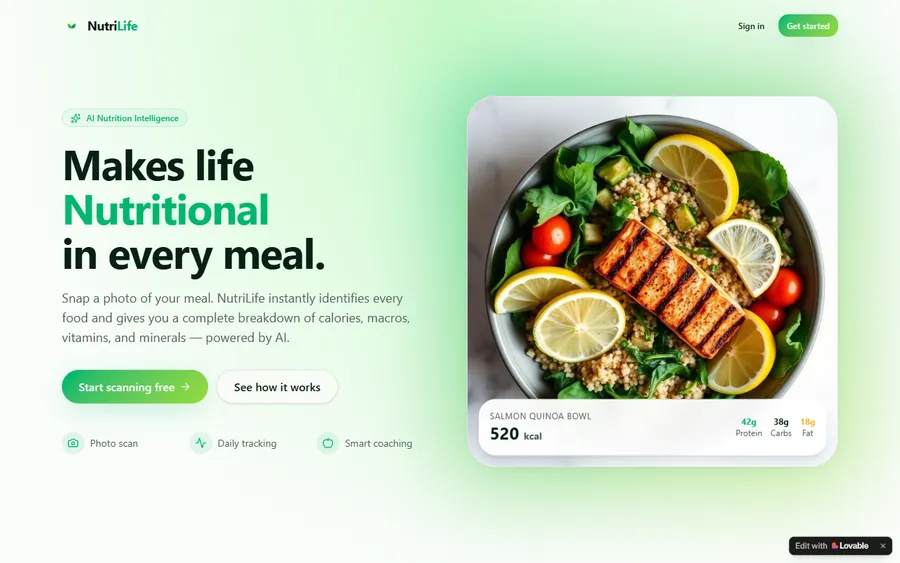
An AI nutrition coach that reads what you eat and works you toward a target.
AI and ML
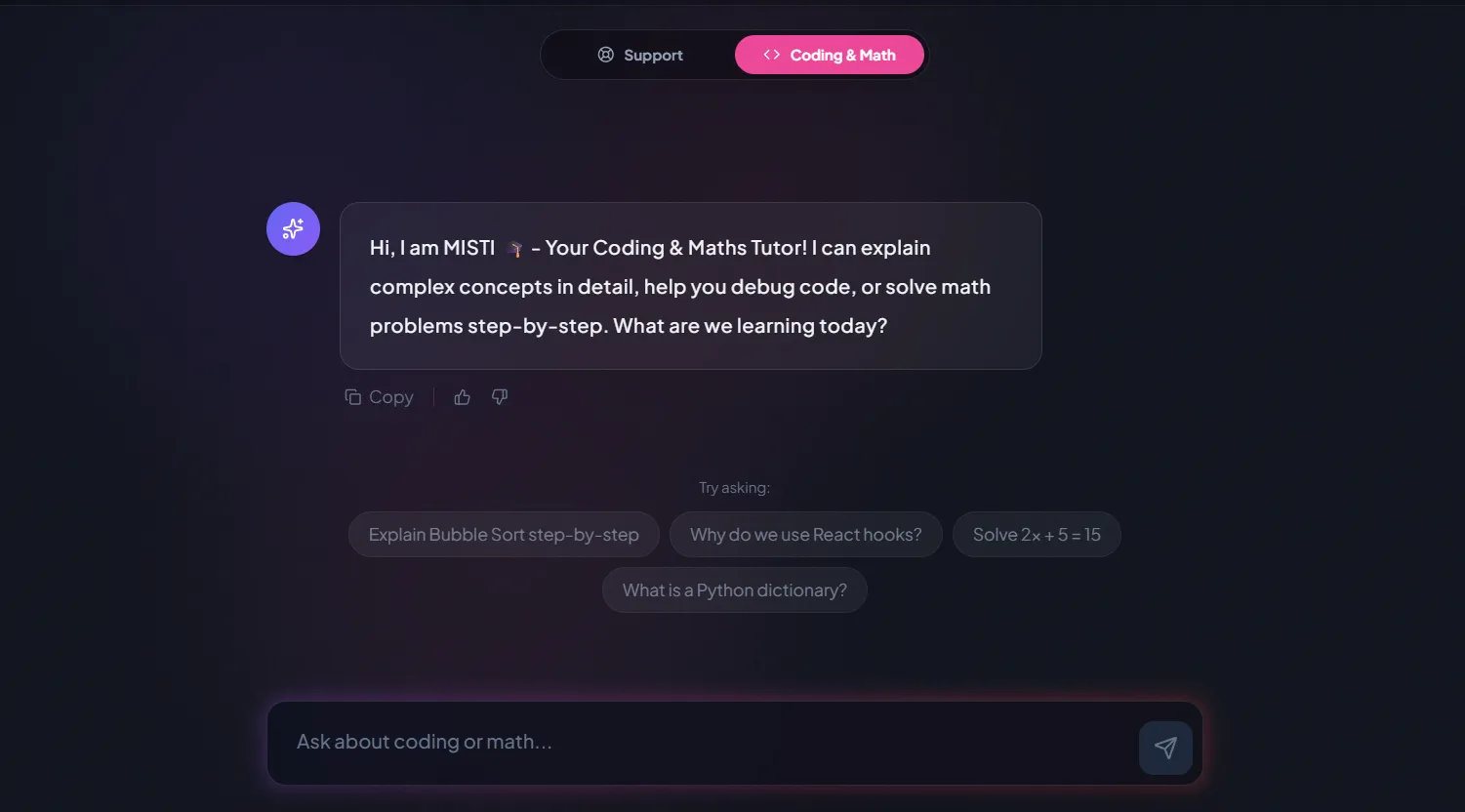
A chatbot that answers mathematics and programming questions, built and deployed by a student.
AI and ML
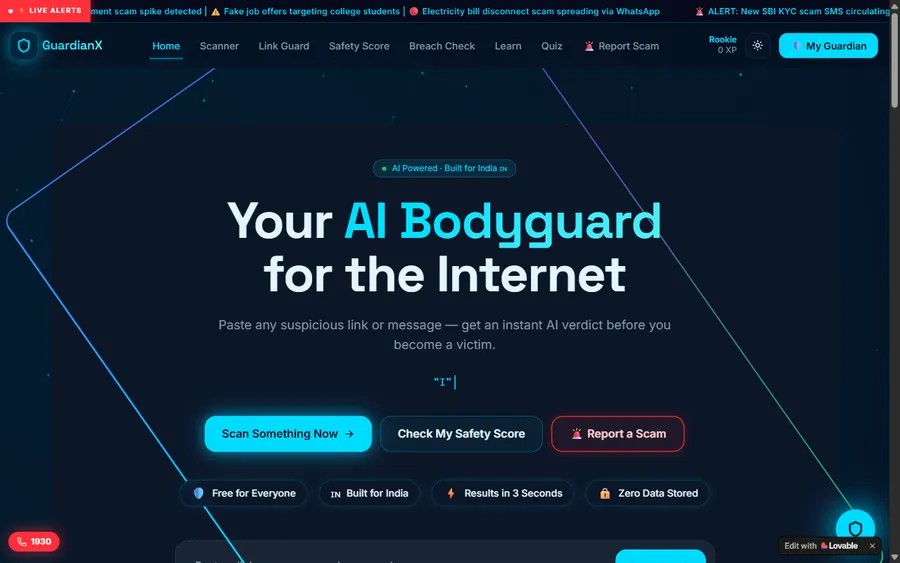
An assistant that helps a young person recognise unsafe situations online.
Web app
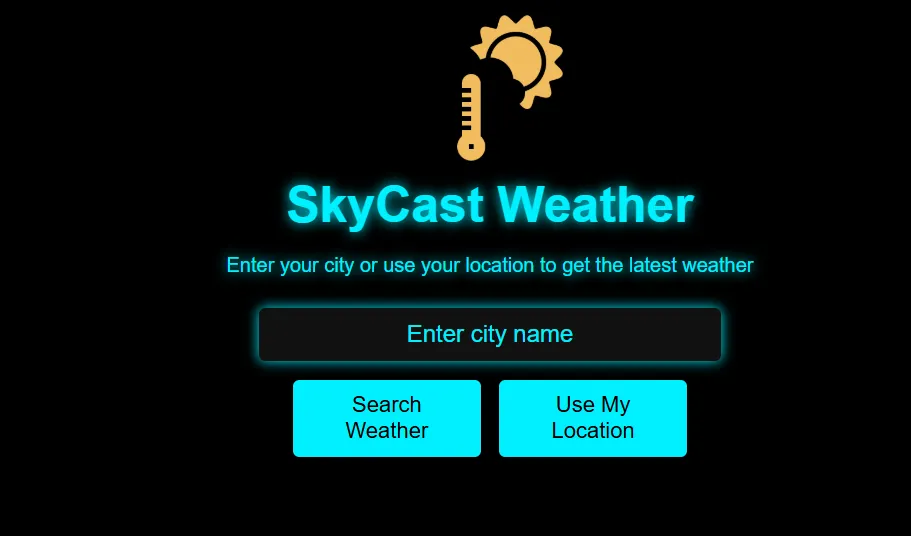
A weather forecasting site with live conditions for any location.
Fees
Billed in US dollars each month, one price for every country outside India, with no registration fee and no contract to sign.
Free first class
USD 0
no card required
Group batch
USD 100
a month, billed in US dollars
One to one
USD 150
a month, billed in US dollars
What families say
Unaltered Google reviews from families and learners.
★★★★★
"The one step solution for my son. Modern Age Coders make learning coding so simple that kids love it. The teachers explain complex concepts clearly with practical exercises and interactive content."
Ria Mukherjee
Parent
★★★★★
"Modern Age Coders has been a game-changer for me. I struggled to grasp IT concepts and coding before joining, but their classes transformed everything. I can now confidently write complex programs with ease."
Samriddha Mondal
Student
★★★★★
"One of the most wonderful education centres out there. Education is not limited to school syllabus but focuses on skill development."
Vansh Agarwal
Student
★★★★★
"My child Dhairya is really enjoying the Modern Age Coders classes. This is his first online class and he eagerly looks forward to it. I can already see his improvement, and the teachers are very cooperative."
Sonam Oswal
Parent of Dhairya
★★★★★
"Modern Age Coders have wonderful teachers who teach in a clear, easy and practical way. The teacher boosts students' confidence and inspires them to learn without hesitation."
Sonu Goyal
Parent
★★★★★
"I highly recommend this computer coding class! The teachers are incredibly knowledgeable and passionate about coding."
Ritu Kedia
Parent
Bristol maths questions
The first lesson is free. Ongoing lessons cost USD 100 a month in a class of five to ten learners at the same level, or USD 150 a month for private lessons. You pay no registration fee and can stop whenever you like.
It is a straight line drawn through a scatter graph so that it follows the general trend of the points as closely as possible. It can be used to estimate values inside the range of the data, but predictions outside that range are unreliable.
For most learners, yes, as long as the lesson is live and the tutor sees the learner's working as it is written. Our tutors use a shared board and step in at the first wrong line.
Yes. Learners of any age join our GCSE course to resit. We begin by working out which topics are secure and then focus where it will help the result most.
Yes, all three, at foundation and higher tier. We also teach the IGCSE papers.
Yes. Our primary course covers all of KS2, from the times tables of the Year 4 check to the reasoning questions that Year 6 SATs maths is built around.
Yes, online, alongside A level Maths, for learners who want the extra pure, statistics and mechanics content.
Start with something they can already do, then move forward in small steps they can explain. Anxiety eases when a child understands why a method works, which is why our lessons always explain before they drill.
No. We describe their public pages so families know about them, but we have no connection with either, or with any Bristol school.
No. We teach carefully and report progress honestly, but no tutor can guarantee an exam result.
Next pages
Maths pages by stage, our Bristol coding page and other city maths pages.
Our national GCSE maths page.
Sixth form maths, explained.
Classes for adult learners across the UK.
Our Bristol coding and AI page.
Our London maths page and its sampling project.
All our UK pages in one place.
Start here
Give us the learner's age or school year, any exam board, and the topic that feels hardest. The first lesson is a proper lesson, and afterwards we tell you plainly where the learner stands.
Want to look first? See all our courses or how our lessons are taught.
WhatsApp us · +91 91233 66161 · connect@modernagecoders.com
WhatsApp brings the quickest answer. The number has an Indian code because the team is in India; we have no Bristol premises and teach entirely online.
A priority demo is a full class of about 45 to 60 minutes. After the class the mentor sends a written skill report and a personal learning roadmap on WhatsApp. If you enrol, the demo fee is adjusted against your first month's fee. Share your demo Order ID with us on WhatsApp and we take it off.
Book a priority demo