CBM / A1
A level maths
All three strands, with stretch available.
Open the syllabusCambridge · Maths tutors for ages 6 to 67 · Live lessons by video
In the 2021 census, 11,836 Cambridge residents said they usually cycled to work. That was 16.8 per cent of everyone in work, against 2.1 per cent across England. So how much more do Cambridge people cycle? You can honestly say 14.7 percentage points more, or 699 per cent more, or about 8 times as much. Leave out the people who worked from home and the share climbs to 30.8 per cent, and the multiple becomes 10. Every one of those statements is true. Knowing which one a writer chose, and why, is what percentages are really about. This page explains how we teach maths to Cambridge learners from primary school to A level and beyond, with the census as our example.
Maths only, on this page · Primary, GCSE, A level and adults · Unconnected to the University of Cambridge or any school
Maths tuition in Cambridge, briefly
Modern Age Coders teaches maths live online to Cambridge learners aged 6 to 67. For younger children that means number sense, the tables and SATs reasoning. Secondary pupils move from KS3 into GCSE, taught for their own board (AQA, Edexcel or OCR) and tier, or into IGCSE. A level students can reach into Further Maths topics. Grown-ups arrive for GCSE retakes, for statistics, or to stop dreading numbers. A learner may have a teacher to themselves or share a class with between five and ten others at the same point. Our Cambridge project uses the census: 16.8 per cent of Cambridge workers cycled to work against 2.1 per cent in England, which is 14.7 percentage points, or about 8 times as much. The first lesson is free; then it is USD 100 a month for a class place or USD 150 a month for a private teacher.
Where Cambridge learners begin
These three cover most of the enquiries we receive from Cambridge. The rest of our maths courses are listed further down.
CAM / 1
The full A level, with Further Maths topics for students who finish the core early and want harder problems.
Open the syllabus →
CAM / 2
Percentages, ratio and proportion done properly, because they decide more GCSE marks than most families realise.
Open the syllabus →
CAM / 3
Place value, tables and fractions for Years 1 to 6, so that percentages later have something firm to stand on.
Open the syllabus →From six to sixty-seven
The national curriculum for England sets what Cambridge schools teach. Below, the emphasis of our lessons at each point along it.
| Stage | Usual ages | What our lessons stress |
|---|---|---|
| KS1 | 5 to 7 | Number to 100, simple fractions, adding and subtracting with confidence. |
| KS2 | 7 to 11 | Tables for the Year 4 multiplication tables check, fractions to percentages, the Year 6 SATs. |
| KS3 | 11 to 14 | Percentage change, ratio, algebra and the first statistics. |
| GCSE | 14 to 16 | Either tier for the three main boards or IGCSE, with multipliers and percentage change taught as one idea. |
| A level | 16 to 18 | Pure, statistics and mechanics; Further Maths topics for those who want them. |
| Adults | 18 to 67 | Retaking GCSE, statistics for the job, or a fresh start with the basics. |
Most percentage trouble at GCSE begins with fractions at primary school. We teach that a half, 0.5 and 50 per cent are the same amount written three ways, and we keep coming back to it until it is obvious.
Times tables matter too. The Year 4 multiplication tables check is statutory, and a child who knows the tables well finds percentages of amounts far less frightening later.
At KS3 and GCSE we treat percentages as multipliers: an increase of 20 per cent means multiplying by 1.2. That one idea turns a long topic into a short one. At A level the same idea becomes exponential growth and logarithms.
Deeper guides sit on our national pages, one per stage: Further Maths for the keenest sixth formers, A level, GCSE, Years 7 to 9 and Years 3 to 6.
Ages follow the normal English school pattern. Admissions advice is not something we offer.
The Cambridge project
One census table, the same few numbers, and three different but correct answers.
The 2021 census asked people in work how they usually travelled to work. The Office for National Statistics publishes the answers for every local authority through Nomis, in table TS061. Cambridge had 70,596 residents in employment. Of those, 32,113 worked mainly at or from home, 11,836 cycled, 13,485 drove a car or van and 6,858 walked.
Across England the same table counts 26,405,214 people in work, of whom 554,215 cycled. As a share of everyone in work, that is 16.77 per cent for Cambridge and 2.10 per cent for England.
We ranked all 331 local authority districts in England and Wales by the share of workers who cycled. Cambridge came first, and Oxford second at 10.53 per cent. That ranking is our own calculation from the published table.
A warning comes with the data. The census was taken during the pandemic, and the ONS says: "Take care when interpreting areas below regional level since high concentrations of furloughed respondents may have affected the data." Our numbers describe March 2021, not a normal year.
| In employment | Mainly at or from home | Cycled | Cycled, % of all in work | |
|---|---|---|---|---|
| Cambridge | 70,596 | 32,113 | 11,836 | 16.77% |
| England | 26,405,214 | 8,321,252 | 554,215 | 2.10% |
Subtract: 16.77 minus 2.10 is 14.67. That is a difference of 14.67 percentage points, a difference between two percentages.
Divide: 16.77 divided by 2.10 is about 7.99. Cambridge workers cycled about 8 times as often, in proportion, as workers across England.
Percentage change: the Cambridge share is 699 per cent higher than the England share, because (16.77 − 2.10) ÷ 2.10 × 100 is about 699. The DfE content for GCSE asks learners to "compare two quantities using percentages; work with percentages greater than 100%". This is exactly that.
A headline writer wanting drama picks 699 per cent; a cautious one picks 14.7 points. Neither is lying. A good reader asks which was chosen.
Counts come from census table TS061 on Nomis, the ONS labour market and census service, downloaded on the first of October 2026 under the Open Government Licence. Caveat quoted from the ONS travel to work bulletin. GCSE wording: DfE, GCSE mathematics subject content.
Percentage of what?
Every percentage is a fraction with a bottom number. In the census that bottom number is a choice, and Cambridge shows why it matters.
Nearly half of Cambridge workers, 45.5 per cent, worked mainly at or from home in March 2021, against 31.5 per cent across England. Those people did not travel at all, so it is reasonable to ask what share of the people who did travel went by bike.
Subtracting the home workers leaves 38,483 Cambridge residents who travelled. Of those, 11,836 cycled, which is 30.76 per cent. For England, 18,083,962 travelled and the cycling share is 3.06 per cent.
On this base Cambridge cycles about 10 times as much as England, not 8. Nothing about the cyclists changed; only the bottom of the fraction did. Cambridge still comes first of the 331 districts on this measure, with Oxford second at 17.20 per cent.
The same trick works on cars. Driving a car or van was 19.10 per cent of all Cambridge workers but 35.04 per cent of those who travelled. In England the figures were 44.51 and 64.99. Whichever base you use, say which one it is.
| Base | Cambridge | England | Cambridge as a multiple |
|---|---|---|---|
| Everyone in employment | 16.77% | 2.10% | 7.99 times |
| Those not working mainly from home | 30.76% | 3.06% | 10.04 times |
| Stage | Question | Skill |
|---|---|---|
| KS2 | What fraction of Cambridge workers cycled, roughly? | Fractions and percentages of amounts |
| KS3 | How many percentage points higher is Cambridge? | Percentage points versus per cent |
| GCSE | By what percentage is the share higher? | Percentage change, values above 100% |
| A level | How uncertain is a share measured in a pandemic? | Sampling, bias and judgement |
For England and Wales together the ONS reports that "569,000 (2.0%) travelled by bicycle". Our England-only figures come from the same table and are not added to anything to recreate that total. The subtraction of home workers and every percentage on this page are Modern Age Coders calculations.
Maths in Cambridge
Cambridge is unusually rich in public maths. Here is what a family may come across; we run none of it.
The NCETM names Cambourne Village College and Comberton Village College as the joint lead schools of the Cambridge Maths Hub, which supports maths teaching in schools rather than individual pupils.
Based in the University of Cambridge, the project describes itself as "a maths education and outreach initiative for ages 3 to 19 and the general public". Its programmes include the NRICH website and Plus online mathematics magazine.
Many Cambridge secondary schools enter pupils for the UK Mathematics Trust challenges. Our maths challenges page and Olympiad for Girls page explain how we help.
NRICH is free and full of rich problems, and we encourage learners to use it between lessons. A child who enjoys our census project will find similar thinking there.
National competitions, sorted by the age they suit, are on our calendar page.
Lessons are live online, so a learner in Chesterton, Cherry Hinton, Trumpington or Arbury joins from home. Because we sort learners by level rather than location, the rest of the class might be in Luton or Leeds.
University entry is outside what we do here; the maths a learner needs is the same whichever path they choose afterwards.
Sources: NCETM, Cambridge Maths Hub; Millennium Mathematics Project. Both read on 1 October 2026. None of these organisations is connected with Modern Age Coders: not the NCETM or its hubs, not the University of Cambridge or its outreach projects, and not the UKMT.
For adult learners
Adults are a large part of our Cambridge enquiries: GCSE resits, statistics for a new job, or the wish to finally understand percentages.
We reteach GCSE from the topics you find hardest. A college or exam centre takes the entry; the preparation is ours.
Reports full of percentages and percentage points, read critically. See also our Functional Skills maths page.
Parents learn the methods schools use now, so homework help backs up the teacher rather than confusing the child.
The cycling project lands well with adults, because the same numbers appear in news stories, and seeing three honest versions of one fact changes how a headline reads. Our adult maths page says more.
The road to percentages
A learner can start on any step. The free lesson tells us which.
| Typical years | Step | Ready to go on when they |
|---|---|---|
| Years 2 to 4 | 1. Fractions | Find a half, a quarter and a tenth of an amount |
| Years 5 to 7 | 2. Percentages | Switch between fractions, decimals and percentages without a calculator |
| Years 8 to 10 | 3. Multipliers | Use 1.2 for a 20 per cent rise and 0.8 for a 20 per cent fall |
| Years 11 to 13 | 4. Bases and change | Explain the difference between points and per cent, and choose a base |
Learners who join in Year 11 can still make real progress. We check fractions and decimals first, since most percentage errors start there.
If more needs repair than the time allows, we will be honest about it after the free lesson.
A natural next step is to rank all 331 districts in a few lines of Python on our maths through coding course. Others prefer to go deeper into data with statistics and probability.
Those drawn to proof tend to move on to Further Maths topics.
All maths courses
UK families most often look for GCSE, A level, 11 plus and IGCSE courses, so those come first. Open a card to read the syllabus.
CBM / A1
All three strands, with stretch available.
Open the syllabusCBM / A2
Both tiers, all major boards.
Open the syllabusCBM / A3
For families sitting selective tests.
Open the syllabusCBM / A4
International papers, taught in full.
Open the syllabusCBM / B1
The whole of KS1 and KS2.
Open the syllabusCBM / B2
Counting and shape for six and seven year olds.
Open the syllabusCBM / B3
Fluent arithmetic without paper.
Open the syllabusCBM / B4
A hands-on way into number.
Open the syllabusCBM / C1
Percentages, ratio and algebra for Years 7 to 9.
Open the syllabusCBM / C2
For UKMT and olympiad-style problems.
Open the syllabusCBM / C3
Reading data with a critical eye.
Open the syllabusCBM / C4
Algebra rebuilt step by step.
Open the syllabusCBM / D1
Calculus, linear algebra, proof.
Open the syllabusCBM / D2
Statistics for analytical work.
Open the syllabusCBM / D3
Percentages, interest and growth.
Open the syllabusCBM / D4
Speed methods for arithmetic.
Open the syllabusLesson schedule
Our teachers are in India, which sits five and a half hours ahead of Cambridge in winter and four and a half once the UK clocks go forward. We give every time in UK time.
After school
Primary pupils and Years 7 to 9.
Evenings
GCSE, sixth form and adult learners.
Weekend mornings
All ages and levels.
The same teacher each week, who remembers what went wrong last time.
A short update after lessons on progress and next steps.
Learners at the same level, so the pace fits.
Real tables alongside exam papers.
For an exam soon or one stubborn topic.
Every method is explained before it is practised.
Student work
Four things made by students who once started with data questions like this one. The student labs show plenty more.
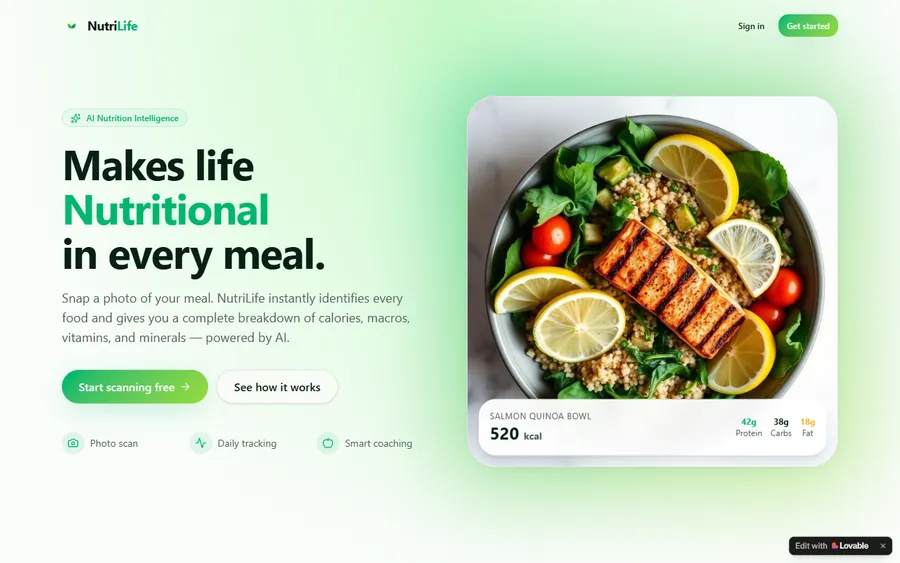
AI and ML
An AI nutrition coach that reads what you eat and works you toward a target.
AI and ML
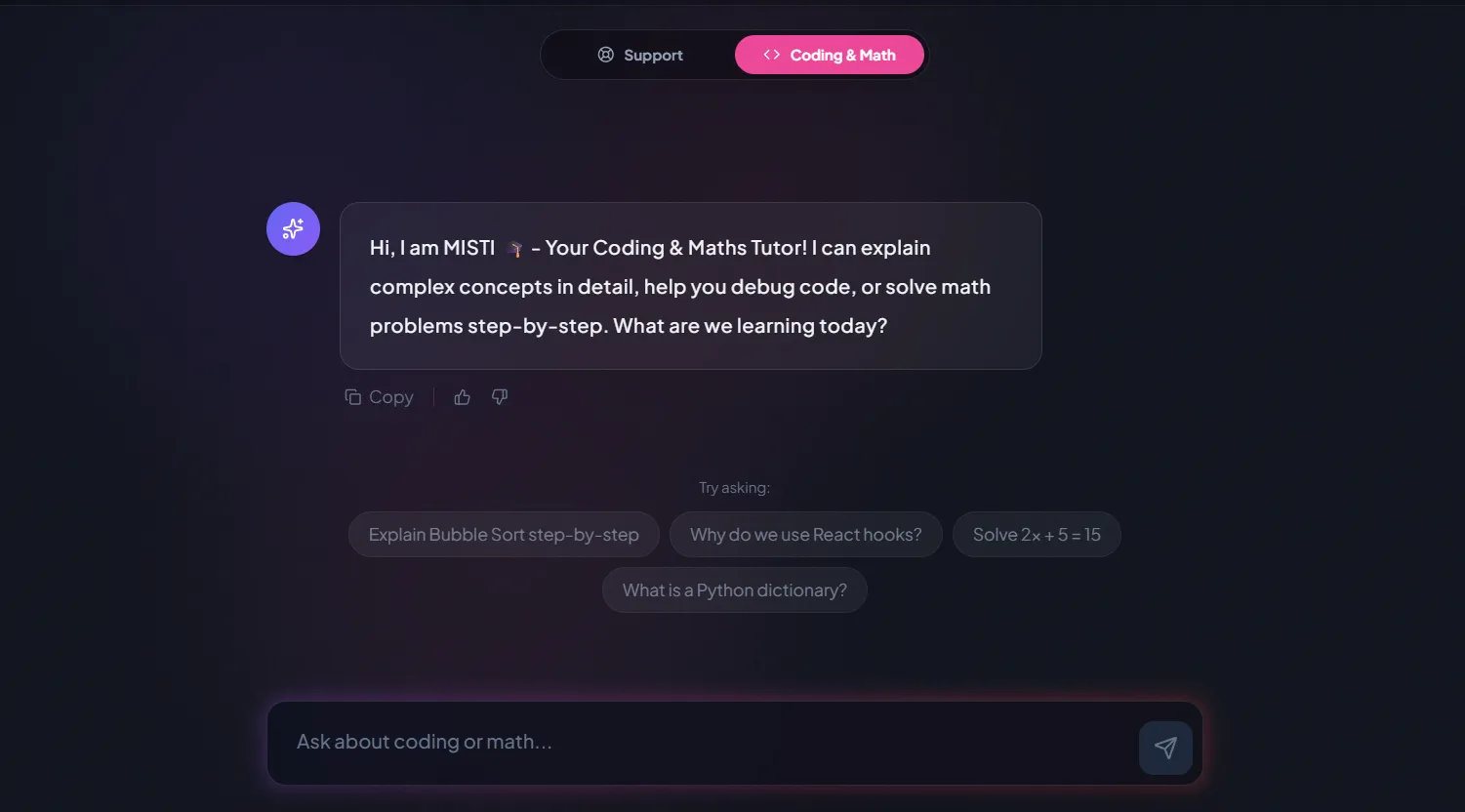
A chatbot that answers mathematics and programming questions, built and deployed by a student.

AI and ML
An assistant that helps a young person recognise unsafe situations online.
Web app
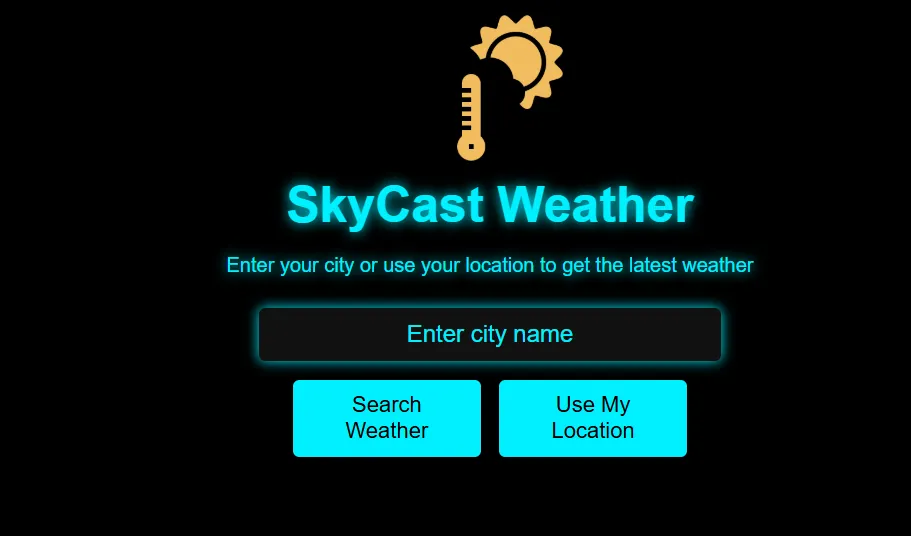
A weather forecasting site with live conditions for any location.
Fees
Monthly, in US dollars, at one price for everywhere outside India. No registration fee and no minimum term.
Free first class
USD 0
no card required
Group batch
USD 100
a month, billed in US dollars
One to one
USD 150
a month, billed in US dollars
What families say
Reviews posted on our Google profile, exactly as families and learners wrote them.
★★★★★
"The one step solution for my son. Modern Age Coders make learning coding so simple that kids love it. The teachers explain complex concepts clearly with practical exercises and interactive content."
Ria Mukherjee
Parent
★★★★★
"Modern Age Coders has been a game-changer for me. I struggled to grasp IT concepts and coding before joining, but their classes transformed everything. I can now confidently write complex programs with ease."
Samriddha Mondal
Student
★★★★★
"One of the most wonderful education centres out there. Education is not limited to school syllabus but focuses on skill development."
Vansh Agarwal
Student
★★★★★
"My child Dhairya is really enjoying the Modern Age Coders classes. This is his first online class and he eagerly looks forward to it. I can already see his improvement, and the teachers are very cooperative."
Sonam Oswal
Parent of Dhairya
★★★★★
"Modern Age Coders have wonderful teachers who teach in a clear, easy and practical way. The teacher boosts students' confidence and inspires them to learn without hesitation."
Sonu Goyal
Parent
★★★★★
"I highly recommend this computer coding class! The teachers are incredibly knowledgeable and passionate about coding."
Ritu Kedia
Parent
Cambridge maths questions
A percentage point is the gap between two percentages, found by subtracting. A per cent change compares that gap with the starting value. Going from 2.10% to 16.77% is 14.67 percentage points, or a rise of about 699 per cent.
The first lesson is free. After that a place in a class of five to ten is USD 100 a month and one to one lessons are USD 150 a month, with no joining fee.
Yes, as an extension of our A level course. Students who are secure in the core can work on Further Maths topics with the same teacher. Tell us the board when booking.
AQA, Edexcel and OCR at both tiers, plus IGCSE. We teach to the specification the school uses.
Certainly. Plenty of Cambridge adults retake GCSE maths with us, often for a training course or job. The work starts wherever your confidence runs out, and the exam itself is entered through a local college or exam centre.
Yes, from the Year 4 multiplication tables check through to the Year 6 SATs papers.
No. We teach school and A level maths and general problem solving. We do not prepare students for admissions tests or advise on applications.
Think of a percentage as a multiplier. A 15 per cent increase means multiplying by 1.15, and a 15 per cent decrease by 0.85. It removes most of the confusion.
No. All lessons are live online with a teacher, which suits learners anywhere in and around the city.
Grades depend on the learner and the day, so we never guarantee one. What we commit to is good teaching and plain reporting.
Related
Our Further Maths and A level pages, the Cambridge coding page and Oxford maths.
Our national page for keen sixth formers.
Pure, statistics and mechanics.
Years 7 to 9, where percentages take hold.
Our coding page for the city.
Second on cycling, with a probability project.
All of our UK pages.
Start here
Let us know the age or year group and the topic that is causing trouble. The trial is a real lesson, after which we give you a clear, honest view of where the learner is.
Prefer to explore first? See the full course list and our approach to teaching.
WhatsApp us · +91 91233 66161 · connect@modernagecoders.com
The fastest reply comes on WhatsApp. Our number starts with India's code because the teachers are there; there is no Cambridge office and lessons are online only.
A priority demo is a full class of about 45 to 60 minutes. After the class the mentor sends a written skill report and a personal learning roadmap on WhatsApp. If you enrol, the demo fee is adjusted against your first month's fee. Share your demo Order ID with us on WhatsApp and we take it off.
Book a priority demo