MTL / A1
Number for beginners
Counting, sorting and shapes for young children.
Open the syllabusLiverpool · Maths at any age from 6 to 67 · Taught live online, in groups or one to one
The water at Liverpool rises and falls twice a day, and in September 2026 the Environment Agency's gauge recorded it every fifteen minutes. Across 54 gaps between one high water and the next, the average was 12 hours 25.6 minutes. That number, and the shape of the rise between, is A level trigonometry wearing a coat: a cosine curve with an amplitude, a period and a midline. We fitted one. On a big spring tide it stayed within a metre of the truth all cycle. A week later, on a small neap tide, the same curve was wrong by more than six metres. This page explains how we teach maths to Liverpool learners from primary school to adulthood, and uses the tide to show what a model can and cannot do.
Maths only on this page · Primary, secondary, sixth form and adults · Unconnected to any Liverpool school or university
In short
Liverpool learners aged 6 to 67 can take live online maths with us, at every level: KS2 maths and the Year 6 papers, KS3, GCSE at Foundation or Higher tier on AQA, Edexcel or OCR, A level Maths with Further Maths, and adult maths from refreshers to GCSE resits. Classes run with five to ten learners matched by level, or privately for one learner. Our Liverpool example is the tide: from 2,766 Environment Agency readings in September 2026, the average time from one high water to the next was 12 hours 25.6 minutes, and a single cosine curve tracked a spring tide to within 0.948 metres but missed a neap tide by up to 6.44 metres. Lesson one is on us. From then on, a group seat runs to USD 100 monthly and individual tuition to USD 150 monthly.
A good first course for most Liverpool learners
Choose by stage. The longer list, from early number to university maths, is below.

LPL / 1
Place value, fractions and times, including the clock arithmetic a tide table needs, taught until it is automatic.
Open the syllabus →
LPL / 2
Whichever of the three English boards the school uses, at either tier, with trig graphs tied to real measurements.
Open the syllabus →
LPL / 3
Trigonometric functions, calculus and statistics, finally applied to something that repeats, like the tide.
Open the syllabus →Every age
Liverpool schools follow the national curriculum for England. Here is how the stages run, and what our lessons emphasise at each one.
| Stage | Usual ages | Our emphasis |
|---|---|---|
| Key Stage 1 | 5 to 7 | Counting, number bonds to 20, money and o'clock and half past times. |
| Key Stage 2 | 7 to 11 | Times tables, the four written methods, fractions, and working out durations across midnight. |
| Key Stage 3 | 11 to 14 | Algebra, ratio, graphs of real situations, and the first trigonometry with right-angled triangles. |
| GCSE | 14 to 16 | Foundation or Higher on any of the three English boards, including trigonometric graphs at Higher tier. |
| A level | 16 to 18 | Pure, statistics and mechanics; Further Maths for learners who want complex numbers, matrices and more proof. |
| Adults | 18 to 67 | Refreshing old skills, a GCSE resit, maths for a course or a job, or helping a child. |
Working out how long it is from 9:45 in the evening to 10:10 the next morning trips up plenty of adults, let alone ten year olds. It needs place value in base 60 and base 24 at once. We teach it with number lines and with real timetables, and the tide gives a natural one: add 12 hours 25 minutes and see where you land.
By Year 6, learners should be able to solve a problem in several steps and explain each one. That is the habit we build from the start.
From Year 7 we treat graphs as pictures of real things changing: water rising, money growing, a car slowing. At GCSE we teach to the school's board and tier, and Higher-tier students meet the graph of a cosine. At A level the DfE content asks students to "Understand and use the sine, cosine and tangent functions; their graphs, symmetries and periodicity".
Our national pages explain each stage further: KS2, KS3, GCSE, A level and Further Maths.
Source: DfE, GCE AS and A level subject content for mathematics, item E3, read on 1 October 2026. The ages are typical for each stage.
The Liverpool project
The Environment Agency publishes live readings from a tide gauge it labels Liverpool. We took every reading for September 2026 and asked how regular the tide really is.
From midnight on 2 September to 20:45 on 30 September, in UTC, the gauge gave 2,766 readings, almost all exactly fifteen minutes apart. Each is a height in metres on the gauge's own scale, so we only ever compare readings with each other, never with a height quoted elsewhere.
We called a reading a high water if nothing within three hours either side was higher, and a low water the same way round. That found 55 of each. The biggest range from a high water to the next low was 8.832 metres, around the spring tide of 13 September. The smallest was 2.513 metres, on 20 September, a week later.
The time from one high water to the next averaged 745.6 minutes, which is 12 hours 25.6 minutes. The shortest gap we measured was 12 hours exactly and the longest 13 hours 15 minutes. Readings come every fifteen minutes, so every time we quote can be up to about seven minutes out, and we say so to students.
That 12 hours 25 minutes is why the tide is roughly fifty minutes later each day: two tides take about 24 hours 50 minutes. A primary learner can check it with nothing more than addition, and the data agree.
| Measure | Value | Stage that uses it |
|---|---|---|
| Readings used | 2,766 | Any: counting and checking a data set |
| High waters found | 55 | KS3: defining a maximum carefully |
| Average high-to-high gap | 12 h 25.6 min | KS2: time arithmetic |
| Largest range | 8.832 m | KS3: difference and scale |
| Smallest range | 2.513 m | GCSE: ratio of spring to neap |
| Average time rising | 5 h 38 min | GCSE: why the curve is not symmetrical |
| Average time falling | 6 h 48 min | A level: refining a model |
The last two rows are a surprise for most students. A perfect wave would rise and fall in equal times. At this gauge, in this month, the water came up in about 5 hours 38 minutes on average and took about 6 hours 48 minutes to go down. The model we try next cannot see that difference, which is one reason it goes wrong.
Data: Environment Agency real-time flood-monitoring API, station E70124 (Liverpool), 15-minute tidal level readings, retrieved 1 October 2026, Open Government Licence. These are recent readings, not a checked archive. All derived figures are Modern Age Coders' calculations, and this page is not a tide table: never use it for safety on or near the water.
From the rule of twelfths to A level trigonometry
Sailors have long used a rough rule for how the tide rises hour by hour. A level students can do better with a cosine. Both are models, and both can be tested against the readings.
The traditional rule says that over the six parts of a rising tide the water climbs 1, 2, 3, 3, 2 and 1 twelfths of its range. It is a lovely piece of fraction work for KS3: the parts must add to twelve twelfths, and the middle of the rise is the fastest.
We split each of the 54 rising tides into six equal parts of its own length and averaged. The water rose 0.77, 2.32, 3.27, 3.02, 1.94 and 0.68 twelfths. So the rule is close, but the real tide starts more slowly, rushes harder in the third part, and by halfway has already done 53.0% of its rising, not 50%.
An A level model of height h after t hours is h = d + a cos(2πt ÷ T). For the spring tide that began at high water on 13 September, the amplitude a is half the range, 4.416 metres; the midline d is 5.368 metres; and T is the measured period of 12.426 hours.
Over the next 48 readings the curve was off by 0.348 metres on average and never by more than 0.948 metres. For three numbers and one function, that is good. Then we kept the same amplitude and started it at the neap high water of 20 September. It missed by up to 6.44 metres, because a neap tide has a far smaller range.
| Sixth | Rule of twelfths | Pure cosine | Liverpool, Sept 2026 |
|---|---|---|---|
| 1st | 1 | 0.80 | 0.77 |
| 2nd | 2 | 2.20 | 2.32 |
| 3rd | 3 | 3.00 | 3.27 |
| 4th | 3 | 3.00 | 3.02 |
| 5th | 2 | 2.20 | 1.94 |
| 6th | 1 | 0.80 | 0.68 |
The DfE content asks A level students to "Understand that a mathematical model can be refined by considering its outputs and simplifying assumptions; evaluate whether the model is appropriate". Here the outputs say exactly what to refine: let the amplitude change over a fortnight, and let the rise be quicker than the fall. Students who make those changes have done real modelling, not a textbook exercise.
Timing works in a similar way. Predicting each high water as the previous one plus 12 hours 25 minutes, 41 of the 54 predictions landed within fifteen minutes of the measured time. The average miss was 12.8 minutes and the worst was 50 minutes, which shows that even the timing drifts more than a single number suggests.
Wording: DfE, GCE AS and A level subject content for mathematics, item OT3.4. The rule of twelfths is a traditional approximation, not an official standard. All fitted values and errors are our calculations from the gauge readings.
Beyond our lessons
There is plenty of maths on offer in Liverpool that has nothing to do with us. These are the parts we confirmed on public pages.
The NCETM lists Liverpool, Knowsley, Sefton, St Helens and Wigan as its council areas, and names St Mary and St Thomas Primary School, St Helens, as lead school. It works with teachers and schools rather than families.
The university describes it as "a group of staff and students committed to providing interactive and enriching mathematics to school pupils from Year 1 up to Year 13", typically visiting schools on 70 to 80 days a year.
Its page says "The roadshow offers a choice of over 300 Maths activities to entertain and educate pupils." The team reports reaching between 8,000 and 10,000 pupils each academic year.
School visits and university activities are booked by schools, so a learner who would like to take part should mention it to a maths teacher. The Department of Mathematical Sciences, based in its Mathematical Sciences Building, also lists summer project topics, from the geometry of complex functions to computer-assisted proofs.
For national competition, schools enter the UK Mathematics Trust challenges at Junior, Intermediate and Senior level. Our competitions calendar gives the dates, and the olympiad page says how we prepare learners for the later rounds.
Our own lessons are live online, so a learner in Anfield, Allerton or Walton joins from home. We group by level rather than by area, which means classmates may log in from Manchester, Leeds or further away.
Wirral families preparing for the eleven plus will find our Wirral 11 plus maths page more useful than this one, which covers maths in general rather than the test.
Sources: NCETM, North West Three Maths Hub; University of Liverpool, Maths Outreach team; UK Mathematics Trust. All read on 1 October 2026. Modern Age Coders has no connection with any of these organisations or with any Liverpool school.
For adults
Many adults who contact us were told at school that they were not maths people. Most of them were simply taught too fast.
Number, fractions and percentages from the beginning, explained rather than recited, with room to ask the questions that felt silly at fifteen.
For a course, an apprenticeship or a job that asks for the grade. The GCSE course we use is built to include resit candidates at either tier.
Budgets, rates, rotas and charts. See our adult maths page and our Functional Skills page.
Adults tend to enjoy the tide project because it is so concrete. Anyone who has walked along the waterfront has seen the river at very different heights, and working out why the times shift by nearly an hour a day turns a vague memory into a calculation they can do themselves.
The sequence
Each step rests on the one below it. Learners join where they fit, and the trial lesson shows us where that is.
| Usually | Step | Secure when the learner can |
|---|---|---|
| Years 3 to 6 | 1. Time and number | Add hours and minutes across midnight without a calculator |
| Years 6 to 8 | 2. Fractions of a whole | Split a quantity into twelfths and check that the parts add up |
| Years 9 to 11 | 3. Graphs and trigonometry | Sketch a cosine graph and read its period and amplitude |
| Years 12 and 13 | 4. Modelling | Fit a model to data, measure its errors and propose a better one |
Joining in Year 11 or Year 6 still pays off, as long as we repair number skills first. Weak arithmetic quietly costs marks on every paper.
If the gap is bigger than the time left, we tell you so at the free lesson.
Some learners move on to statistics and probability, others to maths through coding, where a short program fits the tide curve automatically.
A few discover they love hard problems and turn to competition maths.
The full list
Grouped by stage. Open a card to read the complete syllabus.
MTL / A1
Counting, sorting and shapes for young children.
Open the syllabusMTL / A2
All of primary maths, with understanding.
Open the syllabusMTL / A3
Confident calculation without paper.
Open the syllabusMTL / A4
From bead frame to mental image.
Open the syllabusMTL / B1
Algebra, ratio and geometry from Year 7.
Open the syllabusMTL / B2
Firm ground for learners who lost the thread.
Open the syllabusMTL / B3
Either tier, AQA, Edexcel or OCR, resits welcome.
Open the syllabusMTL / B4
For international GCSE entries.
Open the syllabusMTL / C1
Calculus, vectors, forces and data.
Open the syllabusMTL / C2
Data, distributions and inference.
Open the syllabusMTL / C3
Support alongside first-year degree modules.
Open the syllabusMTL / C4
Competition-style questions with no set method.
Open the syllabusMTL / D1
Interest, loans and investment.
Open the syllabusMTL / D2
The mathematics behind analysis.
Open the syllabusMTL / D3
Letting a program do the repetitive arithmetic.
Open the syllabusMTL / D4
Fast methods for confident calculators.
Open the syllabusFitting lessons in
Teaching happens from India, which has no daylight saving. So the gap to Liverpool is 5 h 30 min from late October to late March, and 4 h 30 min the rest of the year. All slots are agreed and shown in UK time.
Weekdays from mid-afternoon
After school for younger learners.
Weekday evenings
Sixth formers and working adults.
Weekend mornings
For a calmer start to the week's maths.
The same teacher takes a group each week and knows every learner's slips.
A short note home after lessons on progress and next steps.
Five to ten learners in a group, all at one level.
Tide readings, maps and census tables next to exam practice.
For a stubborn topic, a near exam, or by choice.
Learners explain a method in words before drilling it.
Student work
Learners who began with graphs and numbers built the four projects below. More live in the student labs.
AI and ML
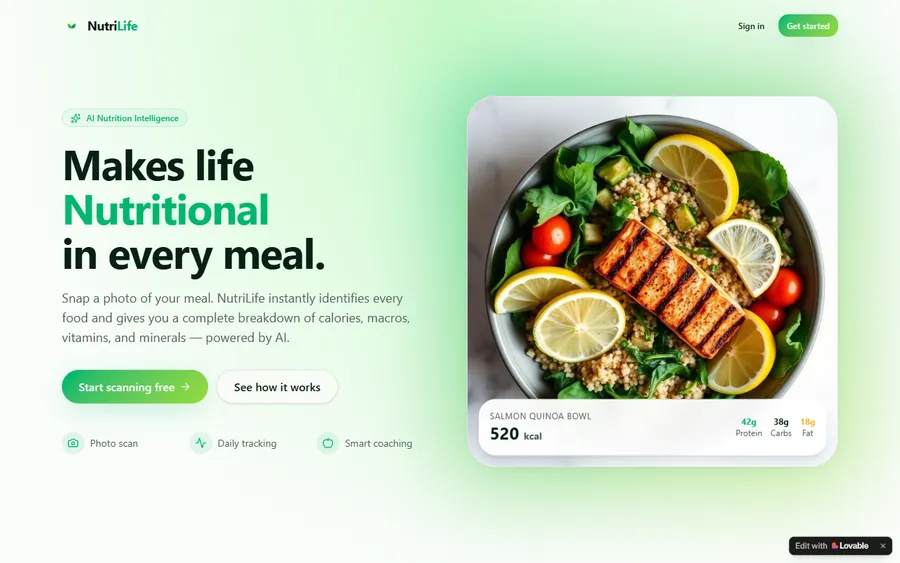
An AI nutrition coach that reads what you eat and works you toward a target.
AI and ML
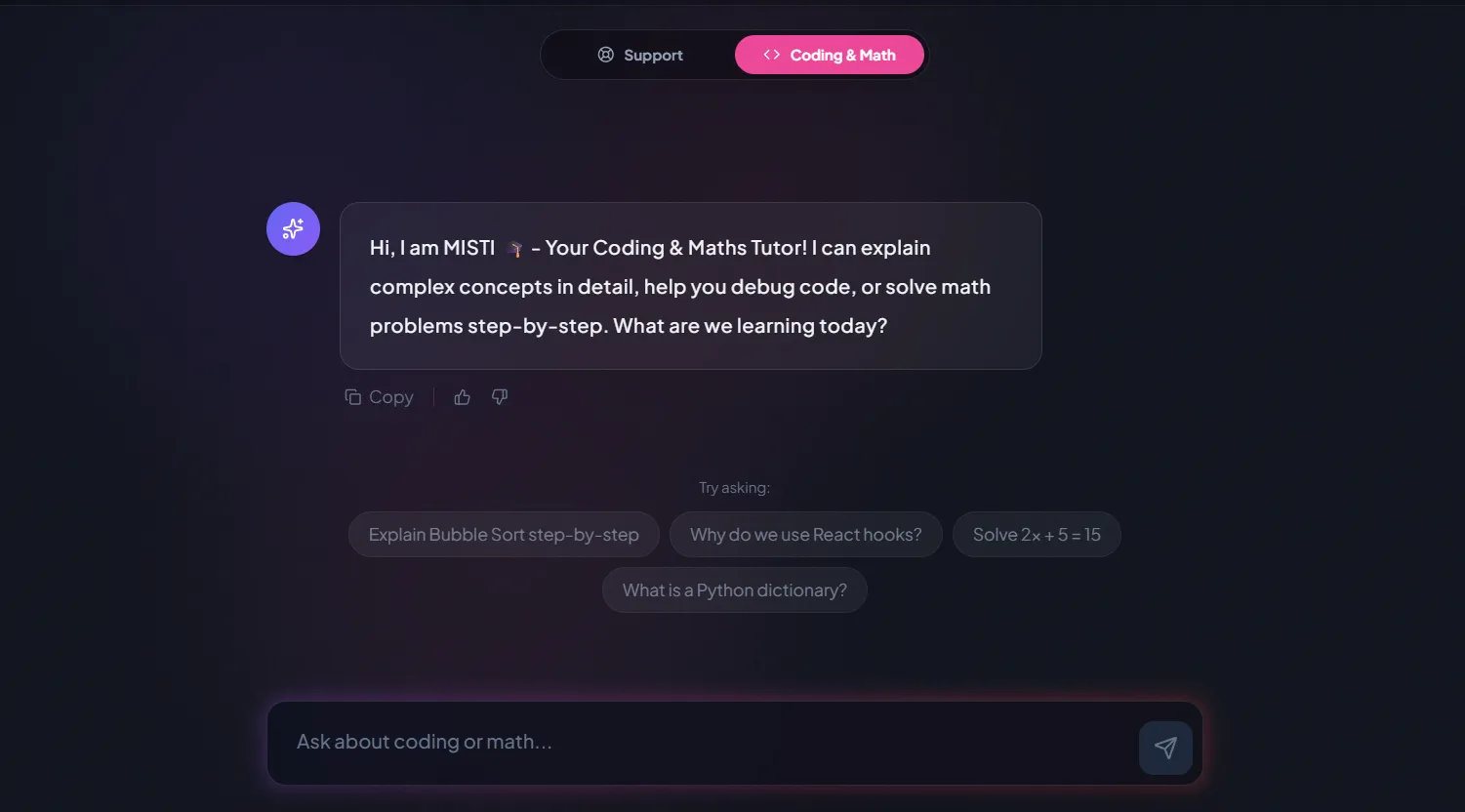
A chatbot that answers mathematics and programming questions, built and deployed by a student.

AI and ML
An assistant that helps a young person recognise unsafe situations online.
Web app
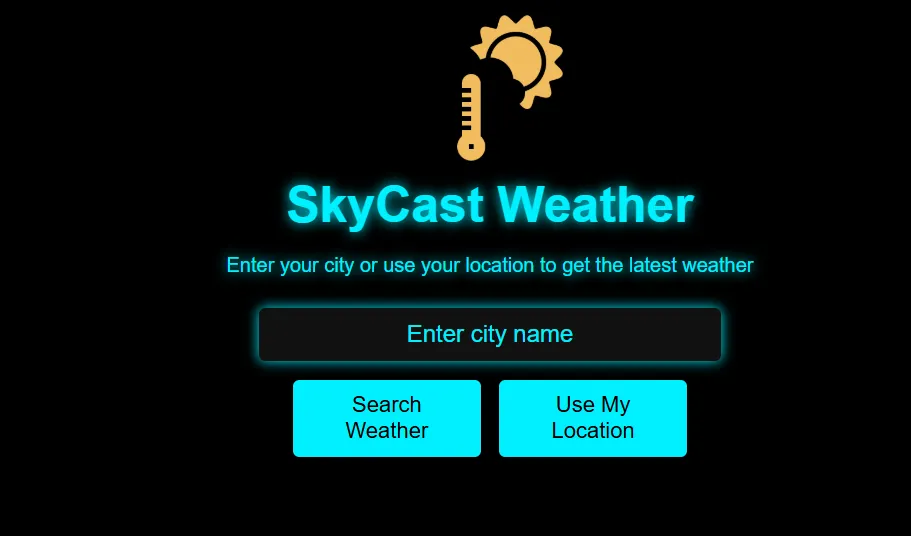
A weather forecasting site with live conditions for any location.
Fees
Monthly, in US dollars, at one rate for every country outside India. No joining fee, no minimum term.
Free first class
USD 0
no card required
Group batch
USD 100
a month, billed in US dollars
One to one
USD 150
a month, billed in US dollars
What families say
Quoted exactly as families and learners wrote them in Google reviews.
★★★★★
"The one step solution for my son. Modern Age Coders make learning coding so simple that kids love it. The teachers explain complex concepts clearly with practical exercises and interactive content."
Ria Mukherjee
Parent
★★★★★
"Modern Age Coders has been a game-changer for me. I struggled to grasp IT concepts and coding before joining, but their classes transformed everything. I can now confidently write complex programs with ease."
Samriddha Mondal
Student
★★★★★
"One of the most wonderful education centres out there. Education is not limited to school syllabus but focuses on skill development."
Vansh Agarwal
Student
★★★★★
"My child Dhairya is really enjoying the Modern Age Coders classes. This is his first online class and he eagerly looks forward to it. I can already see his improvement, and the teachers are very cooperative."
Sonam Oswal
Parent of Dhairya
★★★★★
"Modern Age Coders have wonderful teachers who teach in a clear, easy and practical way. The teacher boosts students' confidence and inspires them to learn without hesitation."
Sonu Goyal
Parent
★★★★★
"I highly recommend this computer coding class! The teachers are incredibly knowledgeable and passionate about coding."
Ritu Kedia
Parent
Liverpool maths questions
The period is the length of one complete cycle before the graph repeats. For cos x in degrees it is 360°. For our tide model it is the time from one high water to the next, which averaged 12 hours 25.6 minutes at the Liverpool gauge in September 2026.
Nothing for the trial. Afterwards, small-group lessons are USD 100 per month and private lessons USD 150 per month, with no registration charge.
Yes. We match lessons to the board and tier your school uses, Foundation or Higher, and we also teach learners who are resitting.
Usually as soon as a learner starts to feel lost, before the gap widens. We teach children from 6 and adults up to 67, so it is never too early or too late.
For most learners, yes. The teacher sees each line of working as it is written and responds immediately. Lessons are live, never recorded, and a group keeps the same teacher.
It is. A level work spans calculus, statistics and forces; Further Maths adds complex numbers, matrices and proof by induction for learners who want the extra subject.
Yes, from first steps to GCSE resits and Functional Skills, in adult groups or privately.
No. Every lesson is live and online, so learners join from home anywhere in the city.
No. No tutor can honestly guarantee a result. We teach thoroughly and give you an honest account of progress each month.
No. Their activities appear here only because families ask about them. Modern Age Coders is a separate, independent tutoring service.
Related
Stage pages, a nearby 11 plus page and our coding page for Liverpool.
Pure, statistics and mechanics in depth.
Years 7 to 9 and the move to GCSE.
For families preparing for the Wirral test.
Our coding page for the city.
A weather data project on correlation.
Our index of UK places and maths pages.
Start here
Send us a school year, or an age, plus whichever topic is causing grief. We teach a full trial lesson and then give you our frank view.
Prefer to explore first? Browse the courses or read how we teach.
WhatsApp us · +91 91233 66161 · connect@modernagecoders.com
For a fast reply, use WhatsApp. The +91 prefix is because our teachers are in India. Nobody works from a Liverpool office; teaching is entirely online.
A priority demo is a full class of about 45 to 60 minutes. After the class the mentor sends a written skill report and a personal learning roadmap on WhatsApp. If you enrol, the demo fee is adjusted against your first month's fee. Share your demo Order ID with us on WhatsApp and we take it off.
Book a priority demo