MLC / A1
KS1 and KS2 maths
All of primary maths, including SATs reasoning.
Open the syllabusLeicester · Maths tutor for ages 6 to 67 · Live online lessons
Draw a bar chart of how far Leicester residents travel to work and one bar towers over the rest: 36,598 people travel between 2 and 5 km. It looks like the most common distance. It is not. That class is three kilometres wide, while the class below it is only two, and once you divide by the width the under 2 km group turns out to be the most crowded part of the chart. Spotting that is exactly what GCSE higher tier asks of a histogram, and it is the kind of reasoning our online maths tutors build with Leicester learners, from times tables in Year 4 to Further Maths and adult refreshers.
A maths page for Leicester · Every age from 6 to 67 · Not connected with any Leicester school, college or university
What is maths tuition in Leicester like with us?
We teach maths live online to Leicester learners from age 6 to 67, in small groups of five to ten at the same level or one to one. That covers primary work (times tables for the Year 4 check and Year 6 SATs maths), KS3 maths, GCSE maths on whichever board a school uses, whether AQA, Edexcel or OCR, at either tier, the IGCSE papers, A level Maths with Further Maths, and adult courses from Functional Skills maths to GCSE maths resits. Lessons use real data as well as past papers. Our Leicester example takes Census 2021 commuting distances and shows why a histogram with unequal class widths needs frequency density, not frequency. The first lesson costs nothing; afterwards it is USD 100 a month for a group place or USD 150 a month for one-to-one lessons.
Where Leicester learners start
Most enquiries from Leicester are about GCSE, primary maths or A level. The full list follows further down.
LEI / 1
Foundation or higher tier on the learner's own board, with histograms and grouped data practised on real numbers.
Open the syllabus →
LEI / 2
Tables for the Year 4 check, then fractions, decimals and the explaining that Year 6 SATs maths rewards.
Open the syllabus →
LEI / 3
Pure maths, mechanics and statistics for Year 12 and 13, with Further Maths open to anyone who wants to go further.
Open the syllabus →From Year 1 to adult
Leicester follows the national curriculum for England, so a Leicester learner meets the same stages, checks and exams as every other English learner. Adults rejoin at whatever level they need.
| Stage | Years | Our main focus |
|---|---|---|
| KS1 | 1 to 2 | Number bonds, counting in steps, place value to 100, simple measures. |
| KS2 | 3 to 6 | Times tables for the Year 4 check, written methods, fractions, decimals and percentages, and SATs reasoning. |
| KS3 | 7 to 9 | Algebra, ratio, angles, probability and the first histograms and averages. |
| GCSE | 10 to 11 | Foundation or higher tier on AQA, Edexcel or OCR, from number to unequal-width histograms. |
| A level | 12 to 13 | Pure maths, statistics and mechanics; Further Maths alongside for learners who want more. |
| Adult | Any | Functional Skills maths, GCSE maths resits and refreshers for work or for helping children. |
Every Year 4 pupil at a state-funded school in England sits the multiplication tables check, Leicester children included. We teach the tables as a web of facts: if 9 × 6 slips away, 10 × 6 take away one six brings it back.
For Year 6 SATs maths we spend most of the time on reasoning, because that is where children lose marks they could have earned. Explaining why a method works is practised every lesson, not saved for the weeks before the test.
KS3 maths is where algebra either clicks or quietly goes wrong, so we teach it slowly and check it often. At GCSE we follow the learner's board and tier; the histogram work on this page is higher tier content on every board.
For more detail, see our pages on KS2 maths tuition, KS3 maths tuition, GCSE maths tuition, A level maths tuition and Further Maths tuition.
Source: gov.uk, multiplication tables check, read 1 October 2026. The year groups for each key stage are the standard ones in England.
The Leicester project
Census 2021 asked every working adult how far they travel to their place of work. For Leicester the answers come in eight distance classes of different widths, which is exactly the situation a histogram is designed for.
| Distance | People | Class width | Frequency density |
|---|---|---|---|
| Less than 2 km | 29,065 | 2 km | 14,532.5 |
| 2 km to less than 5 km | 36,598 | 3 km | 12,199.3 |
| 5 km to less than 10 km | 18,539 | 5 km | 3,707.8 |
| 10 km to less than 20 km | 9,819 | 10 km | 981.9 |
| 20 km to less than 30 km | 5,286 | 10 km | 528.6 |
| 30 km to less than 40 km | 3,555 | 10 km | 355.5 |
| 40 km to less than 60 km | 1,818 | 20 km | 90.9 |
| 60 km and over | 2,399 | Open | Not defined |
The people column comes straight from the census. The frequency density column is our own calculation: people divided by the width of the class, so it is measured in people per kilometre. On a histogram, density goes on the vertical axis and the area of each bar shows how many people are in the class.
Two more groups sit outside the distance classes: 29,530 Leicester residents worked mainly from home, and 18,325 worked offshore, in no fixed place or outside the UK. Adding all ten groups gives 154,934, which matches the published total exactly.
Look at the first two rows. By frequency, 2 to 5 km wins easily, 36,598 against 29,065. By density, under 2 km wins, 14,532.5 against 12,199.3. The second answer is the honest one: commuters are packed more tightly into the first two kilometres than into the next three.
This is why GCSE higher tier insists on frequency density whenever classes are unequal. A bar chart of raw frequencies rewards wide classes for being wide, and the 40 to 60 km class, twenty kilometres across, would look far busier than it really is.
Data: Nomis, Census 2021 table TS058, distance travelled to work, Leicester local authority, read 1 October 2026. Census data: Office for National Statistics, Open Government Licence. Frequency densities and every estimate below are Modern Age Coders' calculations.
Higher tier skills, worked
The DfE content for GCSE maths asks for "histograms with equal and unequal class intervals and cumulative frequency graphs, and know their appropriate use". The Leicester data shows why the last four words matter.
| Estimate | Value | How it is found |
|---|---|---|
| Median distance | 4.0 km | The 53,539.5th person sits in the 2 to 5 km class; interpolating gives 4.006 km. |
| Lower quartile | 1.84 km | A quarter of commuters travel less than this. |
| Upper quartile | 8.95 km | A quarter travel further than this. |
| Within 5 km | 61.3% | The first two classes together, as a share of the 107,079. |
| Mean, open class closed at 80 km | 8.95 km | Using 70 km as that class midpoint. |
| Mean, open class closed at 100 km | 9.18 km | Using 80 km as that class midpoint. |
| Mean, open class closed at 150 km | 9.74 km | Using 105 km as that class midpoint. |
The median needs only the position of the middle person, so the open-ended class at the top makes no difference to it at all. Whatever the 2,399 longest commuters actually travel, the median stays at about 4.0 km.
The quartiles behave the same way. That is why statisticians reach for the median and interquartile range when data has a long tail or an open class, and why a GCSE question will often hint at it.
To estimate a mean you need a midpoint for every class, and "60 km and over" has no top. Close it at 80 km and the mean is 8.95 km; close it at 150 km and the mean rises to 9.74 km. Nothing in the census tells you which is right.
Students who see that a choice they made changed the answer by almost 0.8 km rarely forget it. It is a better lesson about the limits of grouped data than any formula sheet.
At primary level this data becomes a reading and comparing exercise. At KS3 learners turn it into percentages and pie charts. At GCSE they draw the histogram and estimate the median, and at A level they discuss which distribution might fit and how the home workers should be treated.
GCSE wording: DfE, GCSE mathematics subject content. Figures in the table are our calculations from the census counts above.
Maths support around Leicester
Schools in Leicester can draw on the national network of Maths Hubs. Families rarely hear about it, so here is what the public pages say. We are not part of it.
The NCETM page names Beauchamp College, Oadby, Leicestershire as the lead school, and lists Leicester among the council areas the hub works with.
The same hub also covers Rutland, seven Leicestershire districts from Blaby to Oadby and Wigston, and Corby, East Northamptonshire, Kettering and Wellingborough.
Maths Hubs support teachers and schools, for example through teacher development work groups. They do not offer tuition to families, so parents usually see the effect in the classroom.
For competition maths, the UK Mathematics Trust challenges are entered through schools. Our UKMT maths challenge page explains how we prepare learners, and the UK competitions calendar lists dates by age.
We do not run a separate 11 plus page for Leicester. Families who are preparing for a selective school test can still use our 11 plus maths course, which covers the maths of the common test formats.
All our lessons are online, so a learner in Belgrave, Aylestone or Evington joins from home. Groups are formed by level rather than by area, which means a Leicester learner may share a class with someone in Bristol or Glasgow.
Our Leicester coding page covers programming and AI for the city; this page is about maths only.
Source: NCETM, East Midlands South Maths Hub, read 1 October 2026. We have no connection with the NCETM, the hub, Beauchamp College or any Leicester school.
Adults welcome
A good share of our Leicester learners are adults. Some need a maths qualification for a course or a job; others simply want to stop feeling anxious about numbers.
Our GCSE course accepts resit candidates. We find the topics that are really secure first, then fill the gaps in an order that makes each new topic easier than the last.
Everyday and workplace maths at a steady pace: measures, percentages, charts and problem solving. Read more on our Functional Skills maths page.
Fractions, algebra and data for parents, carers and professionals. Our adult maths page has more.
The commuting histogram suits adult learners particularly well. Almost everyone has a commute of their own, and placing yourself in the right bar is a quick way to see what frequency density means in practice.
Steps
This is the order in which we build the ideas on this page. The free lesson tells us where a new learner should start.
| Usually | Step | Secure when the learner can |
|---|---|---|
| Years 3 to 4 | 1. Tables and place value | Recall 12 × 12 facts and rebuild any that slip |
| Years 5 to 7 | 2. Fractions and percentages | Convert between them and compare sizes with a reason |
| Years 8 to 10 | 3. Charts and averages | Choose a sensible diagram and average, and defend the choice |
| Years 10 to 13 | 4. Grouped data | Use frequency density and say what an estimate depends on |
A learner who joins a few months before GCSE can still gain a great deal. We put the topics that carry the most marks and the weakest foundations first.
If the time is too short to close the whole gap, we say so at the free lesson rather than later.
After GCSE many learners take A level Maths, some with Further Maths. Others enjoy our statistics and probability course.
Learners who like computers can rebuild the histogram in Python through maths through coding.
Courses
Grouped by stage, from first numbers to university maths.
MLC / A1
All of primary maths, including SATs reasoning.
Open the syllabusMLC / A2
Fast, reliable arithmetic in the head.
Open the syllabusMLC / A3
Bead-frame arithmetic for younger children.
Open the syllabusMLC / A4
GL-style practice for selective school tests.
Open the syllabusMLC / B1
The three years that decide how GCSE goes.
Open the syllabusMLC / B2
Every board and tier, resits included.
Open the syllabusMLC / B3
International papers, Cambridge or Edexcel.
Open the syllabusMLC / B4
Algebra rebuilt from the start.
Open the syllabusMLC / C1
Pure, statistics and mechanics.
Open the syllabusMLC / C2
Distributions, sampling and testing.
Open the syllabusMLC / C3
For UKMT challenges and olympiad problems.
Open the syllabusMLC / C4
Calculus, matrices and proof.
Open the syllabusMLC / D1
Interest, margins and forecasts.
Open the syllabusMLC / D2
Statistics for analysts and reports.
Open the syllabusMLC / D3
Exploring data and number in Python.
Open the syllabusMLC / D4
Speed techniques for confident calculators.
Open the syllabusWhen lessons run
Teachers are in India, which keeps the same clock all year. In winter India is five and a half hours ahead of Leicester, in summer four and a half, and every slot we offer is written in UK time.
After school on weekdays
For KS2, KS3 and GCSE learners.
Later weekday evenings
For A level students and adults.
Weekend mornings
For learners who prefer a fresh start.
The same teacher each week, who remembers last week's mistakes.
A short honest note on what went well and what needs work.
Five to ten learners at one level, so explanations fit everyone.
Tables such as the commuting one sit next to the past papers.
For a learner who needs a tighter focus or a different pace.
We expect learners to explain a method before drilling it.
Student work
Students who began with data questions like the commuting histogram went on to make the projects below. The student labs show more.
AI and ML
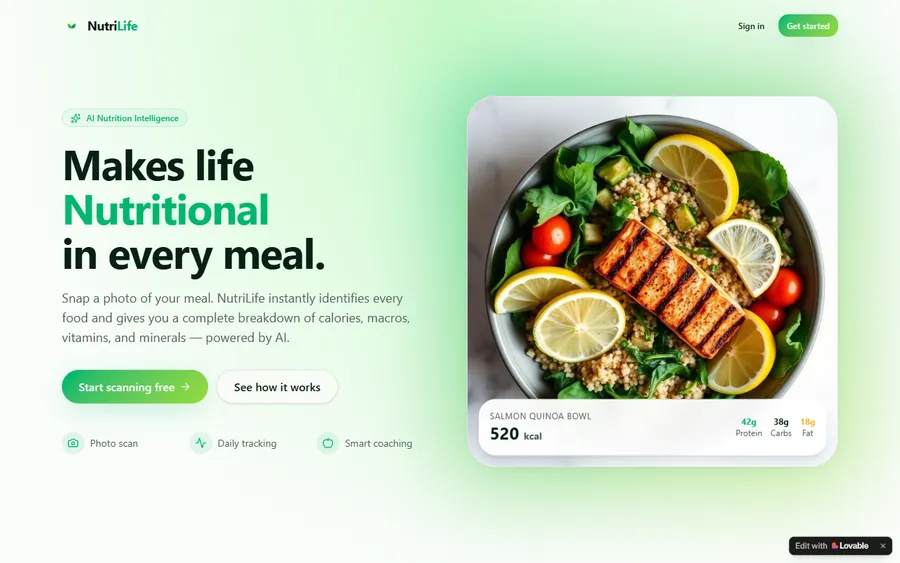
An AI nutrition coach that reads what you eat and works you toward a target.
AI and ML
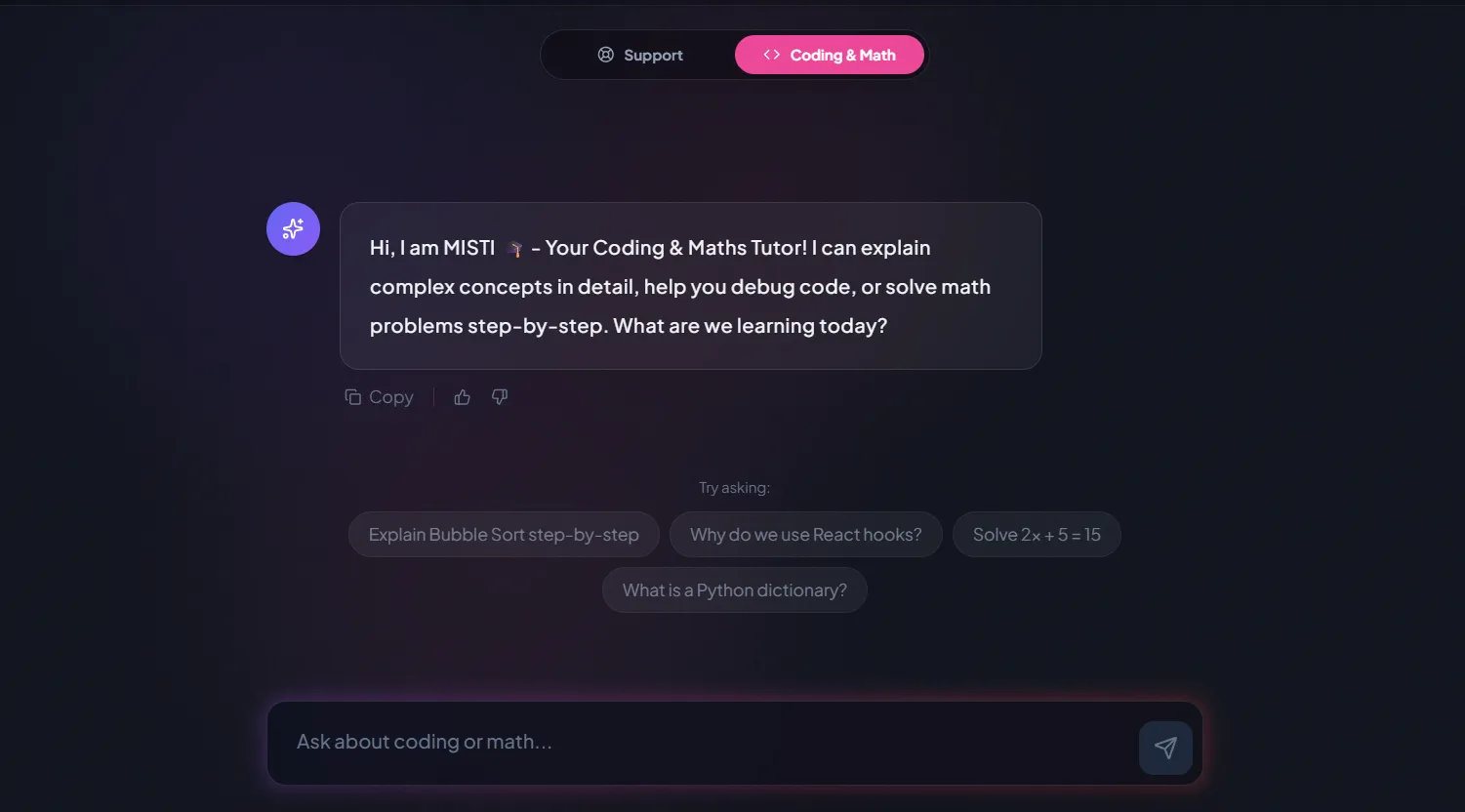
A chatbot that answers mathematics and programming questions, built and deployed by a student.

AI and ML
An assistant that helps a young person recognise unsafe situations online.
Web app
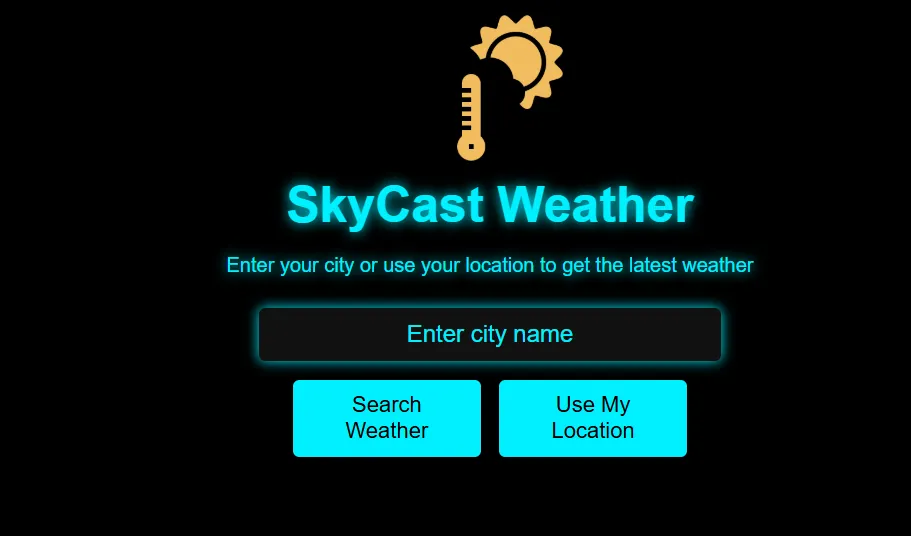
A weather forecasting site with live conditions for any location.
Fees
Paid monthly in US dollars, one price for every country except India, with no sign-up charge and no minimum period.
Free first class
USD 0
no card required
Group batch
USD 100
a month, billed in US dollars
One to one
USD 150
a month, billed in US dollars
What families say
Taken word for word from Google reviews left by families and learners.
★★★★★
"The one step solution for my son. Modern Age Coders make learning coding so simple that kids love it. The teachers explain complex concepts clearly with practical exercises and interactive content."
Ria Mukherjee
Parent
★★★★★
"Modern Age Coders has been a game-changer for me. I struggled to grasp IT concepts and coding before joining, but their classes transformed everything. I can now confidently write complex programs with ease."
Samriddha Mondal
Student
★★★★★
"One of the most wonderful education centres out there. Education is not limited to school syllabus but focuses on skill development."
Vansh Agarwal
Student
★★★★★
"My child Dhairya is really enjoying the Modern Age Coders classes. This is his first online class and he eagerly looks forward to it. I can already see his improvement, and the teachers are very cooperative."
Sonam Oswal
Parent of Dhairya
★★★★★
"Modern Age Coders have wonderful teachers who teach in a clear, easy and practical way. The teacher boosts students' confidence and inspires them to learn without hesitation."
Sonu Goyal
Parent
★★★★★
"I highly recommend this computer coding class! The teachers are incredibly knowledgeable and passionate about coding."
Ritu Kedia
Parent
Leicester maths questions
The first lesson is free. From then on a seat in a class of five to ten is USD 100 monthly, while private lessons are USD 150 monthly, with nothing to pay to join and no term to commit to.
Frequency density is the frequency of a class divided by its width. It is used on histograms with unequal class widths so that the area of each bar, not its height, shows how many values fall in the class.
It does for most learners, as long as the lesson is live and the teacher watches the working rather than just the answer. Our teachers see each line written on a shared board and correct slips the moment they appear.
Certainly. Resit candidates of any age join our GCSE course. The first few lessons map what is already solid, so the time goes on the topics that will actually lift the mark.
All three, at either tier. Learners at schools that use the Cambridge or Edexcel international papers follow our IGCSE course instead.
Yes. Our primary course covers KS2 maths in full, including the times tables needed for the Year 4 check and the reasoning questions in Year 6 SATs maths.
Yes, alongside A level Maths, for learners who want the extra pure, statistics or mechanics content.
Whenever a learner first starts to feel lost. We teach from age 6, and an early gap in times tables or fractions is much quicker to close than the same gap at fifteen.
No. We describe what its public page says so families know it exists. We have no connection with the NCETM, the hub or any Leicester school.
No. We teach carefully and report honestly on progress, but no tutor can guarantee a grade and we never claim to.
Also see
National maths pages by stage, our Leicester coding page and nearby maths pages.
Every board and tier, explained.
Primary maths from Year 3 to SATs.
Practical maths for adults and apprentices.
Programming and AI for Leicester learners.
Our Coventry maths page, with a ring road project.
All our UK nation, city, town and maths pages.
Start here
Let us know the learner's age or year group, any exam and board, and the topic that causes most trouble. The free lesson is a real lesson, followed by a straight answer about where the learner is.
Prefer to browse? See the full course list or our page on teaching approach.
WhatsApp us · +91 91233 66161 · connect@modernagecoders.com
WhatsApp gets the fastest reply. The number begins with India's code because the team is based there; we have no Leicester office and all lessons are online.
A priority demo is a full class of about 45 to 60 minutes. After the class the mentor sends a written skill report and a personal learning roadmap on WhatsApp. If you enrol, the demo fee is adjusted against your first month's fee. Share your demo Order ID with us on WhatsApp and we take it off.
Book a priority demo