SG / KIDS / 01
Python and AI for Kids
Real Python from the first term, not coloured blocks to be unlearned later, then the idea that carries the subject: show a computer examples and it finds the rule itself.
Open the syllabusSingapore · Live online · Ages 6 to 67
Singapore is one of the few countries where a sixteen year old already meets machine learning in a national examination. O-Level Computing 7155 asks for nearest neighbour classification, and Paper 2 is sat at a computer with Python and JupyterLab open. So the question here is not whether AI matters. It is what comes after the few lines the syllabus has room for. Our students load awkward public data, fit a model, catch the column leaking the answer, and report the error in dollars.
Teaching since 2020 · 10,000+ students across 25+ countries · no recordings sold as classes
In short
Modern Age Coders teaches live online AI and machine learning to learners in Singapore aged 6 to 67, in groups of fifteen to twenty or one to one. The work is Python, the mathematics that sits under a model, and the harder discipline of proving a result is real rather than borrowed from the answer. Slots are quoted in SGT alongside IST. Group fees are a flat USD 100 a month, billed in US dollars, and the first class is free.
The catalogue
A Primary 4 pupil and a working analyst are not the same student at different speeds, so we run three separate curricula rather than one course at three settings.
SG / KIDS / 01
Real Python from the first term, not coloured blocks to be unlearned later, then the idea that carries the subject: show a computer examples and it finds the rule itself.
Open the syllabusSG / KIDS / 02
Where a chatbot's answer comes from, why a wrong one sounds as certain as a right one, and how to check a claim before repeating it in class.
Open the syllabusSG / KIDS / 03
Children brief an AI tool, then mend what came back broken. Writing the instruction takes a minute. Finding the fault in the reply is the term.
Open the syllabusSG / TEEN / 01
The spine of this page. Covers 7155 Module 5.4, then classical algorithms, neural networks, computer vision and language models.
Open the syllabusSG / TEEN / 02
The work before any model exists: reading a published file, reconciling columns that disagree, finding the row whose units are wrong.
Open the syllabusSG / TEEN / 03
Two years from a first line to advanced Python, taking in files, testing and APIs. The entry point for a student without Computing.
Open the syllabusSG / TEEN / 04
Shipping web and Python projects with an assistant at the keyboard, while learning to explain, line by line, why the result works.
Open the syllabusSG / PRO / 01
Supervised and unsupervised learning, deep networks, validation that holds up, and the deployment step short courses leave out.
Open the syllabusSG / PRO / 02
How large language models are trained, fine tuned and grounded against a private document set, and how an agent is fenced in so it fails loudly.
Open the syllabusSG / PRO / 03
For working adults who want the applied half first: machine learning turned on the reports and manual pipelines already on the desk.
Open the syllabusSG / PRO / 04
Statistics, SQL, feature construction and the writing up, ending in a portfolio built for a hiring manager, not an examiner.
Open the syllabusSG / PRO / 05
The interview gate at every serious engineering employer here, and the reason a pipeline that runs on 38 rows still runs on 38 million.
Open the syllabusSG / ALL / 06
Outside AI we teach mathematics to university level, web, app and game development, and examination preparation, all on Singapore timings.
Open all coursesWhat you actually build
Every market we teach gets a first project on data from that country, and Singapore gets the Certificate of Entitlement. The Land Transport Authority runs two open bidding exercises a month and publishes quota, successful bids, bids received and the quota premium for every category, which gives 38 exercises between January 2025 and July 2026.
| Exercise | Cat B quota | Bids received | Bids per quota | Cat B premium | Cat E premium |
|---|---|---|---|---|---|
| Jan 2026 | 824 | 1,128 | 1.37 | $119,100 | $122,000 |
| Feb 2026 | 813 | 966 | 1.19 | $110,890 | $116,000 |
| Mar 2026 | 815 | 1,261 | 1.55 | $114,002 | $114,890 |
| Apr 2026 | 811 | 1,406 | 1.73 | $121,000 | $121,001 |
| May 2026 | 883 | 1,332 | 1.51 | $126,236 | $127,700 |
| Jun 2026 | 889 | 1,300 | 1.46 | $126,989 | $129,000 |
| Jul 2026 | 867 | 1,500 | 1.73 | $130,889 | $129,801 |
Read the bids received column carefully. LTA publishes it only after the exercise closes, at the same instant the premium is set, so it explains the mechanism and is never a feature for the current exercise.
Category B covers cars above 1,600cc or above 97kW. Category E is the Open Category, usable for everything except a motorcycle. The quota premium is the highest unsuccessful bid plus one dollar, and every successful bidder pays it.
That definition of Category E is where the project turns. An Open Category certificate can register almost any vehicle, so bidders arbitrage it against the dearest car category and Category E tracks Category B almost perfectly. Across all 38 exercises the correlation is 0.946, an R-squared of 0.895 from a single column. The median gap is $1,088, and in the first April 2026 exercise the two premiums were $121,000 and $121,001.
A student who drops every published column into a model gets that 0.895 and thinks the work is done. It is not a prediction. Category E is sealed and revealed in the same exercise as Category B, the same market event wearing a different label.
Two honest baselines set the real bar. The bids to quota ratio alone scores 0.061, so supply and demand explains about six per cent of the variance. Carrying the previous premium forward scores 0.466, and any model worth reporting has to beat that, not zero.
pandasscikit-learn correlation matrixdata leakage time based splitmean absolute error
0.946
Correlation between the Category B and Category E premiums, an R-squared of 0.895 from a column that predicts nothing
0.466
R-squared from carrying the previous premium forward, the baseline a real model has to beat
0.061
R-squared from the bids to quota ratio alone, the feature every beginner expects to work
38
Bidding exercises from January 2025 to July 2026, typed in by hand
Thirty eight rows into a CSV. Halfway through, the student notices successful bids almost always equals quota, with January 2026 Category A at 1,285 against 1,284. A column that shadows another carries no information.
Category B premium against exercise number, in order. Mark September to October 2025, where it ran $127,501, $136,890, $141,000, then fell to $115,001 by November. Ask what a model could have known about that in advance.
All five category premiums as features. The R-squared looks superb and the batch believes the project is finished. We let that sit, because a warning before the mistake never lands the way one after it does.
The 0.946 between Categories B and E is in plain sight. Go back to LTA's own definition of the Open Category and explain why that number is structural rather than predictive. Spot a feature revealed alongside the target once, and you spot it for life.
Announced quota, genuinely available in advance because LTA publishes it a quarter ahead and released the May to July 2026 quota in April 2026; the previous premium and its recent change; the previous bids to quota ratio; and month of year. Split by time, 30 to train and 8 to test. Never shuffle a time series.
Compare against 0.466 for carrying the premium forward and 0.061 for the bids to quota ratio, then report mean absolute error in Singapore dollars, which a parent can check without reading code.
Quota is set by policy, not by the market, and COE prices react to announcements, category rule changes and power thresholds that appear in no column of this table. State what the model cannot see, then publish the notebook at a link anyone can open.
The distinction
We teach both halves and say plainly which one holds its value. Driving a tool is a product skill, and products get rewritten every year. Building a model rests on evidence and arithmetic, which do not.
In most markets we have to argue that this distinction exists. In Singapore we do not, because the syllabus has already conceded it. Module 5.4 of 7155 asks a student to explain how machine learning differs from traditional programming, and 5.4.5 asks how biased data leads to negative consequences. Those are a builder's questions in a school paper. The gap left is between describing them and doing them.
Why now, in Singapore
Singapore published its first National AI Strategy in 2019. NAIS 2.0 followed on 4 December 2023, launched by then Deputy Prime Minister Lawrence Wong at the inaugural Singapore Conference on AI, structured as three systems, ten enablers and fifteen actions.
Two things since then matter more to a parent than the document. In February 2026 the National AI Council was established, chaired by Prime Minister Lawrence Wong. On 20 May 2026, at ATxSummit 2026, Minister for Digital Development and Information Josephine Teo announced an Update to the National AI Strategy setting out ten refreshed priorities.
Priority four is the one that concerns a family: nurturing AI bilingual talent while attracting top-tier talent and AI practitioners. Take AI bilingual literally. It means someone who can speak the language of a domain and also the language of a model.
The money is public and dated. S$1 billion is committed to public AI research and talent development from 2025 to 2030 through the National Research Foundation, announced in January 2026. The Enterprise Compute Initiative separately allocates S$150 million for compute, cloud services, training and AI engineering support.
The named programmes read like a list of construction sites: national AI Missions in Advanced Manufacturing, Financial Services, Connectivity and Healthcare, the National AI Impact Programme with a target of 10,000 small and medium enterprises, the ASPIRE 2B supercomputer at NSCC Singapore, and the Lorong AI and Kampong AI hubs at one-north.
A student who is twelve today will be twenty two in 2036, applying into exactly that system. Every item on the list needs people who can open a dataset and make something correct come out of it. None of it is staffed by prompting.
S$1 billion
Committed to public AI research and talent development, 2025 to 2030, through the National Research Foundation
20 May 2026
Update to the National AI Strategy announced at ATxSummit 2026, setting out ten refreshed priorities
50,000+
Students reached every year by the IMDA and MOE Code for Fun programme, per MDDI
2027
First examination of the Singapore-Cambridge Secondary Education Certificate, replacing the N and O-Levels
School and university
Secondary examinations are set and awarded jointly by SEAB, MOE Singapore and Cambridge International Education. From 2027 the GCE N(T)-, N(A)- and O-Level examinations are combined into the Singapore-Cambridge Secondary Education Certificate, with subjects taken at level rather than by stream under Full Subject-Based Banding: G1 graded A to E, G2 graded 1 to 6, G3 graded A1 to E8 and 9. The current Secondary 1 cohort sits it first.
Computing is currently O-Level syllabus 7155. Paper 1 is written, two hours, 80 marks, 60 per cent, covering all five modules: Computing Fundamentals, Algorithms and Programming, Spreadsheets, Networking, and Impact of Computing. Paper 2 is lab-based, two and a half hours, 70 marks, 40 per cent, taken at a computer with a spreadsheet, Python and JupyterLab available. From 2027 the successor is G3 Computing, syllabus K349.
Module 5.4, Emerging Technologies, is where machine learning already lives. A student has to define machine learning, explain how it differs from traditional programming, use the nearest neighbour method for a classification task with two quantitative features, and explain how biased data leads to negative consequences. Module 4.3.6 covers the Personal Data Protection Act, and our teens track treats that as the floor. Earlier on, IMDA and MOE run Code for Fun for all upper primary pupils, and from 2025 AI for Fun elective modules have been available to every school.
At A-Level, H2 Computing is syllabus 9569: Paper 1 written, three hours, 60 per cent, and Paper 2 lab-based, three hours, testing problem solving through writing algorithms using HTML, CSS and the Python programming language. The 2027 syllabus lists artificial intelligence among its core areas.
Outcomes here are published rather than claimed. The MOE Graduate Employment Survey 2025, a census, gives NTU's Class of 2025 a gross median of $5,500 in Computer Science and $5,250 in Data Science and Artificial Intelligence, against an NTU-wide median of $4,550. Beyond university, AI Singapore's AI Apprenticeship Programme runs six or nine months on a monthly stipend of SGD 4,000 and expects foundational Python, machine learning fundamentals and software engineering practice, which is a checklist a school student can be built toward.
The NUS Indicative Grade Profile for AY2025/2026 puts Common Computer Science Programmes at AAA/A at both the 10th and 90th percentile, polytechnic GPA 3.81 to 3.98, and Business Artificial Intelligence Systems at AAA/B to AAA/A. The subject prerequisite for the Bachelor of Computing in Computer Science is an H2 pass in Computing, Mathematics, Further Mathematics or Physics, or a good pass in H1 Mathematics.
NTU publishes the same table for AY2025-26. Data Science and Artificial Intelligence runs AAB/B to AAA/A, GPA 3.89 to 4.00, across 202 places, Computer Science AAB/C to AAA/A across 487 places, Computer Engineering AAC/C to AAA/A across 253. The conclusion is blunt: at NUS the Computer Science band is effectively AAA/A at the 10th percentile as well as the 90th. What a portfolio adds is what a grade cannot show, which is evidence the student has already done the work.
How the classes run
Singapore keeps SGT at UTC+8 and our teaching operation sits on IST at UTC+5:30, putting Singapore two and a half hours ahead. Neither country observes daylight saving, so a slot booked in January is the same slot in July. A school day here typically ends between 1:30pm and 2:30pm with co-curricular activities afterwards, which is why our slots sit late.
7:30 to 8:30pm SGT
Tuesday and Thursday, which is 5:00 to 6:00pm IST. After dinner, before homework, and the default for primary and lower secondary.
8:45 to 9:45pm SGT
Monday and Wednesday, which is 6:15 to 7:15pm IST. For junior college students who finish co-curricular activities late.
Saturday 10:00 to 11:30am SGT
Which is 7:30 to 9:00am IST. The longer build session, where a project gets finished rather than started.
On weeknights, sixty minutes of live teaching with a teacher who remembers what your child got stuck on last Tuesday. The Saturday session runs ninety minutes, because a build needs the extra half hour. Screens are shared both ways, so the teacher sees the code being typed and interrupts at the moment the error appears. Batches are fifteen to twenty, or one to one.
Between sessions there is something to make, not a worksheet to complete. Bring it back broken and the class debugs it together. Questions during the week go to the same teacher, and no session is replaced by a recording.
The 2026 school year opened on Friday 2 January and closes on Friday 20 November, with the mid-year break covering 30 May to 28 June and the year-end break running 21 November to 31 December. PSLE written papers fall on 24 to 30 September 2026, schools used as GCE O-Level written examination venues end Term 4 early on 23 October 2026, and results land tentatively 13 to 15 January 2027 for the O-Levels.
Three windows work best for starting: the long mid-year break, the year-end break, and mid-January when O-Level results arrive and a Secondary 4 leaver is deciding what comes next. We do not push families to begin during PSLE week or the October and November examination run, and an enrolled student can pause across either and keep their seat. Admission is otherwise rolling.
Student work
Each has a public address you can open right now, and each was taken from an idea to a working application by one student. There are more in Student Labs.
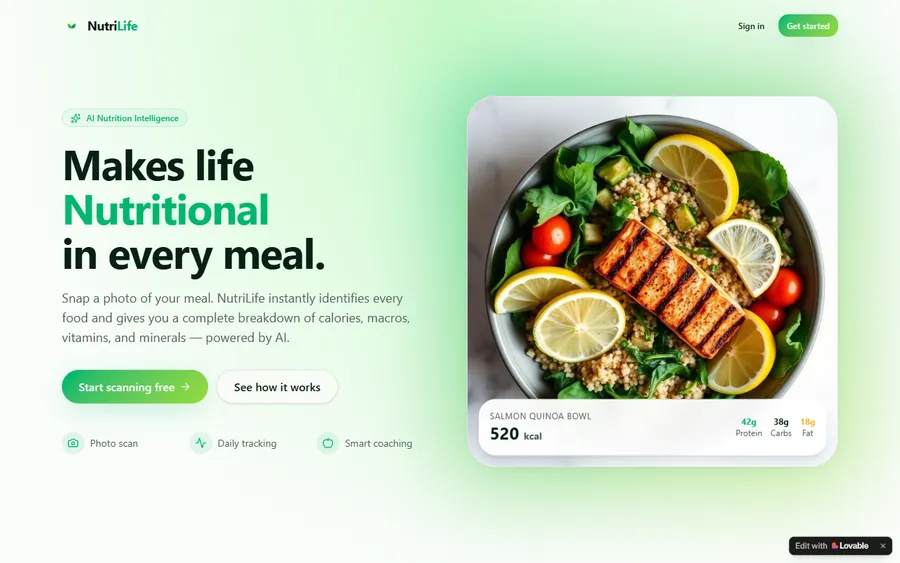
AI and ML
Logs what a person has eaten and coaches them toward a target, carried from first sketch to live link by one student.
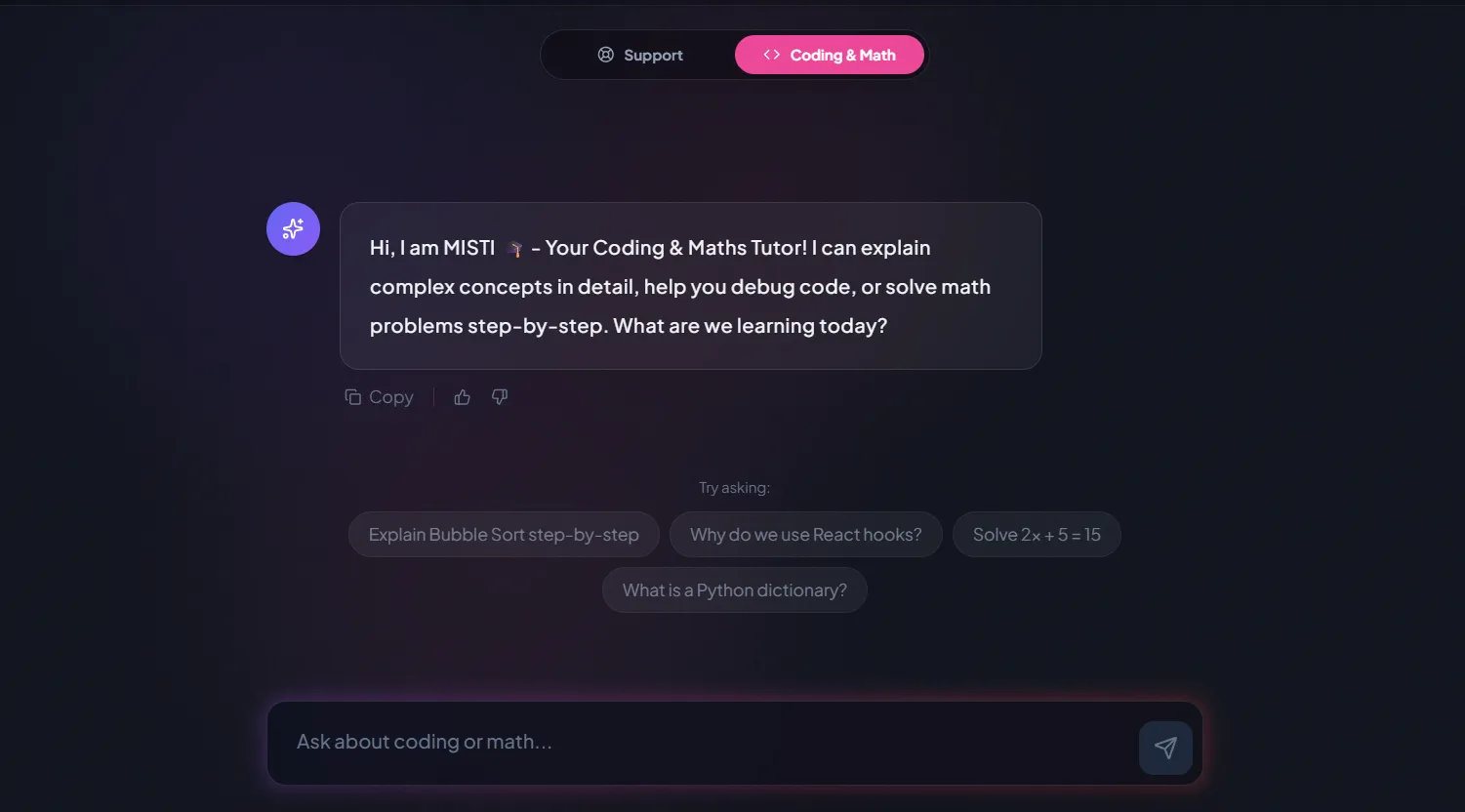
AI and ML
A tutoring chatbot that answers maths and programming questions, written, tested and deployed by a student.

AI and ML
Helps a young person recognise an unsafe situation online before it develops, designed and shipped by a student.
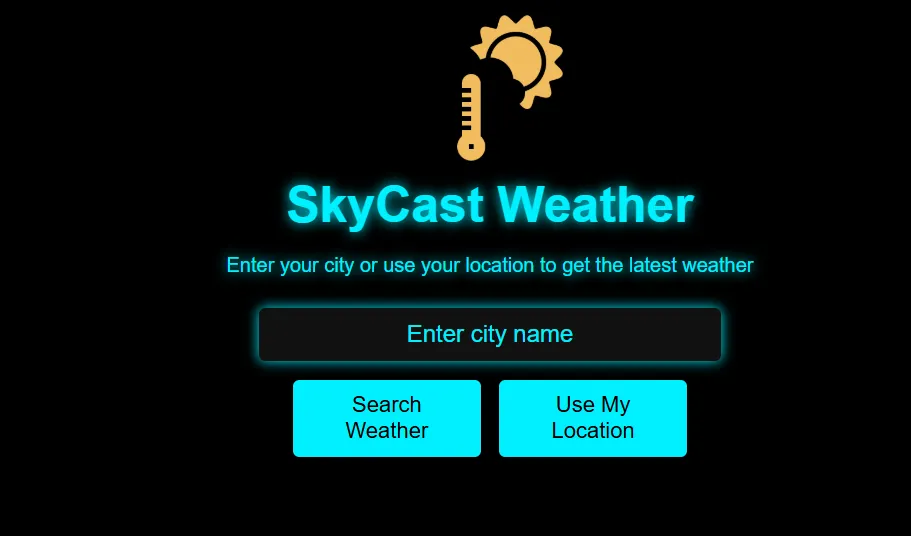
Data and forecasting
Built on live weather data, and the nearest cousin to the COE prediction work described further up this page.
Fees
Fees are set in US dollars and billed in US dollars, a flat rate that is the same everywhere outside India: USD 100 a month for a group batch, USD 150 a month for one to one. Billing is monthly, with no joining fee.
Free first class
USD 0
No card needed
Group batch
USD 100
Per month, billed in US dollars
One to one
USD 150
Per month, billed in US dollars
One honest note about that number. USD 100 a month sits well under what enrichment normally costs here, and a low price is usually a warning rather than a bargain, so it is worth saying where it comes from: we teach from India, and we charge the same fee in every one of the 25+ countries we serve rather than pricing by postcode.
What families say
We hold a 4.9 average across 547 Google reviews. Every line below was left by a real family.
★★★★★
"The one step solution for my son. Modern Age Coders make learning coding so simple that kids love it."
Ria Mukherjee
Parent
★★★★★
"Modern Age Coders has been a game-changer for me! I struggled to grasp IT concepts and coding before joining, but their classes transformed everything."
Samriddha Mondal
Student
★★★★★
"One of the most wonderful education centres out there. Education is not limited to school syllabus but focuses on skill development. Learning here has been a wonderful journey and still continuing."
Vansh Agarwal
Student
★★★★★
"My child Dhairya is really enjoying the Modern Age Coder IT classes. This is his first online class, and he eagerly looks forward to it. I can see his improvement."
Sonam Oswal
Parent of Dhairya
★★★★★
"Modern Age Coders have wonderful teachers who teach in a clear, easy and practical way. The teacher boosts students' confidence and inspires them to learn without hesitation."
Sonu Goyal
Parent
★★★★★
"I highly recommend this computer coding class! The teachers are incredibly knowledgeable and passionate about coding. They make every session engaging and insightful."
Ritu Kedia
Parent
Questions from Singapore
Yes. Section 5.4.4 of syllabus 7155 asks a student to use the nearest neighbour method for a classification task with two quantitative features. We teach it inside the teens track, then carry on past where the syllabus stops, into whether the classifier is genuinely working or has been handed the answer. G3 Computing K349 is the Secondary Education Certificate successor, first examined in 2027.
It changes the certificate more than the content. From 2027 the N(T)-, N(A)- and O-Level examinations become the Singapore-Cambridge Secondary Education Certificate, with subjects taken at G1, G2 or G3 level under Full Subject-Based Banding, and Computing continues as G3 syllabus K349. Start in Secondary 1 or 2, because the mathematics takes about two years to settle.
Yes. Paper 2 of syllabus 7155 runs 2 hours 30 minutes for 70 marks, is worth 40 per cent of the grade, and is taken at a computer with a spreadsheet, Python and JupyterLab available. Our students work in those tools every week, so the exam environment is ordinary long before they sit it. Projects add pandas and scikit-learn.
Every class is live video with the same teacher each week, and nothing is a recording. Singapore is SGT at UTC+8 and India is IST at UTC+5:30, so Singapore is 2 hours 30 minutes ahead, and neither country observes daylight saving. Slots are 7:30pm to 8:30pm SGT on Tuesday and Thursday, 8:45pm to 9:45pm SGT on Monday and Wednesday, and Saturday 10:00am to 11:30am SGT.
A group batch of fifteen to twenty students is a flat USD 100 a month, and one to one teaching is USD 150 a month, billed in US dollars, the same rate everywhere outside India. There is no registration fee, no materials fee and no annual contract, and the first class is free.
It helps with the half of the application that is not a grade. The NUS Indicative Grade Profile for AY2025/2026 puts Common Computer Science Programmes at AAA/A at both the 10th and the 90th percentile, and NTU lists Data Science and Artificial Intelligence at AAB/B to AAA/A across 202 places. What we add is published projects an admissions reader can open.
Your child builds. The first Singapore project takes 38 published Land Transport Authority bidding exercises for the Certificate of Entitlement, types them into a table by hand, fits a model to predict the next Category B quota premium, then finds the feature giving the best score was published at the same moment as the answer.
Yes, and most families do. PSLE written examinations fall on 24 to 30 September 2026, schools used as GCE O-Level written examination venues end Term 4 early on 23 October 2026, and the year-end holiday runs to 31 December. A student can pause across an examination period and keep their place, and admission is rolling.
Start here
Leave a number and a mentor calls back, usually within a few hours and at an hour that suits Singapore rather than one that suits us. The first class is a genuine lesson, and it doubles as a placement check so your child starts at their own level rather than the middle of the room.
Prefer to read first? See how we teach, the full course catalogue, our coding classes in Singapore, or Student Labs.