BH / KIDS / 01
Python and AI for Kids
A text language from week one, not coloured blocks. Python, turtle graphics and small games, then the central idea: a machine can be shown examples and work out the rule.
Open the syllabusBahrain · Live online · Ages 6 to 67
Most of what is sold to families in Bahrain as an AI class is a tour of a chatbot. Our students in Manama, Riffa, Muharraq and Isa Town learn the layer underneath: how data is checked, how a model is trained, how its error is stated in units a parent can verify. Live classes, the same teacher weekly, on the Sunday to Thursday week Bahrain keeps.
Teaching since 2020 · 10,000+ students across 25+ countries · no recordings sold as classes
In short
Modern Age Coders runs live online AI and machine learning classes for students in Bahrain, ages 6 to 67, in batches of fifteen to twenty or one to one. Students learn Python and the mathematics underneath machine learning, then train and evaluate their own models rather than only prompting AI tools. Classes run Sunday to Thursday on Bahrain time. Fees start at USD 100 a month, billed in US dollars, and the first class is free.
The catalogue
A nine year old and a working analyst do not need the same syllabus at different speeds. They need different syllabuses. Every card opens a full week by week outline.
BH / KIDS / 01
A text language from week one, not coloured blocks. Python, turtle graphics and small games, then the central idea: a machine can be shown examples and work out the rule.
Open the syllabusBH / KIDS / 02
Where a model's answers come from, why the wrong ones sound as certain as the right ones, and how to check a claim before repeating it.
Open the syllabusBH / KIDS / 03
Children brief an AI tool, then read what came back and repair it. Writing the instruction takes a minute. Judging the output is the term's real work.
Open the syllabusBH / TEEN / 01
The backbone of this page. Python, the mathematics the subject requires, classical algorithms, neural networks, computer vision and language models, with a trained model closing every stage.
Open the syllabusBH / TEEN / 02
Most of the real work happens before the model exists: loading, cleaning, joining, plotting, finding the row whose units are wrong.
Open the syllabusBH / TEEN / 03
Two years from a first line of code to advanced Python, including files, APIs and testing. The entry point for a teenager with no prior programming.
Open the syllabusBH / TEEN / 04
Shipping web and Python projects with AI assistance while learning to review what the assistant produced. Publish a working link, then defend every line behind it.
Open the syllabusBH / PRO / 01
Supervised and unsupervised learning, deep networks, training discipline, cross validation that holds up, and the deployment step most short courses omit.
Open the syllabusBH / PRO / 02
How large language models are trained, fine tuned and grounded against a private document set, and how an agent is constrained so it fails loudly.
Open the syllabusBH / PRO / 03
For professionals in Manama who want the applied half first: machine learning turned on the reports and spreadsheets already on the desk.
Open the syllabusBH / PRO / 04
Statistics, SQL, feature construction, modelling and the writing up, ending with a portfolio built for a hiring manager rather than an examiner.
Open the syllabusBH / PRO / 05
The technical interview gate at every serious engineering employer, and the reason a pipeline that works on thirty six rows still works on thirty six million.
Open the syllabusBH / ALL / 06
Beyond AI we teach mathematics to university level, web, app and game development, and exam preparation, all on Bahrain timings.
Open all coursesWhat you actually build
Every market we teach gets a first project on data from that country. Bahrain gets an aviation forecast, and the reason is structural. Gulf Air is the rare Gulf carrier with a single hub, that hub is Bahrain International Airport, and it serves an island of 1.59 million people. Every seasonal shock lands in one airport's monthly figures, so thirty six rows model a whole national aviation system. The data is free on the Bahrain Open Data Portal, published by Civil Aviation Affairs.
| Month | Passengers | Aircraft movements | Pax per movement | Ramadan days |
|---|---|---|---|---|
| 2023-01 | 736,545 | 7,640 | 96.4 | 0 |
| 2023-04 | 609,287 | 6,858 | 88.8 | 20 |
| 2023-07 | 832,727 | 8,239 | 101.1 | 0 |
| 2023-12 | 822,786 | 8,769 | 93.8 | 0 |
| 2024-03 | 695,140 | 7,800 | 89.1 | 21 |
| 2024-08 | 884,074 | 9,180 | 96.3 | 0 |
| 2024-12 | 772,770 | 8,538 | 90.5 | 0 |
| 2025-03 | 594,824 | 7,395 | 80.4 | 29 |
| 2025-04 | 808,793 | 8,533 | 94.8 | 0 |
| 2025-08 | 951,795 | 9,029 | 105.4 | 0 |
| 2025-12 | 943,497 | 8,857 | 106.5 | 0 |
| 2026-01 | 933,299 | 8,805 | 106.0 | 0 |
| 2026-02 | 705,610 | 7,195 | 98.1 | not computed |
Passengers and aircraft movements are published; passengers per movement is the only computed column. The February 2026 Ramadan cell is deliberately blank, because a number you have not checked is a guess, not a feature.
There is a schema trap, and we teach it first because it is what makes a beginner declare the data broken. The passenger total is embark plus disembark plus transit; transfers are a separate published line, not a component of it. Check January 2025: 396,376 plus 411,908 plus 4,243 gives 812,527, exactly the published total.
That explains a discrepancy a student would otherwise chase for an hour. The portal reports 9.35 million passengers for 2024 while press coverage quotes 13,970,201 including transfers. The gap of roughly 4.6 million is the transfer line, not an error.
The target is passengers per aircraft movement, not raw passengers, because that strips out fleet growth and stops the model quietly refitting a trend. We fit raw passengers too, because the comparison is where the argument lives.
pandasscikit-learn ridge regressionHijri calendar leave one out CVresidual analysis
Two dataset identifiers on data.gov.bh carry the series, one for monthly passenger movements and one for aircraft movements, 240 records each. Call the catalogue API, pivot on the data type column, join on year and month. Out come thirty six clean months from January 2023 to December 2025.
Assert on every row that the total equals embark plus disembark plus transit. February 2026 fails: the portal publishes the total as 705.61 while its own components sum to 705,610, a thousands units bug rather than a collapse. Then sum each year: 2024 gives 9,350,580 and 2025 gives 9,739,928, matching Bahrain Airport Company's published 9.35 million and 9.74 million.
Use a Hijri calendar library to count how many days of each Gregorian month fall inside Ramadan. Do not hard-code dates you have not checked. Ramadan began on 23 March 2023, 11 March 2024 and 1 March 2025, and its start is set by moon sighting.
Train on January 2023 through December 2025 only. Bahrain's airspace was closed from 1 March 2026, so March recorded no traffic at all, April 76,397 passengers against 926 movements and May 487,069 against 4,875. Exclude and flag those rows, never interpolate. Real series contain regime changes that no seasonal model should fit.
Normalise the target to passengers per movement, then fit linear regression and ridge under leave one out cross validation. Features: aircraft movements, Ramadan days in the month, the sine and cosine of month of year, and months since January 2023. Thirty six rows are far too few for a train and test split, and far too few for a random forest.
Hold out one Ramadan month. Train model A on month number dummies and model B on the Ramadan days feature, then predict it with each. A misses badly and B does not, because the weakest month of each year moves with Ramadan: April 2023 at 609,287, March 2024 at 695,140, March 2025 at 594,824. March 2025 carries 29 Ramadan days and is the weakest of all thirty six at 80.4 passengers per movement, against 105 to 107 in a peak month. Month names cannot learn that, because March means three different things in three years.
Which months does the model still miss, and why? Investigate the Formula 1 Bahrain Grand Prix, held on 2 March 2024 and 13 April 2025, the travel surge straight after Ramadan, and the December peak. One caveat belongs in the write up: passengers per movement conflates how full an aircraft is with how large it is.
The distinction
We teach both, in that order, and we say plainly which holds its value. Prompting is a product skill and products are rewritten every year. Modelling rests on mathematics, which is not.
The distinction is sharper in Bahrain, because the country decided some time ago to run infrastructure rather than rent it: a national AI policy aimed at government builders, a workforce programme with a specialist track for people who make AI tools, and a cloud region live on the island since 2019. None of that is staffed by prompting.
Why now, in Bahrain
Bahrain's AI framework sits under Economic Vision 2030 and is driven by the Information and eGovernment Authority. In 2025 the authority issued the General Policy for the Use of Artificial Intelligence, Version 1.0, which applies to all government entities and names a wider audience than officials: digital service developers, decision makers, academics, researchers and users of smart government services. Its four pillars are legal compliance, including alignment with Bahrain's Personal Data Protection Law, AI use and adoption, public education, and international cooperation. The authority also adopted the GCC Guiding Manual on the Ethics of Artificial Intelligence Use.
A further layer is still in motion. In April 2024 the Shura Council unanimously approved a draft standalone AI regulation of 38 articles. Enactment has not been confirmed, so read it as direction rather than law. The authority also published the Kingdom of Bahrain AI RAM Report, dated 12 November 2025, assessing the country against UNESCO's AI Readiness Assessment Methodology.
The programme that matters most to a family is Tamkeen's. In April 2025 Bahrain's Labour Fund launched a bundle to train 50,000 Bahrainis in AI by 2030 across three tracks: Executive Leadership in AI, General AI Skills, and AI Specialist Training for people who build AI tools. Note the shape. Two tracks are for users. One is for builders, and it is the one in shortest supply.
None of it would be credible without infrastructure. The AWS Middle East (Bahrain) Region went live on 29 July 2019 with three Availability Zones, the first AWS Region in the Middle East, ahead of its larger neighbours. It underpins a cloud-first government policy and is why Bahrain discusses AI as an operational capability rather than an aspiration.
The employer picture is unusually legible too. Citi opened a Global Technology Hub in Seef with Tamkeen and the Bahrain Economic Development Board, carrying a ten year target of 1,000 Bahraini coding jobs; as of January 2023 it had 110 Bahraini employees, 91 already at the Seef premises. Citi has stated that across the candidate countries for its technical coding test and interview, Bahraini talent had the highest pass rate. Financial services is the deepest non-oil sector: Bahrain FinTech Bay hosts more than 100 firms, and the Central Bank of Bahrain runs the region's first regulatory sandbox.
Every item on those lists is a construction project, and a child who is twelve today will be twenty two in 2036, applying for exactly those roles. The shortage is not of AI users. It is of people who can open a dataset and make something correct come out of the other end. That is why we will not sell a prompt engineering short course as an AI education.
50,000
Bahrainis to be trained in AI by 2030 under the Tamkeen bundle launched in April 2025
29 July 2019
AWS Middle East (Bahrain) Region went live, the first AWS Region in the Middle East
0.376
Dinars to the US dollar, the Central Bank of Bahrain peg held since 1980
9,739,928
Passengers through Bahrain International Airport in 2025, the dataset behind the first project
School and university
Bahrain's population was 1,588,670 in 2024: 739,736 Bahrainis and 848,934 non-Bahrainis, so non-nationals are the majority at 53.4 per cent. The Indian community is roughly 350,000, the largest expatriate group and about 30 per cent of the country, which makes the Indian curriculum school system unusually large for a country this size.
The Indian School, Bahrain was founded in 1950, is affiliated to CBSE and runs campuses at Isa Town and Riffa; its own profile page reports over 11,683 students and a workforce of 600. The Asian School is a private, secular, co-educational CBSE school approved by Bahrain's Ministry of Education, as is Bhavan's Bahrain Indian School. Students at all three sit the AISSE at Class 10 and the AISSCE at Class 12, papers set by CBSE in India, which is the content our teachers already work to.
The other boards genuinely sat here are Cambridge and Pearson Edexcel IGCSE and A Level, the IB Diploma, the Bahrain Ministry of Education certificates including the General Intermediate and Religious Intermediate, and the American high school diploma. St Christopher's School, established 1961, offers IGCSE, A Levels, BTEC and the IB Diploma and is rated Outstanding by British Schools Overseas. Ibn Khuldoon National School in Isa Town, established 1983, runs an American curriculum with an IB option, and the British School of Bahrain runs the British curriculum.
Bahrain School is a local oddity worth knowing about: operated by the Bahrain International School Association with the United States Department of Defense Education Activity, kindergarten to Grade 12, with graduating seniors taking either an American diploma or the IB Diploma.
Bahrain Polytechnic runs an MSc in Artificial Intelligence at National Qualifications Framework Level 9, worth 180 NQF credits, first intake October 2024, positioned for computer science and ICT graduates, engineering and applied science graduates, and technically literate graduates from other domains. Its School of ICT offers bachelor's programmes in Programming, Networking, Cybersecurity and Database Systems.
The undergraduate requirements are the ones to read years in advance: a secondary school completion certificate with Semester 1 to 6 transcripts, a minimum 70 per cent cumulative grade point average across the final secondary period, evidence of good conduct less than one year old, and a medical examination from a government health centre. Applicants from Bahraini private schools also supply an equivalence letter from the Ministry of Education's Private Education Directorate; the recognised systems include the Indian one, and the 70 per cent applies across all of them.
Read that in order. It is a grade average first, and a grade average is built in Class 9 and 10, not in the term before an application. That is why our teens track puts the mathematics inside the machine learning.
The University of Bahrain's College of Information Technology is the national university's computing school and the default for state school and CBSE students who stay. Its postgraduate provision includes an MSc in Machine Learning and Computational Intelligence, alongside MSc programmes in Information Technology, Cybersecurity and Software Engineering. The American University of Bahrain offers a BSc in Data Science and Artificial Intelligence through its College of Engineering and Computing, covering programming, algorithms, statistics, machine learning, deep learning and big data analytics, which is the most direct undergraduate AI degree in the country. Also in the set are the University of Technology Bahrain, Ahlia University, RCSI Bahrain and the Bahrain Institute of Banking and Finance.
How the classes run
Bahrain observes Arabia Standard Time, UTC+3, with no daylight saving, so the offset is fixed all year. Indian Standard Time, where our teaching operation sits, is 2 hours and 30 minutes ahead: a teacher's 8:00pm is 5:30pm in Manama. The detail schedulers get wrong is the week itself. Bahrain runs Sunday to Thursday with the weekend on Friday and Saturday, the inverse of India's, so Sunday here is a school night.
17:00 to 18:30
Bahrain time, Sunday to Thursday, which is 19:30 to 21:00 in India. After school here, a civilised evening for the teacher, and our default.
19:00 to 20:30
Bahrain time, Sunday to Thursday, which is 21:30 to 23:00 in India. For parents who want to sit in after work, and late on the teaching side.
Saturday 10:00 to 11:30
Bahrain time, which is 12:30 to 14:00 in India. Saturday is the Bahraini weekend, so this is the unhurried family slot and easiest to roster.
Ninety minutes of live teaching from a teacher who carries last week's sticking point into this one. Screens are shared both ways, so the teacher interrupts at the moment the mistake happens rather than marking it three days later. Batches are fifteen to twenty students, or one to one.
Between one session and the next there is something to build rather than something to fill in. Questions go to the same teacher, not into a queue. We place no class on a Friday before roughly 2:00pm, so Jumu'ah is never in competition with a lesson.
Two exam seasons dominate. The Ministry of Education's published calendar puts first term finals from late December into mid January, the mid year break across the second half of January, and the second term opening in early February. The Indian curriculum segment has a different dead zone: CBSE board exams run roughly February to April, set from India. Cambridge and Edexcel families work around the May to June and October to November series.
We pause for National Day on 16 December 2026 and Accession Day on 17 December 2026, consecutive days that form the main national block, and for Eid al-Fitr and Eid al-Adha. Ramadan is the one that moves: it began on 23 March 2023, 11 March 2024 and 1 March 2025, drifting about eleven days earlier each Gregorian year, so it walks through the school calendar rather than sitting still, and during it we re-cut evening slots around iftar. Islamic dates are set by moon sighting and can shift by a day or two, so we confirm rather than assume. Admission is rolling and a student can join in any week.
Student work
None of it is a mockup. Every one is a working application at a real address, built by a student and left online where anyone can open it. Explore more in Student Labs.
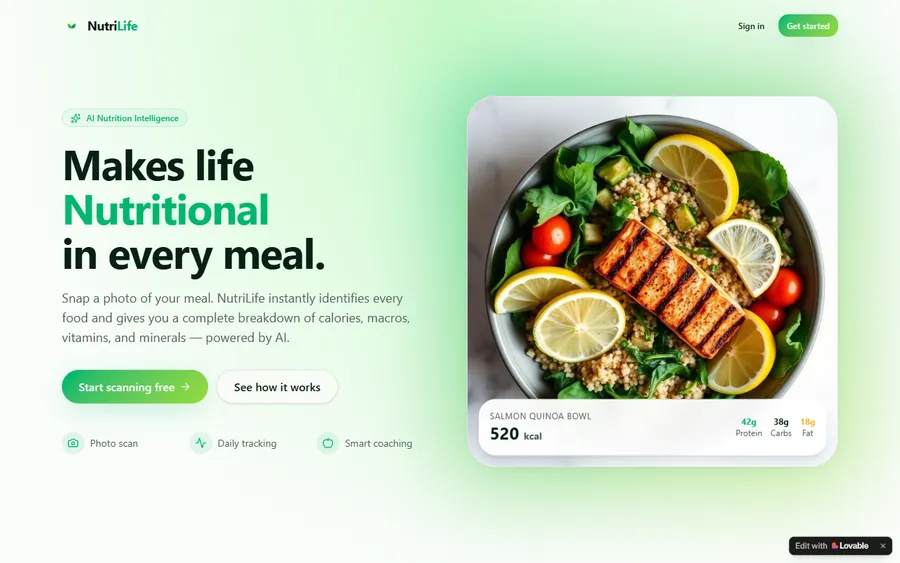
AI and ML
A nutrition assistant that reads what you have eaten and coaches you towards a target, taken from idea to live link by one student.
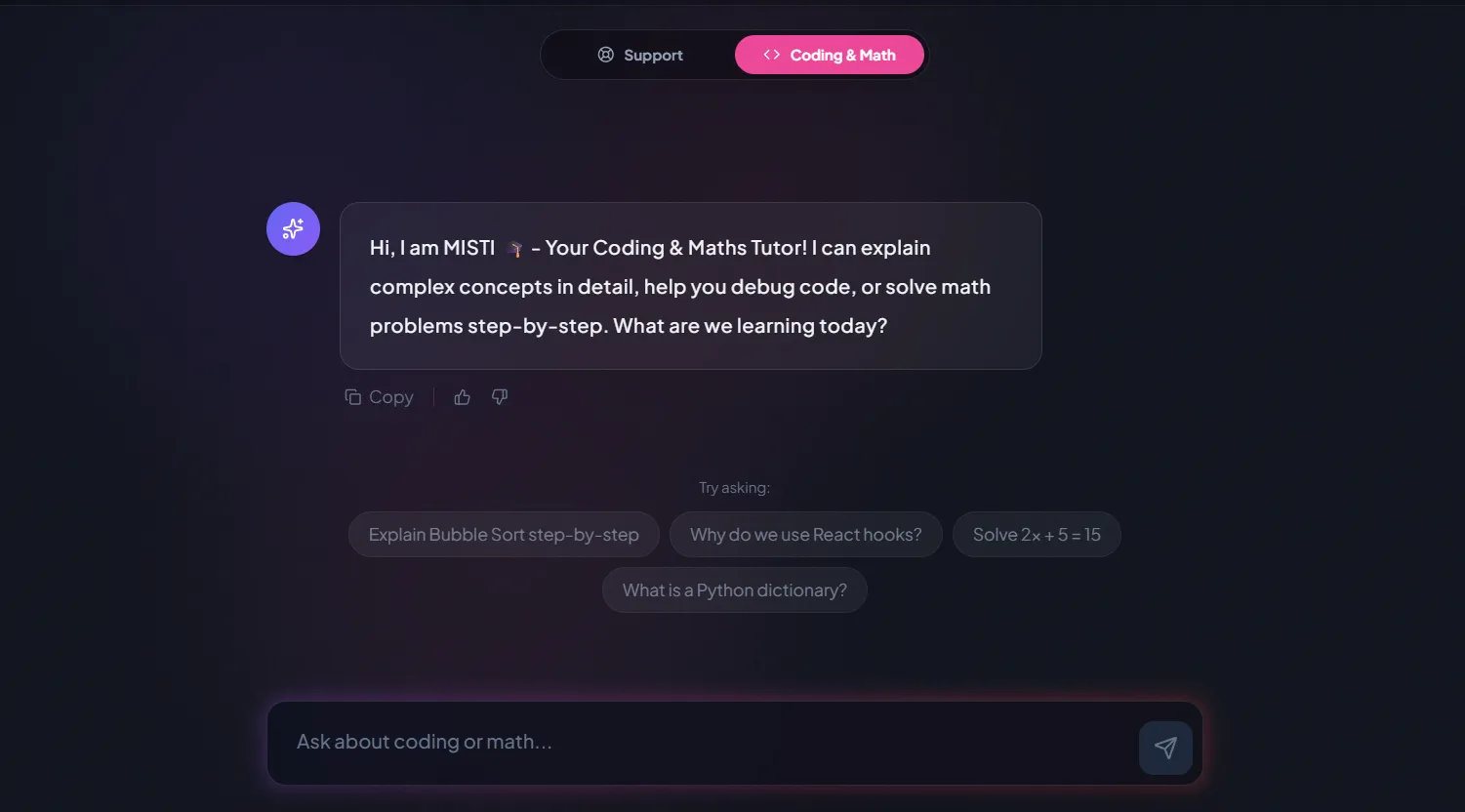
AI and ML
A tutoring chatbot that answers maths and programming questions, written and deployed by a student.
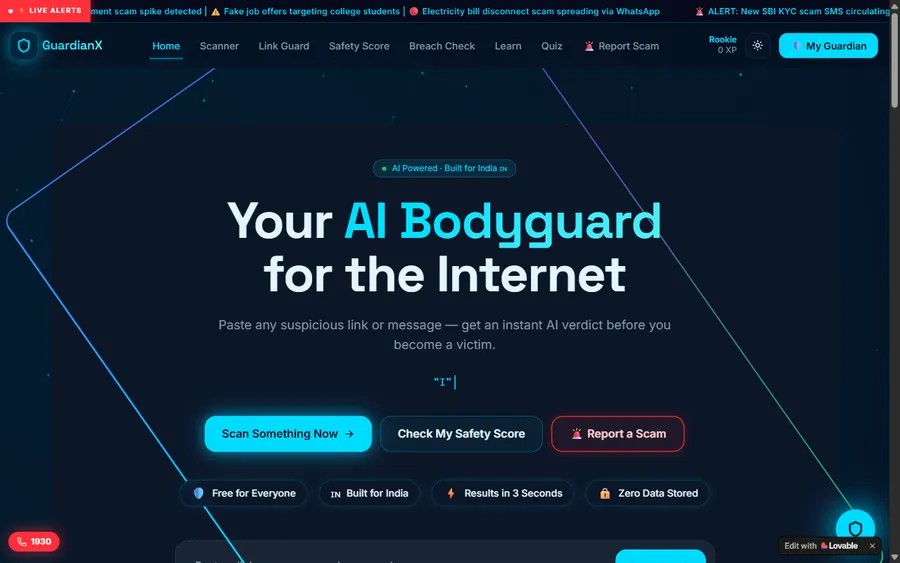
AI and ML
An assistant that helps a young person recognise an unsafe situation online, designed and shipped by a student.
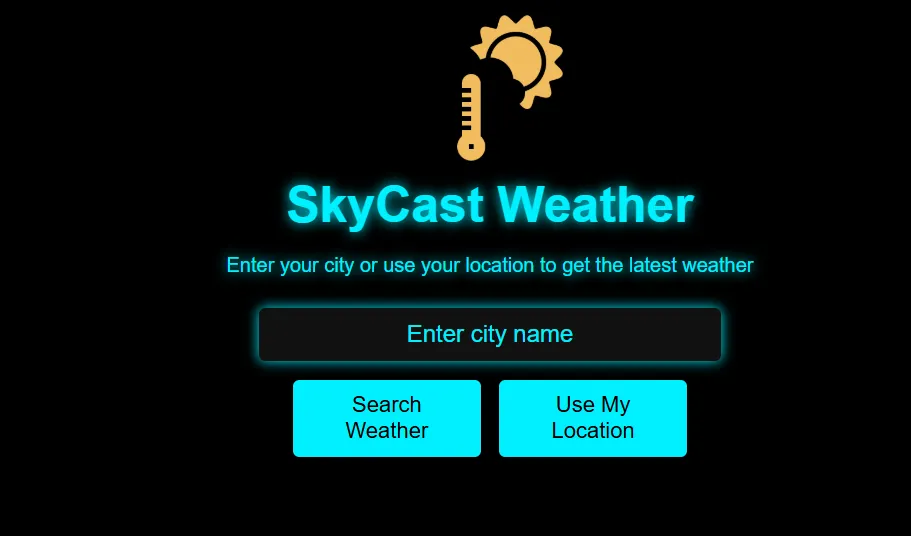
Data and forecasting
A forecasting application built on live weather data, the closest sibling to the airport project above.
Fees
Fees are a flat USD 100 a month for a group batch and USD 150 for one to one, billed in US dollars everywhere outside India. Fees run month by month, with no joining charge and no year-long contract.
Free first class
USD 0
No card needed
Group batch
USD 100
a month, billed in US dollars
One to one
USD 150
a month, billed in US dollars
One honest note on payment. Your card is billed in US dollars, and your bank converts the charge to dinars at its own retail rate, which sits slightly wide of the Central Bank of Bahrain peg. At the peg one dinar is about 2.66 US dollars, one of the highest valued currencies in the world, so a dollar figure always looks larger to a Bahraini parent than it is.
What families say
These are real reviews left by real families. We do not write testimonials and we do not commission them.
★★★★★
"The one step solution for my son. Modern Age Coders make learning coding so simple that kids love it."
Ria Mukherjee
Parent
★★★★★
"Modern Age Coders has been a game-changer for me! I struggled to grasp IT concepts and coding before joining, but their classes transformed everything."
Samriddha Mondal
Student
★★★★★
"One of the most wonderful education centres out there. Education is not limited to school syllabus but focuses on skill development. Learning here has been a wonderful journey and still continuing."
Vansh Agarwal
Student
★★★★★
"My child Dhairya is really enjoying the Modern Age Coder IT classes. This is his first online class, and he eagerly looks forward to it. I can see his improvement."
Sonam Oswal
Parent of Dhairya
★★★★★
"I highly recommend this computer coding class! The teachers are incredibly knowledgeable and passionate about coding. They make every session engaging and insightful."
Ritu Kedia
Parent
★★★★★
"Coding classes here make learning very interesting and conceptual. The teachers teach us in a very easy-to-understand and efficient manner."
Arush Poddar
Student
Questions from Bahrain
CBSE sets both papers in India and the series runs roughly February to April, so we treat that window as an exam term rather than a teaching term. Students in a board year move to a lighter cadence, or pause and resume in April without losing their seat. Our teachers already work to the CBSE Artificial Intelligence and Computer Science content, so revision and the machine learning track are one piece of work.
Bahrain keeps Arabia Standard Time, UTC+3, with no daylight saving, so the offset is fixed all year. Indian Standard Time is 2 hours and 30 minutes ahead, which makes 4:00pm, 6:00pm and 8:00pm in Manama into 6:30pm, 8:30pm and 10:30pm in India. Our default Bahrain block is 5:00pm to 6:30pm local, Sunday to Thursday. A 7:00pm local slot and a Saturday morning slot are also available.
Yes, and it is the commonest scheduling error made by providers teaching into Bahrain from India. Our Bahrain batches run Sunday to Thursday, because Sunday is a school night here and not a free day. The weekend slot is Saturday morning, not Sunday morning. We place no class on a Friday before roughly 2:00pm local, so Jumu'ah prayers are never in competition with a lesson.
A group batch is USD 100 a month and one to one teaching is USD 150 a month, billed in US dollars everywhere outside India, so we do not take payment in dinars and we do not publish a dinar price list. Your card is billed in dollars and your bank converts at its own retail rate, which sits slightly wide of the Central Bank of Bahrain peg, so the dinar figure on the statement lands a little above a straight conversion. The first class is free.
Bahrain Polytechnic's published undergraduate and diploma requirements ask for a secondary school completion certificate with Semester 1 to 6 transcripts, a minimum 70 per cent cumulative grade point average across the final secondary period, evidence of good conduct less than one year old, and a medical examination from a government health centre. Applicants from private schools in Bahrain also need an equivalence letter from the Ministry of Education's Private Education Directorate, and the Indian system is one of the recognised ones. The mathematics we teach inside the machine learning is the same mathematics that lifts a grade average. Bahrain Polytechnic also runs an MSc in Artificial Intelligence, the University of Bahrain's College of Information Technology an MSc in Machine Learning and Computational Intelligence, and the American University of Bahrain a BSc in Data Science and Artificial Intelligence.
General purpose AI assistants set their own minimum age in their terms of service, and for a child under 13 an account is usually not permitted. We do not ask a nine year old to open one. Children aged 6 to 12 work in Python with turtle graphics, small games and datasets small enough to read end to end, and any assistant on screen is driven by the teacher. What a young learner needs is the idea that a machine can learn a rule from examples.
Tamkeen is Bahrain's Labour Fund and its programmes are directed at Bahraini nationals, including the bundle it launched in April 2025 to train 50,000 Bahrainis in artificial intelligence by 2030 across three tracks: Executive Leadership in AI, General AI Skills and AI Specialist Training. Modern Age Coders is not a Tamkeen provider and our fees are paid directly by the family. We raise it because that specialist track is explicitly for people who build AI tools rather than people who use them.
Ramadan moves about 11 days earlier each Gregorian year, so it drifts through the school calendar rather than sitting still, and its start is confirmed by moon sighting. Through Ramadan we re-cut the evening slots around iftar instead of teaching across it. We pause for National Day on 16 December 2026 and Accession Day on 17 December 2026, which fall on consecutive days, and for the Eid al-Fitr and Eid al-Adha holidays. Missed sessions are rescheduled.
Start here
Leave a number and a mentor calls you back, usually within a few hours and at an hour that suits Bahrain rather than one that suits us. The first class is a real class with a real teacher, and it doubles as a placement check so your child starts at their own level rather than the average one.
Prefer to look around first? Read how we teach, browse the full course catalogue, or see what students have built in Student Labs.