Machine learning, generative AI and agents, taught live
AI is the most oversold subject on the internet, which is exactly why we teach it the boring way: live classes of at most eight students, real datasets, real code, and a teacher who says "that model is wrong, find out why" instead of playing a highlight reel.
Students across the Kingdom join in the AST evening, from curious ten year olds to engineers adding a second skill. Below is what they build, with the tools named.
4.9 rating across 547+ Google reviews
Build 01
A chatbot with your material inside itFrom the generative course: a bot that answers questions using notes the student supplied, wired together with prompts, retrieval and an API.
Python + LLM APIsBuild 02
A model trained on gathered dataFrom the machine learning tracks: data collected and cleaned by the student, a classifier trained on it, and an honest reading of its mistakes.
scikit-learnBuild 03
Software written with an agentFrom the agents courses: a project where the student directs an AI coding agent, reviews every change it proposes, and ships the result.
Codex + Claude CodeThe AI tracks
Everything below runs as a weekly live class. AI here is taught through Python, so if the language itself is the missing piece, begin at Python Classes in Saudi Arabia and come back.
For teenagers with a little Python behind them: they assemble datasets, train classifiers with scikit-learn, and practise the rarest AI skill going, stating plainly what their model gets wrong.
View syllabus
The adult route through the discipline: data preparation, classical models, neural networks, and enough of the mathematics to trust your own results for the right reasons.
View syllabus
Working with large language models from the inside: prompt design that survives contact with real users, API integration, retrieval, and small finished applications.
View syllabus
For working developers and determined switchers: directing AI coding agents, auditing what they produce, and folding them into real work without surrendering judgement.
View syllabus
The teen edition of the agents course: the same tools with more scaffolding, and a teacher checking that understanding keeps pace with output.
View syllabus
Ages 6 to 12. A guided first pass over the AI tools children already gossip about at school, with safety habits built in and the wonder kept honest.
View syllabus
Where a child's AI road usually begins: real typed Python plus first AI ideas, shaped for ages eight to twelve.
View syllabus
The proof
Course pages love the word "build", so here is what the word means in these courses, family by family.
The chatbot family. Students in the generative course produce assistants with actual knowledge in them: a study helper that answers from class notes, a small business bot that knows one menu or one price list. Getting there means learning prompts as engineering rather than incantation, calling a language model API from Python, and adding retrieval so the bot cites what it was given instead of inventing. The last lesson is the deepest one: testing the bot until it fails, and understanding the failure.
The trained-model family. Students in the machine learning tracks gather data, clean it until it stops lying, and train classifiers and regressors with scikit-learn. The deliverable is never just accuracy on a chart. It is the student explaining, in ordinary sentences, what the model learned, where its blind spots sit, and why a confident prediction still deserves suspicion. Teens present these projects; adults put them in portfolios.
The agent family. Students in the Codex and Claude Code courses complete software projects by directing AI agents: specifying the change, reading the diff that comes back, catching the subtle wrongness, insisting on tests. The skill being trained is judgement with tools attached, which is precisely the skill the industry now interviews for.
Every family shares one rule: if it does not run, it does not count.
The instruments
No tool soup, no logo wall. The courses stand on four instruments, each chosen because the industry actually stands on it too.
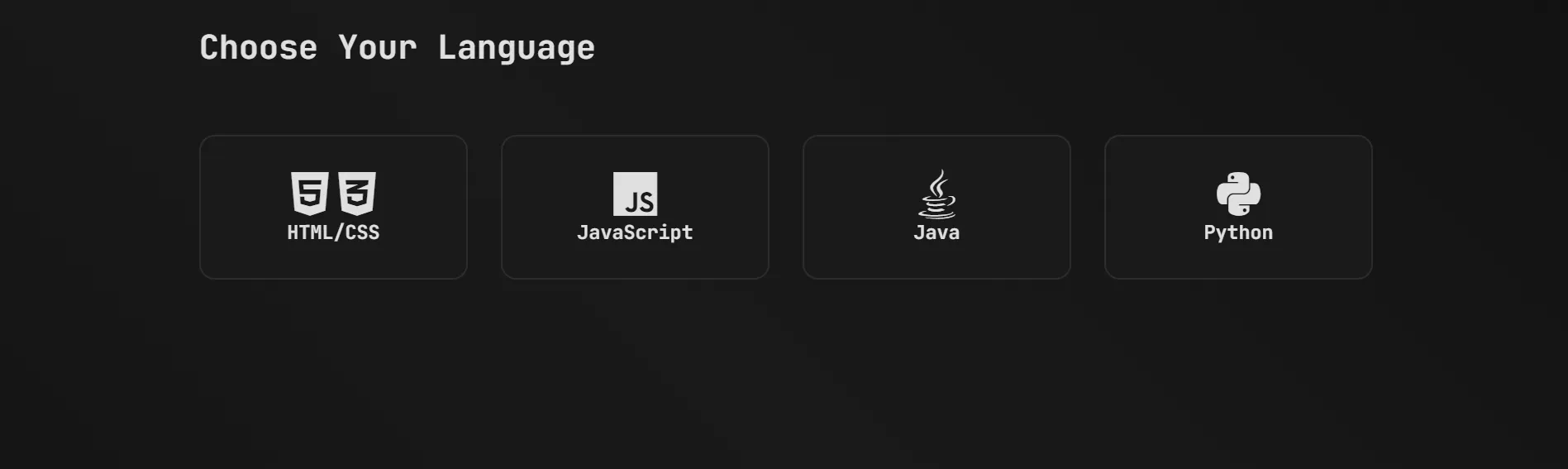
Every AI course here speaks Python, because practical AI does. Students arriving without it take the groundwork stretch or a Python track first; students arriving with it go straight to the data.
The classic library for training models without mystery. Students use it to fit classifiers and regressors on data they prepared themselves, and to measure honestly how wrong the results are. pandas and NumPy do the lifting underneath.
The generative course treats large language models as components you call from code: structured prompts, API responses, retrieval over supplied documents, and error handling for the days the model behaves strangely. Demystification through use.
AI systems that write and modify code under direction. The agents courses teach students to brief them precisely, review their work line by line, and keep responsibility for the result where it belongs: with the human.
Local context
Saudi Arabia has made its AI intentions unusually official: a national authority dedicated to data and AI, technology programmes threaded through Vision 2030, and public investment that keeps making international news. For a student in the Kingdom, that translates into something simpler than headlines: the subject they are curious about is one their own country has decided to take seriously.
What that does not translate into is a shortcut. We will not claim our courses feed some pipeline into national projects, and no reputable school can. The connection is humbler and more useful. AI work everywhere runs on the same foundations, Python, data handling, model training, tool fluency, and those foundations are exactly what a weekly live class can build properly. A student who owns them is prepared for whatever the local version of the future turns out to be, which is the most any honest education can offer.
For teenagers, the courses also feed back into school. Machine learning projects make strong science-fair and portfolio material, and the habit of testing claims against data improves work in every subject that involves evidence, which is most of them.
For adults, the calculus is the one we state on every page: skills plus proof, no employment promises. An engineer in Dammam, an analyst in Riyadh or a pharmacist in Jeddah leaves the course with trained models and working applications to their name. What happens in the interview room stays their achievement, not our claim.
The format
Every session is a real-time video class where students work and the teacher watches the working. AI is a subject full of confident nonsense, and a live teacher is the antidote on tap.
Group classes never exceed eight students. Model-training projects need individual attention, and the cap is what makes that attention arithmetic instead of aspiration.
Weekday classes run in the evening after school and work, with Friday and Saturday slots for the weekend. One fixed weekly hour, held for the length of the course.
Classes are taught in English, as most Saudi international schooling is. Instructors keep the terminology under control and never mistake jargon for understanding.
Chatbots, models, agent-built software: the coursework leaves objects behind. A student's record is a folder of things that run, not a stack of watched videos.
The first hour costs nothing and behaves like every hour after it. Judge the teaching from inside a class, then choose.
Grounds for trust
People whose occupation is teaching, who stay with their batches long enough to know them. Not moonlighters, not videos wearing a person's name.
The batch limit holds because everything else depends on it. When your model misbehaves at minute forty, someone qualified is looking at your screen.
Students train the models and call the APIs themselves. AI in particular cannot be learned by spectating; the intuitions live in the doing.
Each completion certificate stands on a project that exists. That is what lets it carry weight in an application or a review.
We teach what models genuinely do and where they fail, including the tools we ourselves sell courses about. Scepticism is part of the syllabus.
One free class before any money changes hands. It has been our opening move for years because it keeps us honest.
Verified reviews
Since the classes are live and online, Saudi students share their batches with learners from many countries. These reviews are genuine and verified, reproduced without editing; the rest live on our Wall of Love.
"Modern Age Coders has been a game-changer for me. I struggled to grasp IT concepts and coding before joining, but their classes transformed everything. I can now confidently write complex programs with ease."
Samridho Mondal
Student
"My son struggled with maths for years. Integrating it into coding projects has transformed his understanding and confidence. Highly recommended."
Shewta Singh
Mother of Ishan
"I am truly grateful for my experience at Modern Age Coders. My teachers were not only teachers but also mentors and friendly figures. The perks are excellent: one-on-one doubt solving, mentoring and regular tests. The most impressive part was working on real-world projects."
Krishnam Bhatter
Former student
"The one step solution for my son. Modern Age Coders make learning coding so simple that kids love it. The teachers explain complex concepts clearly with practical exercises and interactive content. The projects were challenging and rewarding."
Ria Mukherjee
Parent
Adjacent pages
AI is one wing of the catalogue. These pages cover the neighbouring questions Saudi families and professionals usually ask alongside it.
The Kingdom-wide guide holding this whole cluster together: all subjects, all ages, one page.
The language these AI courses run on, taught from age eight upward. Start there if the code itself is the gap.
The capital's page, for families who want the local view before the subject view.
The Eastern Province guide, covering Dammam, Khobar and Dhahran together.
Fees
Monthly billing in US dollars, riyal equivalents shown for orientation. No tiers, no surprises, no asterisks.
Group classes
$40 per month
about SAR 150 per month
One-on-one classes
$100 per month
about SAR 375 per month
Registration is free because it is a demo class, not a transaction. Fees begin only when you decide they should.
Questions
Free demo class
One free class settles what pages of copy cannot. Sit in, watch the teacher work, see what the student produces in an hour, and treat our claims like a model under evaluation. Enrol only if the evidence earns it.
Or open with a message: WhatsApp us here and a mentor responds during Saudi business hours.
4.9 rating across 547+ Google reviews