Live online · AI and machine learning, Dubai
Live AI and machine learning classes for Dubai students from age eight to working professionals. One teacher, five to eight students, one hour a week of building things that involve AI rather than hearing speeches about it.
Five tracks cover the ground between a child's first honest look at ChatGPT and an adult training and shipping real models. The index below shows where each one sits; the rest of the page shows what is inside them.
4.9 rating across 547+ Google reviews
Index of AI tracksAge · Focus
01 · The AI tracks
Each card opens the complete syllabus, schedule and fees. Every course runs as a weekly live cohort in English, and every one of them ends with work the student made rather than watched.
Ages 13 to 18, starting from zero code. A Python opening month, then real datasets, trained classifiers, computer vision and a first pass at generative AI, with every model tested until it confesses.
View syllabus
The adult track. Mathematics for ML without hand-waving, classical algorithms, deep learning, then the unglamorous production skills that separate a notebook from a system.
View syllabus
How large language models behave when you build with them: prompting as a craft, API integration, retrieval, LangChain applications, and fine-tuning for people who get that far.
View syllabus
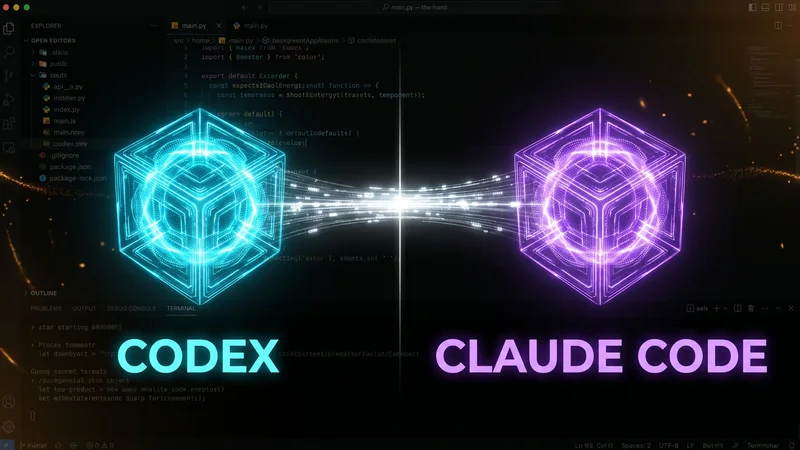
Twenty-four lab classes on agentic coding tools: writing precise briefs, reviewing generated work line by line, and staying accountable for everything that ships under your name.
View syllabus
Children explore chatbots, image and music tools with a teacher present, learn prompt craft, and practise the question that matters most: is this answer actually right?
View syllabus
The coding-first route for ages 8 to 12: real Python through games and turtle graphics, growing into simple chatbots and image AI projects by the end of the year.
View syllabus
Parents comparing options for children across the Emirates will find the fuller picture on our AI classes for kids in the UAE page.

02 · The evidence
Every claim about an AI course should survive one question: what did the student make? Here are the three families of work our students leave with, drawn straight from the course syllabi.
01
Kids in the Python track build rule-based chatbots in their natural-language months, then graduate to smarter ones. Adults in Generative AI wire chatbots to large language model APIs and retrieval, so the bot answers from real documents instead of guessing. The same idea at two altitudes.
02
Teens and adults collect data, clean it, and train classifiers and recommenders with scikit-learn, the same family of techniques behind the suggestions in a streaming app. Then comes the honest part: measuring the model, finding where it fails, and saying so.
03
The professional courses build agent workflows: an AI given a brief, tools and boundaries, doing multi-step work under supervision. Students of Codex and Claude Code practise the hard half of the skill, which is reading what came back before trusting it.
03 · The syllabus arc
Marketing likes to make AI sound like magic. The syllabus is more respectful than that: it is a sequence, each stage buildable by an ordinary diligent student, and here is the whole of it.
Python groundwork The entry ramp
Every serious AI track here opens with Python, because models are built in code, not in dashboards. Beginners get a full foundation month; students who already program treat it as a warm-up and move on early.
Data handling pandas and NumPy
Loading, cleaning and shaping data. Unfashionable, and easily half of real AI work, which is exactly why we refuse to skip it. A student who can wrangle a messy spreadsheet into a training set has learned something most tutorials never teach.
Classical machine learning scikit-learn
Regression and classification, training and test splits, and evaluation that goes past a single accuracy number. Students train models on data they gathered themselves, which makes the failures instructive instead of theoretical.
Deep learning Neural networks
What layers actually compute, image and vision projects, and the judgement call the industry keeps relearning: when a small classical model beats a large fashionable one. The teen and adult tracks both arrive here in their later phases.
Generative AI LLM APIs in practice
Prompting with intent, calling large language model APIs from Python, retrieval so answers come from your documents, and LangChain to assemble it into applications. The Generative AI course carries this through to fine-tuning.
Agents and judgement The current frontier
Coding agents such as Codex and Claude Code, put to work on real repositories: specifying, delegating, reviewing, correcting. The tool writes fast; the human stays responsible. Teaching that responsibility is the point of the course.
04 · The toolbox
Course pages in this industry love vague phrases like "industry-standard tools", so let us just name ours. Python is the working language throughout. pandas and NumPy handle data. scikit-learn is where students train their first models, because it makes the concepts visible without burying them in configuration. Deep learning arrives through the standard Python ecosystem once foundations are in place. On the generative side, students call large language model APIs directly, add retrieval, and use LangChain when an application needs assembling. The professional agents course works inside Codex and Claude Code themselves.
Two things you do not need: an expensive computer, and any paid software. A normal laptop handles everything, the tools are free or have free tiers that comfortably cover coursework, and the rare heavy job runs in the cloud. Families sometimes budget for hardware before a course like this; in our case, please do not.
05 · The format
A
Each class is a scheduled hour on video with a teacher who knows the student's work. AI is full of subtle wrong turns, and a live teacher catches them the moment they happen instead of in a discussion forum three days later.
B
Small enough that the teacher sees every student's screen in every session. One-on-one classes exist for students who want the syllabus at their own speed.
C
Weekday evenings roughly 4:00 to 9:00 PM, plus weekend slots. The UAE holds one time zone all year, so the weekly hour a family picks in September is untouched in June.
D
Classes run in English, matching Dubai schooling. Teachers are practised at explaining to students who think in another language at home, and they verify understanding out loud.
E
Chatbots, models, notebooks, agents: everything built in class belongs to the student afterwards, runnable and improvable. Portfolios grow out of coursework by default.
F
The first class costs nothing and hides nothing. Same teacher, same format, same hour as every other class. Enrol only if it was obviously worth it.
06 · Local context
The UAE created the world's first Minister of State for Artificial Intelligence in 2017, and Dubai has spent the years since treating AI as civic plumbing: in government services, in transport, in how the city talks about its own future. For a student here, AI is not a distant industry. It is the assumption underneath the economy they will enter.
That cuts two ways, and honesty requires saying both. The opportunity is real: organisations across Dubai's finance, logistics, aviation, retail and property sectors are folding machine learning and generative tools into ordinary work, and people who understand these systems from the inside are better placed than people who only consume them. The hype is also real, and plenty of it lands on parents. A child does not need to "master AI by ten", and an adult does not need to panic-enrol in anything. What both need is unhurried, truthful instruction that builds the skill layer by layer.
A teenager who trains and evaluates real models is quietly building the exact muscles that GCSE, A Level, IB and CBSE computer science reward: decomposition, data thinking, debugging, and written explanation of a working system. University applications benefit too, since a project a student can defend in an interview outranks a listed hobby. We claim no more than that: no admission promises, just genuinely strong material to apply with.
The adult tracks exist for analysts, engineers, managers and career changers who want the skill itself rather than a slogan on a certificate. We make no placement or salary claims, and you should treat anyone who does with suspicion. What the courses deliver is concrete: models you trained, applications you wired to an LLM, an agent workflow you can demonstrate on a live screen, and the vocabulary to discuss all of it precisely. In Dubai's job market that evidence travels well, but it is evidence you earn, one evening hour at a time.
07 · Nearby guides
The national hub page: every course, every emirate, and the practical details that stay constant wherever you live.
Read the guide
The other half of this page. AI is built on Python, and the Python tracks are where most of our AI students begin.
Read the guide
For parents: age-appropriate AI literacy, safety rules we actually enforce, and how young students grow into the teen tracks.
Read the guide
The city overview across all twelve live courses, for families still deciding between coding and AI as the starting point.
Read the guide
08 · Plain reasons
The people teaching machine learning here work with these tools constantly and teach for a living. Questions get answers from experience, not from the next slide.
AI concepts fall apart quietly when misunderstood. In a batch of five to eight, misunderstandings surface the same hour they form.
Students spend class time training models and wiring applications, not touring screenshots of other people's work.
A certificate from us names the projects behind it. It certifies work that exists, which is the only kind of certificate worth printing.
Parents of younger students hear plainly what was learned and what needs work. Adults get the same candour about their own code.
The demo class comes first and costs nothing. An hour of real teaching is a fairer pitch than any paragraph on this page.
09 · Verified reviews
Because everything runs live and online, Dubai students share their batches with classmates worldwide. Every review below is real, verified and quoted exactly. The rest live on our Wall of Love.
"Modern Age Coders has been a game-changer for me. I struggled to grasp IT concepts and coding before joining, but their classes transformed everything. I can now confidently write complex programs with ease."
Samridho Mondal
Student
"I am truly grateful for my experience at Modern Age Coders. My teachers were not only teachers but also mentors and friendly figures. The perks are excellent: one-on-one doubt solving, mentoring and regular tests. The most impressive part was working on real-world projects."
Krishnam Bhatter
Former student
"My son struggled with maths for years. Integrating it into coding projects has transformed his understanding and confidence. Highly recommended."
Shewta Singh
Mother of Ishan
"The one step solution for my son. Modern Age Coders make learning coding so simple that kids love it. The teachers explain complex concepts clearly with practical exercises and interactive content. The projects were challenging and rewarding."
Ria Mukherjee
Parent
10 · Fees
Billed in US dollars, monthly. The dirham is pegged to the dollar, which keeps the AED numbers below honest month after month.
Group classes
$40 per month
about AED 150 per month
One-on-one classes
$100 per month
about AED 370 per month
No registration fee, no material charges, no lock-in period. If the demo class does not persuade you, the experiment cost nothing.
11 · Questions
12 · Free demo class
An hour with an actual teacher answers questions this page cannot: whether the pace fits, whether the student lights up, whether we are what we say we are. The demo is free and complete, and the decision afterwards is entirely yours.
Faster on WhatsApp? Message us here and a mentor replies during Dubai daytime hours.
4.9 rating across 547+ Google reviews