Copilot Studio Agent Masterclass: Ship Production Agents and Own the Governance Conversation
Most agent projects die in pilot. Learn to build, evaluate, govern and cost agents that survive contact with your organisation, in private 1-on-1 classes built around your actual work.
Syllabus updated August 2026
Recordings are free with a Google sign-in. These recordings show how we teach, not the exact syllabus of this course.
How long this course takes
This course runs 24 classes (12 weeks · 2 classes/week) at 4-6 hours/week recommended. The range allows for background and pace: a complete beginner uses the full span, and a student with prior knowledge finishes sooner. The syllabus below is planned to the shorter end, with margin kept for revision.
For personalised duration planning, call +91 91233 66161 and we'll map a schedule to your goals.
At a glance
- Who it is for
- Intermediate to advanced (working professionals; no prior agent experience assumed, business software fluency expected).
- Prerequisites
- None required. Copilot Studio is a graphical, low-code studio, and this course teaches the design, governance and cost disciplines around it. Professionals who do code can go deeper into custom connectors, REST tools and Power Fx expressions inside the same syllabus
- Format
- Live, interactive classes with a real instructor, never pre-recorded videos. Live classes run about one hour.
- Language
- English or Hindi, depending on the batch.
- Duration
- 24 classes (12 weeks · 2 classes/week)
- Weekly commitment
- 4-6 hours/week recommended
- Class size
- Taught 1-on-1 only: every class is a private session with your own mentor.
- Certificate
- Certificate from Modern Age Coders, awarded on passing the final assessment
- Watch first
- Free recordings of real classes for ages 13 and up, free with a Google sign-in. These recordings show how we teach, not the exact syllabus of this course.
- Live demo
- Optional. Enroll directly on this page, or book a free live demo if you would like to meet a mentor first.
How we teach
Deep understanding. Real projects. Expert guidance.
Learn coding, AI and maths through careful explanations, practical demonstrations, and hands-on problem-solving. Our instructors guide you from the foundations to advanced ideas, helping you understand what happens, why it happens, and how to build it yourself.
You will explore concepts step by step, write and improve code, investigate mistakes, ask questions, and apply your knowledge to meaningful projects. Lessons are designed around active participation, thoughtful feedback, and growing independence.
Expert-led live teaching, with practical participation built into every lesson.
- Students explain their thinking.
- Instructors demonstrate, then guide practice.
- Learners code, solve, or build during lessons.
- Questions and misconceptions get attention.
- Assignments receive useful feedback.
- Progress is checked before advancing.
Ready to Master Copilot Studio Agent Masterclass for Professionals?
This course runs as 1-on-1 private mentorship only: one private class a weektwo private classes a week, a pace set to you, and a dedicated mentor on your screen.
Rated 4.9 across 547 Google reviews. Enroll directly, or see a class first. The free demo is a waiting list and needs no card. Monthly billing, cancel anytime.
Try this course in a full live class, today or tomorrow.The Priority Live Demo is a real class of about 45 to 60 minutes with a mentor reserved for you. You get a written skill report afterwards, and the fee is adjusted against your first month if you enrol.
Book priority demo · ₹499International Students (Outside India)
Billed monthly in US dollars, the same price in every country. Contact us with any questions.
Program Overview
Gartner projects that over 40% of agentic AI projects will be canceled by the end of 2027, and that by 2027, 40% of enterprises will demote or decommission autonomous agents due to governance failures. The builders who survive that filter are the ones who can answer the unglamorous questions: what is this agent grounded in, who approved its connector permissions, what does a conversation cost in Copilot Credits, and how do we know it is actually resolving anything? This masterclass teaches exactly that, on Microsoft Copilot Studio, the graphical low-code studio that 90% of the Fortune 500 use by Microsoft's own count. Across 24 live 1-on-1 classes you build the full professional stack: enterprise knowledge grounding across SharePoint, Dataverse and connector-indexed enterprise data with tenant graph grounding; designed topics and generative orchestration; the complete tool surface from prebuilt and premium connectors through custom connectors, REST, Prompt tools, agent flows, Model Context Protocol under DLP policies, and computer use with access control, HTTPS enforcement, stored credentials and human supervision; autonomous agents on event triggers, hardened with approval pauses and run under the maker-credentials rule; multi-agent architectures with child agents, connected agents and the A2A protocol; agent evaluations with test sets and graders; analytics down to outcomes, CSAT and the cost savings metric; and the governance layer that makes it all deployable, from mandatory Microsoft Entra Agent IDs and Conditional Access to Microsoft Agent 365 as the control plane and the Agent Store approval path. You finish with a production-grade capstone agent for your own team plus the governance and ROI pack to defend it in front of your leadership. Because every class is 1-on-1, the whole course runs on your organisation's real use cases, discussed at whatever depth your role demands. The syllabus is a Living Syllabus, re-verified against Microsoft's documentation as the platform ships, so what you learn is the August 2026 platform, not a 2024 recording.
What Makes This Program Different
- 1-on-1 only, by design: production agent work involves your real processes, your data boundaries and your org's licensing, none of which can be discussed honestly in a group class; a private mentor can go exactly as deep as your role requires.
- Governance is taught as a first-class skill, not an afterthought: Microsoft Entra Agent ID (mandatory for new agents since July 2026), Conditional Access over connector permissions, DLP policies, Microsoft Agent 365 and the Agent Store approval path are all in the syllabus.
- Cost fluency that most builders lack: you learn the Copilot Credits model down to per-feature rates, what a Microsoft 365 Copilot licence covers at no charge, what it does not (computer use), and the 125% capacity cutoff that silently disables over-budget agents.
- The full 2026 tool surface: Prompt tools, agent flows, premium and on-premises connectors, custom connectors, REST, Model Context Protocol, computer use with enterprise guardrails, and deep reasoning, taught with their real limits and billing behaviour.
- Quality you can prove: agent evaluations (GA March 2026) with test sets, graders and multi-turn tests, plus analytics outcomes, CSAT and the cost savings metric, so your capstone ships with evidence, not vibes.
- Living Syllabus: Copilot Studio ships monthly (the current model lineup includes GPT-5.5 Chat and Anthropic Claude Opus 4.7; the A2A protocol went GA in April 2026), and this course is re-verified against Microsoft's What's New pages as features land.
Your Learning Journey
Career Progression
Detailed Course Curriculum
Explore the complete week-by-week breakdown of what you'll learn in this comprehensive program.
Topics Covered
- What Microsoft ships in 2026: Copilot Studio as a graphical, low-code studio for building and managing AI-powered agents and workflows, run standalone at copilotstudio.microsoft.com on Power Platform infrastructure
- The ownership decision Microsoft itself recommends making first: Copilot Studio (SaaS, low-code, managed guardrails) vs Microsoft Foundry (PaaS, pro-code, fine-grained control), and how the two interoperate rather than compete
- The three build artifacts by their exact names: agents, workflows and agent flows, and which business problems map to which
- Why the market filter matters to you: Gartner's finding that over 40% of agentic AI projects will be canceled by end of 2027, and what the surviving 60% do differently
- Environments and tenants: where agents live, why production and practice environments are separated, and what your employer's admin controls
- Access honestly stated: Copilot Studio needs a Microsoft work or school (Entra ID) account; a work email gets a 30-day self-service trial that cannot publish agents, and this course arranges a practice environment where needed
- Choosing your capstone: one real process from your own team that an agent could genuinely improve, nominated in Class 1 and refined all course
Projects You Build
- Write the one-page 'agent opportunity memo' for your organisation: three candidate processes, the data each would need, the risks each carries, and which one becomes your capstone
Practice & Assignments
Audit two agents you already encounter at work (a support bot, an IT helpdesk) and reverse-engineer their instructions, knowledge and escalation rules.
Assessment
Defend your capstone choice in five minutes: the process, the users, the data, the risk, and what 'better' will measurably mean.
Topics Covered
- The anatomy every agent shares: name, description, instructions, knowledge, tools, triggers, channels, and where each is configured
- The new-experience component names as Microsoft spells them: Instructions, Knowledge, Tools and skills, Model, Connected agents, Memory
- The instruction stack for business agents: identity, scope, tone, format rules, refusals and escalation, in that order
- Scope fences that survive real users: what the agent must not answer (HR disputes, legal advice, pricing exceptions) and wording refusals that de-escalate
- Describe-to-create and Build with natural language (preview): what the generators give you and why professionals still rewrite the instructions by hand
- Instruction anti-patterns from real deployments: contradictions, vague verbs, policy text pasted verbatim, and instructions that fight the knowledge sources
- Versioning instructions outside the tool from day one, because 'what changed last Tuesday' is a governance question
Projects You Build
- Build 'Policy Desk v1': an internal FAQ agent for one real policy area of your workplace, with a complete instruction stack and five tested refusals
Practice & Assignments
Run the same 10 workplace questions against two instruction variants and score every difference in a comparison table.
Assessment
Present your instruction stack line by line and state, for each line, what production incident removing it would eventually cause.
Topics Covered
- The fixed test set: happy path, edge case and adversarial questions written before you tune anything
- Adversarial testing for business agents: prompt injection attempts, policy-boundary probes, and the disgruntled-user tone test
- Regression discipline: rerunning the full set after every instruction, knowledge or tool change, and logging verdicts
- Hallucination triage: distinguishing missing knowledge, bad grounding and model overreach, because each has a different fix
- The escalation path as a tested feature: 'this needs a human' is a designed outcome, not a failure
- What you are rehearsing for: agent evaluations (GA March 2026) automate exactly this loop with test sets and graders in Phase 4
- The rule this course grades you on: no change ships without a retest, and every retest leaves a written trail
Projects You Build
- Build the permanent 25-question test set for Policy Desk, including five adversarial probes, with expected behaviour written before the first run
Practice & Assignments
Attempt three prompt-injection attacks on your own agent, document the outcomes, and patch the weakest point.
Assessment
Given a transcript with three subtle failures, identify each one and classify it: instructions, knowledge or escalation gap.
Topics Covered
- The model picker in August 2026: GPT-4.1 as default, GPT-5 Chat and GPT-5.5 Chat GA, Anthropic Claude Sonnet 4.6, Claude Opus 4.6 and Claude Opus 4.7 GA, with GPT-5 Reasoning and GPT-5 Auto in preview
- External models are an admin decision: Anthropic, Mistral and xAI models must be allowed in both the Power Platform admin center and the Microsoft 365 admin center before makers can pick them
- Model release types you must read correctly: Experimental, Preview, GA, Default, Retired (GPT-4o and Claude Sonnet 4.5 are already retired), and why production agents pin to GA
- Harnesses, the 2026 architectural change: the runtime between your design and the model, in three flavours, standard harness, GitHub Copilot harness and Copilot chat harness
- The GitHub Copilot harness honestly costed: most capable, creates Word, Excel, PowerPoint and PDF files natively, supports skills and memory, and bills Copilot Credits from the moment you start building, including preview and testing
- Agents cannot move between harnesses, so the harness choice is made once, per agent, with eyes open
- The Copilot Studio extension for Visual Studio Code (GA January 2026): where low-code agents meet source control and code review
Projects You Build
- Run your Policy Desk test set against two GA models (one OpenAI, one Anthropic), score the differences, and write the one-paragraph model decision with evidence attached
Practice & Assignments
Draft the admin request you would send to enable an external model in your tenant, naming both admin centers and the business justification.
Assessment
Phase 1 gate: rebuild a small business agent from a written spec in 30 minutes, with instruction stack, refusals, a 10-question test and a defended model choice.
Topics Covered
- The knowledge source lineup with real limits: public websites via Bing (25 websites), uploaded documents stored in Dataverse (512 MB per file, up to 500 files), SharePoint (25 URLs), Dataverse tables, and enterprise data via connectors indexed by Microsoft Search
- The hard ceilings that force strategy: 500 knowledge sources per agent and 1,000 topics per agent mean knowledge is curated, never dumped
- Generative answers under the hood: how the agent searches sources and composes cited answers, and what 'Allow ungrounded responses' changes
- Citations as a compliance feature: why grounded-with-sources is the difference between an answer and a liability
- Matching source type to content type: policies in SharePoint, structured records in Dataverse, public facts on the website, and why mixing them carelessly produces conflicts
- Web search as a deliberate exception: what 'Use information from the web' adds and when a curated internal agent must leave it off
- Designing the capstone's source map: authoritative, current, permissioned, and small enough to audit
Projects You Build
- Ground Policy Desk in a real SharePoint site (or a mirrored practice copy) and prove ten answers cite the correct policy paragraph
Practice & Assignments
Ask your grounded agent five questions its sources cannot answer and document the exact edge-of-knowledge behaviour.
Assessment
Present your capstone source map: every source, its owner, its update cadence, and why it earns its place under the 500-source discipline.
Topics Covered
- Writing documents for retrieval: headings that answer questions, one fact per paragraph, consistent terminology, and the anti-pattern of 40-page PDFs
- SharePoint hygiene that grounding exposes: stale copies, duplicate policies, draft folders, and the librarian pass that fixes them
- Permissions reality: agents surface what the knowledge configuration can reach, so source selection is a security decision, not just a quality one
- Freshness engineering: which source updates win, what happens when the underlying document changes, and update cadences you can promise
- Testing document knowledge surgically: questions whose answers live in one exact paragraph, and what retrieval failure looks like
- The curation multiplier: five well-structured pages outperform fifty messy ones, demonstrated live on your own content
- Data minimisation at the source: what never belongs in agent knowledge (personal data, credentials, unreleased financials)
Projects You Build
- Rebuild one messy real document into a retrieval-optimised version, ground both versions side by side, and publish the before-and-after accuracy comparison
Practice & Assignments
Run a librarian audit on one SharePoint area you actually use: what is in, what is stale, what would embarrass the agent that cites it.
Assessment
Given two document structures, predict which grounds better and prove it with a five-question retrieval test.
Topics Covered
- Dataverse as knowledge: structured tables behind conversational answers, and when structure beats prose
- Enterprise data via connectors, indexed by Microsoft Search: reaching systems beyond Microsoft 365 without exporting them
- Tenant graph grounding with semantic search: retrieval over the tenant's Microsoft Graph, what it unlocks, and the fact that it costs extra Copilot Credits (10 per use)
- Source arbitration: what happens when SharePoint, Dataverse and a website disagree, and how instructions scope question types to sources
- Knowledge source health: monitoring which sources actually get used, and retiring the ones that never answer
- Foundry IQ and Microsoft IQ in preview: where Microsoft is taking enterprise knowledge, flagged honestly as preview, not promised
- Cost-aware knowledge design: grounding choices are billing choices, previewing the credit mathematics of Class 20
Projects You Build
- Add a second source type to Policy Desk (Dataverse table or connector-indexed source), then document the arbitration behaviour with five conflict questions
Practice & Assignments
Write the scoping instructions that route 'how many' and 'which record' questions to structured sources and 'what is the policy' questions to documents.
Assessment
Whiteboard the retrieval path of one question end to end: user, orchestration, source choice, retrieval, citation, answer.
Topics Covered
- The accuracy audit protocol: scoring 25 grounded answers against the actual source text, with a rubric a non-builder could apply
- Uncertainty language as policy: agents that say 'my sources do not cover that' instead of improvising, and how instructions enforce it
- Bias in the source list: how a one-sided knowledge estate produces a one-sided agent, and the review that catches it
- The 'Allow ungrounded responses' decision as a governance artifact: who signs it, and for which agent categories it is defensible
- Transparency obligations: users must know they are talking to an agent and what it can reach
- The audit trail: accuracy numbers, test logs and source maps as the documents that survive an internal review
- Phase 2 gate: the grounding checklist you will apply to every agent for the rest of your career
Projects You Build
- Run the full 25-answer accuracy audit on Policy Desk and publish the result as a one-page report with examples, methodology and a remediation list
Practice & Assignments
Have a colleague ask your agent ten unscripted questions from their real work and log every answer they would not accept.
Assessment
Phase 2 exam: design the complete knowledge plan for a new use case in writing (sources, limits, scoping, refusals, audit protocol) in 30 minutes.
Topics Covered
- Topics as designed conversation: when a business process demands the same path every time, you design it, you do not hope for it
- Trigger phrases at scale: teaching the many phrasings of one request (topics support up to 200 trigger phrases)
- Question nodes, entities and variables: collecting exactly the data a process needs, with validation for messy human answers
- Condition groups (June 2026): combining tests cleanly, and the escalation branch every customer-facing topic must have
- Adaptive cards for business: structured, tappable responses for approvals, summaries and forms, designed for phones first
- System topics: greeting, escalate, goodbye, and why you customise rather than delete them
- The topic map for your capstone: the five jobs users will actually ask it to do, each with an owner path
Projects You Build
- Build 'Support Triage v1': a customer-facing agent with three designed topics (report an issue, check status, escalate to human), entities capturing the details, and an adaptive card summary
Practice & Assignments
Collect ten real phrasings of one request from colleagues and tune trigger phrases until all ten route correctly.
Assessment
Given four user messages, predict the topic each triggers and the variables each fills, then verify live.
Topics Covered
- The two orchestration modes: classic (trigger phrases select topics) versus generative (the model plans across topics, knowledge and tools), and what each buys you
- What generative orchestration unlocks: multi-intent requests, dynamic tool choice, and the event triggers and autonomy of Phase 4, which require it
- What you trade: determinism, and the instruction patterns that rein the planner back onto approved paths
- Reading the plan: inspecting how the agent chose a topic, source or tool, and turning surprises into design fixes
- The hybrid pattern professionals actually ship: designed topics for critical and regulated paths, generative flexibility for the long tail
- Re-running your guardrail tests after the mode switch, because refusals and scope fences must survive orchestration
- Microsoft's own scale heuristic, previewed: when an agent grows past 30 to 40 choices of tools, topics and agents, you split it, which is where Phase 4's multi-agent work begins
Projects You Build
- Migrate Support Triage to generative orchestration, rerun the full test set, and publish the behaviour-change log with a keep-or-fix verdict per change
Practice & Assignments
Craft three multi-intent messages ('report this, and also what happened to yesterday's ticket, and who do I call') and tune until all three resolve cleanly.
Assessment
Defend your capstone's orchestration choice in writing: mode, why, and the two risks you are explicitly accepting.
Topics Covered
- The tool menu by its exact names: Prompt, Agent flow, Computer use, Custom connector, Model Context Protocol and REST API, plus prebuilt connectors
- Prompt tools: one perfect transformation (summarise, classify, extract, rewrite) with a tested prompt behind a stable interface
- Agent flows: deterministic multi-step automations the agent calls as tools, for anything that must run the same way every time
- Flow anatomy in practice: trigger, steps, conditions, outputs handed back to the conversation, and the error paths that make failure graceful
- The approvals pattern: a flow that pauses for a human decision, the single most reused pattern in business agents
- Tool descriptions as the real API: the orchestrator chooses tools by reading descriptions, so you write them like documentation
- Tool discipline: the platform allows 128 tools per agent under generative orchestration, Microsoft recommends 25 to 30, and good architects use fewer
Projects You Build
- Build 'Expense Helper': conversation collects an expense claim, an agent flow validates it, routes it for approval, and returns the outcome, with tested error paths for every step
Practice & Assignments
Break your flow deliberately (missing field, rejected approval, timeout) and verify the user sees a designed message for each failure.
Assessment
Given five business tasks, assign each to Prompt tool, agent flow, topic or knowledge, and justify each assignment in two sentences.
Topics Covered
- The scale of the estate: more than 1,400 prebuilt connectors, categorised as Standard, Premium, Custom and On-premises, with licensing implications per category
- Using prebuilt connectors as tools: reading and writing real systems (SharePoint, Outlook, Planner, third-party SaaS) from inside a conversation
- Authentication honestly explained: connection credentials, who consents to what, and why 'connect your account' is a governance event
- On-premises connectivity: reaching systems behind the firewall via the gateway, and when that is the right call versus an API
- Custom connectors: wrapping your organisation's own REST API so agents (and flows) can call it like any other connector
- The REST API tool: calling an endpoint directly, mapping JSON responses into conversation variables
- DLP preview: connector access is policy-controlled, and the same DLP machinery will govern MCP in the next class
Projects You Build
- Wire one real connector tool and one REST or custom connector tool into a practice agent, and demonstrate a conversation that reads and writes live data through both
Practice & Assignments
Inventory the five systems your capstone's users touch daily and classify the connector path to each: prebuilt, premium, custom or REST.
Assessment
Sketch one tool call end to end (utterance, orchestration, tool selection, auth, call, result, answer) and mark every point where governance can intervene.
Topics Covered
- MCP in one sentence: the open protocol for plugging tool servers into agents, added in Copilot Studio via Tools, Add a tool, Model Context Protocol
- What an MCP server exposes: Tools and Resources, with per-tool toggles and the Allow all switch you will learn to distrust
- The governance fact that makes MCP enterprise-safe here: MCP runs over Power Platform connector infrastructure, so DLP data policies govern MCP access like any connector
- Why MCP fluency compounds: the same protocol appears in Claude, IDEs and other agent platforms, so this is portable knowledge
- The Windows 365 for Agents MCP server (GA June 2026): full operational control of a Cloud PC as a case study in how much power a single MCP server can carry
- Evaluating a third-party MCP server before connecting it: capabilities, data flows, failure modes, and the least-power principle
- MCP versus custom connector versus REST: three ways to reach the same system, chosen by governance posture, not fashion
Projects You Build
- Add an MCP server to a practice agent, disable every tool you do not need, and document the resulting capability surface as a one-page security note
Practice & Assignments
Write the DLP review request for your MCP integration as you would submit it to your Power Platform admin, naming the data boundaries.
Assessment
Explain to a skeptical security lead, in three minutes, why this MCP integration is governable and what would make you switch it off.
Topics Covered
- Computer use (GA 2026): Computer-Using Agents that operate real user interfaces when no API exists, and why it is the tool of last resort, not first
- The model menu with per-step credit costs: OpenAI Computer-Using Agent at 5 credits per step, Claude Sonnet 4.6 at 5, Claude Opus 4.6 at 15 as the premium option
- The four guardrails you configure before any computer-use agent runs: Access control allow-lists, Enforce HTTPS, Stored credentials (internal or Azure Key Vault), Human supervision
- Costing a computer-use task honestly: steps multiply, credits are per step, and computer use is not covered by the Microsoft 365 Copilot licence
- Deep reasoning (preview): the Azure OpenAI o3 model invoked by the keyword 'reason' in agent instructions, US and EU availability, and why preview features stay out of production commitments
- Choosing between a designed flow, an API call and computer use for the same task: the decision tree with cost and fragility on it
- Phase 3 gate: the complete tool architecture of your capstone, every tool justified
Projects You Build
- Build a governed computer-use demo: one legacy-UI task automated with allow-lists, HTTPS enforcement and human supervision configured, plus a per-run credit cost estimate
Practice & Assignments
Take one process from your workplace with no API and write the computer-use feasibility note: steps, guardrails, cost per run, and the API alternative if any.
Assessment
Phase 3 exam: given a use case, design the full tool architecture (tools chosen, tools rejected, governance controls, cost notes) and defend it.
Topics Covered
- The autonomy switch: event triggers let agents act with no user in the chat, on events like item created in SharePoint, file created in OneDrive, task completed in Planner, and Recurrence schedules
- Generative orchestration required: autonomous behaviour runs on the planning brain, which is why Class 10 preceded this one
- The trigger payload: event data arriving as input, and instructions deciding what the agent does with it
- The security fact that shapes everything: triggers run with the agent maker's credentials, so every autonomous action is effectively signed by you
- Designing the first autonomous job: small, observable, reversible, and logged
- The activity trail habit: knowing exactly what your agent did at 3am, before anyone asks
- Autonomy scoping: which of your capstone's jobs deserve a trigger, and which must stay human-initiated
Projects You Build
- Build 'Weekly Reporter': an autonomous agent on a Recurrence trigger that compiles a weekly status summary from real sources and posts it for review, never directly to stakeholders
Practice & Assignments
Let Weekly Reporter run unattended for three real events and audit every action against what you intended, scoring each.
Assessment
Explain the maker-credentials rule and name the three design constraints you imposed on your agent because of it.
Topics Covered
- From demo to dependable: idempotence (running twice must not double the damage), retries, and safe defaults when inputs surprise you
- Human-in-the-loop as architecture: which autonomous actions pause for approval, how the pause is built, and who the approver is on paper
- Notification etiquette: an autonomous agent that spams gets disabled by its own users, so frequency and channel are design decisions
- Failure diaries: structured capture of what went wrong, so Tuesday's incident is not repeated on Thursday
- Scope creep in autonomy: the 'it could also just' trap, and the change-control habit that resists it
- Gartner's warning as a design brief: 40% of enterprises will demote or decommission autonomous agents by 2027 due to governance failures, and hardened agents are how you stay in the other 60%
- The operations note: one page stating what the agent does, when, with whose permissions, and how to turn it off
Projects You Build
- Harden Weekly Reporter: add an approval pause before anything leaves draft, an error diary, and a self-report of its own actions, then run it for a full real week
Practice & Assignments
Write the operations note for Weekly Reporter and have a colleague verify they could disable the agent using only that page.
Assessment
Live drill: your mentor corrupts one input source; your agent must fail gracefully and your diary must show why, unedited.
Topics Covered
- When one agent becomes several: Microsoft's own heuristic, split when an agent exceeds 30 to 40 choices of tools, topics and agents
- The four ways to add agents to an agent, by their exact names: child agents, other Copilot Studio agents, agents over the A2A protocol, and (preview) Microsoft Foundry agents, Fabric Data agents and Microsoft 365 Agents SDK agents
- The A2A protocol, GA since April 2026: agent-to-agent interoperability beyond a single vendor's walls
- Child agents in practice: decomposing Support Triage into a router plus specialists, each with its own 128-tool budget
- Interop with Microsoft Foundry: low-code front door, pro-code specialist behind it, the documented enterprise pattern
- Failure across agent boundaries: timeouts, unclear hand-offs, and the tracing habits that keep multi-agent systems debuggable
- Architecture review: when multi-agent is real engineering and when it is complexity cosplay
Projects You Build
- Refactor Support Triage into a two-agent architecture: a routing agent plus a specialist child agent, with documented hand-off contracts and a failure-mode table
Practice & Assignments
Diagram your capstone as both a single agent and a multi-agent design, and write the three-sentence verdict on which ships.
Assessment
Defend one hand-off contract: what crosses the boundary, what must never cross it, and what happens when the far side fails.
Topics Covered
- Agent evaluations, GA March 2026: automated test sets run against your agent, the industrial version of the discipline you built by hand in Class 3
- Evaluation anatomy: test sets, graders scoring responses, multi-turn tests for whole conversations, and activity maps showing what the agent did
- Writing graders that mean something: correctness, groundedness, tone and policy compliance as separately scored dimensions
- The evaluation REST API (preview): wiring evaluations into release habits, flagged honestly as preview
- Evaluation-gated changes: no instruction, knowledge or tool change ships without a green evaluation run
- Building the capstone's evaluation suite: the 30 conversations that define 'working' for your use case
- Evaluations as governance evidence: the artifact you hand to a reviewer instead of a demo
Projects You Build
- Build the full evaluation suite for your capstone: 30 test conversations, graders for correctness and policy compliance, and a baseline report you will beat by Class 23
Practice & Assignments
Make one deliberate regression (weaken an instruction), prove the evaluation suite catches it, then revert.
Assessment
Present your grader definitions and defend why a passing score actually means the agent is safe to ship.
Topics Covered
- The analytics view by its real dimensions: sessions, outcomes (Resolved, Escalated, Abandoned), daily and monthly active users, CSAT, and themes
- The cost savings metric and custom metrics: putting a defensible number on what the agent is worth
- Transcript review as design fuel: session details and transcripts are retained 28 days, analytics 360 days, so review cadence is a calendar item, not a hope
- The Analytics Viewer role: giving stakeholders the numbers without giving them the editor
- Finding the gap: unanswered and escalated questions, ranked, as the roadmap for the next iteration
- The improvement loop as a weekly ritual: analytics, hypothesis, one change, evaluation run, remeasure
- Instrumenting the capstone: the three numbers that will define success in front of your leadership
Projects You Build
- Analytics sprint: run one agent with at least five real users for a week, review every session, ship two data-demanded improvements, and write the before-and-after
Practice & Assignments
Draft the monthly one-page agent report your leadership would actually read: outcomes, CSAT, cost savings, next actions.
Assessment
From a set of session transcripts, diagnose the top failure pattern, propose the fix, and prove it with an evaluation run.
Topics Covered
- The billing currency since September 1, 2025: Copilot Credits, replacing messages, with pay-as-you-go at $0.01 per credit and prepaid packs at $200 per 25,000 credits per month, billed annually, unused credits not rolling over
- The per-feature rate card you estimate with: classic answer 1 credit, generative answer 2, agent action 5, tenant graph grounding 10, agent flow actions 13 per 100, AI tools at 1, 15 or 100 per 10 responses by tier
- What the Microsoft 365 Copilot licence (at $30 per user per month) covers at no extra charge for licensed users, and the pointed exception: computer use is not included
- The 125% rule: at 125% of prepaid capacity, custom agents are disabled and users see the unavailable message, so capacity planning is an availability feature
- GitHub Copilot harness economics: credits consumed from the moment you start building, including preview, testing and evaluation generation
- Modelling a real workload: your capstone's expected sessions, features used, credits per session, and monthly cost under pack versus pay-as-you-go
- Cost as a design input: grounding choices, tool counts and orchestration mode all move the bill, and you now know by how much
Projects You Build
- Build the complete cost model for your capstone: per-session credit estimate by feature, monthly projection at three adoption levels, pack versus pay-as-you-go recommendation, and the 125% risk line
Practice & Assignments
Re-estimate the cost model twice: once with tenant graph grounding on, once off, and write down what the difference buys.
Assessment
Phase 4 exam: given a described workload, produce the credit estimate, the licensing recommendation and the capacity alert plan in 30 minutes.
Topics Covered
- The July 2026 line in the sand: all new agents must have Microsoft Entra Agent IDs, with no opt-out, making every agent a first-class identity in your tenant
- What an agent identity buys: connector permissions surfacing as API permissions that Conditional Access policies can target
- DLP policies over the whole tool surface: connectors, custom connectors and MCP governed by the same data policies, reviewed in the Power Platform admin center
- The two admin centers in the loop: Power Platform admin center and Microsoft 365 admin center, and which decisions live where (including enabling Anthropic and other external models)
- Environment strategy as governance: who can make agents where, and why production environments have fewer makers than pilots
- Guest users cannot access Copilot Studio, and other tenant facts that shape rollout plans
- Drafting your capstone's identity and policy plan: the Agent ID, the permissions it needs, and the Conditional Access posture it will live under
Projects You Build
- Write the identity and policy plan for your capstone: Entra Agent ID registration, the permission list with justifications, the DLP review outcome, and the Conditional Access recommendation
Practice & Assignments
Map your organisation's (or a model organisation's) admin roles to the approvals your capstone needs, with named decision points.
Assessment
Role-play the security review: your mentor plays the identity admin, and your plan must answer every 'who approved this' question.
Topics Covered
- Microsoft Agent 365, GA May 1, 2026 at $15 per user per month: the control plane for the agent estate, with registry, access control and observability, already holding nearly 40 million registered agents by Microsoft's July 2026 count
- The Agent Store path: publishing a Copilot Studio agent to Microsoft 365 Copilot via Channels, then Microsoft 365 Copilot and Microsoft Teams, followed by admin approval in the Microsoft 365 admin center
- Channel strategy for business agents: Teams and Microsoft 365 Copilot, SharePoint, custom websites, and WhatsApp for customer-facing cases, chosen by audience, not fashion
- Versioning and change control on live channels: what re-publishing replaces and how not to break your users mid-shift
- The rollout playbook: pilot cohort, feedback loop, evaluation gates, comms, training, and the rollback plan nobody hopes to use
- The adoption evidence: IDC's projection of 1.3 billion agents by 2028 (as cited by Microsoft) and nearly 90% of the Fortune 500 with active agents on Microsoft's low-code tools (Microsoft FY26 Q3 earnings), used correctly as context, not hype
- Pre-launch gate: the 20-point production checklist covering grounding, evaluations, identity, DLP, cost and rollback
Projects You Build
- Produce the rollout pack for your capstone: channel plan, pilot design, approval path through the Agent Store or internal publishing, comms draft and rollback runbook
Practice & Assignments
Run the 20-point production checklist against your capstone as it stands today and file every failure into Class 23's build plan.
Assessment
Present the rollout pack in ten minutes as if to your real leadership, and survive the 'what if it goes wrong' round.
Topics Covered
- Freezing the spec: the capstone's job, users, sources, tools, triggers, channel, identity plan and cost model on one page
- Building in production order: knowledge first, topics second, tools third, triggers last, evaluations running throughout
- Timeboxing with a mentor: what gets cut when reality bites, and why the evaluated core loop is protected
- Beating your baseline: the Class 18 evaluation suite as the bar, rerun at every milestone
- Governance artifacts finalised: identity plan, DLP note, cost model and operations note, versioned alongside the agent
- Polish that earns trust: greeting, transparency statement, escalation tone, card design, error messages
- Dress rehearsal: the full demo with one planned failure and recovery, timed
Projects You Build
- Build the complete capstone: a production-grade agent for your own team with grounded knowledge, designed topics, at least one tool or agent flow, one governed trigger if autonomous, a passing evaluation suite, and the full governance pack
Practice & Assignments
Run the dress rehearsal for a colleague outside the course and fix the two weakest moments they point at.
Assessment
Milestone gate: the capstone beats its evaluation baseline and passes the 20-point production checklist before demo day.
Topics Covered
- The live defence: your capstone demonstrated on a real channel, with evaluations, analytics and the governance pack on the table
- Defending decisions like an architect: why these sources, this orchestration mode, these tools, this identity posture, this cost model
- The retrospective: what you would build differently, and the honest limits of the current platform for your use case
- The credential road mapped: Microsoft Certified: AI Agent Builder Associate (exam AB-620, covering planning and configuring agent solutions, integrating and extending agents, and testing and managing them), with the Applied Skills labs 'Build an agent in Microsoft Copilot Studio' and 'Enhance agents with autonomous capabilities' as nearer milestones, and PL-900 as the on-ramp for teammates you onboard
- Where the skill curve goes: Gartner's projection that by 2029 at least half of knowledge workers will need to work with, govern or create AI agents, and by 2028 at least 15% of day-to-day work decisions will be made autonomously
- Taking it internal: turning your capstone pack into your organisation's agent playbook, and positioning yourself as the person who owns it
- Certificate, feedback, and the Living Syllabus promise: what changed in Copilot Studio while you were learning it, reviewed together
Projects You Build
- Deliver the capstone defence and hand over the complete packet: spec, source map, evaluation report, analytics plan, cost model, identity and DLP plan, rollout runbook, and the leadership deck
Practice & Assignments
Book the next step while momentum is real: an AB-620 study plan, or the internal pitch meeting for your agent playbook.
Assessment
Final evaluation: capstone defence, governance pack review, and the complete documentation packet, graded against the Class 22 production checklist.
Projects You'll Build
Build a professional portfolio with 24 professional deliverables, one per class, finishing with a production capstone agent plus a governance and ROI pack real-world projects.
Weekly Learning Structure
Certification & Recognition
Technologies & Skills You'll Master
Comprehensive coverage of the entire modern web development stack.
Support & Resources
Career Outcomes & Opportunities
Transform your career with industry-ready skills and job placement support.
Prerequisites
Who Is This Course For?
Career Paths After Completion
Course Guarantees
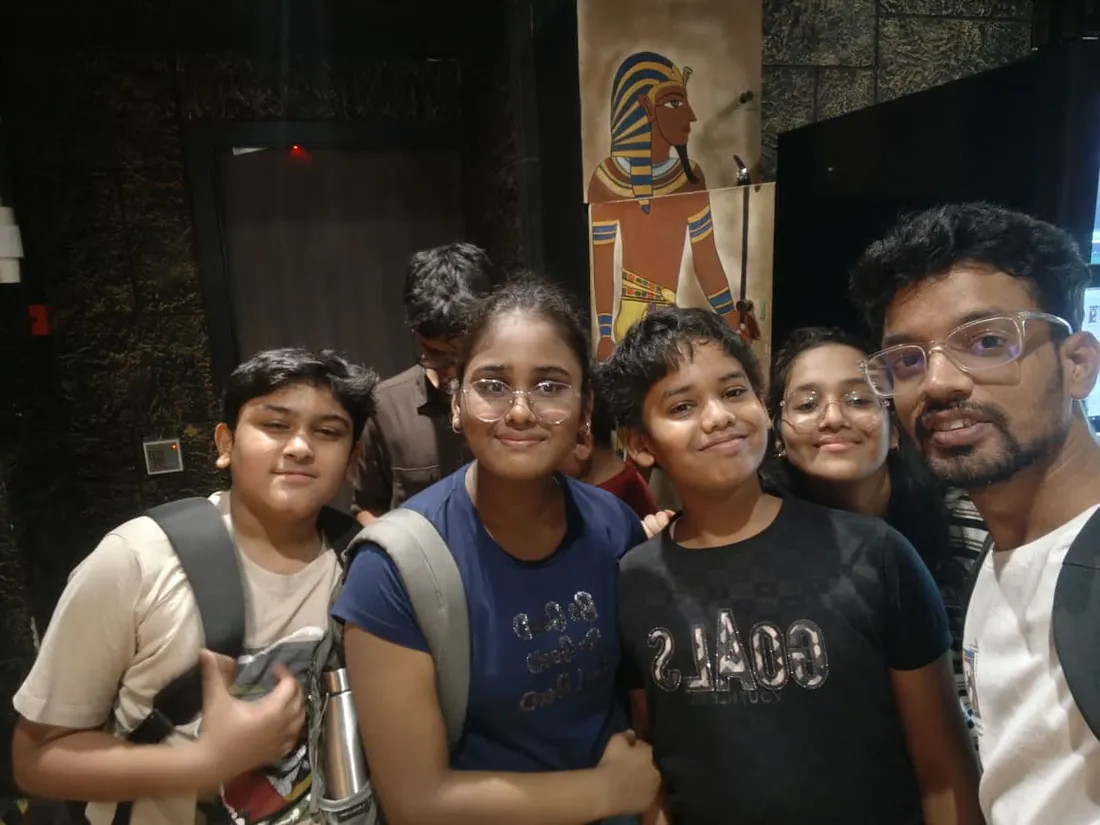
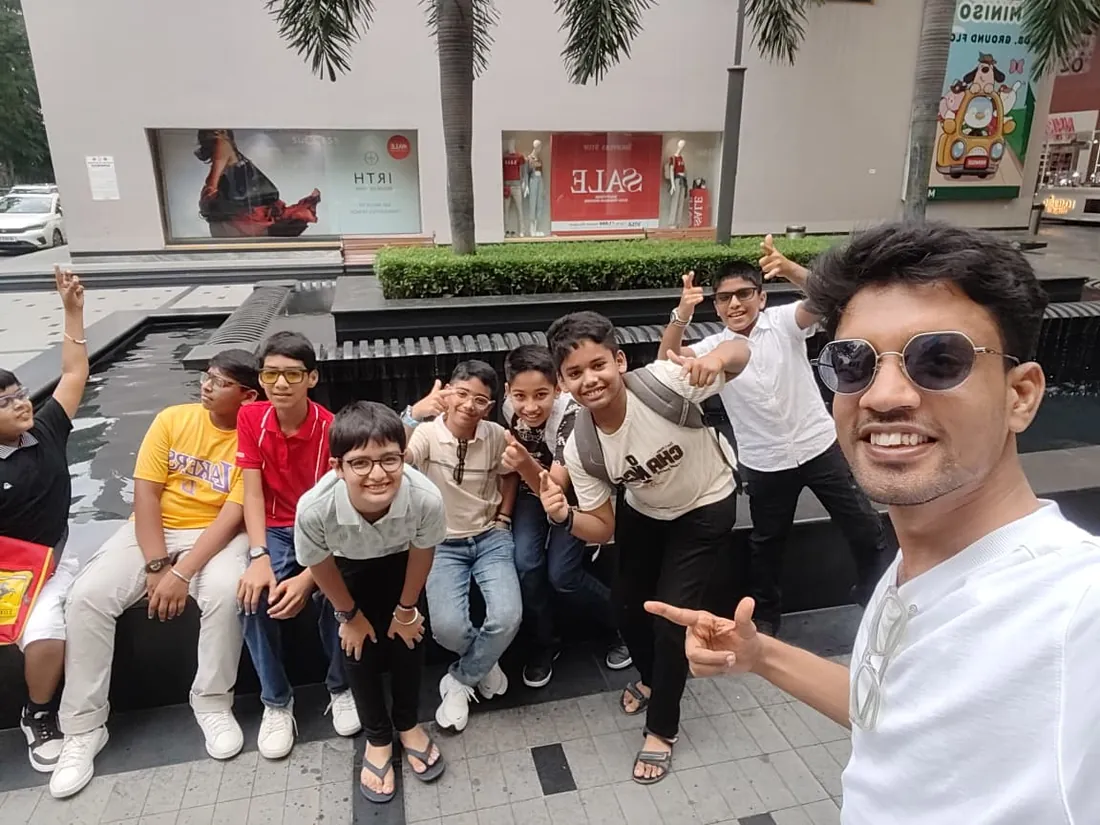
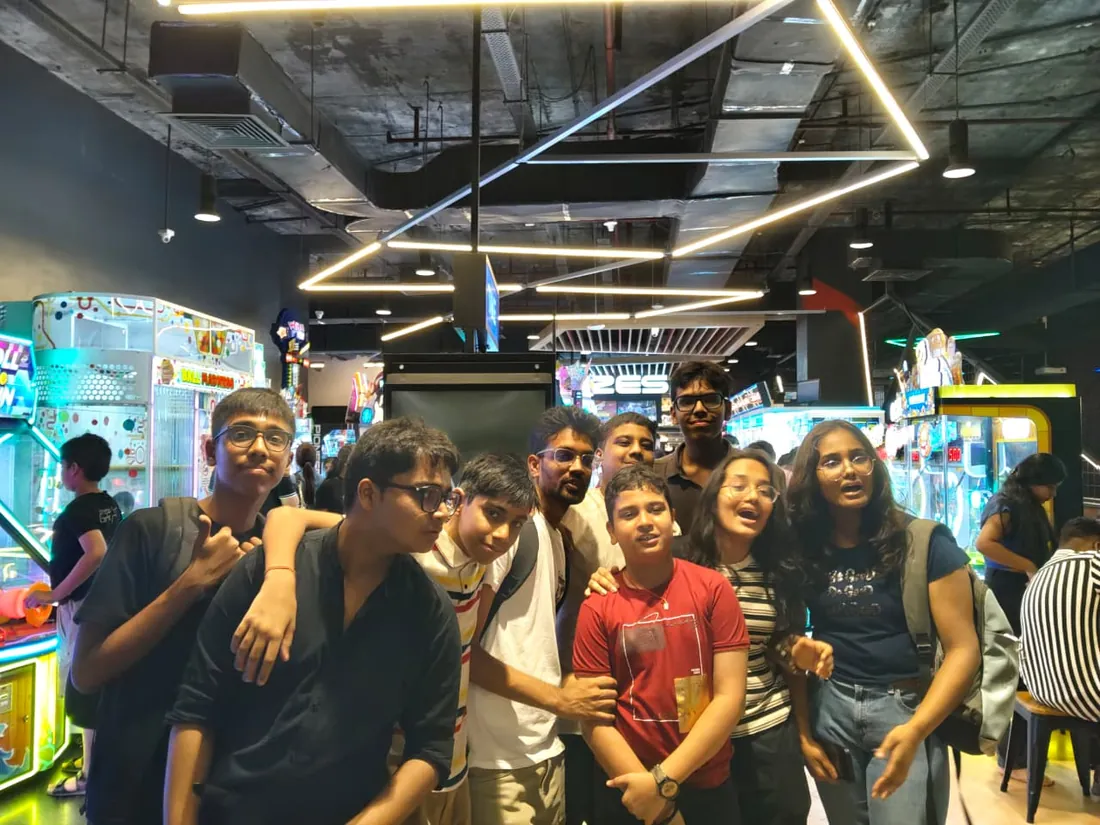
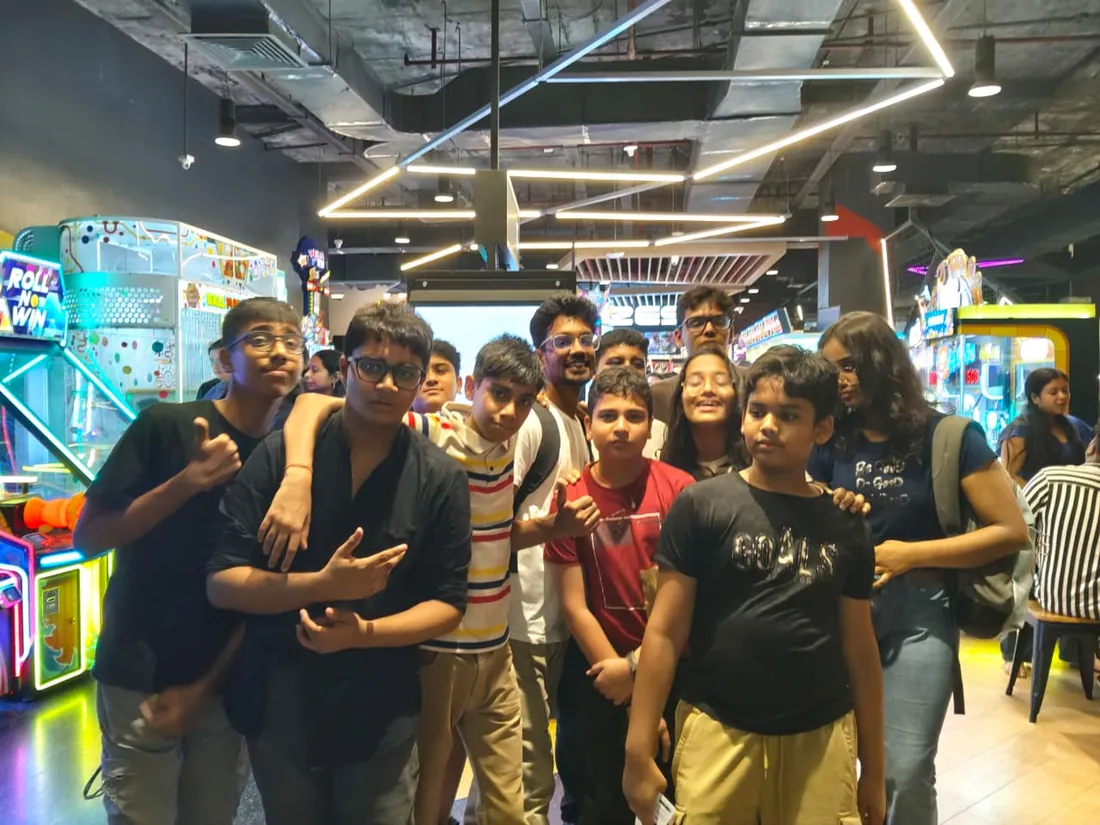
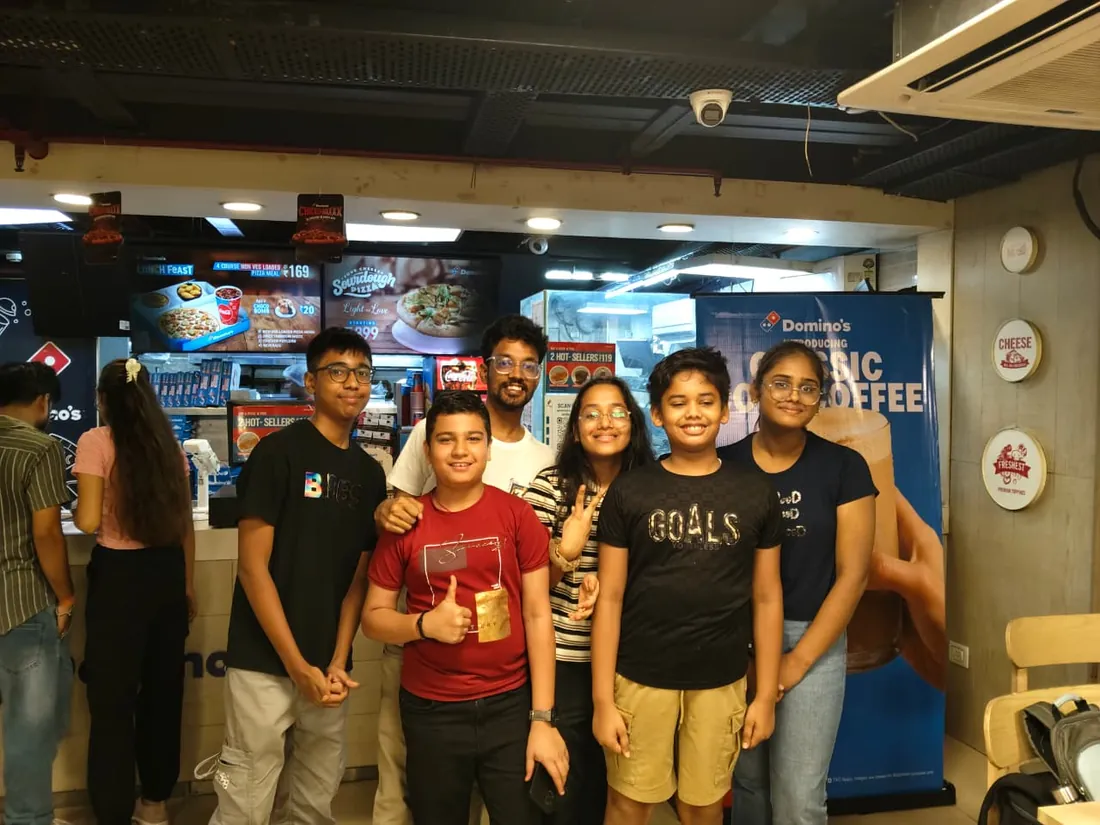
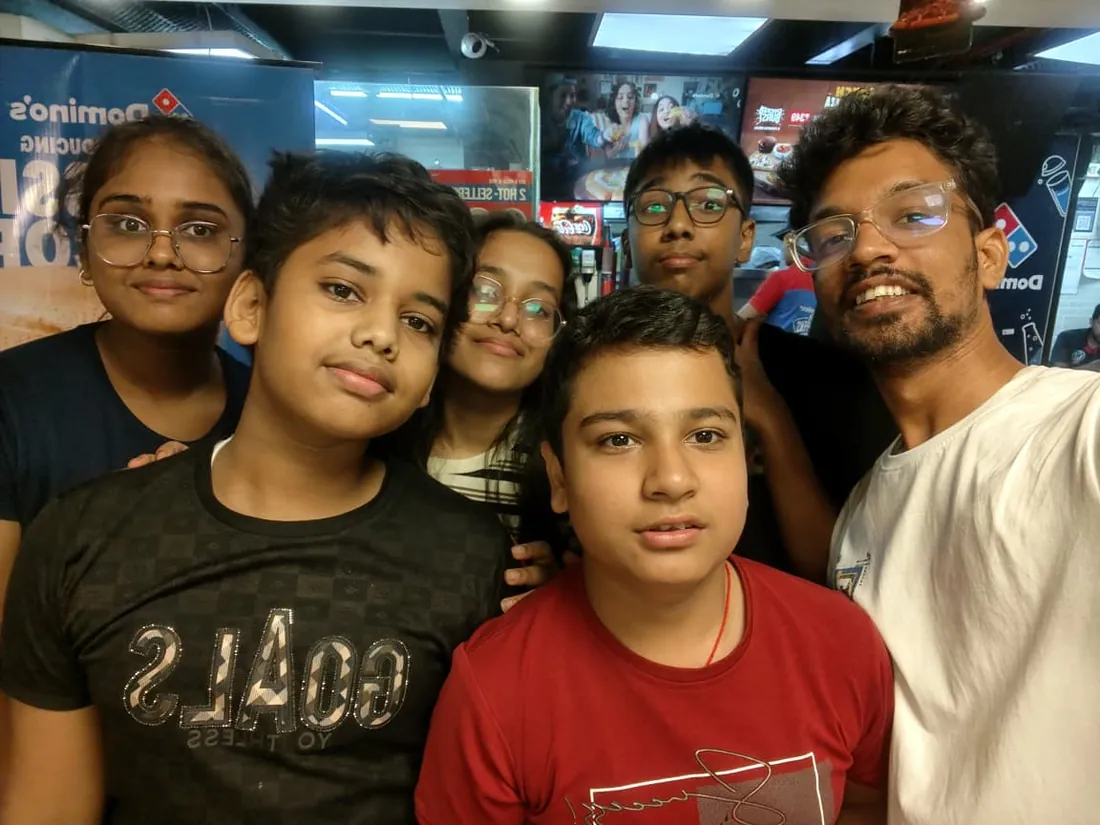
Real students. Real moments. Real joy.
These are our actual student meetups. No stock photos, no filters. Swipe through and meet the community you'll be joining.





























What families say
Straight from the parents and students who learn with us. Rated 4.9 across 547 Google reviews.
“Mivaan enjoys the class. He understands the concepts and completes his tasks with excitement. He started taking interest in coding… truly amazing class.”
“I absolutely love it here! I made new friends and learned important valuable coding skills while having the fun of my life. It's not just coding here, it's outings, bonding and most importantly preparing you for your future. Definitely five stars.”
“What stands out most is how excited my son is before every class. He looks forward to learning, problem-solving, and sharing what he's built. I've noticed a big boost in his confidence!”
“Modern Age Coders has been a game-changer for me! I struggled to grasp IT concepts and coding before joining, but their classes transformed everything. I'm now the topper in my class and can confidently write complex programs with ease.”
“Modern Age Coder have wonderful teachers who teach in a clear, easy and practical way. The teacher boosts students' confidence, keeps them updated with technology, and inspires them to learn without hesitation.”
“The one step solution for my son. Modern Age Coders make learning coding so simple that kids love it.”
“Coding classes here make learning very interesting and conceptual. The teachers teach us in a very easy-to-understand and efficient manner.”
“One of the most wonderful education centres out there. Education is not limited to school syllabus but focuses on skill development. Learning here has been a wonderful journey and still continuing.”
“I highly recommend this computer coding class! The teachers are incredibly knowledgeable and passionate about coding. They make every session engaging and insightful.”
“My child Dhairya is really enjoying the Modern Age Coder IT classes. This is his first online class, and he eagerly looks forward to it.”
“Very good classes. Don't worry about coding. They teach the best, especially Shivam sir.”
“Very good classes. Makes learning very easy and interactive.”
Hear it from our students
Real parents and students in their own words, on our public YouTube channel.
Straight answers about Copilot Studio Agent Masterclass for Professionals
- Who should take this course?
- Intermediate to advanced (working professionals; no prior agent experience assumed, business software fluency expected). It suits analysts and process owners who know exactly which workflows are broken and want to ship the agent that fixes one, with the evidence to defend it; it professionals and microsoft 365 admins who will be asked to govern agents either way, and would rather be the person who understands entra agent id, dlp and agent 365 before the first incident; developers and power platform makers adding the 2026 agent stack (mcp, a2a, computer use, evaluations) to skills employers already recognise.
- What will they learn and build?
- Gartner projects that over 40% of agentic AI projects will be canceled by the end of 2027, and that by 2027, 40% of enterprises will demote or decommission autonomous agents due to governance failures.
- How deeply are topics covered?
- The course runs 24 classes (12 weeks · 2 classes/week) at 4-6 hours/week recommended, across 5 phases listed week by week in the syllabus below. A structured, well-paced 24-class curriculum taught step by step, with a real deliverable in every single class.
- Who teaches it?
- Modern Age Coders mentors, who teach the live classes themselves. You can watch them at work in the free class recordings before you decide.
- How do practice, feedback and assessment work?
- Classwork every session, a task after every class, monthly reviews that mix in earlier topics, and a final project defended live, plus a written assessment that decides the certificate: real knowledge and real work, with a free retest after revision if needed. Doubt support between classes over WhatsApp, so a blocked flow or a failed evaluation never waits four days. A certificate you earn by passing the final assessment, with a free retest after revision if needed.
- What does it cost?
- One plan, taught 1-on-1 only, billed per month of private classes. The price is shown in your currency in the plans section. Monthly billing, cancel any time.
- When can classes take place?
- Live classes are scheduled around your week: as a 1-on-1 student you choose your own slots with your mentor, and international students are scheduled in their own timezone. Ask on WhatsApp for the current availability.
- Can I watch the teaching before deciding?
- Yes. Full recordings of real 13 and up classes are free to watch, free with a Google sign-in. These recordings show how we teach, not the exact syllabus of this course. Some classes are in English and some in Hindi; everyone follows at their own pace. Watch a class end to end, like you are in it. Sessions are interactive and each moment builds on the last.
- Can I enroll without a live demo?
- Yes. Choose a plan on this page and enroll directly; a booking or a demo is not required. A free live demo is optional, for anyone who wants to meet a mentor first. Outside India, our team confirms the plan and completes payment with you over WhatsApp, so allow a little time for that step.
Common Questions About Copilot Studio Agent Masterclass for Professionals
Get answers to the most common questions about this comprehensive program
Still have questions? We're here to help!
Contact UsWhy Choose Copilot Studio Agent Masterclass for Professionals?
Related Courses You May Like
Continue your learning journey with these recommended programs
 AI Agents & Automation
AI Agents with Microsoft Copilot Studio for Teens
Build real AI agents with Microsoft Copilot Studio in 24 live 1-on-1 online classes for ages 13-18: ...
Explore Course AI Agents & Automation
AI Agents with Microsoft Copilot Studio for College Students
Build business-grade AI agents in Microsoft Copilot Studio: 24 live 1-on-1 online classes on knowled...
Explore CourseRelated Articles & Guides
Deepen your knowledge with these hand-picked articles
 Artificial Intelligence
14 min read
Artificial Intelligence
14 min read
Agent Terminology in AI: A Simple Guide to Understanding AI Agents
Decode AI agent terminology in ai with this beginner-friendly guide. Learn about autonomous agents, ...
Read Article Technology
26 min read
Technology
26 min read
Best Data Science Courses in India for Students and Professionals in 2026
Comprehensive guide to the best data science courses in India for 2026. Compare IITs, IIMs, online p...
Read ArticleReady to start Copilot Studio Agent Masterclass for Professionals?
Book a free demo class to meet your mentor and see how we teach, with no commitment. Or enrol now and start this week.