RTJ / WEB / 01
React
Components, state and real interfaces.
Open the syllabusPeru · Developers and career changers · Live online, in English
Plenty of advice about remote work is guesswork. This page sticks to what can be checked: what a public employer skills framework lists for software developers, how Peruvians in different jobs score in English, what Peru's clock means for working with teams in other countries, and what a home set-up in Peru looks like by the numbers. Then it turns those facts into a skills plan, and is plain about what no course, including ours, can promise.
Teaching live online since 2020 · 10,000+ students worldwide · technical English used in every class
Straight answer
Remote technology employers abroad list the same core skills as any software team: programming, testing, Git, databases, clear writing, and the confidence to discuss work in English on calls. Peru's fixed UTC minus 5 clock overlaps closely with North American hours. Modern Age Coders teaches these skills live online in English to adults and students in Peru, either with a level-matched group of up to twenty or privately, whenever suits you on the Lima clock. Nobody can honestly guarantee you a remote job or a salary, and we do not; our part is the skills.
Where to start
The habits distributed teams rely on, a language large employers use, and the new tools of AI-assisted development.

RTJ / 01
Branches, pull requests, reviews and written discussion: the way remote teams work together without sharing a room or a clock.
Open the syllabus →
RTJ / 02
Core Java, object-oriented design and back-end services, the stack many larger companies hire for, taught live with code review.
Open the syllabus →
RTJ / 03
For learners over 18: working with Codex and Claude Code while keeping tests, review and judgement in your own hands.
Open the syllabus →What employers list
The same skills as on-site jobs, with more weight on writing, listening and working without someone at the next desk. The clearest public source is O*NET, the US Department of Labor's occupational database; its profile of software developers draws on surveys of people in the job and on employers' postings.
O*NET lists programming among the transferable skills for software developers, with systems analysis and complex problem solving. Its detailed activities include developing testing routines and modifying software to improve performance. Its tool lists include Git for version control, Atlassian JIRA for tracking work and Slack for team messages.
It flags certain tools as "Hot Technologies", which it defines as "requirements most frequently included across all employer job postings". That is a useful, evidence-based list to check a course syllabus against.
Among the essential skills O*NET lists are reading comprehension, active listening, writing and speaking. Among knowledge areas it lists "English Language". Among work activities: communicating with supervisors, peers or subordinates, and documenting information.
Its work-context survey found teamwork rated extremely important by 71% of respondents. Its listed video tools include Zoom, Google Meet and Microsoft Teams. For a remote developer, those calls are where the job is visible.
O*NET describes the United States. Other countries' employers differ in detail, but most remote roles advertised internationally are written in English and assume the same kinds of tools. Our reading of the framework is that for a remote developer, being understood is part of the technical skill, not an extra.
English by job
Moderate overall and uneven across jobs. EF's English Proficiency Index 2025 gives Peru a score of 519, Lima 555, and breaks Peruvian test-takers down by job function. People working in IT score 522.
| Job function | Score | EF band |
|---|---|---|
| Strategy and project management | 589 | High |
| Customer service | 585 | High |
| Marketing | 565 | High |
| Operations | 554 | High |
| Sales | 547 | Moderate |
| Human resources | 542 | Moderate |
| Admin and clerical | 540 | Moderate |
| Legal | 532 | Moderate |
| Teacher | 532 | Moderate |
| IT | 522 | Moderate |
| Unspecified or unemployed | 506 | Moderate |
| Accounting and finance | 484 | Low |
| Student | 482 | Low |
Source: EF English Proficiency Index 2025, Peru country page (job function data), read on 9 November 2026. EF bands: high from 550, moderate from 500, low from 450. EF tests adults who choose to take its online test, so these are indications, not a census.
IT sits in the middle of the Peruvian table, below project management, customer service and marketing. Technical people in Peru read plenty of English documentation; the numbers suggest the gap is in the rest of the language.
EF's skill breakdown for Peru points the same way: reading scores 540, speaking 480. Speaking is exactly what a remote call demands.
Our reading: practise English inside technical work, not beside it. Explaining your own code aloud, writing pull request descriptions, and arguing a design choice with a mentor all build the language a remote team uses.
That is why every one of our classes is taught in English. Our mentors in India pace their English to the learner and get used to each accent, which keeps the practice steady rather than stressful.
The Lima clock
North America overlaps most. Peru stays on UTC minus 5 all year, with no daylight saving, so in the northern winter Lima shares New York's clock exactly and in the northern summer it is one hour behind. This short Python lesson measures the overlap instead of guessing it.
For two dates in 2026, one in January and one in July, it asks: if everyone works 09:00 to 18:00 on their own clock, how many hours do Lima and each other city share? It uses Python's zoneinfo, which reads the tz database, so daylight saving is handled by the data, not by hand.
The overlap of two intervals is the earlier end minus the later start. If that comes out negative, there is no overlap, so the function returns max(hours, 0).
New York: 9 shared hours in January, 8 in July. In July, New York moves to summer time and Lima does not.
Los Angeles: 6 in January, 7 in July. Here summer time helps: the US west coast moves an hour closer to Lima.
Madrid: 3 in January, 2 in July. Working with Spain is possible, but the shared window is short, and every meeting has to be planned.
from datetime import datetime, date, time
from zoneinfo import ZoneInfo

LIMA = ZoneInfo('America/Lima')
OTHERS = ['America/New_York', 'America/Los_Angeles', 'Europe/Madrid']

def overlap_hours(day, other, start=9, end=18):
    tz = ZoneInfo(other)
    a0 = datetime.combine(day, time(start), LIMA)
    a1 = datetime.combine(day, time(end), LIMA)
    b0 = datetime.combine(day, time(start), tz)
    b1 = datetime.combine(day, time(end), tz)
    hours = (min(a1, b1) - max(a0, b0)).total_seconds() / 3600
    return max(hours, 0)

for day in [date(2026, 1, 14), date(2026, 7, 15)]:
    nine = datetime.combine(day, time(9), LIMA)
    print(day, 'Lima 09:00 =', end=' ')
    print(', '.join(nine.astimezone(ZoneInfo(o)).strftime('%H:%M') for o in OTHERS))
    for o in OTHERS:
print(' ', o, overlap_hours(day, o), 'shared office hours')2026-01-14 Lima 09:00 = 09:00, 06:00, 15:00
America/New_York 9.0 shared office hours
America/Los_Angeles 6.0 shared office hours
Europe/Madrid 3.0 shared office hours
2026-07-15 Lima 09:00 = 10:00, 07:00, 16:00
America/New_York 8.0 shared office hours
America/Los_Angeles 7.0 shared office hours
Europe/Madrid 2.0 shared office hoursExact output from our run with Python 3.14 and the tz data on that machine. The 09:00 to 18:00 working day is our assumption; teams vary.
The lesson in the lesson: never hard-code an offset like "minus 5" for a city that observes daylight saving. A remote developer who schedules a meeting with a fixed offset will be an hour wrong for half the year. Store times with their zone, convert at the edge, and let the tz database do the rest.
America/Sao_Paulo in the list and explain the result.Team tools and home set-up
A reliable computer, a stable connection, a quiet place for calls, and fluency with the handful of tools distributed teams share. The first two are less common in Peru than people assume.
INEI reports that in the second quarter of 2026, 95.2% of Peruvians aged 25 to 40 used the internet, but only 36.4% of households nationwide had at least one computer. In Lima Metropolitana, 84.7% of households had an internet service.
Our reading: being online is nearly universal for working-age Peruvians; having a proper computer and a dependable connection for an eight-hour day is not. That is worth solving before applying for remote roles.
Version control with Git and a hosting service; a ticket tracker such as JIRA; team chat such as Slack; and video calls in Zoom, Google Meet or Microsoft Teams. All appear in O*NET's tool lists for software developers.
None is hard to learn alone. What takes practice is using them well in English: a clear ticket, a short status message, a review comment that is kind and precise.
| Expectation | Where it shows up | How we practise it |
|---|---|---|
| Readable code | Code review | Mentor review of every project |
| Tests | Pull requests | Tests written before features in later levels |
| Git fluency | Every change | All projects kept in repositories |
| Written English | Tickets and messages | Commit messages and short write-ups |
| Spoken English | Daily calls | Explaining code aloud in every class |
| Time awareness | Meetings across zones | The overlap lesson above, and booking in your own time zone |
The first two columns summarise O*NET's software developer profile (tasks, work activities and tools), read on 9 November 2026. The third column is our own teaching practice.
A skills plan
In steps you can check, roughly in this order. This is our plan, built from the framework above; it is not a promise of any job.
We looked for an official figure on how many Peruvians work remotely for employers abroad, and found none from a primary source. So this page gives no such number, and we would be wary of anyone who quotes one without a source.
The same goes for pay. Salaries for remote roles vary by employer, country and contract, and we do not publish figures or promises.
Everything in the plan above, taught live in English, whether you join a group at your level or study privately. Mentors read your code, make you explain it, and keep your projects in Git from the start.
Our certificate of completion is our own. It is not a Peruvian qualification and does not stand in for experience; finished, explained projects do more.
Worth reading next: our Java course page for Peru, the guide for working professionals, the one for university students, and, written in Spanish, desarrollo web en inglés. The full list is on the Peru hub.
Readiness
Our own readiness levels, built from the employer framework on this page. Reaching level 6 does not guarantee a job; it means you can show what remote teams ask for.
| Level | In code | In writing | On a call |
|---|---|---|---|
| 1. Fluent | Solve small problems without notes | Comment your code in English | Say what a function does |
| 2. Versioned | Everything in Git, with branches | Clear commit messages | Walk through a diff |
| 3. Tested | Tests that catch your own bugs | A README that works | Explain what a test proves |
| 4. Collaborative | Review and be reviewed | Kind, precise review comments | Disagree politely and clearly |
| 5. Finished | Two deployed projects | A short project write-up | Present one in five minutes |
| 6. Remote-ready | Pair on a problem live | A daily status in three lines | Hold a 30-minute technical interview |
Most working developers in Peru reach level 1 quickly; levels 4 and 6 are where practice in English matters most.
Record yourself presenting a project. Watch it once. Then do it again.
Levels 1 to 3 come first, whatever the job. Do not skip testing to get to projects faster.
Keep everything in Git from day one, even exercises. It becomes your record.
More courses
Taught live, in English, by one mentor, in a group or one to one.
RTJ / WEB / 01
Components, state and real interfaces.
Open the syllabusRTJ / WEB / 02
Types that make large codebases safer.
Open the syllabusRTJ / WEB / 03
Queries, joins and schema design.
Open the syllabusRTJ / DATA / 01
From zero to files, APIs and automation.
Open the syllabusRTJ / DATA / 02
pandas, charts and careful conclusions.
Open the syllabusRTJ / DATA / 03
Machine learning foundations, built by hand.
Open the syllabusRTJ / MORE / 01
Android and server-side Kotlin.
Open the syllabusRTJ / MORE / 02
iOS apps in Apple's language.
Open the syllabusRTJ / MORE / 03
Timed problems, as in coding interviews.
Open the syllabusHow it runs
Any day, any time, flexible: choose a batch, or for a very personalised plan choose 1-on-1 at the hour that suits your family.
Morning
An early class on the Lima clock, before your own workday.
Night
A late slot for people already working full days.
1-on-1
One mentor, hours that move with your job.
Every project lives in a repository.
Your mentor reviews and questions it.
You explain your work in every class.
Commit messages, READMEs and notes.
One person for the whole course.
Join a level group, or book a mentor alone.
Student work
Working tools and applications made by people who stayed the course. The student labs collect many more.

AI and ML
An AI nutrition coach that reads what you eat and works you toward a target.
AI and ML
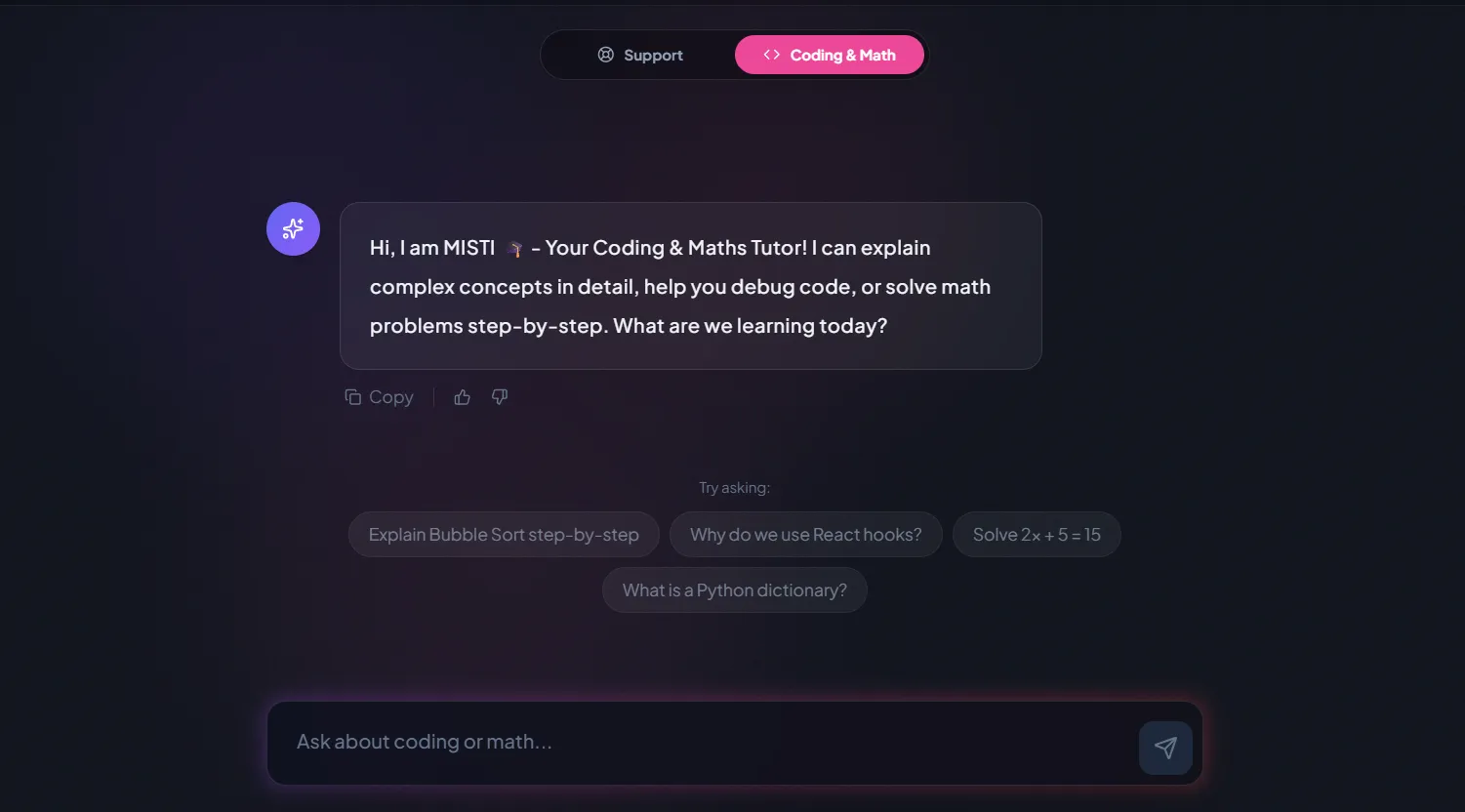
A chatbot that answers mathematics and programming questions, built and deployed by a student.
AI and ML
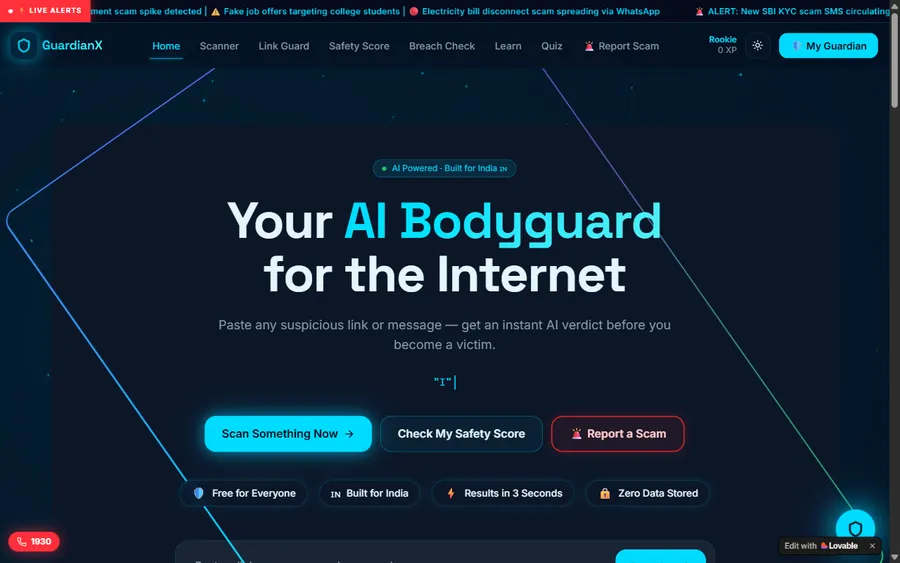
An assistant that helps a young person recognise unsafe situations online.
Web app
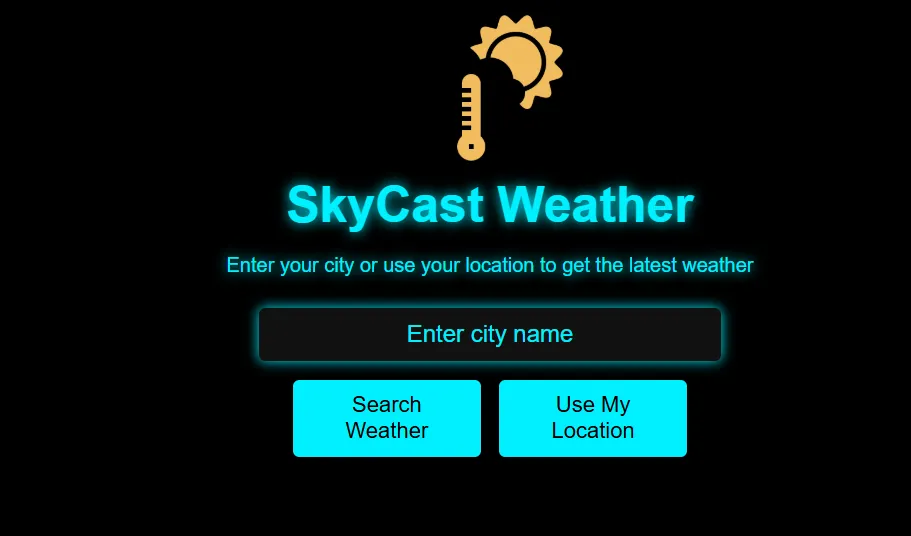
A weather forecasting site with live conditions for any location.
Fees
Our courses are billed in US dollars each month to a card. What appears in soles depends on the rate your bank applies, so the figure can differ slightly between months.
Free first class
Free
no card required
Group batch
$100 USD
a month, eight live classes
One to one
$150 USD
a month, eight live classes
What families say
Google reviews left by our learners and their families, reproduced as written.
★★★★★
"The one step solution for my son. Modern Age Coders make learning coding so simple that kids love it. The teachers explain complex concepts clearly with practical exercises and interactive content."
Ria Mukherjee
Parent
★★★★★
"Modern Age Coders has been a game-changer for me. I struggled to grasp IT concepts and coding before joining, but their classes transformed everything. I can now confidently write complex programs with ease."
Samriddha Mondal
Student
★★★★★
"One of the most wonderful education centres out there. Education is not limited to school syllabus but focuses on skill development."
Vansh Agarwal
Student
★★★★★
"My child Dhairya is really enjoying the Modern Age Coders classes. This is his first online class and he eagerly looks forward to it. I can already see his improvement, and the teachers are very cooperative."
Sonam Oswal
Parent of Dhairya
★★★★★
"Modern Age Coders have wonderful teachers who teach in a clear, easy and practical way. The teacher boosts students' confidence and inspires them to learn without hesitation."
Sonu Goyal
Parent
★★★★★
"I highly recommend this computer coding class! The teachers are incredibly knowledgeable and passionate about coding."
Ritu Kedia
Parent
Learners ask
No. Our teaching language is English, in every live online session. The mentors, who work from India, keep their speech clear and adjust to how fast you follow and to your accent. Using English for technical work every week is a large part of what the classes give you.
No course can promise that, and we do not. What we can do is train what the frameworks on this page describe, from code and tests to Git and spoken English, and see that your portfolio holds finished work. Whether to hire you is always the employer's call.
We found no official figure from a primary source, so we do not quote one. Treat any number without a named source with care.
North American ones. Lima never changes its clock (UTC minus 5 year-round), so it shares New York's clock in the northern winter and is one hour behind in summer. Our Python lesson on this page measures the overlap for New York, Los Angeles and Madrid.
If you can read documentation, you have a base. EF's 2025 index scores Peruvians in IT at 522, in its moderate band, with speaking the weakest skill nationally. Live classes in English work on exactly that.
It depends on the role. JavaScript or TypeScript for web, Python for data and automation, Java or Kotlin for larger back-end systems. Fluency in one, plus Git and SQL, matters more than a little of everything.
Any day, any time, flexible: choose a batch, or for a very personalised plan choose 1-on-1 at the hour that suits your family. India runs a constant 10 hours 30 minutes ahead of Lima, which makes a 07:00 Lima start 17:30 for the mentor.
No. Contracts, taxes and legal status for working remotely from Peru are questions for a qualified adviser in Peru. We teach technical and communication skills only.
Yes, our own certificate of completion. It is not a Peruvian qualification. For remote employers, finished projects you can explain usually say more.
By card, monthly, in US dollars; your bank converts the amount into soles. The first class is free and needs no card.
Further reading
Pages for the next step.
Inside one live class.
Thinking before tools and shortcuts.
Projects by our learners.
Each tool's terms and age rules.
All syllabuses, in full.
All our Peru pages.
Part of the guide: Every Peru page
More guides: Coding and AI classes in Peru · En español: clases de programación en inglés · Start here: English-medium coding in Lima · By age and stage: AI and coding for professionals · Subjects and courses: AI agents course · Exams, olympiads and school holidays: IB computer science tutor · Regions of Peru: Amazonas region · Cities: Arequipa: coding for every age · Lima and Callao districts: Programación para niños en Ancón
Start here
In one free class a mentor works through a real problem with you in English, sees where your code and your spoken English stand, and suggests where to begin: a language, Git and teamwork, or interview practice. You leave with a plan, whether or not you join.
Reading first? How we teach shows a class from start to finish; the course list has every syllabus.
WhatsApp us · +91 91233 66161 · connect@modernagecoders.com
All classes are live video from India, in English. WhatsApp us in English for a quick reply.
A priority demo is a full class of about 45 to 60 minutes. After the class the mentor sends a written skill report and a personal learning roadmap on WhatsApp. If you enrol, the demo fee is adjusted against your first month's fee. Share your demo Order ID with us on WhatsApp and we take it off.
Book a priority demo