Artificial Intelligence Masterclass
The AI beneath the hype: how machines search, reason, plan and decide, the canon university exams test and modern agent systems quietly reuse.
Syllabus updated August 2026
Recordings are free with a Google sign-in. These recordings show how we teach, not the exact syllabus of this course.
How long this course takes
This course runs 10-12 months (44-52 weeks) at 2 live classes/week + 4-6 hours practice. The range allows for background and pace: a complete beginner uses the full span, and a student with prior knowledge finishes sooner. The syllabus below is planned to the shorter end, with margin kept for revision.
For personalised duration planning, call +91 91233 66161 and we'll map a schedule to your goals.
At a glance
- Who it is for
- Complete beginner (18+); college students, graduates and working professionals. Age: 18+; college students, graduates and working professionals.
- Prerequisites
- None. Everything is taught from the first line
- Format
- Live, interactive classes with a real instructor, never pre-recorded videos. Live classes run about one hour.
- Language
- English or Hindi, depending on the batch.
- Duration
- 10-12 months (44-52 weeks)
- Weekly commitment
- 2 live classes/week + 4-6 hours practice
- Class size
- Group batches of 5 to 10 students, mini batches of 3 to 4, or 1-on-1.
- Certificate
- Certificate from Modern Age Coders, awarded on passing the final exam
- Watch first
- Free recordings of real classes for ages 13 and up, free with a Google sign-in. These recordings show how we teach, not the exact syllabus of this course.
- Live demo
- Optional. Enroll directly on this page, or book a free live demo if you would like to meet a mentor first.
How we teach
Deep understanding. Real projects. Expert guidance.
Learn coding, AI and maths through careful explanations, practical demonstrations, and hands-on problem-solving. Our instructors guide you from the foundations to advanced ideas, helping you understand what happens, why it happens, and how to build it yourself.
You will explore concepts step by step, write and improve code, investigate mistakes, ask questions, and apply your knowledge to meaningful projects. Lessons are designed around active participation, thoughtful feedback, and growing independence.
Expert-led live teaching, with practical participation built into every lesson.
- Students explain their thinking.
- Instructors demonstrate, then guide practice.
- Learners code, solve, or build during lessons.
- Questions and misconceptions get attention.
- Assignments receive useful feedback.
- Progress is checked before advancing.
Ready to Master Artificial Intelligence Course: Search, Logic & Agents?
Choose your plan and start your journey into the future of technology today.
Rated 4.9 across 547 Google reviews. Enroll directly, or see a class first. The free demo is a waiting list and needs no card. Monthly billing, cancel anytime.
Try this course in a full live class, today or tomorrow.The Priority Live Demo is a real class of about 45 to 60 minutes with a mentor reserved for you. You get a written skill report afterwards, and the fee is adjusted against your first month if you enrol.
Book priority demo · ₹499International Students (Outside India)
Billed monthly in US dollars, the same price in every country. Contact us with any questions.
Program Overview
Before AI meant chatbots, it meant something precise: algorithms that search enormous possibility spaces, represent knowledge in logic, reason under uncertainty and plan actions toward goals. That canon still runs the world, game AI, route planning, scheduling, robotics, diagnosis systems, it is what university AI papers actually examine, and it is exactly what modern LLM agent systems borrow when they need planning and search that works. This live online masterclass teaches it properly: search algorithms from BFS to A* and adversarial game play, propositional and first-order logic with constraint satisfaction, then reasoning under uncertainty, probability, Bayesian networks, Markov models, decision theory and classical planning, then intelligent systems: expert systems, agent architectures, robotics and vision from the AI perspective, and multi-agent systems with game theory. A finale month ships an intelligent-system capstone and sits the final exam.
The pace is honest: ten teaching months at two live classes a week plus four to six hours of practice, with two more in hand. Problem sets, monthly mixed reviews, phase exams, and a final exam that decides the certificate with a free retest.
What Makes This Program Different
- The real AI canon: search, logic, planning and probabilistic reasoning, taught with code
- University-aligned: this is the syllabus AI papers and competitive exams actually test
- Modern relevance made explicit: where game AI, robotics and LLM agents reuse each idea
- Every algorithm implemented: A* you wrote beats A* you memorized
- An honest 10-month arc with 2 months in hand
- Real assessment: weekly problem sets, monthly mixed reviews, phase exams and a final exam with a free retest
Your Learning Journey
Career Progression
Detailed Course Curriculum
Explore the complete week-by-week breakdown of what you'll learn in this comprehensive program.
Topics Covered
- What is Artificial Intelligence? Definitions and perspectives
- History of AI: from Dartmouth Conference to present
- AI winters and AI springs
- Turing Test and philosophical foundations
- Strong AI vs Weak AI
- Narrow AI, General AI (AGI), Super AI
- Symbolic AI vs Connectionist AI vs Hybrid AI
- AI paradigms: logic-based, knowledge-based, learning-based
- Rational agents and intelligent behavior
- PEAS framework: Performance, Environment, Actuators, Sensors
Projects You Build
- Simple reflex agent implementation
- Model-based agent for grid world
- Agent environment simulator
- AI timeline and evolution visualization
- Turing Test chatbot (rule-based)
Practice & Assignments
Study 20 landmark AI papers from history
Topics Covered
- Problem-solving as search
- State space representation
- Problem formulation: initial state, actions, goal test, path cost
- Tree search vs graph search
- Search strategies evaluation: completeness, optimality, time, space
- Breadth-First Search (BFS): algorithm and analysis
- Uniform Cost Search (UCS)
- Depth-First Search (DFS): algorithm and analysis
- Depth-Limited Search (DLS)
- Iterative Deepening DFS (IDDFS)
Projects You Build
- 8-puzzle solver with BFS/DFS
- Maze solver with multiple algorithms
- Route finding system (city maps)
- N-Queens problem solver
- Missionaries and Cannibals problem
- Search visualization tool
- Performance comparison framework
Practice & Assignments
Implement all uninformed search algorithms from scratch
Topics Covered
- Heuristic functions and admissibility
- Greedy Best-First Search
- A* Search: algorithm, optimality proof
- Heuristic design and dominance
- Memory-bounded heuristic search: IDA*, RBFS, SMA*
- Weighted A* and bounded suboptimal search
- Bidirectional heuristic search
- Pattern databases for heuristics
- Local search algorithms
- Hill-climbing and variants
Projects You Build
- A* pathfinding implementation
- 15-puzzle solver with pattern databases
- Route optimization with A*
- Simulated annealing for TSP
- Genetic algorithm for optimization
- Hill-climbing variants comparison
- Heuristic function designer tool
Practice & Assignments
Solve 30 search problems with optimal algorithms
Topics Covered
- Game theory basics for AI
- Game trees and game search
- Minimax algorithm
- Alpha-beta pruning
- Move ordering for better pruning
- Iterative deepening in games
- Evaluation functions for game states
- Quiescence search
- Transposition tables
- Monte Carlo Tree Search (MCTS)
Projects You Build
- Tic-Tac-Toe with minimax
- Chess AI with alpha-beta pruning
- Checkers AI implementation
- Connect-4 game AI
- Go AI with MCTS (simplified)
- Poker bot (partial information)
- Game AI framework with multiple algorithms
Practice & Assignments
Build 10 different game-playing AI agents
Topics Covered
- Knowledge-based agents
- Logic as knowledge representation
- Propositional logic: syntax and semantics
- Logical connectives: AND, OR, NOT, IMPLIES, IFF
- Truth tables and logical equivalence
- Inference in propositional logic
- Inference rules: Modus Ponens, And-Elimination
- Resolution and refutation
- Conjunctive Normal Form (CNF)
- Horn clauses and forward/backward chaining
Projects You Build
- Propositional logic inference engine
- SAT solver implementation
- Logic-based puzzle solver (Sudoku)
- Wumpus World agent with logic
- Circuit verification system
- Resolution theorem prover
- Knowledge base system
Practice & Assignments
Solve 40 logical reasoning problems
Topics Covered
- First-Order Logic (FOL) syntax
- Predicates, functions, quantifiers
- Universal and existential quantification
- Semantics and interpretation
- Using FOL for knowledge representation
- Unification algorithm
- Generalized Modus Ponens
- Forward chaining in FOL
- Backward chaining in FOL
- Resolution in FOL
Projects You Build
- FOL inference engine
- Prolog-like system in Python
- Automated theorem prover
- Knowledge base with FOL
- Family tree reasoning system
- Medical diagnosis system (logic-based)
- Natural language to FOL translator (simple)
Practice & Assignments
Build 10 knowledge-based systems with FOL
Topics Covered
- CSP framework: variables, domains, constraints
- Examples: map coloring, N-Queens, scheduling
- Backtracking search for CSP
- Variable ordering heuristics: MRV, degree heuristic
- Value ordering: least-constraining-value
- Inference in CSP: forward checking
- Arc consistency (AC-3 algorithm)
- Path consistency and k-consistency
- Local search for CSP: min-conflicts
- Constraint propagation
Projects You Build
- N-Queens CSP solver
- Sudoku solver with constraint propagation
- Map coloring problem
- Course scheduling system
- Resource allocation optimizer
- Timetable generator
- PHASE 1 MINI CAPSTONE: Intelligent Planning System with CSP
Assessment
Phase 1 exam: a practical build defended live, plus a written paper mixing this phase with everything before it
Topics Covered
- Uncertainty in AI systems
- Probability basics: events, axioms, rules
- Conditional probability and Bayes' Rule
- Bayesian reasoning
- Random variables: discrete and continuous
- Probability distributions
- Joint probability distributions
- Independence and conditional independence
- Inference using full joint distributions
- Marginalization and conditioning
Projects You Build
- Bayesian inference engine
- Naive Bayes spam filter
- Medical diagnosis system (probabilistic)
- Weather prediction system
- Probabilistic reasoning toolkit
- Bayesian calculator and visualizer
Practice & Assignments
Solve 50 probabilistic reasoning problems
Topics Covered
- Bayesian Network structure and semantics
- Conditional independence in Bayes nets
- Constructing Bayesian networks
- Compact conditional distributions: CPTs
- Exact inference in Bayesian networks
- Inference by enumeration
- Variable elimination algorithm
- Clustering algorithms for inference
- Junction tree algorithm
- Approximate inference: sampling methods
Projects You Build
- Bayesian Network inference engine
- Variable elimination implementation
- MCMC sampler for Bayes nets
- Medical diagnosis Bayes net
- Risk assessment system
- Bayes net learning from data
- Decision support system with Bayes nets
Practice & Assignments
Build 15 Bayesian network applications
Topics Covered
- Time and uncertainty
- Markov processes and Markov assumption
- Hidden Markov Models (HMM)
- HMM representation and semantics
- Forward algorithm for filtering
- Viterbi algorithm for most likely sequence
- Forward-backward algorithm for smoothing
- Baum-Welch algorithm for learning HMMs
- Applications: speech recognition, POS tagging
- Kalman filters for continuous state
Projects You Build
- HMM for speech recognition (simplified)
- POS tagger with HMM
- Robot localization with Kalman filter
- Particle filter for tracking
- Weather prediction with HMM
- Stock market HMM (simplified)
- Dynamic Bayesian network system
Practice & Assignments
Implement all temporal reasoning algorithms
Topics Covered
- Making decisions under uncertainty
- Utility theory and preferences
- Utility functions and axioms
- Maximum Expected Utility (MEU)
- Decision networks (influence diagrams)
- Value of information
- Value of perfect information (VPI)
- Sequential decision problems
- Markov Decision Processes (MDPs)
- MDP formulation: states, actions, transitions, rewards
Projects You Build
- Decision network solver
- MDP solver (value iteration, policy iteration)
- Grid world MDP
- Inventory management with MDPs
- Robot navigation with POMDP
- Medical treatment decision system
- Resource allocation optimizer
Practice & Assignments
Solve 25 decision-theoretic problems
Topics Covered
- Planning with probabilistic effects
- Contingency planning
- Conditional plans and execution monitoring
- Replanning strategies
- Online planning and acting
- Information gathering actions
- Exploration vs exploitation
- Multi-armed bandit problems
- UCB algorithms for exploration
- Monte Carlo planning
- Rollout algorithms
- Hierarchical planning under uncertainty
- Applications: robotics, autonomous systems
Projects You Build
- Contingent planner
- Multi-armed bandit solver
- Robot exploration system
- Adaptive planning agent
- Online planning framework
- Monte Carlo planner
Practice & Assignments
Build 10 planning under uncertainty systems
Topics Covered
- Planning problem representation
- STRIPS representation
- Actions: preconditions and effects
- State-space search for planning
- Forward (progression) state-space search
- Backward (regression) state-space search
- Heuristics for planning: ignore-preconditions, ignore-delete-lists
- Plan-space planning (partial-order planning)
- Graphplan algorithm
- Planning graphs and graph heuristics
Projects You Build
- STRIPS planner implementation
- Graphplan algorithm
- Blocks world planner
- Logistics planning system
- Robot task planner
- SAT-based planner
- HTN planner (simplified)
Practice & Assignments
Solve 20 classical planning problems
Topics Covered
- Knowledge engineering process
- Ontology definition and components
- Upper ontologies: Cyc, SUMO
- OWL (Web Ontology Language)
- RDF and semantic web
- Knowledge graphs
- Ontology design patterns
- Domain modeling
- Taxonomies and hierarchies
- Relationships and properties
Projects You Build
- Domain ontology creation (healthcare/e-commerce)
- Knowledge graph builder
- Ontology-based reasoning system
- Semantic search engine
- Question answering with knowledge graphs
- Ontology alignment tool
- SPARQL query system
Practice & Assignments
Build 5 ontologies for different domains
Topics Covered
- Learning agents architecture
- Supervised learning integration in AI
- Decision tree learning: ID3, C4.5
- Information gain and entropy
- Ensemble learning in AI
- Unsupervised learning for AI: clustering
- Reinforcement learning fundamentals (AI perspective)
- Q-learning in AI agents
- Temporal difference learning
- Exploration strategies
Projects You Build
- Decision tree AI agent
- Reinforcement learning grid world
- Q-learning robot navigator
- Learning agent framework
- Hybrid reasoning system (logic + learning)
- Transfer learning AI agent
- Meta-learning experiment
Practice & Assignments
Integrate learning into 15 AI systems
Topics Covered
- Explainable AI (XAI) importance
- Explanation in expert systems
- Trace-based explanations
- Rule-based explanation generation
- Argumentation and justification
- Counterfactual explanations
- Contrastive explanations
- Transparency vs performance tradeoffs
- LIME for model explanations
- SHAP values in AI
Projects You Build
- Explainable expert system
- Explanation generator for decisions
- Argumentation framework
- Counterfactual explanation system
- XAI dashboard
- Causal reasoning engine
- Interactive explanation interface
Practice & Assignments
Add explanations to all AI systems built
Topics Covered
- Integrated AI system design
- Combining multiple AI techniques
- Reasoning under uncertainty
- Planning and decision-making
- Learning and adaptation
- Explanation generation
Projects You Build
- PHASE 2 CAPSTONE: Intelligent Decision Support System
- Requirements: Bayesian reasoning, planning, decision theory, learning, explanations
- Option 1: Medical diagnosis and treatment planning system
- Option 2: Autonomous robot mission planner
- Option 3: Smart home energy management system
- Option 4: Financial portfolio advisor with uncertainty
Assessment
Phase 2 exam: a practical build defended live, plus a written paper mixing this phase with everything before it
Topics Covered
- Expert systems overview and history
- MYCIN, DENDRAL, XCON case studies
- Expert system architecture: knowledge base, inference engine, UI
- Rule-based expert systems
- Forward chaining systems
- Backward chaining systems
- Conflict resolution strategies
- Certainty factors and fuzzy logic
- Dempster-Shafer theory
- Knowledge acquisition bottleneck
Projects You Build
- Medical diagnosis expert system
- Legal reasoning expert system
- Technical troubleshooting system
- Financial advisory expert system
- Expert system shell development
- Rule-based configurator
- Fuzzy logic controller
Practice & Assignments
Build 10 domain-specific expert systems
Topics Covered
- Agent theory and design
- Deliberative agents (BDI: Belief-Desire-Intention)
- Reactive agents and subsumption architecture
- Hybrid agent architectures
- Layered architectures: InteRRaP, TouringMachines
- Agent communication languages (ACL)
- FIPA specifications
- Agent reasoning cycles
- Agent planning and execution
- Agent learning and adaptation
Projects You Build
- BDI agent implementation
- Reactive agent for dynamic environment
- Hybrid agent architecture
- Communicating agents system
- Personal assistant agent
- Agent-based automation system
- Situated agent in simulation
Practice & Assignments
Design and implement 12 intelligent agents
Topics Covered
- AI in robotics overview
- Robot perception: sensors and processing
- Computer vision for robotics
- Object recognition and tracking
- SLAM (Simultaneous Localization and Mapping)
- Robot motion planning: configuration space
- Path planning algorithms for robots
- Potential field methods
- Probabilistic roadmaps (PRM)
- Rapidly-exploring Random Trees (RRT)
Projects You Build
- Robot simulator with AI planning
- Path planning visualizer (PRM, RRT)
- SLAM implementation (simplified)
- Behavior-based robot controller
- Robot learning from demonstration
- Autonomous navigation system
- ROS-based AI agent (if feasible)
Practice & Assignments
Implement 10 robotics AI algorithms
Topics Covered
- Vision as AI problem
- Image formation and camera models
- Image processing fundamentals
- Edge detection: Canny, Sobel
- Feature detection: SIFT, SURF, ORB
- Image segmentation techniques
- Object recognition classical methods
- Template matching
- Hough transform for shape detection
- Optical flow and motion analysis
Projects You Build
- Object detector (classical methods)
- Face recognition system
- Motion tracking application
- Image segmentation tool
- 3D reconstruction (simple)
- Visual reasoning system
- Autonomous vehicle perception (simulated)
Practice & Assignments
Build 12 computer vision AI applications
Topics Covered
- Language as AI challenge
- Syntax: parsing and grammars
- Context-free grammars
- Parsing algorithms: CKY, Earley
- Semantic analysis and representation
- First-order logic for semantics
- Lambda calculus for meaning
- Discourse and pragmatics
- Coreference resolution
- Information extraction
Projects You Build
- Parser for natural language
- Semantic representation generator
- Question answering system (logic-based)
- Dialogue system with state management
- Information extraction system
- Natural language interface to database
- Story understanding system
Practice & Assignments
Build 10 NLU systems with AI techniques
Topics Covered
- Multi-agent systems (MAS) introduction
- Agent interactions and coordination
- Cooperation, collaboration, competition
- Agent communication protocols
- Speech acts and performatives
- Contract Net Protocol
- Negotiation and bargaining
- Auction mechanisms
- Coalition formation
- Task allocation in MAS
Projects You Build
- Multi-agent coordination system
- Negotiation protocol implementation
- Auction system with agents
- Coalition formation simulator
- Distributed task allocation
- Multi-agent marketplace
- Swarm intelligence application
Practice & Assignments
Implement 12 multi-agent scenarios
Topics Covered
- Game theory foundations
- Normal form games
- Nash equilibrium concept
- Finding Nash equilibria
- Dominant strategies
- Mixed strategies
- Extensive form games
- Subgame perfect equilibrium
- Repeated games and folk theorem
- Evolutionary game theory
Projects You Build
- Game theory solver (Nash equilibrium)
- Repeated game simulator
- Auction mechanism with game theory
- Voting system analyzer
- Cooperative game solver
- Mechanism design implementation
- Multi-agent game scenarios
Practice & Assignments
Analyze 20 game-theoretic scenarios
Topics Covered
- Swarm intelligence principles
- Ant Colony Optimization (ACO)
- Particle Swarm Optimization (PSO)
- Bee algorithms
- Flocking and bird behavior (Boids)
- Stigmergy and indirect communication
- Self-organization in swarms
- Emergent intelligence
- Distributed sensing and actuation
- Robot swarms
Projects You Build
- Ant Colony Optimization for TSP
- Particle Swarm Optimizer
- Flocking simulation (Boids)
- Robot swarm simulator
- Stigmergy-based system
- Cellular automata explorer
- Artificial life simulation
Practice & Assignments
Implement 8 swarm intelligence algorithms
Topics Covered
- Social intelligence in AI
- Theory of Mind in AI
- Emotion recognition and affective computing
- Sentiment analysis for AI
- Social robots and companions
- Conversational AI and chatbots
- Personality in AI agents
- Trust and transparency in AI
- Anthropomorphism and uncanny valley
- Human-in-the-loop AI systems
Projects You Build
- Emotion-aware chatbot
- Social robot behavior system
- Theory of Mind agent
- Personality-based AI assistant
- Collaborative AI system
- Human-AI teaming framework
- Culturally-aware AI agent
Practice & Assignments
Build 10 social AI applications
Topics Covered
- Complex multi-agent system design
- Intelligent agent development
- Coordination and cooperation
- Real-world application
- Evaluation and analysis
Projects You Build
- PHASE 3 CAPSTONE: Intelligent Multi-Agent System
- Requirements: Multiple agents, coordination, learning, real-world application
- Option 1: Smart city traffic management with agents
- Option 2: Multi-robot warehouse automation
- Option 3: Distributed energy grid management
- Option 4: Multi-agent trading and auction system
- Option 5: Disaster response coordination system
Assessment
Phase 3 exam: a practical build defended live, plus a written paper mixing this phase with everything before it
Topics Covered
- Choosing the capstone: an intelligent system: a game-playing agent, a planner, a constraint solver or a knowledge-based reasoner
- A one-page spec: scope, milestones, stack
- Repository and skeleton ready on day one
- Instructor sign-off before the build begins
Projects You Build
- Approved capstone spec plus the running skeleton
Practice & Assignments
Pitch the spec to the batch and absorb one hard question
Topics Covered
- Two focused weeks in vertical slices
- Instructor checkpoints and honest scope cuts
- Using the whole course: search, knowledge representation, probabilistic reasoning and agent design, chosen to fit the build
- Daily commits and an always-working build
Projects You Build
- The capstone, feature-complete with version control
Practice & Assignments
A working build at the end of every session
Topics Covered
- The finishing pass: edge cases, errors, documentation
- Benchmarked honestly: your system measured against baselines, with its limits stated
- A README worth reading and a demo worth watching
- A full-course spiral review before the exam
Projects You Build
- The capstone shipped, documented and rehearsed
Practice & Assignments
Two mock demos, each tighter than the last
Topics Covered
- Presenting the capstone: live demo plus the hardest bug story
- The honest map of next roads: AI engineering, robotics and planning systems, or ML depth in our AI/ML course
- Where our other courses continue the journey
Projects You Build
- Demo day presentation delivered to the batch
Assessment
FINAL EXAM: a practical build plus a written paper with questions mixed from every phase. Passing earns the certificate; falling short earns a focused revision plan and a free retest
Projects You'll Build
Build a professional portfolio with 15+ implemented AI systems, crowned by a benchmarked capstone real-world projects.
Weekly Learning Structure
Certification & Recognition
Technologies & Skills You'll Master
Comprehensive coverage of the entire modern web development stack.
Support & Resources
Career Outcomes & Opportunities
Transform your career with industry-ready skills and job placement support.
Prerequisites
Who Is This Course For?
Career Paths After Completion
Salary & Market Context
The ranges below are general market salary bands for these roles in India and abroad, drawn from public industry data. They are shown for career context only and are not a promise or guarantee of income. Actual pay depends on your skills, experience, location, and the job market.
Course Guarantees
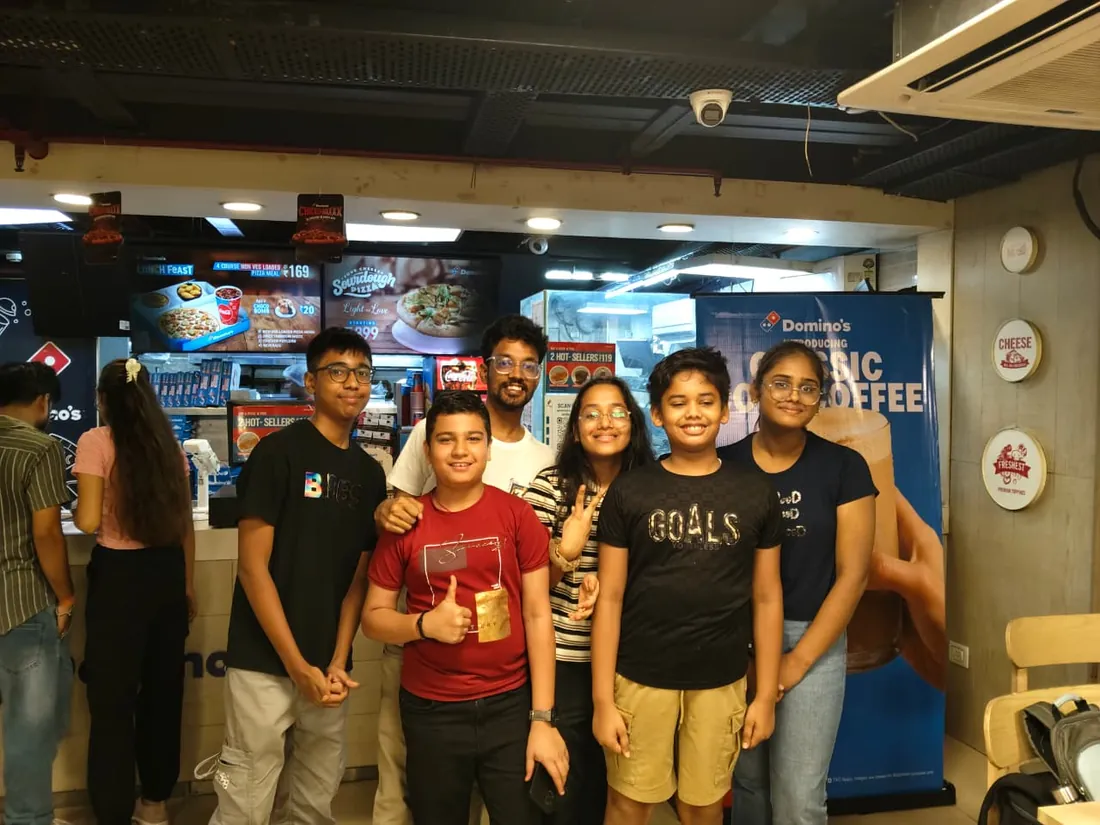
Real students. Real moments. Real joy.
These are our actual student meetups. No stock photos, no filters. Swipe through and meet the community you'll be joining.






































What families say
Straight from the parents and students who learn with us. Rated 4.9 across 547 Google reviews.
“Mivaan enjoys the class. He understands the concepts and completes his tasks with excitement. He started taking interest in coding… truly amazing class.”
“I absolutely love it here! I made new friends and learned important valuable coding skills while having the fun of my life. It's not just coding here, it's outings, bonding and most importantly preparing you for your future. Definitely five stars.”
“What stands out most is how excited my son is before every class. He looks forward to learning, problem-solving, and sharing what he's built. I've noticed a big boost in his confidence!”
“Modern Age Coders has been a game-changer for me! I struggled to grasp IT concepts and coding before joining, but their classes transformed everything. I'm now the topper in my class and can confidently write complex programs with ease.”
“Modern Age Coder have wonderful teachers who teach in a clear, easy and practical way. The teacher boosts students' confidence, keeps them updated with technology, and inspires them to learn without hesitation.”
“The one step solution for my son. Modern Age Coders make learning coding so simple that kids love it.”
“Coding classes here make learning very interesting and conceptual. The teachers teach us in a very easy-to-understand and efficient manner.”
“One of the most wonderful education centres out there. Education is not limited to school syllabus but focuses on skill development. Learning here has been a wonderful journey and still continuing.”
“I highly recommend this computer coding class! The teachers are incredibly knowledgeable and passionate about coding. They make every session engaging and insightful.”
“My child Dhairya is really enjoying the Modern Age Coder IT classes. This is his first online class, and he eagerly looks forward to it.”
“Very good classes. Don't worry about coding. They teach the best, especially Shivam sir.”
“Very good classes. Makes learning very easy and interactive.”
Hear it from our students
Real parents and students in their own words, on our public YouTube channel.
Straight answers about Artificial Intelligence Course: Search, Logic & Agents
- Who should take this course?
- Complete beginner (18+); college students, graduates and working professionals. Age: 18+; college students, graduates and working professionals. It suits students whose university ai papers test exactly this canon; developers who want ai understanding deeper than api calls; ml users adding the reasoning-and-planning half of ai.
- What will they learn and build?
- Before AI meant chatbots, it meant something precise: algorithms that search enormous possibility spaces, represent knowledge in logic, reason under uncertainty and plan actions toward goals.
- How deeply are topics covered?
- The course runs 10-12 months (44-52 weeks) at 2 live classes/week + 4-6 hours practice, across 4 phases listed week by week in the syllabus below. A structured, well-paced curriculum taught step by step, with classwork in every session and problem sets after every class.
- Who teaches it?
- Modern Age Coders mentors, who teach the live classes themselves. You can watch them at work in the free class recordings before you decide.
- How do practice, feedback and assessment work?
- Monthly mixed reviews, cumulative phase exams, and a final exam that decides the certificate: real knowledge, real work. Doubt support between classes over WhatsApp, so you are never left stuck. A certificate you earn by passing the final exam, with a free retest after revision if needed.
- What does it cost?
- Three monthly plans: a group batch, a mini batch and 1-on-1. Prices are shown in your currency in the plans section. Monthly billing, cancel any time.
- When can classes take place?
- Live classes are scheduled around your week. Group batches meet at a fixed weekly slot; 1-on-1 students choose their own. International students are scheduled in their own timezone. Ask on WhatsApp for the current slots.
- Can I watch the teaching before deciding?
- Yes. Full recordings of real 13 and up classes are free to watch, free with a Google sign-in. These recordings show how we teach, not the exact syllabus of this course. Some classes are in English and some in Hindi; everyone follows at their own pace. Watch a class end to end, like you are in it. Sessions are interactive and each moment builds on the last.
- Can I enroll without a live demo?
- Yes. Choose a plan on this page and enroll directly; a booking or a demo is not required. A free live demo is optional, for anyone who wants to meet a mentor first. Outside India, our team confirms the plan and completes payment with you over WhatsApp, so allow a little time for that step.
Common Questions About Artificial Intelligence Course: Search, Logic & Agents
Get answers to the most common questions about this comprehensive program
Still have questions? We're here to help!
Contact UsRelated Courses You May Like
Continue your learning journey with these recommended programs
 Hackathons & Professional Innovation Programs
Hackathon for Adults: Free Event + 12-Week Pro Prep (18+)
Free hackathon for adults, professionals and founders (18+), plus a 12-week Pro Prep in full-stack e...
Explore Course Advanced Placement Mathematics
AP Precalculus: Units 1 to 3 and Full Exam Prep
Live online AP Precalculus exam prep covering Units 1-3: functions, exponentials, trig and polar. Sm...
Explore CourseRelated Articles & Guides
Deepen your knowledge with these hand-picked articles
 Artificial Intelligence
14 min read
Artificial Intelligence
14 min read
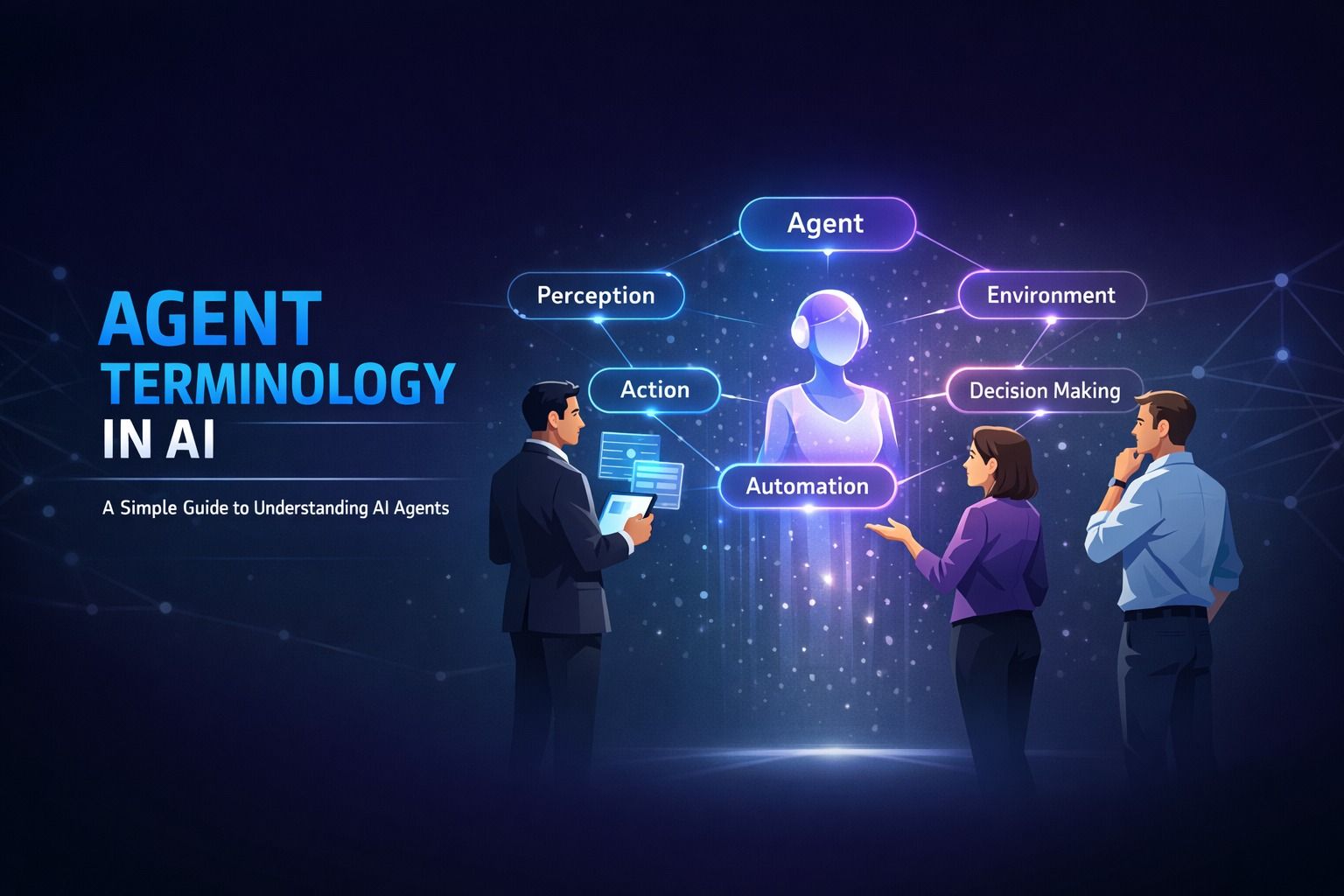
Agent Terminology in AI: A Simple Guide to Understanding AI Agents
Decode AI agent terminology in ai with this beginner-friendly guide. Learn about autonomous agents, ...
Read Article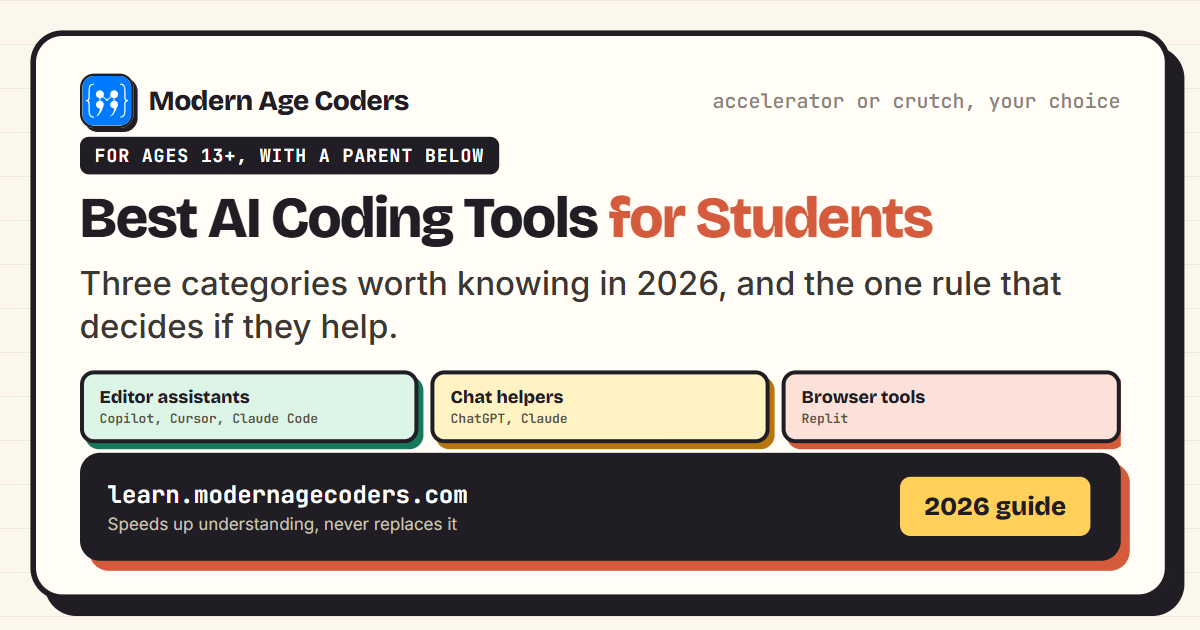 Artificial Intelligence
7 min read
Artificial Intelligence
7 min read
Best AI Coding Tools for Students in 2026
The best AI coding tools for students in 2026, what each is good for, and the one rule that decides ...
Read ArticleReady to start Artificial Intelligence Course: Search, Logic & Agents?
Book a free demo class to meet your mentor and see how we teach, with no commitment. Or enrol now and start this week.