Codex + Claude Code: AI Coding Agents Masterclass for Adults & Professionals
Stop typing every line. Learn to direct the two most powerful AI coding agents and ship more, faster, safely, in 24 classes.
Syllabus updated August 2026
Questions? WhatsApp +91 91233 66161 or email connect@modernagecoders.com
Recordings are free with a Google sign-in. These recordings show how we teach, not the exact syllabus of this course.
Our promise
The world's best learning experience, open to everyone.
- World-class instructorsEvery class is taught by an instructor who specialises in that exact field.
- No compromise on qualityEvery lesson, project and piece of feedback is held to the highest standard.
- Education for everyoneLearners aged 6 to 67, from first-time beginners to working professionals, in 25+ countries.
If you want the highest quality, Modern Age Coders is the right choice.
Book a Priority DemoHow long this course takes
This course runs 24 classes (12 weeks · 2 classes/week) at 4-6 hours/week recommended. The range allows for background and pace: a complete beginner uses the full span, and a student with prior knowledge finishes sooner. The syllabus below is planned to the shorter end, with margin kept for revision.
For personalised duration planning, call +91 91233 66161 and we'll map a schedule to your goals.
At a glance
- Who it is for
- Beginner to advanced, for working professionals, career switchers & developers.
- Prerequisites
- Helpful but not required: beginners and career switchers are welcome; we start from install and ramp quickly
- Format
- Live, interactive classes with a real instructor, never pre-recorded videos. Live classes run about one hour.
- Language
- English or Hindi, depending on the batch.
- Duration
- 24 classes (12 weeks · 2 classes/week)
- Weekly commitment
- 4-6 hours/week recommended
- Class size
- Group batches of 5 to 10 students, mini batches of 3 to 4, or 1-on-1.
- Certificate
- Certificate from Modern Age Coders, awarded on passing the final assessment
- Watch first
- Free recordings of real classes for ages 13 and up, free with a Google sign-in. These recordings show how we teach, not the exact syllabus of this course.
- Live demo
- Optional. Enrol directly on this page, or book a Priority Demo: a full live class of about 45 to 60 minutes with a mentor reserved for you.
- Questions
- WhatsApp +91 91233 66161 or email connect@modernagecoders.com.
How we teach
Deep understanding. Real projects. Expert guidance.
Learn coding, AI and maths through careful explanations, practical demonstrations, and hands-on problem-solving. Our instructors guide you from the foundations to advanced ideas, helping you understand what happens, why it happens, and how to build it yourself.
You will explore concepts step by step, write and improve code, investigate mistakes, ask questions, and apply your knowledge to meaningful projects. Lessons are designed around active participation, thoughtful feedback, and growing independence.
Expert-led live teaching, with practical participation built into every lesson.
- Students explain their thinking.
- Instructors demonstrate, then guide practice.
- Learners code, solve, or build during lessons.
- Questions and misconceptions get attention.
- Assignments receive useful feedback.
- Progress is checked before advancing.
How to join Codex & Claude Code: AI Coding Agents for Professionals
Four steps from this page to the first class. See a full class first with a Priority Demo, or choose a plan and enrol today.
Rated 4.9 across 547 Google reviews. Monthly billing, cancel any time.
How enrolment works
See a full class first (optional)
Book a Priority Demo: a live class of about 45 to 60 minutes with a mentor reserved for you, today or tomorrow. After the class the mentor sends a written skill report and a personal learning roadmap on WhatsApp. If you enrol, the demo fee is adjusted against your first month's fee. Share your demo Order ID with us on WhatsApp and we take it off.
Book a Priority DemoDemo fee ₹499Choose a plan
Group batch (5 to 10 students), mini batch (3 to 4 students, India only) or 1-on-1 with your own mentor. Every plan is live online, and each class runs about one hour. The cards below show classes per week and the monthly fee in your currency.
Enrol and pay the first month
Press Enrol Now on your plan, fill in the student's name, email and phone, and pay through secure Razorpay checkout: UPI, cards or net banking in India, and debit or credit card from any other country.
Fix your class timings
After payment, message us on WhatsApp or call +91 91233 66161 with the student's name, the course and your preferred time slot. We confirm the batch, send the class link and schedule the first class at your chosen time.
Billing is monthly and you can cancel any time.
International Students (Outside India)
Billed monthly in US dollars, the same price in every country. Contact us with any questions.
Questions before you enrol? Talk to our team.
Ask about class timings, the right level for your child, what they need to know already, or payment. Parents and adult learners can reach us on WhatsApp, by email or by phone.
Program Overview
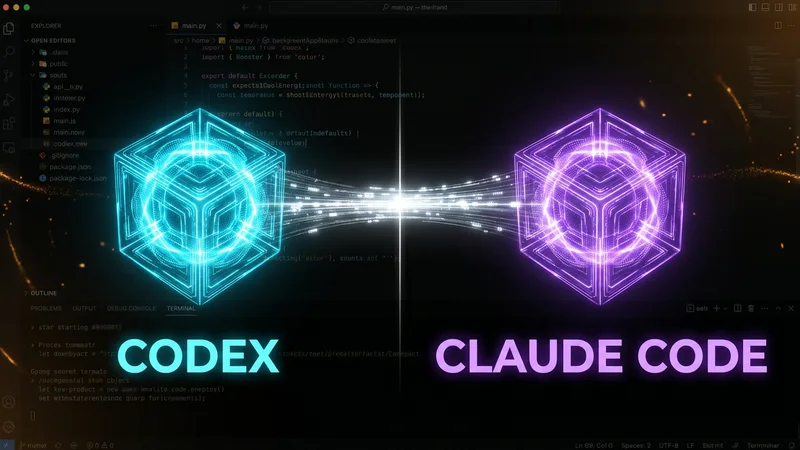
This is the definitive professional course on the two agentic coding tools reshaping software work in 2026: OpenAI Codex and Anthropic Claude Code. Across 24 in-depth, lab-driven classes you'll go from first install to automating real engineering workflows: building features, refactoring legacy code, fixing flaky tests, reviewing PRs at scale, and orchestrating parallel agents. Whether you're a developer leveling up, a career switcher entering tech, or a professional who wants to 10x routine work, you'll learn both tools at the depth a job demands. You learn the current stack: Claude Code v2.1.x on Anthropic's Claude 5 family (Sonnet 5 default with native 1M-token context; Fable 5 and Opus 4.8 for the hardest work), and the OpenAI Codex CLI/Cloud on the GPT-5.6 family (Sol, Terra, Luna) with reasoning levels up to ultra. Every class is live with a mentor in a small batch or 1-on-1, hands-on with real commands, config, and a deliverable. One important requirement: you must have your own active Claude subscription (Pro or higher) for Claude Code and ChatGPT subscription (Plus or higher) for Codex, or equivalent API access through your employer. Subscriptions are purchased directly from Anthropic and OpenAI, are separate from the course fee, and we help you pick the most cost-effective setup in your free demo.
What Makes This Program Different
- Two agents, professionally: graduate fluent in BOTH Codex and Claude Code, and able to choose the right one per task and team.
- Workplace-grade labs: refactor legacy modules, fix CI, automate releases, review PRs at scale; not toy examples.
- Goes all the way to the SDKs: build your own automations and internal tooling with the Claude Agent SDK and Codex SDK.
- Living Syllabus: continuously updated as OpenAI Codex and Anthropic Claude Code ship new features, models, and capabilities. You always learn the current product.
- Security & governance built in: permission rules, OS sandboxes, secrets handling, and prompt-injection defense for real teams.
- Real production tools, not a sandbox: you train on your own Claude and ChatGPT subscriptions, so every workflow you learn transfers directly to your day job.
- Outcome-focused: finish with a production-grade capstone, reusable automations, and a portfolio of AI-assisted engineering work.
Your Learning Journey
Career Progression
Detailed Course Curriculum
Explore the complete week-by-week breakdown of what you'll learn in this comprehensive program.
Topics Covered
- Agentic coding defined: an autonomous loop that reads context, plans, edits, runs commands, verifies, and iterates
- OpenAI Codex as a product family: the CLI, Codex Cloud, the IDE extension, the ChatGPT/desktop/mobile apps, and the Codex SDK
- Anthropic Claude Code surfaces: terminal, VS Code/JetBrains, desktop, web (claude.ai/code), mobile, Slack, and CI
- Where each excels: Codex for cloud parallelism + GitHub-native review + ChatGPT ecosystem; Claude Code for deep terminal control, subagents, hooks, and skills
- The 2026 model backends: Claude Code on the Claude 5 family (Sonnet 5 default, Fable 5 and Opus 4.8 above it); Codex on the GPT-5.6 family (Sol, Terra, Luna)
- How agentic tools change team workflows: review-centric, smaller PRs, faster iteration
- Building a mental model for evaluating any new agentic tool
Projects You Build
- Write a one-page internal brief: 'Codex vs Claude Code: where we'd use each' for a hypothetical team
Practice & Assignments
Map three tasks from your own work to the tool you'd choose and justify it.
Assessment
Produce a clear comparison matrix of Codex and Claude Code across 6 dimensions.
Topics Covered
- Install: macOS/Linux curl -fsSL https://claude.ai/install.sh | bash; Windows irm https://claude.ai/install.ps1 | iex; Homebrew/WinGet alternatives
- Authenticate: claude auth login (subscription) or ANTHROPIC_API_KEY; claude auth status; claude setup-token for CI
- Enterprise providers: Amazon Bedrock, Google Vertex AI, Azure AI Foundry via env flags (CLAUDE_CODE_USE_BEDROCK, etc.)
- First session and the REPL; the slash-command menu; /status, /usage
- Settings hierarchy: ~/.claude/settings.json (user), .claude/settings.json (project), .claude/settings.local.json (gitignored)
- Choosing your model with /model (Sonnet 5 is the current default; Fable 5, Opus 4.8 and Haiku 4.5 are selectable)
- IDE integration: install the VS Code/JetBrains extension and open Claude Code in your editor
Projects You Build
- Install Claude Code, configure a project .claude/settings.json, and run your first task in a real repo
Practice & Assignments
Set up the VS Code extension and review an edit as an inline diff.
Assessment
Show a configured project with settings.json and a successful first task.
Topics Covered
- Install: npm install -g @openai/codex (Node 18+), or brew install --cask codex; note the @openai/ scope matters
- Authenticate: Sign in with ChatGPT (Plus/Pro/Business/Edu/Enterprise) or an API key
- Health check: codex doctor verifies runtime, auth, terminal, and network
- The interactive TUI: model, service tier, token usage, and approval mode shown inline
- Config file: ~/.codex/config.toml; switch settings per project with profiles (codex --profile <name>)
- Model & reasoning selection with /model (low up to ultra); the 2026 lineup is GPT-5.6 Sol (complex work), Terra (all-rounder), Luna (fast, repeatable tasks)
- Windows options: native (PowerShell + Windows Sandbox) or WSL2
Projects You Build
- Install Codex, create a ~/.codex/config.toml with a custom profile, and complete a task in workspace-write mode
Practice & Assignments
Run codex doctor, fix any warnings, and switch reasoning level mid-task.
Assessment
Submit your config.toml and a screenshot of a successful Codex session.
Topics Covered
- Why approvals are the safety backbone of agentic coding
- Claude Code permission modes (Shift+Tab to cycle): default, acceptEdits, plan (read-only), auto (classifier-approved); set with --permission-mode, manage via /permissions
- Permission rule syntax: allow/ask/deny patterns like Bash(git push *), Edit(*.env)
- Codex sandbox modes: read-only, workspace-write (default), danger-full-access; approval policies untrusted/on-request/on-failure/never/granular
- Codex /approvals to switch live; the --dangerously-bypass-approvals-and-sandbox flag and why it's a last resort
- Designing a team-safe default posture (start restrictive, widen deliberately)
- Reading and reasoning about an approval request before granting it
Projects You Build
- Author a restrictive permission/approval policy for both tools and prove a blocked action is denied
Practice & Assignments
Add a deny rule for force-push and destructive commands in both tools.
Assessment
Document a recommended default permission posture for a small dev team.
Topics Covered
- Pick a real bug or small feature in a sample repo and scope it precisely
- Claude Code: plan → diff → approve → verify; iterate with targeted feedback
- Codex: same task in workspace-write; compare approach, edits, and explanations
- Reading multi-file diffs critically and catching over-broad changes
- Driving iteration: 'narrow the change to module X', 'add a guard for null input'
- Verifying behavior: have the agent run the app/tests and confirm the fix
- Capturing what worked: notes you'll fold into project memory next phase
Projects You Build
- Resolve the same issue with each agent and write a short comparison of edit quality and effort
Practice & Assignments
Introduce a regression and have each agent locate and fix it.
Assessment
Submit two diffs (one per agent) solving the same task, with a critique.
Topics Covered
- Claude Code: /help, /clear, /compact (compress context), /context (inspect what's loaded), /model, /diff, /review
- Codex: /model, /approvals, /review, /status, /plan, /goal, and the @ picker for files/dirs/skills
- Managing context windows deliberately: when to /compact vs /clear vs start fresh
- @-mentioning files and MCP resources to target the agent precisely
- Monitoring cost and limits: /usage (Claude) and inline token usage (Codex)
- Recovering a derailed session: ask the agent to restate its current plan
- Building muscle memory in each TUI for speed
Projects You Build
- Create a personal/team reference of the 12 most-used commands across both tools with examples
Practice & Assignments
Run a long session, then reclaim context with /compact and compare token usage before/after.
Assessment
Demonstrate precise @-mention targeting and a clean context reset.
Topics Covered
- Claude Code Plan Mode (/plan): read-only research and a proposed plan before any edit
- Goal Mode (/goal): the agent works until a defined completion condition is met
- Codex /plan and /goal (Goal mode stable and on by default in 2026)
- Writing checkable goals and acceptance criteria the agent can self-verify against
- Editing the agent's plan to constrain scope and approach before approval
- Plan-then-execute as a default for any multi-file or risky change
- Combining plan mode with restrictive permissions for safe exploration
Projects You Build
- Use Plan Mode to design a non-trivial change (e.g., add pagination to an API) and execute the approved plan
Practice & Assignments
Convert a vague ticket into a precise, checkable goal statement.
Assessment
Submit a plan you edited before approval and the resulting implementation.
Topics Covered
- How agents propose precise edits and render diffs across multiple files
- Reviewing a feature that spans several files coherently
- Accept / reject / request-changes on individual hunks
- Claude Code /diff and the VS Code/JetBrains inline review experience
- Keeping PRs small and reviewable; resisting scope creep from the agent
- Asking for rationale: 'why this approach over X?'
- Detecting and reverting unintended edits
Projects You Build
- Have an agent refactor a legacy function and review every hunk, rejecting anything out of scope
Practice & Assignments
Force the agent to split one large change into two smaller, reviewable steps.
Assessment
Critique a multi-file diff and identify any risky or unnecessary change.
Topics Covered
- Delegating command execution: build, run, lint, and test through the agent
- Test-driven loops: have the agent write a failing test, implement, and make it pass
- Git with the agent: staged diffs, clear commit messages, branch hygiene
- Claude Code Bash tool (sandboxable) and Codex commands inside the workspace boundary
- Approving commands with judgment: reading the exact command first
- Fixing flaky/failing tests iteratively until green
- Frequent, small commits as a safety net
Projects You Build
- Implement a feature TDD-style with the agent: failing test → implementation → green → commit
Practice & Assignments
Have the agent bisect and fix a failing CI step locally.
Assessment
Show a clean commit history of an agent-assisted TDD cycle.
Topics Covered
- Claude Code: /init generates CLAUDE.md; it auto-loads each session
- Memory hierarchy: managed/policy, user (~/.claude/CLAUDE.md), project (./CLAUDE.md), local (CLAUDE.local.md); imports with @path
- Auto-memory (2026): Claude saves learnings to a project memory folder; manage with /memory
- Codex AGENTS.md: repo root + nested per-package + personal ~/.codex/AGENTS.md (closest file wins)
- A 'Review guidelines' section in AGENTS.md to standardize Codex code review
- What belongs in memory: run/build/test commands, conventions, architectural rules, do/don't
- Keeping memory lean (~200 lines) and version-controlled for the team
Projects You Build
- Write production-quality CLAUDE.md and AGENTS.md for a real repo, including review guidelines
Practice & Assignments
Add a convention and confirm both agents follow it without re-prompting.
Assessment
Submit team-ready memory files and explain three rules' impact.
Topics Covered
- Claude Code automatic checkpointing before edits; /rewind (or Esc-Esc) to restore code, conversation, or both
- Key limitation: checkpoints track file-tool edits, not shell rm/mv: your git commits remain the real safety net
- Resuming: claude --continue and claude --resume (by id/name); --fork-session; --from-pr
- Branching a conversation (/branch) to explore alternatives
- Codex session resume and local conversation history search
- Combining git + checkpoints for confident experimentation
- Session organization across multiple concurrent tasks
Projects You Build
- Run a risky refactor, reject the outcome, and recover cleanly via /rewind plus git
Practice & Assignments
Resume a prior session by name and continue the task.
Assessment
Demonstrate a recovery workflow combining rewind and git.
Topics Covered
- Model Context Protocol: a standard for exposing tools/data/resources to agents
- Claude Code: claude mcp add --transport http <name> <url> (also sse/stdio); scopes local/project/user; manage with /mcp, claude mcp list
- MCP resources (@server:protocol://path) and MCP prompts as slash commands
- Codex: configure servers under [mcp_servers.<name>] in config.toml (stdio command/args/env or HTTP url), per-tool approval modes
- Practical integrations: issue trackers, databases, docs, design tools, internal APIs
- Tool Search / deferred tool loading to keep context lean with many servers
- Security: trust boundaries, OAuth, and prompt-injection risk from MCP content
Projects You Build
- Connect a real MCP server (e.g., a database or docs server) to both agents and complete a task using it
Practice & Assignments
Add a project-scoped .mcp.json so teammates inherit the same server.
Assessment
Show one server connected per tool and a task that used its tools.
Topics Covered
- Claude Code Skills (Agent Skills standard): reusable, auto-invokable instructions; .claude/commands/*.md and .claude/skills/*/SKILL.md both create /commands
- Frontmatter control: who can invoke, allowed/disallowed tools, subagent execution; /skills to manage, /reload-skills
- Designing a skill: a /deploy or /release command encapsulating your workflow
- Codex profiles for per-project model/sandbox settings and the plugin marketplace for sharing setups
- When to encode a workflow as a skill/plugin vs ad-hoc prompting
- Distributing skills/plugins to a team for consistency
- Versioning and reviewing shared automations
Projects You Build
- Build a Claude Code skill that automates a repeatable workflow and a Codex profile for a project
Practice & Assignments
Iterate a skill twice based on real usage feedback.
Assessment
Submit a working skill/command and document what it standardizes.
Topics Covered
- Subagents run in their own context with their own tools and permissions
- Built-ins: Explore (fast read-only search), Plan (read-only planning), General-purpose
- Define your own: .claude/agents/*.md with name, description, tools, model, permissionMode
- Least-privilege agents: a reviewer that can only read; a test-writer scoped to tests
- Manage and generate with /agents; subagent memory for cross-session learning
- Dispatching parallel subagents for independent subtasks
- Why subagents protect the main context and improve reliability (since mid-2026 they run in the background by default, so the main session keeps working)
Projects You Build
- Create code-reviewer and test-writer subagents and use them on a real change
Practice & Assignments
Compare Explore subagent results vs the main agent for a codebase question.
Assessment
Submit two subagent definitions and sample outputs.
Topics Covered
- Hooks run deterministic code at lifecycle events: automation and guardrails
- Key events: PreToolUse, PostToolUse, SessionStart, UserPromptSubmit, Stop, PreCompact and more
- Config in settings JSON: matcher + handler (command/http/prompt/agent), exit-code 2 to block
- Practical hooks: auto-format/lint on edit, run tests after changes, block dangerous commands, inject context
- Placeholders like ${CLAUDE_PROJECT_DIR} and viewing hooks with /hooks
- Treating hook output as feedback the agent must respond to
- Governance: enforcing team standards automatically via hooks
Projects You Build
- Implement a PostToolUse format+lint hook and a PreToolUse guard that blocks force-push
Practice & Assignments
Add a SessionStart hook that prints project setup status.
Assessment
Submit two working hooks and explain their events and effects.
Topics Covered
- Claude Code models: Fable 5 (the new Claude 5 flagship tier), Opus 4.8, Sonnet 5 (the default), Haiku 4.5 (fast/cheap); /model and aliases
- Effort levels low/medium/high/xhigh (set via /effort, --effort) and the ultrathink keyword
- Native 1M-token context on Sonnet 5 for large codebases
- Codex models: GPT-5.6 Sol, Terra, and Luna; reasoning levels low up to ultra (ultra auto-delegates to subagents); long-task compaction across context windows
- Cost/performance trade-offs: cheap+fast for routine edits, top model+high effort for hard design
- Subagent model overrides for cost control at scale
- Measuring whether more effort actually improved the result
Projects You Build
- Benchmark a hard refactor at two effort levels and two models; document quality vs cost/latency
Practice & Assignments
Pin different models for main vs subagents and observe the effect.
Assessment
Produce a model+effort selection guide for five task types.
Topics Covered
- Why visuals help: convey designs, dashboards, and bugs faster than prose
- Drag-and-drop screenshots/images into the prompt as context
- Codex Appshots (macOS): capture frontmost app windows for context
- UI-from-image: have the agent implement a layout from a design screenshot
- Debugging from a screenshot of an error or broken render
- Mixing text + image instructions for precise outcomes
- Current limits: image input in both agents; Codex added audio inputs and tool outputs in 2026; video is still not supported
Projects You Build
- Recreate a real UI from a design screenshot and reconcile it against the spec
Practice & Assignments
Diagnose a rendering bug from a screenshot alone.
Assessment
Show an image-driven task with a correct, verified result.
Topics Covered
- Codex Cloud: asynchronous agents working in isolated, sandboxed environments
- Get started at chatgpt.com/codex and connect GitHub
- Queue many tasks in parallel; each returns as its own pull request
- Configure cloud environments: repo, setup steps, tools, and internet-access controls
- Reviewing cloud-generated PRs before merge; iterating via comments
- When cloud wins: long-running jobs, parallel chores, repos not on your laptop
- Governance for cloud agents in a team setting
Projects You Build
- Delegate three parallel Codex Cloud tasks and review/merge the resulting PRs
Practice & Assignments
Configure a cloud environment's setup steps so the agent can build/test the repo.
Assessment
Show parallel cloud tasks and explain each PR's scope and quality.
Topics Covered
- claude.ai/code on the web for long-running and parallel tasks, even on repos you don't have locally
- Desktop app: visual diff review and multiple side-by-side sessions
- Background agents: detach with /background, manage with claude agents / attach / logs
- Remote control & mobile: steer and approve from your phone
- Teleporting a web/remote session into the terminal to finish locally
- Choosing the right surface per task and handing off between them
- Slack/GitHub triggers that start sessions
Projects You Build
- Start a task on the web, hand it to the desktop/terminal, and finish it; run one agent in the background
Practice & Assignments
Manage a background agent's lifecycle from the shell.
Assessment
Demonstrate a task moving across two surfaces and a managed background agent.
Topics Covered
- Connect GitHub apps so both agents can open and review PRs
- Codex review: @codex review (P0/P1 findings) or enable automatic reviews on every PR; scoped reviews like @codex review for security regressions
- Codex task mentions: @codex fix the CI failures pushes fixes when authorized
- Claude Code /code-review (effort levels), --comment for inline GitHub comments, --fix to apply findings
- CI automation: openai/codex-action and Claude Code GitHub Actions / GitLab CI
- Defining team review guidelines (AGENTS.md) honored during review
- Acting on AI review feedback with rigor, not blind acceptance
Projects You Build
- Set up automatic AI code review on a repo and run a PR through both Codex and Claude Code review
Practice & Assignments
Tune review guidelines and observe how findings change.
Assessment
Show a reviewed PR with AI findings you triaged and resolved.
Topics Covered
- Parallelization strategy: decompose large work into independent units
- Git worktrees for isolation: claude -w <name> creates an isolated workspace
- Claude Code /batch: split a large change into 5-30 units, one background subagent per worktree, each tests + opens a PR
- Agent teams: multiple coordinating sessions (--teammate-mode)
- Codex Cloud parallelism for the same outcome via many PRs
- Reviewing and integrating parallel outputs without conflicts
- Knowing when serial is safer than parallel
Projects You Build
- Use /batch (or parallel Codex Cloud tasks) to roll a cross-cutting change across a codebase and review each PR
Practice & Assignments
Run two agents in separate worktrees on independent tasks simultaneously.
Assessment
Document a parallelized change: the split, the worktrees/PRs, and the review.
Topics Covered
- Headless automation: claude -p "task" (output-format text/json/stream-json) and codex exec (with --output-schema for structured JSON)
- Claude Agent SDK: npm i @anthropic-ai/claude-agent-sdk / pip install claude-agent-sdk; query() with tools, hooks, agents, permissionMode
- Codex SDK: @openai/codex-sdk (TS) and openai-codex (Python): startThread, run, resumeThread
- Piping and composition: git diff main | claude -p "review for security issues"
- Building an internal automation: triage, summarize, or auto-fix in CI
- Budget/turn controls (--max-turns, --max-budget-usd) for safe unattended runs
- Note: from June 15 2026 Agent SDK / claude -p usage draws on a separate credit on subscription plans
Projects You Build
- Build a CI automation (e.g., auto-summarize PR diffs or auto-label issues) using claude -p or codex exec with structured output
Practice & Assignments
Write a script that pipes logs into an agent and parses its JSON response.
Assessment
Submit a working SDK/headless automation with structured output.
Topics Covered
- Permission rules (allow/ask/deny) evaluated before any tool runs; pattern syntax for fine control
- Claude Code Bash sandbox (/sandbox): Seatbelt (macOS) / bubblewrap (Linux/WSL2); filesystem & network isolation, allow/deny domains
- Codex sandboxes: Seatbelt / bubblewrap / Windows Sandbox; read-only vs workspace-write vs danger-full-access
- Secrets hygiene: denyRead for ~/.ssh, ~/.aws; never commit credentials; env scrubbing
- Prompt injection & untrusted content: risks from web fetches and MCP servers, and mitigations
- Managed/enterprise settings: forced login org, allowed models, disabling hooks, managed domain allowlists
- Accountability: you own the code the agent writes: review and test it
Projects You Build
- Define and test a hardened security configuration (permissions + sandbox + secret denials) for a team repo
Practice & Assignments
Demonstrate a sandbox blocking network/file access outside the allowed scope.
Assessment
Deliver a team 'safe agentic coding' policy document with concrete settings.
Topics Covered
- Scope a real deliverable: a feature in an existing app, or a small full-stack app + an automation
- Plan with Plan/Goal mode; author CLAUDE.md and AGENTS.md with review guidelines
- Build with both agents, using subagents/hooks/MCP where they add value
- Quality gate: tests, AI code review (with fixes), and a clean PR history
- Ship it: deploy the app and/or land the automation in CI
- Document your workflow: what each agent did, decisions, and safeguards
- Present and earn the Modern Age Coders AI Coding Agents Professional certificate
Projects You Build
- Deliver a deployed, tested, AI-reviewed capstone (app and/or SDK automation) with a documented agentic workflow
Practice & Assignments
Present a 5-minute walkthrough of how you directed the agents end-to-end.
Assessment
Final capstone: deployed/merged work + repo + write-up; pass earns the professional certificate.
Projects You'll Build
Build a professional portfolio with 24 hands-on deliverables, one per class, including a production-grade capstone shipped in Class 24 real-world projects.
Weekly Learning Structure
Certification & Recognition
Technologies & Skills You'll Master
Comprehensive coverage of the entire modern web development stack.
Support & Resources
Career Outcomes & Opportunities
Transform your career with industry-ready skills and job placement support.
Prerequisites
Who Is This Course For?
Career Paths After Completion
Salary & Market Context
The ranges below are general market salary bands for these roles in India and abroad, drawn from public industry data. They are shown for career context only and are not a promise or guarantee of income. Actual pay depends on your skills, experience, location, and the job market.
Course Guarantees
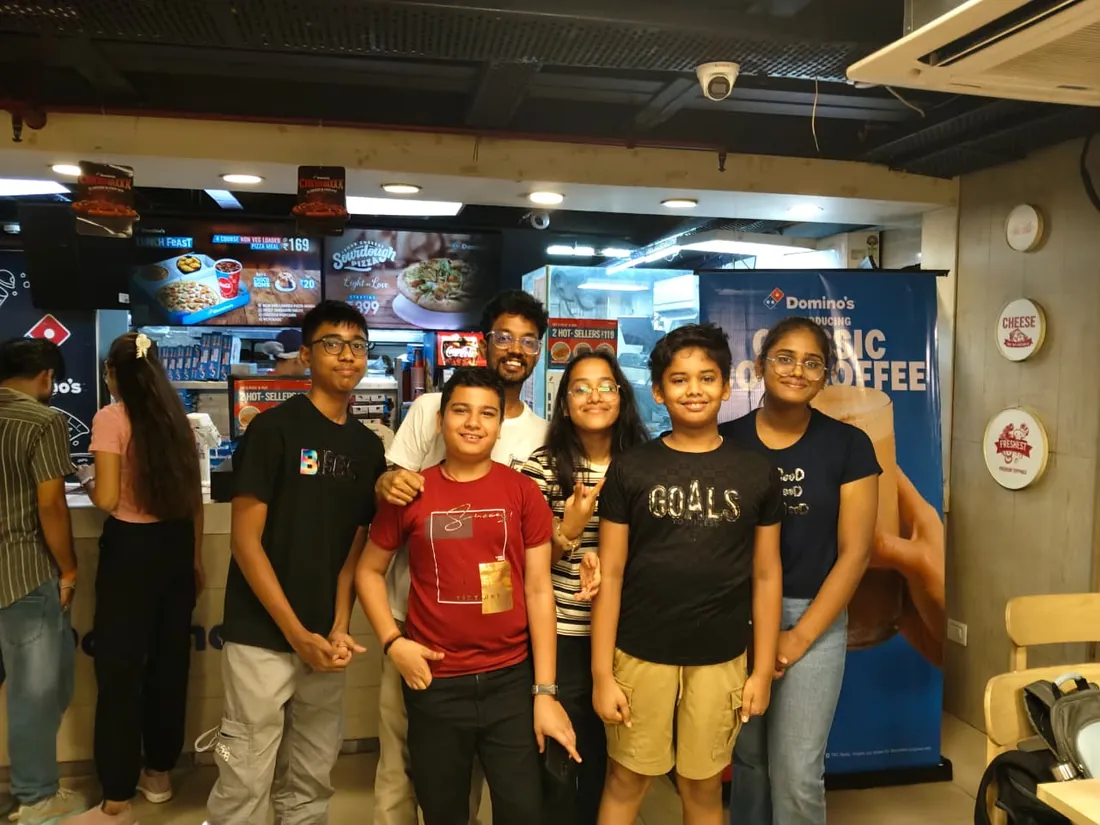
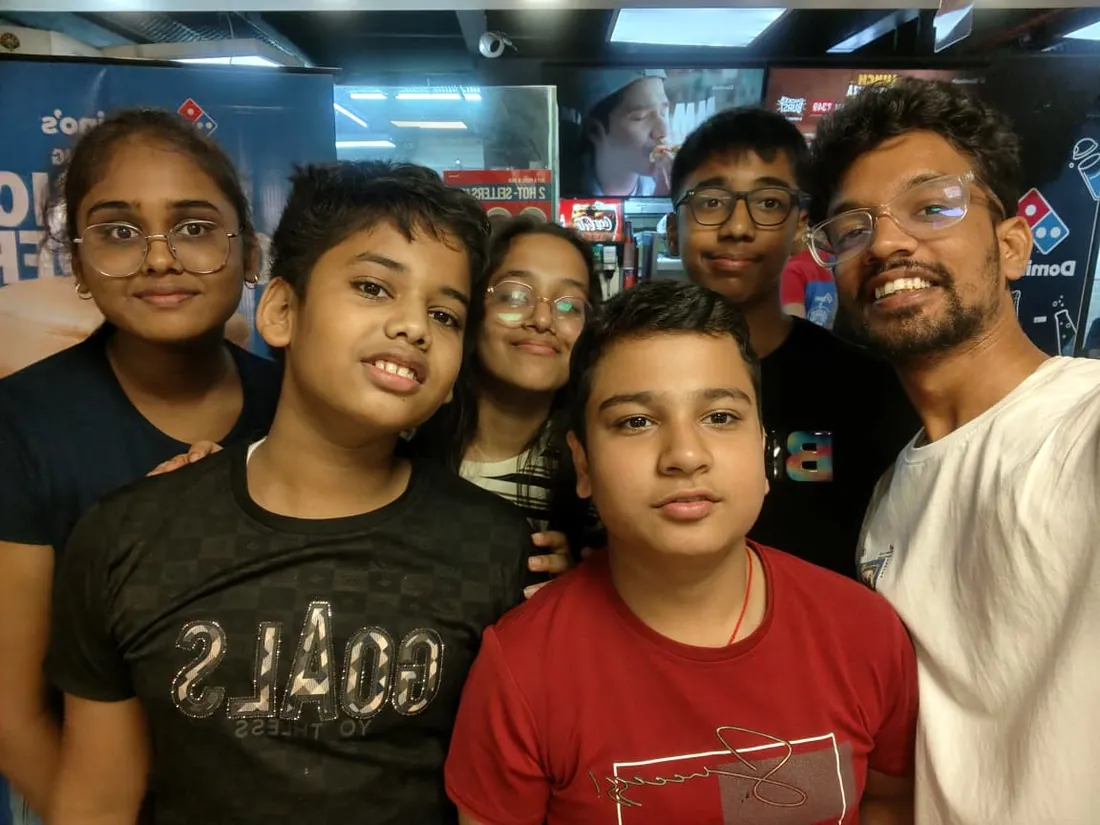
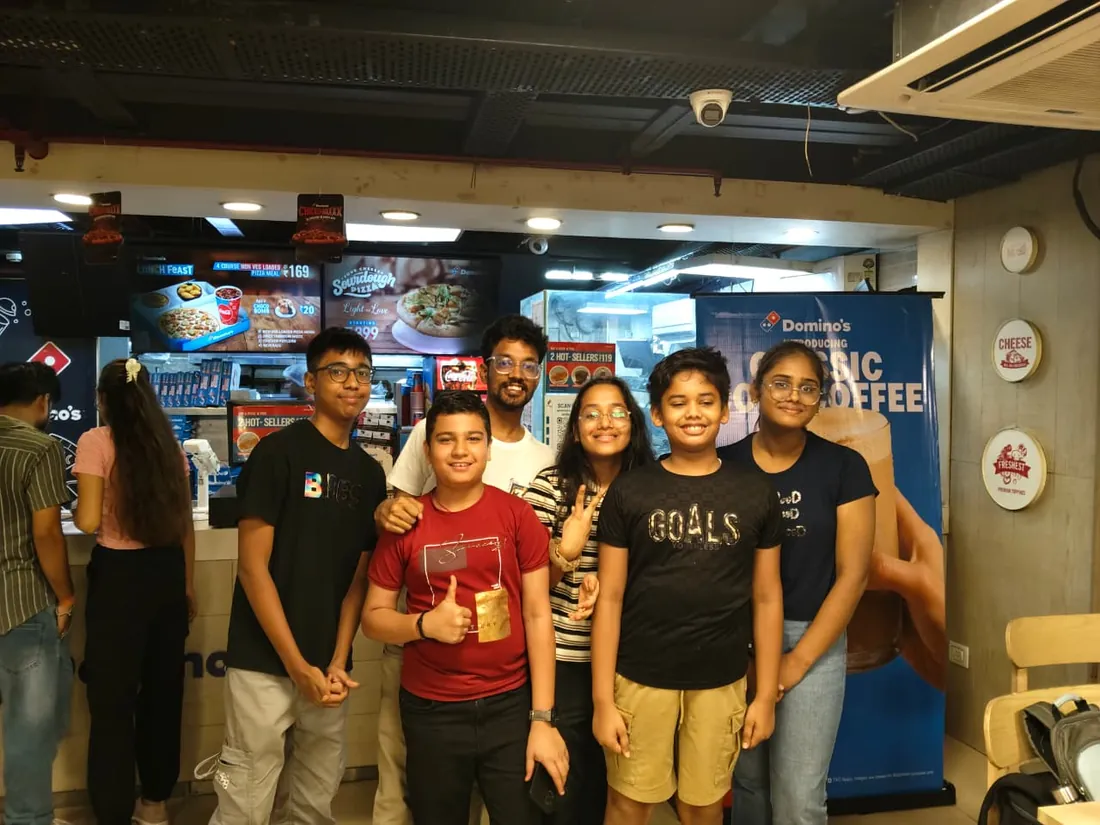
Real students. Real moments. Real joy.
These are our actual student meetups. No stock photos, no filters. Swipe through and meet the community you'll be joining.




































What families say
Straight from the parents and students who learn with us. Rated 4.9 across 547 Google reviews.
“Mivaan enjoys the class. He understands the concepts and completes his tasks with excitement. He started taking interest in coding… truly amazing class.”
“I absolutely love it here! I made new friends and learned important valuable coding skills while having the fun of my life. It's not just coding here, it's outings, bonding and most importantly preparing you for your future. Definitely five stars.”
“What stands out most is how excited my son is before every class. He looks forward to learning, problem-solving, and sharing what he's built. I've noticed a big boost in his confidence!”
“Modern Age Coders has been a game-changer for me! I struggled to grasp IT concepts and coding before joining, but their classes transformed everything. I'm now the topper in my class and can confidently write complex programs with ease.”
“Modern Age Coder have wonderful teachers who teach in a clear, easy and practical way. The teacher boosts students' confidence, keeps them updated with technology, and inspires them to learn without hesitation.”
“The one step solution for my son. Modern Age Coders make learning coding so simple that kids love it.”
“Coding classes here make learning very interesting and conceptual. The teachers teach us in a very easy-to-understand and efficient manner.”
“One of the most wonderful education centres out there. Education is not limited to school syllabus but focuses on skill development. Learning here has been a wonderful journey and still continuing.”
“I highly recommend this computer coding class! The teachers are incredibly knowledgeable and passionate about coding. They make every session engaging and insightful.”
“My child Dhairya is really enjoying the Modern Age Coder IT classes. This is his first online class, and he eagerly looks forward to it.”
“Very good classes. Don't worry about coding. They teach the best, especially Shivam sir.”
“Very good classes. Makes learning very easy and interactive.”
Hear it from our students
Real parents and students in their own words, on our public YouTube channel.
Straight answers about Codex & Claude Code: AI Coding Agents for Professionals
- Who should take this course?
- Beginner to advanced, for working professionals, career switchers & developers. It suits engineers and analysts who want to ship more with ai agents and automate routine work; people entering tech who want a modern, ai-native skill set that employers increasingly expect; developers leveling up from autocomplete to true agentic workflows (mcp, subagents, sdks).
- What will they learn and build?
- This is the definitive professional course on the two agentic coding tools reshaping software work in 2026: OpenAI Codex and Anthropic Claude Code. Across 24 in-depth, lab-driven classes you'll go from first install to automating real engineering workflows: building features, refactoring legacy code, fixing flaky tests, reviewing PRs at scale, and orchestrating parallel agents.
- How deeply are topics covered?
- The course runs 24 classes (12 weeks · 2 classes/week) at 4-6 hours/week recommended, across 5 phases listed week by week in the syllabus below. A structured, well-paced curriculum taught step by step, with hands-on practice in every session.
- Who teaches it?
- Modern Age Coders mentors, who teach the live classes themselves. You can watch them at work in the free class recordings before you decide.
- How do practice, feedback and assessment work?
- Classwork every session, a task after every class, monthly reviews that mix in earlier topics, and a final project defended live, plus a written assessment that decides the certificate: real knowledge and real work, with a free retest after revision if needed. Doubt support between classes over WhatsApp, so you are never left stuck. A certificate you earn by passing the final assessment, with a free retest after revision if needed.
- What does it cost?
- Three monthly plans: a group batch, a mini batch and 1-on-1. Prices are shown in your currency in the plans section. Monthly billing, cancel any time.
- When can classes take place?
- Live classes are scheduled around your week. Group batches meet at a fixed weekly slot; 1-on-1 students choose their own. International students are scheduled in their own timezone. Ask on WhatsApp for the current slots.
- Can I watch the teaching before deciding?
- Yes. Full recordings of real 13 and up classes are free to watch, free with a Google sign-in. These recordings show how we teach, not the exact syllabus of this course. Some classes are in English and some in Hindi; everyone follows at their own pace. Watch a class end to end, like you are in it. Sessions are interactive and each moment builds on the last.
- Can I enroll without a live demo?
- Yes. Choose a plan on this page and enrol directly; a demo is not required. If you would like to see a full class with a mentor first, book a Priority Demo.
- How do I reach you with a question?
- WhatsApp +91 91233 66161, email connect@modernagecoders.com, or call +91 91233 66161. Tell us the student's age and what they have learned so far, and we will point you to the right plan and batch.
Common Questions About Codex & Claude Code: AI Coding Agents for Professionals
Get answers to the most common questions about this comprehensive program
Still have questions? We're here to help!
Contact UsWhy Choose Codex & Claude Code: AI Coding Agents for Professionals?
Related Courses You May Like
Continue your learning journey with these recommended programs
 AI Coding Agents
Codex & Claude Code for Teens: AI Coding Agents Course
Live online Codex + Claude Code course for teens 13-18. 24 mentor-led classes: install the CLIs, pla...
Explore Course AI Agents & Automation
AI Agents with Microsoft Copilot Studio for College Students
Build business-grade AI agents in Microsoft Copilot Studio: 24 live 1-on-1 online classes on knowled...
Explore CourseRelated Articles & Guides
Deepen your knowledge with these hand-picked articles
 Education
8 min read
Education
8 min read
Is Coding Still Worth Learning in 2026?
AI can write code, so is coding still worth learning? Yes, and here is exactly why, and what changed...
Read Article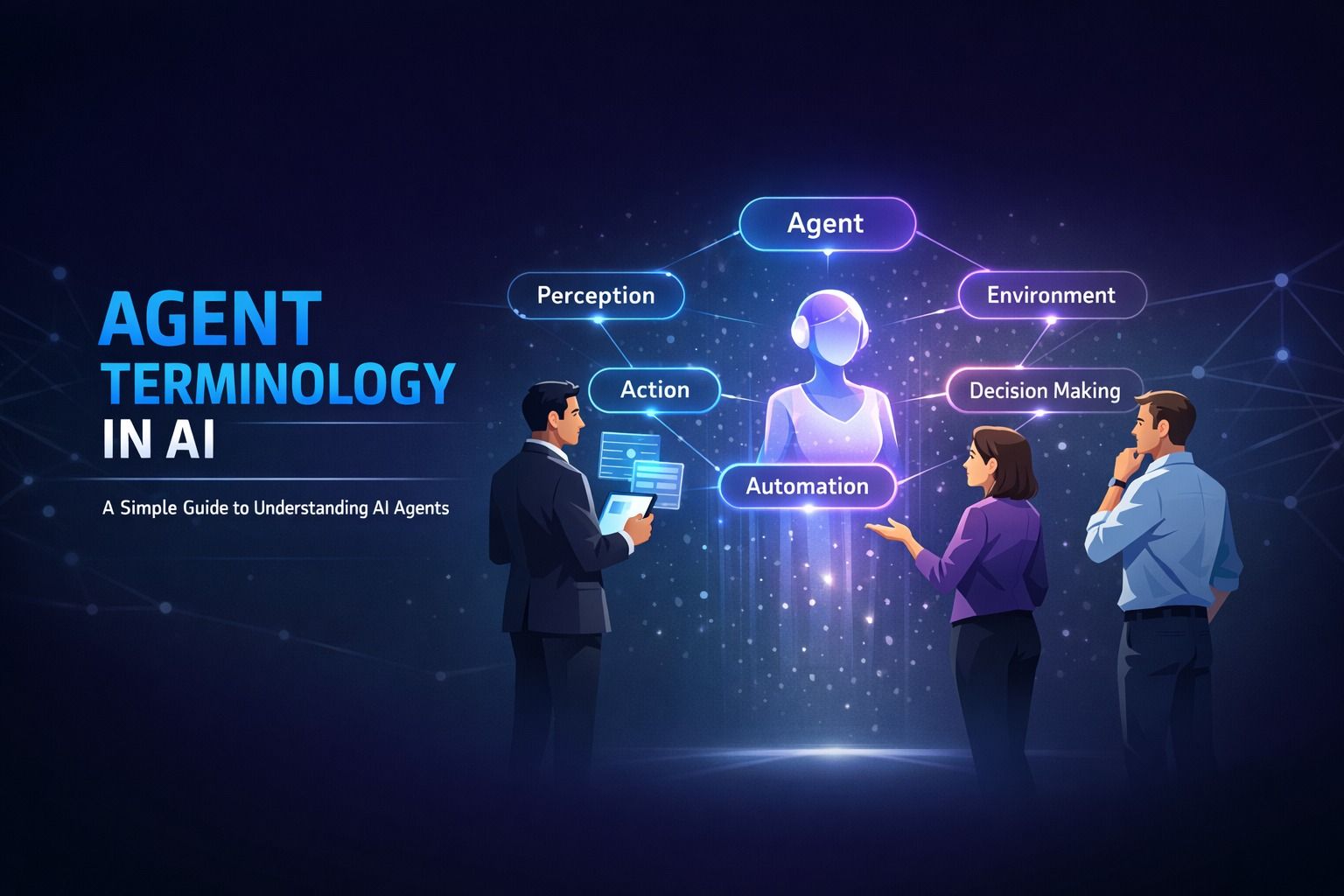 Artificial Intelligence
14 min read
Artificial Intelligence
14 min read
Agent Terminology in AI: A Simple Guide to Understanding AI Agents
Decode AI agent terminology in ai with this beginner-friendly guide. Learn about autonomous agents, ...
Read ArticleReady to start Codex & Claude Code: AI Coding Agents for Professionals?
Book a Priority Demo to see a full live class with a mentor reserved for you, today or tomorrow. Or choose a plan and enrol now.
Questions? WhatsApp +91 91233 66161 or email connect@modernagecoders.com