AGT / BASE / 01
AI Tools Mastery
Real work from AI assistants, and the habit of checking it.
Open the syllabusUK · Working professionals · Live online
Around 35% of UK businesses with 10 or more employees now use some form of AI, almost three times the share in late 2023, according to the Office for National Statistics. Agents are a further step: software that plans its own steps and acts on real systems, which the ONS does not yet count separately. For organisations taking that step, three UK authorities have already set out what they expect. The Information Commissioner's Office applies Article 22A of the UK GDPR to decisions about people taken without meaningful human involvement. The National Cyber Security Centre says an agent whose actions cannot be understood, monitored or contained is not ready to deploy. The Competition and Markets Authority says a business is responsible for how it treats consumers whether it acts through people or through AI systems. This course is for the analysts, operations leads, engineers and managers who are being asked to build these agents, and it teaches them to build ones that can stand up to those questions.
Live teaching since 2020 · 10,000+ students · agents with an owner and a test set
In short
An AI agent is software in which a language model plans steps and uses tools to reach a goal. In the UK, three authorities now shape how one should be built. The ICO applies Article 22A of the UK GDPR, which requires safeguards, including access to human intervention, for solely automated decisions with legal or similarly significant effects. The NCSC advises starting small, with low-risk tasks and the minimum access for the shortest time. The CMA holds businesses responsible for how they treat consumers whether through people or AI systems. Modern Age Coders teaches working professionals to build agents that meet all three, live and online, in small groups or one to one. The first class is free; afterwards a group place is USD 100 a month and one-to-one lessons USD 150 a month. Copilot Studio and Gemini Enterprise are taught one to one only, and Gemini Enterprise has its own fee, shown on its course page.
Start here
The engineering underneath, or the agent platform your employer already licenses. Each card opens the full syllabus.
APU / 01
Retrieval, tool calls and evaluation built from first principles, so no platform is a black box to you.
Open the syllabus →
APU / 02
Agents inside Microsoft 365, grounded in your organisation's documents. Taught one to one only.
Open the syllabus →
APU / 03
The Google route, for organisations that run on Workspace. One to one only, with its own monthly fee.
Open the syllabus →UK adoption
From the Office for National Statistics, Artificial intelligence in UK businesses: 2023 to 2026, released 20 July 2026 and based on the Business Insights and Conditions Survey.
| Measure | Published figure |
|---|---|
| Businesses using at least one AI technology | Around 35%, up from around 12% in late 2023 |
| Businesses with 250 or more employees | 49% |
| Large language models, the most used type | 18% |
| Visual content creation | 16% |
| Data processing using machine learning | 12% |
| AI technologies per adopting business | About 1.6, up from about 1.4 |
| Adopters that use AI extensively | 10% |
| Information and communication, against construction | 58% against 13% |
The ONS calls adoption to date "relatively shallow". The typical adopting business uses about 1.6 AI technologies, up only modestly since late 2023, and only one adopter in ten describes its use as extensive. For most organisations, AI is still something a person opens, not something that acts on their systems.
That gap, between trying AI and building it into a process, is exactly where agents sit, and the ONS figures suggest most organisations have not crossed it yet.
The ONS does not count agents. Large language models, at 18%, are the closest category, but a business using a chatbot and one letting software act on its finance system both fall into it, so we do not relabel the figure.
The same article sets 55% of employees reporting AI use for work or education beside 35% of businesses, and explains the gap: the employee figure comes from a different survey, covers Great Britain rather than the whole UK, and can include informal use. Staff are often ahead of their employer's official systems.
A lack of expertise is one of the barriers businesses cite most, reaching around 18% of firms with 100 to 249 employees. Cost holds back around 7% to 14% across size bands.
Around 62% of businesses citing a lack of AI expertise train or retrain existing staff, against around 26% of those reporting no barriers. Recruiting new AI-skilled staff remains relatively uncommon.
Around half of businesses said AI had no impact on headcount. Reductions were most evident among medium-sized businesses, where just under 7% reported a decrease.
Source, read 21 September 2026: ONS, Artificial intelligence in UK businesses: 2023 to 2026, released 20 July 2026 (Business Insights and Conditions Survey, wave 159, 5 to 28 June 2026). Business figures cover firms with 10 or more employees unless stated.
Automated decisions
The Data (Use and Access) Act 2025 replaced Article 22 of the UK GDPR with new Articles 22A to 22D. This is the rule an agent meets the moment it decides something about a person.
The ICO summarises Article 22A like this: automated decision-making is where a decision "is based solely on automated processing (ie there is no meaningful human involvement in the decision)" and "has a legal or similarly significant effect on a person". The government describes the Act as creating a "more permissive framework" for such decisions than the old rule, which was framed as a general prohibition with narrow exceptions, on condition that organisations put safeguards in place.
| Safeguard | What the agent's designer has to build |
|---|---|
| "providing people with information about significant decisions made about them" | A plain-language notice, produced with the decision, that the person affected can actually understand |
| "enabling them to make representations about and to challenge such decisions" | A route back in, and a log showing exactly what the agent saw and did |
| "enabling them to obtain human intervention in respect of such decisions" | A named person with the authority to review the decision and change it |
The ICO explains that organisations can now rely on a much wider range of lawful bases for significant automated decisions, as long as appropriate safeguards continue to apply. That does not extend to special category data, such as health or ethnicity, which stays more protected.
The government commenced the majority of the Act's data protection and privacy provisions on 5 February 2026. Keeping a person in the loop is no longer just a slogan here; it is a design requirement with a legal shape.
On 31 March 2026 the ICO published a report on automated decisions in recruitment, after engaging with more than 30 employers, and wrote to 16 organisations likely to be making automated decisions about candidates. Its expectations were to "Proactively monitor for bias", "Be transparent with jobseekers" and "Explain rights to recourse".
Its draft guidance on automated decision-making was open for consultation until 29 May 2026. Check the ICO's site for the current version before relying on any summary, this one included.
None of this is legal advice, and the course does not give any. What it does is make the questions impossible to skip. Is a person meaningfully involved, or approving whatever the agent produces? Does the outcome have a legal or similarly significant effect on someone? Could that person find out, object, and reach somebody able to change it? Answering those before building costs an afternoon; answering them after a complaint costs a great deal more.
Sources, read 21 September 2026: gov.uk, Data (Use and Access) Act 2025: data protection and privacy changes; UK GDPR and DPA factsheet; plans for commencement; ICO, what the Act means for organisations; ICO, automated decisions in hiring, 31 March 2026.
Security and accountability
Two more UK authorities reached the same conclusion from different directions in 2026: the National Cyber Security Centre on security, and the Competition and Markets Authority on consumers.
On 15 May 2026 the NCSC summarised new joint guidance, Careful adoption of agentic AI services, written with international partners. Its advice is that organisations should "start small, use agents only for low-risk tasks" and apply established cyber security controls from the outset. Its test for readiness is blunt: "If you cannot understand, monitor or contain an agent's actions, it is not ready for deployment".
| NCSC control | In the agent you build |
|---|---|
| Least privilege: "give agents only the minimum access they need, for the shortest time required" | A written list of every system the agent may read or change, and nothing beyond it |
| Limit scope | Actions and hours constrained in configuration, not only in the prompt |
| Avoid long-lived credentials | Temporary keys, revoked when the task finishes |
| Monitor behaviour | A log of every tool call, reviewed rather than simply stored |
| Threat-model the deployment | Test cases that try to manipulate the agent, including instructions hidden in documents it reads |
| Plan for incidents | A way to stop the agent at once, and a named person allowed to use it |
The NCSC asks organisations to be clear about "who owns an agentic system, who approves its access, who monitors its behaviour, who reviews incidents, and ultimately who can stop it", and to settle this before the agent is connected to real systems or data.
On the course, those five answers sit at the top of every agent's documentation. An agent without them is unfinished, however impressive it looks in a meeting.
The CMA's paper Agentic AI and consumers, published on 9 March 2026, states that "businesses are responsible for how they engage with consumers, regardless of whether that is through people or AI systems".
It also observes that where businesses deploy agents today, "Consumer facing authority remains limited and escalation to humans is common." Handing over to a person is a sound design pattern, not a weakness to engineer away.
Sources, read 21 September 2026: NCSC, Thinking carefully before adopting agentic AI, 15 May 2026; CMA, Agentic AI and consumers, 9 March 2026.
What you build
Every agent built on the course ends with a one-page record that a manager, an auditor or a data protection officer could read in five minutes.
| Field | What goes in it | The rule it answers |
|---|---|---|
| Owner | The person who answers for the agent and can switch it off | NCSC accountability |
| Job | One task, written in a single sentence | Start small |
| Access | Each system, the permission level, and how long access lasts | Least privilege |
| Data | Whether personal or special category data is involved | UK GDPR |
| Decisions | Whether any output is a significant decision about a person, and where a human steps in | Article 22A |
| Evidence | The test cases, the pass rate, and when they were last run | Your own standard of proof |
| Hand-over | What makes the agent stop and pass the case to a person, and which person | Escalation |
Triage, lookups and drafting from templates make good first agents: frequent, low stakes and easy to check. The NCSC points the same way, towards tasks that are repetitive, well understood and low risk.
Thirty or so real examples with agreed outcomes, rerun after every change. A pass rate you can repeat is worth more than a demonstration that went well once.
Documents carrying hidden instructions, requests just outside the agent's job, inputs designed to make it overreach. Far better found in class than in production.
The platforms are the ones UK employers already pay for. Microsoft Copilot Studio and Google Gemini Enterprise are each taught one to one, because every agent is shaped by one organisation's licences, data and permissions. Engineers can work in code instead, building retrieval, tool calls and evaluation themselves.
Coding agents such as Codex and Claude Code are taught on your own paid subscriptions, bought directly from their providers and separate from our fee, so nothing you build depends on us.
Sometimes the right answer is not to build an agent at all. A process that is disputed, rare or high stakes may be better simplified, left with a person, or automated with plain rules. The NCSC asks the same thing: whether AI is really needed.
How models are trained and measured is covered on learn to train AI, not just prompt it, and why reading AI output critically matters is on learn to think, not just use AI tools.
Stages
Plan on roughly four to six months at one lesson a week, less if you already work with data or code.
| Stage | What you can do |
|---|---|
| 1. Check | Use AI tools on real work and catch their errors against what you know |
| 2. Ground | Connect a model to your own documents and find where retrieval misses |
| 3. Connect | Give it tools, with access written down and limited |
| 4. Test | Run a case set, attack the agent, and report the pass rate honestly |
| 5. Own | Complete the agent record and run the agent for other people |
Copilot Studio and Gemini Enterprise are configured more than programmed. Python becomes useful once you want custom tools or your own evaluation scripts, and the free class settles which route suits your role.
The wider sequence of subjects is on the coding roadmap.
One lesson a week, short enough to survive a quarter end. Billing is monthly, so a launch or an audit season can mean pausing at the end of a month and starting again later.
Confidential systems belong in one-to-one lessons, where nothing is shown to a group.
The catalogue
Choose by where you begin rather than by job title. The free class confirms the choice.
AGT / BASE / 01
Real work from AI assistants, and the habit of checking it.
Open the syllabusAGT / BASE / 02
Answers from your own data, no language required.
Open the syllabusAGT / BASE / 03
For custom tools, evaluation scripts and automation.
Open the syllabusAGT / PLAT / 01
Microsoft 365 agents, taught one to one only.
Open the syllabusAGT / PLAT / 02
Workspace agents; one to one, with its own fee.
Open the syllabusAGT / PLAT / 03
The engineering beneath every platform.
Open the syllabusAGT / ENG / 01
Coding agents directed, every change reviewed.
Open the syllabusAGT / ENG / 02
Scheduled jobs that run with nobody watching.
Open the syllabusAGT / ENG / 03
Review and rollback, which agent work relies on.
Open the syllabusHow lessons run
Our teachers work from India, which does not change its clocks. The UK is four and a half hours behind India during British Summer Time and five and a half hours behind in winter, so UK mornings, evenings and weekends can all be arranged.
Before work
An early slot, ahead of the UK working day.
After work
The usual choice for people in full-time roles.
Weekend
Longer sessions for building and testing.
Bring a process you run and leave knowing whether an agent belongs in it.
Five to ten professionals at one level, comparing designs and test results.
For confidential data, and the only format for Copilot Studio and Gemini Enterprise.
Coding-agent work runs on accounts you own, so the work stays with you.
An agent counts as finished when its record is complete and its tests pass.
A teacher reviews what the agent did and why, not only what it produced.
Student work
Four finished projects from our students. Many more, from every age group, are collected in student labs.
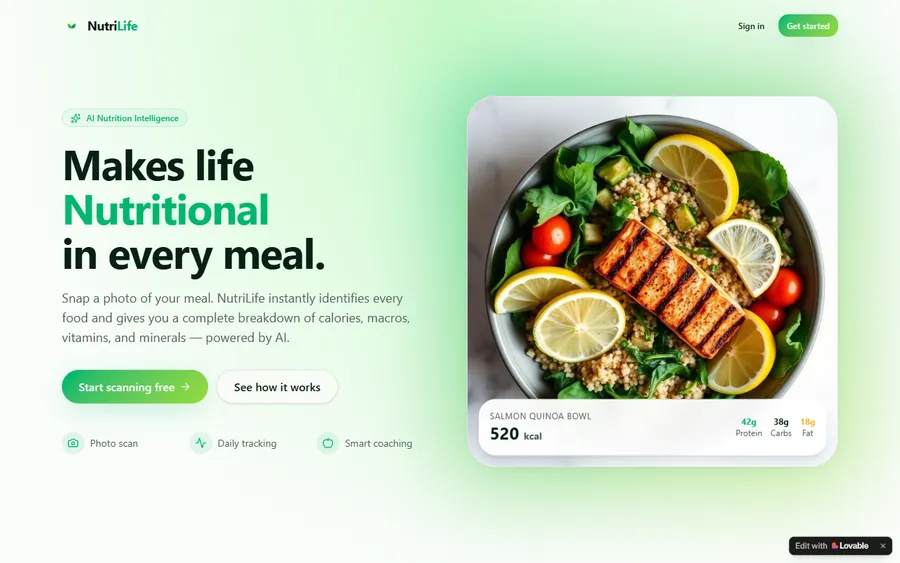
AI and ML
An AI nutrition coach that reads what you eat and works you toward a target.
AI and ML
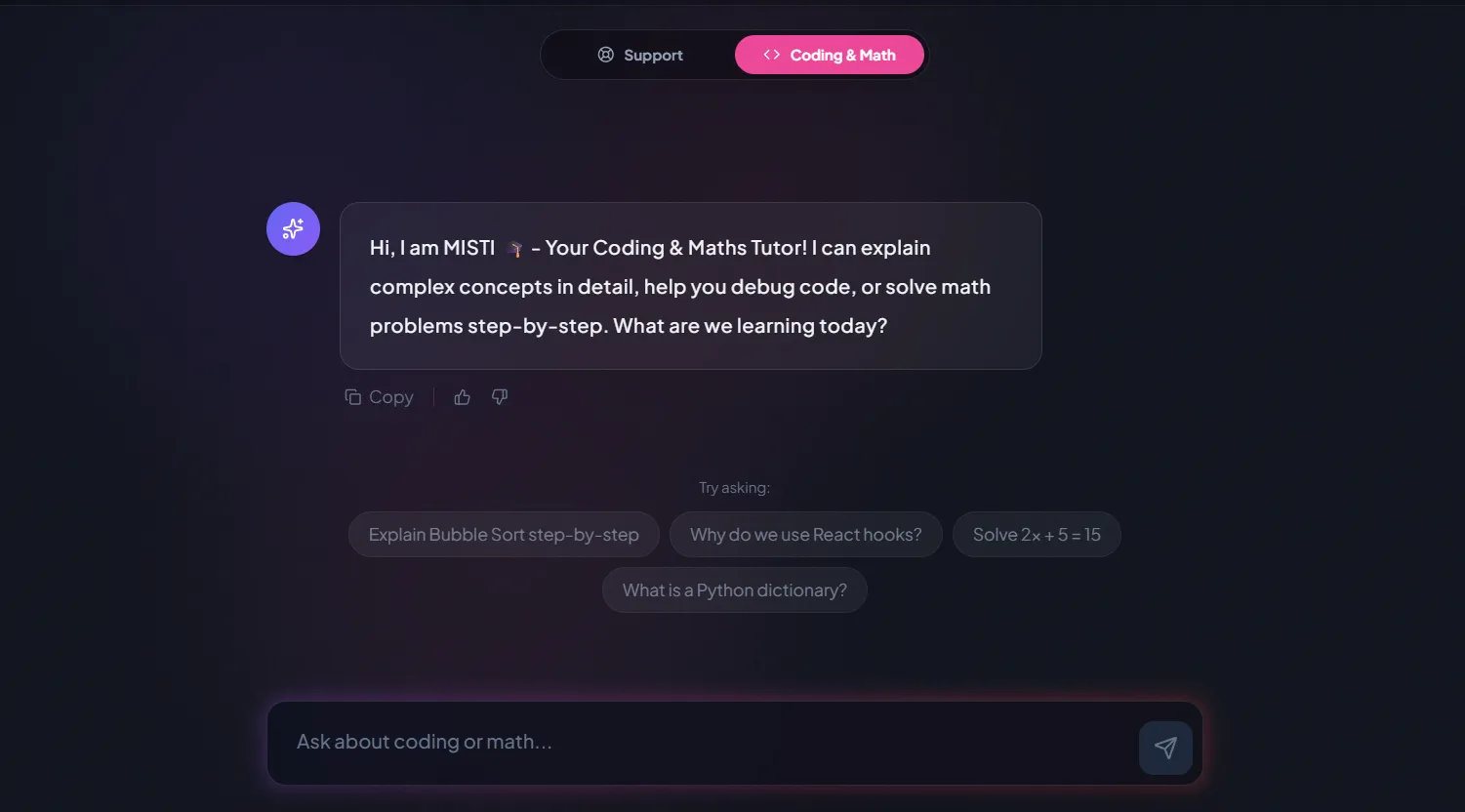
A chatbot that answers mathematics and programming questions, built and deployed by a student.
AI and ML
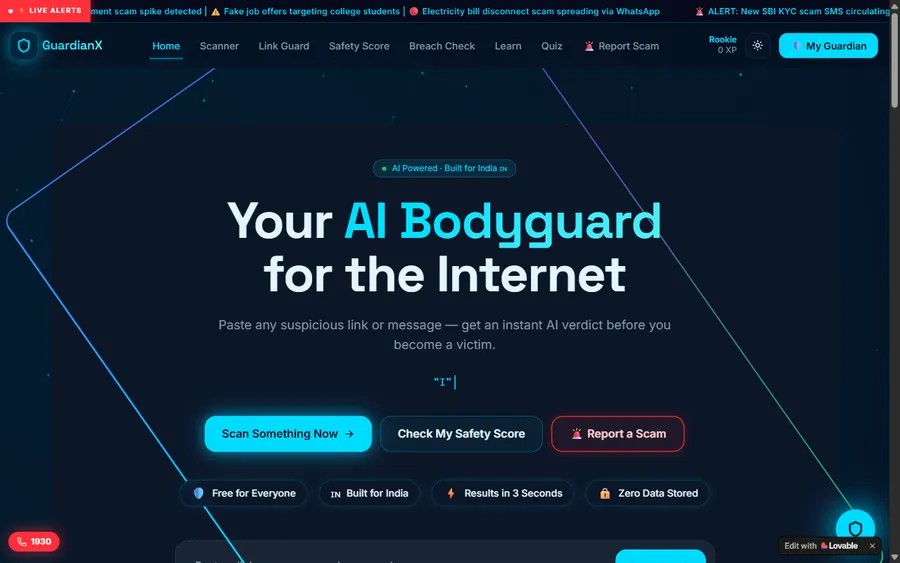
An assistant that helps a young person recognise unsafe situations online.
Web app
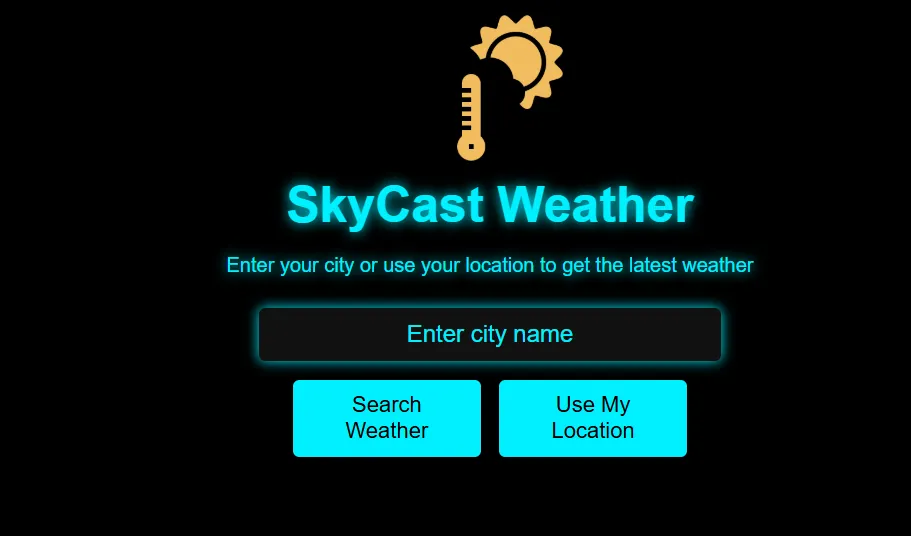
A weather forecasting site with live conditions for any location.
Fees
One monthly fee in US dollars, charged the same way in every country outside India, with no enrolment fee and nothing to sign beyond the month. Copilot Studio and Gemini Enterprise are one to one only, and Gemini Enterprise carries its own monthly fee, shown on its course page.
Free first class
USD 0
no card required
Group batch
USD 100
a month, billed in US dollars
One to one
USD 150
a month, billed in US dollars
What families say
Reviews posted on Google by our students and their families, reproduced as written.
★★★★★
"The one step solution for my son. Modern Age Coders make learning coding so simple that kids love it. The teachers explain complex concepts clearly with practical exercises and interactive content."
Ria Mukherjee
Parent
★★★★★
"Modern Age Coders has been a game-changer for me. I struggled to grasp IT concepts and coding before joining, but their classes transformed everything. I can now confidently write complex programs with ease."
Samriddha Mondal
Student
★★★★★
"One of the most wonderful education centres out there. Education is not limited to school syllabus but focuses on skill development."
Vansh Agarwal
Student
★★★★★
"My child Dhairya is really enjoying the Modern Age Coders classes. This is his first online class and he eagerly looks forward to it. I can already see his improvement, and the teachers are very cooperative."
Sonam Oswal
Parent of Dhairya
★★★★★
"Modern Age Coders have wonderful teachers who teach in a clear, easy and practical way. The teacher boosts students' confidence and inspires them to learn without hesitation."
Sonu Goyal
Parent
★★★★★
"I highly recommend this computer coding class! The teachers are incredibly knowledgeable and passionate about coding."
Ritu Kedia
Parent
Questions from UK professionals
The ONS found that around 35% of businesses with 10 or more employees used at least one AI technology in June 2026, up from around 12% in late 2023, and 49% of those with 250 or more employees.
Nobody publishes that for the UK. The ONS counts large language models, used by 18% of businesses, and other technology types, but not agents, and we do not relabel its categories.
Under Article 22A of the UK GDPR, a solely automated decision with a legal or similarly significant effect needs safeguards: information about the decision, a way to make representations and challenge it, and access to human intervention. This is general information, not legal advice.
Yes. In March 2026 it published a report on automated decisions in hiring and wrote to 16 organisations, expecting bias monitoring, transparency with candidates and a clear way to challenge a decision.
Start small with low-risk tasks, give agents the minimum access for the shortest time, decide who owns and can stop each one, and do not deploy an agent whose actions you cannot understand, monitor or contain.
Not for Copilot Studio or Gemini Enterprise, which are mostly configured. The engineering and coding-agent courses expect some programming, which the Python course can supply first.
No. Copilot Studio and Gemini Enterprise are taught one to one only, because each agent depends on one organisation's licences, data and permissions.
Only with their permission, and only one to one. Where that is not possible, the Copilot Studio course arranges a practice environment.
The first class is free. After that a group place is USD 100 a month and one-to-one lessons USD 150 a month, except Gemini Enterprise, whose fee is on its course page. There is no enrolment fee.
Before work, after work or at weekends in UK time, fixed in the free class. Our teachers are four and a half hours ahead of the UK in summer and five and a half in winter.
Elsewhere on this site
The models underneath, the programming first, and reading what AI writes.
How models are measured and assured.
Why judgement still decides the outcome.
Reading what an assistant writes for you.
When the programming has to come first.
Starting later, and England's free routes.
Every page for the UK in one place.
Start here
Leave a number and we will ring at a time that fits your UK working day. Describe a process you actually run; you will leave with a view on whether an agent belongs in it, and on what its record would need to say.
Prefer to read before talking? The teaching approach comes first, then the full course list, then finished work in student labs.
WhatsApp us · +91 91233 66161 · contact@modernagecoders.com
WhatsApp is often the quickest way to reach us from a UK mobile. The team works from India, so our number starts +91, and we have no UK office.