★★★★★
"The one step solution for my son. Modern Age Coders make learning coding so simple that kids love it. The teachers explain complex concepts clearly with practical exercises and interactive content."
Ria Mukherjee
Parent
For parents · Oman · Live online · Ages 6 to 67
Vibe coding, describing what you want and letting an AI tool write it, genuinely works, and we sell courses in it, so this is not a page arguing that it is worthless. It is a page about a specific distinction: operating a tool well and being able to reason about what the tool produced are different capabilities, they look identical from the outside, and only one of them survives the moment something breaks in a way the tool cannot fix.
Live online for Oman · ages 6 to 67 · from USD 100 a month · first class free
Courses
We teach vibe coding and we teach building. The pages elsewhere explain why they are not the same skill.
VIBE / 01
Describing what you want and judging what comes back. Genuinely useful, and an operating skill.
Open the syllabus →
VIBE / 02
The constructing skill. What lets a student reason about the code once the tool stops being able to fix it.
Open the syllabus →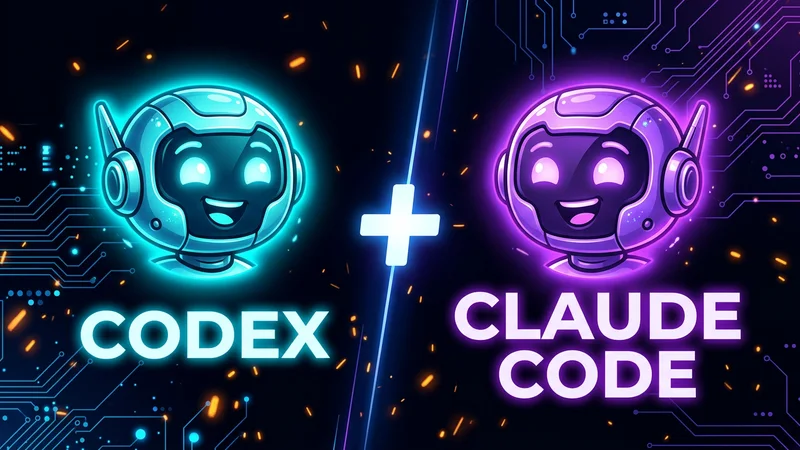
VIBE / 03
The serious version: direct an agent, then defend the diff line by line.
Open the syllabus →The full ladder is Python and AI for Kids · AI Literacy for Kids · Python for Teens · AI and Machine Learning for Teens · Data Science for Teens · Git and GitHub · AI and ML Masterclass · Generative AI: LLMs, RAG and Agents. The full list is on the catalogue.
In short
Vibe coding is describing what you want and letting an AI tool produce the code. It is powerful, it is permanent, and Modern Age Coders teaches it. What it does not by itself give a learner is the ability to reason about the code when the tool stops being able to fix it, and that ability is what this academy exists to build. We teach both, in that order, for learners in Oman aged six to sixty-seven. Group teaching is USD 100 a month and private teaching USD 150, and the first class is free.
Starting from an honest position
We should declare an interest before arguing: we sell vibe coding courses. So this page is not going to tell you the practice is worthless. It is going to tell you precisely what it gives a learner and precisely what it does not, because the two are easy to confuse and expensive to confuse.
Vibe coding is describing what you want and letting an AI tool produce the code, then steering it by describing what is wrong. It is genuinely powerful. A thirteen year old can now put a working web application in front of their family in an evening, which even five years ago took months of study to reach. Anybody who dismisses that has not watched a child do it.
It also teaches real things. Specifying what you want clearly is a skill, and most people are bad at it. Reading code you did not write is a skill, and it is one traditional teaching neglects badly. Judging whether an output meets a requirement is a skill. Those are not nothing.
Here is the part that gets left out of the marketing. Vibe coding is an operating skill: it makes you effective with a tool. Building is a constructing skill: it makes you able to reason about the thing the tool produced. They feel similar from the outside, because both end with working software on a screen, and they diverge completely the moment something goes wrong in a way the tool cannot fix by being asked again.
The honest way to put it to a parent: after a year of vibe coding a student can build more than they can explain. After a year of this track they can explain more than they can build. The second gap closes on its own; the first one does not.
| Vibe coding gives you | Building gives you | |
|---|---|---|
| Speed to a working thing | Very high, immediately | Low at first, high later |
| When it works | You have software | You have software |
| When it breaks | Re-describe and hope | Read it, find it, fix it |
| Ceiling | Whatever the tool can do | Whatever you can reason about |
| Transfers to | The next version of that tool | Any language, any tool, any decade |
| Time to competence | Weeks | Years |
The test
Forget the argument and try this instead. It takes about ten minutes and it will tell you more about where your child actually is than any syllabus we could publish.
Anything: a page, a game, a small application. Let them enjoy showing it, because they should. This is not a trap and it should not feel like one.
Not something the tool would obviously handle. Something narrow: make this button only work once, or stop this from happening when the list is empty. Watch what they do first. Reaching for the code is one answer; reaching for the chat box is another.
Change a value, remove a line, rename something. Then ask: what is wrong, and where. The question is not whether they can fix it. It is whether they can locate it and describe what that part was for.
Point at any line and ask what it is doing and what would happen without it. This is the single most diagnostic question of the four and it takes about twenty seconds.
If the student can find the line, explain what it does, and say why it is wrong, they are building. The tool is an accelerator and they are the engineer, which is exactly where you want them.
If they can only re-describe the problem to the tool and hope, they are operating. That is a real capability and it has a ceiling: it works until the tool cannot fix the thing, and then it stops completely. Every student we have met who was stuck at that ceiling was stuck at rungs one and two, and both are recoverable in a term.
Teach both, in an order. Building first, so the student has something to judge with. Vibe coding on top, so they are not slower than their peers at producing things. That order is not moral, it is practical: a learner who can read code gets far more out of an AI tool than one who cannot, because they can tell when it has quietly done something odd.
The vibe coding courses we run are for kids and for teens, and there is a general vibe coding classes page for the site as a whole.
What to do about it, by age
Having run the test, most parents want to know what follows. It depends less on the result than on how much time is left before the student needs the underlying skill for something that matters.
Let them use the tools, with somebody nearby, and do not worry about the gap yet. At this age the valuable thing is that making software feels possible and enjoyable, and AI tools deliver that faster than anything before them. Start typed Python alongside, in small amounts, so that reading code becomes familiar before it becomes necessary. There is no urgency and plenty of runway.
This is the window where the order matters most. A student who builds the reading and debugging habit here will spend the rest of their education using AI tools as an amplifier. A student who does not tends to arrive at sixteen able to produce impressive things and unable to progress past whatever the tool can do unaided, which is a frustrating place to be stuck and takes longer to fix later.
Move quickly and go straight at the gap. Older students close it far faster than younger ones: the abstractions land in a term rather than a year, and the motivation is usually already there because they have hit the ceiling themselves. Pair it with a published project from the start, because at this age accumulated evidence of work matters more than accumulated hours of study.
The version for Oman specifically
Oman is close to fully connected. At the start of 2025, 95.3 per cent of the population was online, 5.14 million people out of 5.40 million. Which means every AI tool that exists is already in every Omani teenager's hand, at the same moment it reaches a teenager in London or Singapore. There is no lag to exploit and no advantage in access.
When the tools are universal, the differentiator stops being who has them and becomes who can do something with them that the tools cannot do alone. That is not a comfortable thought and it is the accurate one.
It also cuts the other way, which is the optimistic half. A student in Salalah or Sohar has exactly the same tools as a student anywhere, and the thing that used to separate them, which was access to teaching, is now a video call. The remaining question is entirely what they do with the time.
Where that leads is the ladder: Python to AI in five rungs, ending in something published that a stranger can check. The rung most people mean when they say AI now is agents.
Connectivity figures from DataReportal Digital 2025 Oman. Verified 18 August 2026.
Fees
Free first class
USD 0
no card required
Group batch
USD 100
a month, billed in US dollars
One to one
USD 150
a month, billed in US dollars
Free first class
USD 0
no card required
Group batch
USD 100
a month, billed in US dollars
One to one
USD 150
a month, billed in US dollars
What families say
Real reviews from real families. We neither write nor commission them.
★★★★★
"The one step solution for my son. Modern Age Coders make learning coding so simple that kids love it. The teachers explain complex concepts clearly with practical exercises and interactive content."
Ria Mukherjee
Parent
★★★★★
"Modern Age Coders has been a game-changer for me. I struggled to grasp IT concepts and coding before joining, but their classes transformed everything. I can now confidently write complex programs with ease."
Samriddha Mondal
Student
★★★★★
"One of the most wonderful education centres out there. Education is not limited to school syllabus but focuses on skill development."
Vansh Agarwal
Student
★★★★★
"My child Dhairya is really enjoying the Modern Age Coders classes. This is his first online class and he eagerly looks forward to it. I can already see his improvement, and the teachers are very cooperative."
Sonam Oswal
Parent of Dhairya
★★★★★
"Modern Age Coders have wonderful teachers who teach in a clear, easy and practical way. The teacher boosts students' confidence and inspires them to learn without hesitation."
Sonu Goyal
Parent
★★★★★
"I highly recommend this computer coding class! The teachers are incredibly knowledgeable and passionate about coding."
Ritu Kedia
Parent
Questions parents ask
No, and trying would be both futile and counterproductive. These tools are how software is written now, and a student kept away from them is disadvantaged rather than protected. What is worth doing is making sure they can read what comes back. A learner who can review the output gets far more from an AI tool than one who cannot, because they notice when it has quietly done something strange.
Some of it, and not the part that matters here. Typing out boilerplate is already largely gone and nobody should mourn it. What has not become obsolete, and shows no sign of it, is deciding what should be built, judging whether it works, and diagnosing why it does not. Those are the parts this track teaches, and they have become more valuable rather than less as the typing got cheaper.
It is extremely normal and it is fixable, usually within a term. It means they are operating rather than constructing, which is where nearly everybody starts now. The route out is rungs one and two: Python written by hand and data handled honestly. Neither is glamorous and both go faster than parents expect, because the student is already motivated by things they have made.
We teach it and sell it, which is why the page opens by declaring that. There is a vibe coding course for kids and one for teens, and a coding agents course that works with Codex and Claude Code. The argument here is about sequence rather than about worth: build the judgement first, then the tools amplify it instead of substituting for it.
A group batch of five to eight students is USD 100 a month and one to one teaching is USD 150 a month, billed in US dollars, the same flat figures everywhere outside India. There is no enrolment fee, no annual contract, and the first class is free without a card.
Around nine or ten in our experience, and with an adult nearby. The vibe coding course for kids is built around exactly that: the child directs a tool, gets something back, and then has to work out which parts are broken and repair them. Issuing the instruction takes an afternoon to learn. Evaluating what returns is where the whole course goes.
It can, and whether it does depends almost entirely on whether anybody ever asks them to explain what came back. A student who is never asked will not develop the habit. A student who is asked in every session develops it quickly, and then the tool accelerates a mind that is working rather than replacing one that is not. That question is most of what a teacher does here.
That is common and it is workable. We start where the motivation is and let the gaps surface naturally, because they always do: within a few weeks something breaks that the tool cannot fix, and at that moment a student who has been resisting Python usually wants it. Teaching that when it is wanted is far easier than insisting on it beforehand.
Not directly, and nothing here is on an Omani school certificate. What tends to transfer is the habit of specifying a problem precisely before attacking it, which shows up in open-ended assignments across subjects. Several parents have reported that as the first visible change, well before anything technical.
A mentor calls you at an Omani hour to arrange the free session. Nothing is charged and no card is requested. Sending the form starts a conversation rather than an enrolment and reserves no seat. Where the learner actually is, which is often not where a parent expects, gets settled on that call before money is mentioned.
Both sides of this argument
We sell courses on both sides of the distinction this page draws, so here are the pages for each rather than only the ones that suit the argument.
The site-wide page for the AI-assisted side, with the full syllabus and what it covers.
Where directing AI tools becomes engineering rather than instruction.
The long form of the constructing argument, with the evidence behind it.
What is happening underneath the tool your child is talking to.
The order we teach in, which is the practical answer this page arrives at.
What a session looks like, including how a teacher checks that a student understands their own code.
Start here
If the four questions above suggested your child is operating rather than constructing, that is useful information rather than bad news, and it is very common. The free first class covers the same ground with a teacher watching, and produces a specific answer: which rung they are on, how long the gap takes to close, and whether they should keep using the AI tools while it does. The answer to that last one is almost always yes.
Read first if you prefer: the academy hub for Oman, the site-wide vibe coding classes page, or how we teach.
WhatsApp us · +91 91233 66161 · connect@modernagecoders.com
There is no centre anywhere in Oman. Every session is a live video call taught from India, and the number above rings in India.