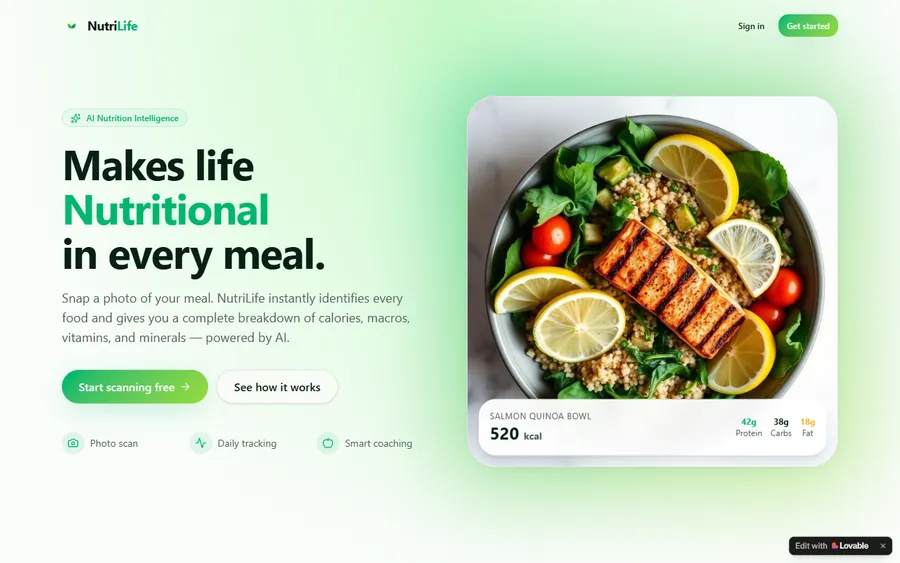
AI and ML
NutriLife
An AI nutrition coach that reads what you eat and works you toward a target.
Rung five · Oman · Live online · Ages 6 to 67
Students finish courses with folders. What actually persuades a university, a competition judge or an employer is a link: something running at a public address, with the code readable, the error rate stated, the commit history intact and an honest note about what it cannot do. That is a different object from a demonstration, it is harder, and it is worth more than everything above it on the ladder combined.
Live online for Oman · ages 6 to 67 · from USD 100 a month · first class free
Courses
A finished thing with a stated error and an honest limitation, rather than a demonstration.

BUILD / 01
Where the data comes from, and the row that would have poisoned the result if nobody looked.
Open the syllabus →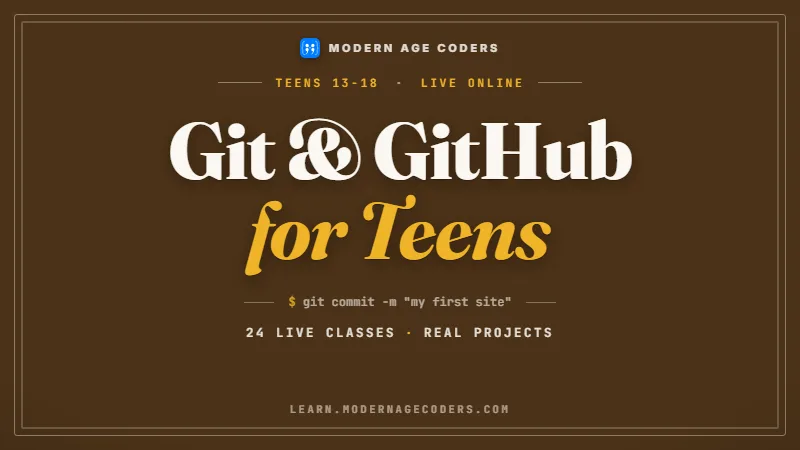
BUILD / 02
Committing as the work happens, which is what turns a folder into a history a reader can assess.
Open the syllabus →
BUILD / 03
The measured model at the centre of the project, with the baseline it had to beat.
Open the syllabus →The wider ladder is Python and AI for Kids · AI Literacy for Kids · Python for Teens · AI and Machine Learning for Teens · Data Science for Teens · Git and GitHub · AI and ML Masterclass · Generative AI: LLMs, RAG and Agents. The full list is on the catalogue.
In short
Modern Age Coders teaches learners in Oman to take AI and machine learning work past the demonstration stage: deployed at a public address, code readable on GitHub, error stated in a unit a non-specialist can check, a commit history that shows the thinking, and a written note of where it fails. It runs alongside the rest of the ladder from about the second rung. Group teaching is USD 100 a month and private teaching USD 150, and the first class is free.
The distinction the whole page turns on
Most student AI work is a demo. That is not a criticism of the students; it is what almost every course produces, because demos are what fit inside a term and what look good in a showcase. A project is a different object, and it is worth defining precisely.
| A demo | A project | |
|---|---|---|
| Where it lives | A laptop, or a screen recording | A public address anyone can open |
| Who can run it | The student, carefully | A stranger, without help |
| How good is it | Looks impressive | Stated in a unit, against a baseline |
| History | One folder | Commits going back months |
| What it cannot do | Not mentioned | Written down by the author |
| Reads as | A performance | Engineering |
Read down the right-hand column and notice that none of it is about sophistication. A linear regression a fourteen year old wrote can satisfy every row. A neural network with a screen-recorded demonstration and no repository satisfies none of them. The difference is not how clever the thing is. It is whether a stranger can check it.
The checklist we hold students to
This list is short on purpose. Students who are given twenty criteria satisfy none of them; students given five satisfy five.
Deployed, at an address. Not a video, not a screenshot, not a file that needs the student present to explain which order to run things in. This single requirement forces a dozen useful lessons about dependencies, configuration and the difference between works on my machine and works.
A repository with commits spread across the weeks it took, not one commit called final on the last day. The history is evidence of process, and to a technical reader it is often more convincing than the result. Students commit from the first week for exactly this reason.
Not ninety-four per cent accurate. Wrong by about four degrees, or misses roughly one in nine. And always next to what you would have got by doing nothing clever at all, because a number without a baseline is not a result, it is a decoration.
What it does, who it is for, how to run it, what the data was, and what the author would do next. Two hundred words of clear prose beats two thousand of generated filler, and writing it is where a student usually discovers which parts of their own project they never understood.
One honest paragraph naming the conditions under which the thing stops working, ideally with the test that demonstrates it. This is the item students fight hardest and the one that most changes how their work is received.
Of the five, the one students resist hardest is writing down what their project cannot do. It feels like undermining their own work. It is the opposite: a stated limitation is the clearest possible signal that the author understands their system, and every experienced reader knows it.
A project that says this model is unreliable below about fifty samples, and here is the test that shows it reads as engineering. The identical project without that sentence reads as a student hoping nobody looks closely. The work is the same. The judgement on display is not.
It also gives the student somewhere to go next. A written limitation is a to-do list with a reason attached, and the second version of a project is almost always better than the first precisely because the author wrote down what was wrong with it while they still remembered.
For a family outside the capital it is the one asset distance does not touch. A repository written in Salalah opens identically for a reader in Muscat, and the commits are dated. That is why the Salalah page makes this rung its whole argument.
It also matters at national level. The 2025/26 National Olympiad for Scientific Innovations, Robotics and AI took 70 projects across four fields, of which Information Technology is one. A student arriving with something that runs, that states its own error and that a judge can open is in a small group rather than a crowd.
Before any of the five criteria
More student projects die of a bad topic than of a hard technique. The three rules below are applied before a single line is written, and they eliminate most of the failures we used to see.
The single strongest predictor of a finished project. If a student cannot independently tell whether their output is right, they cannot debug, cannot improve, and will quietly lose interest around week four. Predicting something they can go and measure beats predicting something grand and unverifiable every time.
Ambition is the enemy here. A project that fits in six weeks and works is worth ten that were going to be remarkable. Students almost always propose something three times too large, and the most useful thing a teacher does in the first session is negotiate it down without deflating them.
A topic a student chose survives the week where nothing works. A topic assigned by a teacher does not. We supply the criteria and the review, and we push hard against suggesting the subject, even when the student is stuck, because a project the learner does not care about will be technically fine and abandoned.
There is a fourth rule we apply that is about people rather than engineering. Projects must not use data about identifiable individuals who have not agreed to it, must not include personal information in a public repository, and must not scrape anything a site has asked not to be scraped. Students find those constraints genuinely interesting once they realise the questions are the same ones professionals argue about, and a project that navigated them well is a better talking point than one that ignored them.
Work students shipped
Not screenshots. Open any of them, break them, look at what they get wrong. That is the point. More in Student Labs, and the general guide to assembling one is how to build a coding portfolio.
A question that comes up once the link exists: where does it actually go? Three places, in our experience. Into a university application, as a line in a personal statement that an admissions reader can click rather than a claim they have to take on trust. Into a competition entry, where a judge with forty projects to assess will reward the one whose limits are already written down. And into a first conversation about work, where being able to say here is something I built, here is how wrong it is, and here is what I would fix next is a strikingly unusual thing for a nineteen year old to be able to do.
AI and ML
An AI nutrition coach that reads what you eat and works you toward a target.
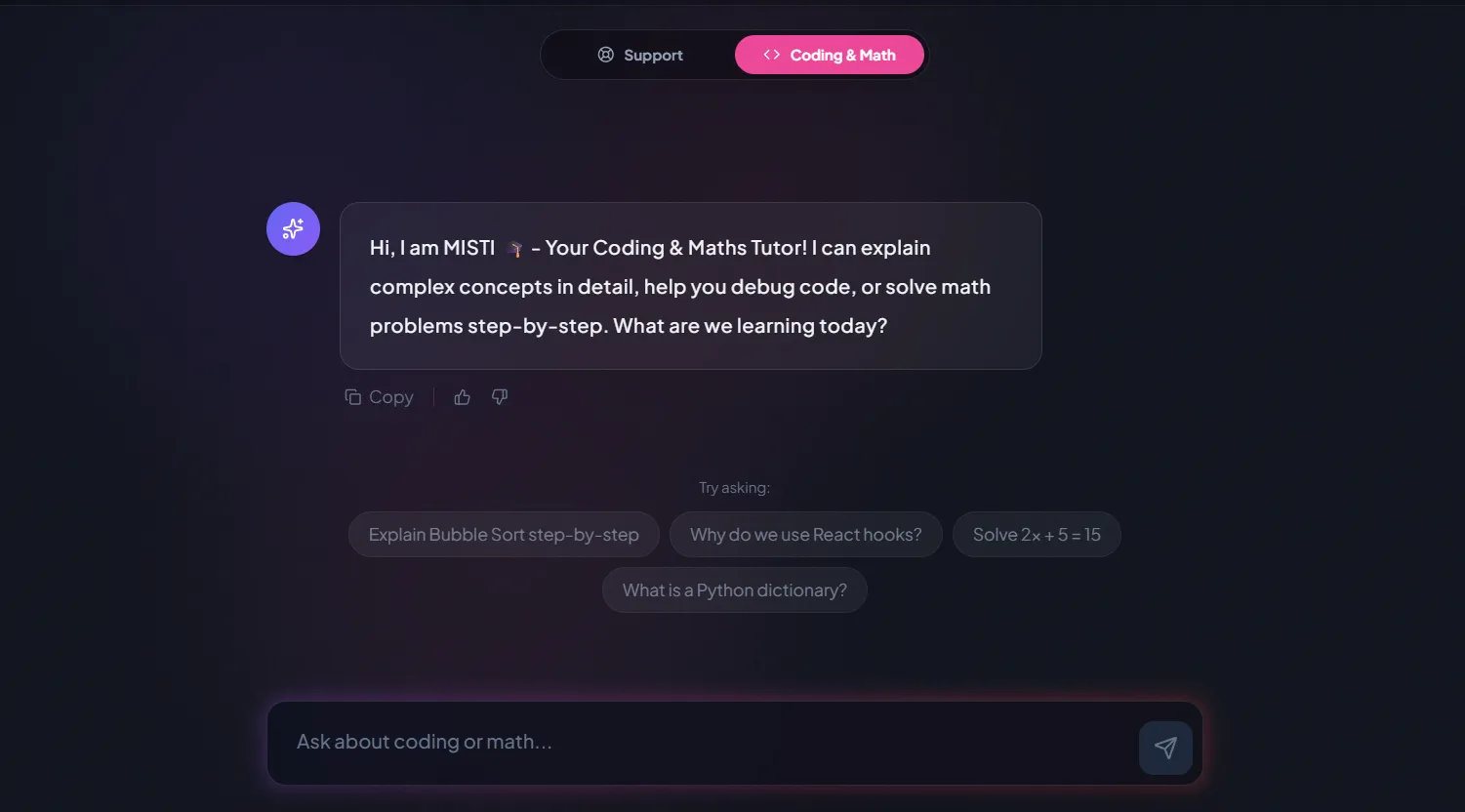
AI and ML
A chatbot that answers mathematics and programming questions, built and deployed by a student.
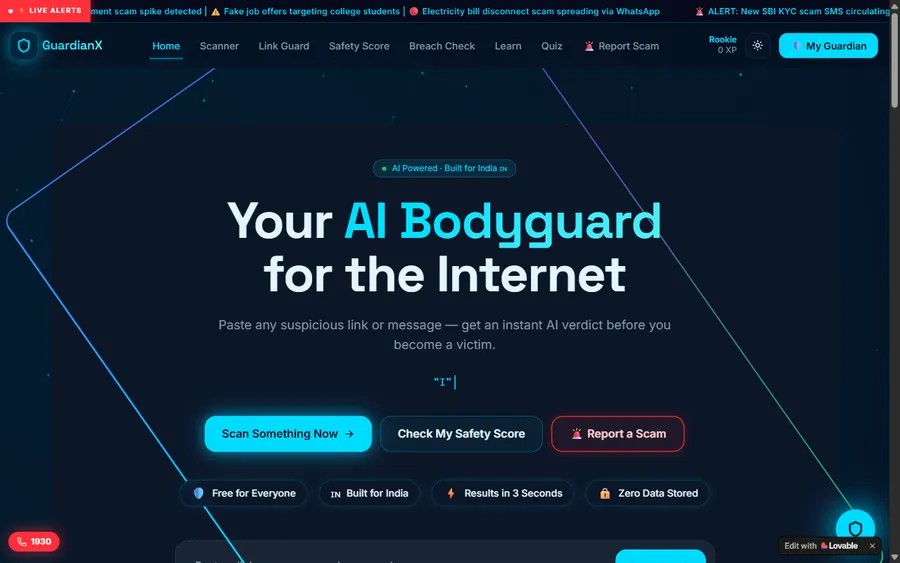
AI and ML
An assistant that helps a young person recognise unsafe situations online.
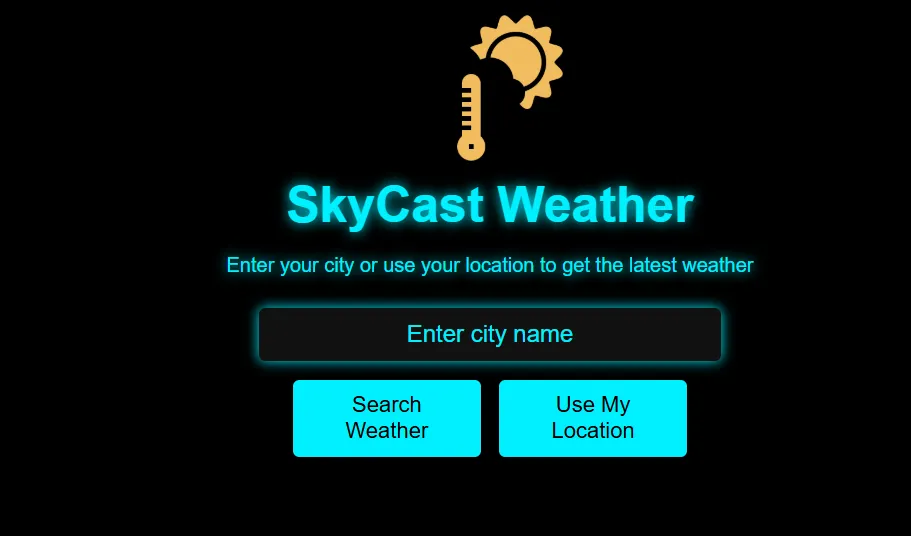
Web app
A weather forecasting site with live conditions for any location.
Fees
Free first class
USD 0
no card required
Group batch
USD 100
a month, billed in US dollars
One to one
USD 150
a month, billed in US dollars
Free first class
USD 0
no card required
Group batch
USD 100
a month, billed in US dollars
One to one
USD 150
a month, billed in US dollars
What families say
Real reviews from real families. We neither write nor commission them.
★★★★★
"The one step solution for my son. Modern Age Coders make learning coding so simple that kids love it. The teachers explain complex concepts clearly with practical exercises and interactive content."
Ria Mukherjee
Parent
★★★★★
"Modern Age Coders has been a game-changer for me. I struggled to grasp IT concepts and coding before joining, but their classes transformed everything. I can now confidently write complex programs with ease."
Samriddha Mondal
Student
★★★★★
"One of the most wonderful education centres out there. Education is not limited to school syllabus but focuses on skill development."
Vansh Agarwal
Student
★★★★★
"My child Dhairya is really enjoying the Modern Age Coders classes. This is his first online class and he eagerly looks forward to it. I can already see his improvement, and the teachers are very cooperative."
Sonam Oswal
Parent of Dhairya
★★★★★
"Modern Age Coders have wonderful teachers who teach in a clear, easy and practical way. The teacher boosts students' confidence and inspires them to learn without hesitation."
Sonu Goyal
Parent
★★★★★
"I highly recommend this computer coding class! The teachers are incredibly knowledgeable and passionate about coding."
Ritu Kedia
Parent
Questions about projects
It is worth more than it was, for a specific reason: grades compress and links do not. Two candidates with near-identical transcripts are hard to separate, and a reader who can open a repository, see commits dated across months and read an honest note about the model's limits has something to go on. It is not a substitute for results and we would never claim that. It is the thing that distinguishes between people whose results already look the same.
With supervision, and with a few rules we apply from the start. No personal information in the repository, no real names of other people, no data about anybody who has not agreed to it, and a parent who knows the account exists. Under those conditions, yes: a twelve year old with eighteen months of visible history at fourteen is in an unusual position, and the habit is far easier to build early than to retrofit.
Then it is a project that is not very good, published honestly, which is still worth more than nothing published. The checklist deliberately contains no requirement to be impressive. It requires the work to run, to be readable, to state its own error and to admit its failures. A modest thing that does all five reads better to an experienced person than an ambitious thing that does none.
No, and this is worth being blunt about because some providers do. A teacher reviews, questions, refuses to accept a number without a baseline, and points at the paragraph the student has not written. The student writes the code. A portfolio the learner cannot explain in an interview is worse than no portfolio, because it fails at exactly the moment it is supposed to help.
A group batch of five to eight students is USD 100 a month and one to one teaching is USD 150 a month, billed in US dollars, the same flat figures everywhere outside India. There is no enrolment fee, no annual contract, and the first class is free without a card.
It is the right shape for it, and we cannot promise anything about selection. For scale: the 2025/26 National Olympiad for Scientific Innovations, Robotics and AI took 70 projects across four fields, of which Information Technology is one, from more than 250 students. A working, measured, documented project is a strong entry into a field that size. Entry routes go through your school rather than through us.
Whatever they can check the answer to, which is the only rule we impose. That tends to mean something local and small: a prediction about something they measured themselves, a tool for a problem in their own house, a model of something they watch happen. Grand topics with no ground truth are how projects die, because the student can never tell whether they are wrong.
No. Git and GitHub are free, Python is free, and the libraries are free. Deployment for a student project is normally free too. The one exception is the coding agents strand, where the student needs their own subscription to the tools that course works with, and that is stated on the course page rather than buried.
Yes, and that is a common one to one request. We go through what exists against the five criteria, which usually means adding the error figure, the baseline and the failure note rather than writing new code. That is often a few sessions rather than a term, and it frequently doubles what the existing work is worth.
A mentor calls you at an Omani hour to arrange the free session. Nothing is charged and no card is asked for. The form starts a conversation, not an enrolment, and holds no seat. Where the learner starts, the format and the evening are agreed on that call ahead of any discussion of money.
On portfolios and shipped work
Rung five is a habit rather than a course, so most of what is useful about it lives on other pages.
The general guide, covering what goes in, what stays out and how it is structured.
The full collection of work students have shipped, each at a public address.
A hands-on route to having something trained and measured, which is what gets published.
For students aiming a project at a competition rather than at an application.
Why constructing beats operating, which is the argument this rung exists to prove.
Every course, with the syllabus behind each and where projects sit in it.
Start here
The free first session works either way. If your child already has code, we go through it against the five criteria and tell you what is missing, which is usually the error figure and the failure note rather than more features. If they are starting fresh, the session establishes which rung they are on and what the first publishable thing could realistically be.
Read first if you prefer: the academy hub for Oman, Student Labs for more shipped work, or the general guide to building a coding portfolio.
WhatsApp us · +91 91233 66161 · connect@modernagecoders.com
There is no centre anywhere in Oman. Every session is a live video call taught from India, and the number above rings in India.