AGU / ONE / 01
Scratch Programming
Block coding for ages 6 to 12.
Open the syllabusUK · Girls and their parents · Mixed classes
The national review of England's curriculum put the problem in one line in November 2025: "take-up of GCSE Computer Science is now 20% for boys versus 6% for girls". Girls make up fewer than a quarter of the students sitting the subject; the National Centre for Computing Education puts the female share of entries at 22.6% in 2025, up only slightly from 21.1% two years earlier. Yet the girls who do take it do well: in the same year, 35.7% of girls earned the top grades, against 27.8% of boys. So the gap is not about who can do computing. It is about who starts, and who keeps going long enough to find out they are good at it. The review points to stereotyping of computing careers and to how the subject is taught and resourced. This academy is for girls who want to learn Python and AI properly, and for the parents helping them decide. Classes are mixed and placed by ability, with the same teacher every week and projects that are worth finishing.
Live teaching since 2020 · 10,000+ students · mixed classes, placed by ability
In short
The Curriculum and Assessment Review's final report, published in November 2025, found that take-up of GCSE Computer Science was 20% among boys but 6% among girls, and pointed to gender stereotyping of computing careers and to school factors such as pedagogy and resources. The National Centre for Computing Education reports that girls made up 22.6% of GCSE Computer Science entries in 2025, and that 35.7% of girls achieved the top grades compared with 27.8% of boys. In the workforce, DSIT found only 17% of the cyber security workforce was female, against 48% of the UK workforce. Modern Age Coders teaches Python and AI live and online to UK learners, girls included, in mixed groups of five to ten placed by ability, or one to one, with the same teacher each week and real projects. We do not run girls-only classes and do not teach girls differently. The first class is free; afterwards a group place is USD 100 a month and one-to-one lessons USD 150 a month.
Start here
Python for teenagers, AI and machine learning, and Python with AI for younger learners. Each card opens the full syllabus.
AGU / 01
A complete route through Python for ages 13 to 18, to the point of building real programs.
Open the syllabus →
AGU / 02
From Python to models that learn from data, with school maths enough to start.
Open the syllabus →
AGU / 03
A first step into Python and AI ideas for ages 9 to 12.
Open the syllabus →Who takes computing
From the Curriculum and Assessment Review's final report, published in November 2025, and Ofqual's provisional entries for summer 2026.
| Measure | Figure | Source |
|---|---|---|
| GCSE Computer Science take-up, boys | 20% | Curriculum and Assessment Review |
| GCSE Computer Science take-up, girls | 6% | Curriculum and Assessment Review |
| GCSE Computer Science entries overall | Plateaued at 12-13% of students | Curriculum and Assessment Review |
| Girls' share of GCSE Computer Science entries | 21.1% in 2023, 21.9% in 2024, 22.6% in 2025 | National Centre for Computing Education |
| GCSE computing entries, provisional | 89,610 in 2025, 83,330 in 2026, down 7.0% | Ofqual |
The review says "take-up of Computing has declined among girls", and names "a range of factors", including "gender stereotyping of computing and related careers" and school factors "such as pedagogy and resources".
It also considered evidence that the GCSE "is perceived to be less relevant to girls", and recommended a broader GCSE in Computing, partly to engage a wider range of students. Our page on the new Computing GCSE covers that change.
Ofqual's provisional entries for summer 2026 show GCSE computing falling 7.0%, the largest percentage fall of the 15 EBacc subjects. Ofqual does not split those provisional figures by sex, so we do not guess how girls fared.
Either way, the subject is not gaining students, and girls remain a small minority of those who sit it.
Sources, read 21 September 2026: Curriculum and Assessment Review: Final Report, November 2025; National Centre for Computing Education, Exam results 2025; Ofqual, Provisional entries for summer 2026, 9 June 2026. Figures cover England.
How girls do
Results tell a different story from uptake. Two findings sit side by side, and both matter.
| Finding | Figure | Source |
|---|---|---|
| Students achieving the top grades, 2025 | 29.6% | National Centre for Computing Education |
| Girls achieving the top grades, 2025 | 35.7% | National Centre for Computing Education |
| Boys achieving the top grades, 2025 | 27.8% | National Centre for Computing Education |
| Average grade in Computer Science against a student's other subjects | 0.72 of a grade lower | Curriculum and Assessment Review, pre-pandemic data |
| The same measure for girls | 1.11 of a grade lower | Curriculum and Assessment Review, pre-pandemic data |
In 2025, a larger share of girls than boys earned the highest GCSE Computer Science grades: 35.7% against 27.8%, with the gap narrowing according to the NCCE.
Among those who choose the subject, girls are not behind. Many of them are ahead.
The review also found that students generally score lower in Computer Science than in their other subjects, by 0.72 of a grade on average and by 1.11 for girls, using pre-pandemic data. That is a statement about how the subject is graded and taught, not about ability.
For a student deciding at 13 or 14, it means Computer Science can feel harder than it is worth. Steady practice before the GCSE makes that first year far less of a shock.
We read these figures as an argument about starting and persisting, not about girls needing a different kind of teaching. We teach every learner the same way: clear explanations, real projects and a teacher who reads the code.
Keeping going
If the gap is in who starts and who continues, the useful question for a parent is what makes a learner continue. These are our teaching choices, not claims about girls.
| We do | We do not |
|---|---|
| Place every learner by ability, in mixed groups of five to ten | Run girls-only or boys-only classes |
| Keep the same teacher every week | Rotate teachers so no one knows the learner |
| Build projects a learner chooses and can show | Set exercises that never become anything |
| Explain every idea until it is understood | Assume some learners are naturally suited to code |
| Offer one-to-one lessons for anyone who prefers them | Teach girls with a different method or pace by default |
A quiz for a younger sibling, a chart of a football season, an image classifier, an animated story. Finishing things is what keeps anyone going.
A teacher who remembers last week's bug and this week's idea is the simplest reason learners come back.
Work kept in the learner's own portfolio, so progress is visible to her, to parents and later to a school or employer.
DSIT's 2025 cyber skills research found "Only 17% of the cyber security workforce was female compared to 30% of the digital workforce and 48% of the UK workforce."
Our pages on cyber security for teens and data science show two of the many routes Python opens.
The NCSC's CyberFirst Girls competition is covered on our CyberFirst Girls page, and girls interested in maths competitions can look at the Mathematical Olympiad for Girls.
Those are community routes run by others. Our own classes stay mixed.
Source for the workforce figure: DSIT, Cyber security skills in the UK labour market 2025.
How classes run
The route depends on age and starting point. The free first class settles where to begin.
| Learner | A sensible route |
|---|---|
| Ages 6 to 12, new to code | Scratch or Coding for Kids, then Python and AI for Kids from age 9 |
| Ages 13 to 18, new to code | Python for Teens from the first line |
| Teenagers who already code | AI and Machine Learning, or Data Science for Teens |
| Girls choosing GCSE options | A term of Python before Year 9 options, to test the subject properly |
| Creative teenagers | Creative coding and animation alongside Python |
For families weighing the GCSE decision, our page on choosing GCSE Computer Science in Year 9 explains why the real decision often comes earlier than the options form. Whatever route a learner takes, we never work on coursework, NEA or anything submitted for assessment.
Stages
Every learner starts where her current skills place her.
| Stage | What should be true |
|---|---|
| 1. First programs | Short Python programs written, run and fixed without help |
| 2. Useful programs | Programs that solve a real problem with lists, loops and functions |
| 3. Working with data | Real data loaded, cleaned and charted |
| 4. A model that learns | A simple machine learning model trained, tested and explained |
When a program does something she actually wanted, coding stops being homework.
The full sequence of topics is on the coding roadmap.
Machine learning builds on stages one to three, not on special talent.
With steady weekly lessons, it is a realistic goal for a teenager.
The catalogue
By age and interest. The free class decides the starting point.
AGU / ONE / 01
Block coding for ages 6 to 12.
Open the syllabusAGU / ONE / 02
Python and AI ideas for ages 9 to 12.
Open the syllabusAGU / ONE / 03
Scratch to games, apps and AI, ages 6 to 12.
Open the syllabusAGU / TWO / 01
The complete route through Python.
Open the syllabusAGU / TWO / 02
Python to real models.
Open the syllabusAGU / TWO / 03
Real data, pandas and charts.
Open the syllabusAGU / THREE / 01
Defensive security, no coding needed to start.
Open the syllabusAGU / THREE / 02
Art and animation made with code, ages 13 and up.
Open the syllabusAGU / THREE / 03
The exam subject, taught properly.
Open the syllabusHow lessons run
Teachers work from India, which keeps the same clock all year, so the UK is four and a half hours behind in British Summer Time and five and a half hours behind in winter. After-school and weekend slots in UK time are straightforward.
After school
An early-evening weekday slot.
Saturday
A longer session for projects.
Sunday
For busy Saturdays.
We find out what she knows and what she would like to build.
Five to ten learners of similar level, placed by ability.
For anyone who prefers to learn privately.
One teacher each week, who knows the learner and her projects.
Finished projects kept in her own account.
Parents can message the team with questions about progress.
Student work
Four projects our students finished. More, from every age group, are collected in student labs.
AI and ML
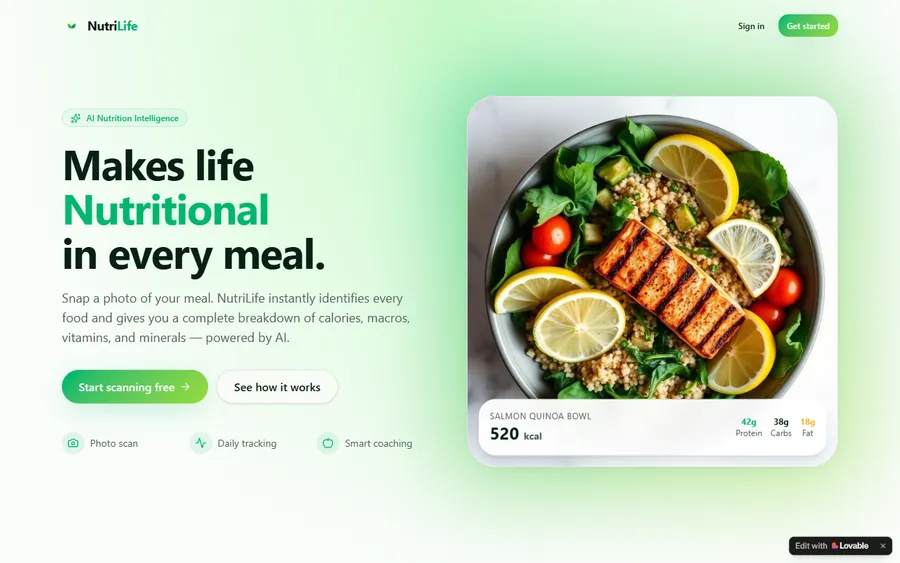
An AI nutrition coach that reads what you eat and works you toward a target.
AI and ML
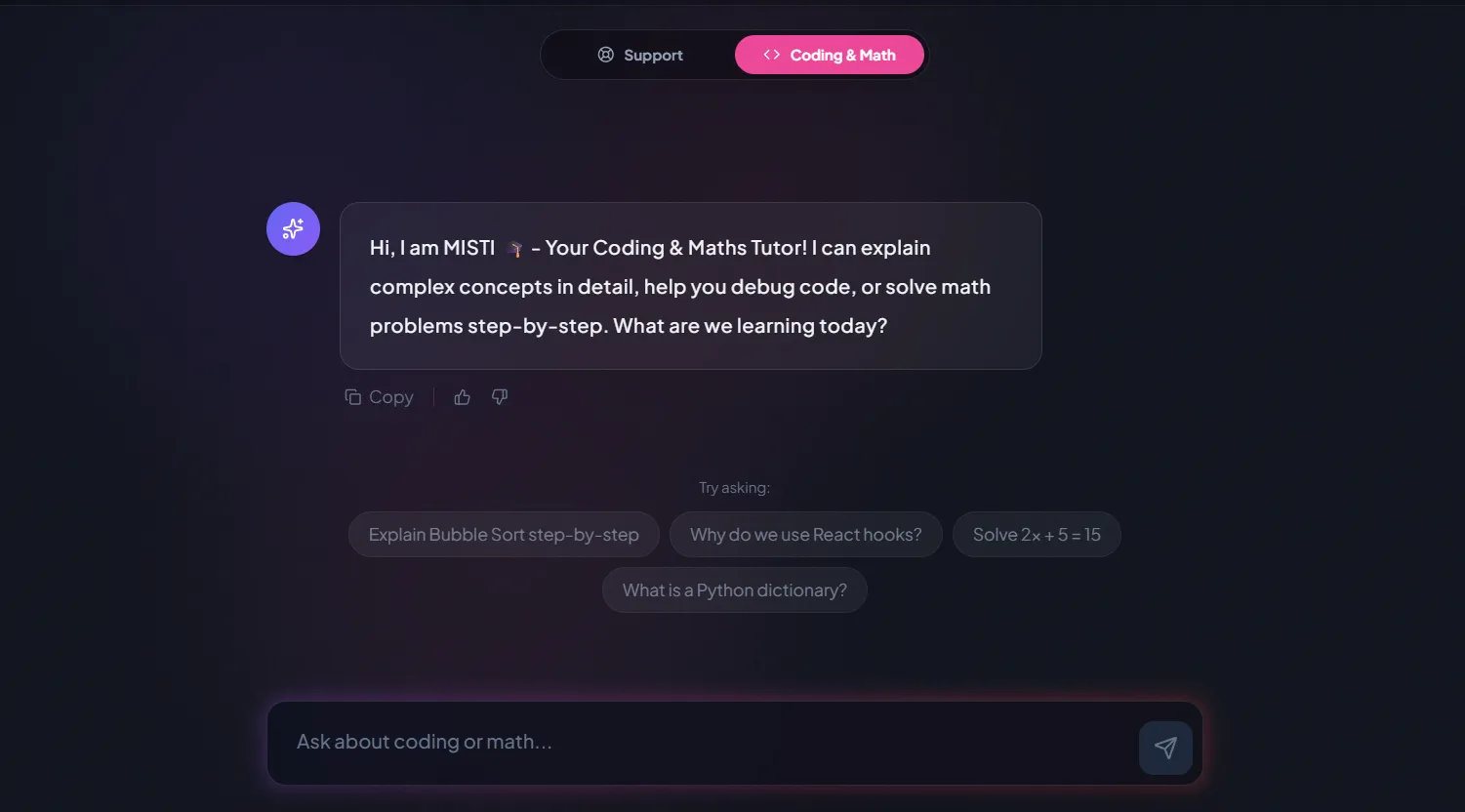
A chatbot that answers mathematics and programming questions, built and deployed by a student.
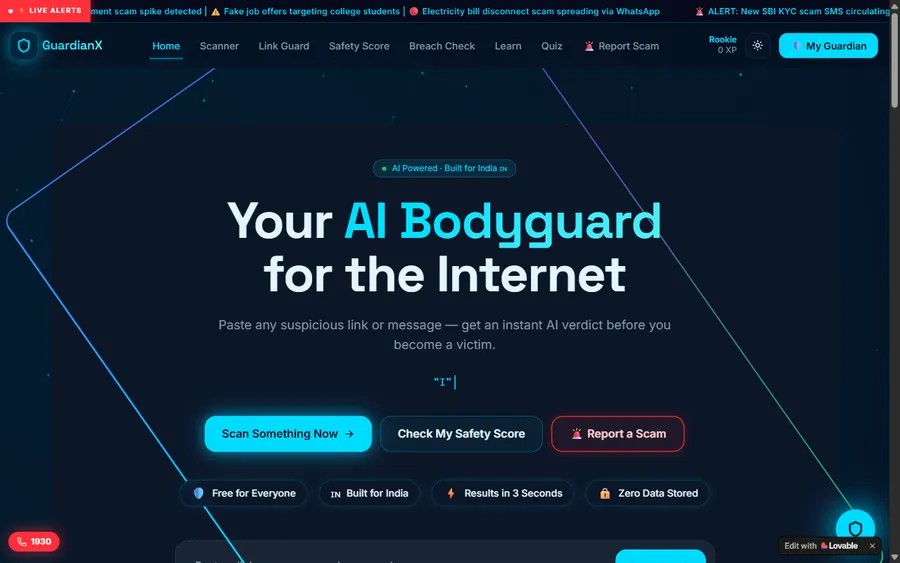
AI and ML
An assistant that helps a young person recognise unsafe situations online.
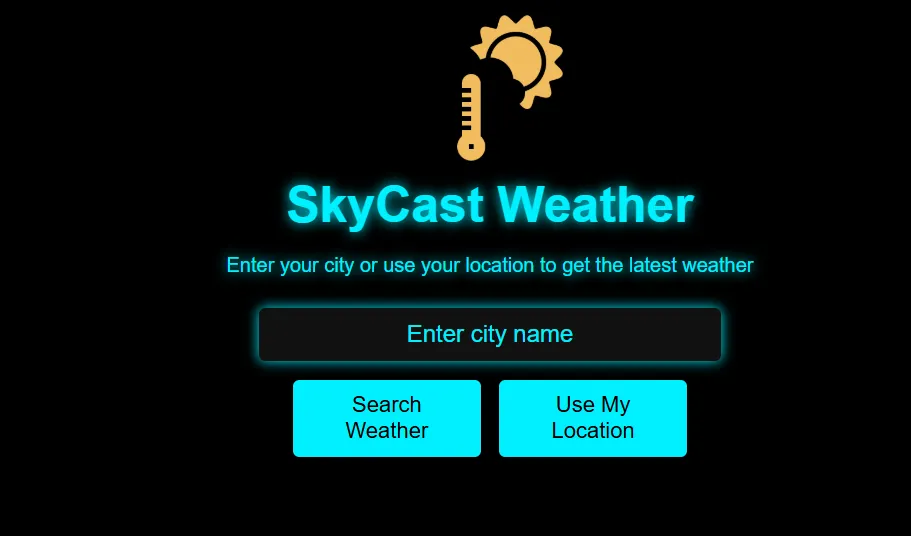
Web app
A weather forecasting site with live conditions for any location.
Fees
A monthly fee in US dollars, identical for every learner outside India, with no joining fee and no commitment past the current month.
Free first class
USD 0
no card required
Group batch
USD 100
a month, billed in US dollars
One to one
USD 150
a month, billed in US dollars
What families say
Google reviews from students and parents, as they wrote them.
★★★★★
"The one step solution for my son. Modern Age Coders make learning coding so simple that kids love it. The teachers explain complex concepts clearly with practical exercises and interactive content."
Ria Mukherjee
Parent
★★★★★
"Modern Age Coders has been a game-changer for me. I struggled to grasp IT concepts and coding before joining, but their classes transformed everything. I can now confidently write complex programs with ease."
Samriddha Mondal
Student
★★★★★
"One of the most wonderful education centres out there. Education is not limited to school syllabus but focuses on skill development."
Vansh Agarwal
Student
★★★★★
"My child Dhairya is really enjoying the Modern Age Coders classes. This is his first online class and he eagerly looks forward to it. I can already see his improvement, and the teachers are very cooperative."
Sonam Oswal
Parent of Dhairya
★★★★★
"Modern Age Coders have wonderful teachers who teach in a clear, easy and practical way. The teacher boosts students' confidence and inspires them to learn without hesitation."
Sonu Goyal
Parent
★★★★★
"I highly recommend this computer coding class! The teachers are incredibly knowledgeable and passionate about coding."
Ritu Kedia
Parent
Questions from girls and parents
No. Classes are mixed and placed by ability, in groups of five to ten. One-to-one lessons are available for anyone who prefers them.
No. Every learner is taught the same way: clear explanations, real projects and a teacher who reads the code. We place by ability, not by gender.
The Curriculum and Assessment Review found take-up of 6% among girls against 20% among boys. The NCCE puts girls at 22.6% of entries in 2025.
Those who take it do: in 2025, 35.7% of girls achieved the top GCSE grades against 27.8% of boys, according to the NCCE.
The review points to factors including stereotyping of computing careers, and school factors such as how the subject is taught and resourced. It also considered evidence that the GCSE is perceived as less relevant to girls.
From 6, with Scratch or Coding for Kids. Python and AI for Kids suits ages 9 to 12, and teenagers start with Python for Teens.
That is her decision, but a term of Python before options gives her real evidence of whether she enjoys it. Our Year 9 options page explains the timing.
No. We never work on coursework, NEA or anything submitted for assessment.
Her first class costs nothing. Afterwards, a place in a mixed group is USD 100 a month and one-to-one lessons are USD 150 a month, and there is no charge for joining.
An early-evening weekday slot or a weekend session, fixed in UK time at the first class. Our teachers work four and a half hours ahead of British Summer Time and five and a half ahead in winter.
Elsewhere on this site
Choices, competitions and where Python leads.
Why the real decision comes early.
The NCSC competition for girls.
The broader GCSE the review recommended.
Where younger learners start.
How we teach Python.
All our UK pages.
Start here
Leave a number and we will call at a UK time that suits you. Tell us her age and what she enjoys; the class checks her level and ends with a first project idea.
Reading first? See how we teach, the list of courses, and projects our students have finished.
WhatsApp us · +91 91233 66161 · contact@modernagecoders.com
WhatsApp from a UK phone is the quickest way to reach us. We are in India, so our number begins +91, and there is no UK office.