DSU / DS / 01
Data Science for Teens
Python, pandas and first models, ages 14 to 18.
Open the syllabusUK · Sixth formers and adults · Python
Every student taking A level maths in England already works with real data. The Department for Education's subject content requires specifications to make students "become familiar with one or more specific large data set(s) in advance of the final assessment", data that "must be real and sufficiently rich", explored with "spreadsheets or specialist statistical packages". Ofqual adds that the data "should not be cleansed by the awarding organisation": missing values and awkward units stay in. Then comes the exam, where, in OCR's words, "Students will not have access to the data set in the exam", and the analysis is done with a calculator's statistical functions. Code is nowhere in that picture. Yet the thing students are practising, turning a messy real table into a defensible conclusion, is exactly what data scientists do in Python every day. This course fills that gap for UK sixth formers who want to go further than the exam asks, and for adults who want data skills for work: loading real data, cleaning it honestly, summarising and charting it, and building first models.
Live teaching since 2020 · 10,000+ students · real data, cleaned honestly, analysed in code
In short
The DfE subject content for AS and A level mathematics in England requires every specification to make students familiar with one or more real large data sets before the final assessment, explored using technology such as spreadsheets or statistical packages. Ofqual's guidance says the data should be real, not cleansed by the exam board, and include a mix of categorical and numerical data, and that exam questions should give a material advantage to students who know it. Students do not have the data set in the exam and analyse subsets with a calculator. Modern Age Coders teaches data science live and online to UK teenagers aged 14 to 18 and adults: Python and pandas, cleaning and joining real data, summary statistics, charts, sampling, correlation and first machine learning models. Sixth formers can explore their own board's large data set in code as a teaching resource; we never work on anything submitted for assessment. The first class is free; afterwards a group place is USD 100 a month and one-to-one lessons USD 150 a month.
Start here
Data science for teenagers, data science for adults, and A level maths with its statistics. Each card opens the full syllabus.
DSU / 01
Python, pandas, charts and first machine learning models, for ages 14 to 18 with basic Python.
Open the syllabus →
DSU / 02
Python, SQL, machine learning and deep learning, for university students, graduates and professionals.
Open the syllabus →
DSU / 03
Pure, mechanics and statistics, including work with the large data set.
Open the syllabus →The large data set
From the DfE's subject content for AS and A level mathematics and Ofqual's guidance on it. The requirement covers A levels in England.
| Requirement | Wording |
|---|---|
| Know a data set in advance | "become familiar with one or more specific large data set(s) in advance of the final assessment" |
| Explore it with technology | "use technology such as spreadsheets or specialist statistical packages to explore the data set(s)" |
| Read real summaries | "interpret real data presented in summary or graphical form" |
| Ask real questions | "use data to investigate questions arising in real contexts" |
| Technology throughout | Graphing tools and spreadsheets "must permeate the study of AS and A level mathematics" |
| Board | Large data set arrangement |
|---|---|
| AQA (7357) | A Family Food extract for 2018 and 2019 exams; "For exams from 2020 there is a new dataset", available on AQA's site |
| Pearson Edexcel | A large data set that supports the assessment of Statistics in Paper 3: Statistics and Mechanics |
| OCR Mathematics A | One pre-release data set, used for the life of the specification |
| OCR Mathematics B (MEI) | Three large data sets, each updated or replaced on a three-year cycle, with one assessed |
Ofqual's guidance says the data sets "consist of real data", and that "the data may be reorganised into a standard format but should not be cleansed by the awarding organisation". They should include the source where possible, a mix of categorical and numerical data, and be "suitable for analysis using a spreadsheet and/or statistical data package".
Uncleaned real data is the everyday material of data science. A level students meet it at 16.
Ofqual expects questions on the data set to "give a material advantage" to students who have studied it. OCR notes that exam questions set in its context often come with several graphs and more reading than traditional statistics questions.
OCR also says students "should work with real data from many different sources", not only the pre-release set.
Sources, read 21 September 2026: DfE, AS and A level mathematics subject content; Ofqual, GCE Subject Level Guidance for Mathematics; AQA 7357, Use of data in statistics; Pearson Edexcel A level Mathematics specification; OCR support articles on the large data set for Mathematics A and Mathematics B (MEI).
The missing middle
The requirement stops at spreadsheets and statistical packages, and the exam at a calculator. Nothing asks a student to write a line of code, which is why so few do.
OCR describes the practical side candidly: "The LDS is published as an Excel file to make it easy to extract data for tables and charts", and "Scheduling whole class lessons in computer suites is still an issue for some teachers." In the exam itself, students have no data set and analyse any subset with "a calculator with standard statistical functions", as the DfE content puts it.
| Spreadsheet in class | Calculator in the exam | Python in our course | |
|---|---|---|---|
| Size it handles comfortably | Thousands of rows | A small subset typed in | Millions of rows |
| Cleaning | By hand, cell by cell | Not possible | Written once, rerun on every update |
| Repeatable | Hard to audit what was clicked | Only on paper | Every step recorded in code |
| Charts | Built-in chart types | None | Any chart, reproducible |
| Next step | More formulas | The exam answer | Joining data, sampling, models |
The exam is testing statistical reasoning: what a summary means, whether a sample is fair, whether a correlation says anything. Code would add a skill the qualification does not examine.
That is a fair design choice, and it leaves room for a course that adds the skill deliberately.
Running the same analysis in Python forces every assumption into the open. A student who has cleaned the data in code knows exactly which rows were dropped and why, which is the reasoning the exam rewards.
We explore a student's own board data set as a teaching resource; we never touch anything submitted for assessment.
From exam to code
Each topic in the statistics section has a direct counterpart in data science. Learning them side by side makes both stronger.
| A level topic | In Python | Why it matters beyond the exam |
|---|---|---|
| Sampling methods | Random and stratified samples drawn in code | Every survey, experiment and model starts with a sample |
| Summary statistics | Means, medians, quartiles and spreads computed per group | The first look at any new data set |
| Outliers and cleaning | Rules for missing values and outliers, written down and applied | Decisions others can check and challenge |
| Charts and interpretation | Histograms, box plots and scatter plots from the data | Showing a result honestly |
| Correlation and regression | Correlation coefficients and a fitted line | The simplest predictive model |
| Hypothesis testing | Tests run on real samples, with the assumptions stated | Telling a real effect from noise |
Public weather records make a good first project: missing readings, units to convert, and seasons to compare.
Public travel and vehicle statistics raise real questions about sampling, grouping and fair comparison.
The strongest projects start from something the student actually wants to know, with public data to test it.
Public data sets from UK government sources are free to use for projects. Students keep their notebooks and code in their own repository, and every chart they publish says where its data came from, the same habit Ofqual asks boards to follow by including sources.
Beyond A level
Nobody needs A level maths to start. The course meets learners where they are.
| You are | A sensible route |
|---|---|
| A sixth former taking A level maths | Python basics, then Data Science for Teens alongside the statistics course |
| A teenager who codes but does not take maths | Data Science for Teens, with the statistics taught as needed |
| An adult who lives in spreadsheets | Data Analysis: Excel, SQL, then Python |
| An adult aiming at data roles | Data Science for Adults, from Python to machine learning |
| Someone who wants models without code first | The Orange visual machine learning course, then Python |
Modern AI is built on data, and understanding how data is sampled, cleaned and labelled is the strongest defence against trusting a model too much.
Our pages on training AI, not just prompting it and building real AI projects take this further.
Students who find the statistics hard can study A level maths with us as well, with the large data set covered as part of the course.
For university students using data in any subject, coding for university students maps useful coding by degree.
Stages
Start at the stage your current skills put you in.
| Stage | What should be true |
|---|---|
| 1. Load and look | You load a real data file in Python and describe what it contains |
| 2. Clean and summarise | You handle missing values and outliers by stated rules and compute group summaries |
| 3. Chart and question | You chart the data honestly and test a question with a sample |
| 4. Model and explain | You fit a first model, measure how well it does and explain its limits |
Every cleaning decision changes the answer, so each one is written down.
The wider sequence of subjects is on the coding roadmap.
A model trained on carelessly cleaned data is confidently wrong.
Measuring a model means admitting where it fails.
The catalogue
Data science itself, the maths and tools under it, and where it leads.
DSU / DS / 01
Python, pandas and first models, ages 14 to 18.
Open the syllabusDSU / DS / 02
Python, SQL, machine learning and deep learning.
Open the syllabusDSU / DS / 03
Excel, SQL, Python and dashboards for work.
Open the syllabusDSU / FN / 01
Statistics and the large data set, with pure and mechanics.
Open the syllabusDSU / FN / 02
The language data science is written in.
Open the syllabusDSU / FN / 03
Querying data where it is stored.
Open the syllabusDSU / AI / 01
Python to real models.
Open the syllabusDSU / AI / 02
Models without code, for ages 13 to 18.
Open the syllabusDSU / AI / 03
Answers from data for adults who do not code.
Open the syllabusHow lessons run
Lessons are taught from India, where there is no clock change, so the UK sits four and a half hours behind in British Summer Time and five and a half hours behind in winter. That leaves after-school, evening and weekend slots in UK time.
After sixth form
Early evening on weekdays.
Evening
For adults fitting learning around work.
Weekend
Longer sessions for a data project.
We look at your maths and coding, and pick a route and a first data set.
Five to ten learners at the same level.
For a faster pace or a particular project.
Every analysis is saved in your own repository.
Students record where each data set came from.
We never work on anything you submit to a school, college or university.
Student work
Four finished projects from our students. The full collection, across ages and subjects, is in student labs.
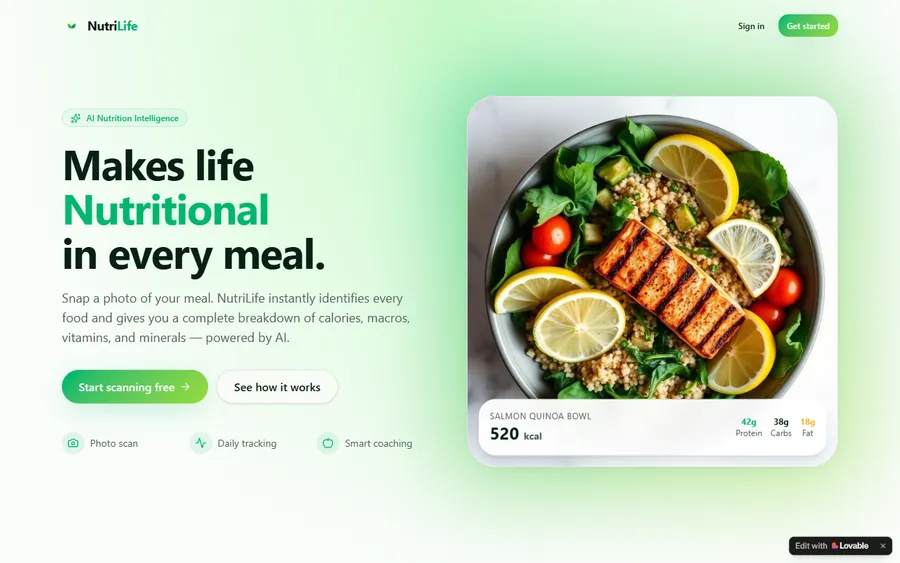
AI and ML
An AI nutrition coach that reads what you eat and works you toward a target.
AI and ML
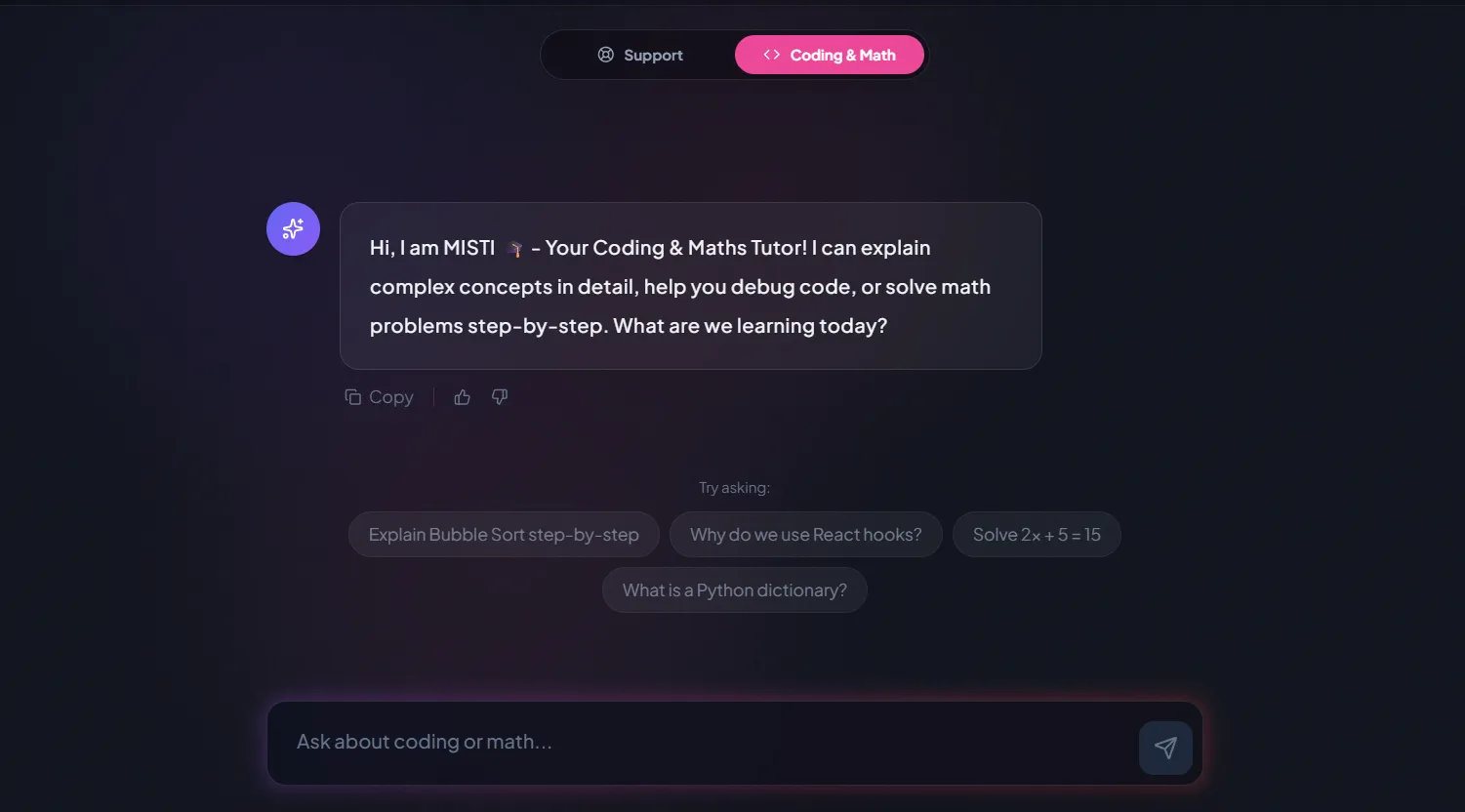
A chatbot that answers mathematics and programming questions, built and deployed by a student.
AI and ML
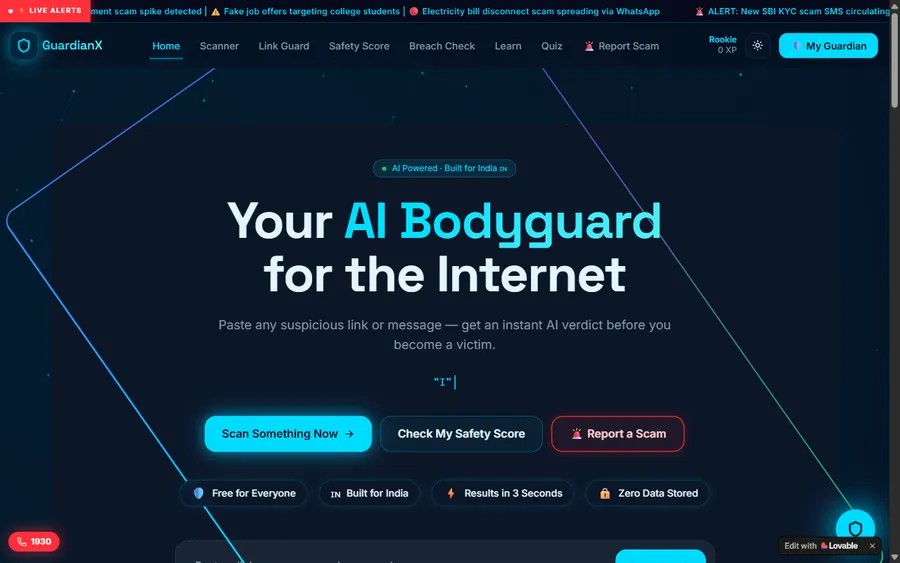
An assistant that helps a young person recognise unsafe situations online.
Web app
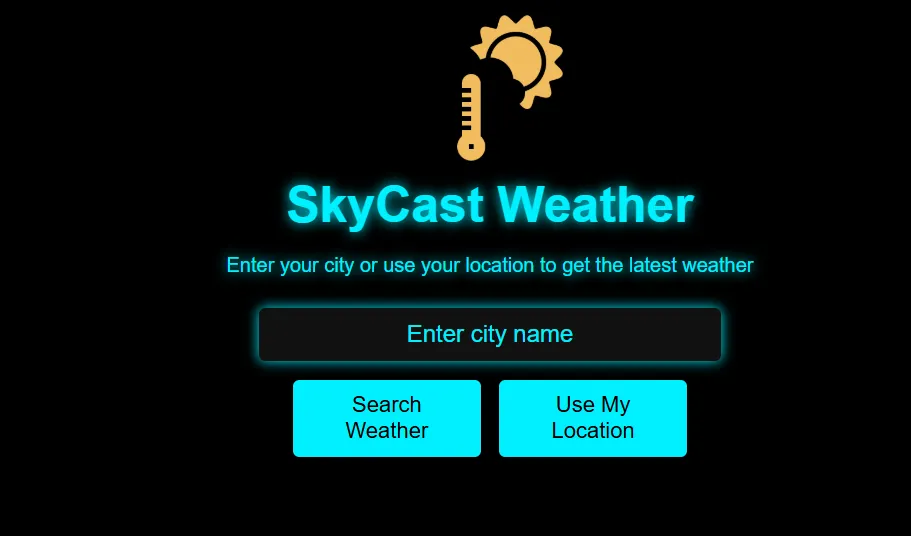
A weather forecasting site with live conditions for any location.
Fees
Charged monthly in US dollars, at one rate for learners anywhere outside India. There is no joining fee, and you can stop when any month ends. The software we use is free.
Free first class
USD 0
no card required
Group batch
USD 100
a month, billed in US dollars
One to one
USD 150
a month, billed in US dollars
What families say
What our students and their families wrote on Google, unchanged.
★★★★★
"The one step solution for my son. Modern Age Coders make learning coding so simple that kids love it. The teachers explain complex concepts clearly with practical exercises and interactive content."
Ria Mukherjee
Parent
★★★★★
"Modern Age Coders has been a game-changer for me. I struggled to grasp IT concepts and coding before joining, but their classes transformed everything. I can now confidently write complex programs with ease."
Samriddha Mondal
Student
★★★★★
"One of the most wonderful education centres out there. Education is not limited to school syllabus but focuses on skill development."
Vansh Agarwal
Student
★★★★★
"My child Dhairya is really enjoying the Modern Age Coders classes. This is his first online class and he eagerly looks forward to it. I can already see his improvement, and the teachers are very cooperative."
Sonam Oswal
Parent of Dhairya
★★★★★
"Modern Age Coders have wonderful teachers who teach in a clear, easy and practical way. The teacher boosts students' confidence and inspires them to learn without hesitation."
Sonu Goyal
Parent
★★★★★
"I highly recommend this computer coding class! The teachers are incredibly knowledgeable and passionate about coding."
Ritu Kedia
Parent
Questions about data science
A real data set each exam board provides in advance, which the DfE requires students to explore using technology. Exam questions are set in its context, but students do not have the data set in the exam.
No. Ofqual's guidance says it may be reorganised into a standard format but should not be cleansed by the exam board, so missing values and quirks remain.
No. The requirement is for technology such as spreadsheets or statistical packages, and the exam uses a calculator. Coding is an extra skill that our course adds.
Yes, as a teaching resource: we can explore it in Python and discuss what it shows. We never work on anything submitted for assessment.
No. Teenagers can start with basic Python, and adults can begin with our data analysis course. Statistics is taught as it is needed.
Python, with pandas for data and plotting libraries for charts, plus SQL for querying databases in the adult courses.
Data Science for Teens is for ages 14 to 18 and expects basic Python. Younger or newer coders start with Python for Teens.
Yes. Our data analysis course starts with Excel and SQL before Python, and a non-programmers course covers data and AI without code.
The first class is free. After that it is USD 100 a month in a group or USD 150 a month one to one, with no enrolment fee.
Weekday evenings or weekends in UK time, fixed in the free class. Our teachers are four and a half hours ahead of the UK in summer and five and a half in winter.
Elsewhere on this site
Maths, AI and the coding around data.
Where data meets models.
Projects that use what data science teaches.
The language underneath.
Data skills for any degree.
How we teach teenagers.
All our UK pages.
Start here
Leave a number and we will call at a UK time that suits you. Tell us your maths and coding level and a question you would like data to answer; the class starts there.
Would you like to read first? See the full course list, how lessons are taught, and work students have finished.
WhatsApp us · +91 91233 66161 · contact@modernagecoders.com
WhatsApp from a UK phone is often quickest. Our team is in India, so the number begins +91, and we have no UK office.