UK / DT1 / 01
HTML and CSS
Multi-page websites with clean navigation and one consistent style.
Open the syllabusWales · WJEC GCSE · Years 10 and 11
Wales has two computing GCSEs from the same awarding body, and they are built as opposites. WJEC's Computer Science is entirely examined, both units on screen, with Python named in the rules. Its Digital Technology, first taught this month under the Made-for-Wales reforms, puts sixty per cent of the marks into non-examination work set by WJEC and marked in school: a multi-page website and either a computer game or a 2D animation for one client brief, then a marketing video for another. Inside that work, the choice between the game and the animation carries 25 of Unit 2's 80 marks, and WJEC says the tasks and mark scheme stay the same every year while only the client changes. So the skills can be learned well in advance, and that is exactly where outside help belongs. Once Unit 2's supervised hours begin, the rules leave no room for anyone but the candidate.
Live teaching since 2020 · 10,000+ students · Drawn from WJEC's own specification and assessment pack
In short
Digital Technology, the second of WJEC's two computing GCSEs for Wales, was first taught in September 2026 and is first awarded in 2028. It has three units. Unit 1, The Digital World, is a 1 hour 30 minute digital exam worth 40 per cent. Unit 2, Digital Practices, is 20 hours of non-examination assessment worth 40 per cent: data work in a spreadsheet, a proposal, design options, then a multi-page website plus either a computer game or a 2D animation, tested and evaluated. Unit 3, Communicating in the Digital World, is 10 hours worth 20 per cent: a digital marketing campaign and its video. Units 2 and 3 are set by WJEC, marked in school and moderated; Unit 2 runs under supervision where the teacher may give no help beyond reading the instructions, and any help from anyone else must be declared. Modern Age Coders teaches the skills those tasks grade, web, game development, animation, video and spreadsheets, on practice briefs of our own before the controlled hours start, and the Unit 1 theory. We never touch a candidate's brief, research, assets or assessed work. The first lesson is free, then USD 100 a month in a group or USD 150 one to one.
Start here
The website everyone builds, and one course for each side of the game-or-animation choice. Cards open the full syllabus.

DT / 01
Multi-page sites with navigation, media, links and consistent styles: the compulsory Unit 2 website.
Open the syllabus →
DT / 02
Scripted game behaviour, characters, levels, sound and interfaces, for candidates choosing the game.
Open the syllabus →
DT / 03
Animation, motion and video editing, for candidates choosing the 2D animation and for the Unit 3 video.
Open the syllabus →Two opposite GCSEs
Both are WJEC, both are Made for Wales, and a school may offer either or both. They assess almost opposite things.
| Computer Science | Digital Technology | |
|---|---|---|
| First taught | September 2025 | September 2026 |
| First awarded | Summer 2027 | Summer 2028 |
| Examined | All of it: two on-screen exams | Unit 1 only, 40 per cent |
| Made in school | None | 60 per cent, in 30 hours of non-examination assessment |
| At its core | Programming in Python, reading and extending code | Making digital products for a client: website, game or animation, video |
| Data work | Data structures inside programs | Cleaning and analysing a dataset in a spreadsheet |
| Tiered | No | No |
For a Year 9 student choosing options, the question is less which is harder than which kind of work they want graded. A student who enjoys solving problems in code and performs well in exams will find Computer Science a closer fit. A student who likes making things people use and look at, and works steadily over weeks, may do better in Digital Technology, where most of the marks are earned at a desk in school over many sessions rather than on two exam mornings.
Planning for an audience: the Unit 2 brief comes with qualitative data on styles and themes and a quantitative dataset to analyse for audience needs, trends and preferences.
Finished, working products, built from a design the candidate chose and justified, and tested throughout.
A particular programming language named in the rules. The products need scripting and web skills, but the specification does not fix one language the way Computer Science fixes Python.
Exam technique for most of the marks. Only Unit 1 is sat as an exam.
The WJEC Computer Science page covers the other GCSE in the same depth, and the page on Year 9 options sets out what the evidence says about choosing a computing subject at 14.
Source: the WJEC GCSE Digital Technology Specification, teaching from 2026, version 2, February 2026, and the WJEC GCSE Computer Science Specification, teaching from 2025, both linked from the WJEC Digital Technology page and its Computer Science counterpart.
Unit 2: Digital Practices
From the Unit 2 sample assessment pack. WJEC sets a new client brief each September; the tasks and the mark scheme do not change.
| Task | What the candidate produces | Marks | Suggested hours |
|---|---|---|---|
| 1. Data | A cleaned, organised dataset, then analysis showing audience needs, trends and preferences, all in a spreadsheet | 10 | 2.5 |
| 2. Proposal | A digital product proposal and a time plan | 10 | 1 |
| 3. Design | Annotated design options, and a justified choice between them | 15 | 2.5 |
| 4a. Website | A functional multi-page website with media, navigation, links and consistent styles | 10 | 13, shared |
| 4b. Game or animation | Either a multilevel computer game or a 2D animation | 25 | 13, shared |
| 5. Evaluation | An evaluation of the ongoing testing and of the finished products | 10 | 1 |
Task 4 takes thirteen of the twenty hours and 35 of the 80 marks, and most of that sits in the second product. The website is compulsory but worth 10. The game or the animation is worth 25, nearly a third of the unit and its largest single allocation, so the choice between them is the decision with the most marks riding on it in Unit 2.
A multilevel game that uses scripting to control its behaviour, characters, objects and environments with animation, sound effects and background music, and an interface that is intuitive and engaging.
The top band asks for "at least five complex, five medium, and five basic game development techniques" from WJEC's own list, all of them suitable. That is a volume of technique nobody learns inside thirteen supervised hours.
A 2D animation built with suitable production skills, sound that supports it, and multiple animation sets for different scenes and actions, and timeline control of timing and movement, graded against its own list of basic, medium and complex techniques.
The same logic applies: the techniques are graded by level, so they have to be familiar before the controlled hours begin.
The website, the spreadsheet work and the second product are all graded partly by counting techniques at three levels, basic, medium and complex, from lists in the assessment pack. A candidate who has used those techniques many times before, on unrelated projects, spends the supervised hours building. One who meets them for the first time in the room spends the hours learning, and the marks show it.
Source: WJEC GCSE Digital Technology Unit 2 Sample Assessment Materials (2025), including the candidate mark record sheet, the suggested timings and the mark bands for Task 4. The specification confirms that the client brief changes annually while the tasks and mark scheme stay the same.
What help is allowed
Units 2 and 3 are marked in school and moderated by WJEC. The conditions are strict, and they cover outside help too.
| Condition | What it means |
|---|---|
| Supervision | Work is done under formal supervision in class, and stays in school between sessions |
| Teacher help | "No assistance may be given by the teacher beyond reading the instructions" |
| Other students | No communication with peers, even about unrelated topics |
| Research | Allowed in separate research time, with internet access, and it must be referenced when brought in |
| Outside help | Must be declared: "If you receive help and guidance from someone other than your teacher, you must tell your teacher who will then record the nature of the assistance given to you." |
| AI tools | Must be referenced, and copying a solution produced by AI is treated as cheating |
Teach the techniques the tasks grade, at all three levels, on practice briefs we write ourselves: websites for invented clients, small multilevel games, short 2D animations, marketing videos, and messy spreadsheets to clean.
Finish that work before the school's controlled hours begin, so nothing we set can be mistaken for, or merged into, assessed work.
Read a WJEC client brief, collect or edit assets for it, suggest designs for it, or look at any evidence a candidate is producing for Unit 2 or Unit 3.
Help during research time for the real brief either. That time is part of the candidate's own preparation and the declaration rule applies to it.
One practical point families miss. The software a candidate uses in the controlled hours is the school's, not ours. Before choosing a course for the game or the animation, ask the teacher which tools the department runs, and learn on the same or similar software so the techniques transfer without friction.
The page on declaring AI covers the wider rules on AI in assessed work across the UK.
Units 1 and 3
Unit 1 is the only exam, first sat in 2028. Unit 3 is ten more hours of non-examination assessment, around a marketing campaign.
| Area | What it takes in |
|---|---|
| 1.1 Data | Measuring and storing data; analogue and digital data |
| 1.2 Digital technology systems | Devices and connections, operating systems, software types, backup, cloud services, the systems development life cycle |
| 1.3 Digital communication | Communication methods, reliability of online sources, social networking practices and ownership |
| 1.4 The digital shift | Changing working practices, marketplace models, and the rise of services and monetised content |
| 1.5 Securing data and systems | Threats, the consequences of cyber-attacks on organisations, digital footprints, legal and ethical responsibilities |
| 1.6 Emerging technologies | How digital technologies develop, and artificial intelligence models |
Unit 1 is a 1 hour 30 minute digital exam worth 80 marks and 40 per cent of the GCSE, mixing objective, short and extended answers. It is first available in 2028, while work for Units 2 and 3 can be submitted from summer 2027, so a school may run the coursework first and the exam at the end. The theory is broad rather than deep, and it rewards steady weekly study over a last-minute push.
Ten hours of non-examination assessment worth 60 marks and 20 per cent. The candidate researches social media platforms, recommends one for the organisation in a second client brief, plans a campaign and produces a marketing video, then exports it in a suitable format.
As in Unit 2, research time sits outside the assessed hours and the work is marked in school and moderated.
WJEC's earlier Digital Technology GCSE is closing: "Summer 2027 will be the final full assessment opportunity for this qualification", with a resit for the examinations in January 2028, subject to demand.
Year 10 entries to it stopped in September 2026, so it concerns only students already on it.
Our lessons are in English only, although WJEC publishes its qualifications in Welsh too. The Wales page sets out the whole system around both GCSEs.
Progression
The order matters more than the pace: every rung below the last should be done before the school starts Unit 2.
| Rung | When | What should be true |
|---|---|---|
| 1. Spreadsheets and data | Year 9 or early Year 10 | Cleaning, sorting and filtering a messy dataset, formulas and functions, charts that show a trend |
| 2. Websites | Early Year 10 | Multi-page sites with navigation, media, links and one consistent style, built without a template |
| 3. The second product | Year 10 | A small multilevel game or a short 2D animation, using techniques at basic, medium and complex level |
| 4. Theory and video | Through Year 11 | The six Unit 1 areas studied weekly, and short practice videos edited and exported |
The game or animation carries 25 marks. Deciding which to learn early, with the school's software in mind, gives a candidate a year to build depth.
The general order of skills runs down the coding roadmap.
Units 2 and 3 can be done at any point in the course, once the teaching is complete. We plan back from the date the school gives.
When the controlled hours begin, our lessons switch to Unit 1.
The catalogue
Sorted by unit. Where a student begins is decided in the free lesson.
UK / DT1 / 01
Multi-page websites with clean navigation and one consistent style.
Open the syllabusUK / DT1 / 02
Interactive pages, the step that lifts a website beyond the basic level.
Open the syllabusUK / DT1 / 03
Scripted behaviour, levels, characters and sound in real games.
Open the syllabusUK / DT2 / 01
Motion, animation and video editing from first principles.
Open the syllabusUK / DT2 / 02
Photo, video and design, for the Unit 3 campaign video and its assets.
Open the syllabusUK / DT2 / 03
Layout, typography and social graphics for design options and campaigns.
Open the syllabusUK / DT3 / 01
Spreadsheet cleaning, formulas and charts; pitched older, but its spreadsheet months are Task 1 exactly.
Open the syllabusUK / DT3 / 02
Threats, attacks and digital footprints, the heart of area 1.5.
Open the syllabusUK / DT3 / 03
Systems, operating systems, cloud and the life cycle, shared with Unit 1.
Open the syllabusHow lessons work
Our teachers are in India, which never moves its clocks, so Wales runs four and a half hours behind in summer and five and a half in winter. Every time is agreed in UK time.
After school
The usual slot for Years 9 to 11.
Evening
For students with clubs or part-time work.
Weekend
Longer sessions suit game and animation work.
Each technique taught and practised at basic, medium and complex level, so the lists in the assessment pack hold no surprises.
Practice briefs with their own data and style notes, written by us and never resembling a WJEC brief.
Testing recorded throughout every practice product, because Task 5 grades the testing as well as the result.
Data cleaning and analysis first, since Task 1 opens the unit and sets up everything after it.
Practice ends before the school's supervised hours start, and lessons turn to Unit 1.
Five to ten students at one rung, reviewing each other's practice products.
Student work
A few pieces students made in ordinary lessons, none of it assessed. Plenty more sit in student labs.

AI and ML
An AI nutrition coach that reads what you eat and works you toward a target.
AI and ML
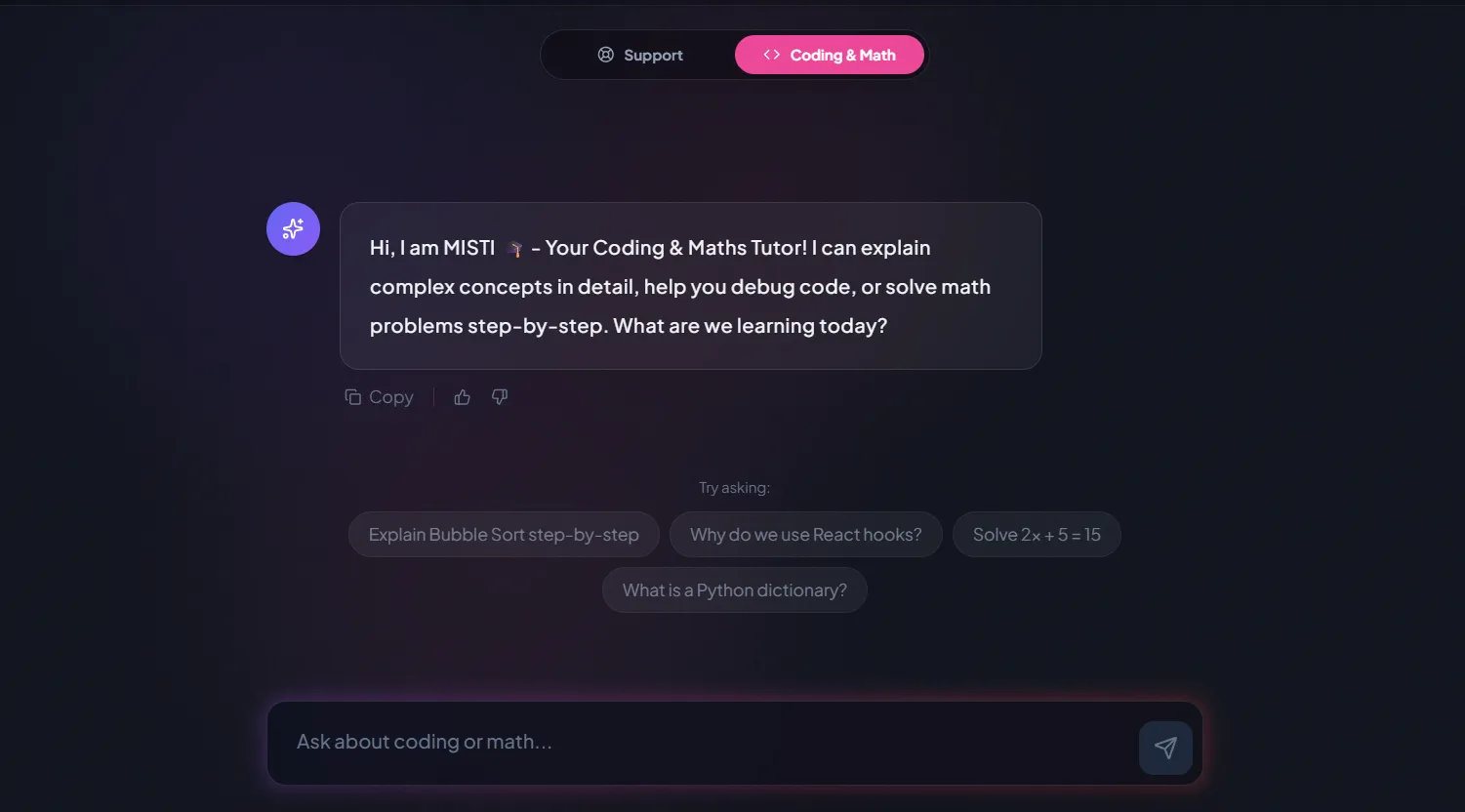
A chatbot that answers mathematics and programming questions, built and deployed by a student.

AI and ML
An assistant that helps a young person recognise unsafe situations online.
Web app
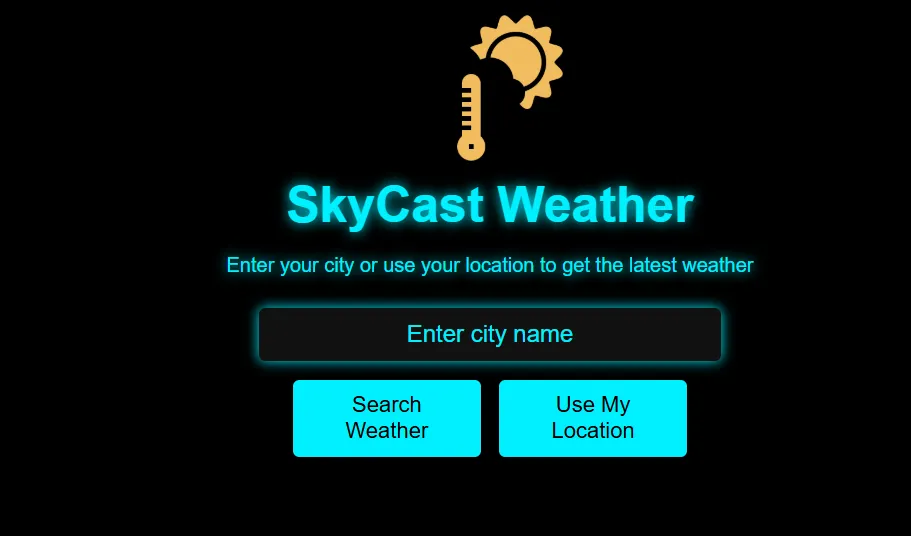
A weather forecasting site with live conditions for any location.
Fees
Fees are charged monthly in US dollars, at one rate for all families outside India. There is no charge for the first lesson, and none at all until a course and a weekly time are agreed.
Free first class
USD 0
no card required
Group batch
USD 100
a month, billed in US dollars
One to one
USD 150
a month, billed in US dollars
What families say
Parents' Google reviews, as they wrote them.
★★★★★
"The one step solution for my son. Modern Age Coders make learning coding so simple that kids love it. The teachers explain complex concepts clearly with practical exercises and interactive content."
Ria Mukherjee
Parent
★★★★★
"Modern Age Coders has been a game-changer for me. I struggled to grasp IT concepts and coding before joining, but their classes transformed everything. I can now confidently write complex programs with ease."
Samriddha Mondal
Student
★★★★★
"One of the most wonderful education centres out there. Education is not limited to school syllabus but focuses on skill development."
Vansh Agarwal
Student
★★★★★
"My child Dhairya is really enjoying the Modern Age Coders classes. This is his first online class and he eagerly looks forward to it. I can already see his improvement, and the teachers are very cooperative."
Sonam Oswal
Parent of Dhairya
★★★★★
"Modern Age Coders have wonderful teachers who teach in a clear, easy and practical way. The teacher boosts students' confidence and inspires them to learn without hesitation."
Sonu Goyal
Parent
★★★★★
"I highly recommend this computer coding class! The teachers are incredibly knowledgeable and passionate about coding."
Ritu Kedia
Parent
Questions about WJEC GCSE Digital Technology
In three units. Unit 1 is a 1 hour 30 minute digital exam worth 40 per cent. Unit 2 is 20 hours of non-examination assessment worth 40 per cent, and Unit 3 is 10 hours worth 20 per cent. Units 2 and 3 are set by WJEC, marked in school and moderated.
Computer Science is entirely examined and centres on programming in Python. Digital Technology is sixty per cent made in school and centres on digital products for a client: a website, a game or animation, and a marketing video.
A cleaned and analysed dataset, a proposal and time plan, design options, a multi-page website, either a multilevel computer game or a 2D animation, and an evaluation of the testing and the products.
Whichever they can build to a higher level with the school's software. It is worth 25 of the unit's 80 marks, so the decision deserves a year of practice rather than a guess in the first session.
The client brief changes every year. WJEC says the tasks and the mark scheme stay the same, which is why the skills can be prepared well in advance.
Not with the assessed work itself. In Unit 2 teachers may give no help beyond reading the instructions during the supervised hours, and help from anyone else must be declared and recorded. We teach the techniques beforehand, on our own briefs, and stay away from the real ones.
Unit 1 is first available in 2028. Work for Units 2 and 3 can first be submitted in summer 2027, and the first full award is in 2028.
No. Every candidate takes the same assessments.
Its final full assessment is in summer 2027, with a resit for the examinations in January 2028, subject to demand. It stopped taking Year 10 entries in September 2026.
The first lesson is free. Afterwards one monthly fee in US dollars applies, lower for a group place than for a teacher of your own, shown in the fees section above and never charged ahead of time.
Elsewhere on this site
The other WJEC computing GCSE, the Welsh system, and choosing at 14.
The fully examined alternative, and its program you did not write.
Primary school to sixth form across Wales.
What the evidence says about the choice at 14.
AI tools near assessed work, and the declaration rules.
Where young makers build things for real audiences outside school.
Where every UK page on this site is gathered.
Start here
Leave a number and we will call at a UK time that works for you. The lesson covers real Digital Technology skills and ends with a rung to begin on and a view on game or animation.
Want to read first? Every course page sets out its syllabus, how we teach explains who the method suits and who it does not, and student labs shows real student work.
WhatsApp us · +91 91233 66161 · contact@modernagecoders.com
WhatsApp is quickest and free from a UK phone. Messages reach our office in India, so the number begins +91.