UK / WJ1 / 01
Python for teens
From first programs to Tkinter desktop apps, the whole Unit 2 toolkit.
Open the syllabusWales · WJEC GCSE · Years 10 and 11
In the summer of Year 11, a candidate for WJEC's Made-for-Wales GCSE Computer Science sits at a computer with no internet, opens a Python file they have never seen, and starts reading. WJEC's guidance for teachers says learners "will be supplied with a working unannotated program based on the initial task", the scenario from the brief they were given in Year 10, and must "annotate, add and amend functionality to this program during the examination." The solution they wrote themselves during the course stays outside the room. So the skill that decides Unit 2 is not writing a program from nothing. It is reading somebody else's, quickly, in a fixed version of IDLE, with Tkinter windows in it and no comments to help. This page sets out what the sample paper asks, which tools the rules fix, what Unit 1 covers, and how we practise all of it.
Live teaching since 2020 · 10,000+ students · Built from the WJEC specification and Unit 2 sample paper
In short
WJEC's Made-for-Wales GCSE Computer Science, first taught in September 2025, has two units of 80 marks each, both sat on screen. Unit 1, Understanding Computer Science, is a 1 hour 30 minute digital exam first sat in summer 2026. Unit 2, Computer Programming, is a two-hour on-screen exam built on a scenario released in Year 10, first sat in summer 2027. In that exam candidates receive a working, unannotated Python program written by WJEC, using the Tkinter library, and must annotate it, add and amend features, design in pseudo-code rather than Python or flowcharts, test with typical, extreme and erroneous data, refine it and evaluate it, all in the version of IDLE the brief names, with no internet and no notes. Modern Age Coders practises exactly that on programs of our own, reading, commenting and extending unfamiliar Tkinter code, and teaches the eight areas of Unit 1. We never work on a candidate's pre-release brief. The first lesson is free, then USD 100 a month in a group or USD 150 one to one.
Start here
Python with Tkinter for Unit 2, the shared theory for Unit 1, and algorithms for both. Each card opens its syllabus.
WJ / 01
Includes a module on desktop apps with Tkinter, covering windows, widgets and layouts, the library the Unit 2 program is written in.
Open the syllabus →
WJ / 02
Architecture, data representation, networks, security and operating systems: the theory every GCSE board shares, mapped here to WJEC's eight Unit 1 areas.
Open the syllabus →
WJ / 03
Tracing, decomposition and standard algorithms, which Unit 1 asks candidates to create and interpret and Unit 2 asks them to design.
Open the syllabus →The Unit 2 program
From WJEC's Guidance for Teaching for Unit 2 and the Unit 2 sample assessment materials, version 3, July 2025.
A working Python program based on the scenario from the pre-release brief, written by WJEC in the standard IDLE editor, with a graphical interface built in Tkinter, and without annotation.
A clean copy of the pre-release materials. Candidates are "not permitted to take any prompts or notes into the examination", so the year's own work stays outside.
Run it and explain what it does, find particular kinds of code inside it, write the comments the original programmer left out, and design new features in pseudo-code.
Then build those features into the file, test them with planned data, refine the program when the requirements change, and evaluate the result.
| Question | What it asks, set in a payroll program for a fictional firm | Marks |
|---|---|---|
| 1. Running it | Find the login error message and the valid login, describe what a blank username produces, name the function that runs first, complete a pay calculation and explain why a currency symbol left in the input breaks it | 8 |
| 2. Data modelling | Point to lines in the file that show given kinds of code | 3 |
| 3. Annotation | Find four uncommented features, such as a window title, a back button, a fixed-width text routine and an error pop-up, and comment each one | 8 |
| 4. Design | Pseudo-code for a surname check that rejects digits, and a layout for a new data-entry window | 11 |
| 5. Implementation | Build that window in Tkinter inside the file: four labelled entry boxes, a Save button that writes to a file, a button back to the main menu, all annotated | 23 |
| 6. Testing | Typical, extreme and erroneous test data for the login, the outcomes explained, and a small fix using upper or lower case handling | 8 |
| 7. Refinement | Add an entry box and a check against the legal limit of 48 hours a week, with an average worked out and shown | 8 |
| 8. Refinement testing | Judge three results against the assumption behind them, such as four weeks to a month | 5 |
| 9. Evaluation | How far the final program meets the requirements and what could still improve, marked in bands | 6 |
Read the marks down the right-hand column. The single largest question, 23 of the 80 marks, is building a new Tkinter window inside code the candidate did not write, and another 8 go to commenting that code. A student who can only program on a blank page meets Unit 2 unprepared, however strong they are.
Two rules on the design question catch candidates out. The sample mark scheme says of pseudo-code that "flowcharts are not accepted", and WJEC's guidance says learners "must refrain from using any Python source code in its place". Design is marked as design, in the pseudo-code conventions the specification sets out.
Source: WJEC GCSE Computer Science Guidance for Teaching, Unit 2, and the Unit 2 Sample Assessment Materials, version 3, both linked from the WJEC GCSE Computer Science page. The table paraphrases the sample questions; live papers use a new scenario each year.
IDLE and Tkinter
Schools may teach programming in any editor they like. For the Unit 2 exam itself, WJEC fixes the environment in writing.
| Area | The rule |
|---|---|
| Editor | The Python IDLE version named in the pre-release brief. Schools may teach in any editor, but the exam uses that IDLE version |
| Language | Python 3, matching the version on the brief |
| Interfaces | Tkinter, the library the exam materials use for windows, buttons and other graphical elements |
| Design | Pseudo-code only: no Python in its place, and no flowcharts |
| Environment | No internet, shared drives, virtual learning environments or email during the exam |
| Practice | WJEC's on-screen system is open through the year for practice papers, so the software is familiar before the day |
The guidance names windows, frames, widgets, buttons and geometry managers, and the three ways of placing widgets: pack, grid and place. All of it should feel routine by the spring of Year 11.
Presence, range, length and format checks, lookup tables, check digits and double entry. Candidates design them in pseudo-code and must read and adjust existing ones in the program.
Typical, extreme and erroneous, chosen for a specific routine and then explained. The sample paper gives more marks to a developed explanation than to a bare result.
IDLE is a plain editor. Students used to an environment that completes their code, suggests fixes or chats back will find it quiet, and the time to get used to that is months before the exam rather than the morning of it. We teach in IDLE for Unit 2 work for that reason.
A curiosity across the border: Scotland's Advanced Higher project now forbids Tkinter, because Qualifications Scotland says tools like it stop candidates showing the skills being assessed. Wales builds its GCSE exam on it. Neither is wrong; they are testing different things, and the Advanced Higher page explains the Scottish reasoning.
Source: WJEC Guidance for Teaching, Unit 2, for the editor, library, pseudo-code, validation and Tkinter lists; Appendix B of the Unit 2 sample materials for the exam environment; Appendix A for practice on the on-screen system.
Unit 1
Understanding Computer Science: 1 hour 30 minutes, 80 marks, half the qualification. First sat in summer 2026.
| Area | What it takes in |
|---|---|
| 1.1 Computer architecture | Components, peripheral devices and storage |
| 1.2 How systems are structured and function | Data types with their representation, storage and compression; data and file structures; automated systems |
| 1.3 How systems communicate | Networks and infrastructure; cybersecurity and personal privacy |
| 1.4 Algorithms | Creating and interpreting algorithms |
| 1.5 Software | Principles of programming, the software development life cycle, program construction |
| 1.6 Logical operations | Logical operators |
| 1.7 Operating systems | What an operating system does and how |
| 1.8 Systems development life cycle | How a system is planned, built, tested and maintained |
The paper mixes question types: objective responses, short answers and extended answers, all typed. The qualification is unitised, each unit entered separately and neither tiered, and WJEC suggests taking Unit 2 in the final year so that it can draw on what Unit 1 has built. In practice that makes Unit 1 the theory a candidate needs in place before the programming exam, not a separate subject.
Data types, file structures and validation turn up again as code in the Unit 2 program. Authentication appears in both: as a concept in Unit 1, as a login routine to test in Unit 2.
The software development life cycle in Unit 1 is the shape of Unit 2's questions: investigate, design, implement, test, refine, evaluate.
Extended answers are typed under time pressure. A student who writes clearly by hand but types slowly loses time on every long answer, and that is fixable with practice.
We set typed answers from the first lesson for exactly that reason.
The old GCSE, and our limits
WJEC's earlier Computer Science GCSE, first awarded in 2019, is closing.
| Earlier GCSE | Made-for-Wales GCSE | |
|---|---|---|
| First award | Summer 2019 | Summer 2027 |
| Units | Written Unit 1, on-screen Unit 2, and a 20-hour non-exam Unit 3 | Digital Unit 1 and on-screen Unit 2, no non-exam unit |
| Status | "Summer 2026 will be the final full assessment opportunity for this qualification." | Taught from September 2025 |
| Next sitting | A January 2027 resit for the examinations, "subject to demand" | Unit 1 each summer; Unit 2 from summer 2027 |
From September 2025 WJEC stopped Year 10 entries to the earlier GCSE, so the resit only concerns students who sat it in 2026 and want another attempt at an exam. A resitter should confirm with the school that the January sitting is going ahead before planning around it. We teach both.
We never see or work on a candidate's pre-release brief or their own solution to it. The brief is the school's to use, and the whole design depends on candidates meeting the exam program with only what they have learned.
Our practice uses programs we write ourselves, in other settings, with the same kind of structure: working, Tkinter-based and deliberately uncommented.
WJEC publishes its qualifications in Welsh as well as English. Our lessons are in English only, so a Welsh-medium candidate is welcome but will learn the technical terms in English.
The Wales page sets out the wider picture, from primary school to sixth form.
WJEC also runs a separate GCSE Digital Technology, a different subject with a different focus; the Digital Technology page explains how the two differ, and the page on declaring AI covers AI tools near any assessed work.
Progression
Placement depends on what a student can do without help, whatever year they are in.
| Rung | When | What should be true |
|---|---|---|
| 1. Typed Python | Year 9 or early Year 10 | Variables, selection, loops, lists and functions written unaided, in IDLE |
| 2. Files and data | Year 10 | Reading and writing files, lists, tuples and dictionaries, string handling and slicing |
| 3. Tkinter | Late Year 10 | Windows, frames, labels, entry boxes and buttons placed with pack, grid or place |
| 4. Unfamiliar code | Year 11 | Opening a working program, explaining it, commenting it and extending it within the time allowed |
Plenty of students can write their own programs. Far fewer can read a stranger's under time pressure, and nothing in ordinary coursework practises it.
The general order of topics runs down the coding roadmap.
The theory is taught in parallel with the programming, in short weekly blocks, so the summer Unit 1 exam never becomes a cram.
Lessons thin out near each exam and pick up again afterwards.
The catalogue
Grouped by the unit they serve. The free lesson settles where a student begins.
UK / WJ1 / 01
From first programs to Tkinter desktop apps, the whole Unit 2 toolkit.
Open the syllabusUK / WJ1 / 02
For Year 8 or 9, so typed Python is settled before the GCSE begins.
Open the syllabusUK / WJ1 / 03
For post-16 resitters on the earlier GCSE who need the programming rebuilt quickly.
Open the syllabusUK / WJ2 / 01
Architecture, data, networks, operating systems and the life cycle.
Open the syllabusUK / WJ2 / 02
Creating and interpreting algorithms, traced by hand first.
Open the syllabusUK / WJ2 / 03
Defensive security and personal privacy, the second half of area 1.3.
Open the syllabusUK / WJ3 / 01
Real datasets and charts, a natural next step from GCSE Python.
Open the syllabusUK / WJ3 / 02
A second, strictly typed language, useful before sixth-form computing.
Open the syllabusUK / WJ3 / 03
Databases and queries, which most sixth-form courses reach early.
Open the syllabusHow lessons work
Teachers work from India, where the clock never changes, so Wales is four and a half hours behind in summer and five and a half in winter. Times are always fixed in UK time.
Straight after school
The usual choice for Year 10 and 11.
Mid evening
After clubs, sport or homework.
Weekend
A full two-hour practice paper with time to go through it.
Each week a working program the student has not seen, to run, explain and comment before changing anything.
Windows and widgets placed by the student, never generated, until a new data-entry window takes minutes.
Designs written in pseudo-code first, checked for any slip into Python, then implemented.
Typical, extreme and erroneous data chosen for a routine, with the outcome explained in full sentences.
Timed practice in plain IDLE with nothing else open, because that is the room.
Students at the same rung, reading and commenting each other's programs.
Student work
Four projects from lessons, none of them assessed. More in student labs.
AI and ML
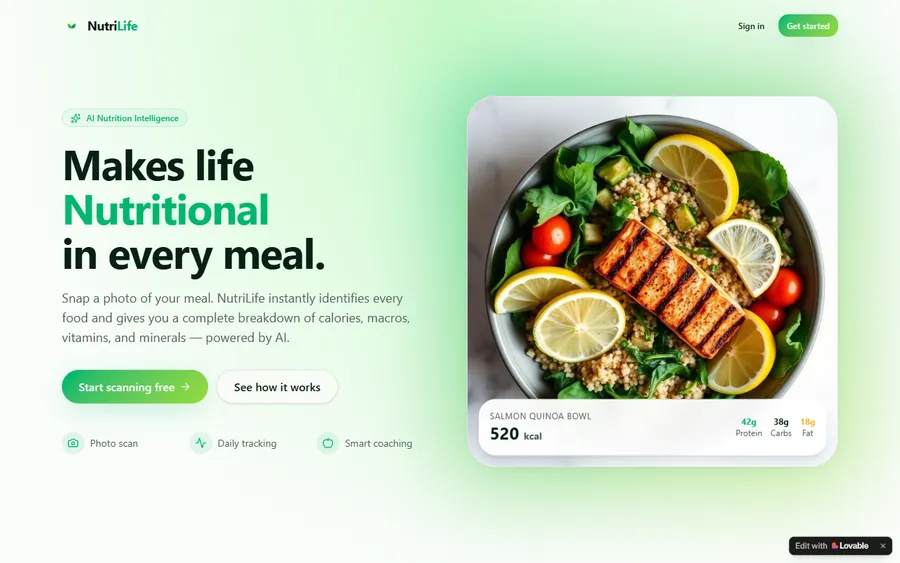
An AI nutrition coach that reads what you eat and works you toward a target.
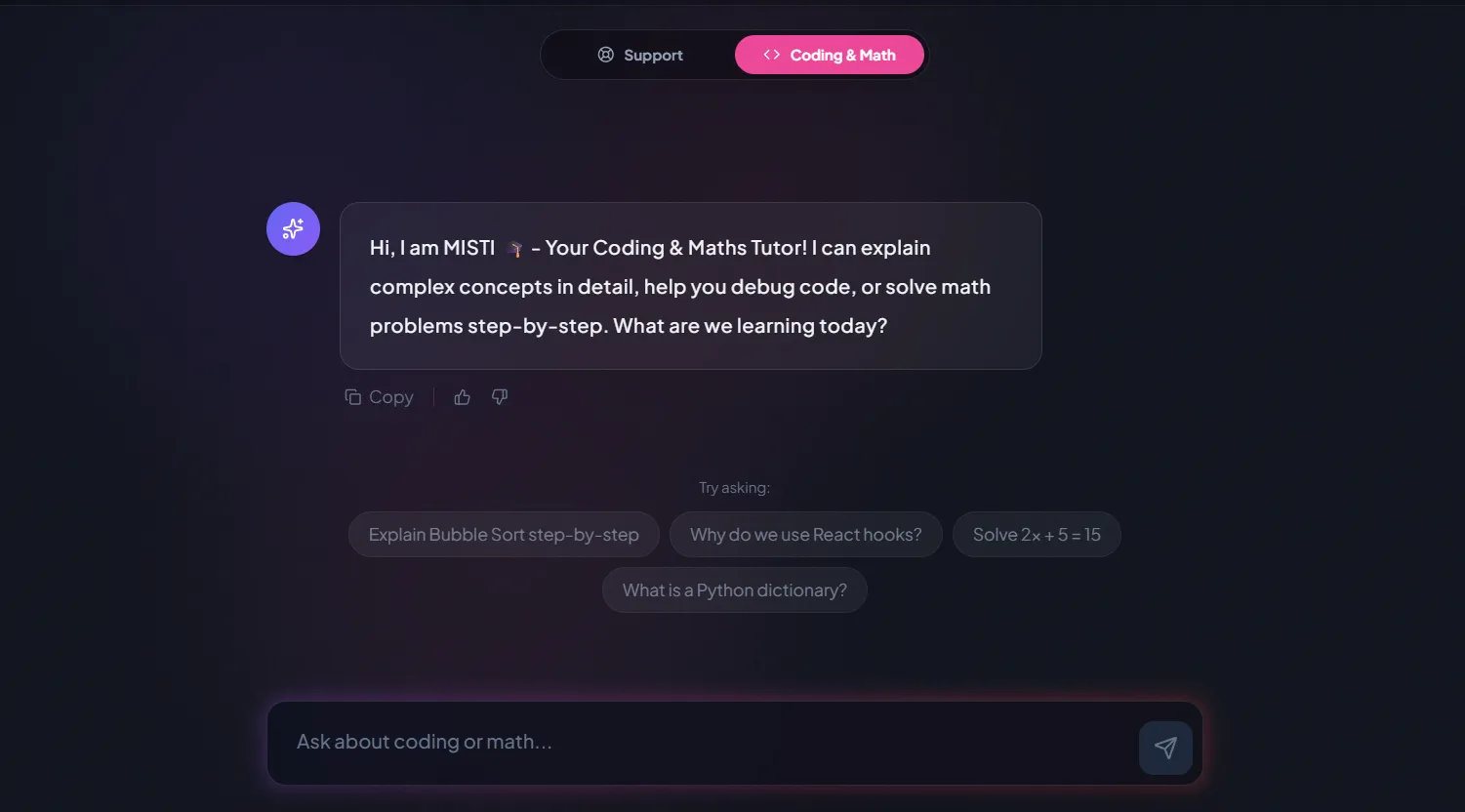
AI and ML
A chatbot that answers mathematics and programming questions, built and deployed by a student.

AI and ML
An assistant that helps a young person recognise unsafe situations online.
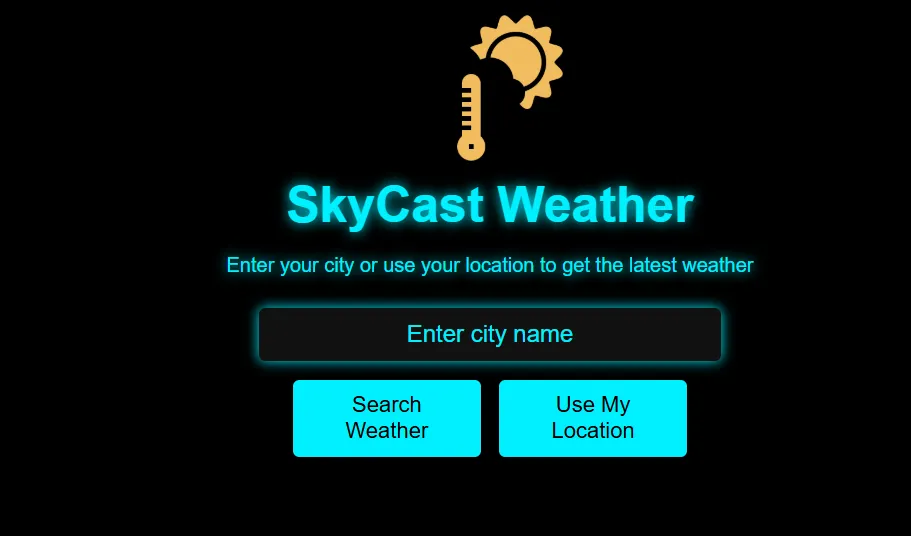
Web app
A weather forecasting site with live conditions for any location.
Fees
One monthly fee in US dollars, the rate for every family outside India. The first lesson costs nothing, and we bill only once a course and a regular time are fixed.
Free first class
USD 0
no card required
Group batch
USD 100
a month, billed in US dollars
One to one
USD 150
a month, billed in US dollars
What families say
Google reviews from parents, exactly as posted.
★★★★★
"The one step solution for my son. Modern Age Coders make learning coding so simple that kids love it. The teachers explain complex concepts clearly with practical exercises and interactive content."
Ria Mukherjee
Parent
★★★★★
"Modern Age Coders has been a game-changer for me. I struggled to grasp IT concepts and coding before joining, but their classes transformed everything. I can now confidently write complex programs with ease."
Samriddha Mondal
Student
★★★★★
"One of the most wonderful education centres out there. Education is not limited to school syllabus but focuses on skill development."
Vansh Agarwal
Student
★★★★★
"My child Dhairya is really enjoying the Modern Age Coders classes. This is his first online class and he eagerly looks forward to it. I can already see his improvement, and the teachers are very cooperative."
Sonam Oswal
Parent of Dhairya
★★★★★
"Modern Age Coders have wonderful teachers who teach in a clear, easy and practical way. The teacher boosts students' confidence and inspires them to learn without hesitation."
Sonu Goyal
Parent
★★★★★
"I highly recommend this computer coding class! The teachers are incredibly knowledgeable and passionate about coding."
Ritu Kedia
Parent
Questions about WJEC GCSE Computer Science
By two exams of 80 marks each, both on screen. Unit 1 is a 1 hour 30 minute digital exam on computer science theory; Unit 2 is a two-hour on-screen programming exam based on a scenario released in Year 10.
Candidates get a working Python program based on the scenario, written by WJEC and left without comments. They annotate it, design and add features, test, refine and evaluate it, within two hours.
No. Learners may not take prompts or notes into the room. They receive a clean copy of the pre-release materials and WJEC's own program.
Python 3 in the IDLE editor, in the version the brief names, with the Tkinter library for windows and buttons. Schools may teach in other editors, but the exam uses that IDLE version.
Not in the sample paper's design question, where the mark scheme says flowcharts are not accepted. Designs are written in pseudo-code, and Python code must not be used in its place.
Unit 1 is available every summer and was first sat in 2026. Unit 2 is first sat in summer 2027, the first year the full qualification is awarded, and WJEC suggests taking it in the final year of the course.
No. There is one paper for each unit for every candidate, and grades run from A* to G.
WJEC plans a January 2027 resit opportunity for the examinations, subject to demand. Check with your school that it is running before you plan around it.
No. We never see a candidate's brief or their solution to it. We practise the same skills on programs we write ourselves.
The first lesson is free. After that there is one monthly fee in US dollars, lower for a group place than for a teacher of your own, with both figures in the fees section. Nothing is paid in advance.
Elsewhere on this site
The Welsh system, the other WJEC subject, and the rules on AI.
The Welsh system from primary to sixth form, and how the brief works.
The other WJEC computing GCSE, and how it differs.
AI tools and assessed work, and what the rules say.
How we teach Python to examined standard.
What the research says coding does and does not teach.
The national page, with every UK page listed.
Start here
Leave a number and we will ring at a UK time you choose. The lesson uses real WJEC-style material and ends with the rung to begin on.
Would you rather read first? Every course page shows its syllabus, how we teach is frank about who the method suits, and the coding roadmap shows the order of topics.
WhatsApp us · +91 91233 66161 · contact@modernagecoders.com
WhatsApp is fastest and free from a UK phone. It goes to our office in India, so the number starts +91.