Pick the course. Start this week.
Every mentor teaches from a structured programme, adapted live to your child. Open a course to see the full syllabus and enroll in minutes, or start with a Priority Demo and let the diagnostic pick the level for you.
 Best fit
Middle School Mathematics Mastery
Ratios, negatives, algebra and geometry: the make-or-break years, taught for genuine ownership.
$100/mo group · $150/mo 1-on-1
View course & enroll
High School Mathematics Mastery
Algebra through precalculus and calculus readiness, with exam craft for the courses that decide admissions.
$100/mo group · $150/mo 1-on-1
View course & enroll
Elementary Mathematics Masterclass
Counting to advanced problem solving: number sense, fractions, geometry and word problems, built concrete-first.
$100/mo group · $150/mo 1-on-1
View course & enrollGood online maths tutoring for an Australian student does three things: teaches to the Australian Curriculum and your state's senior syllabus (HSC, VCE, QCE and cousins are genuinely different exams); treats NAPLAN as a symptom-reader, not a goal; and gets the Year 11 subject choice right, because Methods versus General quietly decides university doors. That is what we do: 8 live one-hour classes a month at Australian after-school hours, 1-on-1 or small group, priced in your currency, Priority Demo first.
One curriculum to Year 10, then a fork that decides futures.
Up to Year 10, Australia teaches one national curriculum, and the trouble hides in plain sight: maths is cumulative, class sizes are what they are, and a gap opened in Year 7, fractions, negatives, early algebra, compounds silently until Year 10 makes it look like sudden failure. NAPLAN flags it in Years 3, 5, 7 and 9, "Developing" where you hoped for "Strong", but a proficiency band is a smoke alarm, not a fire plan.
Then comes the fork almost no one explains properly. At Year 11, students choose their maths: Standard or Advanced and Extensions in NSW; General, Methods or Specialist in Victoria and Queensland; parallel menus elsewhere. The choice looks like a difficulty setting. It is actually a doors decision: engineering, computer science, actuarial studies and most quantitative degrees expect Methods-level maths (often with Specialist), and discovering that in Year 12 is discovering it late.
The standard Australian answers each solve part of it. Private tutors at A$50 to A$100 an hour are excellent when you find a good one, and expensive twice a week. Tutoring companies sell sessions that are often 50 minutes with rotating tutors. Worksheet franchises drill process without teaching.
What we bring is the missing combination: a dedicated mentor, a full interactive hour, twice a week, teaching for understanding, the same depth-first method behind the world's strongest maths systems, mapped to your child's state and year level. Concrete before abstract, your child explaining aloud rather than watching, gaps repaired at the root instead of papered over. And because our cost base is global, the whole month of eight classes costs about what two hours with a local tutor would. Quality first; the price just makes trying it risk-free.
The Australian maths road, mapped.
| Stage | What it demands | Where students actually struggle |
|---|---|---|
| Foundation-Year 6 | Number and place value, fractions and decimals, patterns, measurement, early statistics | Fraction sense built on pictures arriving too thin; times-table fluency left to chance |
| Years 7-10 (+ NAPLAN 7 & 9) | Algebra as a language, linear and quadratic relationships, geometry reasoning, probability, financial maths | The Year 7-8 algebra handover; gaps from primary compounding; calculator dependence masking weak arithmetic |
| The Year 11 fork | NSW: Standard / Advanced / Ext 1 / Ext 2 · VIC: General / Methods / Specialist · QLD: General / Methods / Specialist, and parallels in every state | Choosing by fear instead of destination; Methods assumed to be "just harder" when it is the university-doors subject |
| Years 11-12 (HSC / VCE / QCE…) | Functions, calculus, statistics at genuine depth; exam craft against your state's papers | Memorized procedure collapsing under exam re-framings; ATAR pressure amplifying every wobble |
Curricula and assessments evolve (Australian Curriculum v9, NAPLAN's March window and proficiency levels); we verify current ACARA and state-authority documentation for your child's year and state.
Facing the fork now, or suspecting the wrong branch was taken? The Priority Demo doubles as an honest subject-selection consult, including when the honest answer is "General is right for this child".
Eight signs it is time for real help.
NAPLAN said "Developing"
A band below "Strong" in Year 5 or 7 numeracy is early, actionable information, the cheapest moment to fix what it flags.
Year 7-8 algebra never landed
Letters-as-numbers felt arbitrary, and everything since has been memorized coping. This is the most repairable gap in school maths.
The calculator does the arithmetic
Fluency outsourced to a device leaves nothing behind when reasoning needs quick, confident number sense underneath.
Homework is a nightly negotiation
Tears, stalling, "I just do not get it": the sound of a child protecting themselves from feeling incapable.
Marks sliding as content deepens
Year 9 comfort turning into Year 10 panic is the classic signature of procedure without understanding.
Methods is on the horizon
If engineering, CS or a quantitative degree is even a maybe, the Methods runway starts in Year 9-10 algebra, now.
Already in Year 11-12 and slipping
Senior maths moves fast and exam season is unforgiving; targeted help now beats heroics in Term 3.
Bright, bored, and coasting
A capable child cruising through class is quietly losing the challenge habit that Methods and Specialist will demand.
A NAPLAN-style question, solved with number sense.
Box A: 400 g of muesli for $3.20
Box B: 650 g of muesli for $4.94
The procedure-only student reaches for the calculator, divides both, writes down eight decimal places, and still is not sure what they mean.
The number-sense student our mentors build picks a friendly unit, price per 100 g, and estimates first:
Box B: $4.94 ≈ $4.90 for 650 g → roughly 76c per 100 g
Box B wins, by about 4c per 100 g. (Check: 76c × 6.5 = $4.94 exactly.)
The skill on display is not division; it is choosing the comparison that makes the numbers easy, then estimating before computing. That is what NAPLAN numeracy actually measures, what financial maths in Years 9-10 builds on, and what a worksheet can never coach mid-thought the way a live mentor does.
Depth-first teaching, mapped to your state.
Understanding before procedure
Every method earned from the idea underneath, concrete, pictorial, abstract, so it survives exam re-framings and the years between.
State-syllabus exact
HSC, VCE, QCE, WACE and SACE differ in structure, calculator rules and exam style; your mentor teaches to the one in front of your child.
Fluency without the crutch
Mental arithmetic and estimation trained every class, so the calculator becomes a tool again instead of a hiding place.
The fork, handled early
Methods readiness built through Years 9-10 algebra, and honest advice about Standard versus Advanced versus Extensions when the choice comes.
Exam craft for seniors
Past papers from your state's authority, mark-scheme logic, time discipline, and the calm of having met every question shape before.
One mentor, compounding
The same teacher every class, tracking exactly where your child's understanding thins, something no rotating-tutor session can offer.
A Methods-style optimisation, where the idea carries the marks.
against a straight river (no fence needed on the river side).
Find the dimensions that maximise the area.
The formula-hunting student looks for "the optimisation formula", finds none, and stalls, because this question tests modelling, not recall.
The idea-trained student builds the model first: width x on the two sides, so the river-parallel length is 100 - 2x.
a downward parabola → maximum at the vertex
zeros at x = 0 and x = 50 → vertex at x = 25
width 25 m, length 50 m, area 1250 m²
(and in calculus terms: A'(x) = 100 - 4x = 0 → x = 25, the same answer twice)
Notice the double solution: vertex reasoning from Year 10, derivative reasoning from Year 12, agreeing. Students taught ideas see senior calculus as a sharper version of things they already own, which is exactly the Methods experience we build toward, and the opposite of the cliff most students fall off.
From diagnostic to exam day, mapped.
Class 1 · The Priority Demo diagnostic
A real lesson at an Australian after-school hour, plus an audit: year-level gaps, fluency, and where the current trouble actually starts.
Month 1 · Roots, not symptoms
The upstream gap, usually fractions or the algebra handover, repaired properly while current schoolwork gets supported in parallel.
Months 2-4 · Depth at curriculum pace
The year's topics taught for ownership, with your child deriving and explaining aloud, marks follow understanding, in that order.
The fork · Subject selection, advised honestly
Evidence-based advice on Standard/Advanced, General/Methods, Extensions/Specialist, based on months of data, not one anxious meeting.
Years 11-12 · The exam runway
State-exact past papers, timing discipline and mark-scheme craft, so the HSC, VCE or QCE exam room feels like a rehearsed place.
What one full hour looks like, after school at home.
Every class is a full 60 minutes, live and interactive, scheduled for Australian afternoons and evenings, no commute, no 50-minute "sessions":
0-10 min · Fluency warm-up
Mental arithmetic and estimation at pace, the number sense NAPLAN measures and seniors quietly depend on.
10-35 min · The day's idea
One topic taught from the idea underneath, your child deriving and explaining aloud, not copying board work.
35-50 min · Real questions, real clock
Curriculum-true problems, and for seniors, past-paper questions from your state, reviewed for where marks actually live.
50-60 min · Explain-back and the week's plan
Your child teaches the idea back, and the week's practice is set with a purpose they can state.
Parents tell us these classes become the hour their child stops dreading maths, and starts being early to. Watch one first: the demo is free. See exactly how we teach →
Who this genuinely fits, and who it does not.
A strong fit if…
• Your child is anywhere from Year 3 to Year 12 and the maths marks, or the NAPLAN bands, do not match what their effort deserves.
• The Year 7-8 algebra handover never landed, the calculator does all the arithmetic, or Methods is looming without a runway.
• Maths has become a nightly battle and you want a calm curriculum-fluent expert to take over the teaching.
• You want one mentor who knows your child and their state syllabus, not a rotating cast or an app with streaks.
Honestly not the fit if…
• Your child cannot yet engage with a screen and a teacher for a full hour. By Year 3 nearly every child can, provided the hour is genuinely interactive, and ours are.
• You want homework done for the child. We teach the child to do it, which is slower on night one and far faster by week four.
• You want a two-week miracle before exams. A fortnight buys paper technique, real mark movement takes a term of understanding work, and we will tell you honestly which one time allows.
The courses behind the tutoring.
Every mentor teaches from a structured curriculum, adapted live to your child. If you prefer to see the full syllabus before you start, these are the programmes Australian students join, matched to year level.
Premium teaching. One honest price.
You are paying for a real teacher, live, for a full hour, twice a week, the format Australian private tutors bill A$50 to A$100 an hour for. Our cost base is global, so the price is not.
1:1 Private Mentorship
$150 / month
- 8 live one-hour classes a month, 2 per week4 live one-hour classes a month, 1 per week
- A dedicated mentor who knows your child by name
- Diagnostic-led plan for your child's state and year level
- Class recordings for revision · cancel any time
Small-Group Class
$100 / month
- 8 live one-hour classes a month, 2 per week
- A handful of children at the same level
- Same teaching method, gentle peer energy
- Recordings included · cancel any time
That is $18.75 per dedicated hour of 1-on-1 teaching, or $12.50 in a small group. No registration fee, no contract, and you can see a full class first with a Priority Demo. Read our zero-risk promise or compare with what maths tutoring costs in 2026.
Mentors who teach the why, in classes kids wait for.
Our mentors are trained in one method: understanding before procedure, concrete before abstract, the child talking more than the teacher. They teach both maths and coding, which matters more than it sounds, because a mentor who can turn "4 groups of 6" into a model your child wants to build has engagement tools a worksheet never will.
And because the same mentor stays with your child month after month, teaching compounds. They know that your daughter rushes when unsure, that your son shuts down after two wrong answers, and exactly which idea to revisit before it becomes a gap.
"My child Dhairya is really enjoying the classes. This is his first online class, and he eagerly looks forward to it. I can see his improvement."
Sonam Oswal, mother of Dhairya · verified Google review
"My son struggled with math for years. Integrating it into coding projects has transformed his understanding and confidence. Highly recommended!"
Shewta Singh, mother of Ishan · verified Google review
Your real options in Australia.
| Option | Typical cost | What it really is | Best for |
|---|---|---|---|
| Modern Age Coders | $100-$150 / month | Live one-hour 1-on-1 classes, curriculum and state-syllabus exact, understanding-first | Sustained repair and stretch, from NAPLAN years to Methods |
| Private tutors | A$50-$100+ / hour | Quality varies widely; twice weekly runs A$400-$800+ a month | Families who have found, and can keep, a proven local gem |
| Online tutoring companies | A$60-$90 / session | Often 50-minute sessions, sometimes rotating tutors, learning plans of varying depth | Structured homework support at a session cadence |
| Worksheet franchises | A$120-$180 / subject / month | Daily drill packets and brief check-ins, process without teaching | Building a practice habit and calculation speed |
| Maths apps | A$10-$30 / month | Gamified practice, no teacher, no accountability | Extra reps between real lessons |
Competitor figures are typical published Australian prices as of July 2026. See our full comparisons: what maths tutoring costs · best online math tutoring 2026.
Everything Australian families ask.
Do you teach to the Australian Curriculum and our state's syllabus?
Yes. Foundation to Year 10 follows the Australian Curriculum (currently v9), and seniors are taught to their actual state syllabus, NSW's HSC courses, Victoria's VCE, Queensland's QCE and the WACE/SACE parallels, because the exams differ in structure, calculator rules and style. The first thing your mentor confirms is state and year level, and we verify current ACARA and state-authority documentation rather than assuming.
How do the class timings work from Australia?
Well, and better than most expect: Australian after-school hours, roughly 4 to 8 pm AEST, sit inside our mentors' prime teaching window, so the good slots are genuinely available. Weekend mornings work too. You pick two weekly slots and they stay yours, and the schedule survives daylight-saving changes because we adjust with you.
My child's NAPLAN numeracy came back "Developing". How worried should we be?
Not panicked, but not dismissive either. A band below "Strong" is early, specific information about gaps that are cheapest to fix right now. We treat the NAPLAN report as a symptom list, run our own diagnostic to find the roots, usually fractions, place value or early algebra, and repair those properly. The band moves as a side effect.
Should my child take Methods or General (or Advanced vs Standard)?
Decide by destination first: engineering, computer science, actuarial and most quantitative degrees expect Methods-level maths, often with Specialist, and universities publish their prerequisites. Then be honest about readiness, which is really a question about Years 9-10 algebra. We give evidence-based advice from months of teaching data, and we say "General is the right call" when it is.
Is scaling a reason to pick a harder maths subject?
Not by itself. Scaling helps students who can genuinely perform in the harder subject; it punishes students who take it as a strategy and struggle. The honest sequence is: destination first, readiness second, scaling a distant third. What we can change is readiness, which is what makes the choice real rather than theoretical.
My child depends on the calculator for everything. Is that a problem?
It is the most common gap we see in Australian students, and among the most fixable. Every class opens with mental arithmetic and estimation work, so number sense comes back within weeks. The calculator, including the CAS calculators seniors use, then becomes what it should be: a tool for the hard part, not a hiding place for the easy part.
Can you rescue a Year 11 or 12 student mid-course?
Usually, yes. Senior maths rewards ideas plus exam craft, and a focused arc, ideas first, targeted technique, state-exact past papers, moves marks meaningfully within a term. The honest exception: if the algebra base is deeply broken close to exams, we will tell you what is achievable now and what needs the summer.
What does it cost, honestly?
The fees for private 1-on-1 and small-group classes are shown in your own currency in the pricing section of this page. Billing is monthly, there is no contract and you can cancel any time. A local tutor twice a week typically runs A$400 to A$800 a month for the same contact time.
Why is an international mentor better than a local tutor?
Often it is not the nationality that matters, it is the method and the consistency. Our mentors teach understanding-first as a philosophy, stay with your child month after month, and teach both maths and coding, which turns quadratics into projectile games and statistics into real datasets for the students who want it. The Priority Demo exists so you can judge the teaching itself, not the pitch.
My child is capable but bored. Do you do extension?
Happily, and it matters more than parents expect: the challenge habit built in Years 7-10 is exactly what Extension and Specialist courses draw on later. Strong students extend into olympiad-style problem solving, AMC-flavoured puzzles and deeper proofs with the same mentor.
Who teaches, and can I see it before deciding?
Mentors who teach both mathematics and programming, trained in concrete-first, understanding-before-procedure teaching. Meet the team on our team page, read our 547 Google reviews, and judge the real thing in a Priority Demo.
Can we try a class before enrolling?
Yes. Book a Priority Demo: a full live class of about 45 to 60 minutes, today or tomorrow, with a mentor reserved for your child. After the class the mentor sends a written skill report and a personal learning roadmap on WhatsApp. If you enrol, the demo fee is adjusted against your first month's fee.
More maths help from Modern Age Coders.
Watch one full hour of real teaching. Free.
Book the demo class at an Australian after-school hour. Your child gets a real lesson with a real mentor, you get a diagnostic against their state and year level, one full hour, free. If your child does not leave the hour lighter about maths, walk away with our thanks.
Real student projects
What our students actually build
Every one is a real, live project shipped by a Modern Age Coders student. Explore more in Student Labs.
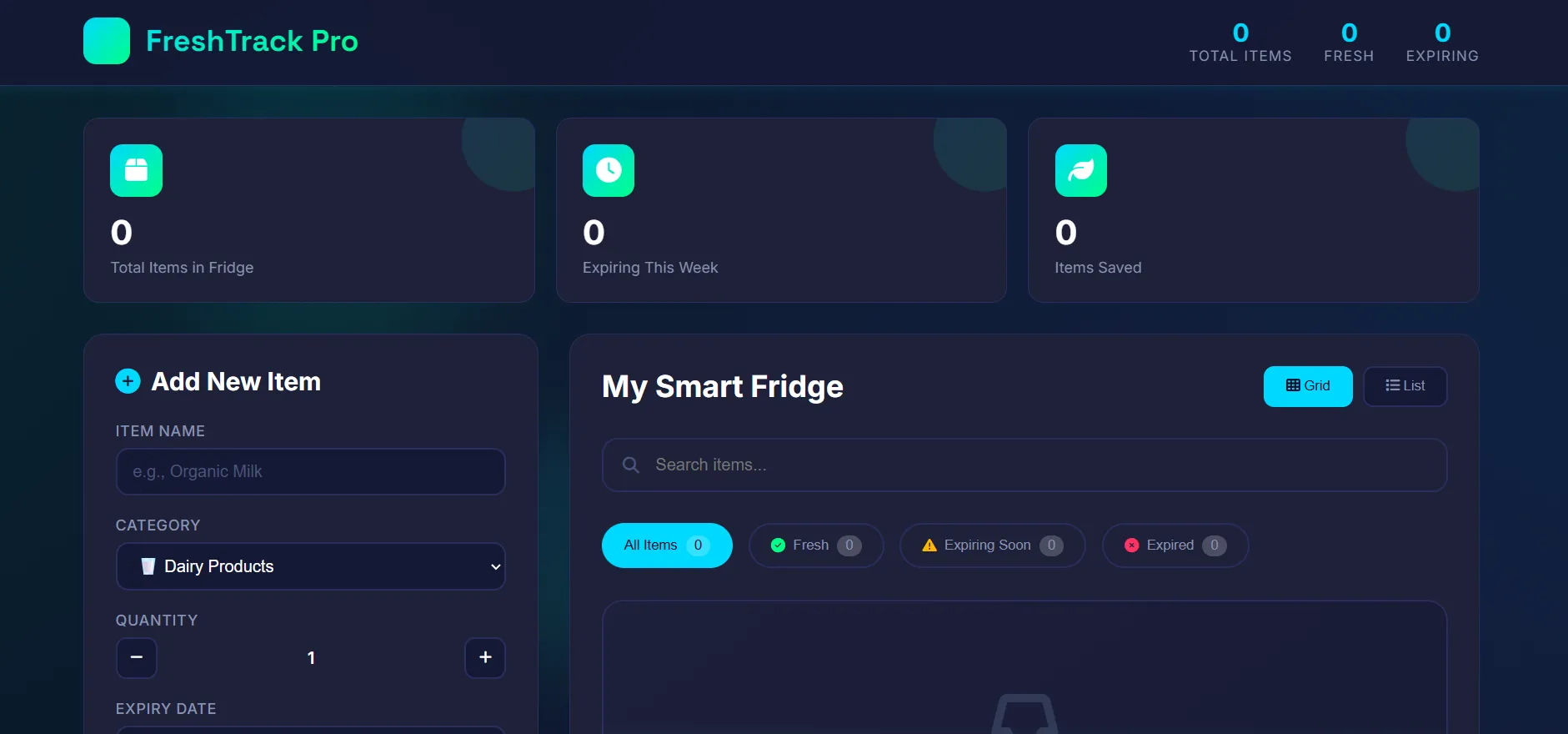 Web AppFreshTrack: Food Expiry TrackerA smart food-management system to track expiry dates, add, update and delete items while the app checks expiry automatically, online and offline.by TanishOpen the live project ↗
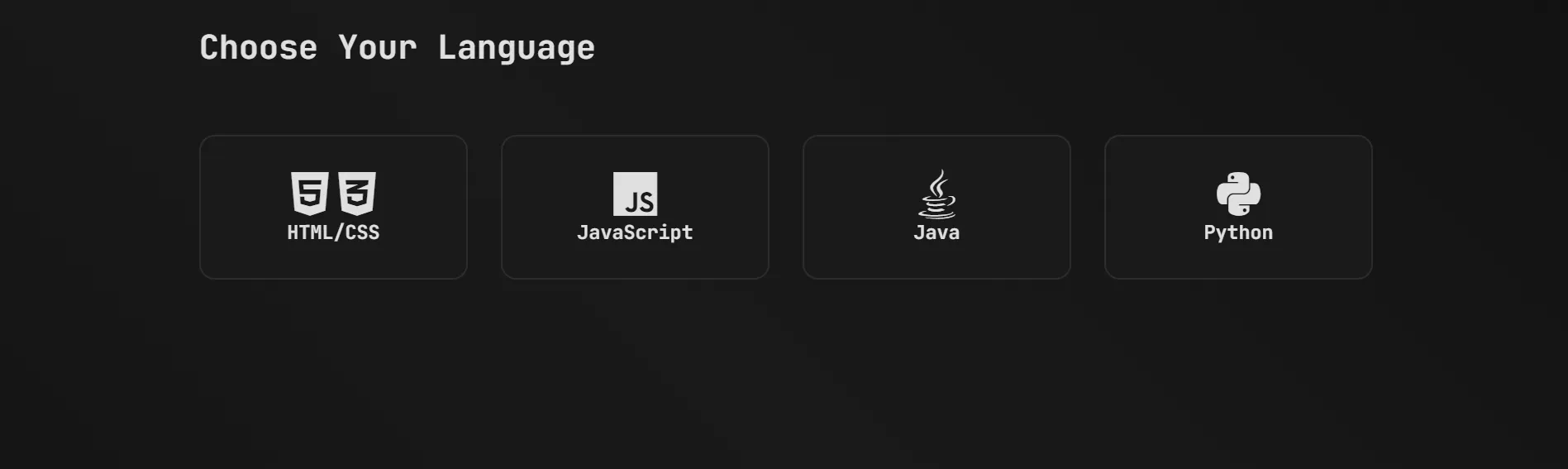 Web AppPracy: Coding Practice & Quiz PlatformAn all-in-one coding-practice site with interactive challenges, quizzes and score tracking across multiple languages to strengthen logic and problem-solving.by RohanOpen the live project ↗
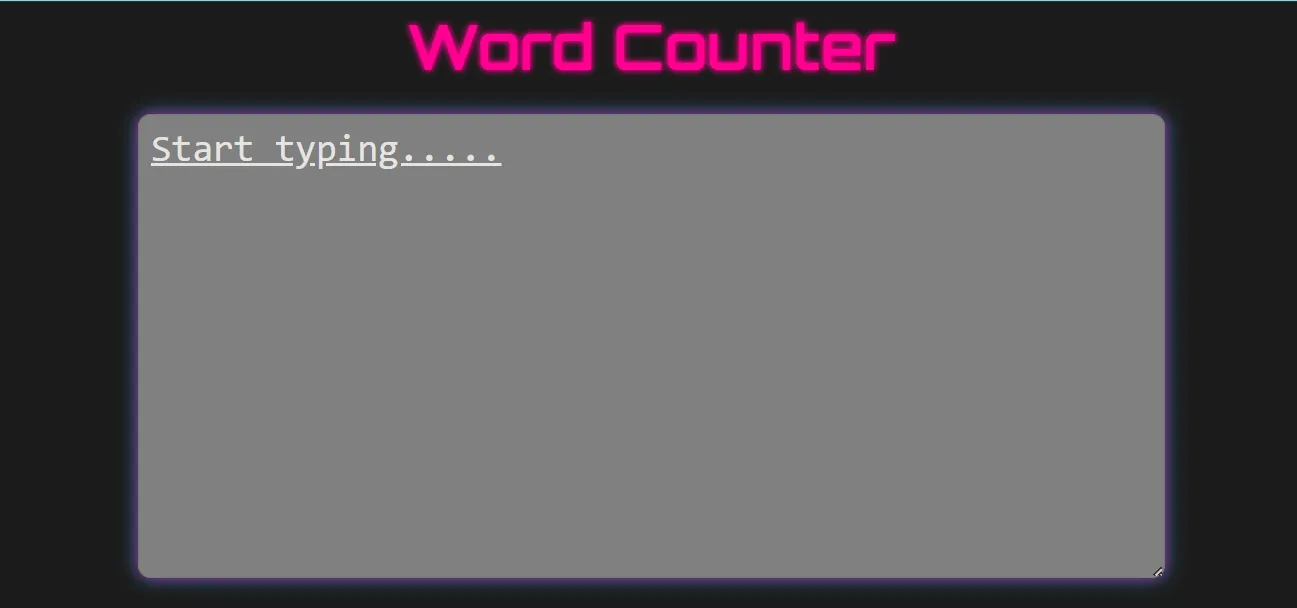 ToolWord Counter WebsiteA simple yet powerful tool that counts words, sentences and paragraphs from user input with instant, real-time results and a clean responsive interface.by VanshOpen the live project ↗