The certificate is the receipt. The repository is the asset.
Live online preparation for the Python Institute PCEP and PCAP certifications, built so that the repository a student finishes with is worth more than the certificate, and the certificate still passes.
Syllabus updated August 2026
Flexible course duration
Duration depends on the student's background and pace. Beginners (kids / teens): typically 6 to 9 months. Adults with prior knowledge: often shorter, with an accelerated path.
For personalised duration planning, call +91 91233 66161 and we'll map a schedule to your goals.
Ready to Master PCEP and PCAP Python Certification Course?
Choose your plan and start your journey into the future of technology today.
Rated 4.9 across 547 Google reviews. Free demo first, no card needed. Monthly billing, cancel anytime.
International Students (Outside India)
Billed monthly in US dollars, the same price in every country. Contact us with any questions.
Program Overview
Python Institute certifications are useful in specific situations and oversold in most others. They give a self-taught learner an external checkpoint, they satisfy some employers and some institutions that want a named credential, and they impose a syllabus on someone who would otherwise wander. What they do not do is demonstrate that a person can build anything, because a multiple-choice exam cannot show that. So this course prepares both certifications properly and insists on something the exams do not require: a public repository of working programs built along the way. Students who finish have PCEP and PCAP if they want them, and something a reader can open either way. PCEP-30-02 is the entry-level exam and PCAP-31-03 the associate one; both are sat through the Python Institute rather than through us, and the current blueprint should be confirmed at pythoninstitute.org before booking.
What Makes This Program Different
Your Learning Journey
Career Progression
Detailed Course Curriculum
Explore the complete week-by-week breakdown of what you'll learn in this comprehensive program.
Topics Covered
- How Python actually runs a file, which the exam asks about indirectly
- Literals, numeral systems and the operators students misjudge
- Variables, naming rules and the shadowing that trips people up
- Reading an error message properly rather than rerunning and hoping
Topics Covered
- Arithmetic, bitwise and logical operators with precedence rules
- Integer division, modulo and the negative-number cases
- Implicit and explicit type conversion, a reliable exam topic
- Predicting the output of an expression rather than running it
Topics Covered
- if, elif and else, and the nested conditions exams favour
- while and for, with break, continue and the else clause on loops
- The loop-else construct, which almost every candidate gets wrong first
- Tracing loops on paper before running them
Topics Covered
- Mutability, which underlies a large share of PCEP questions
- Slicing, and the negative-index cases
- Dictionaries and sets, with the operations the syllabus names
- Copying against referencing, and why it matters in the exam
Topics Covered
- Positional, keyword and default parameters
- Return values, and functions that return nothing
- Recursion at the level PCEP expects
- Writing a function to a stated specification
Topics Covered
- Local and global scope, and how Python resolves a name
- The global keyword and when using it is a mistake
- Shadowing, which produces the exam's favourite trick questions
- Predicting output across nested scopes
Topics Covered
- try, except, else and finally in the order they execute
- The exception hierarchy at PCEP depth
- Raising exceptions deliberately, and when to
- Basic input and output handling
Topics Covered
- Full timed question sets under exam conditions
- Reviewing every wrong answer with the reason named
- Committing the first real program to a public repository
- Deciding whether to sit PCEP now or go straight on
Topics Covered
- import in its several forms, and what each actually binds
- Writing your own module and then your own package
- The standard library modules the syllabus names
- Why the import questions are free marks for anybody who has written a package
Topics Covered
- Instance against class attributes, a heavily examined distinction
- Constructors, methods and self
- Introspection: examining an object at runtime
- Building a class from a written specification
Topics Covered
- Single and multiple inheritance, and method resolution
- Overriding, and calling the parent implementation
- isinstance and issubclass, which the exam uses constantly
- Designing a small hierarchy that is not over-engineered
Topics Covered
- The exception hierarchy in full at PCAP depth
- Defining your own exception classes
- Chaining, and what finally guarantees
- Deliberately breaking a program to see how it reports
Topics Covered
- Text and binary streams, opened and closed properly
- Reading and writing patterns the exam expects
- The with statement and why it exists
- Handling a file that is not there
Topics Covered
- String methods the syllabus names, used rather than memorised
- Escape sequences and formatting
- Character encoding at the level PCAP asks for
- String questions that are really about immutability
Topics Covered
- Comprehensions, including nested and conditional forms
- Lambda functions, map and filter
- Closures, which are the topic candidates most often fail
- Reading a comprehension aloud as a loop and back again
Topics Covered
- Full timed question sets under exam conditions
- Reviewing every wrong answer with the reason named
- A second, larger program committed to the repository
- A README that states what the program does and where it fails
Topics Covered
- Timed papers in the exam's format and question style
- Pacing, since both exams are short relative to their question count
- Eliminating options rather than searching for the right one
- Identifying the two or three topics still costing marks
Topics Covered
- Rebuilding the weakest topics rather than revising everything
- Closures, scope and mutability, which is where most candidates lose
- Predicting output as a drill rather than as an exercise
- Short daily retrieval instead of long revision blocks
Topics Covered
- Three finished programs, running, documented and committed
- A README a stranger can follow without the author present
- One honest paragraph on where each program fails
- Why this is the part an employer or admissions reader can actually assess
Topics Covered
- How the exam is booked and delivered through the Python Institute
- Confirming the current blueprint at pythoninstitute.org before booking
- What to do in the first two minutes of the exam
- Whether PCPP is worth attempting, discussed honestly
Projects You'll Build
Build a professional portfolio with 50+ projects real-world projects.
Weekly Learning Structure
Certification & Recognition
Technologies & Skills You'll Master
Comprehensive coverage of the entire modern web development stack.
Career Outcomes & Opportunities
Transform your career with industry-ready skills and job placement support.
Prerequisites
Who Is This Course For?
Career Paths After Completion
Course Guarantees
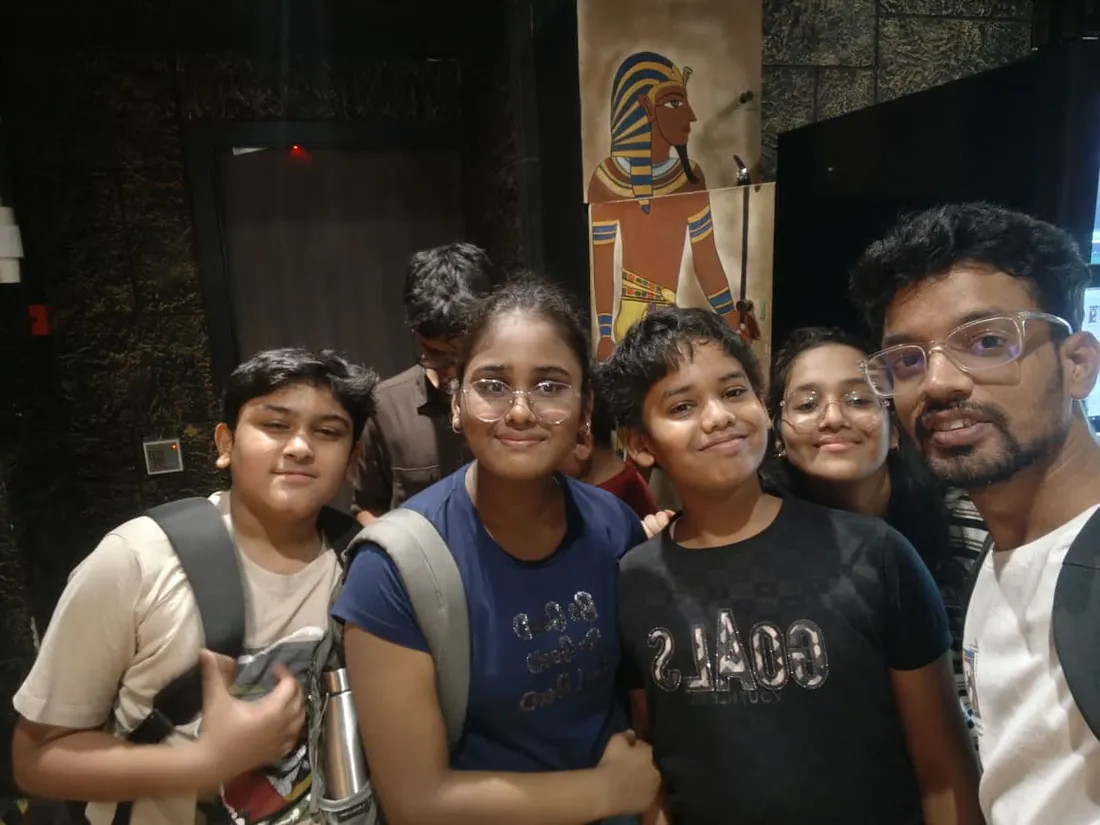
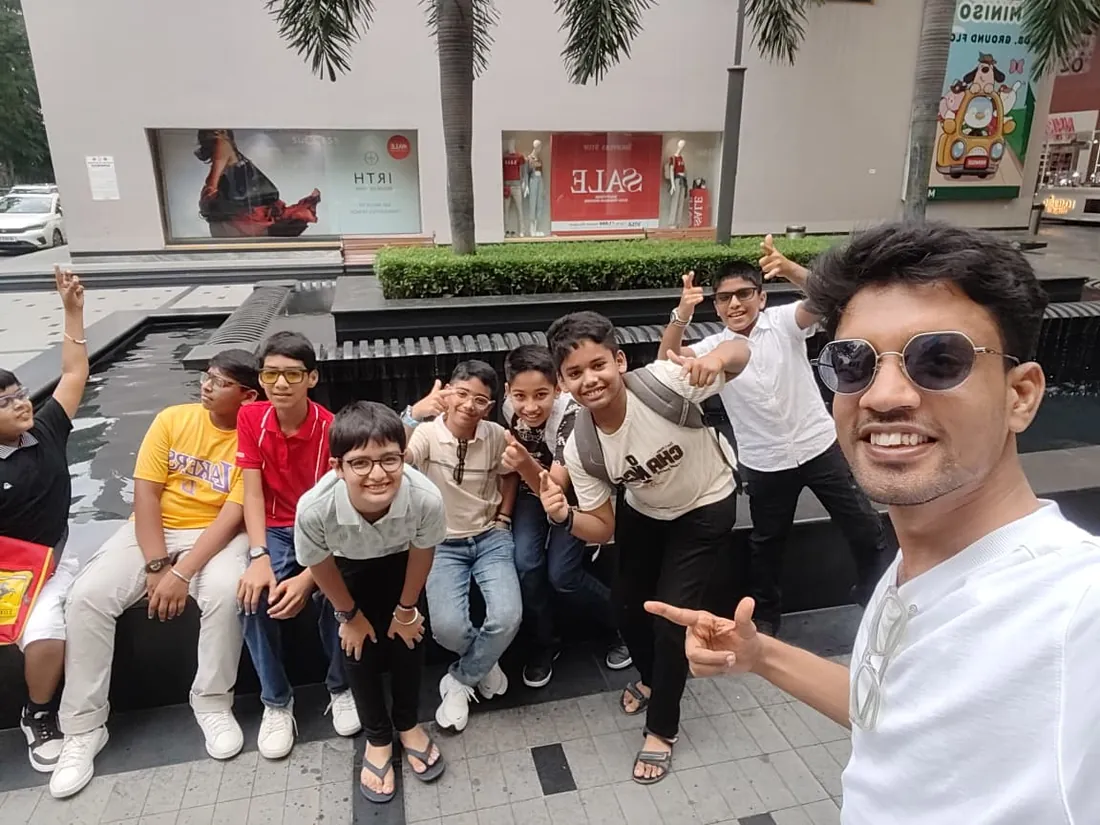
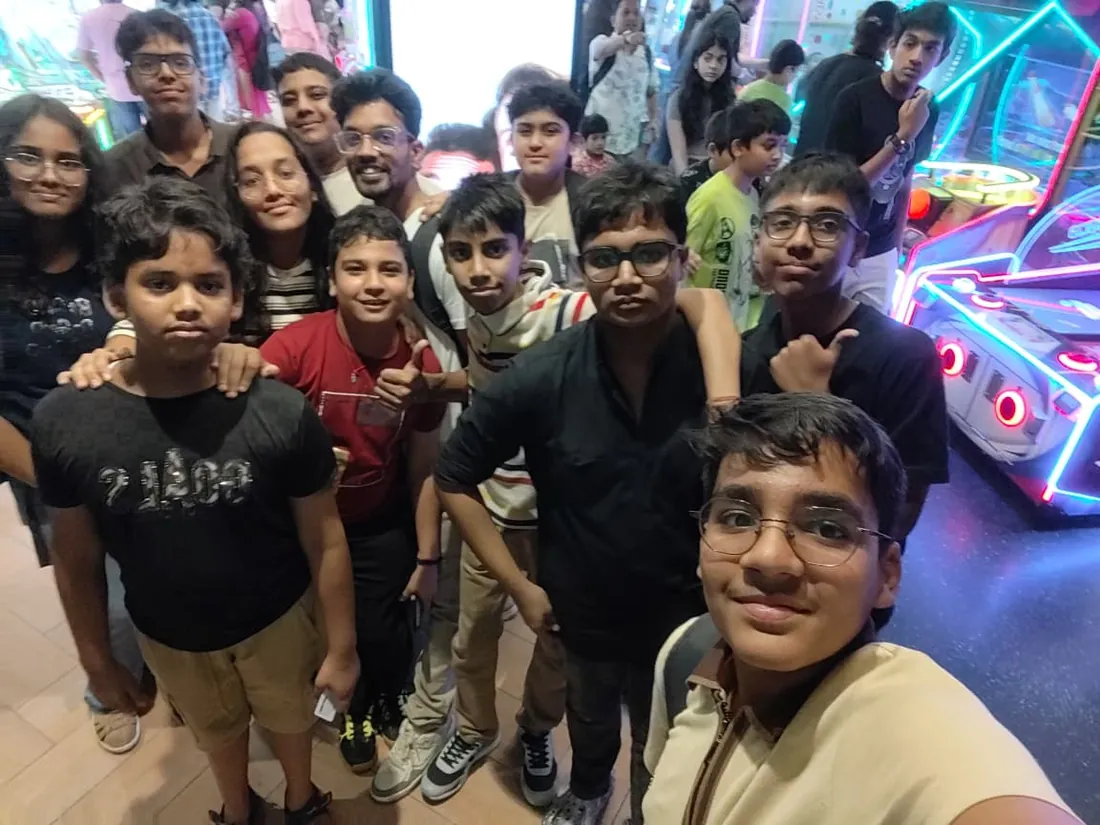
Real students. Real moments. Real joy.
These are our actual student meetups. No stock photos, no filters. Swipe through and meet the community you'll be joining.


















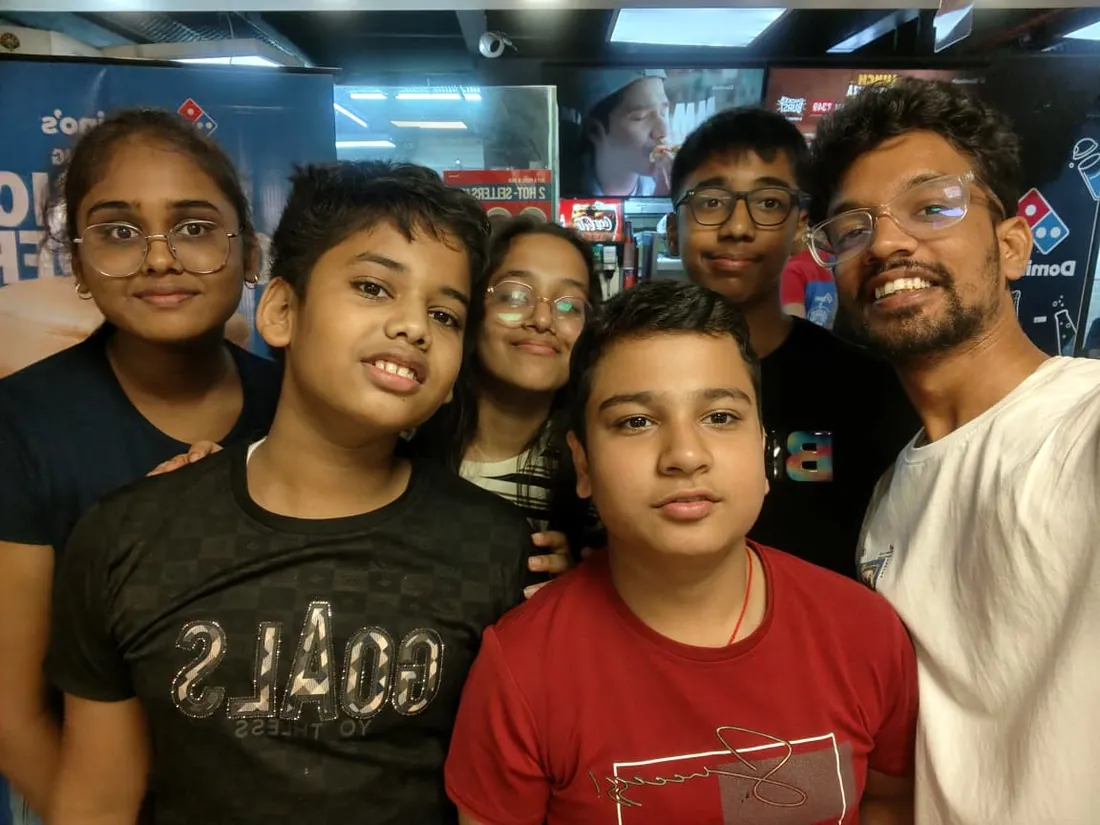


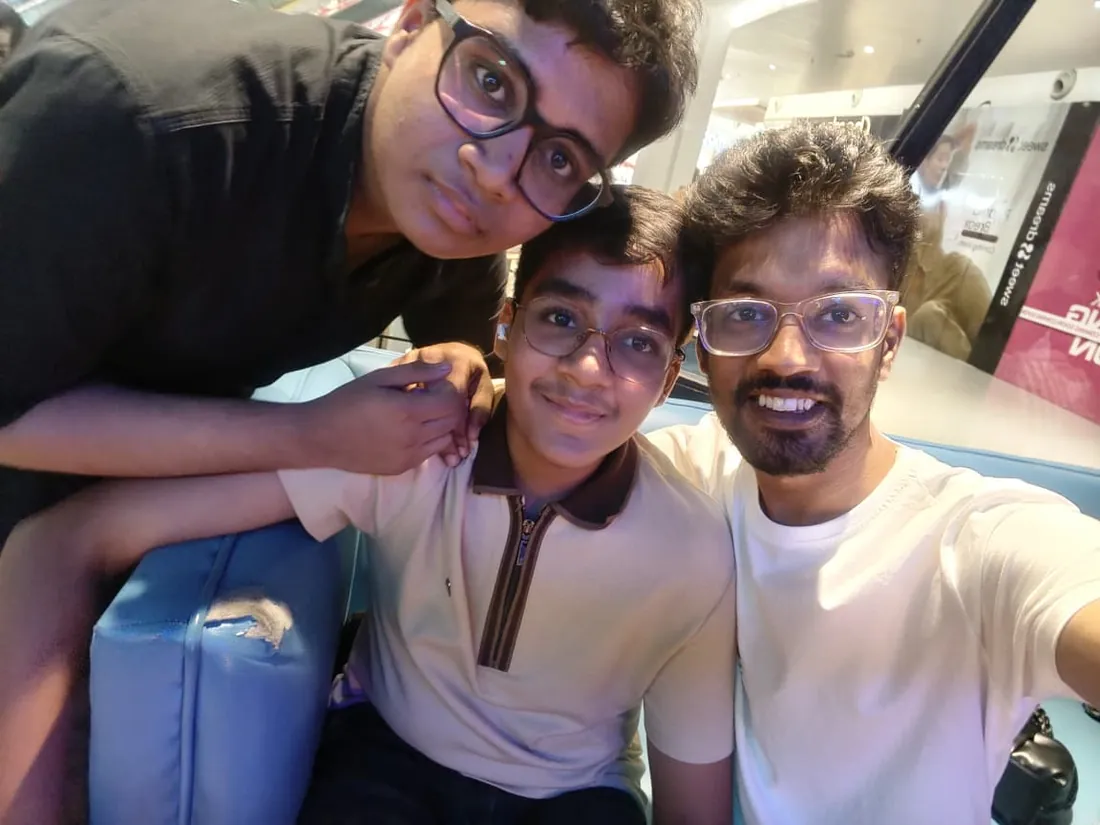


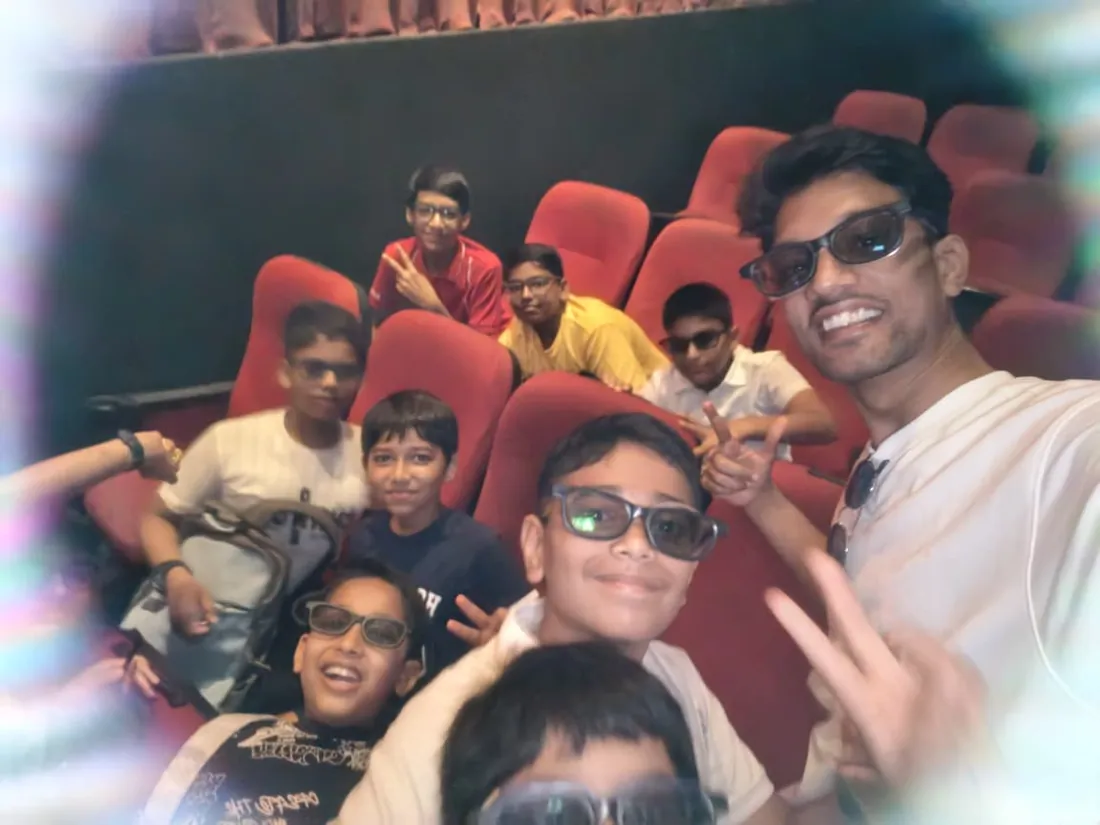



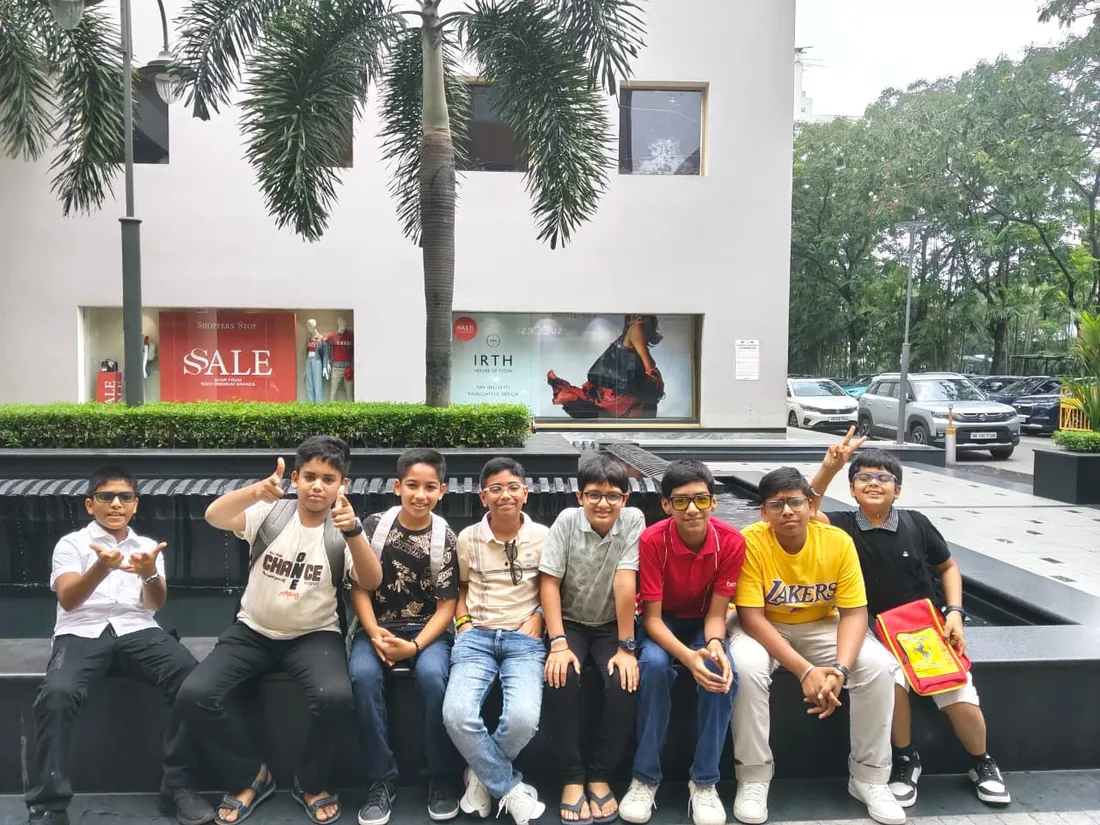
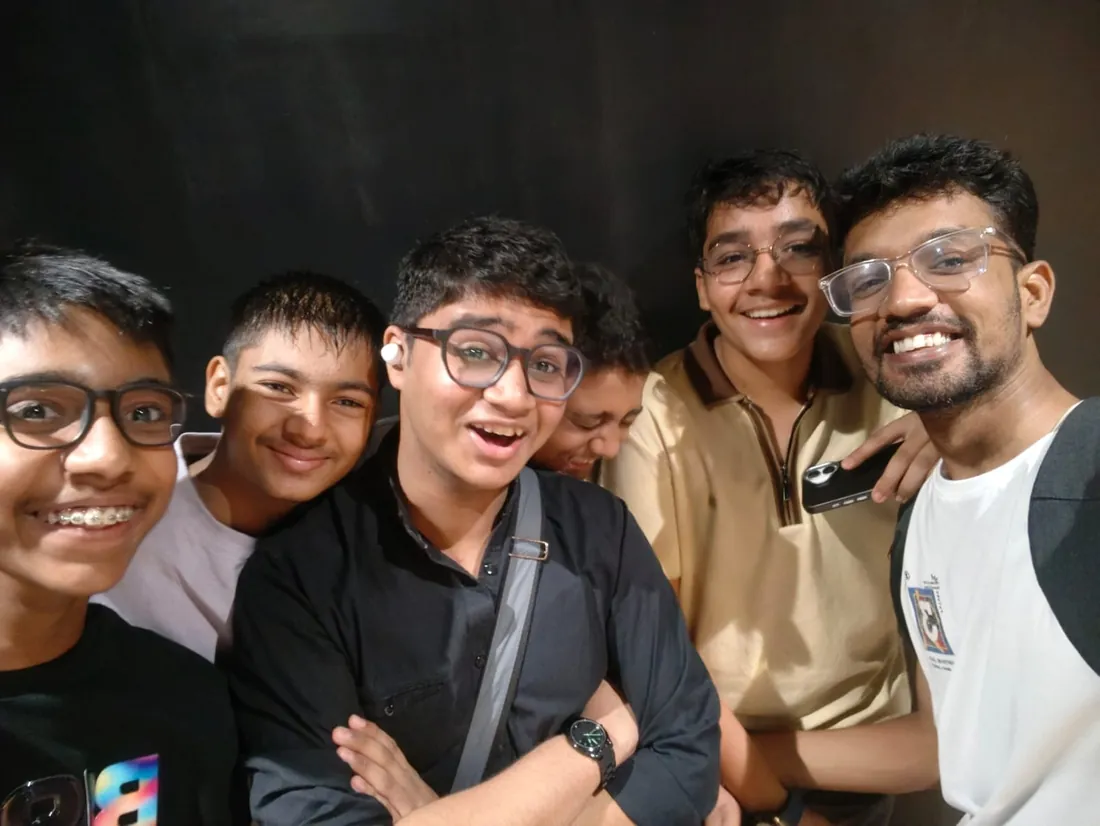
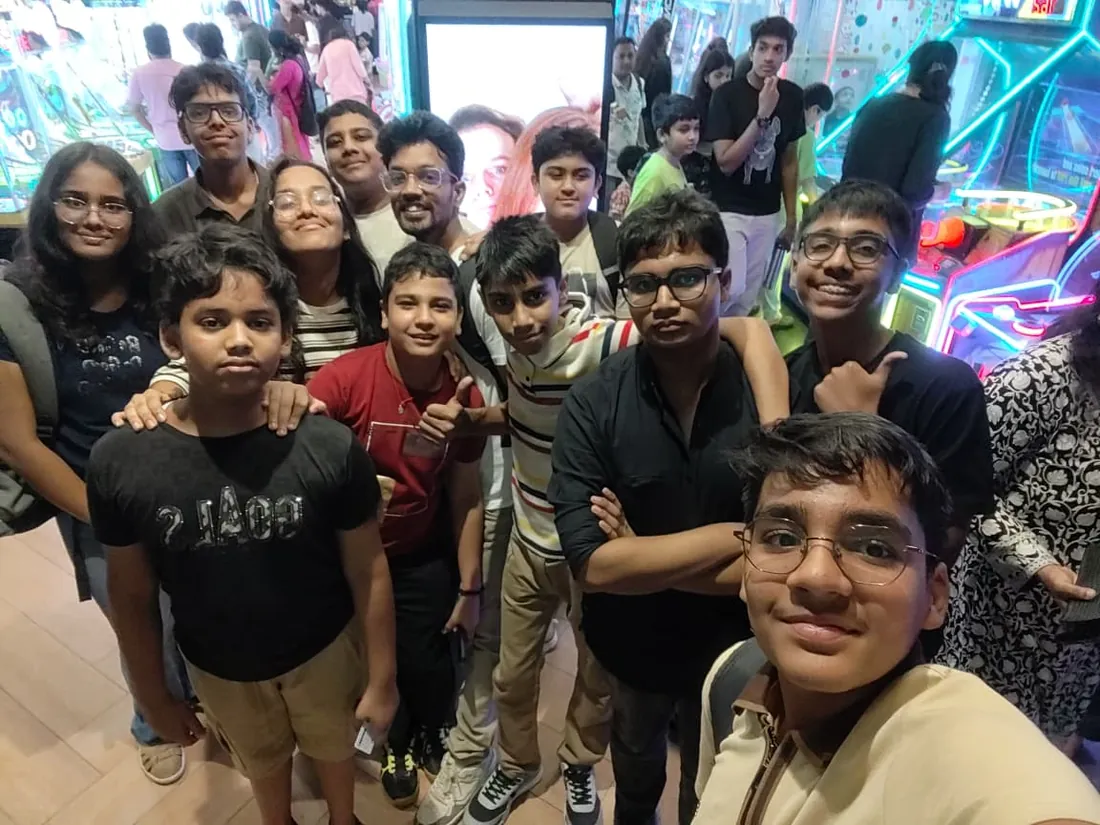

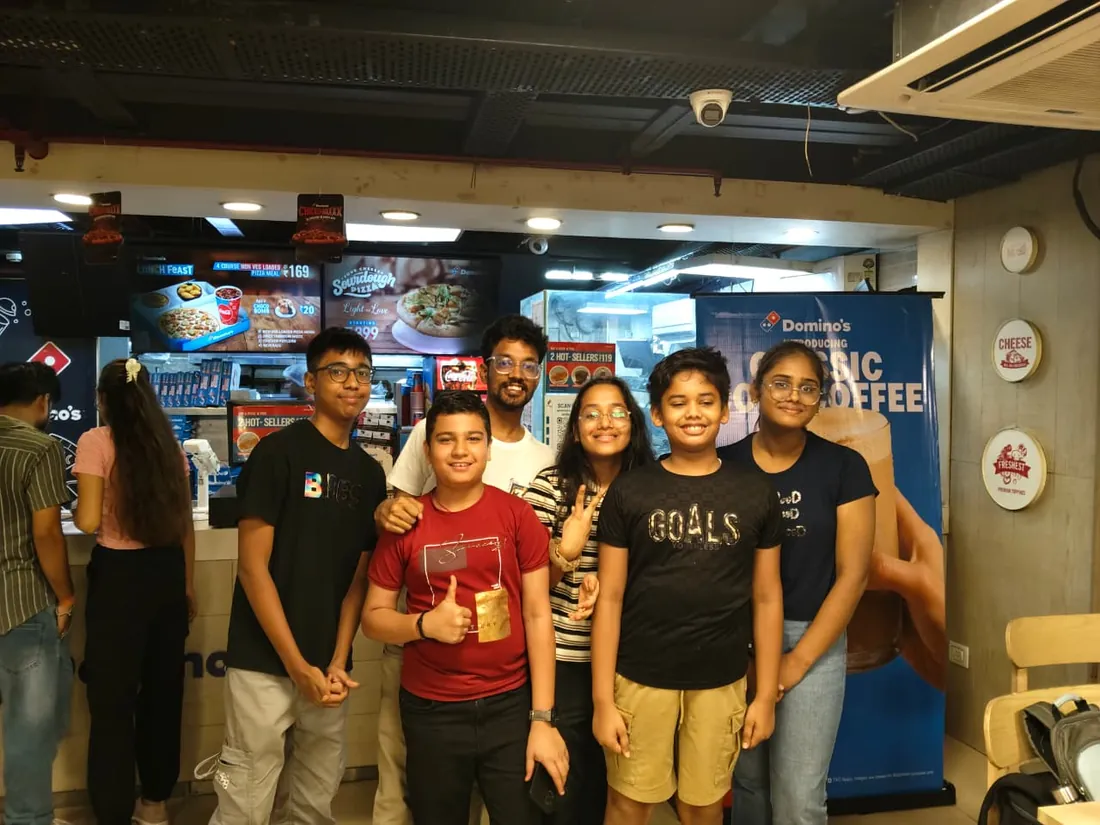



What families say
Straight from the parents and students who learn with us. Rated 4.9 across 547 Google reviews.
“Mivaan enjoys the class. He understands the concepts and completes his tasks with excitement. He started taking interest in coding… truly amazing class.”
“I absolutely love it here! I made new friends and learned important valuable coding skills while having the fun of my life. It's not just coding here, it's outings, bonding and most importantly preparing you for your future. Definitely five stars.”
“What stands out most is how excited my son is before every class. He looks forward to learning, problem-solving, and sharing what he's built. I've noticed a big boost in his confidence!”
“Modern Age Coders has been a game-changer for me! I struggled to grasp IT concepts and coding before joining, but their classes transformed everything. I'm now the topper in my class and can confidently write complex programs with ease.”
“Modern Age Coder have wonderful teachers who teach in a clear, easy and practical way. The teacher boosts students' confidence, keeps them updated with technology, and inspires them to learn without hesitation.”
“The one step solution for my son. Modern Age Coders make learning coding so simple that kids love it.”
“Coding classes here make learning very interesting and conceptual. The teachers teach us in a very easy-to-understand and efficient manner.”
“One of the most wonderful education centres out there. Education is not limited to school syllabus but focuses on skill development. Learning here has been a wonderful journey and still continuing.”
“I highly recommend this computer coding class! The teachers are incredibly knowledgeable and passionate about coding. They make every session engaging and insightful.”
“My child Dhairya is really enjoying the Modern Age Coder IT classes. This is his first online class, and he eagerly looks forward to it.”
“Very good classes. Don't worry about coding. They teach the best, especially Shivam sir.”
“Very good classes. Makes learning very easy and interactive.”
Hear it from our students
Real parents and students in their own words, on our public YouTube channel.
Common Questions About PCEP and PCAP Python Certification Course
Get answers to the most common questions about this comprehensive program
Still have questions? We're here to help!
Contact UsRelated Courses You May Like
Continue your learning journey with these recommended programs
 Python Certification
PCAP Certification Prep: Certified Associate in Python Programming
Live online PCAP-31-03 preparation covering every exam objective: modules and packages, exceptions, ...
Explore Course Design and Creativity
Creative Media for Teens: Photo, Video and Design
Creative media course for teens aged 13-18: photo editing, video production and graphic design in li...
Explore CourseRelated Articles & Guides
Deepen your knowledge with these hand-picked articles
 Career
8 min read
Career
8 min read
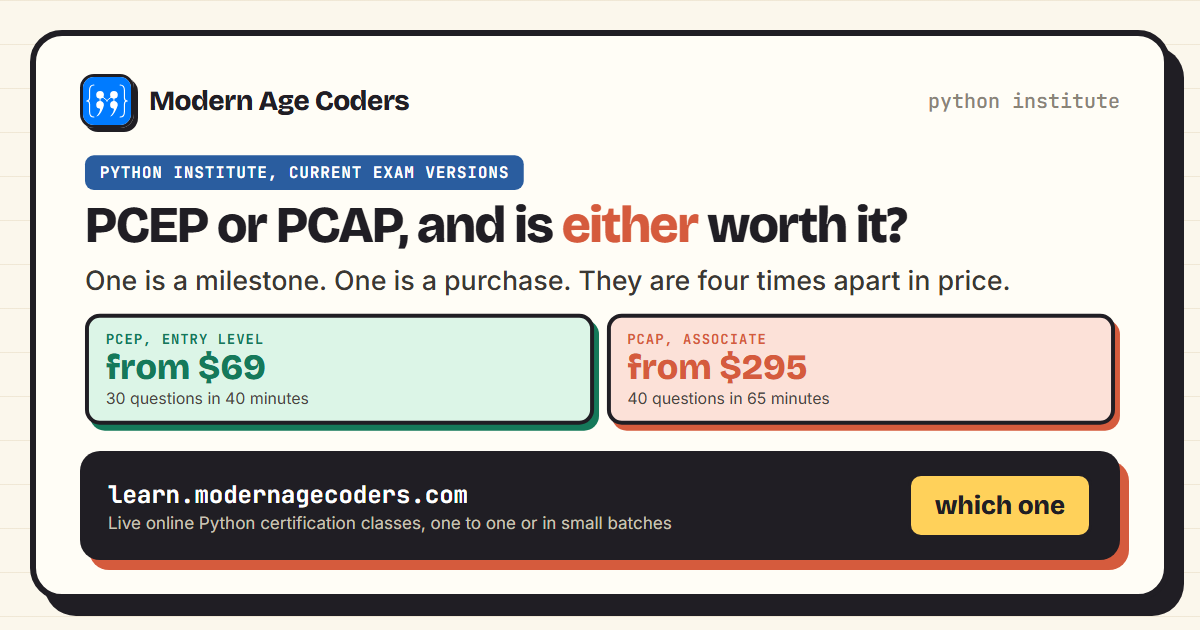
PCEP vs PCAP: Which Python Certification Is Worth It?
The two Python Institute certifications are four times apart in price and test different things. An ...
Read Article Technology
26 min read
Technology
26 min read
Best Data Science Courses in India for Students and Professionals in 2026
Comprehensive guide to the best data science courses in India for 2026. Compare IITs, IIMs, online p...
Read ArticleReady to start PCEP and PCAP Python Certification Course?
Book a free demo class to meet your mentor and see how we teach, with no commitment. Or enrol now and start this week.