Is maths tuition worth it? An honest guide for UK families
Short answer: often, but not always. Research on tuition in English schools found an average of about +2 months of progress for one-to-one maths tuition and +3 months for small groups: real but modest. Tuition is worth paying for when there is a clear gap, a clear goal and time to practise; it is money wasted when none of those is true. A year of weekly GCSE tuition at the national average costs about $1,575. Ours is $100 a month in a small group or $150 a month one-to-one.
Short answer: often, but not always. Research on tuition in English schools found real but modest average gains for maths, and tuition pays off when there is a clear gap, a clear goal and time to practise. Ours is $100 a month in a small group or $150 a month one-to-one, in your own currency.
We sell maths tuition, so read this with that in mind. We would still rather you paid for tuition that works than for tuition that does not. Below: what the evidence says, what a year costs, the signs tuition will help your child, the signs it will not, and a six-week way to find out before committing.
Courses built around a clear goal
Tuition works when it is aimed at something specific. Each of these courses starts by finding where marks are lost.
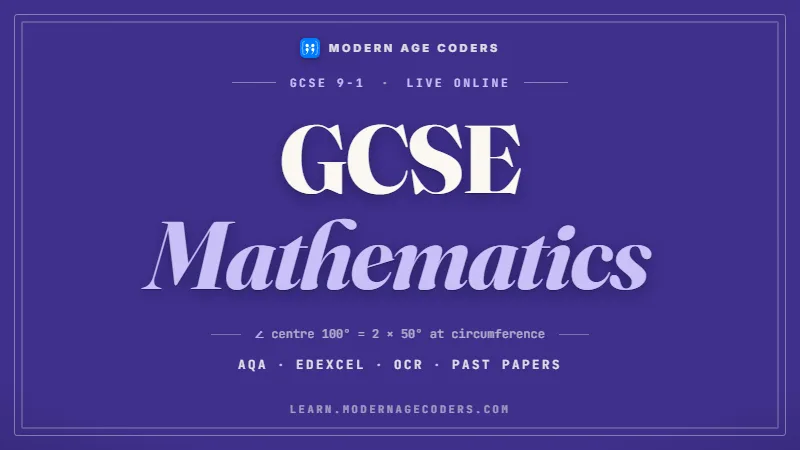 Clear goal
GCSE Maths: Foundation & Higher
AQA, Edexcel and OCR. A diagnosis of lost marks, then the gaps repaired, then past papers.
$100/mo group · $150/mo 1-on-1
View course & enrol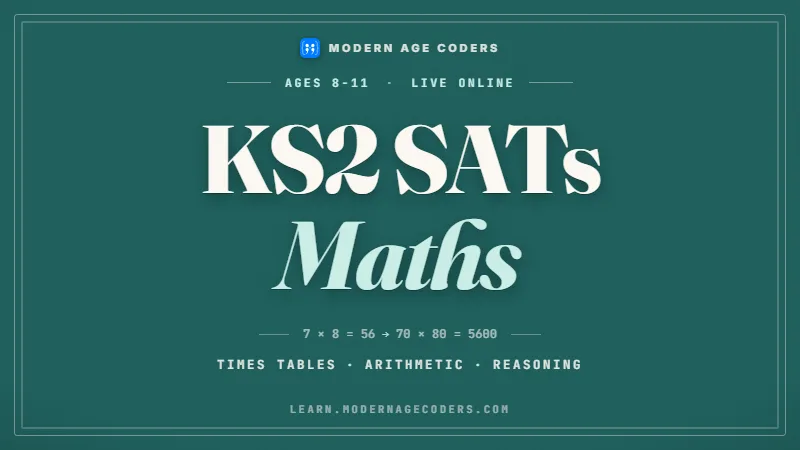
KS2 SATs Maths
Times tables for the Year 4 check, then the arithmetic and reasoning papers.
$100/mo group · $150/mo 1-on-1
View course & enrol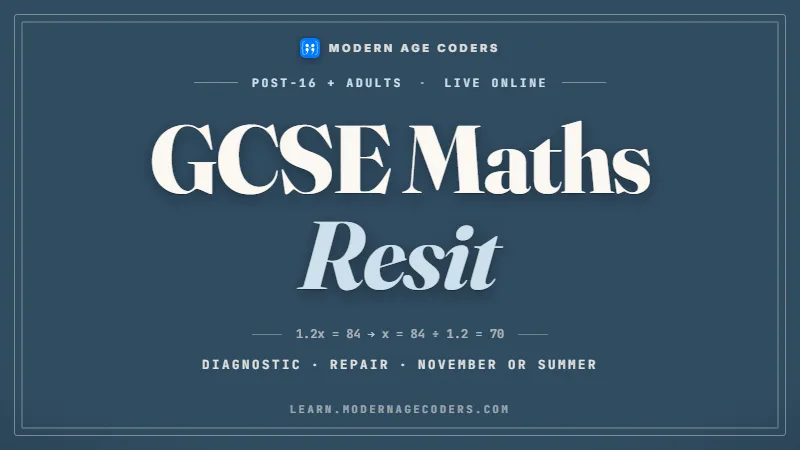
GCSE Maths Resit
For learners aged 16 and over and adults who need the grade 4 to move on.
$100/mo group · $150/mo 1-on-1
View course & enrolWhat the research says about maths tuition
The Education Endowment Foundation reviews school research in England. On one-to-one tuition it says it "can be effective, providing approximately five additional months’ progress on average", and adds that "Effects in mathematics appear to be substantially lower (+2 months) than in literacy (+6 months)."
On small groups it reports "an average impact of four months’ additional progress over the course of a year", and for maths that "The studies in mathematics show a slightly smaller positive impact (+ 3 months)".
Read honestly, that is a modest average effect, not a transformation. Averages hide a wide spread: some children gain a great deal and some gain nothing.
These studies are of tuition run in schools, often with trained tutors and set programmes. Private tuition varies far more in quality, which is why choosing the tutor matters more than choosing to have tuition at all.
What a year of maths tuition costs in the UK
Published rates, read in October 2026 and converted to US dollars so this page uses one currency. The yearly figures are our own arithmetic from those rates.
| Format | Typical price | Where the figure comes from |
|---|---|---|
| Weekly online GCSE maths tutor for a school year (35 hours) | about $1,575 (our arithmetic at the national average of about $45 an hour) | Rate from Tutorful, "How Much Does a Maths Tutor Cost in the UK in 2026?" (updated 24 September 2026) |
| Weekly A level maths tutor for a school year (38 hours) | about $2,090 (our arithmetic at about $55 an hour) | Rate from Tutorful, same guide |
| Tuition centre GCSE maths group, two sessions a week, nine months | about $2,070 (our arithmetic at about $230 a month) | Monthly price from Explore Learning's pricing page (read 7 October 2026) |
| Worksheet programme, one subject, twelve months | about $1,116 to $1,248, plus a joining fee (our arithmetic at about $93 to $104 a month) | Monthly fees from Kumon centre pages for Ilford Lane and Ashford South (read 7 October 2026) |
| Modern Age Coders, live maths | $100 a month in a group of 15 to 20, or $150 a month one-to-one, eight one-hour lessons | Our own price, no enrolment fee, stop at any month end |
Conversion: UK figures were converted at 1.3221 US dollars per pound, the Bank of England spot rate for 5 October 2026 (series XUDLUSS), and rounded to the nearest dollar. Yearly totals are our arithmetic, not the providers' own figures.
This table sets out what UK families typically spend in a year on maths tuition, so it is shown to visitors in the UK. Our plans are $100 a month in a group or $150 a month one-to-one, in your currency.
Signs maths tuition will be worth the money
- There is a specific gap you can name, such as fractions, algebra or a GCSE tier
- There is a goal with a date: the SATs, an 11 plus test, a GCSE or A level paper, a resit
- Your child will practise between lessons, even for twenty minutes
- You can find a tutor who works from your child's course and board
- School has flagged a problem but cannot give one-to-one time
- Confidence has collapsed and your child has stopped asking questions in class
- A good first lesson leaves your child more willing, not less
- You can afford it for long enough to matter, usually a term or more
Signs it may not be worth paying for, yet
No time to practise
One lesson a week with no practice between rarely moves much. Fix the timetable before paying for tuition.
A child who refuses
Tuition forced on an unwilling child often deepens the dislike. A short honest conversation can matter more than a tutor.
Free help is unused
Many schools run catch-up sessions and boards publish many past papers free. Try those first if your child has not.
No clear target
Tuition "to help with maths" with no gap or goal tends to drift. Name the target first.
The wrong tutor
A tutor who does not know your exam board, or who teaches the same lesson to every child, is the most common waste of money.
Promises of a grade
Anyone guaranteeing a grade is selling, not teaching. Walk away from that offer, ours included if we ever made it.
How to find out in six weeks whether tuition is working
Our own suggestion for any tutor, not only us. Agree it with the tutor at the start.
| Week | What should happen | What to look for |
|---|---|---|
| 1 | A diagnosis: the tutor finds where marks or understanding are lost | A short written list of gaps, in plain words |
| 2 to 5 | Teaching aimed at those gaps, with practice set and checked | Your child can explain one thing they could not before |
| 6 | A check against the starting point, such as a short paper | Fewer marks lost on the gaps from week 1, and an honest view on whether to continue |
If it is worth it, which kind of tuition?
A small group may be enough if your child
- is broadly on track and needs structure and practice
- responds well to other students
- needs a long run of steady support
In the school research, small-group maths tuition did about as well as one-to-one, at lower cost.
One-to-one is worth the extra if your child
- has a specific gap and a close deadline
- goes quiet in a class
- needs lessons fitted round a crowded week
Every minute on their own mistakes.
If you decide it is worth trying
We are a live online school teaching maths and coding since 2020, rated 4.9 across 547 Google reviews. Monthly, no contract, so a six-week test costs no more than six weeks.
One-to-one maths
$150 / month
- 8 live one-to-one lessons a month (2 a week, 1 hour each)
- 4 live one-to-one lessons a month (1 a week, 1 hour each)
- A diagnosis first, then teaching aimed at the gaps
- The same tutor every week
- No enrolment fee, stop at any month end
Small-group maths
$100 / month
- 8 live group lessons a month (2 a week, 1 hour each)
- 15 to 20 learners matched by level
- Structure and practice at a lower monthly price
- No enrolment fee, stop at any month end
Want a class sooner? Book a Priority Demo: a full class of about 45 to 60 minutes. If you enrol, the demo fee is adjusted against your first month's fee.
Rated 4.9 across 547 Google reviews
★★★★★
"My son struggled with math for years. Integrating it into coding projects has transformed his understanding and confidence. Highly recommended!"
Shewta Singh, mother of Ishan · Google review
★★★★★
"Modern Age Coders have wonderful teachers who teach in a clear, easy and practical way. The teacher boosts students' confidence and inspires them to learn without hesitation."
Sonu Goyal, parent · Google review
★★★★★
"My child Dhairya is really enjoying the Modern Age Coders classes. This is his first online class and he eagerly looks forward to it. I can already see his improvement, and the teachers are very cooperative."
Sonam Oswal, parent of Dhairya · Google review
Is maths tuition worth it: questions parents ask
Does maths tuition actually work?
On average it helps, modestly. Research on tuition in English schools found about +2 months of progress for one-to-one maths tuition and +3 months for small groups. Individual results vary widely with the tutor, the child and the practice done.
Is maths tuition worth it for GCSE?
Often, when there is a named gap, a target grade and time to practise before the exam. It is less useful as general reassurance with no clear aim.
Is maths tuition worth it for primary children?
It can be for a specific need such as times tables, SATs confidence or an 11 plus test. Many primary children do well with school support and short daily practice at home.
How long before tuition shows results?
Give it about six weeks with a clear target and a check at the end. If nothing has moved by then, change the approach or stop.
Can tuition guarantee a grade?
No, and nobody honest will promise one. Tuition can find and fix gaps and build exam technique; the result still depends on the student.
Is group tuition worth it, or only one-to-one?
In the school research, small-group maths tuition did about as well as one-to-one at lower cost. See our group vs one-to-one guide.
What should we try before paying for tuition?
School catch-up sessions, free past papers from the exam boards, and twenty minutes of daily practice. If those are in place and the gap remains, tuition is easier to justify.
Can we test it before committing?
Yes. The first lesson is free and needs no card, and you can stop at any month end. For a class today or tomorrow, book a Priority Demo; if you enrol, the demo fee is adjusted against your first month's fee.
Why are prices in US dollars?
We teach families in more than 25 countries and bill outside India in US dollars, so the page uses one currency. UK rates were converted at one stated exchange rate.
Find out if it is worth it for your child, free.
One lesson tells you more than any average: the tutor finds where your child is losing marks and says honestly whether tuition is the right answer. No card needed.