STU / GRD / 01
Python Masterclass
The language nearly all agent engineering is written in.
Open the syllabusUK · University students · Live online
Graduate employers in the UK have a new worry. In the Institute of Student Employers' 2026 development survey, two-thirds of employers said they believed graduates and apprentices were using AI to misrepresent their skills, up from around half in 2025. That changes what a strong application looks like. A polished personal statement or a list of AI tools on a CV proves little when anyone can generate one in a minute. What an interviewer can still check is a thing you built and can explain: an AI agent with a clear job, a set of test cases, a history of commits and a list of what it gets wrong. This course teaches UK university students to build exactly that, as their own project, outside anything their university assesses. It covers how agents work, how to ground and test them, how to keep the code in version control, and how to talk about every design decision without notes.
Live teaching since 2020 · 10,000+ students · your own agent, explained without notes
In short
UK graduate employers expect AI to reshape entry-level work rather than remove it, and they increasingly doubt applications that AI may have polished: in the ISE Student Development Survey 2026, two-thirds believed candidates were using AI to misrepresent their skills. Evidence that a student can build and reason about AI systems therefore carries weight. Modern Age Coders teaches UK university students to build an AI agent as a personal project, grounded in documents, connected to tools, tested against known cases and kept in version control, and to explain it without notes. We never work on coursework, dissertations or anything submitted for assessment. Lessons are live and online, in small groups or one to one. The first class is free; afterwards a group place is USD 100 a month and one-to-one lessons USD 150 a month, with the Copilot Studio course taught one to one only.
Start here
Engineering from the model up, an employer platform, or coding agents. Each card opens the full syllabus.
ASU / 01
How models are prompted, grounded, given tools and measured, built in Python rather than taken on trust.
Open the syllabus →
ASU / 02
Agents built on Microsoft's platform, grounded in documents and connected to tools. Taught one to one only.
Open the syllabus →
ASU / 03
Directing coding agents through a real repository and reviewing each change they propose.
Open the syllabus →What employers say
From the Institute of Student Employers, reporting on 7 May 2026 its Student Development Survey 2026, which ran in January and February 2026 and drew 144 employer responses.
| Finding | Share of employers |
|---|---|
| Expect AI adoption to reshape graduate and apprentice roles | 87% |
| Of which, foresee minor adjustments to tasks | 58% |
| Of which, anticipate significant changes | 29% |
| Say entry-level roles have already evolved without a formal redesign | 43% |
| Expect to replace no entry-level roles with AI | 40% |
| Expect a small number replaced, 1 to 10% of roles | 42% |
| Expect larger-scale replacement, more than 10% | 18% |
| Believe candidates use AI to misrepresent skills | Two-thirds, up from around half in 2025 |
The ISE's reading is that the shift "is less about jobs disappearing and more about tasks evolving". Employers expect AI to take away some routine admin, basic data and writing tasks, and they named critical thinking, AI literacy, communication and adaptability as the skills that will grow in importance.
Put simply, the graduate who can judge whether an AI output is right is worth more than the one who can only produce it.
The same survey found two-thirds of employers believed graduates and apprentices were using AI to misrepresent their skills, up from around half in 2025. Every application now arrives under a little more suspicion.
The answer is not to avoid AI but to bring evidence that survives questioning: something you made, with a history, which you can take apart in front of an interviewer.
Employers are "almost twice as likely to build digital literacy on the job than recruit for it", so knowing a list of tools is not what sets a candidate apart.
43% of employers said their entry-level roles had already evolved in response to AI without being formally redesigned. The job advert may lag the job.
54% of employers said they were concerned about the future impact of AI on new hires, and are adjusting development programmes in response.
Source, read 21 September 2026: Institute of Student Employers, Entry-level work reshaped not replaced, 7 May 2026. The ISE surveys its employer members; the figures describe those who responded, not every UK employer.
University rules
The Russell Group's principles on generative AI, launched in July 2023, show how UK universities approach the question. Your own university and department set the rules that apply to you.
| Principle | Wording |
|---|---|
| 1 | "Universities will support students and staff to become AI-literate." |
| 2 | "Staff should be equipped to support students to use generative AI tools effectively and appropriately in their learning experience." |
| 3 | "Universities will adapt teaching and assessment to incorporate the ethical use of generative AI and support equal access." |
| 4 | "Universities will ensure academic rigour and integrity is upheld." |
| 5 | "Universities will work collaboratively to share best practice as the technology and its application in education evolves." |
The principles say that "All 24 Russell Group universities have reviewed their academic conduct policies" to reflect generative AI, and that appropriate uses are "likely to differ between academic disciplines". One module may welcome an AI tool with acknowledgement; the next may forbid it outright.
So the only safe answer to whether a tool is allowed in a given piece of work is the one in your module handbook, or from your module leader. The principles themselves encourage students to ask about specific cases openly.
We never write, edit, debug or review anything you will submit for assessment: coursework, lab reports, dissertation code, take-home tests. The agent you build with us is a separate project of your own, chosen so that it overlaps with no assessed work.
If you later want to use it in a module, that is a question for your department, and you should acknowledge it however your university requires.
One line in the principles is worth keeping on a card above your desk. When information generated by these tools moves into another context, "accountability for the accuracy of information generated by these tools when transferred to another context lies with the user". That is true in a seminar, and it is exactly what an employer will expect of you with an agent at work.
Source, read 21 September 2026: Russell Group principles on the use of generative AI tools in education (PDF); launch date from the Russell Group's own news page. Universities outside the Russell Group publish their own policies.
Evidence that counts
When employers suspect AI-polished applications, the claims that hold up are the ones with evidence behind them. This is the evidence the course produces.
| What the CV says | What backs it up | What an interviewer can do with it |
|---|---|---|
| Built an AI agent | A public repository with a readable commit history | Scroll back and see the work happen over weeks, not overnight |
| Tested it properly | A file of test cases with expected answers, and the pass rate | Pick a case and ask why it fails |
| Understands retrieval | A note on which documents the agent can see and how they are split | Ask what happens when the answer is not in them |
| Knows the limits | A short list of known failures in the README | Ask which one worries you most, and why |
| Can work with others | Pull requests, reviews and issues, even on a solo project | Read how you respond to your own mistakes |
None of this needs a famous project. A small agent with honest documentation beats an ambitious one that only works in a demo. The test that matters is simple: could you rebuild the core of it from memory, on a whiteboard, and explain each choice? If the answer is yes, the project is yours in the way an interviewer cares about.
A commit history is the one piece of evidence that is hard to fake after the fact. Small, frequent commits with clear messages show how you think, where you got stuck and how you got out.
Git and GitHub are taught alongside the agent work for that reason, not as an afterthought.
Listing what your agent gets wrong feels like undermining it. In practice it is the strongest signal of judgement you can give, because it proves you tested it seriously.
The same habit is what employers mean by critical thinking and AI literacy: knowing when not to trust the output.
Projects
Each project is small enough to finish in a term, useful enough to matter, and bounded so that it cannot do harm when it goes wrong.
| Agent | What it does | The limit that makes it safe |
|---|---|---|
| Society events helper | Answers questions about a student society's events from its published calendar and constitution | Answers only from those documents and says so when it cannot |
| Application tracker | Reads job adverts you save, extracts deadlines and requirements, drafts a checklist | Drafts, never sends; every application is yours to write |
| Open data analyst | Answers questions about a public dataset by writing and running small queries | Read-only access, and every query shown alongside the answer |
An agent with a single task can be tested; one that tries to do everything cannot. Scope is the first design decision, and the most important.
Every tool the agent can call is listed, with what it may read and what it may change. Most starter agents may change nothing at all.
Twenty or thirty questions with known answers, written before the agent is finished and rerun after every change.
None of these projects touch a module you are taking, and none are built from your course materials, which keeps them clearly apart from assessed work. Students who want to build in public often take a project on to a student hackathon. For working adults, the professionals course covers agents that act on real organisational systems, and the regulation that comes with them.
Stages
At one lesson a week, plan on roughly two terms to reach the fourth stage, less with Python already in hand.
| Stage | What you can do |
|---|---|
| 1. Read the machine | Explain what a language model does with a prompt, and why it gets things wrong |
| 2. Ground and connect | Give a model your chosen documents and a tool, and trace every step it takes |
| 3. Test and break | Write a case set, attack your own agent, and fix what breaks |
| 4. Ship and defend | Publish the repository and README, and explain every choice aloud as you would to an interviewer |
For the engineering route, a working grasp of Python helps a great deal, and the Python course can come first. The Copilot Studio route is configured more than coded.
Where each subject leads is laid out on the coding roadmap.
Billing is monthly, so you can pause for exam season and restart the following term.
Lessons run in the evening or at weekends, clear of lectures and labs.
The catalogue
Grouped by what they add. The free class settles where you start.
STU / GRD / 01
The language nearly all agent engineering is written in.
Open the syllabusSTU / GRD / 02
The thinking technical interviews still test.
Open the syllabusSTU / GRD / 03
Using assistants well, and checking what they give you.
Open the syllabusSTU / AGT / 01
Retrieval, tools and evaluation, from first principles.
Open the syllabusSTU / AGT / 02
Agents and scripts that run on a schedule.
Open the syllabusSTU / AGT / 03
The Microsoft platform; one to one only.
Open the syllabusSTU / SHW / 01
The commit history that proves the work is yours.
Open the syllabusSTU / SHW / 02
A front end so others can try your agent.
Open the syllabusSTU / SHW / 03
Coding agents, with every change reviewed by you.
Open the syllabusHow lessons run
Our teachers are based in India, where the clocks never change, so the UK is four and a half hours behind during British Summer Time and five and a half hours behind in winter. Evening and weekend lessons in UK time fit comfortably around both.
Weekday evening
After lectures and labs, the most common choice.
Saturday
A longer build session once a week.
Sunday
For students with Saturday jobs.
Talk through what you want to build and leave with a first version of the plan.
Five to ten students at the same level, reviewing each other's agents and test sets.
For a faster pace, and the only format for the Copilot Studio course.
Everything lives in your own GitHub account, so the evidence stays with you.
You talk through your agent's design choices in lessons, the way you would to an interviewer.
We will not touch anything you submit to your university, ever.
Student work
Four finished pieces of work by our students; the full collection, across every age group, is on the student labs page.
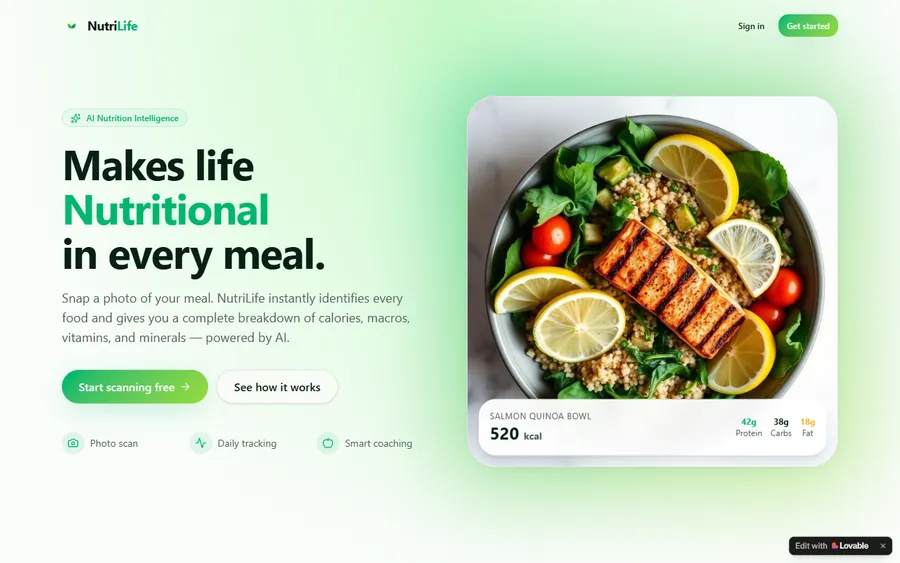
AI and ML
An AI nutrition coach that reads what you eat and works you toward a target.
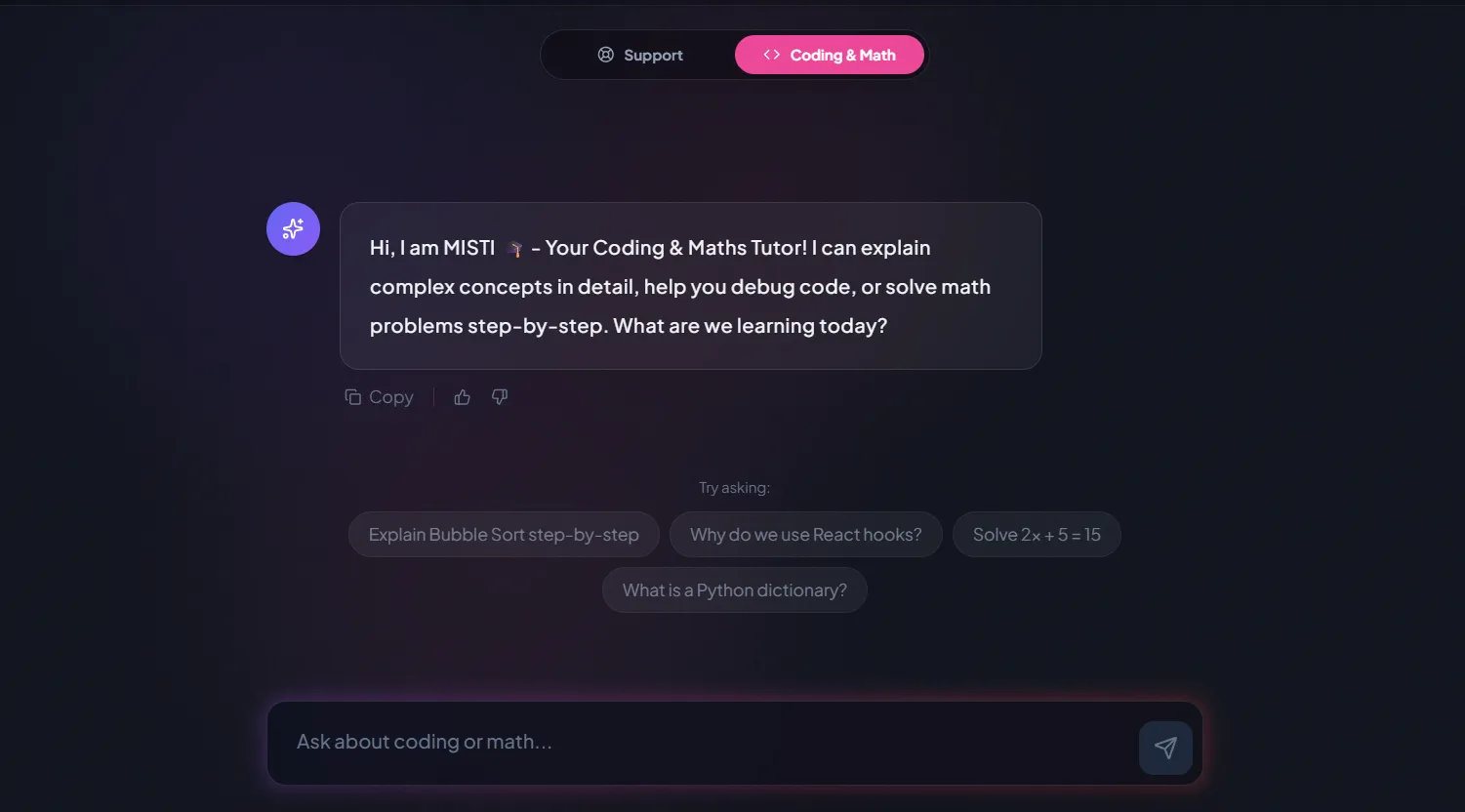
AI and ML
A chatbot that answers mathematics and programming questions, built and deployed by a student.
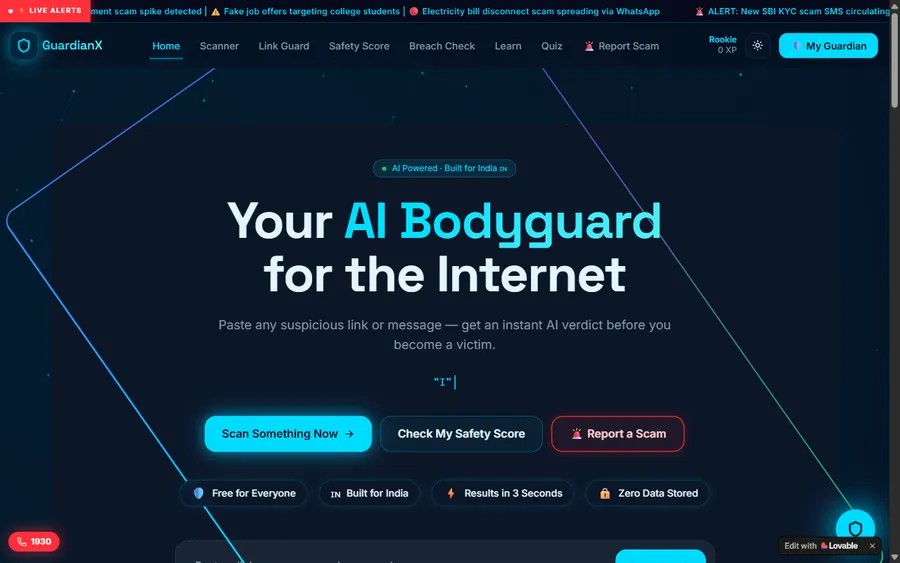
AI and ML
An assistant that helps a young person recognise unsafe situations online.
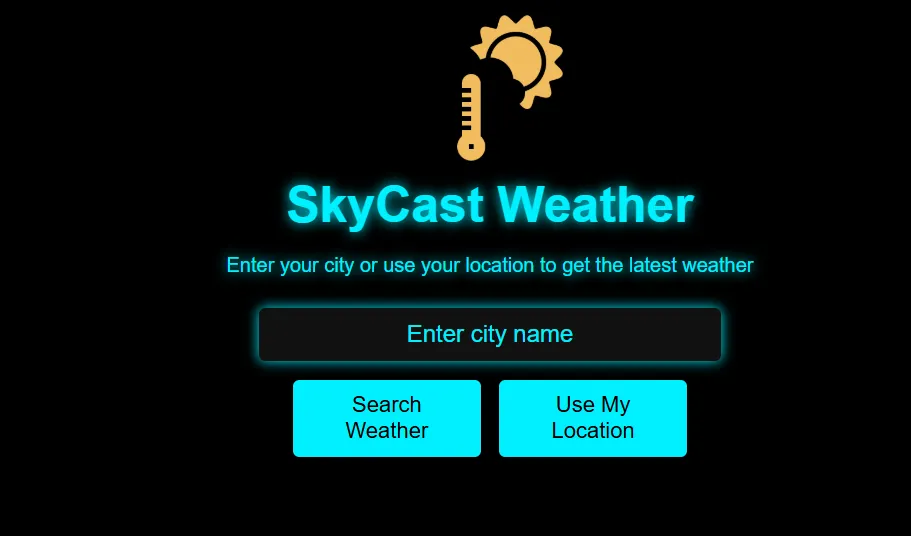
Web app
A weather forecasting site with live conditions for any location.
Fees
A single monthly fee in US dollars, the same in every country outside India. There is no enrolment charge and no term contract, so a month can be the last one whenever exams or a placement get in the way. The Copilot Studio course is one to one only and uses the one-to-one fee.
Free first class
USD 0
no card required
Group batch
USD 100
a month, billed in US dollars
One to one
USD 150
a month, billed in US dollars
What families say
Word for word from Google: reviews left by our students and their families.
★★★★★
"The one step solution for my son. Modern Age Coders make learning coding so simple that kids love it. The teachers explain complex concepts clearly with practical exercises and interactive content."
Ria Mukherjee
Parent
★★★★★
"Modern Age Coders has been a game-changer for me. I struggled to grasp IT concepts and coding before joining, but their classes transformed everything. I can now confidently write complex programs with ease."
Samriddha Mondal
Student
★★★★★
"One of the most wonderful education centres out there. Education is not limited to school syllabus but focuses on skill development."
Vansh Agarwal
Student
★★★★★
"My child Dhairya is really enjoying the Modern Age Coders classes. This is his first online class and he eagerly looks forward to it. I can already see his improvement, and the teachers are very cooperative."
Sonam Oswal
Parent of Dhairya
★★★★★
"Modern Age Coders have wonderful teachers who teach in a clear, easy and practical way. The teacher boosts students' confidence and inspires them to learn without hesitation."
Sonu Goyal
Parent
★★★★★
"I highly recommend this computer coding class! The teachers are incredibly knowledgeable and passionate about coding."
Ritu Kedia
Parent
Questions from students
It can help you stand out, but no course guarantees a job. Employers in the ISE survey expect AI to reshape entry-level roles and value critical thinking and AI literacy; a tested agent you can explain is evidence of both.
Yes. In the ISE Student Development Survey 2026, two-thirds of employers believed graduates and apprentices were using AI to misrepresent their skills, up from around half in 2025.
No. We never write, edit, debug or review anything submitted for assessment. The agent you build with us is a separate personal project.
Only if your module's rules allow it, and you should acknowledge it as your university requires. Ask your module leader; rules often differ between modules.
No. Agents are useful in economics, engineering, the sciences and the humanities alike. Some Python helps for the engineering route, and the Python course can come first.
A public repository with a commit history, a README with the agent's purpose and known failures, a test set with a pass rate, and practice explaining it all out loud.
No, it is taught one to one only. The other courses on this page run in groups of five to ten or one to one.
Not for most of the course. The Codex and Claude Code course needs your own paid Claude and ChatGPT subscriptions, bought directly from those companies.
The first class is free. After that a group place is USD 100 a month and one-to-one lessons USD 150 a month, with no enrolment fee and no term contract.
Weekday evenings or weekends in UK time, fixed in the free class. Our teachers are four and a half hours ahead of the UK in summer and five and a half in winter.
Elsewhere on this site
For working adults, for the models underneath, and for building in public.
Agents at work, with the UK rules on automated decisions.
How models are measured and assured.
Owning the code an assistant writes.
Where to take a finished project.
The language underneath agent work.
All of our UK pages.
Start here
Leave a number and we will call at a time that suits your timetable. Bring an idea, even a vague one; you will leave with a scoped first agent, a list of what it must never do, and a sense of which course fits.
Want to look around first? See how our lessons work, browse every course, or look at projects students have finished.
WhatsApp us · +91 91233 66161 · contact@modernagecoders.com
WhatsApp works well from a UK number and usually gets the quickest reply. We are an Indian team, so the number begins +91; there is no UK campus or office.