Complete Generative AI Masterclass
The modern AI stack, engineered rather than prompted at: LLMs understood, RAG built properly, agents shipped with guardrails, in ten honest months.
Syllabus updated August 2026
Questions? WhatsApp +91 91233 66161 or email connect@modernagecoders.com
Recordings are free with a Google sign-in. These recordings show how we teach, not the exact syllabus of this course.
Our promise
The world's best learning experience, open to everyone.
- World-class instructorsEvery class is taught by an instructor who specialises in that exact field.
- No compromise on qualityEvery lesson, project and piece of feedback is held to the highest standard.
- Education for everyoneLearners aged 6 to 67, from first-time beginners to working professionals, in 25+ countries.
If you want the highest quality, Modern Age Coders is the right choice.
Book a Priority DemoHow long this course takes
This course runs 10-12 months (40-48 weeks) at 2 live classes/week + 5-6 hours practice. The range allows for background and pace: a complete beginner uses the full span, and a student with prior knowledge finishes sooner. The syllabus below is planned to the shorter end, with margin kept for revision.
For personalised duration planning, call +91 91233 66161 and we'll map a schedule to your goals.
At a glance
- Who it is for
- Complete beginner (18+); Python and the maths are built inside the course. Age: 18+; college students, graduates and working professionals.
- Prerequisites
- None required; Python is built in phase 1. Existing developers move faster and go deeper School mathematics; the working maths is rebuilt in month 2
- Format
- Live, interactive classes with a real instructor, never pre-recorded videos. Live classes run about one hour.
- Language
- English or Hindi, depending on the batch.
- Duration
- 10-12 months (40-48 weeks)
- Weekly commitment
- 2 live classes/week + 5-6 hours practice
- Class size
- Group batches of 5 to 10 students, mini batches of 3 to 4, or 1-on-1.
- Certificate
- Certificate from Modern Age Coders, awarded on passing the final exam
- Watch first
- Free recordings of real classes for ages 13 and up, free with a Google sign-in. These recordings show how we teach, not the exact syllabus of this course.
- Live demo
- Optional. Enrol directly on this page, or book a Priority Demo: a full live class of about 45 to 60 minutes with a mentor reserved for you.
- Questions
- WhatsApp +91 91233 66161 or email connect@modernagecoders.com.
How we teach
Deep understanding. Real projects. Expert guidance.
Learn coding, AI and maths through careful explanations, practical demonstrations, and hands-on problem-solving. Our instructors guide you from the foundations to advanced ideas, helping you understand what happens, why it happens, and how to build it yourself.
You will explore concepts step by step, write and improve code, investigate mistakes, ask questions, and apply your knowledge to meaningful projects. Lessons are designed around active participation, thoughtful feedback, and growing independence.
Expert-led live teaching, with practical participation built into every lesson.
- Students explain their thinking.
- Instructors demonstrate, then guide practice.
- Learners code, solve, or build during lessons.
- Questions and misconceptions get attention.
- Assignments receive useful feedback.
- Progress is checked before advancing.
How to join Generative AI Course: LLMs, RAG and AI Agents
Four steps from this page to the first class. See a full class first with a Priority Demo, or choose a plan and enrol today.
Rated 4.9 across 547 Google reviews. Monthly billing, cancel any time.
How enrolment works
See a full class first (optional)
Book a Priority Demo: a live class of about 45 to 60 minutes with a mentor reserved for you, today or tomorrow. After the class the mentor sends a written skill report and a personal learning roadmap on WhatsApp. If you enrol, the demo fee is adjusted against your first month's fee. Share your demo Order ID with us on WhatsApp and we take it off.
Book a Priority DemoDemo fee ₹499Choose a plan
Group batch (5 to 10 students), mini batch (3 to 4 students, India only) or 1-on-1 with your own mentor. Every plan is live online, and each class runs about one hour. The cards below show classes per week and the monthly fee in your currency.
Enrol and pay the first month
Press Enrol Now on your plan, fill in the student's name, email and phone, and pay through secure Razorpay checkout: UPI, cards or net banking in India, and debit or credit card from any other country.
Fix your class timings
After payment, message us on WhatsApp or call +91 91233 66161 with the student's name, the course and your preferred time slot. We confirm the batch, send the class link and schedule the first class at your chosen time.
Billing is monthly and you can cancel any time.
International Students (Outside India)
Billed monthly in US dollars, the same price in every country. Contact us with any questions.
Questions before you enrol? Talk to our team.
Ask about class timings, the right level for your child, what they need to know already, or payment. Parents and adult learners can reach us on WhatsApp, by email or by phone.
Program Overview
Generative AI created a new engineering discipline in record time, and most courses responded with either hype or screenshots. This masterclass responds with engineering. It starts from zero, Python, the working mathematics, a fast pass through classical ML and neural networks, because LLM engineering without foundations is prompt-guessing with extra steps. Then it goes where the real demand is: transformer architecture understood deeply enough to reason about, LLM APIs across providers, prompt engineering with evaluation harnesses, embeddings and vector search, retrieval-augmented generation built and hardened twice, fine-tuning judgment, open-weight models run locally, and AI agents, architecture, tools, memory and the guardrails that keep them honest.
The production phase is what separates this course from tutorials: application architecture, observability, security against prompt injection, cost control, and a capstone shipped behind an API and defended. What it refuses to fake: training frontier models from scratch, research careers and startup playbooks are mapped honestly as next roads, not sold as weeks.
The pace is real: ten months at two live classes a week plus five to six hours of practice, with two more in hand when needed. Problem sets after every class, monthly mixed reviews, phase exams, and a final exam that decides the certificate, with focused revision and a free retest. Real systems, real evaluation, depth over dopamine.
What Makes This Program Different
- Foundations first, honestly: Python, maths and ML basics built in-course, because prompt-guessing is not engineering
- RAG built twice: once to work, once to survive real documents, real users and real failure modes
- Agents with guardrails: architecture, tools and memory, plus the security layer most courses skip
- Provider-agnostic: OpenAI-class, Claude-class, Gemini-class and open-weight models, patterns over brand loyalty
- Evaluation harnesses everywhere: generated output scored honestly, never eyeballed
- Real assessment: weekly problem sets, monthly mixed reviews, and a final exam that decides the certificate, with focused revision and a free retest
Your Learning Journey
Career Progression
Detailed Course Curriculum
Explore the complete week-by-week breakdown of what you'll learn in this comprehensive program.
Topics Covered
- What is Artificial Intelligence? History and evolution
- Types of AI: Narrow AI, General AI, Superintelligence
- Machine Learning vs Deep Learning vs Generative AI
- Generative AI revolution: GPT, current image APIs, Stable Diffusion
- AI career paths and opportunities in 2026 and beyond
- Why Python for AI? Python ecosystem overview
- Installing Python (3.10+) and setting up environment
- Development environments: Jupyter Notebook, VS Code, Google Colab
- Python basics: variables, data types, operators
- Control structures: if-else, loops (for, while)
Projects You Build
- Text-based calculator program
- Todo list application
- File organizer script
- Simple data analyzer from CSV
- Web scraper basics with requests
- Command-line application
- Personal expense tracker
- Password generator and validator
Practice & Assignments
Daily: 45 min Python practice, solve 10-15 problems on HackerRank/LeetCode
Topics Covered
- Object-Oriented Programming in Python
- Classes and objects: __init__, self
- Inheritance and polymorphism
- Magic methods: __str__, __repr__, __len__
- Decorators and their usage
- Lambda functions and functional programming
- Map, filter, reduce functions
- Generators and iterators
- Context managers and 'with' statement
- Regular expressions for text processing
Projects You Build
- Data analysis pipeline for CSV files
- Student grade analyzer with Pandas
- Weather data visualizer
- E-commerce sales dashboard
- Stock price analyzer and plotter
- Text file analyzer with regex
- Custom data class library
- API wrapper class with error handling
Practice & Assignments
Solve 30 Python problems, analyze 5 real-world datasets
Assessment
Month 1 check: a Python data task live, plus a take-home mixing everything so far
Topics Covered
- Why math matters for AI and ML
- Linear Algebra: vectors and vector operations
- Dot product and cross product
- Matrices and matrix operations
- Matrix multiplication and transposition
- Identity matrix and inverse matrix
- Eigenvalues and eigenvectors (intuition)
- Calculus: functions and limits
- Derivatives: concepts and rules
- Chain rule and partial derivatives
Projects You Build
- Vector operations visualizer
- Matrix calculator with NumPy
- Gradient descent implementation from scratch
- Probability distribution plotter
- Coin flip simulator with statistics
- Linear regression using gradient descent
- Simple optimization problems solver
- Derivative calculator for basic functions
Practice & Assignments
Solve 40 math problems relevant to ML, implement algorithms
Topics Covered
- Statistics for data science
- Descriptive statistics: mean, median, mode
- Variance and standard deviation
- Correlation and covariance
- Hypothesis testing basics
- P-values and statistical significance
- Central Limit Theorem
- Confidence intervals
- Linear regression: mathematical foundation
- Cost functions and loss functions
Projects You Build
- Statistical analyzer for datasets
- Hypothesis testing tool
- Correlation matrix visualizer
- Simple linear regression implementation
- Cost function visualizer
- PCA implementation from scratch
- Data distribution analyzer
- A/B testing simulator
Practice & Assignments
Analyze 10 datasets statistically, implement core algorithms
Assessment
Month 2 check: vectors, gradients and probability in code, plus mixed review
Topics Covered
- What is Machine Learning? Formal definition
- Types of learning: Supervised, Unsupervised, Reinforcement
- Machine learning workflow: data, model, evaluation
- Training, validation, and test sets
- Overfitting and underfitting
- Bias-variance tradeoff
- Introduction to scikit-learn library
- Linear regression with scikit-learn
- Logistic regression for classification
- Decision trees: intuition and implementation
Projects You Build
- House price predictor (linear regression)
- Email spam classifier (logistic regression)
- Iris flower classifier (decision trees)
- Handwritten digit recognizer (KNN)
- Customer churn predictor
- Movie recommendation system basics
- Credit card fraud detection
- Student performance predictor
Practice & Assignments
Build 15 ML models, solve Kaggle beginner competitions
Topics Covered
- From ML to Deep Learning: why neural networks?
- Perceptron: the building block
- Multi-layer perceptron (MLP) architecture
- Activation functions: sigmoid, tanh, ReLU, Leaky ReLU
- Forward propagation step-by-step
- Loss functions: MSE, cross-entropy
- Backpropagation algorithm intuition
- Gradient descent and its variants (SGD, Adam)
- Learning rate and hyperparameters
- Introduction to TensorFlow and Keras
Projects You Build
- Neural network from scratch in NumPy
- MNIST digit classifier with Keras
- Fashion MNIST classifier
- Binary classification with neural network
- Multi-class classification problem
- Regression with neural networks
- Simple image classifier
- Neural network hyperparameter tuning
Practice & Assignments
Build 12 neural networks, compare frameworks
Assessment
Phase 1 exam: train and evaluate a small model live, plus a written mixed paper
Topics Covered
- Limitations of RNNs and LSTMs
- Attention mechanism: intuition and math
- Self-attention and multi-head attention
- Positional encoding in transformers
- Transformer architecture: encoder-decoder
- BERT: bidirectional encoder representations
- GPT architecture: decoder-only transformers
- Tokenization: BPE, WordPiece, SentencePiece
- Embedding layers and embedding spaces
- How GPT generates text: autoregressive generation
Projects You Build
- Attention mechanism visualizer
- Tokenizer comparison tool
- Text generation with Hugging Face
- Sentiment analysis with BERT
- Text classification with transformers
- Named Entity Recognition (NER) system
- Question answering system
- Text summarization tool
Practice & Assignments
Implement attention from scratch, use 10+ transformer models
Topics Covered
- OpenAI API overview and capabilities
- Getting API keys and authentication
- Current OpenAI chat models, and how to choose between them
- Chat completions API: messages and roles
- System, user, and assistant messages
- Completion parameters: temperature, max_tokens, top_p
- Streaming responses for real-time output
- Function calling with frontier models
- JSON mode for structured outputs
- Vision API: frontier modelsV for image understanding
Projects You Build
- ChatGPT clone with OpenAI API
- AI content generator dashboard
- Function calling chatbot
- Image analyzer with GPT-4V
- AI image generator web app
- Voice-to-text transcription tool
- Semantic search engine
- AI content moderation system
Practice & Assignments
Build 15 OpenAI API applications
Assessment
Month 4 check: the same task solved through two providers, compared honestly, plus mixed review
Topics Covered
- Prompt engineering as a discipline
- Anatomy of effective prompts
- Zero-shot, one-shot, few-shot learning
- Chain-of-Thought (CoT) prompting
- Tree of Thoughts (ToT) technique
- Self-consistency prompting
- Role prompting and persona design
- Instruction tuning concepts
- Prompt templates and variables
- Output formatting and constraints
Projects You Build
- Prompt library and template system
- Chain-of-Thought problem solver
- AI tutor with CoT reasoning
- Code generator with prompts
- Creative writing assistant
- Structured data extractor
- Multi-step task planner
- Prompt testing and evaluation framework
Practice & Assignments
Create 100+ optimized prompts for various use cases
Topics Covered
- What are embeddings? Semantic representations
- Word2Vec, GloVe, and modern embeddings
- OpenAI embeddings (text-embedding-ada-002)
- Sentence embeddings and document embeddings
- Cosine similarity and semantic search
- Vector databases: purpose and architecture
- Pinecone: managed vector database
- Weaviate: open-source vector DB
- Chroma: simple vector store
- Qdrant: performance-focused vector DB
Projects You Build
- Semantic search engine for documents
- Similar article finder
- Customer support ticket classifier
- Product recommendation system
- Duplicate detection system
- Embedding visualizer (t-SNE/UMAP)
- Multi-language semantic search
- Knowledge base with vector search
Practice & Assignments
Build 10 vector database applications
Assessment
Month 5 check: build a semantic search over real documents, plus mixed review
Topics Covered
- Introduction to LangChain framework
- LangChain architecture and components
- LLMs and Chat Models in LangChain
- Prompt templates and prompt engineering
- Output parsers: structured data from LLMs
- Chains: sequential processing
- LLMChain, SimpleSequentialChain, SequentialChain
- Memory types: ConversationBufferMemory, ConversationSummaryMemory
- Conversation chains with memory
- Document loaders: PDF, CSV, web pages
Projects You Build
- Conversational chatbot with memory
- Document Q&A system with LangChain
- PDF analyzer and summarizer
- Web scraper with AI analysis
- Multi-step reasoning chain
- Structured data extraction pipeline
- Conversation summarizer
- Knowledge base chatbot
Practice & Assignments
Build 15 LangChain applications
Topics Covered
- What is RAG? Why RAG over fine-tuning?
- RAG architecture: retrieval + generation
- Building basic RAG pipeline
- Document preprocessing for RAG
- Chunking strategies: fixed-size, semantic
- Embedding generation for documents
- Vector store population
- Retrieval strategies: similarity search, MMR
- Reranking retrieved documents
- Context compression techniques
Projects You Build
- Enterprise documentation Q&A system
- Academic paper search and summarization
- Legal document analyzer
- Customer support knowledge base
- Code documentation assistant
- Research paper recommendation system
- Meeting notes Q&A system
- Email archive search with AI
Practice & Assignments
Build 10 RAG applications for different domains
Assessment
Phase 2 exam: a working RAG system with an evaluation harness, defended, plus a cumulative paper
Topics Covered
- Advanced RAG architectures
- Self-RAG: self-reflective retrieval
- Corrective RAG (CRAG)
- Agentic RAG with LangGraph
- Multi-document RAG systems
- Hierarchical retrieval strategies
- Graph-based RAG
- Conversational RAG with memory
- RAG with structured data (tables, charts)
- Multimodal RAG: text + images
Projects You Build
- Advanced enterprise RAG system
- Multi-source RAG pipeline
- Conversational RAG with context
- Evaluation framework for RAG
- Self-improving RAG system
- Multimodal document understanding
- RAG-powered coding assistant
- Production-ready RAG API
Practice & Assignments
Build and optimize 8 advanced RAG systems
Topics Covered
- What are AI agents? Autonomous systems
- Agent types: simple reflex, goal-based, utility-based
- Perceive-Think-Act loop
- ReAct: reasoning and acting
- Plan-and-Execute agents
- Cognitive architectures for agents
- Agent memory systems
- Short-term vs long-term memory
- Semantic memory and episodic memory
- Working memory implementation
Projects You Build
- Autonomous research agent
- Data analysis agent
- Code generation and debugging agent
- Travel planning agent
- Email management agent
- Content creation agent
- Personal productivity agent
- Multi-step task automation agent
Practice & Assignments
Build 12 AI agent systems
Assessment
Month 7 check: an agent that uses two tools reliably, plus mixed review
Topics Covered
- Multi-agent systems (MAS)
- Agent communication protocols
- Collaborative agents vs competitive agents
- Agent coordination and cooperation
- Hierarchical agent architectures
- AutoGPT and BabyAGI patterns
- Task decomposition and planning
- Sub-goal generation
- Agent self-evaluation and reflection
- MetaGPT and role-playing agents
Projects You Build
- Multi-agent research team
- Collaborative writing agents
- Software development agent team
- Customer service agent system
- Agent-based simulation
- Hierarchical task planner
- Self-improving agent system
- Production multi-agent platform
Practice & Assignments
Build 8 multi-agent systems
Topics Covered
- What is fine-tuning? When to fine-tune?
- Fine-tuning vs prompt engineering vs RAG
- Types of fine-tuning: full, parameter-efficient
- Transfer learning for LLMs
- Dataset preparation for fine-tuning
- Data annotation and labeling
- Instruction tuning datasets
- Supervised fine-tuning (SFT)
- Training loops and optimization
- Loss functions for language models
Projects You Build
- Fine-tune a current OpenAI model for customer support
- Domain-specific chatbot fine-tuning
- Code completion model fine-tuning
- Fine-tuned model for legal documents
- Medical terminology fine-tuning
- Custom classifier with fine-tuning
- Sentiment analysis fine-tuned model
- Fine-tuning evaluation framework
Practice & Assignments
Fine-tune 8 models for different domains
Assessment
Phase 3 exam: a guarded agent system defended end to end, plus a cumulative written paper
Topics Covered
- Open source LLM landscape
- Llama 2 and Llama 3 models
- Mistral and Mixtral models
- Falcon, MPT, and BLOOM
- Model cards and model documentation
- Downloading models from Hugging Face Hub
- Model quantization: GGUF, GPTQ, AWQ
- Running LLMs locally with Ollama
- llama.cpp for efficient inference
- vLLM for production serving
Projects You Build
- Local LLM deployment with Ollama
- Quantized model serving API
- Multi-model inference server
- LLM benchmarking suite
- Optimized inference pipeline
- Custom model hosting solution
- Edge deployment of LLMs
- Inference cost calculator
Practice & Assignments
Deploy and optimize 10 open source models
Topics Covered
- Designing AI-powered applications
- Microservices architecture for AI
- FastAPI for ML/AI APIs
- Request validation and error handling
- Asynchronous processing with Celery
- Message queues: RabbitMQ, Redis
- Background tasks for AI workloads
- Caching strategies for AI apps
- Redis for response caching
- Database integration: PostgreSQL, MongoDB
Projects You Build
- Production AI API with FastAPI
- Asynchronous AI processing system
- Cached AI inference service
- Multi-user AI application
- AI API with usage tracking
- Webhook-based AI integration
- Client SDK for AI service
- Complete AI backend system
Practice & Assignments
Build 10 production-ready AI APIs
Assessment
Month 9 check: a production-readiness review of your own system, plus mixed review
Topics Covered
- AI ethics fundamentals
- Bias in AI: sources and mitigation
- Fairness metrics and evaluation
- Transparency and explainability
- LIME and SHAP for model interpretation
- Privacy in AI: data protection
- Differential privacy
- Federated learning basics
- AI safety and alignment
- Constitutional AI principles
Projects You Build
- Bias detection tool for models
- Explainable AI dashboard
- Content moderation system
- Deepfake detector
- Privacy-preserving AI application
- AI impact assessment tool
- Responsible AI checklist generator
Practice & Assignments
Evaluate and improve fairness in all projects
Topics Covered
- Two focused weeks: a complete GenAI system, RAG, agent or hybrid
- Instructor checkpoints and honest scope cuts
- The evaluation harness built before the excitement
- Shipped behind an API with observability and guardrails
- A system card a skeptic could audit
Projects You Build
- The capstone: a deployed, evaluated, guarded GenAI system
Practice & Assignments
Daily build log; a working deployed system at all times
Topics Covered
- Presenting the capstone: live system plus the hardest failure story
- A full-course spiral review before the exam
- The honest map of next roads: enterprise agents, coding agents, deep ML and research
- Where our Copilot Studio and Codex/Claude Code courses continue the applied layer
Projects You Build
- Demo day presentation delivered to the batch
Assessment
FINAL EXAM: a practical GenAI engineering task plus a written paper with questions mixed from every phase. Passing earns the certificate; falling short earns a focused revision plan and a free retest
Projects You'll Build
Build a professional portfolio with 20+ working GenAI builds, crowned by a deployed, evaluated capstone system real-world projects.
Weekly Learning Structure
Certification & Recognition
Technologies & Skills You'll Master
Comprehensive coverage of the entire modern web development stack.
Support & Resources
Career Outcomes & Opportunities
Transform your career with industry-ready skills and job placement support.
Prerequisites
Who Is This Course For?
Career Paths After Completion
Salary & Market Context
The ranges below are general market salary bands for these roles in India and abroad, drawn from public industry data. They are shown for career context only and are not a promise or guarantee of income. Actual pay depends on your skills, experience, location, and the job market.
Course Guarantees
Real students. Real moments. Real joy.
These are our actual student meetups. No stock photos, no filters. Swipe through and meet the community you'll be joining.







































What families say
Straight from the parents and students who learn with us. Rated 4.9 across 547 Google reviews.
“Mivaan enjoys the class. He understands the concepts and completes his tasks with excitement. He started taking interest in coding… truly amazing class.”
“I absolutely love it here! I made new friends and learned important valuable coding skills while having the fun of my life. It's not just coding here, it's outings, bonding and most importantly preparing you for your future. Definitely five stars.”
“What stands out most is how excited my son is before every class. He looks forward to learning, problem-solving, and sharing what he's built. I've noticed a big boost in his confidence!”
“Modern Age Coders has been a game-changer for me! I struggled to grasp IT concepts and coding before joining, but their classes transformed everything. I'm now the topper in my class and can confidently write complex programs with ease.”
“Modern Age Coder have wonderful teachers who teach in a clear, easy and practical way. The teacher boosts students' confidence, keeps them updated with technology, and inspires them to learn without hesitation.”
“The one step solution for my son. Modern Age Coders make learning coding so simple that kids love it.”
“Coding classes here make learning very interesting and conceptual. The teachers teach us in a very easy-to-understand and efficient manner.”
“One of the most wonderful education centres out there. Education is not limited to school syllabus but focuses on skill development. Learning here has been a wonderful journey and still continuing.”
“I highly recommend this computer coding class! The teachers are incredibly knowledgeable and passionate about coding. They make every session engaging and insightful.”
“My child Dhairya is really enjoying the Modern Age Coder IT classes. This is his first online class, and he eagerly looks forward to it.”
“Very good classes. Don't worry about coding. They teach the best, especially Shivam sir.”
“Very good classes. Makes learning very easy and interactive.”
Hear it from our students
Real parents and students in their own words, on our public YouTube channel.
Straight answers about Generative AI Course: LLMs, RAG and AI Agents
- Who should take this course?
- Complete beginner (18+); Python and the maths are built inside the course. Age: 18+; college students, graduates and working professionals. It suits professionals aiming at the llm-engineering job family, the fastest-growing in software; software engineers adding the genai layer properly, past the tutorial plateau; founders and makers who want their ai product built on engineering, not vibes.
- What will they learn and build?
- Generative AI created a new engineering discipline in record time, and most courses responded with either hype or screenshots. This masterclass responds with engineering. It starts from zero, Python, the working mathematics, a fast pass through classical ML and neural networks, because LLM engineering without foundations is prompt-guessing with extra steps.
- How deeply are topics covered?
- The course runs 10-12 months (40-48 weeks) at 2 live classes/week + 5-6 hours practice, across 4 phases listed week by week in the syllabus below. A structured, well-paced curriculum taught step by step, with classwork in every session and problem sets after every class.
- Who teaches it?
- Modern Age Coders mentors, who teach the live classes themselves. You can watch them at work in the free class recordings before you decide.
- How do practice, feedback and assessment work?
- Monthly mixed reviews and a final exam that decides the certificate: real systems, really evaluated. Doubt support between classes over WhatsApp, so you are never left stuck. A certificate you earn by passing the final exam, with a free retest after revision if needed.
- What does it cost?
- Three monthly plans: a group batch, a mini batch and 1-on-1. Prices are shown in your currency in the plans section. Monthly billing, cancel any time.
- When can classes take place?
- Live classes are scheduled around your week. Group batches meet at a fixed weekly slot; 1-on-1 students choose their own. International students are scheduled in their own timezone. Ask on WhatsApp for the current slots.
- Can I watch the teaching before deciding?
- Yes. Full recordings of real 13 and up classes are free to watch, free with a Google sign-in. These recordings show how we teach, not the exact syllabus of this course. Some classes are in English and some in Hindi; everyone follows at their own pace. Watch a class end to end, like you are in it. Sessions are interactive and each moment builds on the last.
- Can I enroll without a live demo?
- Yes. Choose a plan on this page and enrol directly; a demo is not required. If you would like to see a full class with a mentor first, book a Priority Demo.
- How do I reach you with a question?
- WhatsApp +91 91233 66161, email connect@modernagecoders.com, or call +91 91233 66161. Tell us the student's age and what they have learned so far, and we will point you to the right plan and batch.
Common Questions About Generative AI Course: LLMs, RAG and AI Agents
Get answers to the most common questions about this comprehensive program
Still have questions? We're here to help!
Contact UsWhy Generative AI Is an Engineering Discipline Now
The prompt-tips era is over. Companies shipping GenAI in 2026 hire people who can build retrieval that survives messy documents, agents that fail safely, evaluation harnesses that catch regressions, and systems whose costs are understood before the invoice arrives. That is engineering, and it is teachable.
This masterclass builds it in the honest order: foundations first, because transformer intuition without mathematics is superstition; then the LLM core, retrieval and agents, each with evaluation built in; then production, observability, security and cost, the layer that separates demos from systems.
It ends the way real learning should: a capstone system deployed and defended, a final exam that decides the certificate, and a truthful map of the roads beyond, from enterprise agents to deep ML research.
Related Courses You May Like
Continue your learning journey with these recommended programs
 AI & Automation
AI Tools Mastery Course: ChatGPT, Claude & Automation
AI tools course for adults and professionals: prompt engineering with ChatGPT and Claude, image and ...
Explore Course Python Certification
PCAP Certification Prep: Certified Associate in Python Programming
Live online PCAP-31-03 preparation covering every exam objective: modules and packages, exceptions, ...
Explore CourseRelated Articles & Guides
Deepen your knowledge with these hand-picked articles
 Artificial Intelligence
14 min read
Artificial Intelligence
14 min read
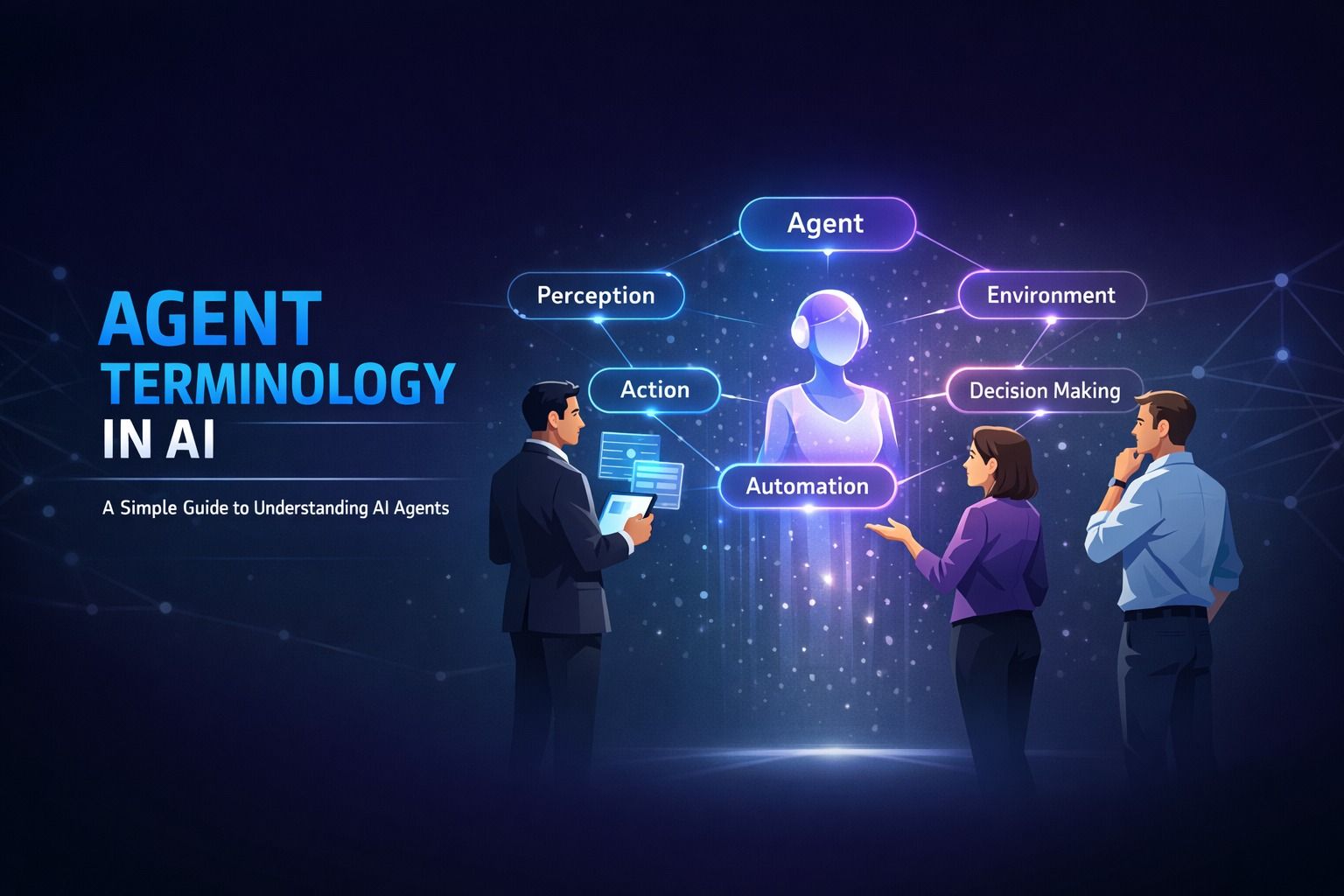
Agent Terminology in AI: A Simple Guide to Understanding AI Agents
Decode AI agent terminology in ai with this beginner-friendly guide. Learn about autonomous agents, ...
Read Article Artificial Intelligence
16 min read
Artificial Intelligence
16 min read
What is the Responsibility of Developers Using Generative AI? A Complete Guide
Learn the essential responsibilities of developers using Generative AI. Complete guide covering secu...
Read ArticleReady to start Generative AI Course: LLMs, RAG and AI Agents?
Book a Priority Demo to see a full live class with a mentor reserved for you, today or tomorrow. Or choose a plan and enrol now.
Questions? WhatsApp +91 91233 66161 or email connect@modernagecoders.com