UK / TU1 / 01
Scratch, properly
The blocks stage done well, so the next stage has something to stand on.
Open the syllabusUnited Kingdom · Tuition · Ages 6 to 67
On 21 January 2026 something changed that most parents looking for a tutor have not yet heard about. Until then, a self-employed tutor could not apply for their own DBS check, because the system was built around organisations doing the applying. Now they can, and guidance for parents from the Government, updated in September, tells them how to ask. That turns choosing a tutor from a matter of price and reviews into something with a checkable step in it. This page explains the change, sets out the four very different things the word tutor covers in the UK, and then states our own position, which includes a limitation we would rather say out loud than let you discover halfway through.
Live teaching since 2020 · 10,000+ students · Group lessons by level, or one to one
In short
The word tutor covers four different arrangements in the UK and they are not equivalent. A self-employed tutor a parent finds and pays directly has, since 21 January 2026, been able to apply for an Enhanced DBS check and can be asked to share it. An agency, a platform and a teaching company each sit differently again. We are the fourth kind: a company whose teachers are employed and work from India. GOV.UK states that DBS "cannot access criminal records held overseas", so a UK check on our teachers would show nothing and we do not claim one. What we offer instead is lessons on a link a parent can join at any time, small groups as the default, work saved where a family can see it, and a named teacher who stays the same. The first lesson is free; after that a group place is USD 100 a month and one-to-one teaching USD 150.
Start here
The three requests that arrive most often with the word tutor attached. Each card opens a full syllabus.
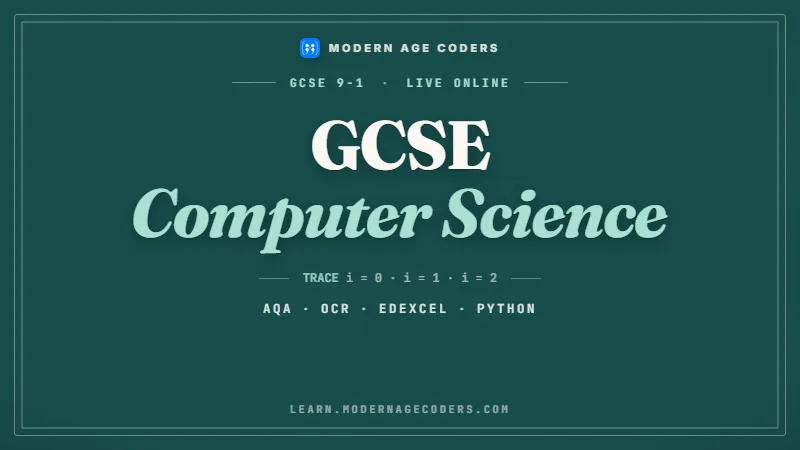
TUTOR / 01
Taught to whichever board a school has actually chosen, for students who are behind or want to be ahead.
Open the syllabus →
TUTOR / 02
The usual request when a school has taught blocks for three years and a typed language has arrived suddenly.
Open the syllabus →
TUTOR / 03
For primary-age children whose school covers computing lightly, and who want to build something of their own.
Open the syllabus →What changed in January
This is recent enough that many tutors have not caught up with it either. Everything below is quoted from GOV.UK.
The DBS system was built around organisations. An employer applied, the certificate came back, the employer decided. A tutor working for themselves had nobody to apply on their behalf, which left a whole category of people working with children who could not be checked even if they wanted to be.
Guidance published on 16 January 2026 changed that, and states that it "is live from 21 January 2026". Self-employed people and personal employees can now apply for an Enhanced DBS check, and where the role is eligible, one that includes the children's barred list, through a DBS Umbrella Body.
In September the Government updated its leaflet for parents, and it goes as far as scripting the conversation. Its suggested wording is: "Before we go ahead, I'd love to see your DBS certificate. I understand you can now apply for an Enhanced one - would you be happy to share it?"
The leaflet's own worked example is a maths tutor, where a parent asks about qualifications, experience and references, and the tutor also chooses to share an Enhanced with Children's Barred List certificate.
| Question | The answer |
|---|---|
| Can I apply for a check on my tutor? | No. "Parents and carers cannot apply for a DBS check on behalf of an individual. Where someone is eligible for an Enhanced DBS check, they must apply for it themselves through a DBS Umbrella Body." |
| Can I ask to see one? | Yes, and the leaflet suggests the words to use. |
| What if it shows a bar? | "If a certificate shows that someone is barred from working with children or vulnerable adults, they are legally prohibited from carrying out certain types of regulated activity with that workforce." |
| Does a check cover everything? | No. GOV.UK states that DBS "cannot access criminal records held overseas, so a DBS check may not provide a complete view of an applicant's criminal history, if they have lived outside of the UK." |
| Is a private arrangement regulated activity? | Not necessarily. Regulated activity "excludes any activities carried out in the course of family relationships or as part of any personal, non-commercial relationships." |
undefined
Sources, read 20 September 2026: DBS checks for self-employed people and personal employees, published 16 January 2026; A guide for parents and carers employing self-employed workers or personal employees, updated 17 September 2026; and DBS check requests: guidance for employers, updated 11 September 2026.
Four kinds of tutor
When a parent types online coding tutor, four quite different things come back, and the questions that matter are not the same for each.
| Arrangement | What it is | The question that matters most |
|---|---|---|
| A self-employed tutor | One person, found and paid directly by the family | Would you share your DBS certificate, and can I take a reference from a family you teach now? |
| An agency | A business that matches you to a tutor and handles the money | Who employs the tutor, who checked them, and what happens if the match does not work? |
| A marketplace or platform | A listing site where individuals advertise and you choose | What has the platform verified itself, as opposed to what a tutor has typed into a profile? |
| A teaching company | An organisation with its own teachers, curriculum and lesson structure | Who exactly will teach my child, will it be the same person each week, and can I see the lessons? |
There is a second difference that matters more for coding than for most subjects. A maths tutor can usefully work on whatever the school set this week. A coding tutor who only does that produces a student who can finish homework and cannot start anything, because programming skill is cumulative and homework is not.
The useful shape for coding is a sequence that goes somewhere, with the school's work handled inside it rather than instead of it. That is a class, even when it is delivered to one person.
So the questions worth asking a coding tutor are slightly different. What will my child be able to build in three months that they cannot build now? What happens in a lesson when their code does not work, and who does the typing? Will anybody read the code, or only the output?
Our answers to those are on how we teach, and the seven checks on the choosing a class page apply to a tutor just as well.
undefined
Our honest position
This section exists because we would rather lose a booking here than have a parent find out later.
We are a teaching company. Our teachers are employed by us and they work from India. That has real advantages, including a fixed timetable that never shifts with British clock changes and small groups that actually fill at a sensible hour, and it has one clear limitation.
A DBS check searches records held in the United Kingdom. GOV.UK states plainly that DBS "cannot access criminal records held overseas, so a DBS check may not provide a complete view of an applicant's criminal history, if they have lived outside of the UK". For a teacher who has always lived in India, a UK check would return nothing and would mean nothing. We therefore do not claim DBS-checked teachers, and any coding company with overseas staff that does should be asked exactly what it checked.
What we do instead is structural rather than documentary, and a parent can verify all of it in the first week.
Lessons happen on a link. A parent can join any lesson at any time without asking, and we never treat that as an intrusion. Small groups are the default rather than one-to-one, so a lesson is rarely one adult and one child. Every teacher is named before the first lesson and stays the same. Work is saved where the family can open it, which means you can see what was actually done. And for younger children we ask that an adult is in the house and reachable.
| Question | Our answer |
|---|---|
| Are your teachers DBS checked? | No, and they could not usefully be. They work from India and a UK check cannot see overseas records. We say so rather than use a phrase that sounds like a yes. |
| Can I sit in on a lesson? | Yes, any lesson, without telling us first. The link is the same one your child uses. |
| Will the same person teach every week? | Yes. The teacher is named before the first lesson and changes only if you ask or if they leave. |
| Is one-to-one the default? | No. Small groups of five to ten at one level are the default, and one-to-one is offered where a group would be the wrong room. |
| Can I see what my child has done? | Yes. Finished work is saved where you can open it, and the weekly feedback goes to you as well as to the learner. |
| What if it is not working? | Stop. There is no minimum term, nothing is taken in advance, and we would rather you left after a month than stayed unhappily for a year. |
undefined
Progression
Tuition works best when it is aimed at something specific. These are the four requests that arrive most often, and what each one really needs.
| The request | What is usually behind it | What actually helps |
|---|---|---|
| My child is behind | A school that taught blocks for years and moved to typed code suddenly | A term of short typed programs, slowly, until the keyboard stops being the obstacle |
| My child is bored | A confident learner waiting for the rest of the class | Harder problems rather than more of the same, and a project nobody set them |
| There is an exam coming | A GCSE, National 5, CCEA course or A level closer than it looked | Past material, timed practice and the specific board, not general enthusiasm |
| They want to build something | A game, an app or a site the child has in mind already | A route from that idea to a finished thing, with the boring parts included |
A tutor who only does this week's task produces a student who can finish and cannot begin. School work is handled inside a sequence that goes somewhere, not instead of one.
The full order of topics is on the coding roadmap.
Families who name what they want in the first lesson get further than families who do not, because it changes what the teacher plans.
If the target is an exam, bring the board and the specification. If it is a project, bring the idea.
The catalogue
Grouped by what a family is trying to fix or reach. The free lesson settles which one fits.
UK / TU1 / 01
The blocks stage done well, so the next stage has something to stand on.
Open the syllabusUK / TU1 / 02
The crossing from blocks to a keyboard, taken at a pace that makes it stick.
Open the syllabusUK / TU1 / 03
Breaking problems apart and describing rules aloud, which is the part schools skip.
Open the syllabusUK / TU2 / 01
Theory and programming taught to the board a school has chosen.
Open the syllabusUK / TU2 / 02
The language behind almost every UK specification, taught past the examined parts.
Open the syllabusUK / TU2 / 03
The A level and Higher material, worked on paper before any code is written.
Open the syllabusUK / TU3 / 01
A site with data behind it, put online where other people can use it.
Open the syllabusUK / TU3 / 02
A phone app from sketch to something installable, including the unglamorous parts.
Open the syllabusUK / TU3 / 03
The request behind most children asking for a tutor in the first place.
Open the syllabusHow lessons work
Teachers work from India, where clocks do not change, so the UK sits five and a half hours behind in winter and four and a half in summer. Every slot is agreed and stated in UK time.
After school
The usual slot for school-age learners.
Evening
For sixth formers and adults once the day has finished.
Weekend morning
Longer and calmer, and better for finishing a build.
Parents can sit in on any lesson without arranging it. Same link, no notice needed, and never treated as a problem.
Five to ten learners at one level. One-to-one exists where it genuinely suits the learner, not as the standard product.
Named before the first lesson and kept, because most of the value is in somebody knowing the learner.
Finished projects are saved where the family can see them, which is how a parent knows what happened.
On the learner's actual code, with reasons, sent to the parent as well as the learner.
Nothing is taken in advance and nothing ties you in. Stopping takes one message.
Student work
Four projects from current and former students. More sit on the student labs page.
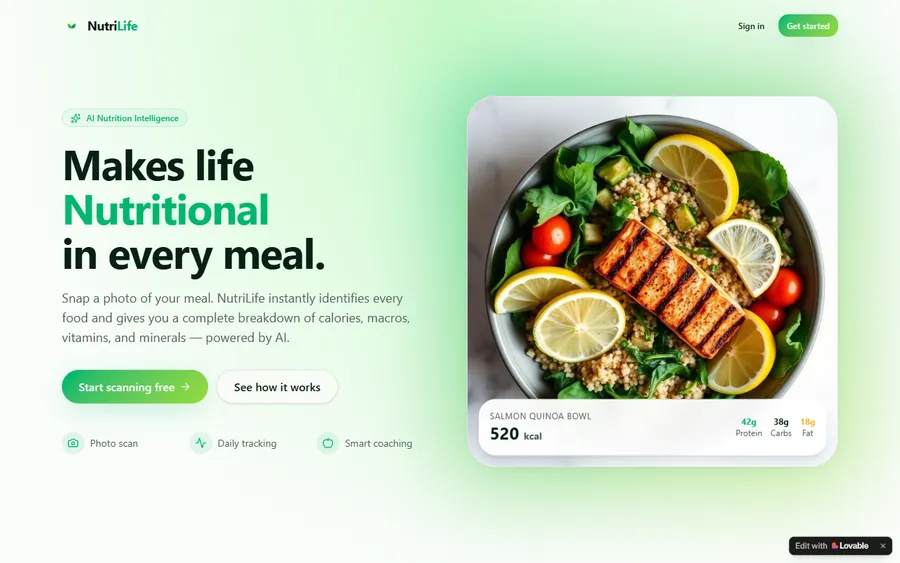
AI and ML
An AI nutrition coach that reads what you eat and works you toward a target.
AI and ML
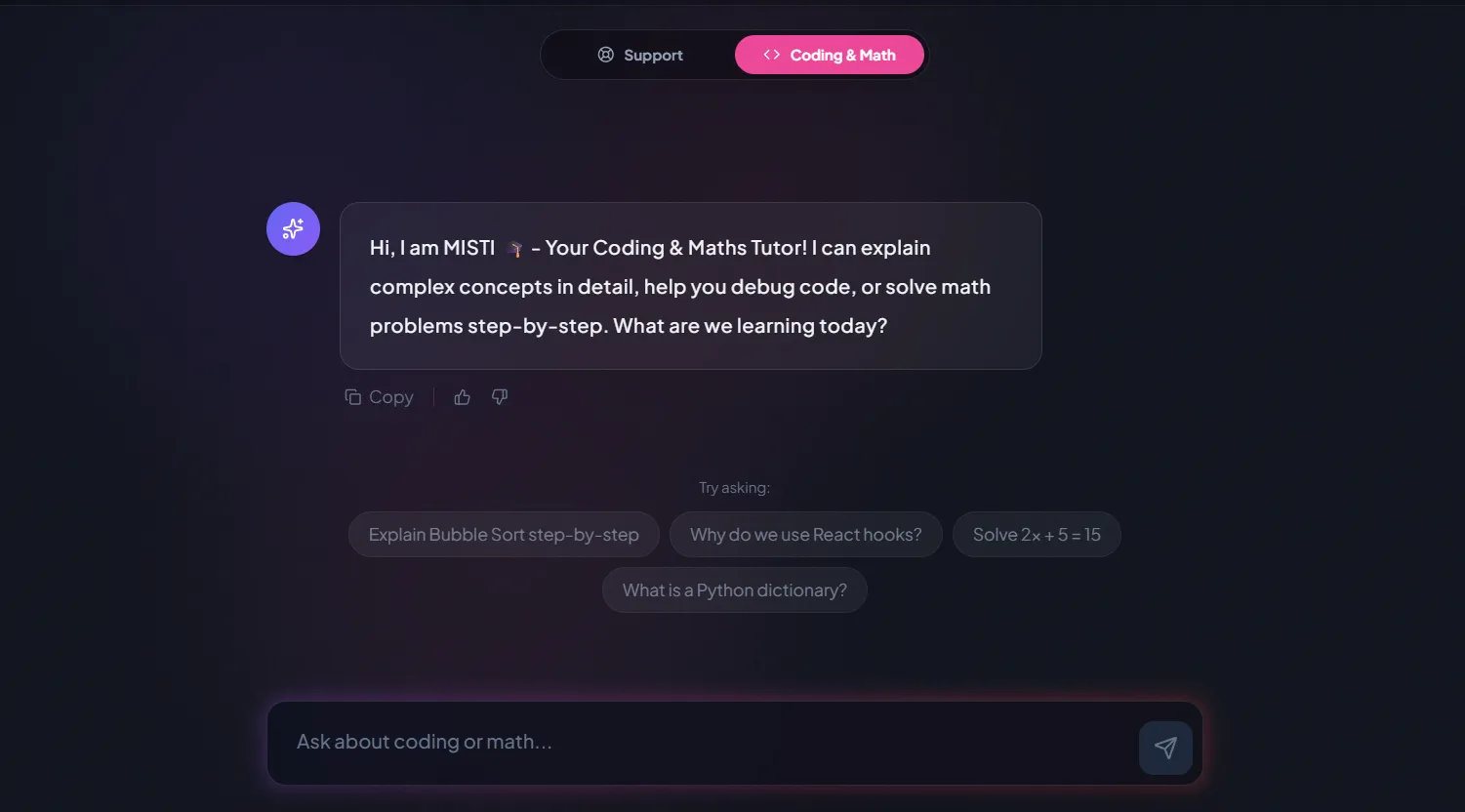
A chatbot that answers mathematics and programming questions, built and deployed by a student.
AI and ML
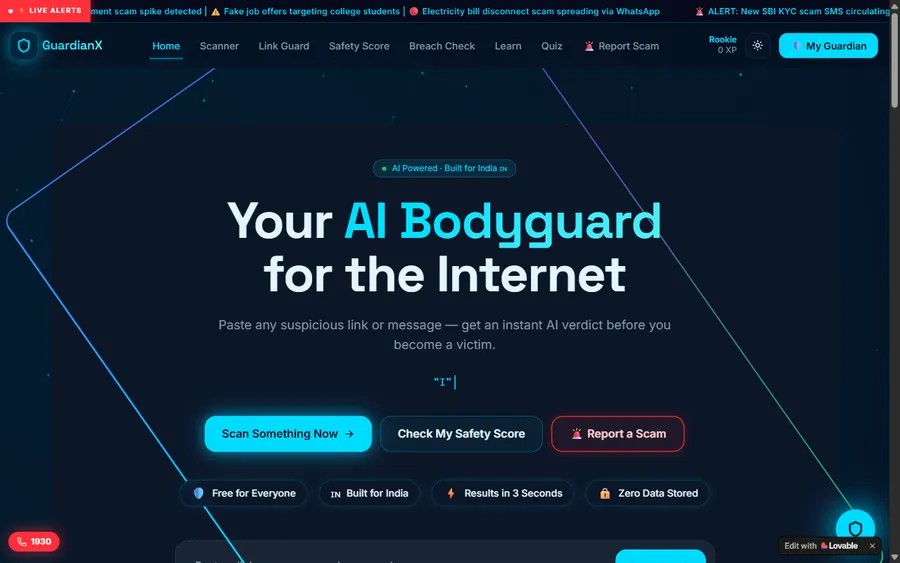
An assistant that helps a young person recognise unsafe situations online.
Web app
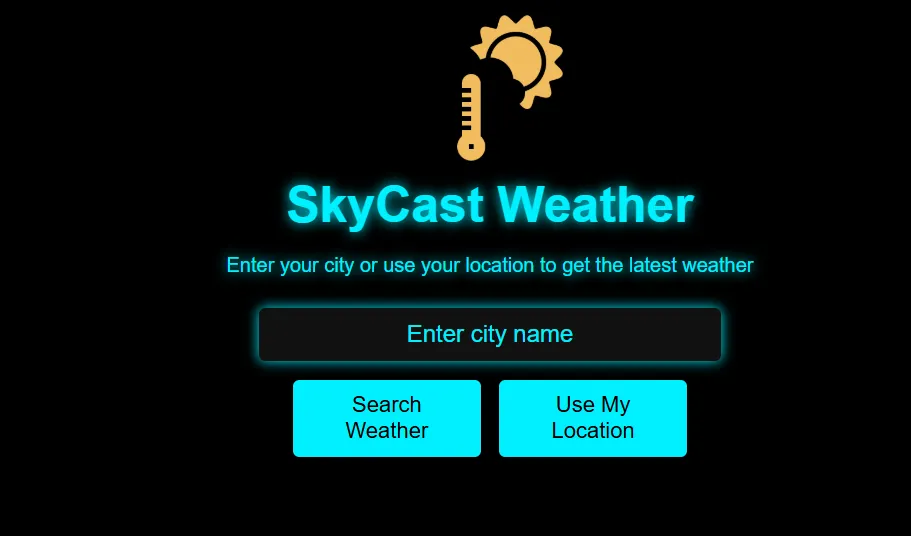
A weather forecasting site with live conditions for any location.
Fees
A monthly figure rather than an hourly one, quoted in US dollars for every country outside India. Nothing is taken before the free lesson.
Free first class
USD 0
no card required
Group batch
USD 100
a month, billed in US dollars
One to one
USD 150
a month, billed in US dollars
What families say
Taken from Google unedited, written by families nobody asked.
★★★★★
"The one step solution for my son. Modern Age Coders make learning coding so simple that kids love it. The teachers explain complex concepts clearly with practical exercises and interactive content."
Ria Mukherjee
Parent
★★★★★
"Modern Age Coders has been a game-changer for me. I struggled to grasp IT concepts and coding before joining, but their classes transformed everything. I can now confidently write complex programs with ease."
Samriddha Mondal
Student
★★★★★
"One of the most wonderful education centres out there. Education is not limited to school syllabus but focuses on skill development."
Vansh Agarwal
Student
★★★★★
"My child Dhairya is really enjoying the Modern Age Coders classes. This is his first online class and he eagerly looks forward to it. I can already see his improvement, and the teachers are very cooperative."
Sonam Oswal
Parent of Dhairya
★★★★★
"Modern Age Coders have wonderful teachers who teach in a clear, easy and practical way. The teacher boosts students' confidence and inspires them to learn without hesitation."
Sonu Goyal
Parent
★★★★★
"I highly recommend this computer coding class! The teachers are incredibly knowledgeable and passionate about coding."
Ritu Kedia
Parent
Questions about coding tuition in the UK
No. Our teachers work from India, and GOV.UK states that DBS cannot access criminal records held overseas, so a UK check would return nothing meaningful. We would rather say that than use wording that sounds like a yes.
Guidance live from 21 January 2026 allows self-employed people and personal employees to apply for an Enhanced DBS check, and where eligible one that includes a barred list, through a DBS Umbrella Body. Before that, a self-employed tutor had no route to apply.
No. The Government leaflet states that parents and carers cannot apply on behalf of an individual, and that an eligible person must apply themselves through an Umbrella Body. You can ask to see the certificate.
GOV.UK suggests the wording itself: ask to see the DBS certificate and note that they can now apply for an Enhanced one. Most tutors will not mind being asked.
Yes, any lesson, on the same link, without telling us beforehand. We treat that as completely normal.
Only if you want it to be. The default is a small group of five to ten learners at the same level, which most children find better than a one-to-one hour.
No, by the month. A group place is USD 100 a month and one-to-one teaching USD 150, with nothing in advance and no minimum term.
We will handle school work inside a sequence that goes somewhere, but a tutor who only does this week's task produces a learner who can finish and cannot start. We say so at the outset.
Yes. Teachers work with National 5 and Higher, WJEC in Wales and CCEA in Northern Ireland as well as the English boards.
Tell us and stop. There is no notice period and nothing has been taken in advance. We would rather you left after a month than stayed unhappily.
Elsewhere on this site
Each covers one part of this properly.
Seven checks that apply to a tutor, a class or a bootcamp equally.
The national page, and the index of every UK page we publish.
The method, and the places it does not suit a learner.
What Ofcom found about British teenagers and AI this year.
What the Government has committed primary pupils will learn.
Projects our learners have built and published.
Start here
Leave a number and we will come back at a UK time that suits you. The lesson is real teaching, and it ends with a straight view of whether we are the right fit at all.
Rather read than talk? Every course page carries its syllabus, how we teach sets out the method and its limits, and the topic sequence runs down the coding roadmap.
WhatsApp us · +91 91233 66161 · contact@modernagecoders.com
WhatsApp is usually quickest and costs a UK mobile nothing. The number is registered in India, which we state here rather than leave you to notice.