In the hours your child spent scrolling, they could have built something real.
Modern Age Coders made this tool because parents kept asking the same question: "my child spends six hours a day on YouTube and mobile games, am I losing them?" The honest answer is: not yet, but the clock is loud. This calculator turns that clock into a number you can see.
Run the calculator →Source: Common Sense Media 2024, IAMAI India 2025, internal MAC parent survey 2026
Tell us about your child. Get the trade.
Screen time is not the enemy. Empty screen time is.
A child writing code is using a screen. A child editing a film is using a screen. A child learning matrix algebra inside a Jupyter notebook is using a screen. The screen is not the problem. The problem is that almost everything our children touch on a screen is engineered by another company to keep them touching it, and almost nothing they touch is engineered to build them.
This page is not asking you to throw the phone out the window. We are asking you to do something much smaller. Convert one hour. Take one of the six daily hours of consumption and turn it into one daily hour of creation. The math from that one swap, over one year, is what this calculator shows you.
One hour a day is 365 hours a year.
That is enough time to build twelve working Python projects, finish a full introductory computer science course, complete an MIT-grade math curriculum, and ship a real mobile app to the Play Store. We have measured this on our own students for six years.
Build-mode and scroll-mode are different brains.
Short-form video trains the brain to expect novelty every 8 seconds. Coding trains the brain to hold a single problem for 40 minutes. Both rewire the brain. Only one of those wirings pays your child for the next forty years.
By age 14, a real student of ours earned ₹38,000 freelancing.
Not because she is special. Because she swapped one hour. By 16 she was building automation for two small businesses on weekends. By 18 her resume was already worth more than most graduates we meet.
This is not about banning fun.
Our students still watch YouTube. They still play Minecraft. They still scroll. The difference is they also make. The kids who only consume grow up to work for the kids who also make. That is the only sentence we need you to remember.
The 90-day swap. Not a course pitch. A plan you can run yourself if you want to.
This is the same on-ramp Modern Age Coders uses for new students. Three months. Three small shifts. By month three, the screen is still on, but the screen is now a workshop.
One hour. One language. One project.
- Block 60 minutes on weekdays. Same time, same chair.
- Open Scratch (age 6–10) or Python via Replit (age 10+).
- Build a working calculator, a dice roller, a quiz that scores itself.
- End of month: child has shipped 4 real micro-projects.
- YouTube is not banned. It is moved. It happens after the build hour, not before.
Add a second hour. One for build, one for math.
- The second hour is mental math, speed, mental shortcuts, geometry play.
- Build a mini-app a week. A timer. A weather check. A flashcard quiz.
- Introduce git. Code now has version history. This matters more than it sounds.
- By week 8, child has read someone else's code on GitHub. Voluntarily.
One real project. One real audience.
- Pick one problem your child actually cares about.
- Build a tool that solves it. Even a small one.
- Show it to three real humans outside your family. Take notes.
- That is the moment the swap is complete. The child stops being a consumer of software and becomes a maker of it.
Real numbers from Modern Age Coders students, 2020–2026.
"My son was the YouTube boy. Then he became the YouTube boy who also wrote a Telegram bot. Then he became the boy who built it for his school cricket team. The phone did not change. The child did.": Mrs. R. Iyer, parent, Bangalore, March 2026.
If you want help running the swap, this is where we come in.
Modern Age Coders runs live, small-batch classes online. No recorded videos pretending to be teachers. Real instructors who have shipped real software. Pick the path that fits your child's age.
The Builder Path
Scratch, block-based logic, animation, and the very first taste of typed Python. The goal is not curriculum coverage. The goal is one finished, working thing a week. We have taught this to over 3,000 children.
The Maker Path
Python, web development with HTML / CSS / JavaScript, an introduction to AI tools, and game development. Built around shipping a real portfolio of 12 projects across the year. School board doesn't matter. We support CBSE, ICSE, IGCSE, IB and US Common Core.
The Income Path
Full-stack web, data science, AI / ML, mobile app development, competitive programming. The path that takes a screen-addicted teenager and turns them into someone freelancing by 17 and employable by 19. Real students. Real outcomes.
Six courses your child can start this week.
These are the most popular Modern Age Coders programmes for the ages 6 to 18 band, small live cohorts, real projects every week, instructor-led. Click any to see the full syllabus, schedule and fee. All include a free 30-minute demo class.
Vibe Coding for Kids
Scratch, block coding, first taste of typed code through AI-assisted projects. The on-ramp every parent asks us for first.
Vibe Coding for Teens
Python, web development, AI tools and real shipped projects. Designed to turn a 12-year-old into someone with a real GitHub by 14.
Python & AI Kids Masterclass
The most-requested course on our list. Pure Python, taught gently, with AI assistance baked in. Ships 12 working projects in a year.
AI & ML Masterclass · Teens
The fastest path from screen-addiction to AI builder. Real ML projects, real models, real tools used in industry.
Game Development for Kids
If your child plays games for hours, this is the course that flips them from player to maker. We have watched this be the conversion moment for hundreds.
Canva & AI Design Masterclass
For the child whose screen time is design and creator content. We turn that taste into a real skill, and a real income for older teens.
Want the personalised 90-day plan, written for your child specifically?
We will send a single page document by WhatsApp. Not a sales pitch. The actual plan: which language, which hour, which project, which checkpoint. Free, written by a human at Modern Age Coders, usually within 48 hours of you submitting this form.
The questions parents actually ask us before booking.
How accurate is the Screen Time to Skill calculator?
The benchmark numbers are built from six years of Modern Age Coders student data, how long an average 10 year old takes to ship their first working Python app, how many hours to finish a CS50-style intro, what twelve weeks of guided practice produces. We chose conservative numbers. Most of our students hit them faster. The point is not the precision; the point is the order of magnitude. The number on screen is meant to make a real possibility feel like a real possibility.
Is screen time really the problem, or is it the kind of screen time?
The kind. A child writing code on a screen is using the screen as a workshop. A child watching short-form video is using the screen as a sedative. We do not believe in banning screens. We believe in giving them a job. The job we give them at Modern Age Coders is to build. Once a child knows how to build, they self-regulate the rest. We have watched this happen with over eleven thousand students.
My child is already addicted to YouTube and mobile games. Is it too late?
It is not too late. The first two weeks are the only hard part. The brain has been on a dopamine drip for years and the swap feels boring at first. Then around day twelve something flips, because building something that works is also a dopamine hit, and a much deeper one. Almost every parent who has run our 90-day plan tells us the same thing in week three: "I am no longer the one nagging." That is the inflection point. Our job is to get the child there.
What age does this calculator work for?
It is designed for parents of children aged 6 to 18. The reading mix is age-adjusted: an 8 year old sees Scratch and block-based outputs, a 12 year old sees Python and game design, a 15 year old sees web development and AI tools, a 17 year old sees automation, freelance income and real software engineering. We have a dedicated page for each year of age if you want to dig in.
Do you have classes outside India?
Yes. Modern Age Coders teaches live online in 25+ countries. Class timings are scheduled in the parent's local time zone. Country-specific information lives on our pages for the United States, the United Kingdom, Canada, the UAE, Singapore, Australia, Germany, Sweden, Switzerland, Ireland and New Zealand.
Is this a guilt-trip page disguised as a calculator?
No. We thought hard about that. The calculator deliberately doesn't say "you are a bad parent." It says "here is the trade you could make." Guilt does not produce action; possibility does. If anything in the page reads as judgment, write to us and we will fix it. The whole point of Modern Age Coders is that we are parents too, and we are running this swap on our own children. We are in the same boat as you.
How much do your classes cost?
Pricing depends on age band, intensity and country. We publish full transparent pricing on our pricing page. We also run a fee calculator that gives you an instant quote based on what your child actually wants to learn. Scholarships are available for academically strong students and for families in financial difficulty. We have given them quietly every year since 2019 and we will keep doing so.
What if my child is preparing for JEE or board exams?
We have a dedicated track for that. The JEE coding track stacks Python and competitive programming on top of board prep without disturbing it, total commitment is three hours a week, designed so a Class 11 or 12 student gets coding fluency without losing JEE rank potential. Several of our 2024 batch students cleared JEE Advanced and now hold full coding portfolios as well.
If you got this far, you might want to read.
By Age
Coding for 8 year olds Coding for 10 year olds Coding for 12 year olds Coding for 14 year olds Coding for 16 year oldsBy Class
Coding for Class 6 Coding for Class 8 Coding for Class 10 CS Class 11 CBSE Computer Apps ICSEReal student projects
What our students actually build
Every one is a real, live project shipped by a Modern Age Coders student. Explore more in Student Labs.
 ToolImage Slider WebsiteA visually appealing site with a smooth image carousel, auto or manual navigation, responsive layout and beautiful transition effects.by SomrajOpen the live project ↗
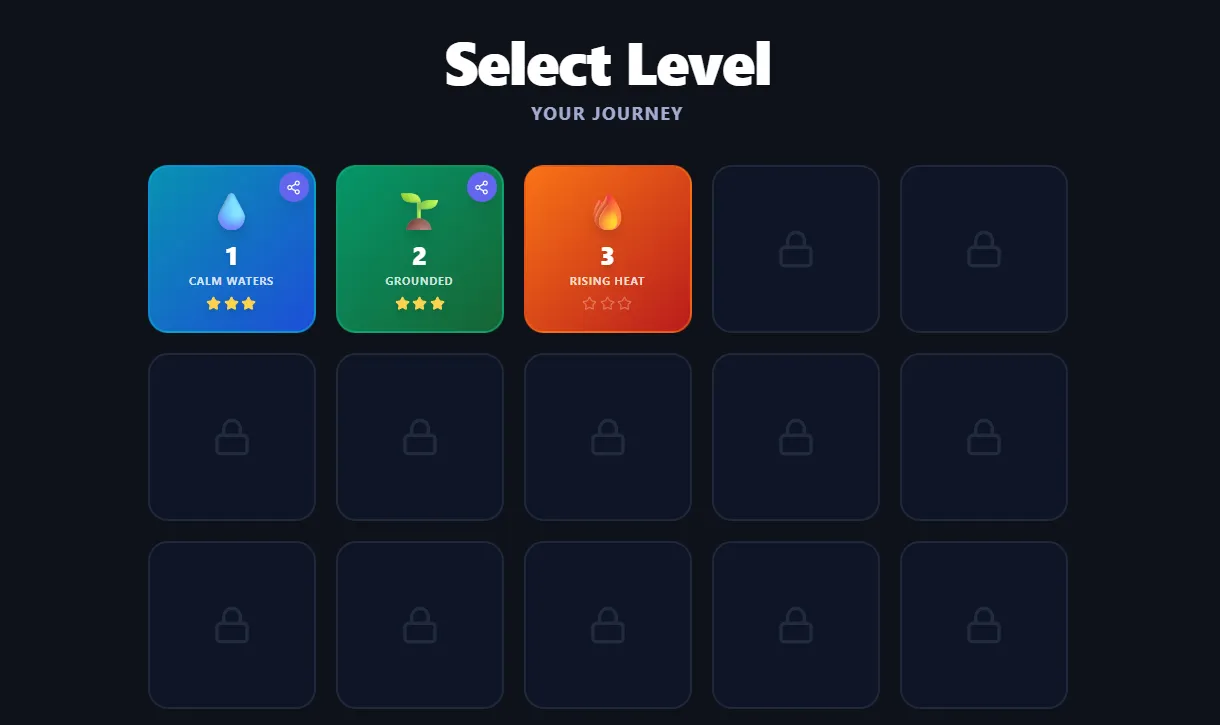 GameThe Beautiful MindA scientifically designed focus and brain-strength game with 15 progressive levels, testing attention, control and mental endurance with real-time progress tracking and leaderboards.by Modern Age CodersOpen the live project ↗
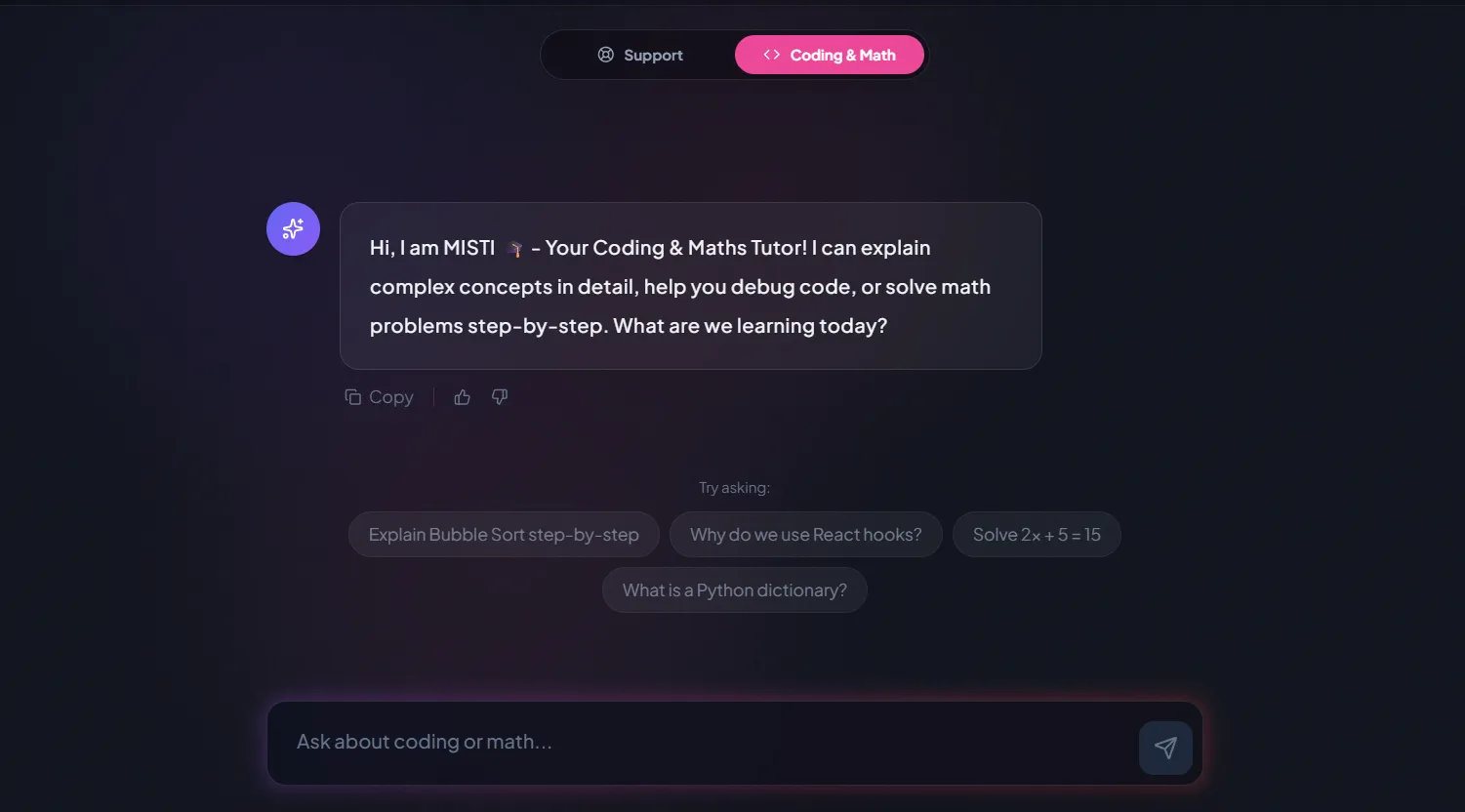 AI & MLMisti: AI Chatbot for Maths & CodingAn intelligent AI-powered chatbot that helps students solve maths and coding questions with deep, step-by-step explanations using advanced Python AI frameworks and LLM APIs.by HarshitOpen the live project ↗
Parent & student voices
What our families say
Real, verified reviews from Modern Age Coders families. Read hundreds more on our Wall of Love.
“Modern Age Coder have wonderful teachers who teach in a clear, easy and practical way. The teacher boosts students' confidence, keeps them updated with technology, and inspires them to learn without hesitation.”
Parent
“I highly recommend this computer coding class! The teachers are incredibly knowledgeable and passionate about coding. They make every session engaging and insightful. They explain complex concepts in an easy way and encourage students to ask questions and think critically. The friendly class atmosphere has boosted my son's confidence and interest in coding.”
Parent
“Very good classes. Makes learning very easy and interactive.”
Parent