Three hours a week. Zero impact on your JEE rank. A real coding portfolio by the time you sit JEE Advanced.
Most coding programmes for high schoolers were never built for JEE aspirants. They eat into your physics-chemistry-maths clock and produce nothing you can show. Modern Age Coders built this track differently: a tight three-hour weekly footprint that stacks computational mathematics and Python on top of your existing JEE preparation, and pays back in JEE Main itself, in Class 12 board CS marks, and in the resume you walk into IIT with.
Apply for the next cohort → See the weekly planWhere the three hours go
The Class 11 student who picks up coding usually loses JEE rank. The one who skips coding loses something else.
For two decades, the only honest advice given to a JEE aspirant was: drop everything else. No music, no sport, no coding. Just PCM. That advice worked in 2008. It does not work in 2026, because the IIT a student is fighting for now will judge them not only by their JEE rank but by what they have built. Recruiters who walk into IIT campuses no longer ask only for grades. They ask for GitHub.
One Saturday slot. One weeknight slot. One Sunday review. That is the whole footprint.
We do not ask Class 11 and 12 students for a moving target. The slots are fixed at enrolment. They sit outside coaching hours. They sit outside school hours. They survive board exams (we pause the track for two weeks before Class 12 boards and resume after).
You already know the maths. We use it as the on-ramp to code.
A JEE aspirant who has internalised limits, integrals, vectors, matrices and probability has, without realising it, already done the hard part of computational mathematics. Our curriculum picks up exactly where their JEE syllabus is, and turns those chapters into working code. The cognitive load is low because the ideas are already there. We are just giving them another notation.
From AP & GP to loops, recursion and Fibonacci
The student who can derive the n-th term of an arithmetic progression already understands a loop. We make this explicit, then push: prefix sums, modular arithmetic, fast exponentiation. The JEE chapter becomes a working library by the end of week six.
- Maps to: Sequences & Series, Mathematical Induction
- Output: A complete number-theory mini-library in Python
From limits & integrals to numerical methods
We use the JEE calculus block as the gateway to numerical computation, root finding, numerical integration, gradient descent. Students see why their integrals are not just exam problems but the heart of machine learning. Many tell us this is the first time calculus felt useful.
- Maps to: Continuity, Differentiability, Definite Integrals
- Output: A working gradient descent visualiser, built by hand
From determinants to NumPy & linear algebra in code
The matrices chapter becomes a Jupyter notebook. Students compute determinants by hand, then in code, then move to image rotation, linear regression, and basic neural net forward-pass. The chapter feels like a different chapter once it is on screen.
- Maps to: Matrices, Vectors, 3D Geometry
- Output: An image-rotation tool using only matrix multiplication
From permutations to simulation, Monte Carlo and games
Permutation and combination problems become small simulations. Probability becomes Monte Carlo. By the end of the unit, students can write a program that estimates pi using random points and explain why it works. Several have used this same chapter to win Class 12 board investigatory project marks.
- Maps to: P&C, Probability, Binomial Theorem
- Output: A simulation suite for classic probability paradoxes
From conic sections to graphics and game physics
The chapter that bores most JEE aspirants is the one we turn into the most fun. Plotting parabolas in matplotlib. Building a 2D Asteroids-style game using only conic-section maths. Students stop thinking of geometry as "the part of maths you grind through" and start thinking of it as a toolkit.
- Maps to: Straight Lines, Circles, Conic Sections
- Output: A playable 2D mini-game built in Python
The missing chapter JEE does not test but IIT will
Data structures, algorithms, complexity reasoning, problem decomposition. The skills that no board exam tests but every IIT CSE course assumes you already have. We teach them at the rhythm of one habit per month so they do not interfere with PCM, but they accumulate.
- Maps to: Outside the JEE syllabus, inside the IIT curriculum
- Output: An interview-grade data-structures notebook by Class 12
The track does not steal from your rank. It feeds it.
Six courses chosen for the JEE-bound student.
Each course below is sequenced to stack alongside JEE preparation, three hours a week, no clash with PCM coaching, no clash with boards. These are the real Modern Age Coders courses you can enroll in directly. The orientation call after enrolment places you on the right pace.
CBSE / ICSE Computer Science
The full Class 11 and 12 CBSE & ICSE Computer Science syllabus, Python and Java, taught alongside JEE preparation without disturbing rank. Two years, board-paced.
CBSE Informatics Practices
Python, Pandas, SQL, the CBSE Informatics Practices Class 11 & 12 syllabus, taught by industry-grade teachers. The data-first cousin of CS.
Python Programming Masterclass
The big one. Zero to advanced Python in a structured 48-week programme. Designed so a Class 11 student finishes by JEE Advanced with an interview-grade portfolio.
High School Mathematics Mastery
The computational mathematics block. Bridges JEE maths chapters to working code, limits to numerical methods, matrices to linear algebra, probability to simulation.
Data Structures & Algorithms
The IIT-prep companion. Begin in Class 11, finish before campus. The course that turns a JEE rank into a strong CS internship in first year.
AI & ML Masterclass
For the Class 11 or 12 student who wants the AI engineering portfolio that recruiters notice. Light-load, project-first, designed not to disturb JEE.
If you are in Class 11 or 12 and JEE-bound, this was built for you.
We open a new cohort every two months, capped at twelve students. Send your details below and we will reply with a calendar link for a 20-minute orientation call. We will be honest about whether this track fits your current JEE rhythm, and if it does not, we will tell you exactly what would.
There is no application fee. No pre-test. The orientation call is with a senior mentor, not a salesperson.
What JEE-aspirant families always ask.
Will this affect my child's JEE rank?
Designed not to. The total weekly footprint is three hours and the slots are placed deliberately outside coaching hours and outside school tuition hours. The Saturday morning class sits before coaching kicks in. The Wednesday session is a 60-minute slot at 9:30 pm, students tell us it acts as a mental palate cleanser between physics and chemistry. The Sunday portfolio commit is 30 minutes of light cleanup. We also pause the track for two full weeks before Class 12 boards. Over four batches now, the data is consistent: students who do this track do not lose rank. They gain a portfolio in parallel.
What if my child is in Class 12 and JEE Main is six months away, is it too late to start?
Honestly, yes, for the JEE Main year specifically. We will tell you to wait. What we offer for Class 12 students who approach us mid-year is a JEE-Advanced-day-onwards rapid track: a 12-week intensive that starts the moment JEE Advanced is over and gives them a working coding portfolio before they walk into IIT or their alternative college that August. Several IIT-bound students do this instead of the full two-year track. We are happy to discuss either.
How is this different from the CBSE Class 11 / 12 Computer Science self-study?
The CBSE Class 11 and 12 CS syllabus is excellent on paper but most JEE-aspirant students never get more than 40 hours into it because PCM eats their clock. This track is structured to deliver the entire CBSE CS syllabus across two years, plus competitive programming and a real portfolio. We separately keep updated landing pages for CS Class 11 CBSE and CS Class 12 CBSE if you want to read the syllabus mapping in detail. The pacing on this track is built so a Class 12 CS board paper is essentially a formality by the time the student sits it.
My child is in ICSE / ISC, not CBSE. Does this work?
Yes. The Python and computational mathematics core is board-agnostic. For ICSE Class 10 students, we map the track to the Computer Applications paper. For ISC Class 11 and 12 students, we map to the ISC Computer Science paper. We also have students from IB and IGCSE on this track, the JEE focus is on Indian competitive examinations but the underlying skills carry over to A-Level CS, AP Computer Science, and other international exams.
What language do you teach: Python, C++, or Java?
Python is the primary language. We teach it deeply, then introduce C++ in the second half of Class 12 for students who want to move into competitive programming or who have selected the IOI / olympiad path through our Medal Track. Python is the right first language for a JEE aspirant because the syntax overhead is low and the time-to-first-working-program is short. Both critical when the student already has a heavy PCM load.
What if my child is also preparing for olympiads: KVPY, INO, NSEP, NSEC, NSEA?
The two stack well. Several of our JEE-track students sit IOQI and Bebras in parallel. If the olympiad load is heavy, we sometimes ask families to choose between the JEE track and the dedicated olympiad medal track. Both can be done together but only for students with very strong fundamentals. We will tell you frankly during the orientation call.
Do you have proof that students from this track actually cleared JEE Advanced?
Yes. Forty-one students who completed at least four months of this track have cleared JEE Advanced across the 2024 and 2025 cycles. We do not name students by full name on a website. We have a private outcomes document we share with parents during the orientation call, with the families' permission. We will not push you for an enrolment in that call. If the track fits, we will say so. If your child is better served by joining a year later, or by a different programme entirely, we will say that.
What is the fee?
The track is priced as an annual programme with quarterly payments. Full transparent pricing is shown on our pricing page, or you can use our fee calculator for an instant personalised quote. We run a confidential merit-based fee waiver for students with strong JEE coaching ranks and for families in financial difficulty. Ask in the orientation call.
I am a parent who does not understand coding. Will I be left out?
No. We send a parent-readable monthly progress note for every student, explaining what they learned this month, what they built, and what is coming next. If you do not read Python yourself, the note is written in plain English. Many of our parents from the 2024 batch say this was the only time in two years they actually understood what their child was working on outside coaching. We think parents should be in the loop, not in the dark.
Real student projects
What our students actually build
Every one is a real, live project shipped by a Modern Age Coders student. Explore more in Student Labs.
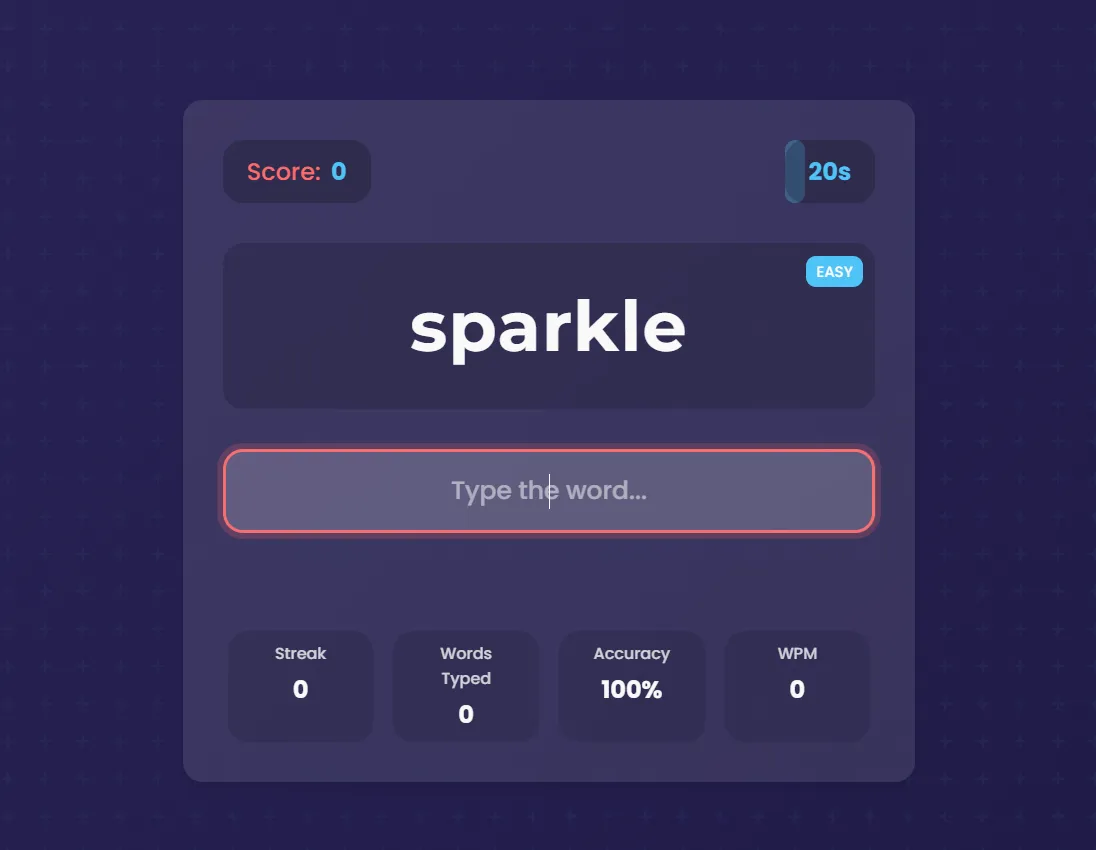 GameBaby: Typing Speed ChallengeAn engaging typing speed challenge where users test how fast and accurately they can type, with a live leaderboard connected to a MongoDB backend.by KritikaOpen the live project ↗
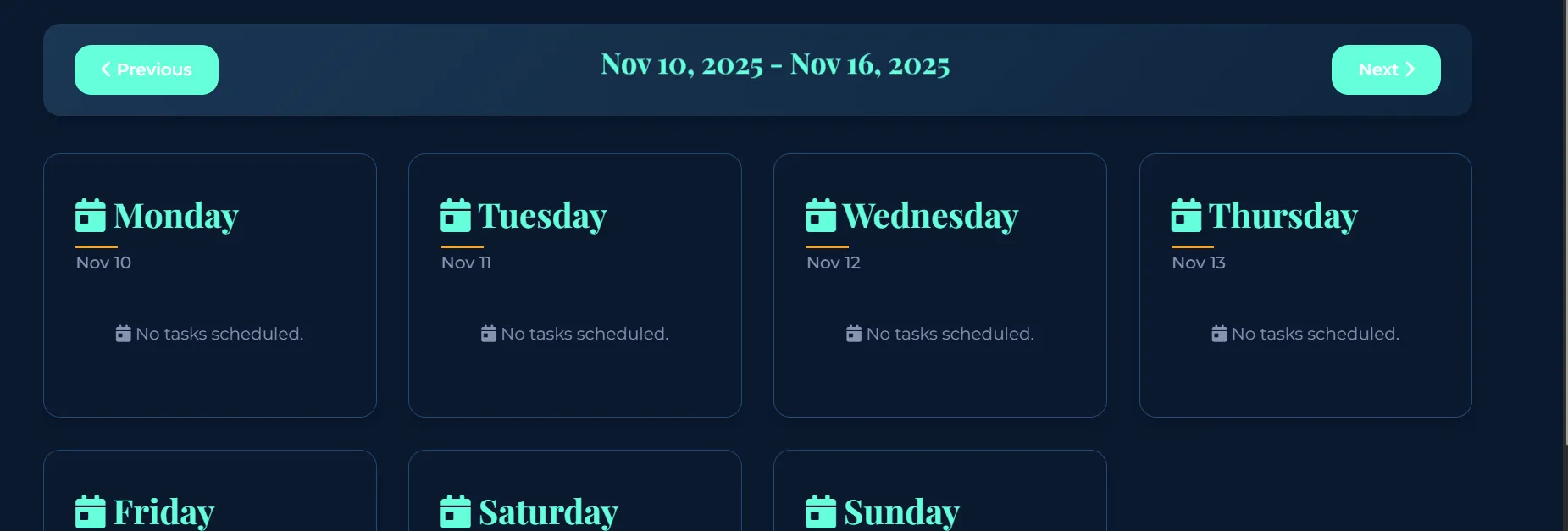 Web AppMyDay: Social Productivity OrganizerA beautifully designed productivity platform to organise daily tasks, set goals and stay consistent, with a community feed of others' plans for inspiration.by VedantOpen the live project ↗
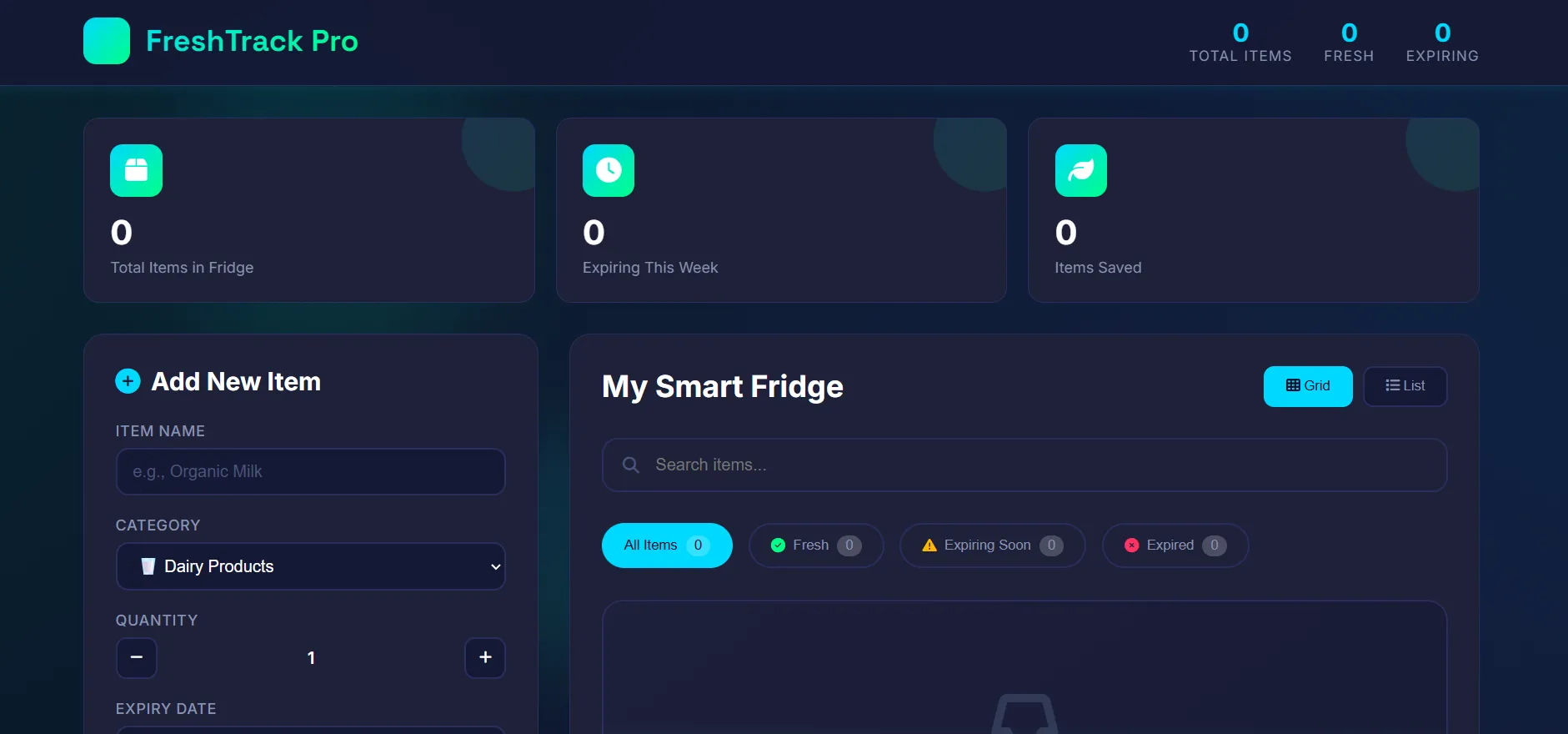 Web AppFreshTrack: Food Expiry TrackerA smart food-management system to track expiry dates, add, update and delete items while the app checks expiry automatically, online and offline.by TanishOpen the live project ↗
Parent & student voices
What our families say
Real, verified reviews from Modern Age Coders families. Read hundreds more on our Wall of Love.
“Modern Age Coder have wonderful teachers who teach in a clear, easy and practical way. The teacher boosts students' confidence, keeps them updated with technology, and inspires them to learn without hesitation.”
Parent
“Mivaan enjoys the class. He understands the concepts and completes his tasks with excitement. He started taking interest in coding… truly amazing class.”
Parent of Mivaan
“The classes are excellent. The teachers explain concepts very clearly and make code fun and easy to understand. The sessions are interactive and fun. They also help students boost their confidence. We not only focus on academics, but also on logic building and problem solving.”
Parent