UK / LT1 / 01
AI literacy for kids
Training, testing and breaking a model, with examples a child gathers themselves.
Open the syllabusUnited Kingdom · AI literacy · Ages 10 to 67
There is a table buried in a government-supported evidence review that deserves a much wider audience. It lists five things everybody assumes about software, and next to each one it says what AI does to that assumption. You are the user. You choose the inputs. The same input gives the same output. You can check how the answer was produced. You know when you are using it. All five, the review reports, are broken. The same paper quotes researchers describing systems in which "artifacts use users to achieve their objectives", which is a sentence worth sitting with. A tool you cannot assume any of those things about does not need a better prompter. It needs a user who understands what is happening, and that is a teachable thing.
Live teaching since 2020 · 10,000+ students · Understanding before tooling
In short
Prompting is a skill with a short shelf life. Understanding is not. A rapid evidence review published for the Department for Science, Innovation and Technology sets out why: AI systems are adaptive and context aware, and so break the assumptions people hold about digital tools, including the assumption that you can verify how an answer was produced and the assumption that you always know when AI is involved. The most cited definition of AI literacy in that review puts critical evaluation first, and of its seventeen competencies, nine sit under the heading of how AI works. That is the part a class can actually teach, and the part that survives the next model release. We teach it alongside the programming and data work that makes it concrete, to learners from about ten to sixty-seven, in groups of five to ten or one to one. The first lesson is free, then USD 100 a month in a group or USD 150 one to one.
Start here
Understanding these systems means building small ones and breaking them. Each card opens a full syllabus.

THINK / 01
Models trained, tested and deliberately broken by the student, which is how the word training stops being a metaphor.
Open the syllabus →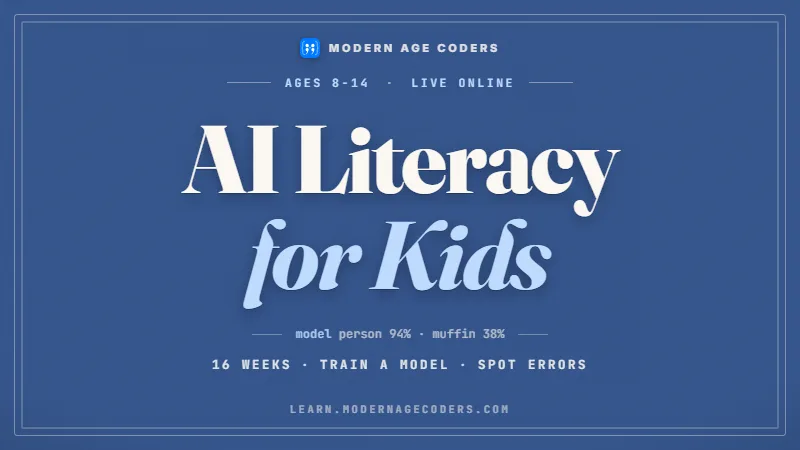
THINK / 02
The same ideas for younger learners: what a model is, what it learnt from, and why it can be confidently wrong.
Open the syllabus →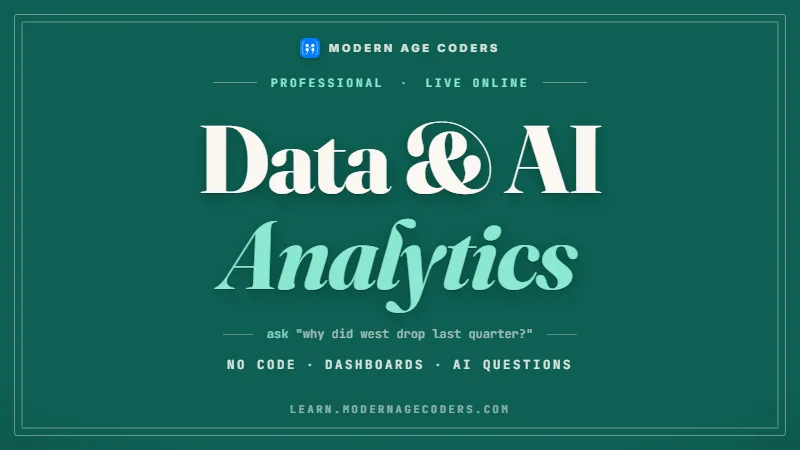
THINK / 03
For adults who need to judge these systems at work without becoming developers.
Open the syllabus →Five broken assumptions
From a rapid evidence review published on 28 January 2026, presenting a framework by Schuetz and Venkatesh. The left column is how people expect software to work. The right is what the researchers say AI does to it.
| What we assume about software | What the researchers say about AI | Why it matters to a learner |
|---|---|---|
| Humans are users | A bilateral human-AI relationship | You are not simply operating it. It is also responding to you, and shaping what you do next |
| The developer defines the inputs | AI is aware of the environment | What goes in is wider than what you typed, and you did not choose all of it |
| Using the tool leads to consistent outcomes | AI can be functionally inconsistent | The same question twice can produce two different answers, so one good answer proves nothing |
| How the tool reached its outcome is comprehensible and can be verified | AI can be functionally not transparent | You may not be able to check the reasoning, which means you have to be able to check the result |
| There is an artificial interface | Humans can be unaware of their AI use | Some of the time you will not know AI was involved at all |
The sentence underneath the table
The review quotes Schuetz and Venkatesh directly: cognitive computer systems "are no longer simple tools and users are no longer simple users. Rather, CCS and users form complex systems in which artifacts use users to achieve their objectives."
Functional inconsistency is the one that catches students out. A tool gives a working answer on Monday and a subtly broken one on Thursday to the same question, and a learner who judged it by the Monday answer has no way of knowing.
The only defence is being able to evaluate the output on its merits. That is not a prompting skill. It is subject knowledge, and it is the same subject knowledge an exam asks for.
If you cannot see how a result was produced, verification has to move to the result itself. In programming this is unusually easy, because a program either does what you said it would or it does not, and running it settles the argument in seconds.
That is why we make the prediction first and the run second. The prediction is the check that survives when the reasoning is invisible.
The review is careful to say where these ideas come from, and so are we. Schuetz and Venkatesh, Long and Magerko and the other researchers named here are the review's citations rather than ours, and the review itself states that its findings and recommendations "do not represent UK Government views or policy".
Source, read 20 September 2026: AI Skills for Life and Work: Rapid Evidence Review, published 28 January 2026, authored by Prof Rob Procter of Warwick University and the Alan Turing Institute, supported by the Department for Science, Innovation and Technology and by the R&D Science and Analysis Programme at DCMS.
What AI literacy is
If AI literacy were mostly about using the tools, the frameworks would say so. The most cited one does not.
The definition the review cites most
Long and Magerko define AI literacy as "a set of competencies that enables individuals to critically evaluate AI technologies; communicate and collaborate effectively with AI; and use AI as a tool online, at home, and in the workplace". Critical evaluation comes first in that sentence, and using it as a tool comes last.
| Theme | Competencies | What it asks of a learner |
|---|---|---|
| What is AI? | Four | Telling AI apart from other digital technology, and knowing why the difference matters |
| What can AI do? | Two | Recognising the kinds of problem these systems are suited to |
| How does AI work? | Nine | Understanding the principal technical elements: the largest group by a distance |
| How should AI be used? | One | The ethical questions raised by using it |
| How do people perceive AI? | One | Common misconceptions, and how trustworthy it actually is |
More than half the competencies sit under how it works. The review notes the framework is "heavily weighted with respect to the first three themes", which are all about understanding rather than operating.
Not as a theme, and not as a competency. It is a technique for operating today's interfaces, and interfaces are the part that changes fastest.
The review says plainly that current definitions of AI competencies and skills are "neither as detailed and nor as mature as those for digital competencies and skills". Anyone selling a settled syllabus is ahead of the evidence.
The review draws a distinction worth carrying into any conversation about a course: AI literacy is the competence to understand, evaluate and use these systems, while AI skills are "the technical abilities linked to those competencies". A class that teaches only the technical abilities is teaching the smaller half, and a class that teaches only the vocabulary is teaching none of it.
Our answer to that is to teach the understanding through the building. A child who trains a classifier on their own drawings learns what training means in a way no explanation achieves, and that is what the AI classes for kids page describes in detail.
What does not expire
One line in the review's summary settles the argument about what is worth learning.
The review reports that "the average skills lifespan now under three years and likely to fall further", and draws the conclusion that employers will have to build a learning culture because individual skills will not last.
Apply that to anything taught as a set of steps for a particular interface. A course in prompting a named tool is a course with an expiry date somewhere inside the same three years, and possibly inside the same term.
Three things outlast a model release. Knowing what a system is doing, well enough to say why it produced that. Being able to evaluate an output against something other than how confident it sounds. And being able to build a small version yourself, which is the fastest way to acquire the first two.
None of those are tied to a product, and all three are ordinary teachable content with a sequence.
| Learning the tool | Learning the subject |
|---|---|
| Techniques for a particular interface | How the class of system behaves, whatever the interface |
| Obsolete when the product changes | Still true after the product changes |
| Judged by whether the answer looked good | Judged by whether the answer is right |
| Cannot be checked without the tool | Checkable by running, testing or reasoning |
| Transfers to nothing | Transfers to the next system of the same kind |
None of this is an argument against using the tools. We use them in lessons, openly, once a learner can predict what the answer ought to be, and we keep a short record of what the tool contributed. The order is the whole point: understand, predict, then ask. A learner who asks first has outsourced the part that was supposed to be theirs.
For students working towards UK qualifications there is a harder reason to get this order right, and it is set out on the page on understanding the code: work reproduced from an AI tool cannot earn marks even when it is properly declared.
And for anyone tempted by the broader promise, we would rather point at the evidence than the pitch. What coding does and does not do for general problem-solving is covered honestly on the problem-solving page, including the claim we refuse to make.
Progression
Each stage is content a learner can be taught and then examined on, rather than a disposition they are said to acquire.
| Stage | What the learner can do | What it protects them from |
|---|---|---|
| 1. Tell it apart | Say whether a product uses AI and what kind | Treating everything digital as if it were the same thing |
| 2. Know what it suits | Identify problems these systems are and are not good at | Asking a tool for something it structurally cannot supply |
| 3. Know how it works | Explain training, data and evaluation, having built a small model | Believing a confident answer because it sounds confident |
| 4. Judge it | Evaluate an output against evidence, and say what would change their mind | Functional inconsistency, and answers that cannot be verified |
It is also the largest group of competencies in the framework the review cites, and the only one that really needs teaching rather than telling.
Building a small model is the shortest route into it, whatever the learner's age.
Plenty of professionals can already tell AI apart and know what it suits, and have never once seen what training actually involves.
Where an adult starts is settled in the free lesson rather than assumed from a job title.
The catalogue
Grouped by how close a learner is to building the thing themselves. Syllabuses sit behind each card.
UK / LT1 / 01
Training, testing and breaking a model, with examples a child gathers themselves.
Open the syllabusUK / LT1 / 02
Describing rules precisely, which is the foundation everything else sits on.
Open the syllabusUK / LT1 / 03
The concepts and the vocabulary for adults who need to judge rather than build.
Open the syllabusUK / LT2 / 01
Models trained from data and then pushed until they fail, on purpose.
Open the syllabusUK / LT2 / 02
Real datasets, where evaluation is a judgement you have to defend out loud.
Open the syllabusUK / LT2 / 03
The language all of the above is written in, taught by predicting before running.
Open the syllabusUK / LT3 / 01
Reviewing, testing and recording what came from where, on projects of our own.
Open the syllabusUK / LT3 / 02
Putting these systems to work on real tasks, with checks that catch them failing.
Open the syllabusUK / LT3 / 03
What these models are doing underneath, for adults who need more than an interface tour.
Open the syllabusHow lessons work
India runs one clock all year, so the UK sits five and a half hours behind from October and four and a half from March. Slots are set in UK time and stay put.
After school
The usual choice for school-age learners.
Evening
Sixth formers, and adults once work is finished.
Weekend morning
Longer, and better for building something end to end.
Understand the problem, predict the answer, then ask a tool. A learner who asks first has given away the part that was theirs.
Nothing explains training like training something. Every learner ends up with a model they made and then broke.
A learner says why an answer is right or wrong and what would change their mind. That is the competency the frameworks put first.
What was suggested, what was kept and why. A minute a week, and it becomes automatic long before it matters.
Five to ten learners at one stage, which is where disagreeing about an answer becomes possible.
We do not teach a named interface as a syllabus. Interfaces change faster than a term.
Student work
Four published projects. The student labs page has the rest.
AI and ML
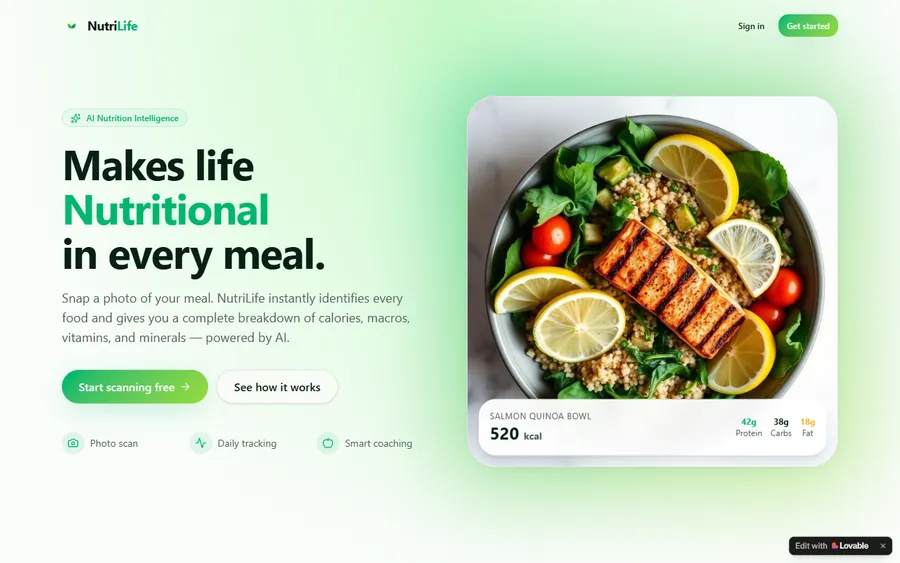
An AI nutrition coach that reads what you eat and works you toward a target.
AI and ML
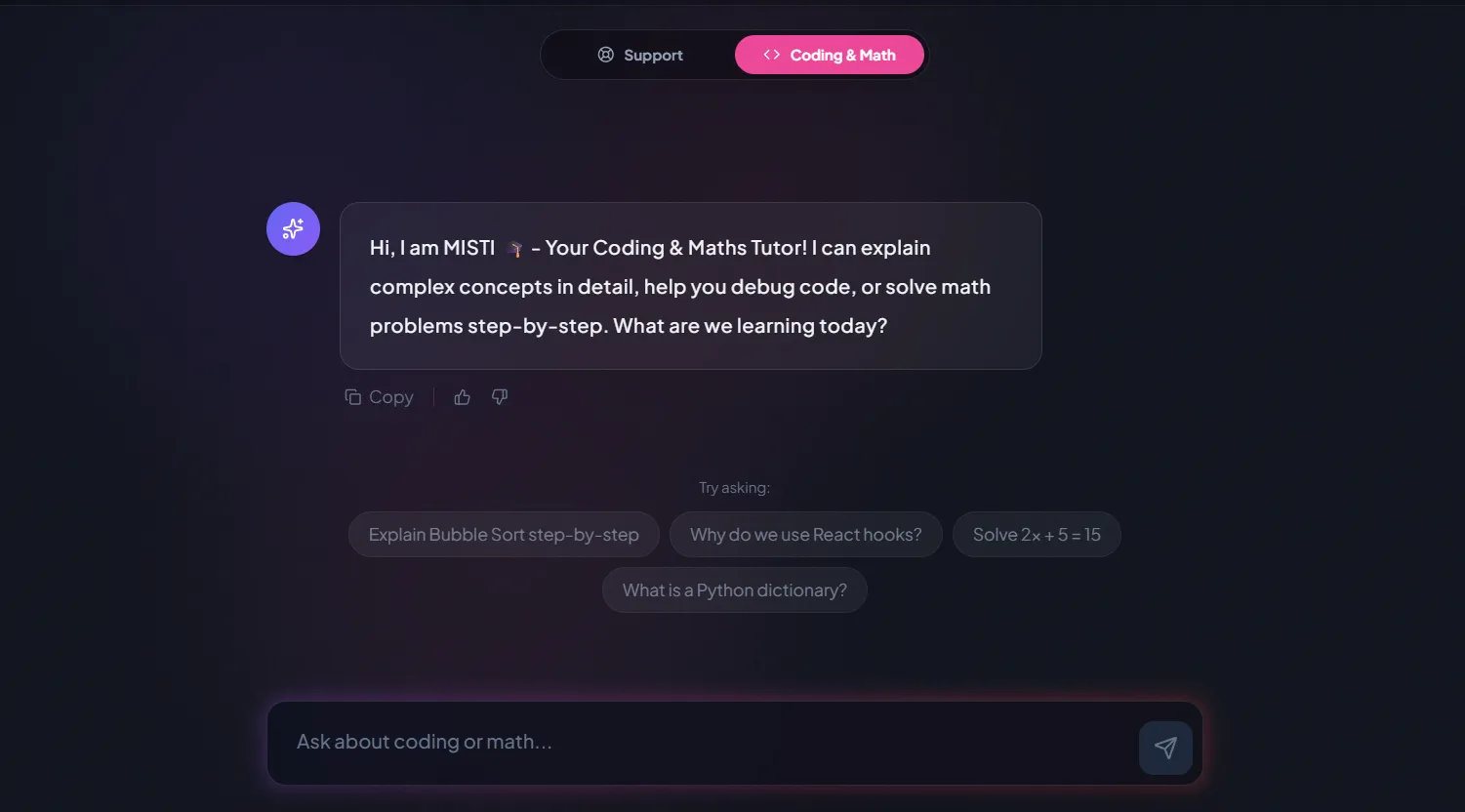
A chatbot that answers mathematics and programming questions, built and deployed by a student.
AI and ML
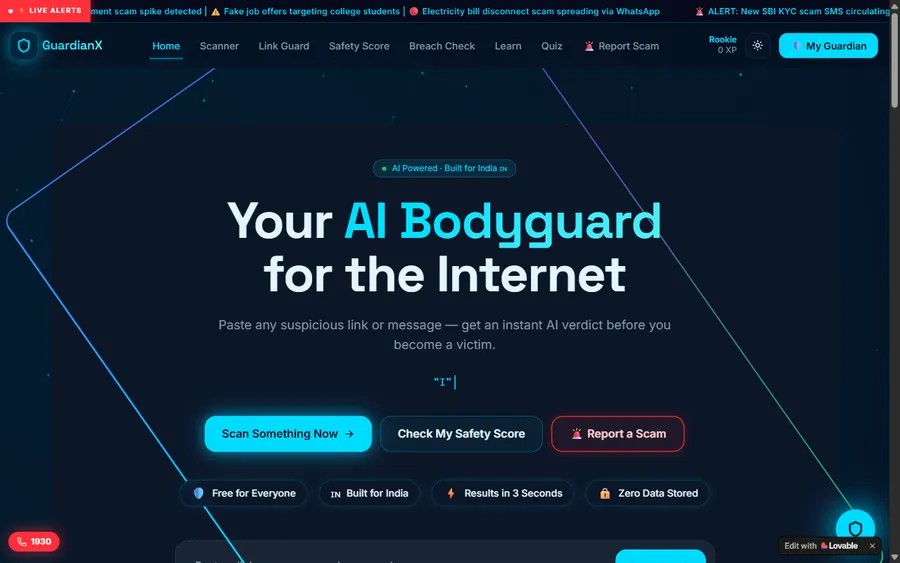
An assistant that helps a young person recognise unsafe situations online.
Web app
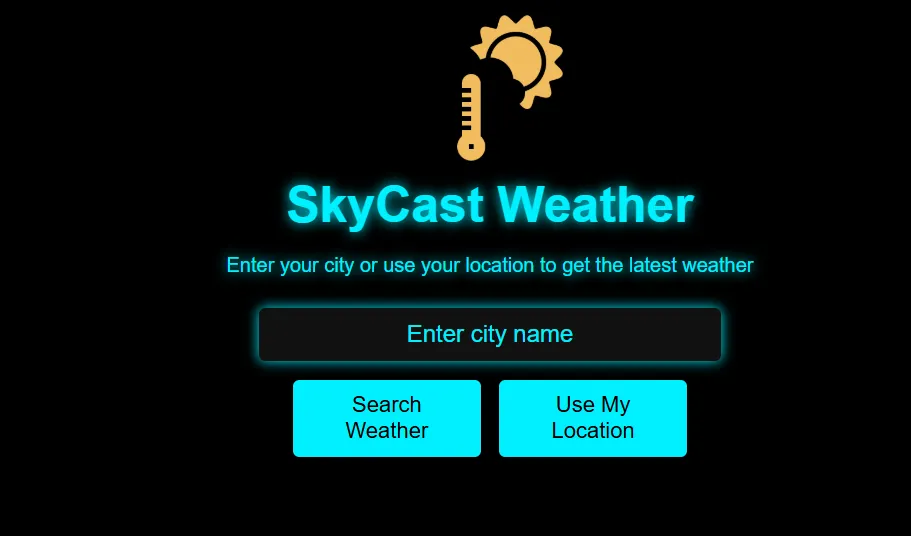
A weather forecasting site with live conditions for any location.
Fees
One monthly fee, quoted in US dollars for everyone outside India. The free lesson comes first, and nothing is charged until a course and a slot are settled.
Free first class
USD 0
no card required
Group batch
USD 100
a month, billed in US dollars
One to one
USD 150
a month, billed in US dollars
What families say
From Google, word for word, unprompted and unpaid.
★★★★★
"The one step solution for my son. Modern Age Coders make learning coding so simple that kids love it. The teachers explain complex concepts clearly with practical exercises and interactive content."
Ria Mukherjee
Parent
★★★★★
"Modern Age Coders has been a game-changer for me. I struggled to grasp IT concepts and coding before joining, but their classes transformed everything. I can now confidently write complex programs with ease."
Samriddha Mondal
Student
★★★★★
"One of the most wonderful education centres out there. Education is not limited to school syllabus but focuses on skill development."
Vansh Agarwal
Student
★★★★★
"My child Dhairya is really enjoying the Modern Age Coders classes. This is his first online class and he eagerly looks forward to it. I can already see his improvement, and the teachers are very cooperative."
Sonam Oswal
Parent of Dhairya
★★★★★
"Modern Age Coders have wonderful teachers who teach in a clear, easy and practical way. The teacher boosts students' confidence and inspires them to learn without hesitation."
Sonu Goyal
Parent
★★★★★
"I highly recommend this computer coding class! The teachers are incredibly knowledgeable and passionate about coding."
Ritu Kedia
Parent
Questions about AI literacy
It is worth knowing, and it is not what AI literacy frameworks are made of. The most cited framework in the review has seventeen competencies across five themes, and prompting is not one of them.
The review presents five: that humans are simply users, that the developer defines the inputs, that use leads to consistent outcomes, that the way a result was produced can be verified, and that there is always an obvious interface so you know when you are using it.
Because one good answer proves nothing. If the same question can produce different answers, a learner has to be able to judge the answer on its merits, which requires knowing the subject.
The review defines it broadly as the competencies to understand, evaluate and use AI systems, and distinguishes that from AI skills, which are the technical abilities linked to those competencies.
More than most people expect. Nine of the seventeen competencies in the framework sit under the question of how AI works.
Because the review reports the average skills lifespan is now under three years and likely to fall further. A course built on one interface expires with it.
No. The review was supported by DSIT and DCMS, and it states that its findings and recommendations do not represent UK Government views or policy. It reviews evidence.
From about ten upwards, and for adults at any age. Younger children start with what a model is and how it was trained, which is covered on our AI classes for kids page.
Yes, in a fixed order: understand the problem, predict the answer, then ask. And we keep a short record of what the tool contributed and what was kept.
The first lesson is free. A group place is then USD 100 a month and one-to-one teaching USD 150, charged monthly with nothing taken in advance.
Elsewhere on this site
Each of these takes one strand somewhere specific.
What the awarding bodies say, and why declared AI work earns nothing.
The transfer claim the research does not support, refused in full.
What training a model actually looks like for a nine-year-old.
What Ofcom found about British teenagers, AI and checking.
The national page, and the index of every UK page we publish.
The method in full, including where it does not suit a learner.
Start here
Leave a number and we will reply at a British hour you pick. The lesson is real teaching, and it finishes by naming the stage the learner is actually on.
Would rather read? Each course page publishes its syllabus, how we teach covers the method and its limits, and the coding roadmap sets out the whole sequence.
WhatsApp us · +91 91233 66161 · contact@modernagecoders.com
WhatsApp gets the fastest reply and costs nothing from a British handset. The number is an Indian one, which we say here rather than leave you to spot.