UK / T1 / 01
First Python
The move from blocks to a keyboard, taken slowly enough that nothing is guessed at.
Open the syllabusUnited Kingdom · Ages 13 to 18 · Live online
Ofcom asked British children this year whether the AI summaries they read at the top of search results are always accurate. Among those who read them, 46 per cent said yes. Twenty-one per cent disagreed. That is the situation a coding class for a British teenager walks into: not a shortage of access to AI, and not a shortage of confidence, but a shortage of checking. Programming happens to be the one subject at school where a teenager can settle an argument in four seconds by running the thing. This page sets out what Ofcom actually measured, a data project built from the small print of its own report, and how our lessons fit around GCSEs, Nationals, CCEA courses and A levels.
Live teaching since 2020 · 10,000+ students · Built around the UK exam years
In short
A coding class earns its place with a British teenager by teaching them to check. Ofcom's 2026 report found that 92 per cent of 13 to 17-year-olds have heard of AI, two-thirds of 16 to 17-year-olds have used it, half of child AI users use it for schoolwork, and among those who read AI summaries in search results, 46 per cent think that information is always accurate. Ofcom also tested the confidence: a quarter of the teenagers who said they were confident at spotting AI-generated content could not identify the AI-generated image they were shown. Coding is the subject where checking is cheap and the answer is not a matter of opinion. We teach teenagers live online, in groups of five to ten at one level or one to one, around GCSE, National 5, Higher, CCEA and A level years. The first lesson is free; after that it is USD 100 a month in a group or USD 150 one to one.
Start here
The language, the thing they can show people, and the models behind the tools they already use. Each card opens a full syllabus.
TEENS / 01
The language most UK exam boards use, taught until a student can write it from an empty file and read code they did not write.
Open the syllabus →
TEENS / 02
A working site with its own data, which is the project a sixth-form or apprenticeship interviewer will actually open.
Open the syllabus →
TEENS / 03
Models trained and tested by the student, so that a confident wrong answer from a chatbot becomes recognisable.
Open the syllabus →What Ofcom found
Ofcom published its Children and Parents: Media Use and Attitudes Report on 21 May 2026. Every figure below is taken from it directly.
| What Ofcom asked | What it found | Who was asked |
|---|---|---|
| Heard of AI such as ChatGPT, CoPilot or Gemini | 86 per cent, rising to 92 per cent of 13 to 17s | All children aged 8 to 17 |
| Have used AI | 56 per cent, rising to 66 per cent of 16 to 17s | All children aged 8 to 17 |
| Use AI for schoolwork or homework | 51 per cent, up from 45 per cent last year | Children who have used AI |
| At least sometimes read AI summaries in search results | 78 per cent | All children aged 8 to 17 |
| Think the information in AI summaries is always accurate | 46 per cent agree, 21 per cent disagree | Those who read AI summaries |
| Feel confident recognising AI-generated content | 52 per cent, of whom only 13 per cent very confident | 13 to 17s who are aware of AI |
| Would trust an AI-generated article at least as much as a human one | 40 per cent | 13 to 17s who are aware of AI |
Then Ofcom did something more useful than asking. It showed children two photographs of well-known people, one real and one generated, and checked. The result is the single most quotable line in the report: "When tested in practice, however, a quarter (25%) were confident but were unable to correctly identify the AI-generated image shown to them."
So one teenager in four who believes they can spot AI cannot. That is not a failure of intelligence. It is what happens when a skill is never tested.
Ofcom also notes where this confidence sits relative to other judgements. Sixty-four per cent of 13 to 17s feel confident recognising advertising online and 65 per cent feel confident telling whether information is true, against 52 per cent for AI-generated content. Of the three, this is the one they trust themselves on least, and it is the one growing fastest.
One more finding is worth a parent knowing: one in ten child AI users say they have used AI "as someone to talk to or as a friend". That is outside what a coding class addresses, and we mention it because it is in the report rather than because we have anything to sell about it.
undefined
Source, read 20 September 2026: Ofcom, Children and Parents: Media Use and Attitudes Report, published 21 May 2026. Figures are quoted with the base Ofcom states for each one.
A data project
This is a real exercise we run with teenage students, and the dataset is the report above. It takes a lesson and it changes how a student reads every statistic afterwards.
Take the four figures a newspaper would headline: 56 per cent have used AI, 51 per cent use it for schoolwork, 46 per cent think AI summaries are always accurate, and 40 per cent would trust an AI article as much as a human one. Put them in a bar chart and you have made something that looks authoritative and means nothing, because no two of those bars count the same children.
The 56 per cent is of all 8 to 17-year-olds. The 51 per cent is of children who have used AI, a smaller group. The 46 per cent is of children who read AI summaries in search results, a different smaller group. The 40 per cent is of 13 to 17-year-olds who are aware of AI, a different group again, and an older one.
The task we set is simple and the answer is not: state, for each figure, exactly who was counted, then say which pairs may fairly be compared and which may not. Students who are used to being right quickly find this uncomfortable, which is the point.
There is a second trap in the footnotes. Ofcom reports schoolwork use rising from 34 per cent in 2023 to 45 per cent in 2024 to 51 per cent this year, and then adds that "Trends are indicative due to changes in methodology". A student who draws a trend line has drawn something the publisher explicitly warned against.
| Figure | Base Ofcom used | What it cannot be compared with |
|---|---|---|
| 56 per cent have used AI | All children aged 8 to 17 | Anything based only on AI users |
| 51 per cent use AI for schoolwork | Children who have used AI | The 56 per cent above, without recalculating |
| 46 per cent say AI summaries are always accurate | Children who read AI summaries | Either of the two above |
| 40 per cent would trust an AI article as much as a human one | 13 to 17s aware of AI | All three above, and any 8 to 17 figure |
undefined
undefined
Around the exam years
A teenager in Glasgow, Cardiff, Belfast and Birmingham is on four different qualification tracks. Lessons are planned around whichever one applies.
| Nation | The years that matter | Where to read more |
|---|---|---|
| England | GCSEs in Years 10 and 11, A levels in Years 12 and 13 | Coding and AI classes in England |
| Scotland | National 5 in S4, Higher in S5, Advanced Higher in S6 | Coding and AI classes in Scotland |
| Wales | The Made-for-Wales GCSE, sat on screen in Python | Coding and AI classes in Wales |
| Northern Ireland | CCEA Digital Technology, on one of two routes | Coding and AI classes in Northern Ireland |
The practical effect is on scheduling rather than on content. Scottish prelims land in a different month from English mocks; a Welsh candidate has an on-screen paper to rehearse for; a Northern Irish student on the programming route has controlled assessment hours inside school that we stay well clear of.
What stays the same is the method. A student says what a piece of code should do, writes it, runs it, and compares the two. Doing that weekly for a year is what produces someone who checks by reflex.
Teenagers who are ahead of their school course usually want somewhere to put it. British competitions are unusually good for this, and the competitions calendar lists what is open and when entries close.
For a student aiming higher still, the British Informatics Olympiad is the national round that matters, and it rewards exactly the habit above.
undefined
Progression
Where a student starts is decided by what they can already build, not by the year group on the register.
| Step | Typical starting point | Evidence it is done |
|---|---|---|
| 1. Typed code without fear | A student who has only ever used blocks | Short Python programs written from a blank file, with the bugs found by the student |
| 2. Programs with structure | A student who can type but not plan | Functions, lists and files used because the problem needed them, and explained in their own words |
| 3. Something other people use | A student who wants to show someone | A site, game or tool put online, with a note of what it does and what it does not |
| 4. Judgement | A student who is ahead of their class | Code reviewed, including code from an AI tool, with a clear statement of what was kept and why |
Plenty of fifteen-year-olds arrive having done almost nothing typed, usually because their school taught computing lightly. They move through the first two steps in a term, faster than a younger learner would, because they read and reason better.
The full topic order, well past school, is on the coding roadmap.
A student already writing Python does not repeat it. They move to problems with no obvious answer, which is where algorithms, data and models begin.
That is usually the point at which a competition or an independent project becomes the right next thing.
The catalogue
Grouped by where most students are when they join. The free lesson settles which one is right.
UK / T1 / 01
The move from blocks to a keyboard, taken slowly enough that nothing is guessed at.
Open the syllabusUK / T1 / 02
The whole language, taught by predicting what each piece will do before running it.
Open the syllabusUK / T1 / 03
Theory and programming aligned to the board a school has actually chosen.
Open the syllabusUK / T2 / 01
A site with a database behind it, deployed where anyone can open it.
Open the syllabusUK / T2 / 02
A phone app taken from sketch to store-ready, including the parts nobody enjoys.
Open the syllabusUK / T2 / 03
Working alongside AI tools properly: reviewing, testing and keeping a record of what came from where.
Open the syllabusUK / T3 / 01
Models trained from data by the student, then broken on purpose to see what they cannot do.
Open the syllabusUK / T3 / 02
Published datasets cleaned and questioned, base lines included, exactly as in the project above.
Open the syllabusUK / T3 / 03
The problems that do not yield to more typing, worked on paper before any code is written.
Open the syllabusHow lessons work
Teachers work from India, where the clocks do not change, so the UK is five and a half hours behind in winter and four and a half in summer. Most teenagers settle on an evening or a weekend morning and keep it.
Early evening
The common choice once homework is out of the way.
Later evening
Suits sixth formers with commitments after school.
Weekend morning
Longer, and better for finishing a project in one go.
A student says what the code will do before it runs. Being wrong out loud is the fastest way to stop being wrong.
Every week, line by line, with the student explaining choices. This is the part a recorded course cannot do.
Allowed once a student can predict the answer, and logged: what the tool suggested, what was kept, and why.
Teachers talk about Year 11, S4, CCEA or WJEC the way the student does. Lessons are in English.
Five to ten teenagers at the same stage, reading each other's code, which is where most of the arguing happens.
Finished projects go to the student's own repository, which is what a sixth form, apprenticeship or university can actually look at.
Student work
Four live examples from students of about this age. More are on the student labs page.
AI and ML
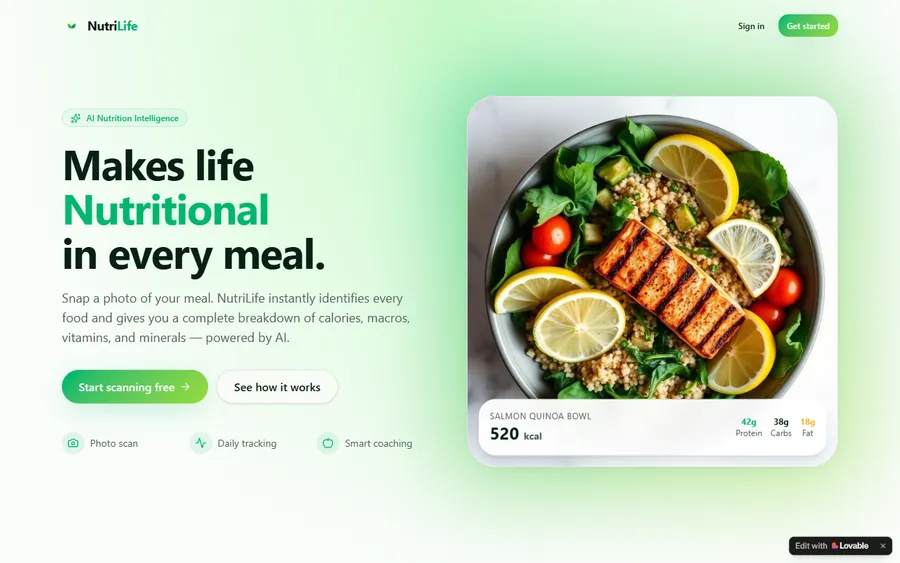
An AI nutrition coach that reads what you eat and works you toward a target.
AI and ML
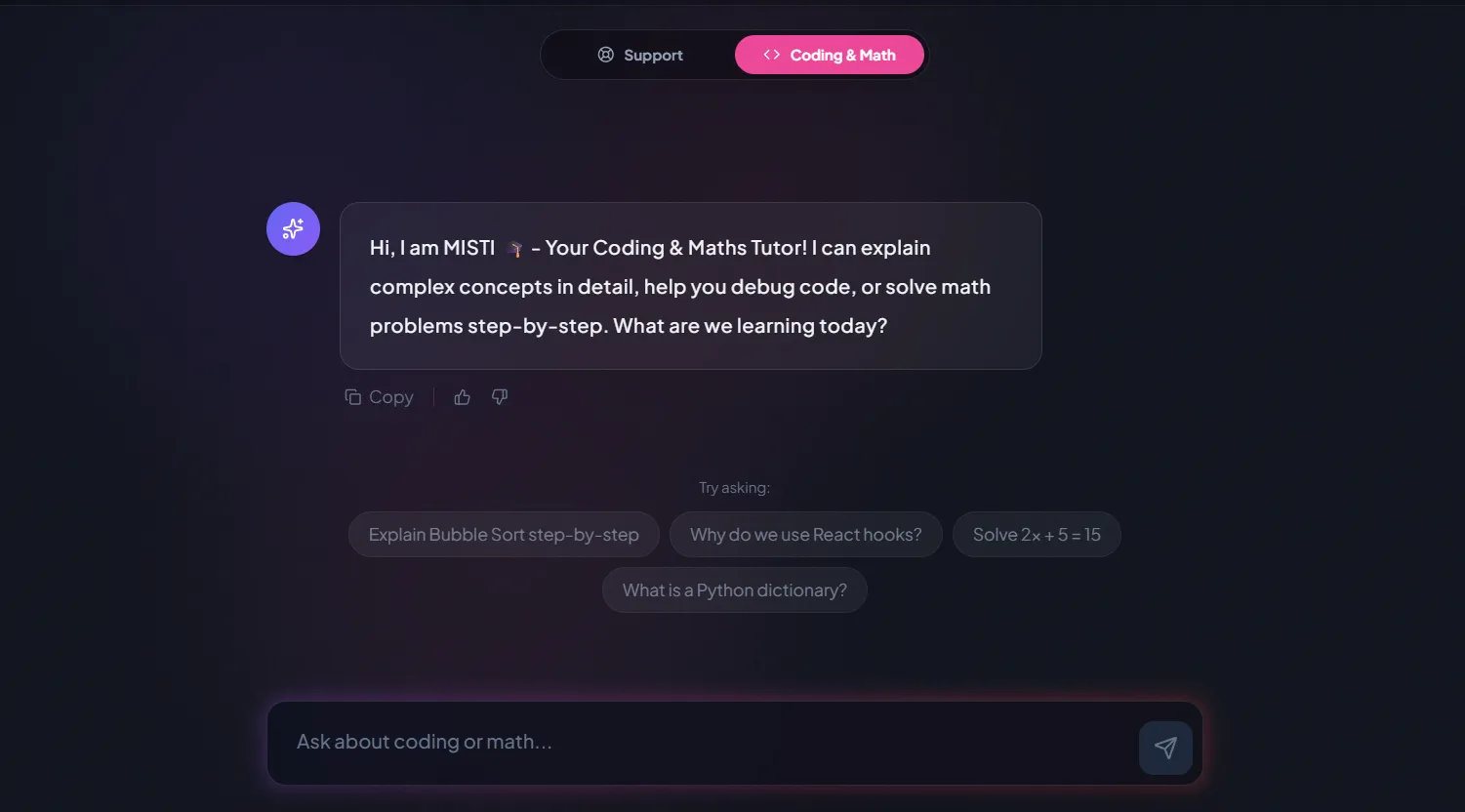
A chatbot that answers mathematics and programming questions, built and deployed by a student.
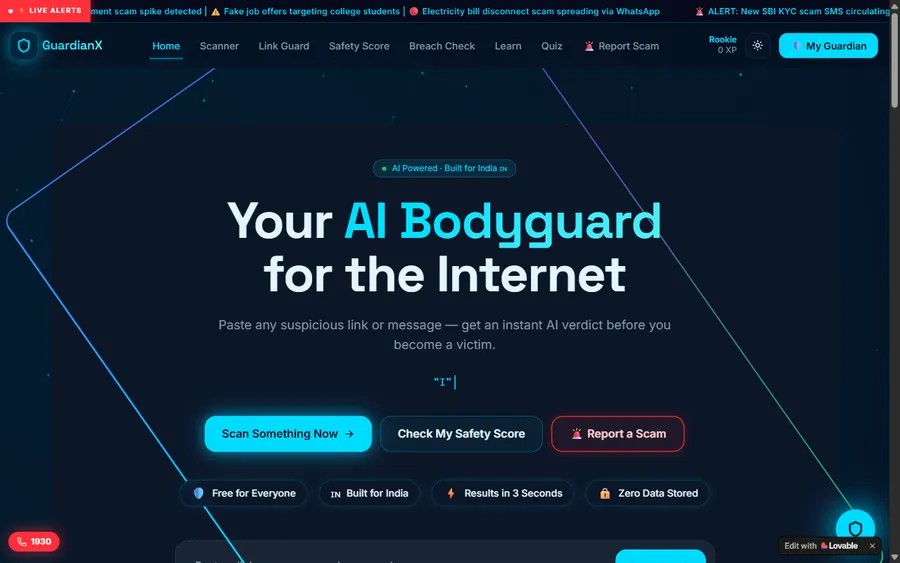
AI and ML
An assistant that helps a young person recognise unsafe situations online.
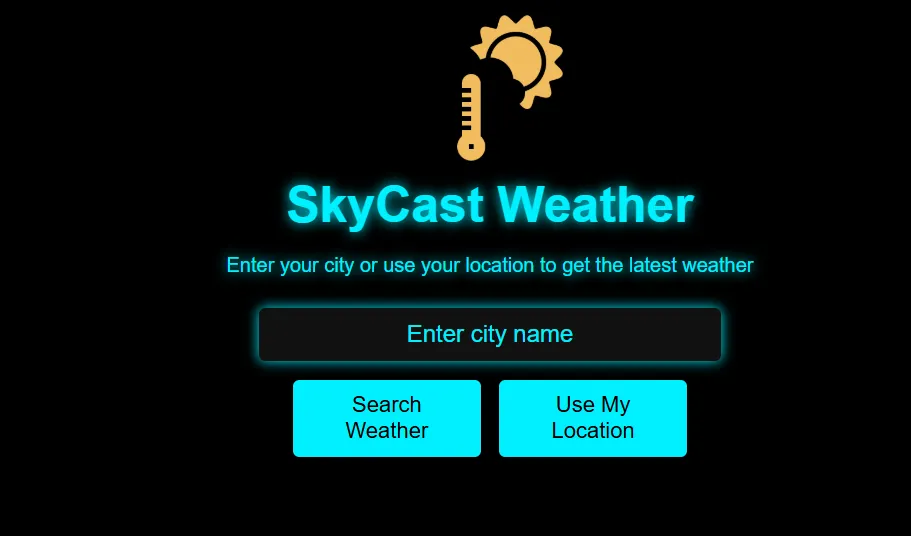
Web app
A weather forecasting site with live conditions for any location.
Fees
One monthly figure in US dollars, the same for every country outside India. No deposit and no annual contract.
Free first class
USD 0
no card required
Group batch
USD 100
a month, billed in US dollars
One to one
USD 150
a month, billed in US dollars
What families say
Taken from Google exactly as written. Nobody is paid or asked to leave one.
★★★★★
"The one step solution for my son. Modern Age Coders make learning coding so simple that kids love it. The teachers explain complex concepts clearly with practical exercises and interactive content."
Ria Mukherjee
Parent
★★★★★
"Modern Age Coders has been a game-changer for me. I struggled to grasp IT concepts and coding before joining, but their classes transformed everything. I can now confidently write complex programs with ease."
Samriddha Mondal
Student
★★★★★
"One of the most wonderful education centres out there. Education is not limited to school syllabus but focuses on skill development."
Vansh Agarwal
Student
★★★★★
"My child Dhairya is really enjoying the Modern Age Coders classes. This is his first online class and he eagerly looks forward to it. I can already see his improvement, and the teachers are very cooperative."
Sonam Oswal
Parent of Dhairya
★★★★★
"Modern Age Coders have wonderful teachers who teach in a clear, easy and practical way. The teacher boosts students' confidence and inspires them to learn without hesitation."
Sonu Goyal
Parent
★★★★★
"I highly recommend this computer coding class! The teachers are incredibly knowledgeable and passionate about coding."
Ritu Kedia
Parent
Questions from UK families
Thirteen to eighteen, which spans Year 9 to Year 13 in England and Wales, S2 to S6 in Scotland, and Year 10 to Year 14 in Northern Ireland.
Ofcom found in 2026 that 56 per cent of children aged 8 to 17 have used AI, rising to 66 per cent of 16 to 17-year-olds, and that 92 per cent of 13 to 17-year-olds have heard of it.
More than you might expect. Among children who read AI summaries in search results, 46 per cent agree the information is always accurate, and 40 per cent of 13 to 17-year-olds aware of AI would trust an AI-generated article at least as much as a human-written one.
Less reliably than they think. Ofcom showed children a real image and an AI-generated one, and found that a quarter of those who said they were confident could not identify the AI-generated image.
No. Older beginners usually move through the early stages faster because they read and reason better. A term of weekly lessons is normally enough to be writing working Python unaided.
Yes. Teachers work to the board or qualification the school has chosen, whether that is an English GCSE or A level board, National 5 and Higher in Scotland, WJEC in Wales or CCEA in Northern Ireland.
No. Those are set, supervised and certified inside a school, and outside help would put an entry at risk. We teach the skills they draw on, using our own projects.
Lessons ease off in the weeks before papers and restart afterwards. A teenager revising for nine subjects does not need a tenth commitment in May.
Groups are built by level rather than by age, so a fast fourteen-year-old and a beginner sixth former can be in different rooms from their own year group. It works better than it sounds.
The first lesson is free. Continuing is USD 100 a month in a group or USD 150 a month one to one, with nothing to pay up front and no annual tie-in.
Elsewhere on this site
Each one goes deeper into a single part of this.
The four school systems, and every UK page in this series.
Seven checks for judging any provider, at any age.
What the computing curriculum says and who has to follow it.
Everything a teenager can enter this year, with closing dates.
The national round for students well ahead of their course.
Projects our students have built and published.
Start here
Send a number and we will come back at a UK time that suits. The first lesson is real teaching on a real problem, and it ends with a straight answer about where the teenager should start.
Rather read first? Every syllabus is on the course pages, the method is set out in how we teach, and the topic order is on the coding roadmap.
WhatsApp us · +91 91233 66161 · contact@modernagecoders.com
WhatsApp from a UK mobile is free and usually fastest. The number is Indian, which we say plainly; there is no British office.