UK / TR1 / 01
Python in full
The language everything here is written in, taught by predicting output before running it.
Open the syllabusUnited Kingdom · Training models · Ages 12 to 67
The UK government publishes an introduction to AI assurance, and in it there is a list of six techniques an organisation can apply to an AI system. Risk assessment. Impact assessment. Bias audit. Compliance audit. Conformity assessment. Formal verification. Read them together and something becomes obvious: every single one operates on a system somebody built, with input data somebody chose and outputs somebody can measure against a benchmark. Not one of them can be applied to a prompt. That is the practical difference between training a model and typing at one, and it is the reason this page exists. Prompting is a thing you do to a product. Training is a thing you can be held to account for, and therefore a thing worth learning.
Live teaching since 2020 · 10,000+ students · Models built, tested and broken
In short
There is a line running through everything people call AI work, and it falls between using a system and building one. The UK government's introduction to AI assurance names six techniques for checking an AI system: risk assessment, algorithmic impact assessment, bias audit, compliance audit, conformity assessment and formal verification. All six assume a system with inputs you selected and outputs you can measure against a benchmark, which is exactly what a person who only prompts does not have. Learning to train models puts a learner on the side of the line where work can be inspected, measured and defended. We teach it with real data and small models, to learners from about twelve upwards and to adults, in groups of five to ten at one level or one to one. The first lesson is free, then USD 100 a month in a group or USD 150 one to one.
Start here
Each one ends with a model the learner trained, tested and can explain. Cards open the full syllabus.

TRAIN / 01
Data gathered, a model trained, evaluated against a held-out set, and then broken on purpose to find where it fails.
Open the syllabus →
TRAIN / 02
The part everyone skips: cleaning, questioning and understanding the data before a model ever sees it.
Open the syllabus →
TRAIN / 03
For adults and older students who need what is happening underneath rather than a tour of an interface.
Open the syllabus →Six ways to check
From the Department for Science, Innovation and Technology's Introduction to AI assurance, published 12 February 2024. These are its own definitions, shortened only where marked.
| Technique | What the guidance says it does | What it needs to exist |
|---|---|---|
| Risk assessment | Used "to consider and identify a range of potential risks that might arise from the development and/or deployment of an AI product/system" | A system with a known development history |
| Algorithmic impact assessment | Used "to anticipate the wider effects of a system/product on the environment, equality, human rights, data protection, or other outcomes" | A stated purpose and a population it affects |
| Bias audit | "Assesses the inputs and outputs of algorithmic systems to determine if there is unfair bias in the input data, the outcome of a decision or classification made by the system" | Access to the input data. This is the decisive one |
| Compliance audit | "Involves reviewing adherence to internal policies, external regulations and, where relevant, legal requirements" | A record of how the system was built and operated |
| Conformity assessment | Demonstrates "whether a product or system meets relevant requirements, prior to being placed on the market. Often includes performance testing" | Requirements written down in advance |
| Formal verification | "Establishes whether a system satisfies specific requirements, often using formal mathematical methods and proofs" | A specification precise enough to be proved against |
Read the third column down
Every entry needs something a person who only prompts does not possess: the training data, the build record, the stated requirements, the specification. The guidance describes a "toolbox of different products, services, and standards", and none of the tools in it fit around a text box.
The guidance organises all of this under three headings. Measure means "gathering qualitative and quantitative data on how an AI system functions, to ensure that it performs as intended". Evaluate means assessing risks and impacts, including "against agreed benchmarks set out in standards and regulatory guidelines". Communicate means being able to say what you found, inside the organisation and outside it.
Measure, evaluate, communicate. A student who has trained a model can do all three about it. A student who has only prompted one can do none.
The guidance is specific that teams should "build in rigorous software testing and performance assessment methodologies with comparisons to clear performance benchmarks".
A benchmark requires a held-out set of examples the model has never seen. Creating one is a ten-minute idea and the single most important habit in machine learning, because without it a model that has simply memorised looks identical to one that has learnt.
Source, read 20 September 2026: Introduction to AI assurance, Department for Science, Innovation and Technology, published 12 February 2024. The guide states that it "focuses on the underlying concepts of AI assurance rather than technical detail", and it is written for organisations rather than for learners; the application to learning here is ours.
Which side of the line
Both are legitimate. They are not the same activity, they do not build the same knowledge, and only one of them leaves evidence.
| Prompting a system | Training a system | |
|---|---|---|
| What you control | The wording of a request | The data, the structure, the objective and the stopping point |
| What you can measure | Whether this answer looked reasonable | Accuracy against examples the model has never seen |
| What you can audit | Nothing in the guidance applies | Inputs, outputs, bias, conformity, and the build record |
| What failure teaches | Try different words | Which part of the data or the design was wrong |
| What transfers | Familiarity with one product | The behaviour of the whole family of systems, product by product |
| What you can show | A conversation | A model, its data, its results and its limits |
Prompting well is a real and useful ability, and we use these tools in lessons. The point is narrower: it is not a substitute for knowing what the system is doing, and it cannot be checked by anybody.
A learner who trained something can hand over the data, the code and the results. That is what a coursework marker, an interviewer or a regulator can actually examine.
A model that fails tells you where. A prompt that fails tells you to rephrase. Only one of those two is a lesson.
The bias audit row deserves a sentence on its own, because it is the one that most surprises students. The guidance defines it as assessing inputs and outputs to find unfair bias "in the input data, the outcome of a decision or classification made by the system". Input data first. A learner who has chosen a training set with their own hands understands immediately why that is the first place to look, and a learner who has only ever typed into a box has no way to reach the question at all.
What the wider evidence says about AI literacy points the same way, and the page on learning to think sets that out: in the most cited framework, nine of seventeen competencies are about how these systems work rather than how to operate them.
How training is taught
Four stages that fit in a term and scale from a twelve-year-old to an adult professional. The only thing that changes is the dataset.
Data comes before anything. Where did these examples come from, what is missing from them, and who would be poorly served by a system trained on this? Doing this badly is the commonest failure in machine learning and the one nobody notices until much later.
Then the model. Small and simple to begin with, because a learner needs to be able to hold the whole thing in their head and say what each part is for. A big model that works is worth less to a student than a small one they can explain.
The benchmark. Split the data before training, hold some back, and only ever judge the model on examples it has never seen. This one rule separates measurement from wishful thinking, and it is what the guidance means by comparing against clear performance benchmarks.
Then failure, deliberately. Find the input that makes the model confidently wrong. Work out whether the fault was in the data, the design or the question. A learner who has done this stops believing confident outputs, permanently.
| Stage | What they produce | Which assurance idea it mirrors |
|---|---|---|
| Data | A described dataset, with what is missing written down | Bias audit, which begins with the input data |
| Model | A trained model they can explain part by part | The build record a compliance audit would ask for |
| Benchmark | A result on examples the model never saw | Performance testing against a clear benchmark |
| Failure | A documented case where it fails and why | Risk assessment, done at the scale of a classroom |
That final column is not a claim that a school project is an audit. It is a claim that the thinking is the same shape, and that a learner who has done the small version recognises the large one when they meet it at work. Beginning in the right shape costs nothing extra.
Younger learners do all four stages with data they collect themselves, usually drawings, which is described in detail on the AI classes for kids page. Older students use published datasets, and adults usually bring something from their own work, which is where the questions get sharpest.
One honest limitation. We teach how these systems are built, trained and evaluated at a scale a learner can hold; we do not train large language models, and nobody in a classroom does. What transfers from the small version is the reasoning, not the hardware.
Progression
Placement follows what a learner has actually built, which is usually less than they expect and easy to fix.
| Rung | What they can do | What they still take on trust |
|---|---|---|
| 1. Describe the data | Say where a dataset came from and what is missing from it | That the training process will do something sensible with it |
| 2. Train something | Produce a working model from labelled examples | That the accuracy figure means what it appears to mean |
| 3. Hold data back | Judge the model only on examples it has never seen | That the held-out set represents the real world |
| 4. Break it deliberately | Find inputs that defeat it, and say why they do | Very little, which is the point of getting here |
Until a learner holds data back, every result they produce is untrustworthy in a way they cannot see. It is a single habit and it changes everything downstream.
The whole topic sequence, including the Python that makes it possible, is on the coding roadmap.
Professionals who use AI daily frequently have never described a training set. That is not a gap in intelligence, it is a gap in exposure, and it closes fast.
Where anyone starts is settled in the free lesson rather than assumed from a job title or a school year.
The catalogue
Grouped by how much programming a learner has before they begin. Full syllabuses sit behind the cards.
UK / TR1 / 01
The language everything here is written in, taught by predicting output before running it.
Open the syllabusUK / TR1 / 02
Cleaning and questioning real datasets, which is most of the work and all of the risk.
Open the syllabusUK / TR1 / 03
Where data actually lives before anybody trains anything on it.
Open the syllabusUK / TR2 / 01
Train, hold data back, measure honestly, then break it on purpose.
Open the syllabusUK / TR2 / 02
Models built and compared visually first, so the ideas land before the notation does.
Open the syllabusUK / TR2 / 03
The same four stages for younger learners, with examples the child gathers themselves.
Open the syllabusUK / TR3 / 01
The architecture and the training process behind the tools, for people who need more than a feature list.
Open the syllabusUK / TR3 / 02
The full route for adults with a destination, from spreadsheets to deployed models.
Open the syllabusUK / TR3 / 03
Putting trained systems to work, with the checks that catch them failing quietly.
Open the syllabusHow lessons work
India keeps one clock all year, which leaves the UK five and a half hours behind from October and four and a half from March. Pick a slot in UK time and it is yours.
After school
Where most school-age learners land.
Evening
Older students and working adults, after the day winds down.
Weekend morning
A longer block, which suits training a model from start to finish.
Where it came from and what is missing, before a single model is trained. Skipping this is how projects fail quietly.
A model a learner can explain part by part beats a bigger one that works for reasons nobody in the room can state.
Judged only on examples it has never seen. Without this, a memorised model is indistinguishable from a good one.
Every project ends with the learner hunting for the input that defeats their own model.
Each finished model comes with a short note on what it cannot do, which is the habit the assurance guidance is built on.
Five to ten learners at one stage, comparing results and arguing about whose benchmark was fairer.
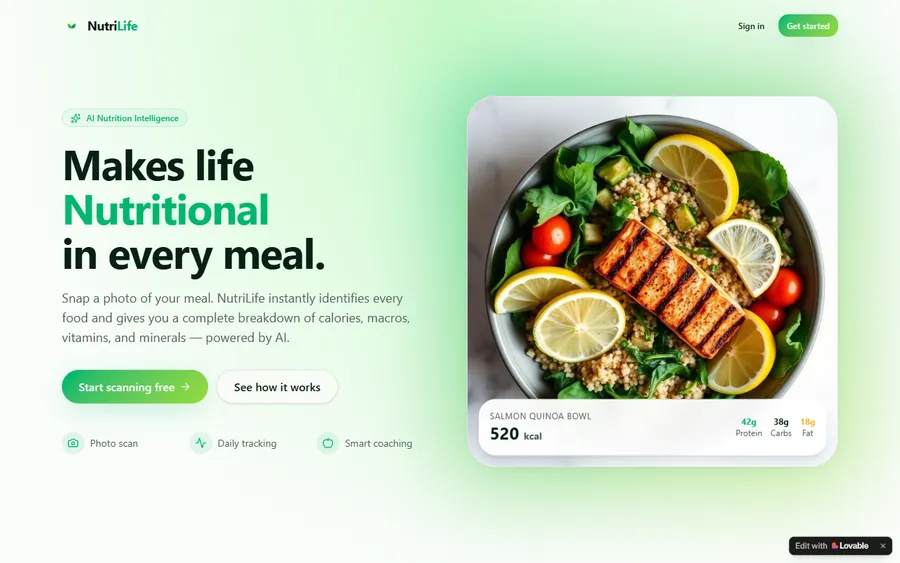
AI and ML
An AI nutrition coach that reads what you eat and works you toward a target.
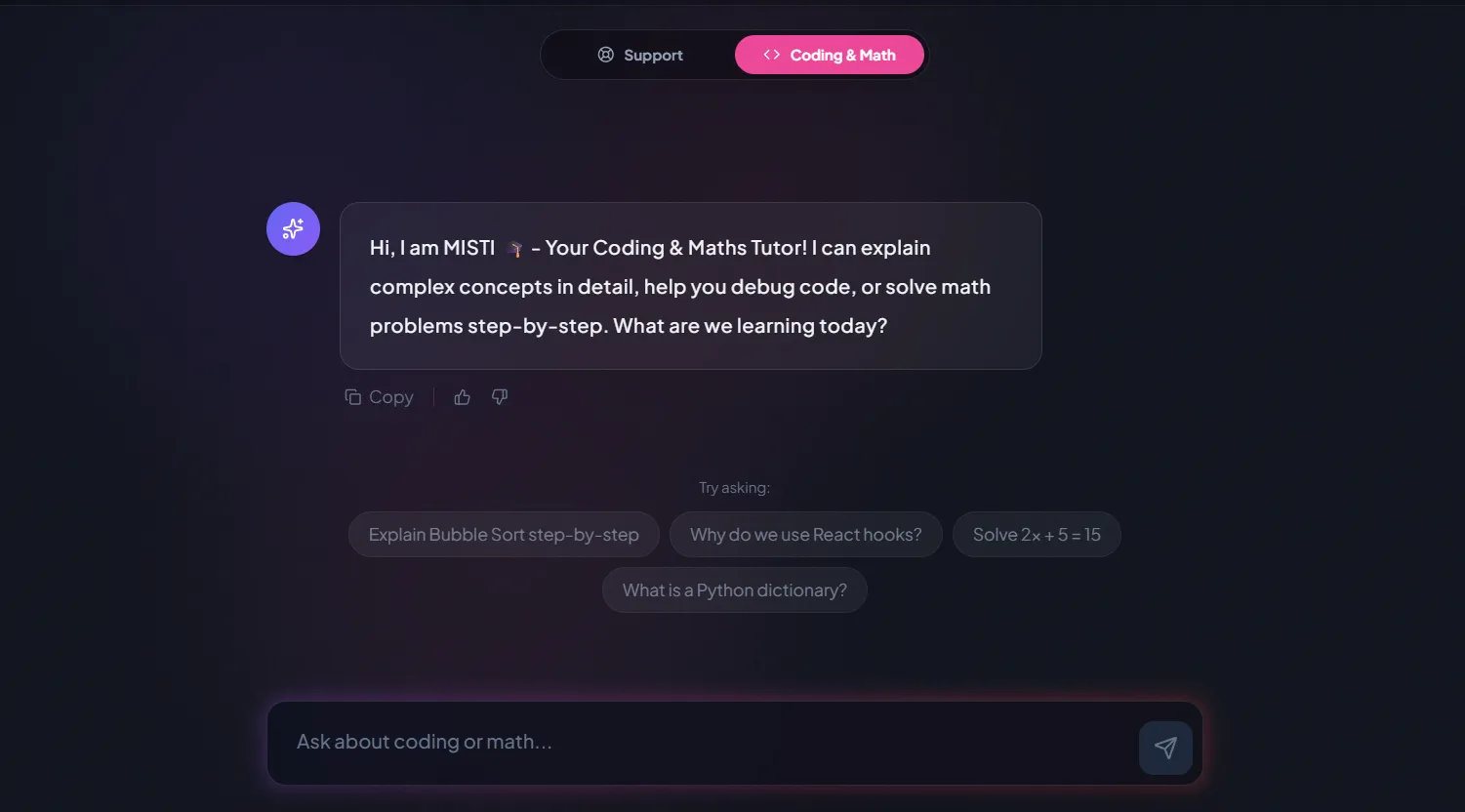
AI and ML
A chatbot that answers mathematics and programming questions, built and deployed by a student.
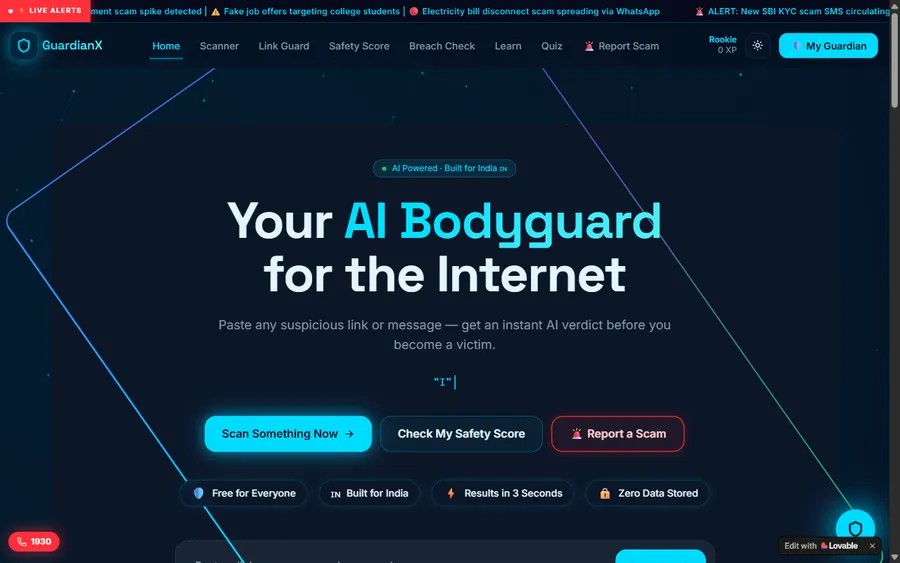
AI and ML
An assistant that helps a young person recognise unsafe situations online.
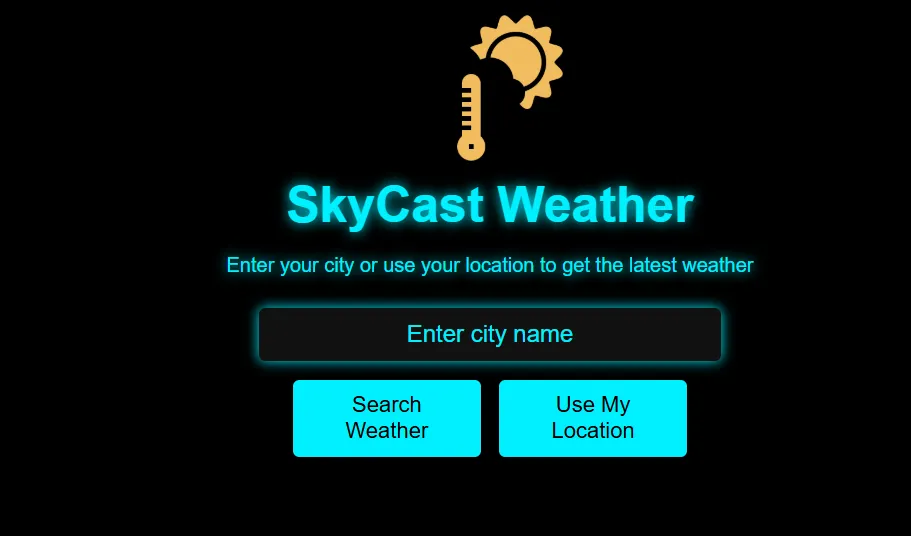
Web app
A weather forecasting site with live conditions for any location.
Fees
One charge a month, set in US dollars for every country but India. Try the free lesson first; billing begins only when a course and a weekly time are fixed.
Free first class
USD 0
no card required
Group batch
USD 100
a month, billed in US dollars
One to one
USD 150
a month, billed in US dollars
What families say
Straight from Google, unedited, from families nobody prompted.
★★★★★
"The one step solution for my son. Modern Age Coders make learning coding so simple that kids love it. The teachers explain complex concepts clearly with practical exercises and interactive content."
Ria Mukherjee
Parent
★★★★★
"Modern Age Coders has been a game-changer for me. I struggled to grasp IT concepts and coding before joining, but their classes transformed everything. I can now confidently write complex programs with ease."
Samriddha Mondal
Student
★★★★★
"One of the most wonderful education centres out there. Education is not limited to school syllabus but focuses on skill development."
Vansh Agarwal
Student
★★★★★
"My child Dhairya is really enjoying the Modern Age Coders classes. This is his first online class and he eagerly looks forward to it. I can already see his improvement, and the teachers are very cooperative."
Sonam Oswal
Parent of Dhairya
★★★★★
"Modern Age Coders have wonderful teachers who teach in a clear, easy and practical way. The teacher boosts students' confidence and inspires them to learn without hesitation."
Sonu Goyal
Parent
★★★★★
"I highly recommend this computer coding class! The teachers are incredibly knowledgeable and passionate about coding."
Ritu Kedia
Parent
Questions about training AI
Prompting means wording a request to a system somebody else built. Training means choosing the data, building the model, measuring it against examples it has never seen, and being able to say where it fails.
Because the UK government's introduction to AI assurance names six techniques for checking an AI system, and every one of them needs something a prompt does not have: the input data, the build record, the stated requirements or a specification.
Risk assessment, algorithmic impact assessment, bias audit, compliance audit, conformity assessment and formal verification.
The guidance defines it as assessing the inputs and outputs of algorithmic systems to determine if there is unfair bias in the input data or in the decision or classification the system makes. Input data comes first in that definition.
About twelve for the full version with real datasets, and from around eight for a simpler form using examples the child collects, which is covered on our AI classes for kids page.
Not to begin. The first term is about data, evidence and honest measurement. The mathematics arrives gradually and much later.
No, and nor does anyone in a classroom. We teach the reasoning at a scale a learner can hold, and the reasoning is what transfers.
Examples put aside before training and used only to judge the finished model. Without one, a model that has memorised the data looks exactly like a model that has learnt something.
No. It is useful and we use these tools in lessons. It is simply not a substitute for knowing what the system is doing, and it cannot be inspected by anybody.
Nothing for the opening lesson. A place in a group runs at USD 100 each month afterwards, or USD 150 for a teacher to yourself, billed month by month and never up front.
Elsewhere on this site
Each page takes one strand of this somewhere specific.
Five assumptions about software that AI breaks, from a DSIT-supported review.
The same four stages, with data a child collects themselves.
Why we will not tell you coding makes a child better at everything.
The language all of this is built in, and what the boards examine.
The national page, and the index of every UK page we publish.
Work our learners built and published.
Start here
Leave a number and we will reply at a British hour you choose. The first lesson is real teaching, and for most learners it ends with a model they trained themselves.
Would rather read? Every course page lists its syllabus, how we teach explains the method and its limits, and the coding roadmap shows the whole sequence.
WhatsApp us · +91 91233 66161 · contact@modernagecoders.com
WhatsApp is quickest and free from a British mobile. The number is registered in India, stated here rather than discovered later.