UK / AQ1 / 01
GCSE Computer Science
The full specification taught to the board a school actually uses.
Open the syllabusEngland · AQA 8525 · Years 10 and 11
There is a detail in the AQA specification that decides a surprising number of marks, and almost no student can state it. Exam questions "will always present algorithms using the current version of the AQA pseudo-code", program code must be written in C#, Python 3 or VB.NET, and the specification adds that questions "will explicitly state in what form the response needs to be provided. This will be, for example, pseudo-code, program code or a flowchart, and students must respond as instructed". Three notations live in the same paper. A candidate who writes beautiful Python into a question that asked for a flowchart has lost those marks before an examiner has read a line of the logic. This page covers both papers, all three notations, and the practical experience AQA says a student should have before they sit paper 1.
Live teaching since 2020 · 10,000+ students · Taught to the 8525 specification
In short
AQA 8525 is a linear GCSE: two written papers, both sat at the end of the course, each 90 marks and each worth half. Paper 1 runs two hours and covers computational thinking and programming; paper 2 runs an hour and three quarters and covers everything else, including SQL. Three things trip students up. Questions present algorithms in AQA pseudo-code, not in the language the class was taught. Program code must be written in C#, Python 3 or VB.NET. And each question states the form the answer must take, whether pseudo-code, program code or a flowchart, so answering in the wrong notation costs the marks outright. We teach the content and the exam habits together, in groups of five to ten or one to one. The first lesson is free, then USD 100 a month in a group or USD 150 one to one.
Start here
The specification content and the programming fluency it assumes. Each card opens a full syllabus.
AQA / 01
The whole specification taught in order, with paper 1 and paper 2 content kept distinct so revision knows which is which.
Open the syllabus →
AQA / 02
One of the three languages AQA supports, taught to the point where writing code by hand is not frightening.
Open the syllabus →
AQA / 03
Searching, sorting and the tracing questions that paper 1 leans on, worked on paper first.
Open the syllabus →Both papers
Everything here is from AQA's own specification for 8525, version 1.2 dated 29 November 2022, for teaching from September 2020 and exams from 2022.
| Paper 1: Computational thinking and programming skills | Paper 2: Computing concepts | |
|---|---|---|
| Length | Written exam, 2 hours | Written exam, 1 hour 45 minutes |
| Marks | 90 | 90 |
| Weighting | 50 per cent of the GCSE | 50 per cent of the GCSE |
| Content drawn from | Fundamentals of algorithms, and Programming | Data representation, computer systems, networks, cyber security, databases and SQL, and the ethical, legal and environmental section |
| What is assessed | "Computational thinking, code tracing, problem-solving, programming concepts including the design of effective algorithms and the designing, writing, testing and refining of code" | "SQL programming skills and theoretical knowledge" |
| Question types | Multiple choice, short answer and longer answer | Multiple choice, short answer, longer answer and extended response |
The specification is explicit: "This qualification is linear. Linear means that students will sit all their exams at the end of the course." There is no unit to bank in Year 10 and nothing to resit along the way.
That shapes the two years more than any content decision. Everything has to still be there in June of Year 11, which makes spaced revisiting worth more here than in a modular subject.
Students often treat paper 2 as the theory paper and paper 1 as the hard one. Paper 2 explicitly assesses SQL programming skills as well as theory, and it carries extended response questions that reward structured written argument.
It is also shorter by fifteen minutes for the same ninety marks, which changes the pace required.
A note on scope. Paper 1 draws on the algorithms and programming sections, and paper 2 on everything else, but AQA is clear that knowledge crosses over: understanding of binary is directly assessed in paper 2 while "the underlying knowledge and principles may be indirectly required for questions in paper 1".
Source, read 20 September 2026: AQA GCSE Computer Science (8525) specification, version 1.2, 29 November 2022. Always check the current version on AQA's own site, and your school will know which one applies.
Three notations
This is the part that costs marks for reasons that have nothing to do with ability.
| Notation | Where it appears | What a student needs |
|---|---|---|
| AQA pseudo-code | In the questions. "Exams will always present algorithms using the current version of the AQA pseudo-code" | To read it fluently. It is nobody's real language and every candidate meets it |
| Program code | In answers, where the question asks for it, in C#, Python 3 or VB.NET | Fluency in one of the three, by hand, without an editor to correct them |
| Flowcharts | In answers, where the question asks for one | The conventions, practised, because an approximate flowchart is not a flowchart |
| Any suitable format | Where pseudo-code is an accepted response, AQA does not require its own version | Enough discipline that a home-made notation still reads unambiguously |
The sentence to memorise
AQA states that "Exam questions will explicitly state in what form the response needs to be provided. This will be, for example, pseudo-code, program code or a flowchart, and students must respond as instructed."
AQA supports three: "C#, Python (version 3), VB.NET", and paper 1 requires students to "design, write, test and refine program code in one of the three languages above". The school chooses, not the student, and it is worth asking in Year 9 which one your school teaches.
Python is the common answer in English schools, and it is the one we teach. If a school has chosen C# or VB.NET we will say so plainly rather than pretend the transfer is seamless.
One line in the specification catches whole classes out: students "need a theoretical understanding of all the topics in this section for the paper 1 exam even if the programming language(s) taught does not support all of the topics".
So a gap in the language taught is not a gap the exam will forgive. It has to be filled on paper, which is exactly the kind of thing a weekly class outside school is useful for.
There is also a presentation standard that reads like advice and functions like a mark scheme. When writing programs in an exam, candidates "need to ensure they use meaningful identifier names, use suitable data types and that all logic flow is clearly identifiable to examiners". Single-letter variables and unindented code are not neutral choices in a paper marked by a human.
Practical experience
The specification lists what a student should have "sufficient practical experience" of before sitting paper 1. It is a short list and it is a good revision checklist.
| AQA expects experience of | What that looks like in practice |
|---|---|
| Structuring programs into modular parts "with clear documented interfaces" | Writing subroutines that do one thing, with parameters and returns a reader can predict |
| Including "authentication and data validation systems/routines" | Login checks and input validation built at least once, not just described |
| Writing, debugging and testing programs, so as to "articulate how programs work and argue using logical reasoning for the correctness of programs" | Explaining out loud why a program is correct, which is the skill the longer questions actually test |
| Designing and applying test data "(normal, boundary and erroneous)" | A test table built before the code, with all three types named |
| "Refining programs in response to testing outcomes" | Changing a working program because the tests said so, and recording what changed |
Arguing for the correctness of a program is the skill that separates a grade 6 from a grade 8 on the longer paper 1 questions, and it is almost never practised, because it looks like talking rather than coding.
Our lessons do it every week: a student says what their program will do and why it is right, before it runs. It sounds slow and it is the fastest thing we do.
Normal, boundary and erroneous. Three words, and a question asking for test data with all three types is the most reliably answerable question on the paper, provided the student has ever built such a table themselves.
A student who has only tested by running the program until it looked fine has never met the vocabulary.
We do not touch any assessed work, and 8525 has none, which makes this page simpler than the A-level ones. Everything here is exam preparation and ordinary teaching. For students carrying on to sixth form, the A-level coursework page covers what changes when a project does count.
If you do not yet know which board your school uses, that question is worth asking before anything else. The Python page explains how differently the three English boards treat the language, and one of them examines it on a computer.
Progression
A linear qualification rewards a plan that revisits rather than one that marches forward and never looks back.
| Stage | Usually | What should be secure |
|---|---|---|
| 1. Fluent in one language | Early Year 10 | Writing short programs by hand, with sensible identifiers and correct indentation |
| 2. Reading AQA pseudo-code | Mid Year 10 | Tracing an unfamiliar algorithm printed in pseudo-code without rewriting it first |
| 3. Paper 2 content | Across both years | Data representation, networks, security, SQL, and the written-argument questions |
| 4. Exam behaviour | Year 11 | Reading the instruction, answering in the form asked, and test tables with all three data types |
Most students can write code and freeze at pseudo-code, because school teaching happens in an editor and the exam does not. It takes about four lessons to fix and it pays across both papers.
The wider topic sequence is on the coding roadmap.
By the spring the content argument is mostly settled and the marks are in habits: reading the instruction, showing logic clearly, and not abandoning a question that opens awkwardly.
Lessons thin out in the weeks immediately before the papers and pick up afterwards.
The catalogue
Grouped by what a candidate needs most. The free lesson decides which is the right starting point.
UK / AQ1 / 01
The full specification taught to the board a school actually uses.
Open the syllabusUK / AQ1 / 02
One of AQA's three supported languages, to the point of writing it by hand.
Open the syllabusUK / AQ1 / 03
The paper 2 section students most often meet for the first time in the exam.
Open the syllabusUK / AQ2 / 01
Searching, sorting and tracing, worked on paper where the exam will ask for them.
Open the syllabusUK / AQ2 / 02
For Year 9 and Year 10 students who arrived from blocks and need the keyboard stage properly.
Open the syllabusUK / AQ2 / 03
Decomposition and precise description, for students who find the wording harder than the code.
Open the syllabusUK / AQ3 / 01
Something real to build once the specification stops being new.
Open the syllabusUK / AQ3 / 02
Where the maths and the programming start to pull in the same direction.
Open the syllabusUK / AQ3 / 03
Real datasets and honest measurement, which A level rewards heavily.
Open the syllabusHow lessons work
Teachers work from India on a clock that never shifts, which puts the UK five and a half hours behind from October and four and a half from March. Slots are agreed in UK time.
After school
Where most Year 10 and 11 students settle.
Early evening
For students with a long journey or other commitments.
Weekend morning
Useful for longer exam-style practice in one sitting.
Regular handwritten code, because that is the medium of both papers and an editor hides every weakness.
Reading AQA pseudo-code until it is unremarkable. Most students can code and cannot yet read this.
Every practice question begins by naming the form the answer must take. It becomes automatic in weeks.
Normal, boundary and erroneous, built before the code rather than after the marks are lost.
A student says why the program is right before running it, which is what the longer questions reward.
Five to ten students at one stage, which is where comparing two answers becomes possible.
Student work
Four published projects. More sit on the student labs page.
AI and ML
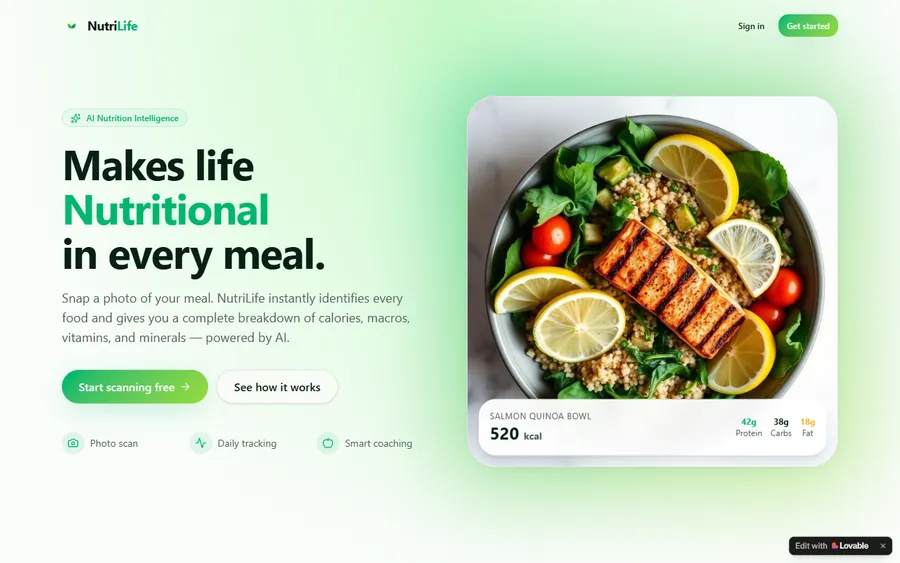
An AI nutrition coach that reads what you eat and works you toward a target.
AI and ML
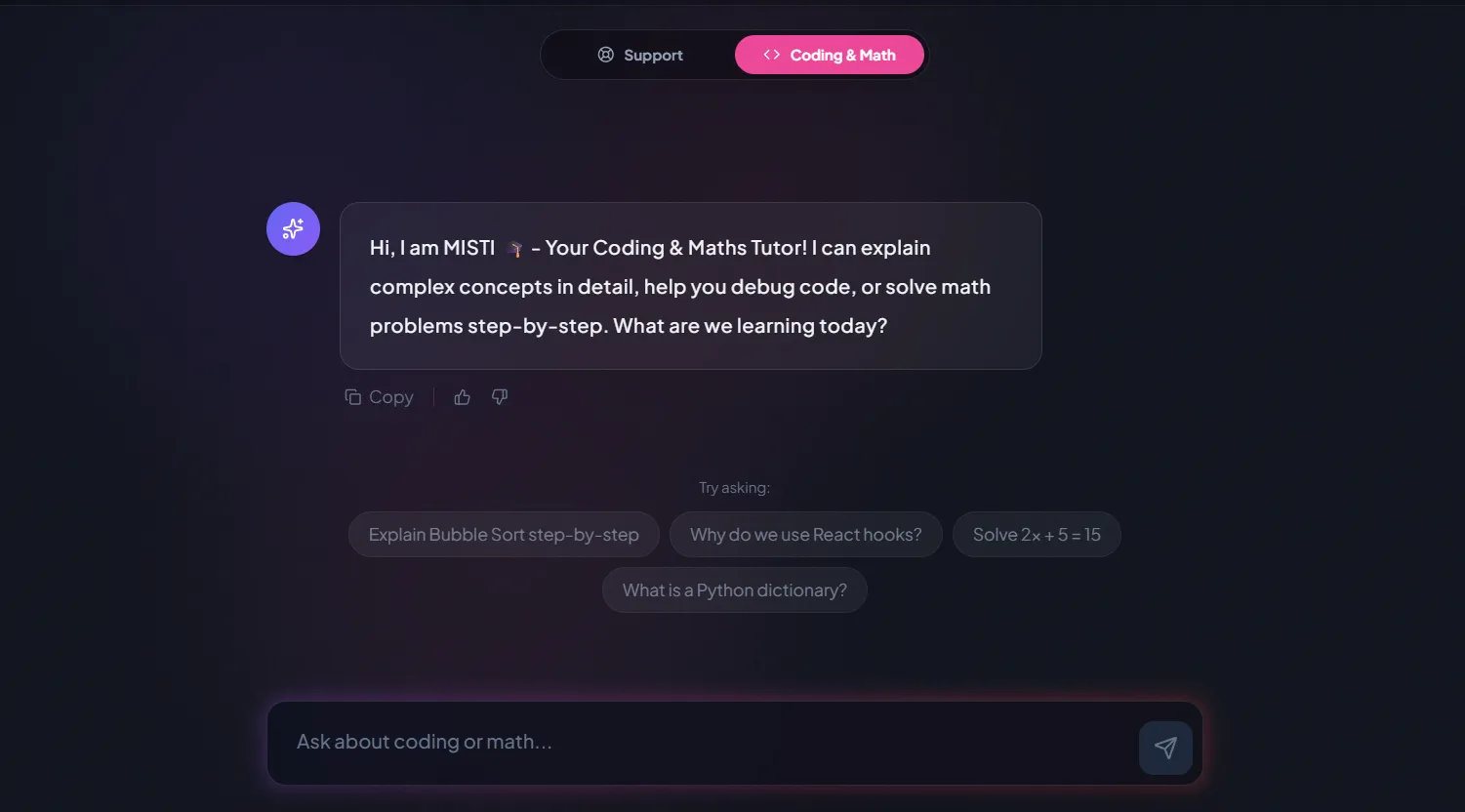
A chatbot that answers mathematics and programming questions, built and deployed by a student.
AI and ML
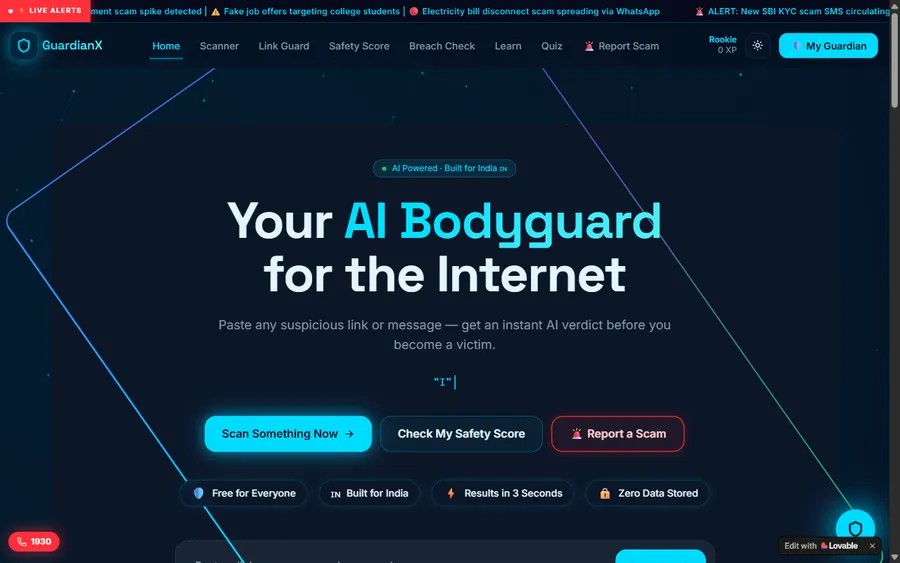
An assistant that helps a young person recognise unsafe situations online.
Web app
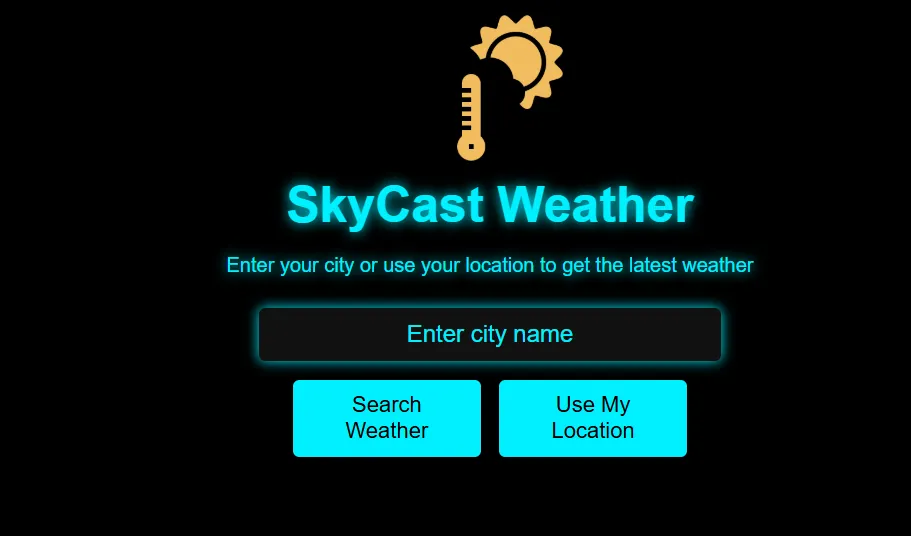
A weather forecasting site with live conditions for any location.
Fees
A single monthly figure in US dollars, the rate outside India. The free lesson comes first and nothing is charged until a course and a slot are settled.
Free first class
USD 0
no card required
Group batch
USD 100
a month, billed in US dollars
One to one
USD 150
a month, billed in US dollars
What families say
From Google, word for word, unpaid and unprompted.
★★★★★
"The one step solution for my son. Modern Age Coders make learning coding so simple that kids love it. The teachers explain complex concepts clearly with practical exercises and interactive content."
Ria Mukherjee
Parent
★★★★★
"Modern Age Coders has been a game-changer for me. I struggled to grasp IT concepts and coding before joining, but their classes transformed everything. I can now confidently write complex programs with ease."
Samriddha Mondal
Student
★★★★★
"One of the most wonderful education centres out there. Education is not limited to school syllabus but focuses on skill development."
Vansh Agarwal
Student
★★★★★
"My child Dhairya is really enjoying the Modern Age Coders classes. This is his first online class and he eagerly looks forward to it. I can already see his improvement, and the teachers are very cooperative."
Sonam Oswal
Parent of Dhairya
★★★★★
"Modern Age Coders have wonderful teachers who teach in a clear, easy and practical way. The teacher boosts students' confidence and inspires them to learn without hesitation."
Sonu Goyal
Parent
★★★★★
"I highly recommend this computer coding class! The teachers are incredibly knowledgeable and passionate about coding."
Ritu Kedia
Parent
Questions about AQA 8525
Two written papers, both at the end of the course. Paper 1 is two hours, 90 marks and half the GCSE. Paper 2 is an hour and 45 minutes, 90 marks and the other half. There is no coursework.
For exams from 2022, AQA supports C#, Python version 3 and VB.NET, and paper 1 requires students to design, write, test and refine code in one of those three.
AQA's own notation for presenting algorithms. The specification says exams will always present algorithms using the current version of it, so every candidate has to be able to read it fluently.
Where a question accepts pseudo-code as a response, AQA says students may present answers in any suitable format and do not have to use AQA's own version. But the question states what form is required, and students must respond as instructed.
No. It assesses SQL programming as well as theory, carries extended response questions, and gives fifteen minutes less than paper 1 for the same 90 marks.
The specification is explicit that students need a theoretical understanding of all the programming topics for paper 1 even if the language taught does not support them all. That gap has to be filled on paper.
Yes. Candidates are told to use meaningful identifier names, suitable data types, and to make the logic flow clearly identifiable to examiners.
Normal, boundary and erroneous. The specification names all three, and questions about test data are among the most reliably answerable on the paper.
We teach Python. The concepts transfer between all three, but the syntax practice does not, so we will say plainly in the free lesson if a school's choice makes us the wrong fit.
The first lesson is free. Continuing is USD 100 a month in a group or USD 150 a month one to one, with nothing taken in advance.
Elsewhere on this site
Each one covers a different part of the picture.
What the computing curriculum says and who has to follow it.
How the three English boards treat the language differently.
What the awarding bodies say about AI in assessed work.
What changes at sixth form, when a project starts counting.
The national page, and the index of every UK page we publish.
Where a strong GCSE student can go next.
Start here
Leave a number and we will reply at a British hour you choose. The lesson uses real 8525 material and ends with a frank view of where the gaps are.
Rather read? Each course page lists its syllabus, how we teach sets out the method, and the coding roadmap shows the sequence.
WhatsApp us · +91 91233 66161 · contact@modernagecoders.com
WhatsApp is quickest and free from a British mobile. The number is registered in India, which we state rather than leave you to notice.