JC / CODE / 01
Scratch Coding for Kids
Blocks for students not yet ready for typed code.
Open the syllabusIreland · Junior Cycle · Coding short course
The Coding short course is one of the few places in the Junior Cycle where a student builds real software, and it ends in a single piece of assessed work that the school, not the State, judges. Parents often hear about it for the first time when that work is due, and then the questions arrive together: what exactly has to be handed in, who marks it, what the words on the report mean, and what help is fair. This page answers those questions from the NCCA's own documents, the June 2025 specification and assessment guidelines, together with the Framework for Junior Cycle. It then explains what live lessons can do for a student taking the course: build the programming, web and AI skills behind it, on different examples, so the student arrives at the assessment able to do the work themselves. We never write, edit or check a student's assessed work, and the guidelines explain why that line matters.
Live teaching since 2020 · 10,000+ students · skills taught, assessed work untouched
In short
The Junior Cycle Coding short course has one Classroom-Based Assessment, called Putting the Pieces Together. Students choose a Software Project, built in a team of two or three but assessed on each student's own role, or an individual Coding Portfolio of 3 to 5 pieces with reflections. It takes place in second or third year, after all three strands, over about six to eight hours, and the school awards one of four descriptors, which appears on the Junior Cycle Profile of Achievement. Modern Age Coders teaches the skills behind the course live online, on separate examples, in groups of five to ten or one to one. We never touch assessed work. The first class is free; later a group place is USD 100 a month, and one-to-one USD 150.
Start here
Programming, the web and AI are the three things the course asks students to handle. One card for each, each opening its syllabus.
JC / 01
Typed programming practised until loops, functions and debugging feel ordinary, the base for either assessment option.
Open the syllabus →
JC / 02
Real web pages from the first tag, matching the course outcome that asks students to build a small website.
Open the syllabus →
JC / 03
What AI models are, where they are used in coding, and their limits and risks, for learners up to fourteen.
Open the syllabus →The assessment
The 2025 guidelines give the short course one Classroom-Based Assessment, and students choose between two ways of completing it.
| Software Project | Coding Portfolio | |
|---|---|---|
| Who does it | A team of two or three, each student assessed on their own role and contribution | The student alone; group work may be included if the student's part is clearly marked |
| What is produced | One piece of software of the team's choice, researched, designed, implemented, tested, documented and presented to peers | Between 3 and 5 pieces of work from the three strands, each with a reason for choosing it and a short reflection, plus an overall reflection |
| Aspects | Five: research and planning; design, implementation and testing; documentation of work and code; presentation; assessment of feedback | Four: choosing the pieces; curating them; explaining and reflecting on each; an overall reflection |
| Form | Software, its documentation and a presentation | Digital, physical or a mix of both |
Students prepare for it over a suggested period in second or third year. The guidelines are firm that assessments for the Junior Cycle Profile of Achievement cannot be conducted in first year, and that work completed in year one cannot be included.
The assessment begins only after the work in the three strands is complete, and either option is expected to take approximately 6 - 8 hours.
Students writing portfolio notes are given guiding questions, among them: "Why is the piece of work a good example of my learning and skills?" and "If there is a mistake in the work can I explain how I learned from it for a later piece of work".
Those questions reward a student who understands their own code. A portfolio built from work the student cannot explain has nothing honest to reflect on.
Sources, read 16 September 2026: NCCA, Junior Cycle Coding: Guidelines for the Classroom-Based Assessment (June 2025); NCCA, Short Course Coding specification (June 2025); Framework for Junior Cycle 2015. Schools may adapt the short course and its assessment, so always check the school's own version.
How it is judged
There are no marks or percentages. The teacher chooses the descriptor that best fits the work, measured against published Features of Quality.
| Descriptor | What it describes |
|---|---|
| Exceptional | Work that reflects the Features of Quality to a very high standard; while not necessarily perfect, its strengths far outstrip its flaws, which are minor |
| Above expectations | Work that reflects the Features of Quality very well |
| In line with expectations | Work that reflects most of the Features of Quality well, shows a good understanding of the task and is free from significant error |
| Yet to meet expectations | Work that falls someway short of the demands of the assessment and its Features of Quality |
The guidelines describe a "best fit" approach: the teacher selects the descriptor that on balance describes the work. They also say results should not be assumed to follow any distribution, because each student is judged against the Features of Quality, not against classmates.
Descriptors are discussed at a subject review meeting in the school before students are told, and any query is dealt with by the school. Short courses are assessed by teachers and reported by the school; there is no State examination for them.
The result is reported to parents and appears on the Junior Cycle Profile of Achievement, which students receive in the autumn after third year. The Framework allows a maximum of four short courses on the profile where a student sits eight examination subjects, and two where they sit nine.
A short course is also a lighter commitment than a subject: the Framework asks for its time over three years, against a minimum of 200 hours for most subjects and 240 for English, Irish and Mathematics.
AI in the course
The revised specification gives artificial intelligence its own topic in the second strand, and brings it into the first strand's look at computers in society.
| Outcome | Wording | Assessed in |
|---|---|---|
| 2.8 | identify different AI models and how they can be applied in coding | The Coding Portfolio option |
| 2.9 | discuss the use of AI models when applied in coding, their potential advantages and limitations and any ethical and safety issues which may arise | The Software Project option |
| 2.5 | create a small website using HTML and CSS to showcase their learning | Taught in the strands |
The first strand, taken before the others, includes a topic on the importance of computers in society, "including the ethical uses of computers, software, and Artificial Intelligence (AI)".
The specification leaves room for choice: students may use a programming language of their choice in the third strand, and free and open-source software should be used where practical, so students can examine the source code of their tools.
Discussing AI's advantages, limitations and risks, as outcome 2.9 asks, is far easier for a student who has used AI tools with guidance and seen them get things wrong. Our lessons give students that experience on practice projects.
For how AI tools and a student's own work fit together under Irish guidance, see understanding the code instead of copy-pasting.
Fair help
The guidelines draw the line clearly. We teach on the right side of it.
The guidelines state that "Work which cannot be authenticated by the teacher cannot be accepted" for the profile, and that only work which is the student's own can be accepted.
The programming, web and AI skills the strands cover, on practice projects that are not the assessed work, so the student can do the real thing alone.
Write, edit, debug or review any part of a student's Software Project or Coding Portfolio, or draft their reflections. During the assessment weeks our lessons move to different examples.
After the short course, the specification itself points to what comes next: coding and computer science through Transition Year modules or, where the school offers it, Leaving Certificate Computer Science. Our pages on the Transition Year coding course and on Leaving Cert Computer Science grinds take up both paths.
The ladder
The rungs follow the course's own order: the introductory strand first, then programming and the web, then the kind of work the assessment asks for.
| Usually | Rung | The student can |
|---|---|---|
| First Year | 1. Computers in society | Explain how computers, software and AI shape everyday life, and their ethical questions |
| First Year | 2. First programs | Write and fix small programs with loops, choices and variables |
| Second Year | 3. The web | Build a small website in HTML and CSS |
| Second Year | 4. Bigger projects | Plan, build, test and document a program of their own on a practice project |
| Second or Third Year | 5. Reflect and present | Explain their own work, what went wrong and what they learned |
A student who has already planned, built and presented two or three practice projects meets the real assessment knowing the shape of the task. The assessed work then stays entirely their own.
The full order of subjects is on the coding roadmap.
Schools choose when the course runs and may adapt it. We ask what the school is covering and fit practice around it, pausing during the assessment weeks.
Students not taking the short course can follow the same rungs; see the best online coding classes in Ireland.
The catalogue
Grouped by the course's three kinds of work. The free first class decides where a student starts.
JC / CODE / 01
Blocks for students not yet ready for typed code.
Open the syllabusJC / CODE / 02
Typed programming, learned for depth.
Open the syllabusJC / CODE / 03
Breaking problems down and testing solutions.
Open the syllabusJC / WEB / 01
Real responsive pages from the first tag.
Open the syllabusJC / WEB / 02
Interactive pages and small browser games.
Open the syllabusJC / WEB / 03
A record of the student's own work over time.
Open the syllabusJC / AI / 01
How AI works and where it fails, up to age fourteen.
Open the syllabusJC / AI / 02
AI tools used well and safely, from thirteen.
Open the syllabusJC / AI / 03
Models built and tested by the student.
Open the syllabusHow lessons run
Lessons are live and taught from India, at a regular hour set in Irish time; Irish time is five and a half hours behind India time in winter and four and a half in summer. Junior Cycle students usually take one or two lessons a week after school.
After school
A weekday late afternoon, Irish time.
Weekend
Saturday or Sunday, for longer practice projects.
Assessment weeks
Lessons switch to unrelated examples while the CBA is under way.
A short task in code, so the teacher can see where the student stands and suggest a starting point.
Five to ten students at the same level, many of them taking school computing courses of their own.
For a student who wants the teacher's full attention, or who is far ahead of their class.
Every project in our lessons is separate from school assessed work, by design.
Strands, CBA, descriptors and JCPA are used as Irish schools use them; lessons are in English.
Practice work stays in the student's own folder, a record of how their skills grew.
Student work
Four live projects by our students. More on the student labs page.
AI and ML
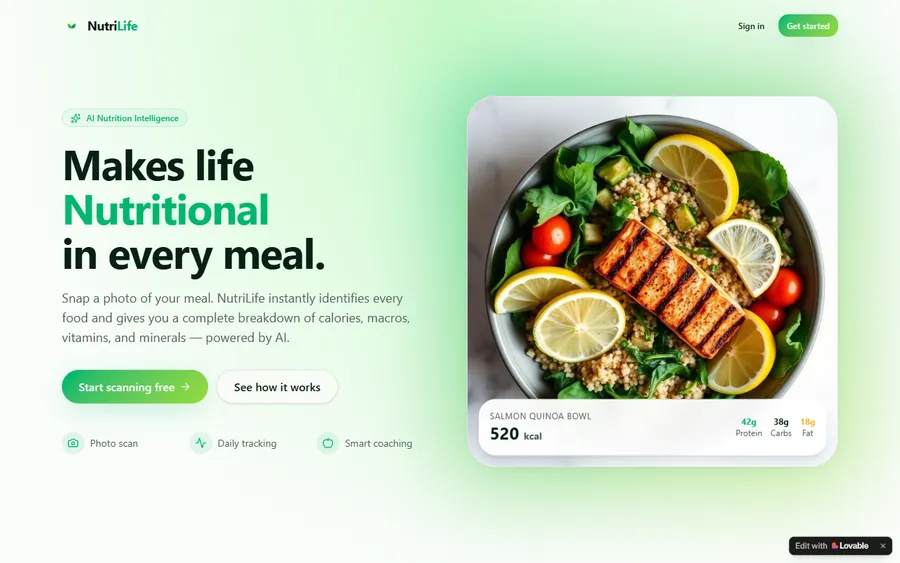
An AI nutrition coach that reads what you eat and works you toward a target.
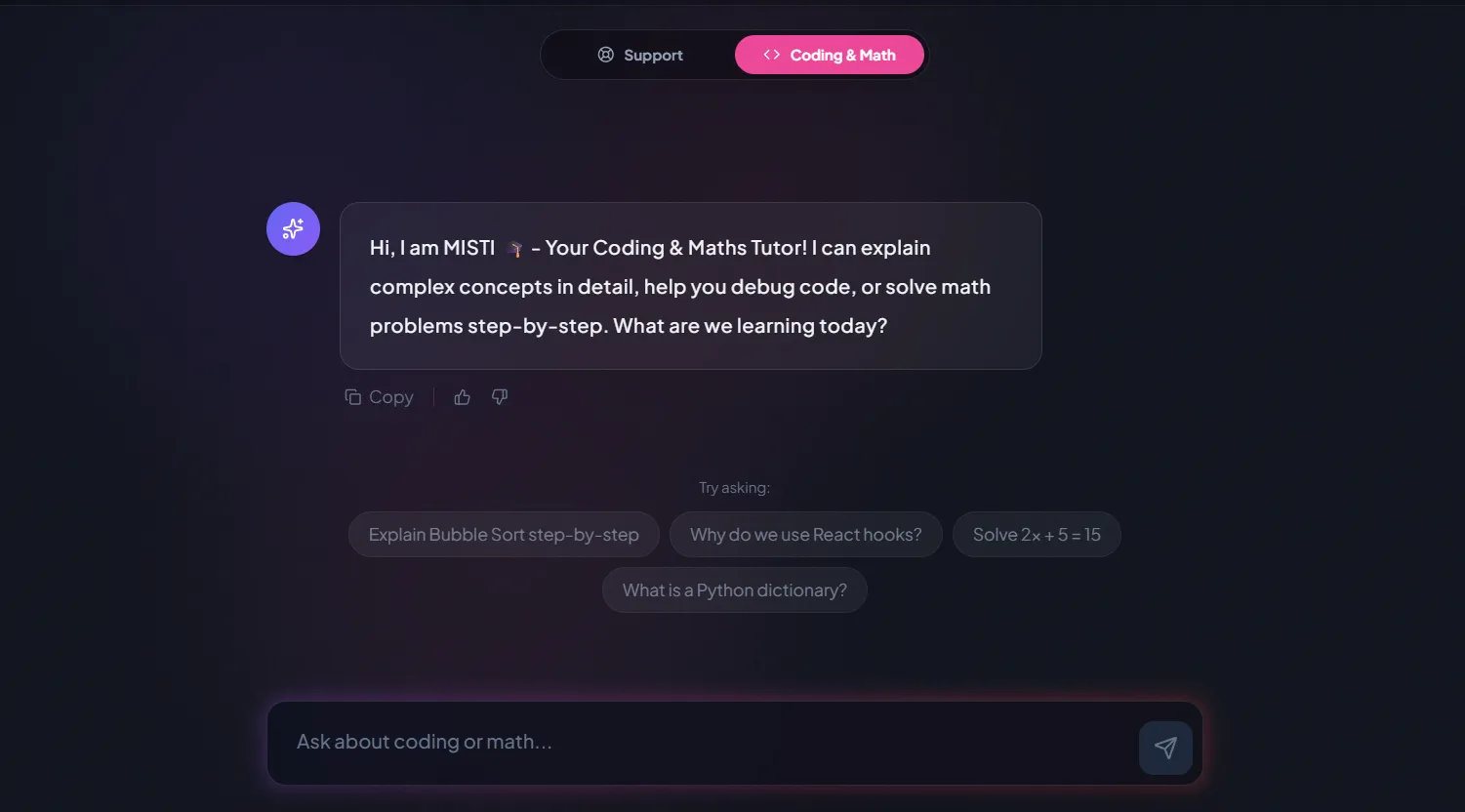
AI and ML
A chatbot that answers mathematics and programming questions, built and deployed by a student.
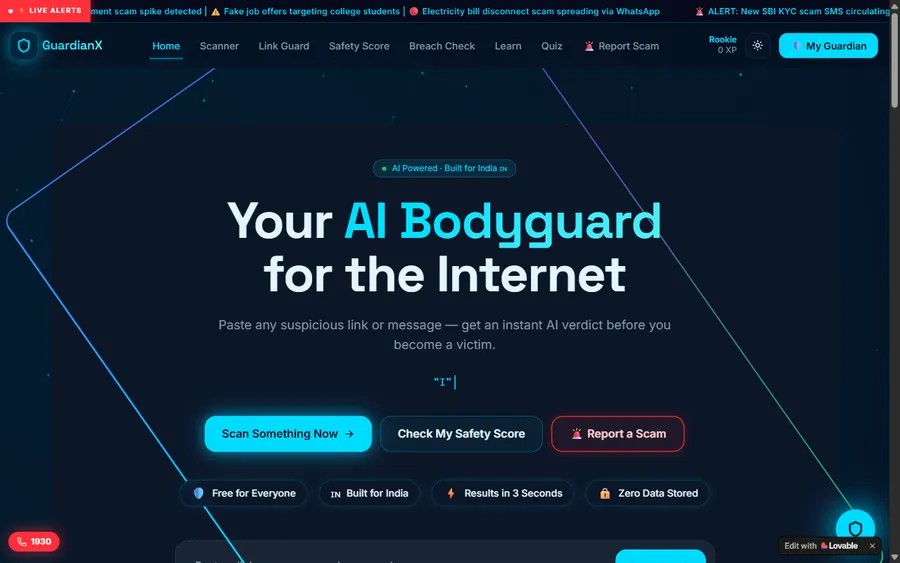
AI and ML
An assistant that helps a young person recognise unsafe situations online.
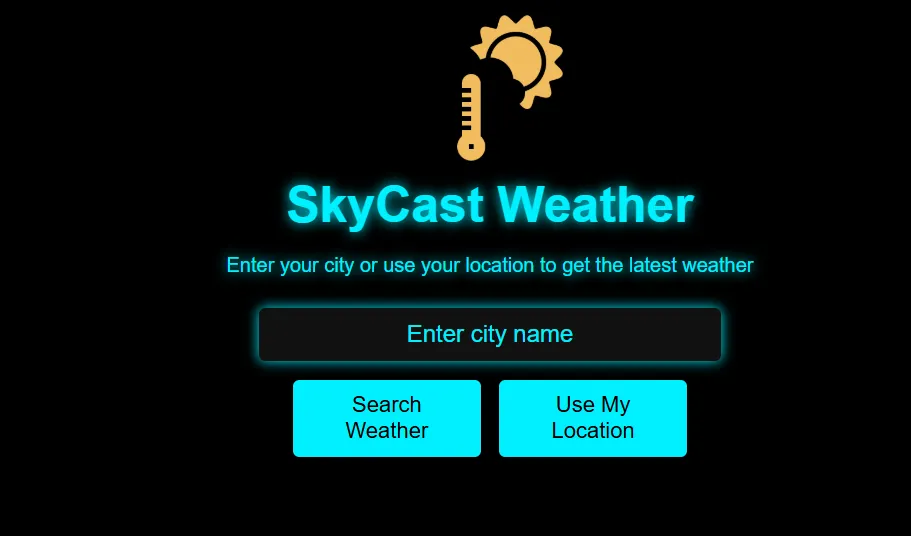
Web app
A weather forecasting site with live conditions for any location.
Fees
A single monthly price in US dollars for families anywhere outside India. Joining costs nothing extra, and there is no contract for the school year.
Free first class
USD 0
no card required
Group batch
USD 100
a month, billed in US dollars
One to one
USD 150
a month, billed in US dollars
What families say
Reproduced from Google without changes. No review here was written or paid for by us.
★★★★★
"The one step solution for my son. Modern Age Coders make learning coding so simple that kids love it. The teachers explain complex concepts clearly with practical exercises and interactive content."
Ria Mukherjee
Parent
★★★★★
"Modern Age Coders has been a game-changer for me. I struggled to grasp IT concepts and coding before joining, but their classes transformed everything. I can now confidently write complex programs with ease."
Samriddha Mondal
Student
★★★★★
"One of the most wonderful education centres out there. Education is not limited to school syllabus but focuses on skill development."
Vansh Agarwal
Student
★★★★★
"My child Dhairya is really enjoying the Modern Age Coders classes. This is his first online class and he eagerly looks forward to it. I can already see his improvement, and the teachers are very cooperative."
Sonam Oswal
Parent of Dhairya
★★★★★
"Modern Age Coders have wonderful teachers who teach in a clear, easy and practical way. The teacher boosts students' confidence and inspires them to learn without hesitation."
Sonu Goyal
Parent
★★★★★
"I highly recommend this computer coding class! The teachers are incredibly knowledgeable and passionate about coding."
Ritu Kedia
Parent
Questions from Junior Cycle families
One. It is called Putting the Pieces Together, and students complete it as either a Software Project or a Coding Portfolio.
Not for the Junior Cycle Profile of Achievement. The guidelines say it takes place in second or third year, after all three strands are complete, and that first-year work cannot be included.
The guidelines expect either option to take approximately six to eight hours.
No. Students work in teams of two or three, but each student is assessed on their own role and contribution.
There are four: Exceptional, Above expectations, In line with expectations and Yet to meet expectations. The teacher picks the best fit against published Features of Quality, and the result appears on the JCPA.
No. Short courses are assessed by the student's teachers and reported by the school, including on the Junior Cycle Profile of Achievement.
We teach the skills behind it on separate practice projects. We never write, edit, debug or review the assessed work itself, because only work the teacher can authenticate as the student's own can be accepted.
The first class is free. After that, lessons cost USD 100 a month in a group or USD 150 a month one to one, paid in US dollars, with no joining fee and no year-long contract.
After school or at the weekend, at an hour fixed in Irish time. Our teachers are five and a half hours ahead in winter and four and a half in summer.
Someone from our team calls a parent at a sensible Irish time and books the free first class. Nothing is charged unless the student carries on.
Elsewhere on this site
Pages for the years around the Junior Cycle.
The year after the Junior Cycle.
For students who take the subject.
AI tools and a student's own work.
The whole school path, stage by stage.
For students coming from a coding club.
The national page.
Start here
Leave a parent's number and we will call when it suits an Irish household. In the first class the student tries a short coding task, and the teacher suggests where to begin, well away from any assessed work.
To read more first: the way we teach, the individual course syllabuses, and the order in which topics build.
WhatsApp us · +91 91233 66161 · contact@modernagecoders.com
Messaging on WhatsApp is free from Irish phones and tends to get the fastest answer. The number belongs to our team in India; we have no premises in Ireland.