OWN / KIDS / 01
Scratch Coding for Kids
Games explained block by block before they are shared.
Open the syllabusIreland · AI and your own work · Live online
Copying code has always been part of learning to program: from a book, a forum, a friend. What has changed is that an AI assistant now writes whole programs on request, and Irish schools and exams have started to say plainly what that means for a student's own work. The Department of Education's guidance on AI in schools says that material generated by AI is treated like any other material a candidate did not produce themselves, and that it must be referenced. The coursework rules for subjects like Leaving Certificate Computer Science ask for the student's own, individual work. None of this bans AI from learning. It does make one skill non-negotiable: being able to read, explain and change every line you hand in. This page sets out what the Irish documents say, why understanding matters even where copying is allowed, and how our classes teach learners to use AI tools and still own their code.
Live teaching since 2020 · 10,000+ students · every line explained by the learner
In short
In Ireland, guidance now treats AI-generated material as material the student did not produce, and asks for it to be referenced; State Examinations coursework must be the candidate's own authentic and individual work. For anyone learning to code, the practical answer is to learn in a way that keeps the understanding with the learner: predict what code will do before running it, write the core by hand, bring AI tools in openly, change what they suggest and explain every line. Modern Age Coders teaches this way, live online, for ages 6 to 67 in groups of five to ten or one to one, and learners keep a simple record of what any AI tool contributed. We never write or edit graded work for a student. The first class is free; after that a group place costs USD 100 a month and one-to-one lessons USD 150.
Start here
One for problem solving, one for the tools that make work traceable, and one for AI coding tools used with judgement. Each card opens its syllabus.
OWN / 01
The reasoning that no assistant can supply: breaking a problem down, tracing a solution by hand and explaining why it works.
Open the syllabus →
OWN / 02
Version control that records who wrote what and when, the plainest possible evidence of a student's own work.
Open the syllabus →
OWN / 03
AI assistants used on real projects, with every suggestion read, changed and explained before it stays.
Open the syllabus →What the guidance says
Each line below is quoted from the document named. We describe public documents; for a particular assignment or exam, the school and the State Examinations Commission are the authorities, and their current rules apply.
| Document | What it says | Applies to |
|---|---|---|
| Department of Education, Guidance on Artificial Intelligence in Schools (October 2025) | Material generated by AI software "will be treated in the same way as any other material that the candidate has not generated themselves". | State examinations work |
| Department of Education press release, 21 October 2025 | "There is a requirement currently that any material generated by AI software be appropriately referenced." | Students' work in examinations |
| NCCA, Leaving Certificate Computer Science coursework guidelines (August 2023) | "Only work which is the student's own can be accepted for submission to the State Examinations Commission." | LCCS coursework |
| NCCA, Leaving Certificate Computer Science specification | The coursework assessment "must be carried out individually". | LCCS coursework |
| NCCA, new Computer Science specification (for introduction from September 2027) | Students acknowledge their sources, "including the use of AI". | The redeveloped subject |
| NCCA, Junior Cycle Coding assessment guidelines (2025) | "Where sources or AI are used, they should be referenced." | The Coding short course |
The State Examinations Commission's own Coursework Rules and Procedures for 2025-26 go further. As published in a copy on a school's website (the Commission's site could not be reached when this page was written), they state that "Coursework must be the candidate's own authentic and individual work" and that "AI tools should not be used to generate coursework content", and they list penalties that can include the loss of the marks for the coursework, the subject or the whole examination.
Where limited AI use is permitted, the same document asks candidates to acknowledge it in detail: which tool and version, its developer, the date, the purpose and, where relevant, the prompts used.
Two cautions. First, rules change: the Department's September 2026 information note said an updated 2026/27 edition of the Commission's coursework rules was due that month, so a student should always read the current edition, not a copy of an older one. Second, none of this is legal or exam advice from us. The school and the Commission decide what is allowed.
What the documents agree on is simple enough to teach from age ten: work you hand in should be work you did and can explain, and anything a tool contributed should be said out loud.
Sources, read 16 September 2026: Guidance on Artificial Intelligence in Schools (2025); Department of Education press release, 21 October 2025; LCCS coursework assessment guidelines; Computer Science specification for introduction in 2027; Junior Cycle Coding assessment guidelines 2025; SEC Coursework Rules and Procedures 2025-26, a school's published copy; Senior Cycle information note, September 2026.
Why it matters
The rules are one reason. The better reason is what happens to a learner who cannot explain their own program.
A program pasted in whole works until it does not. When it breaks, the learner who did not build it has nowhere to start, and asks the tool again, which may break it differently.
Real assignments move: add a feature, handle a new case, use different data. Each change asks the learner to know which line does what, and a copied program keeps that knowledge somewhere else.
Leaving Cert Computer Science coursework is submitted with a report that includes video evidence of the artefact working. Writing about a program honestly means understanding it first.
Research on novices using AI assistants, set out with its limits on our page about the best coding class in the world, points the same way: learners who could already read code used AI to go faster, while learners who could not were carried along by suggestions they could not judge.
The same studies do not show that AI tools harm learning by themselves, and we do not claim it. The difference lies in the order: understanding first, then the tool.
There is also a quieter cost to copying. A learner who pastes code learns what the answer looks like; a learner who writes it learns how answers are found. Only the second transfers to the next problem, the one nobody has written down yet.
That is why, in our classes, the question after every exercise is the same, whatever the age: tell me what this line does, and what would happen if we changed it.
How we teach it
Every lesson follows the same order, from a Scratch game at age seven to a Python project in Sixth Year.
| Step | What the learner does | What it builds |
|---|---|---|
| 1. Predict | Reads a short program and says what it will do before running it | The habit of reading code, not just running it |
| 2. Write | Writes the core of the solution by hand, errors and all | Ownership of the central idea |
| 3. Ask | Brings in an AI tool for a specific, stated purpose, if the task allows it | Using AI as a colleague, not an author |
| 4. Change | Alters what the tool suggested, by hand, to fit the task | Proof that the suggestion was understood |
| 5. Explain | Talks the teacher through every line, including the tool's | Code the learner can defend anywhere |
From Transition Year up, learners keep a short record whenever an AI tool helps: which tool, the date, what they asked, what it gave and what they changed. It takes a minute per session.
The record mirrors the kind of acknowledgement Irish guidance asks for, so the habit is in place long before any assessed piece of work.
We never write, edit or complete a student's graded work: no Junior Cycle classroom-based assessment, no Leaving Cert coursework artefact, no report. Our lessons build the skills; the assessed work stays the student's own.
If a family asks for help with an assessed piece, we teach the underlying ideas on different examples, and say so.
At every age
The principle is the same for every learner. The practice changes with age.
A child explains, in their own words, what each block in their Scratch game does, and predicts what will happen when a block moves. No AI tools yet: the goal is a child who can read a program aloud.
Typed Python, traced by hand before it is run, and a first careful use of an AI assistant on a project, with the AI record kept from the start.
Assistants used at full speed at work, with one rule kept: no line goes into a script, a report or a shared repository until the adult can say what it does.
The ladder
Each rung makes the next safe. AI tools arrive at the fourth, once the learner can check them.
| Rung | The learner can |
|---|---|
| 1. Explain | Say in plain words what a short program does |
| 2. Predict | Trace code by hand and get its output right before running it |
| 3. Modify | Change a working program to do something new and explain each change |
| 4. Build with AI | Use an assistant for a stated purpose, change its suggestion and record what it did |
| 5. Review | Read code from a classmate or an AI tool and find what is wrong with it |
A learner who cannot yet predict what code does has no way to judge a suggestion. Bringing the tool in after the third rung means every suggestion lands on someone able to check it.
The thinking behind the first three rungs is set out on how to think like a programmer.
During any assessed piece of work, the school's rules come first. Our lessons in those weeks switch to different examples of the same ideas.
Learners at every stage move up a rung when the teacher sees it in their work, not by the calendar.
The catalogue
Grouped by where a learner usually starts. A card opens the syllabus, and the free first class decides the first one.
OWN / KIDS / 01
Games explained block by block before they are shared.
Open the syllabusOWN / KIDS / 02
Typed code predicted before it runs.
Open the syllabusOWN / KIDS / 03
Mathematics reasoned out in small programs.
Open the syllabusOWN / TEENS / 01
The language learned by reading, tracing and writing.
Open the syllabusOWN / TEENS / 02
Solutions reasoned out before any tool is asked.
Open the syllabusOWN / TEENS / 03
A history of the learner's own commits.
Open the syllabusOWN / ADULT / 01
Python from zero, every line explained.
Open the syllabusOWN / ADULT / 02
AI tools for study and work, with their limits made plain.
Open the syllabusOWN / ADULT / 03
Reviews and pull requests, as teams actually work.
Open the syllabusHow the classes run
Classes are live, taught from India, at a weekly hour fixed in Irish time. Irish time runs five and a half hours behind India time in winter and four and a half in summer, so most Irish learners meet their teacher after school, in the evening or on a Saturday morning.
After school
For primary and post-primary learners, Irish time.
Evening
For Senior Cycle students and adults.
Saturday morning
For longer project sessions.
The learner explains a small program to the teacher, which shows quickly where understanding stops.
Learners explain their code to one another as well as to the teacher, which is where most of the learning happens.
For a learner in an exam year, or anyone who wants a teacher to themselves.
Assistants are part of the lesson from the fourth rung, with the AI record kept every time.
Teachers teach on examples; the student's assessed work is never written or edited in class.
Projects live in the learner's own repository, showing how the code grew commit by commit.
Student work
Four live projects by our students. More on the student labs page.
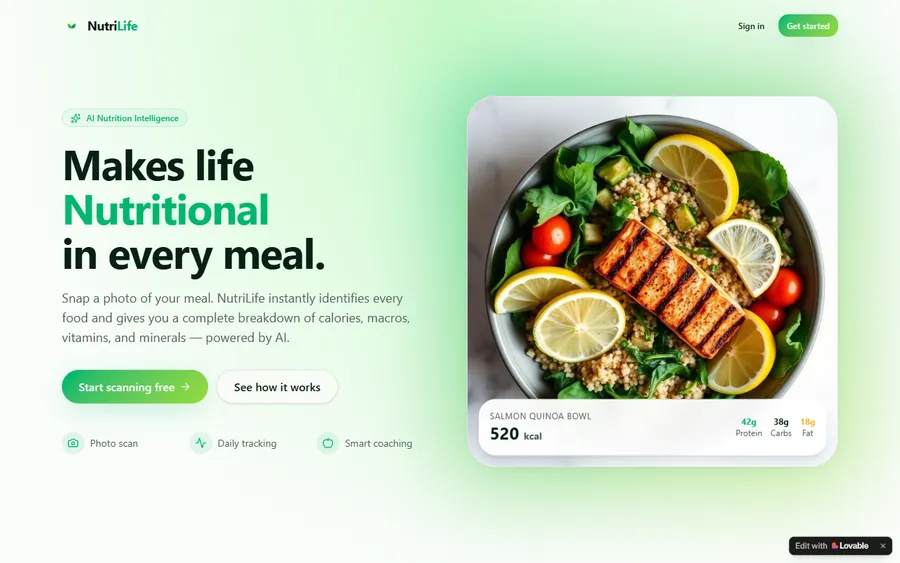
AI and ML
An AI nutrition coach that reads what you eat and works you toward a target.
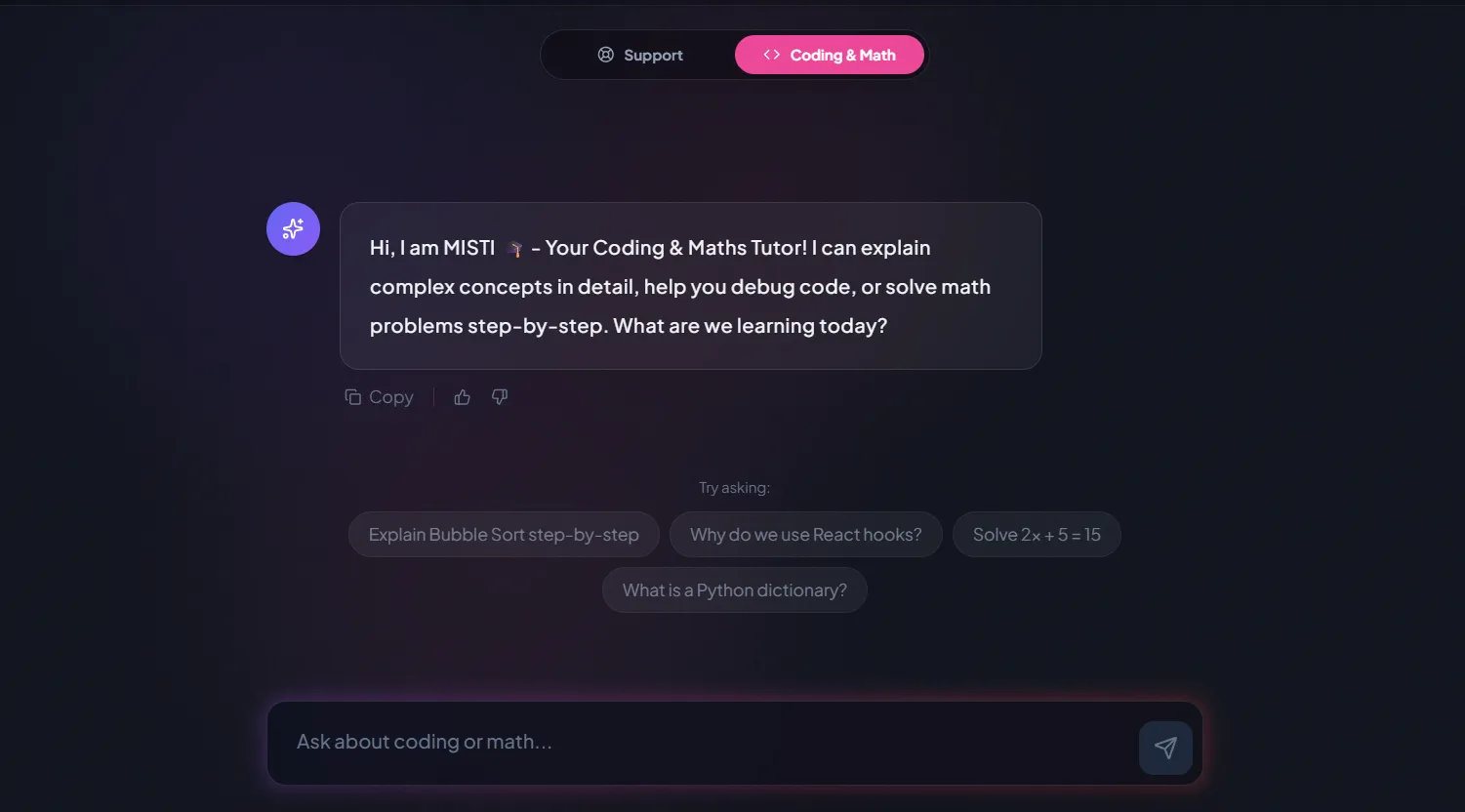
AI and ML
A chatbot that answers mathematics and programming questions, built and deployed by a student.
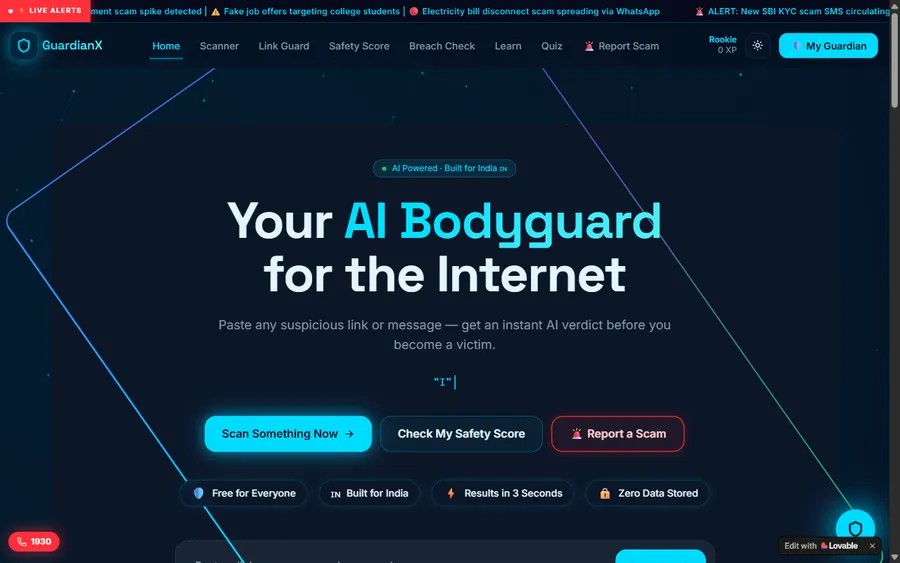
AI and ML
An assistant that helps a young person recognise unsafe situations online.
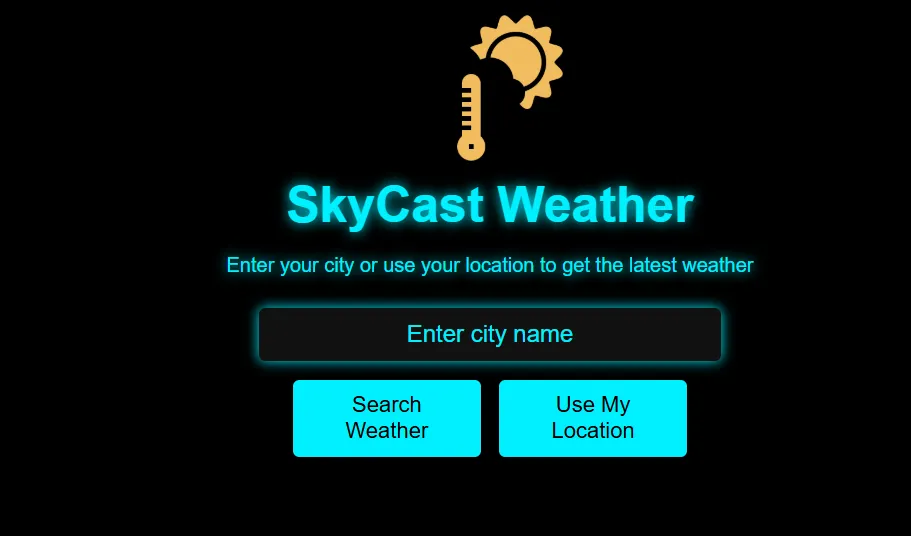
Web app
A weather forecasting site with live conditions for any location.
Fees
One monthly rate in US dollars for every country outside India, Ireland included. Nothing to pay to join and no annual contract.
Free first class
USD 0
no card required
Group batch
USD 100
a month, billed in US dollars
One to one
USD 150
a month, billed in US dollars
What families say
As written on Google. We do not write, alter or pay for reviews.
★★★★★
"The one step solution for my son. Modern Age Coders make learning coding so simple that kids love it. The teachers explain complex concepts clearly with practical exercises and interactive content."
Ria Mukherjee
Parent
★★★★★
"Modern Age Coders has been a game-changer for me. I struggled to grasp IT concepts and coding before joining, but their classes transformed everything. I can now confidently write complex programs with ease."
Samriddha Mondal
Student
★★★★★
"One of the most wonderful education centres out there. Education is not limited to school syllabus but focuses on skill development."
Vansh Agarwal
Student
★★★★★
"My child Dhairya is really enjoying the Modern Age Coders classes. This is his first online class and he eagerly looks forward to it. I can already see his improvement, and the teachers are very cooperative."
Sonam Oswal
Parent of Dhairya
★★★★★
"Modern Age Coders have wonderful teachers who teach in a clear, easy and practical way. The teacher boosts students' confidence and inspires them to learn without hesitation."
Sonu Goyal
Parent
★★★★★
"I highly recommend this computer coding class! The teachers are incredibly knowledgeable and passionate about coding."
Ritu Kedia
Parent
Questions
That is for each school to decide, assignment by assignment. The Department's 2025 guidance asks for any AI-generated material to be referenced, and State Examinations coursework must be the candidate's own work. Ask the teacher before using any tool.
No. The Department's guidance says AI-generated material is treated like any other material the candidate did not produce themselves. The Commission's current coursework rules set out what, if anything, is permitted and how it must be acknowledged.
No. Programmers reuse code all the time. What matters is saying where it came from, understanding it well enough to change it, and following the rules of any assessment.
We teach the programming, testing and reporting skills the coursework assumes, on different examples. We never write, edit or complete a student's coursework artefact or report.
A short note a learner keeps whenever an AI tool helps: the tool, the date, what was asked, what it gave and what the learner changed. It builds the habit of acknowledging AI early.
Once they can predict what a short program will do, usually in the Junior Cycle. Before that, the aim is a child who can read a program aloud.
No. This page describes public documents. For any assignment or exam, the school and the State Examinations Commission decide what is allowed.
The first class is free. Then a group place is USD 100 a month and one-to-one lessons are USD 150 a month, both in US dollars, with no enrolment fee and no yearly contract.
At a weekly hour fixed in the free first class: after school, in the evening or on a Saturday morning. Irish time is five and a half hours behind India time in winter and four and a half in summer.
We ring back at a suitable Irish hour to book the free first class. You pay nothing unless the learner continues.
Elsewhere on this site
Related pages, from the research to the exam.
Eight tests any class should pass, with the research.
Six checks for Irish families.
The subject, its coursework and its exam.
The first skill behind every explanation.
What to do when the prediction was wrong.
The national page.
Start here
Leave a number and we will ring at a suitable Irish hour. In the first class the learner reads and explains a small program, and you will see exactly where understanding is solid and where it is not.
Would you like to look around first? The method is described on how we teach, all courses have their own pages, and how to think like a programmer shows the reasoning we teach.
WhatsApp us · +91 91233 66161 · contact@modernagecoders.com
WhatsApp from an Irish phone is free and usually the quickest way to reach us. The number is Indian, as we say everywhere; there is no Irish office.