IRL / PRIM / 01
Coding for Kids
Block coding for the youngest, from about age 6.
Open the syllabusIreland · Primary to Leaving Cert · Live online
An Irish parent searching for coding classes meets a crowded field: free clubs, summer camps, exam grinds, recorded courses and live online classes, each promising the best. They are not the same thing, and the best one for a child in Second Class is not the best one for a Fifth Year choosing between Leaving Cert subjects or an adult changing career. This page does three things. It sets out where coding actually sits in Irish schooling, stage by stage, from the official descriptions. It gives six checks any online coding class in Ireland should pass, with the question to ask a provider for each. And it explains what each kind of option is genuinely good for, so you can choose the right one even if it is not ours. Our own answer to each check is at the end, limits included, and the first class is free so that you can test the answers yourself.
Live teaching since 2020 · 10,000+ students · Irish school terms, Irish hours
In short
The best online coding class in Ireland is the one that fits where a learner is in the Irish school path and teaches them to think, not just to type. Coding appears at every stage, unevenly: a Coding short course of about 100 hours at Junior Cycle that each school chooses whether to offer, and Leaving Certificate Computer Science, a 180-hour subject offered by 194 schools in 2024 out of 722 post-primary schools that year. A good class fills the gaps without competing with school: a live teacher at an Irish hour, reading before writing, code reviewed every week, and AI tools used openly and acknowledged. Modern Age Coders teaches exactly that online, for ages 6 to 67, in groups of five to ten or one to one; the first class is free, and afterwards a group place is USD 100 a month and one-to-one lessons USD 150.
Start here
One for the senior classes of primary school, one for the Junior Cycle and Transition Year, and one for adults. Each card opens its full syllabus.
IRL / 01
Typed Python for children in Fourth to Sixth Class, with small games and a first program that learns from examples.
Open the syllabus →
IRL / 02
The whole language across the Junior Cycle and Transition Year, taught so each idea is read and predicted before it is written.
Open the syllabus →
IRL / 03
For adults in Ireland: Python that automates real work, with every AI-assisted step checked and understood.
Open the syllabus →Where coding sits in Irish schools
The descriptions below come from the Department of Education and from the NCCA's specifications on curriculumonline.ie. They are the frame any class for Irish learners should fit around.
| Stage | Length | Where coding appears |
|---|---|---|
| Primary | An eight year cycle: junior infants, senior infants, and first to sixth classes | The NCCA's Coding in Primary Schools initiative, which the Digital Strategy for Schools names; no stand-alone coding subject |
| Junior Cycle | Three years | The Coding short course, an optional course a school may choose, designed for approximately 100 hours of student engagement and aligned to NFQ Level 3 |
| Transition Year | One optional year | Wherever a school builds it into its own Transition Year programme |
| Senior Cycle | Two years, for the 15 to 18 age group | Leaving Certificate Computer Science, an optional subject designed for 180 hours of class contact time |
The Coding short course aims, in the NCCA's words, to help students "formulate problems logically; to design, write and test code through the development of programs, apps, games, animations or websites". Its revised 2025 specification, introduced for first years from September 2026, has three strands: Introducing computer science, Let's get connected, and Coding at the next level, and it now includes learning to identify different AI models.
Leaving Certificate Computer Science began in 40 pilot schools in September 2018, with a first exam in 2020, and has been available nationally as an optional Senior Cycle subject since September 2020.
Availability is the catch. The Department's Inspectorate reports that the number of post-primary schools offering Computer Science "increased from 36 in 2018 to 194 schools in 2024". The Department counted 722 post-primary schools in 2024, so by our arithmetic about one in four offered the subject that year, and three in four did not.
Primary schools are more numerous still: 3,082 mainstream primary schools in 2024/25. A child's first contact with coding therefore depends heavily on which school, which teacher and which year.
Sources: Department of Education, A guide to the Irish education system; NCCA, Junior Cycle Coding short course (2025 specification); NCCA, Leaving Certificate Computer Science; Digital Strategy for Schools to 2027; Inspectorate, Post-primary insights (November 2025); Department of Education Statistical Bulletin, December 2024. Read 16 September 2026. The one-in-four share is our division of the two published figures.
The six checks
Each check comes with the question to put to any provider, ours included. The research behind the first three is set out on our page about the best coding class in the world.
| Check | Why it matters in Ireland | Ask the provider |
|---|---|---|
| 1. A live teacher, not only videos | Free recorded courses are good material, but most people who start one alone do not finish. | Who teaches my child, and will it be the same person each week? |
| 2. Reading before writing | The Coding short course asks students to formulate problems logically before they design, write and test code. | How is a new idea introduced: by writing code from a template, or by predicting what code does first? |
| 3. Code read by a person | A school subject marks work at the end; learning happens when someone reads it along the way. | How often will a teacher read my child's code, and what feedback comes back? |
| 4. Irish hours and the Irish year | After-school hours, mid-term breaks, the Junior Cycle, Transition Year and a June Leaving Cert shape every family's calendar. | What time is the class in Irish time, and what happens during exam weeks? |
| 5. AI used openly and acknowledged | Irish schools now expect AI use to be acknowledged, and exam coursework must be the student's own work. | When are AI tools allowed, and how will my child learn to say what the tool did? |
| 6. Honest evidence and a free trial | A rating means little without its source and its size. | Where can I read your reviews, and can we try a real class before paying? |
None of these checks is exotic, and a good provider answers each one in a sentence. What they filter out is common: a course of videos presented as teaching, a class that starts every topic by copying a template, a fixed slot at an hour no Irish child is free, or a promise about Leaving Cert points that nobody can keep.
The fifth check has become more important since October 2025, when the Department of Education published guidance on AI in schools. Our page on understanding the code instead of copy-pasting sets out what it says and what it means for a learner.
Your options
Every option below has a place. The best choice depends on what the learner needs this year, and sometimes the answer is two of them together.
| Option | What it does well | What it does not try to do |
|---|---|---|
| Free coding clubs | A friendly first taste, often with volunteers and other children | A structured path from one level to the next |
| Summer camps | An intense week or two of making things in the long summer break | Weekly practice across the school year |
| Exam grinds | Focused preparation for a subject that is examined in June | Building skills beyond what the exam asks |
| Recorded courses | Material to work through at any hour, often free or cheap | A person who notices when the learner is stuck or gone |
| Live online classes | A teacher, a fixed hour and a group, week after week | In-person contact, or a replacement for the school subject |
A club or a camp for the spark, then a weekly class once the child wants to build more than one thing. Blocks first, typed code from about Fourth Class.
A weekly class that goes deeper than a short course can, whether or not the school offers one, and a real project in Transition Year.
If the school offers Computer Science, a class that builds programming depth beside it; if not, the same ground at an Irish hour. Grinds, if needed, for the exam itself.
Our answer
Our answers first, then the plain limits.
| Check | Our answer |
|---|---|
| 1. A live teacher | Every class is live, with the same teacher each week. |
| 2. Reading before writing | Each new idea starts with a prediction of what the code will do. |
| 3. Code read by a person | The teacher reads and discusses each learner's code every week. |
| 4. Irish hours and the Irish year | A fixed weekly hour in Irish time, with pauses for mid-term breaks and exam weeks. |
| 5. AI used openly | AI tools come in after prediction, and learners record what a tool suggested and what they changed. |
| 6. Evidence and a trial | Rated 4.9 across 547 Google reviews, and the first class is free. |
We do not replace Junior Cycle Coding or Leaving Certificate Computer Science, set their assessments or award school credit.
Our teachers work from India, and there is no Irish office or classroom. Irish time runs five and a half hours behind India time in winter and four and a half in summer.
Fees are charged in US dollars, as for every country outside India. There is no separate euro price list.
The ladder
The school years are typical, not rules. A learner moves up when a rung is secure, which the teacher judges from the work.
| Usually | Rung | The learner can |
|---|---|---|
| First to Third Class | 1. Blocks | Build and explain a small game in blocks, and predict what it will do |
| Fourth to Sixth Class | 2. Typed code | Write short Python programs and fix their own errors |
| Junior Cycle | 3. Problems | Break a problem down, design a solution, then write and test it |
| Transition Year | 4. A project | Finish a real app, game or analysis and show it in public |
| Senior Cycle and beyond | 5. Depth | Work with algorithms, data and AI models, and judge code written by others or by AI |
Two children in Fifth Class can be two rungs apart, and a Fifth Year who starts late climbs the first rungs quickly. Placing each learner by what they can do keeps both learning.
The whole order of subjects, beyond school, is on the coding roadmap.
Most learners take two lessons a week and pause for mid-term breaks. The 2026 Leaving Certificate written exams ran from 3 June to 23 June, and many Sixth Years lighten their lessons in the weeks before.
Adults follow the same rungs at the pace their working week allows.
The catalogue
Grouped by where a learner usually is in the Irish system. Each card opens its syllabus, and the free first class decides the starting point.
IRL / PRIM / 01
Block coding for the youngest, from about age 6.
Open the syllabusIRL / PRIM / 02
Games and stories in Scratch, planned before they are built.
Open the syllabusIRL / PRIM / 03
The step to typed Python, usually in Fourth to Sixth Class.
Open the syllabusIRL / JCTY / 01
The whole of Python, read before it is written.
Open the syllabusIRL / JCTY / 02
A working website with its own data, a strong Transition Year project.
Open the syllabusIRL / JCTY / 03
A real app, often a learner's first public work.
Open the syllabusIRL / SENR / 01
Algorithms and data structures, reasoned out rather than memorised.
Open the syllabusIRL / SENR / 02
Models trained, tested and explained by the learner.
Open the syllabusIRL / SENR / 03
For adults and university students starting from zero.
Open the syllabusHow the classes run
Teachers work from India, which never changes its clocks, so Irish time runs five and a half hours behind India time in winter and four and a half behind in summer. Irish learners usually take lessons after school, in the evening or on a Saturday morning, at a regular hour agreed in the free first class.
After school
Late afternoon, Irish time, for primary and post-primary learners.
Evening
For Senior Cycle students and adults after work or study.
Saturday morning
For longer sessions and Transition Year projects.
A real problem with a real teacher, and an honest view of where the learner should start.
Learners at the same stage, from Ireland and other countries, reviewing one another's work.
For a Sixth Year with a deadline, a learner far ahead, or an adult with a fixed goal.
Junior Infants, Transition Year, the Junior Cycle and the Leaving Cert keep their names; lessons are in English.
Learners note what an AI tool suggested and what they changed, the habit Irish schools now ask for.
Projects go into the learner's own repository, ready for a CAO application or an interview.
Student work
Four live projects by our students. More on the student labs page.
AI and ML
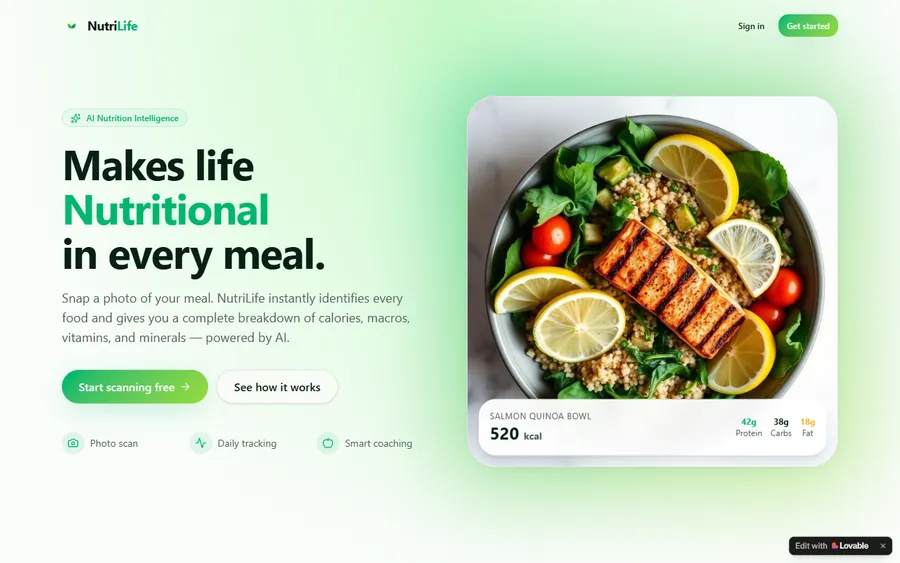
An AI nutrition coach that reads what you eat and works you toward a target.
AI and ML
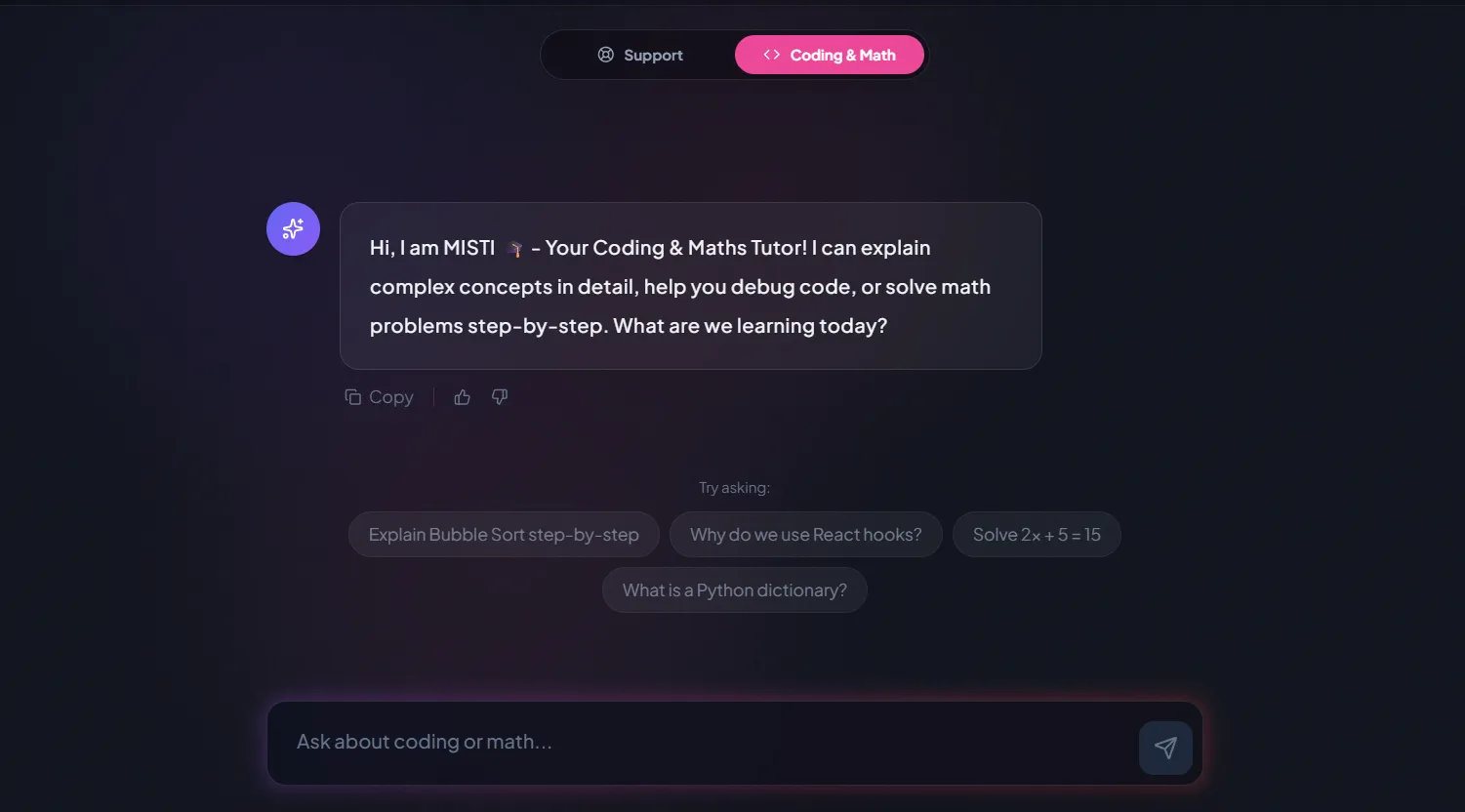
A chatbot that answers mathematics and programming questions, built and deployed by a student.
AI and ML
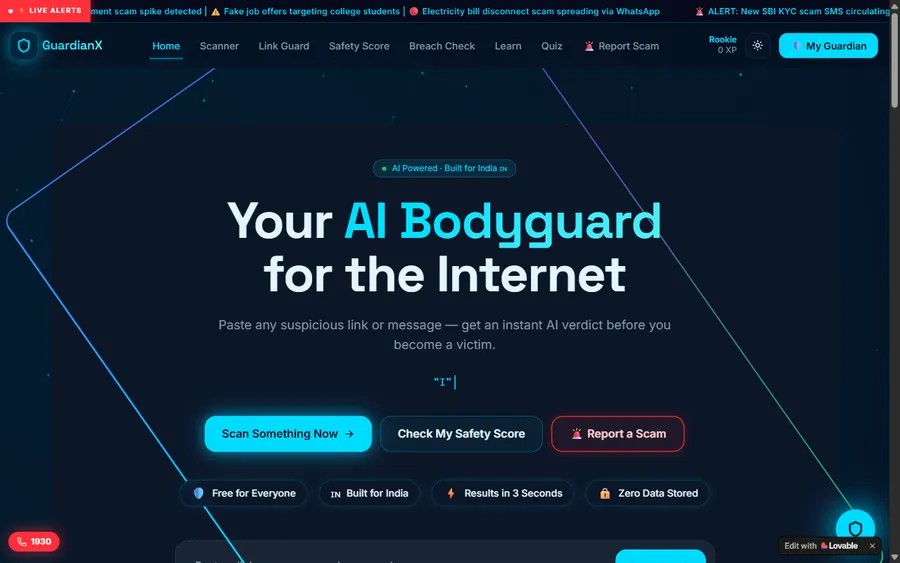
An assistant that helps a young person recognise unsafe situations online.
Web app
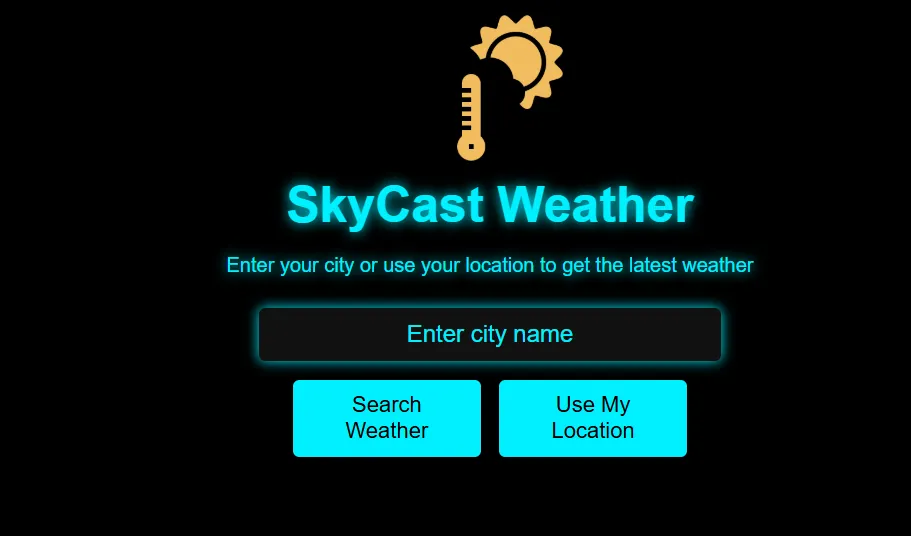
A weather forecasting site with live conditions for any location.
Fees
Monthly and in US dollars, the one rate we use for every country outside India. No enrolment fee and nothing to sign for a year.
Free first class
USD 0
no card required
Group batch
USD 100
a month, billed in US dollars
One to one
USD 150
a month, billed in US dollars
What families say
Taken from Google as written. We never write or pay for reviews.
★★★★★
"The one step solution for my son. Modern Age Coders make learning coding so simple that kids love it. The teachers explain complex concepts clearly with practical exercises and interactive content."
Ria Mukherjee
Parent
★★★★★
"Modern Age Coders has been a game-changer for me. I struggled to grasp IT concepts and coding before joining, but their classes transformed everything. I can now confidently write complex programs with ease."
Samriddha Mondal
Student
★★★★★
"One of the most wonderful education centres out there. Education is not limited to school syllabus but focuses on skill development."
Vansh Agarwal
Student
★★★★★
"My child Dhairya is really enjoying the Modern Age Coders classes. This is his first online class and he eagerly looks forward to it. I can already see his improvement, and the teachers are very cooperative."
Sonam Oswal
Parent of Dhairya
★★★★★
"Modern Age Coders have wonderful teachers who teach in a clear, easy and practical way. The teacher boosts students' confidence and inspires them to learn without hesitation."
Sonu Goyal
Parent
★★★★★
"I highly recommend this computer coding class! The teachers are incredibly knowledgeable and passionate about coding."
Ritu Kedia
Parent
Questions from Irish families
The one that fits the learner's stage and passes six checks: a live teacher, reading before writing, code read by a person, Irish hours, AI used openly and acknowledged, and honest evidence with a free trial.
It depends on the school. The Junior Cycle Coding short course is optional for schools, and in 2024 the Inspectorate counted 194 post-primary schools offering Leaving Certificate Computer Science out of 722.
An NCCA short course designed for approximately 100 hours, with three strands in its 2025 version: Introducing computer science, Let's get connected, and Coding at the next level.
The specification is designed for 180 hours of class contact time. It has been available nationally as an optional Senior Cycle subject since September 2020.
For a first taste, often yes. For steady progress from one level to the next, most learners also need a weekly class with the same teacher.
Not in the usual sense. We build programming skill and understanding. For Leaving Cert Computer Science specifically, see our page on Computer Science grinds, which explains how the two fit together.
Yes, after they can predict what the code should do, and always with a record of what the tool suggested and what they changed. That is also what Irish schools now expect.
The first class costs nothing. After that it is USD 100 a month for a group place or USD 150 a month for one-to-one lessons, charged in US dollars, with no enrolment fee and no yearly contract.
At a fixed weekly hour agreed in the free first class: usually after school, in the evening or on a Saturday morning. Irish time is five and a half hours behind India time in winter and four and a half in summer.
A member of the team rings back at a suitable Irish hour and books the free first class. Nothing is charged unless the learner continues.
Elsewhere on this site
Pages for each part of the Irish picture.
The national page, from primary to third level.
The research behind the first checks.
What Irish guidance says about AI and your own work.
For Senior Cycle students taking the subject.
For families in the capital.
Building AI, from the first model.
Start here
Leave a number and we will ring back at an Irish hour that suits you. In the first class a teacher works with the learner on a real problem, and you will see how each of the six checks is answered in practice.
Would you rather read first? Every course has its own page, our teaching method is set out in detail, and the roadmap shows what follows what.
WhatsApp us · +91 91233 66161 · contact@modernagecoders.com
From an Irish phone, WhatsApp is free and usually fastest. Our number is Indian and presented as one; there is no Irish office.