NEXT / KIDS / 01
Game Development for Kids
Complete games with levels, scores and rules.
Open the syllabusIreland · After a coding club · Live online
Many Irish children meet coding for the first time at a CoderDojo: a free club, run by volunteers, where young people build games and animations alongside friends. The movement began in Cork in 2011 and it still does something a paid class cannot, which is to make coding a social, open, free part of childhood. Sooner or later, though, many children want more. They have built everything they can think of in Scratch, they ask questions a busy volunteer has no time to answer, or they have heard about Python and AI and want to try the real thing. This page is for that moment. It sets out what the clubs are, as their own organisation describes them, the signs that a child is ready for a next step, and what a structured path from Scratch to Python and AI looks like. The best answer is often to keep the club and add a class, not to swap one for the other. We are not connected with CoderDojo in any way.
Live teaching since 2020 · 10,000+ students · not affiliated with CoderDojo
In short
CoderDojo is a network of free, volunteer-run coding clubs that began in Cork in July 2011; today there are over 600 active Dojos worldwide, part of the Raspberry Pi Foundation's Code Club movement. Clubs are brilliant for a first taste, for friendship and for confidence. When a child wants more, such as typed Python, a structured path or a teacher who reads their code every week, a live class is the natural next step, and many families keep the club as well. Modern Age Coders teaches live online for ages 6 to 67, in groups of five to ten placed by ability or one to one, and is not connected with CoderDojo. The first class is free; after it a group place is USD 100 a month and one-to-one lessons USD 150.
Start here
One for the jump from Scratch to typed code, one for children who came to the club to make games, and one that brings AI in the right way. Each card opens its syllabus.
NEXT / 01
The step from blocks to typed Python for children about nine to twelve, with games and a first program that learns from examples.
Open the syllabus →
NEXT / 02
For the child who came to the club to make games: levels, scores and physics, built properly and finished.
Open the syllabus →
NEXT / 03
Scratch and games with AI help, where the child still plans and explains every part of the project.
Open the syllabus →About the clubs
Everything below is taken from the Raspberry Pi Foundation's own posts and from the CoderDojo description the Irish government hosts. The clubs deserve to be described in their own words.
| When | What happened |
|---|---|
| July 2011 | The first CoderDojo took place at the National Software Centre in Cork, set up by James Whelton and Bill Liao to share their passion for computing |
| 26 May 2017 | The Raspberry Pi Foundation announced it was joining forces with the CoderDojo Foundation, which would continue as an independent charity, based in Ireland |
| 2023 | A survey of clubs found that over 95% had used Scratch in the previous year, with micro:bit and Python also popular, and that leaders wanted to offer more activities around AI |
| July 2026 | Fifteen years on, over 600 active CoderDojos run around the world, part of the Code Club movement of more than 10,000 clubs |
The founding idea was simple, in the Foundation's words: "provide a safe and social place for young people to acquire programming skills, learning from each other and supported by mentors." Clubs are free, open and community-based, for young people aged 7 to 17, whom the movement calls Ninjas, helped by volunteer mentors and led by Champions.
The Foundation describes the approach as non-formal education: fun, creativity, collaboration and openness, rather than lessons and tests.
That is exactly why clubs work so well as a first step. A child tries things, sees what friends make, and discovers that coding is something they can do. Nothing a paid class offers replaces that.
It also explains the moment this page is about. A club built on learning from each other, with volunteers giving their free time, is not set up to take one child steadily through Python and into AI over two or three years. That is a different job, and it needs a different kind of help.
Sources, read 16 September 2026: Raspberry Pi Foundation, "Raspberry Pi and CoderDojo join forces" (26 May 2017); "From one club to a global movement: celebrating 15 years of CoderDojo" (July 2026); Code Club and CoderDojo survey 2023; "What is CoderDojo?" on gov.ie. Modern Age Coders is not connected with CoderDojo, Code Club or the Raspberry Pi Foundation.
Ready for more?
The club leaders themselves see it. In the Foundation's 2023 survey, "Almost 90% of club leaders" agreed that after attending a club, young people are interested in more learning about computing and programming.
The child has made the games, the quizzes and the animations, and now copies projects rather than inventing them. That is not boredom with coding; it is readiness for typed code.
Why does this loop never stop? How does a game remember a high score? A mentor with twenty children in the room cannot always stop to explain, and the child notices.
Friends, school or the news mention Python and AI, and the child wants the real thing. Club leaders in the same survey said they would like to offer more AI activities themselves.
| A free coding club | A weekly live class | |
|---|---|---|
| Cost | Free | Paid monthly, after a free first class |
| Who helps | Volunteer mentors, often parents and professionals giving their time | A teacher whose job is to teach this learner |
| How learning happens | Learning from each other, with mentors on hand | A planned path, placed by level, with each step checked |
| Who is in the room | Young people of many ages and levels | Five to ten learners at the same stage, or one to one |
| What it builds best | Confidence, creativity and friendship around technology | Steady progress from blocks to Python, data and AI |
The table compares two kinds of help, not two organisations. It makes no claim about any particular club, which each set their own activities.
The next step
The jump from dragging blocks to typing code is where many young coders stall. Taken in the right order, it is not a jump at all.
| Step | What changes | What the child makes |
|---|---|---|
| 1. Scratch, explained | The child explains their own Scratch projects out loud, block by block | A game they can describe as a list of rules |
| 2. The same idea, typed | The rules of a familiar Scratch game are rewritten in Python | Their first typed game, recognisably their own |
| 3. Real Python | Loops, functions and lists, practised until they stop being new | Small tools and puzzles they chose themselves |
| 4. Data | Reading a small file, counting and drawing a chart | A chart about something they care about |
| 5. A first AI | Teaching a program to recognise examples, then testing it | A model that learns, and a sentence about where it fails |
The second step is the secret. Rewriting a Scratch game the child already knows means the only new thing is the typing. Once a familiar game works in Python, the child believes typed code is theirs, and everything after it goes faster.
AI comes last on purpose. A child who can already read a program can understand what a learning program does, and can see when it gets things wrong.
Many families keep the club going alongside the class. The club stays the social, creative place; the class supplies the steady path and a teacher who reads the code. A child who brings a Python project to the Dojo is often the one helping others with it.
If the club is ending for a child because of age, a move or a timetable, a weekly class keeps the habit going while it is still fresh.
Plainly
A few facts families should have before choosing.
Modern Age Coders has no link with CoderDojo, Code Club or the Raspberry Pi Foundation. We mention them because many Irish children start there, and we respect what they do.
Clubs are free and should stay that way. Our first class is free too; after it, classes are paid monthly in US dollars, at the same rate for every country outside India.
Our teachers work from India. Irish time is five and a half hours behind India time in winter and four and a half in summer, so classes run after school or at the weekend, Irish time.
The ladder
The free first class shows which rung a club coder is already on. Most start higher than their parents expect.
| Rung | The child can |
|---|---|
| 1. Explain | Describe what each part of their own Scratch project does |
| 2. Translate | Rebuild a familiar Scratch game in typed Python |
| 3. Build | Write small Python programs of their own and fix their mistakes |
| 4. Measure | Read a small dataset, count, chart and describe it honestly |
| 5. Teach a machine | Train a simple model and say where it goes wrong |
A child who can explain their Scratch project already thinks like a programmer. Saying it out loud turns the blocks into rules, and rules are what Python is written in.
The whole order of subjects is on the coding roadmap.
Club coders aged about nine to twelve usually reach the third rung within a school year. Teenagers from a club often move faster and head on towards data and AI.
For the Irish school years around it, see the best online coding classes in Ireland.
The catalogue
Grouped by where a club coder usually is. A card opens the syllabus; the free first class decides the starting point.
NEXT / KIDS / 01
Complete games with levels, scores and rules.
Open the syllabusNEXT / KIDS / 02
Scratch and games with careful AI help.
Open the syllabusNEXT / KIDS / 03
Typed code in Lua, inside a world children already know.
Open the syllabusNEXT / TYPE / 01
The step from blocks to Python.
Open the syllabusNEXT / TYPE / 02
A first website, built line by line.
Open the syllabusNEXT / TYPE / 03
What AI is, how it learns and where it fails.
Open the syllabusNEXT / TEEN / 01
The whole language, learned for depth.
Open the syllabusNEXT / TEEN / 02
Models trained and tested properly.
Open the syllabusNEXT / TEEN / 03
A real app, often a first public project.
Open the syllabusHow the classes run
Classes are live, taught from India at a fixed hour in Irish time. Irish time runs five and a half hours behind India time in winter and four and a half in summer, so most children join after school or on a weekend morning, on a different day from their club.
After school
Late afternoon, Irish time, on a weekday.
Saturday morning
For longer game and project sessions.
Sunday
For families whose Saturdays are taken.
The child shows the teacher a club project and explains it, and the teacher places them on the right rung.
One teacher who gets to know the child's projects, week after week.
Five to ten children at the same stage, from Ireland and other countries.
For a child who is far ahead, or who learns best with a teacher alone.
Families hear what their child has built and what comes next.
Work is saved in the child's own space, ready to show at the club or at school.
Student work
Four live projects by our students. More on the student labs page.
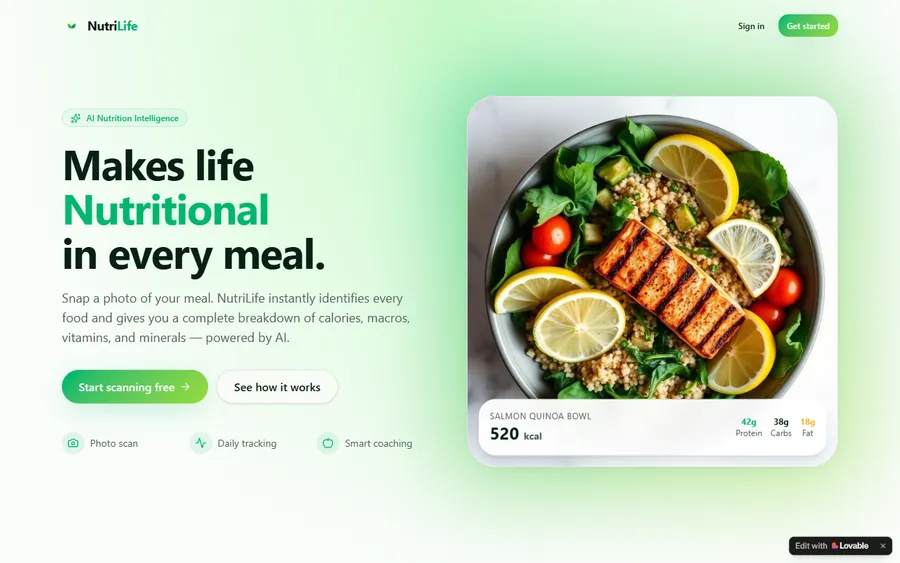
AI and ML
An AI nutrition coach that reads what you eat and works you toward a target.
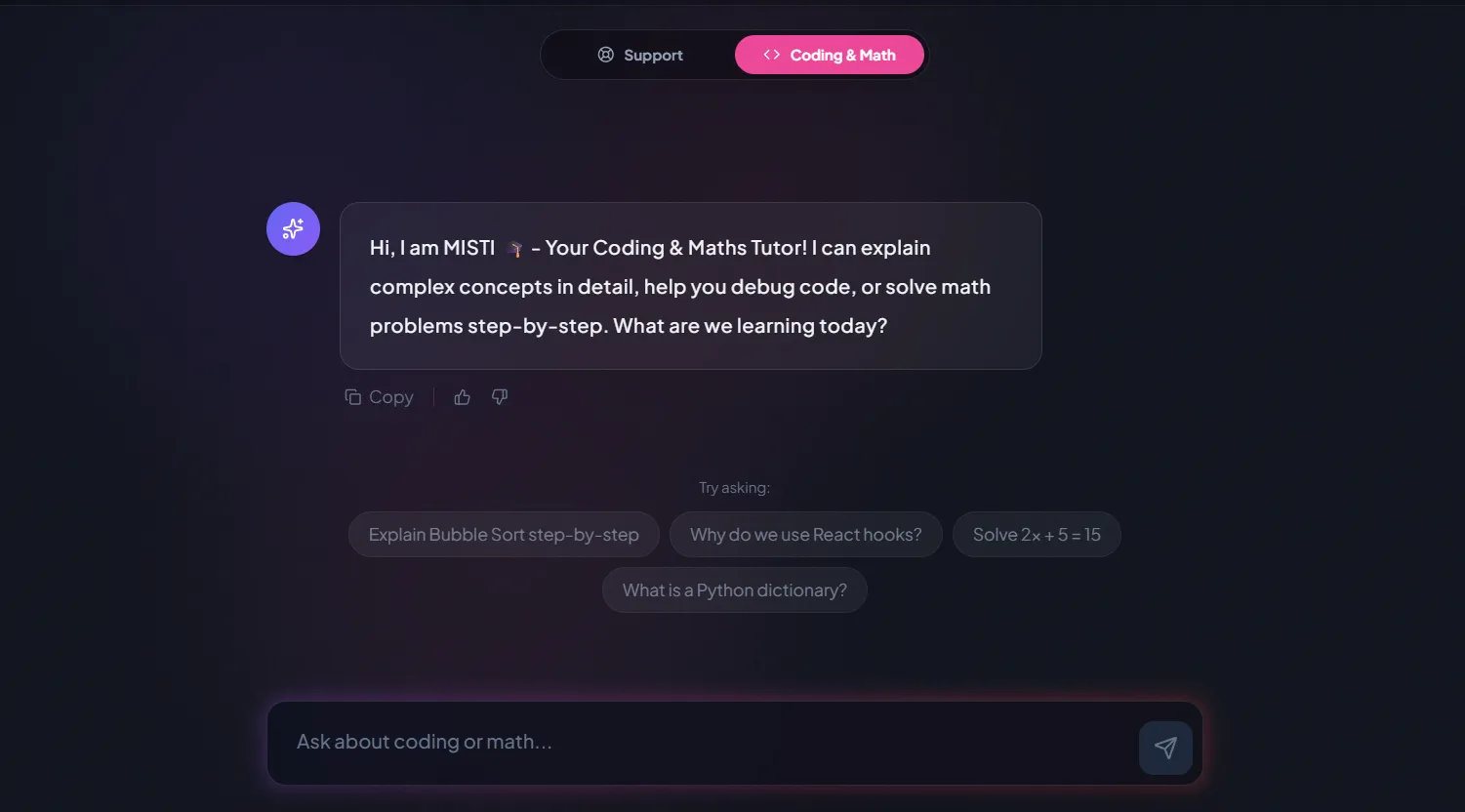
AI and ML
A chatbot that answers mathematics and programming questions, built and deployed by a student.
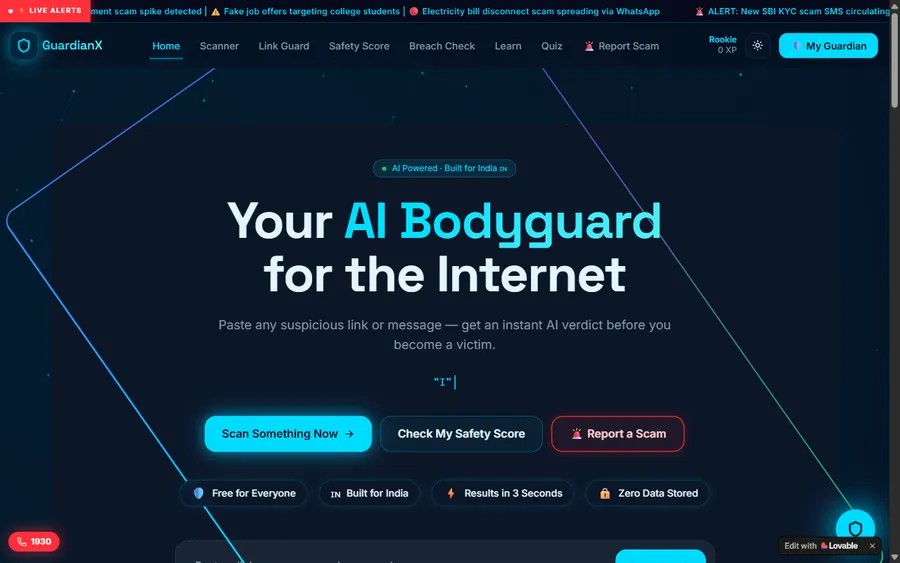
AI and ML
An assistant that helps a young person recognise unsafe situations online.
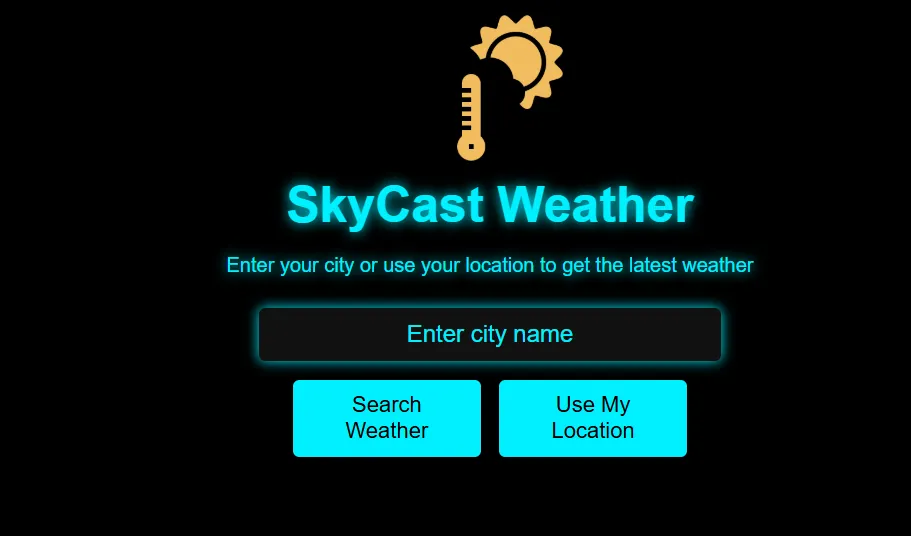
Web app
A weather forecasting site with live conditions for any location.
Fees
Monthly, in US dollars, the one rate we use for every country outside India. No enrolment fee and nothing to sign for a year.
Free first class
USD 0
no card required
Group batch
USD 100
a month, billed in US dollars
One to one
USD 150
a month, billed in US dollars
What families say
Copied from Google as written. We do not write or pay for reviews.
★★★★★
"The one step solution for my son. Modern Age Coders make learning coding so simple that kids love it. The teachers explain complex concepts clearly with practical exercises and interactive content."
Ria Mukherjee
Parent
★★★★★
"Modern Age Coders has been a game-changer for me. I struggled to grasp IT concepts and coding before joining, but their classes transformed everything. I can now confidently write complex programs with ease."
Samriddha Mondal
Student
★★★★★
"One of the most wonderful education centres out there. Education is not limited to school syllabus but focuses on skill development."
Vansh Agarwal
Student
★★★★★
"My child Dhairya is really enjoying the Modern Age Coders classes. This is his first online class and he eagerly looks forward to it. I can already see his improvement, and the teachers are very cooperative."
Sonam Oswal
Parent of Dhairya
★★★★★
"Modern Age Coders have wonderful teachers who teach in a clear, easy and practical way. The teacher boosts students' confidence and inspires them to learn without hesitation."
Sonu Goyal
Parent
★★★★★
"I highly recommend this computer coding class! The teachers are incredibly knowledgeable and passionate about coding."
Ritu Kedia
Parent
Questions from club families
No. Modern Age Coders is not connected with CoderDojo, Code Club or the Raspberry Pi Foundation. We are a separate, paid online school, and we recommend the clubs warmly.
Usually not. Many children keep the club for friendship and creativity and add a weekly class for steady progress. Choose a class day that does not clash with the club.
The first CoderDojo took place in July 2011 at the National Software Centre in Cork, started by James Whelton and Bill Liao, according to the Raspberry Pi Foundation.
The Raspberry Pi Foundation said in July 2026 that there are over 600 active CoderDojos around the world, part of the Code Club movement of more than 10,000 clubs.
Yes. Scratch is a strong start. The first step in our classes is rebuilding a familiar Scratch game in Python, so nothing new arrives except the typing.
Club coders usually move to typed code at about nine or ten. Teenagers from a club can start straight on Python and move towards data and AI.
Yes, once they can read and explain their own code. AI comes after the basics, so the child understands what the tool is doing.
The first class is free. After it, a group place is USD 100 a month and one-to-one lessons are USD 150 a month, charged in US dollars, with no enrolment fee and no yearly contract.
At a weekly hour agreed in the free first class, usually after school or at the weekend. Irish time is five and a half hours behind India time in winter and four and a half in summer.
We ring back at a suitable Irish hour to book the free first class. You pay nothing unless your child continues.
Elsewhere on this site
Pages for the next few years of a young coder's path.
Where coding sits in Irish schools, stage by stage.
Using AI tools and still owning the code.
Eight tests any class should pass.
The national page.
For families in the capital.
What comes after what.
Start here
Leave a number and we will ring at a suitable Irish hour. In the first class your child shows the teacher something they made at the club, explains it, and finds out what the next step looks like.
Would you like to read first? See how we teach, the course pages, or the roadmap from blocks to AI.
WhatsApp us · +91 91233 66161 · contact@modernagecoders.com
WhatsApp from an Irish phone is free and usually the quickest way to reach us. Our number is Indian, as we say everywhere; there is no Irish office.