LCCS / EXAM / 01
Python for Teens
The language of the paper, learned to fluency.
Open the syllabusIreland · Leaving Certificate · Live online
Leaving Certificate Computer Science is unusual among Irish subjects: part of the marks come from a program the student builds and documents alone, and the written exam assesses Python. A grind for it therefore has two jobs. It has to build the fluency that lets a student read, trace and write code under exam conditions, and it has to build the skills the coursework assumes, without ever touching the coursework itself. This page sets out the subject as its specification describes it: the strands, the weighting, the languages assessed and the coursework rules. It also covers the redeveloped subject that reaches schools from September 2027. And it explains how our live online grinds for Fifth and Sixth Years work, one to one or in small groups, taught by a specialist at an Irish hour. We make no promise about grades or points. What we promise is a student who understands their code.
Live teaching since 2020 · 10,000+ students · Python taught for understanding
In short
Leaving Certificate Computer Science is designed for 180 hours of class contact time and, under the current specification, assessed by an end-of-course examination worth 70 percent and coursework worth 30 percent: one computational artefact with a report, done individually. Python is the language assessed in the exam, Python and JavaScript in the coursework. From September 2027 a redeveloped subject moves to a 60 percent exam and a 40 percent coursework project. Our grinds build what both parts reward: fluent, well-understood Python, algorithms and data handled with confidence, and the testing and reporting habits a project needs. We never write or edit coursework. Classes run live online, one to one or in groups of five to ten; the first class is free, then USD 150 a month one to one or USD 100 in a group.
Start here
Python for the exam, problem solving for the algorithms, and web development for the JavaScript side of the coursework. Each card opens its syllabus.
LCCS / 01
The language the exam assesses, taught until reading, tracing and writing it are second nature.
Open the syllabus →
LCCS / 02
Algorithms reasoned out and explained in words, the way a written exam asks for them.
Open the syllabus →
LCCS / 03
JavaScript and the web, the other language the current coursework assesses.
Open the syllabus →The subject
Two specifications matter to students now: the current one, which applies for examination up to June 2028, and the redeveloped one, for introduction in schools from September 2027. The details below are quoted or closely paraphrased from both.
| Current specification | Redeveloped specification | |
|---|---|---|
| When | For examination to June 2028 | For introduction in September 2027 |
| Hours | Designed for 180 hours of class contact time | Designed for a minimum of 180 hours of class contact time |
| Assessment | An end-of-course examination (70%) and coursework (30%) | A final examination (60%) and a Coursework Project (40%) on a common brief |
| Levels | Higher and Ordinary, with the same coursework brief for both | Higher and Ordinary |
| Languages | Does not require a specific language; Python is assessed in the exam, and Python and Javascript in the coursework | Python is the language assessed in the final examination |
| Coursework time | About ten school weeks for one computational artefact with report | Students may need up to 25 hours to complete the Coursework Project |
The current specification has three strands: Practices and principles, Core concepts, and Computer science in practice. The third is taught through four applied learning tasks, set in the contexts of Interactive information systems, Analytics, Modelling and simulation, and Embedded systems.
The redeveloped specification adds learning outcomes on artificial intelligence, among them "1.11. explain factors empowering AI systems", and asks students to acknowledge their sources, including the use of AI.
The change is part of the redevelopment of the Senior Cycle. Computer Science is in the third group of subjects, introduced to all schools in 2027, and the new assessment components are worth at least 40 percent of the marks and externally assessed by the State Examinations Commission.
For a student in Fifth Year now, the practical point is simple: check with the school which specification your class will sit, because the weighting and the coursework format differ.
Sources, read 16 September 2026: LCCS specification (current); Structure of Leaving Certificate Computer Science; Coursework assessment guidelines (August 2023); Computer Science specification for introduction in 2027; Senior Cycle redevelopment: what it means for me; Senior Cycle redevelopment. The current coursework guidelines give ten school weeks in one place and eight in another.
The coursework
The coursework is where a grind has to be most careful. It is also where understanding pays off most.
Under the current specification, one computational artefact with a report. The guidelines ask for the report in HTML format, including video evidence of the final artefact in operation, and the State Examinations Commission sets the brief towards the end of the first term of the course's second year.
The specification says the coursework "must be carried out individually", and the guidelines say only work which is the student's own can be accepted. Irish guidance treats AI-generated material as material the student did not produce.
Teach the skills the brief will need, on other examples: planning a program, testing it, handling data, building a simple interface, and describing honestly what a program does and does not do.
We never write, edit, debug or review a student's actual coursework artefact or report, and we do not suggest code for it. During the coursework weeks our lessons move to different examples of the same ideas.
This is not only about rules. A student who builds the artefact alone, from skills they own, can write the report about it truthfully and explain every design choice.
Interactive information systems need a working interface and stored data; Analytics needs data read, cleaned and interpreted; Modelling and simulation need a model whose assumptions are stated; Embedded systems need code that talks to hardware.
Our lessons practise each kind of task on separate projects across Fifth Year, so no brief arrives as a surprise. More on AI and your own work is on understanding the code instead of copy-pasting.
The written exam
A written paper tests whether a student can reason about code without a computer to check it. That is a skill, and it is practised.
Students read short Python programs and write down exactly what they print, then check. The habit of predicting code is the single best preparation for a paper that cannot be run.
Algorithms are explained in plain sentences as well as in code: what a sort does, why a search stops, what happens with an empty list. Written answers reward clear explanations.
Short functions written by hand against the clock, then compared with the teacher's version line by line, including the edge cases that cost marks.
The 2026 Leaving Certificate written examinations ran from 3 June to 23 June 2026. We do not quote the date of any individual paper here: the State Examinations Commission publishes the timetable, and students should take it from there. Nothing on this page is a prediction of exam content or results.
Good grinds
Four things worth asking before booking Computer Science grinds, with our own answers.
| Question | Why ask it | Our answer |
|---|---|---|
| Is it live, with the same teacher? | Recorded lessons cannot notice where a student is stuck. | Live every time, with one specialist through the year. |
| Does it teach understanding or answers? | A paper that cannot be run rewards reasoning, not memory. | Every program is predicted and explained before it is written. |
| How does it handle the coursework? | The coursework must be the student's own work. | Skills on other examples only; the artefact is never touched. |
| What does it promise? | No one can promise a grade or CAO points. | We promise a student who understands their code, and nothing we cannot keep. |
Fifth and Sixth Year
The plan fits the current specification's timing, with the coursework brief arriving towards the end of the first term of the second year. Each student's plan is adjusted to their school.
| When | Focus | By the end the student can |
|---|---|---|
| Fifth Year, autumn | Python fluency | Read, trace and write Python without looking things up |
| Fifth Year, spring | Algorithms and data | Explain and code sorts, searches and data handling |
| Fifth Year, summer term | Project skills | Plan, test and document a small program of their own |
| Sixth Year, first term | Practice on other briefs | Handle each of the four coursework contexts on separate examples |
| Sixth Year, after the brief | Exam practice | Answer written questions on code and algorithms under time |
Students who start in Sixth Year skip nothing, but move faster through the first rungs and spend more time on tracing and written answers. One-to-one lessons usually suit a late start best.
Students who have not yet chosen the subject can begin with a general coding class in the Junior Cycle or Transition Year.
While the student builds the artefact, grinds switch entirely to exam practice and to different example projects, so there is no question about whose work the coursework is.
After the coursework is submitted, the final months go to written practice.
The catalogue
The courses our Computer Science students draw on, grouped by what they support. The free first class decides the mix.
LCCS / EXAM / 01
The language of the paper, learned to fluency.
Open the syllabusLCCS / EXAM / 02
Algorithms and data structures, reasoned out.
Open the syllabusLCCS / EXAM / 03
The mathematics that algorithms quietly rely on.
Open the syllabusLCCS / SKILL / 01
Interfaces, stored data and JavaScript.
Open the syllabusLCCS / SKILL / 02
Reading, cleaning and interpreting data.
Open the syllabusLCCS / SKILL / 03
A clear history of the student's own work.
Open the syllabusLCCS / NEXT / 01
How AI systems learn, and what makes them work.
Open the syllabusLCCS / NEXT / 02
A complete app, built and documented.
Open the syllabusHow the grinds run
Lessons are live, taught from India, at a weekly hour set in Irish time. Irish time runs five and a half hours behind India time in winter and four and a half in summer, so Senior Cycle students usually meet their teacher in the early evening or at the weekend.
Early evening
After study, on school days, Irish time.
Saturday
Longer sessions for written practice.
Sunday
For students with busy weekday evenings.
The student traces and explains some Python, and the teacher says honestly where they stand.
The usual choice for Sixth Years: one specialist, one student, the whole hour.
Five to ten Senior Cycle students at the same level, often from several schools.
Teachers who program, not generalists covering the subject for a term.
Skills on other projects only; the student's artefact is never seen or touched.
Parents hear what the student can now do, in plain terms, as the months go by.
Student work
Four live projects by our students. More on the student labs page.
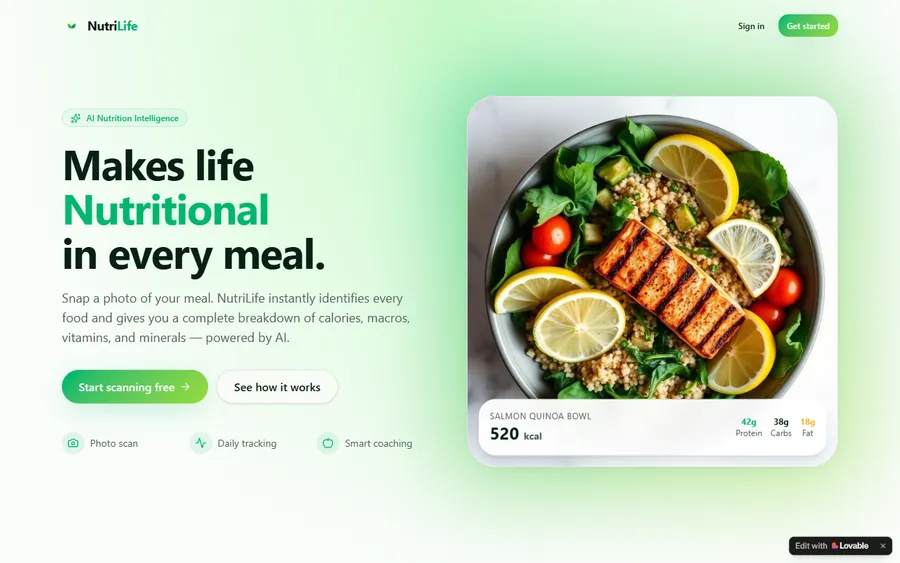
AI and ML
An AI nutrition coach that reads what you eat and works you toward a target.
AI and ML
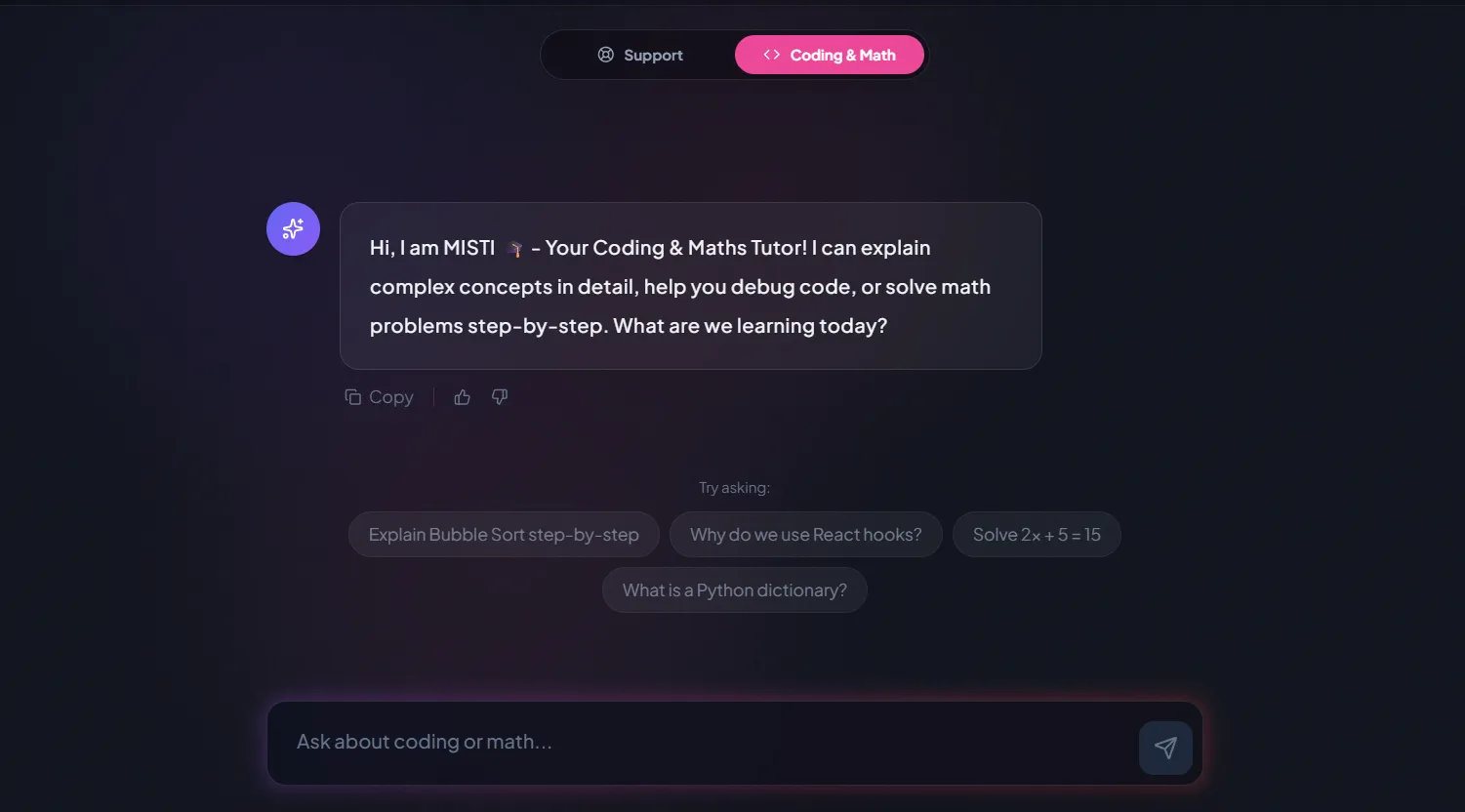
A chatbot that answers mathematics and programming questions, built and deployed by a student.
AI and ML
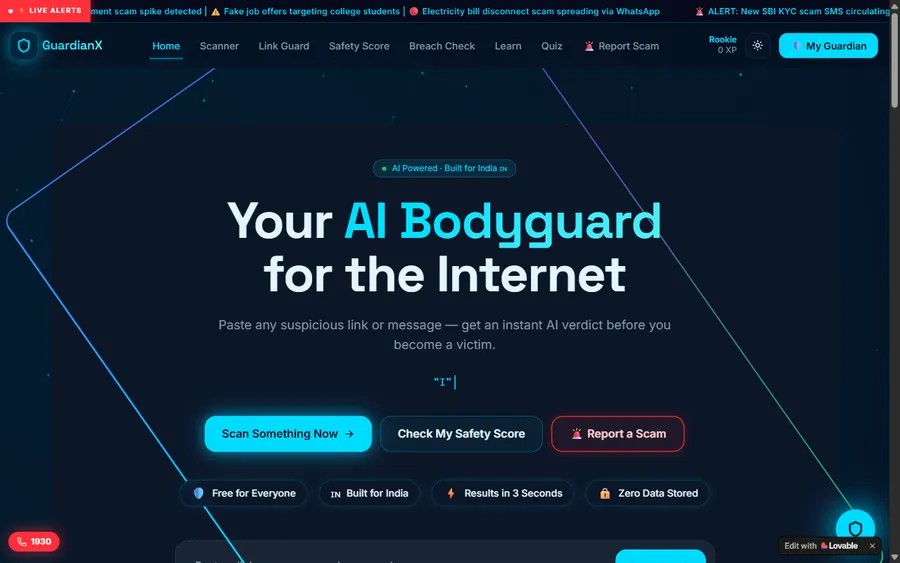
An assistant that helps a young person recognise unsafe situations online.
Web app
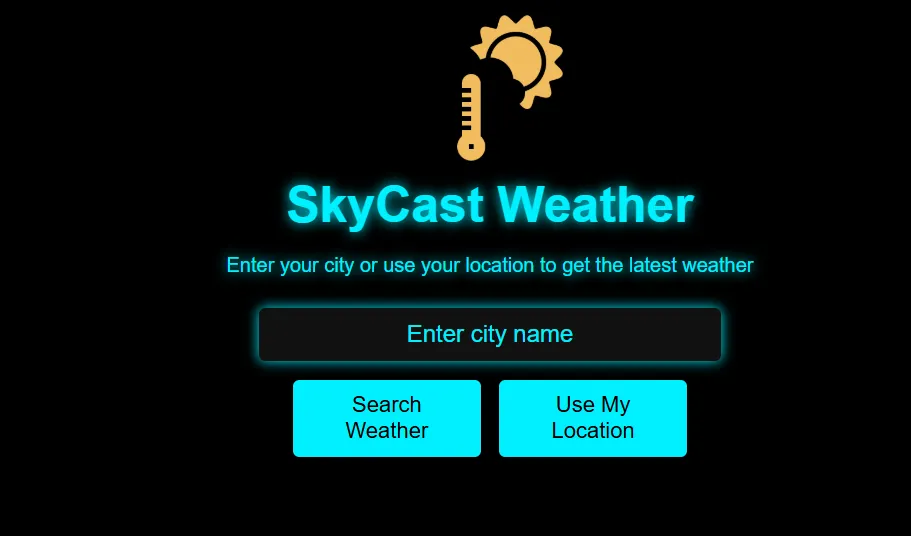
A weather forecasting site with live conditions for any location.
Fees
Charged monthly in US dollars, the one rate we use outside India. No registration fee, and you can stop at the end of any month.
Free first class
USD 0
no card required
Group batch
USD 100
a month, billed in US dollars
One to one
USD 150
a month, billed in US dollars
What families say
Copied from Google exactly. We do not write or pay for reviews.
★★★★★
"The one step solution for my son. Modern Age Coders make learning coding so simple that kids love it. The teachers explain complex concepts clearly with practical exercises and interactive content."
Ria Mukherjee
Parent
★★★★★
"Modern Age Coders has been a game-changer for me. I struggled to grasp IT concepts and coding before joining, but their classes transformed everything. I can now confidently write complex programs with ease."
Samriddha Mondal
Student
★★★★★
"One of the most wonderful education centres out there. Education is not limited to school syllabus but focuses on skill development."
Vansh Agarwal
Student
★★★★★
"My child Dhairya is really enjoying the Modern Age Coders classes. This is his first online class and he eagerly looks forward to it. I can already see his improvement, and the teachers are very cooperative."
Sonam Oswal
Parent of Dhairya
★★★★★
"Modern Age Coders have wonderful teachers who teach in a clear, easy and practical way. The teacher boosts students' confidence and inspires them to learn without hesitation."
Sonu Goyal
Parent
★★★★★
"I highly recommend this computer coding class! The teachers are incredibly knowledgeable and passionate about coding."
Ritu Kedia
Parent
Questions from Senior Cycle families
Under the current specification, by an end-of-course examination worth 70 percent and coursework worth 30 percent. The redeveloped subject introduced from September 2027 moves to a 60 percent examination and a 40 percent Coursework Project.
The current specification does not require a specific language, but Python is assessed in the exam, and Python and JavaScript in the coursework. In the redeveloped subject, Python is assessed in the final examination.
The specification is designed for 180 hours of class contact time, and the redeveloped one for a minimum of 180 hours.
We teach the skills the coursework needs on different examples, before and after it. We never write, edit, debug or review the artefact or the report itself, because it must be the student's own individual work.
No, and no honest provider can. We promise a student who understands their code and has practised the kinds of task the subject sets.
For Computer Science, often better: the teacher and student share one screen, the code is on it, and every lesson can be recorded in the student's own notes.
Fifth Year autumn is ideal. A Sixth Year start works too, usually one to one, with more time on tracing and written answers.
The first class is free. One-to-one grinds are USD 150 a month and a group place is USD 100 a month, both charged in US dollars, with no registration fee.
At a weekly hour set in the free first class, usually early evening or at the weekend. Irish time is five and a half hours behind India time in winter and four and a half in summer.
We ring back at a suitable Irish hour to arrange the free first class. Nothing is charged unless the student continues.
Elsewhere on this site
Related pages for the subject and beyond.
AI and your own work, in Irish guidance.
Where Computer Science sits in Irish schools.
For students drawn to the AI side of the new subject.
The national page.
Tracing, the core exam skill.
Eight tests for any class, grinds included.
Start here
Leave a number and we will ring at a suitable Irish hour. In the first class a specialist works through some Python with the student and tells you plainly what to work on first.
To read first: the course pages list every syllabus, how we teach explains the method, and how to read code shows the tracing skill the exam rewards.
WhatsApp us · +91 91233 66161 · contact@modernagecoders.com
WhatsApp from an Irish phone is free and usually quickest. The number is Indian; we have no Irish office or classroom.