HKDSE ICT: Programming and Exam Prep (Python and C++)
The whole HKDSE ICT subject taught one to one in English, with the programming done for real in Python and C++, so Paper 1, Paper 2 and the SBA all rest on understanding instead of memory.
Syllabus updated November 2026
Questions? WhatsApp +91 91233 66161 or email connect@modernagecoders.com
Recordings are free with a Google sign-in. These recordings show how we teach, not the exact syllabus of this course.
Fees and enrolment
How to join HKDSE ICT: Programming and Exam Prep (Python and C++)
Choose how you want to pay, pick a plan and press Enrol. We then fix your class timing with you.
Rated 4.9 across 547 Google reviews.
How would you like to pay?
Pay once for 6 months and save 20%. Same live classes, same mentor, a lower price for every session.
How your 6-month price works
- Sessions
- 24 one-to-one sessions over 6 months, fully flexible timing
- Price per session
- ₹1,000 instead of
₹1,250 - Your 6-month fee
- ₹1,000 × 24 sessions = ₹24,000
- Paying monthly instead
₹4,999 × 6 months = ₹29,994- You save
- ₹5,994 (20%)
Everything in the monthly 1-on-1 plan is included: your own mentor, flexible timing, personal dashboard, class recordings, progress reports and parent-teacher meetings.
Stop early? Every session you have not taken is refunded at ₹1,000. Refund policy
Pay once for 6 months and save 25%. Same live classes, same mentor, a lower price for every session.
How your 6-month price works
- Sessions
- 48 one-to-one sessions over 6 months, 2 sessions a week
- Price per session
- $14 instead of
$18.75 - Your 6-month fee
- $14 × 48 sessions = $672
- Paying monthly instead
$150 × 6 months = $900- You save
- $228 (25%)
Everything in the monthly 1-on-1 plan is included: your own mentor, flexible timing, personal dashboard, class recordings, progress reports and parent-teacher meetings.
Stop early? Every session you have not taken is refunded at $14. Refund policy
Pay once for 6 months and save 25%. Same live classes, same mentor, a lower price for every session.
How your 6-month price works
- Sessions
- 48 one-to-one sessions over 6 months, 2 sessions a week
- Price per session
- $19.60 instead of
$26.25 - Your 6-month fee
- $941
- Paying monthly instead
$210 × 6 months = $1,260- You save
- $319 (25%)
Everything in the monthly 1-on-1 plan is included: your own mentor, flexible timing, personal dashboard, class recordings, progress reports and parent-teacher meetings.
Stop early? Every session you have not taken is refunded at $19.60. Refund policy
How enrolment works
Pick a plan
This course is taught 1-on-1 only: private live classes with your own mentor, about one hour each. Pay monthly, or for 6 months at once and save.
Press Enrol and pay
Fill in the student's name, email and phone, then pay securely: UPI, cards or net banking in India, or a debit or credit card from any other country.
Fix your class timing
After paying, WhatsApp or call +91 91233 66161 with the student's name and your preferred time. We confirm the batch or 1-on-1 slot and send the class link.
Start learning
Join your first live class at the time you chose. Your mentor takes it from there.
Want to see a class first? Book a Priority Demo: a live class of about 45 to 60 minutes with a mentor reserved for you. If you enrol, the demo fee is adjusted against your first month's fee. Share your demo Order ID with us on WhatsApp and we take it off.
Pay monthly and cancel any time, or pay for 6 months at once and save. Stop a 6-month plan early and every session left is refunded.
International Students (Outside India)
Billed monthly in US dollars, the same price in every country. Contact us with any questions.
Questions before you enrol? Talk to our team.
Ask about class timings, the right level for your child, what they need to know already, or payment. Parents and adult learners can reach us on WhatsApp, by email or by phone.
Our promise
The world's best learning experience, open to everyone.
- World-class instructorsEvery class is taught by an instructor who specialises in that exact field.
- No compromise on qualityEvery lesson, project and piece of feedback is held to the highest standard.
- Education for everyoneLearners aged 6 to 67, from first-time beginners to working professionals, in 25+ countries.
If you want the highest quality, Modern Age Coders is the right choice.
Book a Priority DemoHow long this course takes
This course runs 10 months (40 weeks), joinable any month; most students start in S5 so the course ends before the April HKDSE written exams at 2 live one to one classes a week + about 3 hours of programming and exam practice a week, rising to full timed papers in the final month. The range allows for background and pace: a complete beginner uses the full span, and a student with prior knowledge finishes sooner. The syllabus below is planned to the shorter end, with margin kept for revision.
For personalised duration planning, call +91 91233 66161 and we'll map a schedule to your goals.
At a glance
- Who it is for
- S4 to S6 students (about ages 15 to 18) taking HKDSE ICT, from first programming steps to the Algorithm and Programming elective.
- Prerequisites
- None required. Programming starts from the first steps, and students who already code move faster
- Format
- Live, interactive online classes in English with a real mentor, never pre-recorded videos. Live classes run about one hour.
- Language
- English or Hindi, depending on the batch.
- Duration
- 10 months (40 weeks), joinable any month; most students start in S5 so the course ends before the April HKDSE written exams
- Weekly commitment
- 2 live one to one classes a week + about 3 hours of programming and exam practice a week, rising to full timed papers in the final month
- Class size
- Taught 1-on-1 only: every class is a private session with your own mentor.
- Certificate
- Certificate from Modern Age Coders, awarded on passing the final assessment (this is not an HKEAA document or an HKDSE result)
- Watch first
- Free recordings of real classes for ages 13 and up, free with a Google sign-in. These recordings show how we teach, not the exact syllabus of this course.
- Live demo
- Optional. Enrol directly on this page, or book a Priority Demo: a full live class of about 45 to 60 minutes with a mentor reserved for you.
- Questions
- WhatsApp +91 91233 66161 or email connect@modernagecoders.com.
How we teach
Deep understanding. Real projects. Expert guidance.
Learn coding, AI and maths through careful explanations, practical demonstrations, and hands-on problem-solving. Our instructors guide you from the foundations to advanced ideas, helping you understand what happens, why it happens, and how to build it yourself.
You will explore concepts step by step, write and improve code, investigate mistakes, ask questions, and apply your knowledge to meaningful projects. Lessons are designed around active participation, thoughtful feedback, and growing independence.
Expert-led live teaching, with practical participation built into every lesson.
- Students explain their thinking.
- Instructors demonstrate, then guide practice.
- Learners code, solve, or build during lessons.
- Questions and misconceptions get attention.
- Assignments receive useful feedback.
- Progress is checked before advancing.
Program Overview
HKDSE Information and Communication Technology (ICT) is one of the elective subjects in the Hong Kong Diploma of Secondary Education. The exam is set by the Hong Kong Examinations and Assessment Authority (HKEAA), and the curriculum is set by the Curriculum Development Council with the Education Bureau (EDB). The current curriculum (2021) applies to students who started S4 in 2022/23, which means every HKDSE from 2025 onwards. We are an independent online academy: we are not part of the HKEAA or the EDB, and we do not set, mark or see any exam.
The subject is assessed in three parts. Paper 1 is the Compulsory Part, worth 55 percent of the subject mark and lasting 2 hours: Section A is multiple choice (22 percent) and Section B is short and structured questions (33 percent). Paper 2 is the Elective Part, worth 25 percent and lasting 1 hour 30 minutes: candidates answer all the questions on any two of three electives, 2A Databases, 2B Web Application Development and 2C Algorithm and Programming. The School-based Assessment (SBA) is worth the remaining 20 percent and is compulsory for school candidates; private candidates need not complete it, and their result is based on the public exam alone.
The Compulsory Part has five modules: Information Processing, Computer System Fundamentals, Internet and its Applications, Computational Thinking and Programming, and Social Implications. The EDB guide gives Computational Thinking and Programming 48 of the 144 Compulsory Part hours, the largest single share, and the Algorithm and Programming elective builds directly on it. The guide's language table lists Python and C++ for the Compulsory Part and the Algorithm and Programming elective (for students who started S4 in 2025/26 or later these are the only two listed; earlier cohorts could also use Pascal), with SQL for the Databases elective. That is why this course teaches programming properly in Python first, then shows C++ alongside it, because the student who can genuinely write and trace code is ready for Paper 1 Section B, all of elective 2C and a large part of the SBA.
The SBA has two guided tasks on developing an information system: Task 1 Design and Implementation (25 marks) and Task 2 Testing and Evaluation (15 marks), 40 marks in total, completed in class under the school's teacher. The SBA Teachers' Handbook says each piece of work must clearly be the individual student's own, and that presenting work done by others, including work generated by AI tools, is malpractice. So we give guidance only: we teach the design, coding and testing skills the tasks need and explain how marks are awarded, but we never write, edit or produce any part of a student's SBA.
The course runs for ten months. Months 1 and 2 cover information processing and computer systems. Months 3 and 4 cover the internet, security, social implications and the start of computational thinking. Months 5 and 6 cover programming in Python to the Compulsory Part standard, plus how the SBA works. Months 7 and 8 are the Algorithm and Programming elective in Python and C++: data types, searching, sorting, linked lists, stacks, queues, files and parameter passing. Month 9 covers the Databases and Web Application Development electives so the student is ready for whichever second elective their school offers. Month 10 is event-driven programming and full timed papers. Every two-week block teaches one central idea with one original worked example. All practice questions are written by us in the HKDSE style: we never copy, adapt or reproduce HKEAA past-paper questions. We promise teaching and practice, never a grade, a level or a university place.
What Makes This Program Different
- Taught one to one in English by a mentor who follows your school's pace and your chosen electives
- Built on the real weights: Paper 1 is 55 percent (22 multiple choice, 33 structured), Paper 2 is 25 percent, the SBA is 20 percent
- Real programming in Python first, then the same algorithms in C++, the two languages the EDB guide lists for students starting S4 from 2025/26
- Elective 2C Algorithm and Programming taught in full, with 2A Databases and 2B Web Application Development explained so the second elective is covered
- SBA guidance only: we teach the skills and the marking, and never write or edit a student's SBA work
- Every two-week block has one original worked example traced step by step; no HKEAA past-paper question is ever reproduced
Your Learning Journey
Career Progression
Detailed Course Curriculum
Explore the complete week-by-week breakdown of what you'll learn in this comprehensive program.
An information system is people, processes, data and technology working towards a purpose, and data only becomes information once it is organised. Errors creep in when data is entered or sent, so systems use validation, verification and parity checks to catch them. The common trap is mixing up validation (is this value sensible?) with verification (is this value what was meant?).
Topics Covered
- The components of an information system: purpose, data, processes, technologies and personnel
- Data versus information, and the types of data: text, number, image, audio and video
- The hierarchy of data: field, record, file and database
- Direct access and sequential access, with their uses and drawbacks
- Validation checks: range, type, length, presence, format and check digit
- Verification by double entry and proofreading, and why it differs from validation
- Odd and even parity, and what a parity check can and cannot detect
- A diagnostic set of our own questions to find each student's starting point
Worked Example
Problem. A school system sends 8-bit bytes using even parity: the leftmost bit is the parity bit, chosen so that each byte has an even number of 1s. Which received byte must contain an error? (A) 01011001 (B) 11100100 (C) 10000001 (D) 00110111
- Count the 1s in each byte: (A) has 4, (B) has 4, (C) has 2, (D) has 5.
- Under even parity every correct byte has an even count.
- Only (D) has an odd count, so (D) must contain an error.
- Note what parity cannot do: if two bits flip, the count stays even and the error is missed.
Answer. (D) 00110111
The idea to keep. A parity check counts 1s, so it catches any odd number of flipped bits and misses any even number.
Projects You Build
- A one-page data control sheet: each validation check with its own example, plus three parity bytes the student writes and checks
Practice & Assignments
Ten short questions on data organisation and data control in 20 minutes, then the diagnostic set reviewed with the mentor
Computers store whole numbers in binary, and negative numbers in two's complement: invert the bits of the positive value and add 1. With 8 bits the range is -128 to 127, so adding two positive numbers can overflow into a pattern that reads as negative. The classic trap is reporting the wrong-looking answer without saying that an overflow has happened.
Topics Covered
- Converting between denary, binary and hexadecimal in both directions
- Binary addition and subtraction, and the overflow error
- Two's complement for negative integers, up to 2 bytes
- The largest and smallest values an n-bit pattern can hold
- How many patterns n bits give: three bits for eight colours
- Character sets: ASCII, Big-5, GB and Unicode, and why the size of the set sets the bits needed
- Analog and digital data, and where conversion is needed
Worked Example
Problem. Using 8-bit two's complement: (a) write -45 in binary; (b) add 01100100 and 00110010, state the 8-bit result and what it represents, and explain what has gone wrong.
- 45 in binary is 00101101. Invert every bit to get 11010010, then add 1 to get 11010011. So -45 is 11010011.
- 01100100 is 100 and 00110010 is 50. Adding them gives 10010110.
- The leftmost bit is 1, so in two's complement 10010110 represents -106.
- The true sum is 150, but 8-bit two's complement only reaches 127, so an overflow error has occurred.
Answer. (a) 11010011 (b) 10010110, which reads as -106: overflow, because 150 is outside the range -128 to 127
The idea to keep. Always compare the true answer with the range of the bit pattern before trusting a binary result.
Projects You Build
- A number systems drill sheet worked by hand, then a short Python script the student writes to check every answer
Practice & Assignments
Twenty conversion, two's complement and overflow questions in 30 minutes, each with full working shown
Assessment
Month 1 check: 25 minutes of original multiple choice and short questions on data control and data representation, marked in the HKDSE style
The Compulsory Part expects students to manipulate data in spreadsheets and to trace and interpret simple SQL on a single table. A SELECT statement keeps only the rows that pass every condition in the WHERE clause, and then any function such as COUNT or SUM works on those rows alone. The trap is applying the function to the whole table before filtering.
Topics Covered
- How images, sound and video are digitised, and common file formats compared
- Spreadsheet cell references, functions and logical and relational operators
- Filtering, searching and sorting with single and multiple criteria
- Pivot tables, pivot charts and what-if scenarios for data analysis
- Creating a simple database with a DBMS tool, forms for data entry and reports
- Tracing SELECT, FROM, WHERE and ORDER BY on a single table
- COUNT, SUM and AVG, and the order in which a query is worked out
Worked Example
Problem. Table MEMBER has fields ID, FORM, CLUB and HOURS, with six records: (M01, S4, Robotics, 12), (M02, S5, Robotics, 7), (M03, S4, Drama, 15), (M04, S4, Robotics, 9), (M05, S5, Drama, 11), (M06, S4, Robotics, 4). What does this query output? SELECT COUNT(*), SUM(HOURS) FROM MEMBER WHERE FORM = 'S4' AND CLUB = 'Robotics' AND HOURS >= 5
- Keep only S4 records: M01, M03, M04 and M06.
- Of these keep only Robotics: M01, M04 and M06.
- Of these keep only HOURS of 5 or more: M01 (12) and M04 (9). M06 has 4 hours and is removed.
- COUNT(*) counts the remaining 2 rows and SUM(HOURS) adds 12 + 9 = 21.
Answer. 2 and 21
The idea to keep. Filter first, row by row against every condition, and only then apply COUNT or SUM to the rows that are left.
Projects You Build
- A small club database the student builds in a DBMS tool, with a data entry form, three saved queries and one report
Practice & Assignments
Eight SQL tracing questions and four spreadsheet formula questions in 30 minutes
The CPU repeats the fetch, decode, execute cycle, moving instructions and data between memory and its registers along buses. The number of address lines decides how many memory locations can be addressed, and the word length decides how much data moves at once. The common trap is mixing computer prefixes (1 KB = 1024 bytes) with SI prefixes (1 kilo = 1000), which the EDB guide asks students to keep apart.
Topics Covered
- Input and output devices, processing units (CPU and GPU), the bus system and storage
- The structure of the CPU: control unit, ALU and registers
- The fetch, decode, execute cycle with a single processor
- RAM, ROM and cache, and how memory size, address, word length and performance relate
- Storage devices compared: random or sequential access, volatile or non-volatile, speed and capacity
- Computer prefixes versus SI prefixes: KB, MB, GB, TB and microseconds to picoseconds
- System software, application software, operating systems and utility programs
- Modes of operation: batch, real-time, parallel, distributed processing and virtualisation
Worked Example
Problem. A small computer has 16 address lines and each address holds one byte. (a) How many bytes can it address, in bytes and in KB? (b) If the memory is read as 32-bit words instead, how many words is that?
- 16 address lines give 2 to the power 16 = 65,536 different addresses.
- One byte per address means 65,536 bytes.
- Using computer prefixes, 65,536 / 1024 = 64 KB.
- A 32-bit word is 4 bytes, so 65,536 / 4 = 16,384 words.
Answer. (a) 65,536 bytes, which is 64 KB (b) 16,384 words
The idea to keep. n address lines give 2 to the power n locations, and computer storage prefixes step in 1024s, not 1000s.
Projects You Build
- An annotated diagram of one full fetch, decode, execute cycle, with each register and bus labelled in the student's own words
Practice & Assignments
Twelve questions on hardware, memory and modes of operation in 25 minutes, with written justifications
Assessment
Phase 1 test: 45 minutes of original Paper 1 style questions (multiple choice plus structured) on Information Processing and Computer System Fundamentals
Data crosses a network as packets following the TCP/IP rules, and the speed of a link is measured in bits per second using SI prefixes. File sizes, though, are often given in bytes with computer prefixes. The trap in transfer-time questions is forgetting to turn bytes into bits, or mixing the two kinds of prefix.
Topics Covered
- LAN, WAN and wireless networks, and the devices that connect them
- Transmission media and the meaning of bandwidth and interference
- Simple concepts of TCP/IP and communication protocols
- IP addresses and the role of the Domain Name System (DNS)
- Client and server roles in everyday internet services
- Transfer time = data size in bits / transmission rate in bits per second
- Computer prefixes for file sizes, SI prefixes for link speeds
Worked Example
Problem. A 25 MB video file (1 MB = 1024 x 1024 bytes) is downloaded over a 100 Mbps link (1 Mbps = 1,000,000 bits per second). Ignoring overheads, how long does the download take, to 2 decimal places?
- Size in bytes: 25 x 1024 x 1024 = 26,214,400 bytes.
- Size in bits: 26,214,400 x 8 = 209,715,200 bits.
- Rate: 100 x 1,000,000 = 100,000,000 bits per second.
- Time = 209,715,200 / 100,000,000 = 2.10 seconds (2.097 before rounding).
Answer. 2.10 seconds
The idea to keep. Convert both quantities to bits first, using 1024 for storage and 1000 for transmission, then divide.
Projects You Build
- A labelled map of how a request travels from a home device to a web server and back, naming every device and protocol
Practice & Assignments
Ten networking and transfer-time questions in 25 minutes
A URL names the protocol, the host, an optional port, the path to a resource and an optional query string, and DNS turns the host name into an IP address. HTTPS is HTTP protected by encryption. The common trap is reading the host name as the whole address and losing the marks for the port, path or query.
Topics Covered
- Internet services and applications: web, email, file transfer, streaming and cloud services
- The parts of a URL: protocol, host, port, path and query string
- HTTP and HTTPS, and what the S protects
- How DNS resolves a domain name
- Elementary web authoring: reading and editing HTML tags and attributes
- Hyperlinks, images and simple tables in HTML
- Choosing the right internet service for a described task
Worked Example
Problem. For the URL https://www.lantau-library.edu.hk:8443/catalogue/search?subject=ict&year=2027 identify (a) the protocol, (b) the host name, (c) the port, (d) the path and (e) the data sent in the query string.
- The protocol is everything before ://, which is https.
- The host name runs up to the colon: www.lantau-library.edu.hk.
- The number after the colon is the port: 8443.
- The path runs from the first / after the port up to the ?: /catalogue/search.
- After the ? come name=value pairs joined by &: subject = ict and year = 2027.
Answer. (a) https (b) www.lantau-library.edu.hk (c) 8443 (d) /catalogue/search (e) subject=ict and year=2027
The idea to keep. Read a URL left to right by its separators, ://, :, /, ? and &, and every part falls out in order.
Projects You Build
- A simple two-page website written in HTML by hand, with a link, an image and a table, checked in a browser
Practice & Assignments
Eight URL, DNS and HTML questions in 20 minutes
Assessment
Month 3 check: 30 minutes of original multiple choice and structured questions on networking, internet services and web authoring
In public key encryption each person has a public key that anyone may use to encrypt and a private key that only they hold to decrypt. To send a secret message you encrypt with the receiver's public key, so only the receiver's private key can open it. The common trap is encrypting with your own key, which protects nothing.
Topics Covered
- Threats: malware, eavesdropping, hacking, phishing and denial of service
- Protection: anti-virus software, authentication, access and user rights, firewalls, WPA and VPN
- Symmetric encryption and public and private key encryption
- Authentication and authorisation, digital certificates and secured transmission
- Technological innovations and their impact on society
- Health and ethical issues in using ICT
- Intellectual property, copyright and licences
- Answering scenario questions by matching each threat to a suitable protection
Worked Example
Problem. A toy public key system (far too small to be secure, used only to see the idea) uses n = 55 and public key e = 3. The private key d satisfies 3 x d leaves remainder 1 when divided by 40. (a) Find d. (b) Encrypt the message 8 using c = 8 to the power 3, mod 55. (c) Show that decrypting c with d gives back 8.
- Try multiples: 3 x 27 = 81 = 2 x 40 + 1, so d = 27.
- 8 to the power 3 is 512, and 512 = 9 x 55 + 17, so c = 17.
- Decrypting means 17 to the power 27, mod 55. Computing step by step (a short Python line, pow(17, 27, 55), does it instantly) gives 8.
- Anyone can encrypt with (55, 3), but only the holder of d = 27 can decrypt.
Answer. (a) d = 27 (b) c = 17 (c) 17 to the power 27, mod 55 = 8
The idea to keep. The public key locks and only the matching private key unlocks, so to send a secret you use the receiver's public key.
Projects You Build
- A threat and protection table for a described school network, with a written recommendation and a justification for each choice
Practice & Assignments
Ten scenario questions on security and social implications in 25 minutes, marked for the justification, not just the name
Before writing code, a problem is broken into inputs, processes and outputs, and the algorithm is written in pseudocode or a flowchart. A trace table records the value of every variable after every step, which is how examiners check that you can follow an algorithm exactly. The trap is updating a variable in your head and skipping the row where it did not change.
Topics Covered
- Defining a problem and its scope, and identifying inputs, processes and outputs
- Decomposition into smaller sub-problems, and spotting common patterns
- Pseudocode and program flowcharts for the same algorithm
- Simple data types: integer, real, character and Boolean; strings and one-dimensional arrays
- Sequence, selection (binary and multi-way) and iteration
- Boolean logic with AND, OR and NOT, and complete truth tables
- Dry runs and trace tables, row by row
Worked Example
Problem. Trace this algorithm and give the final value of x. x = 0; for i = 1 to 5: if i mod 2 = 1 then x = x + i * i; end for
- i = 1: 1 mod 2 = 1, so x = 0 + 1 = 1.
- i = 2: 2 mod 2 = 0, so x stays 1.
- i = 3: odd, so x = 1 + 9 = 10.
- i = 4: even, so x stays 10.
- i = 5: odd, so x = 10 + 25 = 35.
Answer. x = 35 (the sum of the squares of the odd numbers from 1 to 5)
The idea to keep. Write one trace-table row for every pass of the loop, including the passes where nothing changes.
Projects You Build
- One problem written three ways: an input, process and output table, pseudocode and a flowchart, then a trace table that tests it
Practice & Assignments
Six trace tables and four truth tables in 30 minutes, then two short algorithms written in pseudocode
Assessment
Phase 2 test: 45 minutes of original Paper 1 style questions on the internet, security, social implications and algorithm design
Most short programs combine three constructs: sequence, selection with if, and iteration with for or while. A while loop is right when you do not know in advance how many passes are needed, for example when you keep dividing a number by 10 until nothing is left. The trap is a loop condition that never becomes false, or a counter that is updated in the wrong place.
Topics Covered
- Setting up Python and running a first program
- Variables, constants, assignment, input and output
- Arithmetic operators including integer division and modulus
- Relational operators and Boolean expressions with and, or and not
- Selection with if, elif and else
- Counting loops with for and conditional loops with while
- Producing a programming solution from a written specification
Worked Example
Problem. What does this Python program print? n = 40721; count = 0; total = 0; while n > 0: total = total + n % 10; n = n // 10; count = count + 1; then print(count, total)
- n % 10 takes the last digit and n // 10 removes it.
- Pass 1: digit 1, n becomes 4072. Pass 2: digit 2, n becomes 407. Pass 3: digit 7, n becomes 40.
- Pass 4: digit 0, n becomes 4. Pass 5: digit 4, n becomes 0 and the loop stops.
- count is 5 and total is 1 + 2 + 7 + 0 + 4 = 14.
Answer. 5 14
The idea to keep. Modulus 10 peels off the last digit and integer division by 10 removes it, which is the standard way to walk through the digits of a number.
Projects You Build
- A body mass index calculator in Python that reads height and weight, validates them and prints a category
Practice & Assignments
Ten short programs written and run in class, each tested with values the student chooses
The Compulsory Part expects a set of standard algorithms on a one-dimensional list: find the maximum, minimum and average, search for an item, count items that meet a condition and check whether a list is in order. To find a maximum you start with the first item and replace it only when you meet something larger. The trap is starting the maximum at 0, which fails when every value is negative.
Topics Covered
- Lists as one-dimensional arrays: indexing from 0, length and traversal
- Loading, printing, adding and deleting items in a list
- Maximum, minimum, total and average
- Linear search and reporting whether an item was found
- Counting the items that meet a condition
- Checking whether a list is in order
- String length and extracting characters from a string
Worked Example
Problem. scores = [56, 73, 91, 48, 73, 65]. Using the standard algorithms, find (a) the maximum and the index where it first appears, (b) how many scores are 60 or more, (c) the average to 2 decimal places, and (d) whether the list is in ascending order.
- Start with max = 56 at index 0. 73 is larger, so max = 73 at index 1. 91 is larger, so max = 91 at index 2. Nothing later is larger.
- Scores of 60 or more: 73, 91, 73 and 65, so the count is 4.
- The total is 406 and there are 6 scores, so the average is 406 / 6 = 67.67.
- 91 is followed by 48, which is smaller, so the list is not in ascending order.
Answer. (a) 91 at index 2 (b) 4 (c) 67.67 (d) not in order
The idea to keep. Every standard algorithm is one loop with one variable that is updated only when its condition is met.
Projects You Build
- A class results program that reads marks from the keyboard and reports maximum, minimum, average and the number passed
Practice & Assignments
Eight list programs in Python, plus four of the same algorithms traced on paper in 25 minutes
Assessment
Month 5 check: a 40-minute task to write, run and trace two original programs, marked for correctness and style
Programs fail in three ways: syntax errors stop them running, run-time errors crash them part way, and logic errors give wrong answers quietly. Logic errors hide at the boundaries, so good test data always includes values exactly on each limit. The trap is testing only comfortable middle values that pass whether the code is right or not.
Topics Covered
- Syntax, run-time and logic errors: why each happens and how each shows itself
- Designing test data: normal, boundary and invalid values
- Data validation checks written in code
- Locating and correcting a logic error in an algorithm
- Modifying an algorithm when the specification changes
- Comparing two solutions to the same problem by steps and resources used
Worked Example
Problem. A program should accept ages from 15 to 18 inclusive. The code is: if age > 15 and age < 18: print('accepted'). Using the test values 14, 15, 16, 18 and 19, find which tests expose the error and correct the condition.
- The correct rule accepts 15, 16, 17 and 18, and rejects 14 and 19.
- The code accepts 16 (correct) and rejects 14 and 19 (correct).
- The code rejects 15 and 18, which should be accepted: these two boundary tests expose the error.
- Correct the condition to age >= 15 and age <= 18.
Answer. The tests with 15 and 18 expose the error; the condition should be age >= 15 and age <= 18
The idea to keep. Always test exactly on each boundary, because that is where a wrong comparison operator hides.
Projects You Build
- A test plan table for an earlier program, with normal, boundary and invalid data, expected and actual results
Practice & Assignments
Six find-the-error tasks and four test plans in 30 minutes
A function packages one job with a name and parameters, so a program can be built, tested and changed one piece at a time. This is also the habit the SBA rewards: its two guided tasks are Design and Implementation (25 marks) and Testing and Evaluation (15 marks), done in class with the school's teacher. We explain the tasks and how they are marked, but the SBA work itself is always the student's own; we never write, edit or produce any part of it.
Topics Covered
- Functions and procedures with parameters and return values
- The advantages of modularity when designing a solution
- Answering Paper 1 Section B programming questions: completing code, tracing and explaining
- The SBA: two guided tasks on developing an information system, 40 marks in total, worth 20 percent of the subject
- Why critical parts of the SBA are done in class, and why schools set milestones
- Academic honesty: acknowledging help, and why presenting AI-generated or others' work as your own is malpractice
- Keeping a complete record of your own work until the results are released
Worked Example
Problem. Write a Python function is_leap(y) that returns True for a leap year (divisible by 4 but not by 100, or divisible by 400), and give the results for a test plan of 2027, 2024, 1900 and 2000.
- Write the rule as one Boolean expression: return (y % 4 == 0 and y % 100 != 0) or (y % 400 == 0).
- 2027 is not divisible by 4, so the result is False.
- 2024 is divisible by 4 and not by 100, so the result is True.
- 1900 is divisible by 100 but not by 400, so the result is False; 2000 is divisible by 400, so the result is True.
Answer. def is_leap(y): return (y % 4 == 0 and y % 100 != 0) or (y % 400 == 0); results False, True, False, True
The idea to keep. A test plan should include a case for every branch of the rule, including the rare ones like 1900 and 2000.
Projects You Build
- A small modular program of the student's own design (not their SBA), with each function documented and tested in a test plan
Practice & Assignments
Four Paper 1 Section B style programming questions written by us, answered in 35 minutes
Assessment
Phase 3 test: a 60-minute original Paper 1 practice paper covering all five Compulsory Part modules, with Section A multiple choice and Section B structured questions
Elective 2C adds structured and user-defined data types, such as a record that groups a name, a form and a mark. C++ makes types explicit: dividing two int values gives an int and throws the fraction away, while Python's / always gives a real number. The trap is assuming a C++ calculation works like a calculator, and losing marks for an output you never traced.
Topics Covered
- Simple, structured and user-defined data types, and choosing the right one
- Records in Python (classes or dictionaries) and structs in C++
- Reading C++ next to Python: types, braces, semicolons and cout
- Integer division and modulus in C++ and in Python
- Global and local variables, constants and operator precedence
- Numerical errors: rounding, truncation, overflow and underflow
- Good programming style: meaningful names, comments and indentation
Worked Example
Problem. In C++: int a = 7, b = 2; cout << a / b << " " << a % b << " " << (double)a / b; What is printed, and what would Python print for a / b?
- a and b are both int, so a / b is integer division: 7 / 2 gives 3 and the .5 is discarded.
- a % b is the remainder: 7 = 3 x 2 + 1, so it gives 1.
- (double)a turns 7 into 7.0 before dividing, so the result is 3.5.
- In Python, / always gives a real result, so 7 / 2 is 3.5; Python uses // for integer division.
Answer. C++ prints 3 1 3.5; Python's 7 / 2 gives 3.5
The idea to keep. In C++ the types of the operands decide the result, so trace the types before you trace the values.
Projects You Build
- A student record program written in Python and again in C++, storing name, form and mark as one record
Practice & Assignments
Ten predict-the-output questions mixing Python and C++, then three short C++ programs compiled and run
Binary search only works on sorted data: look at the middle item, and if it is not the target throw away the half that cannot contain it. On 15 items it never needs more than 4 comparisons, while a linear search may need 15. The trap is using binary search on unsorted data, or getting the new low and high values wrong by one.
Topics Covered
- Linear search and its worst case
- Binary search with low, high and mid, traced step by step
- Bubble sort: passes, swaps and the early-exit flag
- Insertion sort and selection sort traced pass by pass
- Counting, accumulating and swapping inside sorting loops
- Choosing an algorithm by efficiency, correctness and the data structure
- Awareness that faster sorts such as merge sort and quick sort exist
Worked Example
Problem. Binary search the sorted array [3, 8, 12, 17, 21, 25, 30, 34, 40, 46, 51, 58, 63, 70, 77] (indexes 0 to 14) for 58, using mid = (low + high) // 2. List the mid indexes checked. How many comparisons would a linear search from index 0 need?
- low = 0, high = 14, mid = 7: the value is 34, which is less than 58, so low = 8.
- low = 8, high = 14, mid = 11: the value is 58, found.
- So the mids checked are 7 and 11: two comparisons.
- A linear search checks indexes 0 to 11 in turn, which is 12 comparisons.
Answer. Mids 7 then 11, found in 2 comparisons; linear search needs 12
The idea to keep. Each binary search comparison halves what is left, which is why it beats linear search on large sorted lists.
Projects You Build
- A Python program that runs linear search, binary search and bubble sort on the same data and counts comparisons for each
Practice & Assignments
Four binary search traces and three sorting traces, each sort written out pass by pass, in 35 minutes
Assessment
Month 7 check: 40 minutes of original Paper 2C style structured questions on data types, C++ output and searching and sorting
The elective asks students to build linked lists, stacks and queues inside arrays. A linked list stores each item with the index of the next one, so you read it by following pointers from the head until you reach -1. The trap is reading the array in index order instead of following the pointers.
Topics Covered
- Merging two sorted arrays into one sorted array
- Linear linked lists in arrays: data, next pointer, head and the end marker
- Inserting into and deleting from a linked list by changing pointers
- Stacks: push, pop, top and stack overflow and underflow
- Queues: enqueue, dequeue, front and rear, and the circular queue
- Nested loops, which the elective requires
- Choosing a structure for a described task
Worked Example
Problem. A linked list is stored in two arrays: data = ['C', 'R', 'E', 'T', 'A'] and next = [2, 4, -1, 1, 0], with head = 3 and -1 marking the end. Traverse the list and write the items in order.
- Start at head = 3: data[3] is 'T' and next[3] is 1.
- Index 1: data[1] is 'R' and next[1] is 4.
- Index 4: data[4] is 'A' and next[4] is 0.
- Index 0: data[0] is 'C' and next[0] is 2.
- Index 2: data[2] is 'E' and next[2] is -1, so the list ends.
Answer. T R A C E
The idea to keep. Follow the pointers, never the index order: the array order and the list order are different things.
Projects You Build
- A Python module with a linked list, a stack and a circular queue, all stored in fixed-size arrays, with a test for every operation
Practice & Assignments
Three linked list traversals, three stack and queue simulations and one merge, traced in 30 minutes
When a value is passed to a sub-program by value, the sub-program works on a copy and the original never changes. When it is passed by reference, as with an ampersand in C++, the sub-program changes the original directly. The trap is tracing a by-value parameter as if the change came back to the caller.
Topics Covered
- Reading from and writing to text files
- Updating file records: delete, insert, append and amend
- Procedures and functions with parameters
- Passing by value and by reference in C++, and how Python behaves
- Structured programming to design, implement and debug
- Debugging with stubs, flags, break points and program traces
Worked Example
Problem. In C++: void f(int x, int &y) { x = x + 1; y = y + x; } and in main: int a = 3, b = 4; f(a, b); What are a and b after the call?
- x is passed by value, so x starts as a copy of a: x = 3.
- y is passed by reference, so y is another name for b.
- Inside f: x becomes 4, then y = y + x makes b = 4 + 4 = 8.
- a was never touched because only its copy x changed.
Answer. a = 3 and b = 8
The idea to keep. A reference parameter is the caller's own variable under a new name; a value parameter is only a copy.
Projects You Build
- A Python program that keeps a library loan file, with functions to add, amend and delete records and a trace of every change
Practice & Assignments
Six parameter-passing traces and two file-handling programs in 35 minutes
Assessment
Phase 4 test: a 45-minute original Paper 2C practice section on the whole Algorithm and Programming elective, in the HKDSE short and structured style
The Databases elective goes beyond single tables: joins combine related tables, GROUP BY with HAVING summarises groups, and normalisation up to third normal form removes redundancy. An inner join only keeps rows that match in both tables, so finding something with no matches needs an outer join. The trap is expecting an inner join to show the club that nobody joined.
Topics Covered
- Relational database concepts: entities, attributes, primary and foreign keys
- Entity-relationship diagrams and resolving many-to-many relationships
- SQL: SELECT with arithmetic, comparison and logical operators, IN, BETWEEN and LIKE
- Aggregate and string functions, GROUP BY and HAVING
- Equi-join, natural join and outer join
- Sub-queries one level deep
- Normalisation to third normal form, denormalisation and access rights
Worked Example
Problem. CLUB(CID, CNAME) holds (C1, Chess), (C2, Coding), (C3, Choir). JOINS(SID, CID) holds (S1, C2), (S2, C2), (S3, C1), (S1, C1), (S4, C2). What does this output? SELECT CNAME, COUNT(*) FROM CLUB, JOINS WHERE CLUB.CID = JOINS.CID GROUP BY CNAME HAVING COUNT(*) >= 2 ORDER BY CNAME. Which kind of join would find the club with no members?
- The join matches each JOINS row to its club: Coding three times (S1, S2, S4) and Chess twice (S3, S1). Choir matches nothing.
- GROUP BY CNAME gives Chess with 2 and Coding with 3.
- HAVING COUNT(*) >= 2 keeps both, and ORDER BY CNAME puts Chess first.
- Choir never appears in an inner join; a LEFT OUTER JOIN from CLUB with WHERE JOINS.SID IS NULL finds it.
Answer. Chess 2, then Coding 3; an outer join finds Choir
The idea to keep. An inner join keeps only matches, so any question about what is missing needs an outer join.
Projects You Build
- A normalised three-table database for a school event, with an ER diagram and five SQL queries the student writes and tests
Practice & Assignments
Ten SQL queries written and run, two normalisation exercises and one ER diagram in 40 minutes
In a web application the client sends a request, often a GET or POST, and a server-side script processes the data and sends back a page. Anything that arrives from the client must be validated on the server, even if the page also checks it. The trap is trusting the client-side check alone, which any user can bypass.
Topics Covered
- Client-server communication: request and response, TCP ports, GET and POST
- Common network servers: DHCP, domain controller, file, proxy, web and database servers
- Setting up simple networks and sharing resources with permissions
- HTML with CSS for a consistent look across pages
- Client-side scripts (JavaScript) and server-side scripts (PHP), and the difference
- Processing and validating form data, cookies and reading and updating a single database table
- Publishing content and new trends in web applications
Worked Example
Problem. A quiz page sends the request GET /quiz/result?name=Kit&score=17&total=20 to a server-side script. The script must reject any score outside 0 to total, otherwise print the percentage. What does it print? What should it do with score=23 and total=20?
- Split the query string at & into name = Kit, score = 17 and total = 20.
- Validate on the server: 0 <= 17 <= 20 is true, so the data is accepted.
- Percentage = 17 x 100 / 20 = 85.
- With score = 23 and total = 20, 23 > 20 fails the check, so the script rejects it with an error message.
Answer. It prints 85 percent for Kit; score=23 with total=20 is rejected
The idea to keep. Validate every value on the server, because anything in a GET or POST request can be typed by the user.
Projects You Build
- A small homework checklist web application with a form, a client-side check, a server-side check and one database table
Practice & Assignments
Six questions on client-server concepts and three short scripts traced in 30 minutes
Assessment
Month 9 check: 45 minutes of original Paper 2 style questions on the student's two electives, timed at the Paper 2 pace
Elective 2C ends with programs that react to events, such as a button press or a sensor reading passing a set value. An event happens at the moment of crossing, not on every reading beyond the threshold, so the program must remember its current state. The trap is counting every low reading as a new event.
Topics Covered
- Using extended modules or libraries to read sensors and control devices
- Event handlers for user actions and sensor values
- Keeping state so an event fires once per crossing
- Light sensors, accelerometers, motors and speech recognition in simple programs
- Nested loops and selection inside event-driven code
- Reviewing the whole 2C elective against the curriculum list
Worked Example
Problem. A lamp program reads a light sensor every second: 310, 280, 190, 170, 240, 160, 150, 320. The lamp switches ON when the reading falls below 200 and OFF when it returns to 200 or more. How many ON events and OFF events occur? How many would a program that counts every reading below 200 report?
- Start with the lamp OFF. 310 and 280 are not below 200, so nothing happens.
- 190 is below 200 while OFF: ON event 1. 170 is still low, but the lamp is already ON, so no event.
- 240 is 200 or more while ON: OFF event 1. 160 is low while OFF: ON event 2. 150: no event.
- 320 while ON: OFF event 2. A naive count of low readings would report 4 (190, 170, 160 and 150).
Answer. 2 ON events and 2 OFF events; a naive count gives 4
The idea to keep. Store the current state and fire an event only when a reading changes it.
Projects You Build
- A simulated sensor program in Python that reads values from a file and switches a virtual device with correct event handling
Practice & Assignments
Four event-driven traces and one full mixed 2C review set in 35 minutes
Paper 1 gives 2 hours for multiple choice and structured questions on the whole Compulsory Part, and Paper 2 gives 90 minutes for all the questions on two electives. Nested loops are a favourite in tracing questions, and the safe method is a trace table with one row for every pass of the inner loop. The trap is spending too long on one structured question and rushing the last elective.
Topics Covered
- Paper 1 timing: Section A multiple choice and Section B structured questions
- Paper 2 timing: splitting 90 minutes across two electives
- Command words: state, describe, explain, compare and justify
- Writing code by hand clearly, with comments that make the logic plain
- Turning the error log from every practice paper into a revision list
- Full-length original practice papers in the HKDSE format, marked by the mentor
- Exam week: the 2027 timetable and a calm routine
Worked Example
Problem. Trace this nested loop and give the final value of count. count = 0; for i = 1 to 4: for j = 1 to i: if (i + j) mod 2 = 0 then count = count + 1
- i = 1: j = 1 gives 2, even: count = 1.
- i = 2: j = 1 gives 3, odd; j = 2 gives 4, even: count = 2.
- i = 3: j = 1 gives 4, even; j = 2 gives 5, odd; j = 3 gives 6, even: count = 4.
- i = 4: j = 1 gives 5, odd; j = 2 gives 6, even; j = 3 gives 7, odd; j = 4 gives 8, even: count = 6.
- The inner loop ran 1 + 2 + 3 + 4 = 10 times in total.
Answer. count = 6
The idea to keep. In a nested loop the inner loop restarts for every value of the outer loop, so give every inner pass its own trace row.
Projects You Build
- Two complete original mock exams (Paper 1 and Paper 2), each reviewed question by question and turned into a final revision list
Practice & Assignments
Full timed papers under exam conditions until pacing and accuracy are steady
Assessment
Final assessment: a full original mock of Paper 1 (2 hours) and Paper 2 (90 minutes) on the student's electives, marked and reviewed; passing earns the certificate
Projects You'll Build
Build a professional portfolio with Twenty original worked examples traced step by step, more than ten working Python programs, C++ versions of the key algorithms, a database, a small web application and two full mock exams real-world projects.
Weekly Learning Structure
Certification & Recognition
Technologies & Skills You'll Master
Comprehensive coverage of the entire modern web development stack.
Support & Resources
Career Outcomes & Opportunities
Transform your career with industry-ready skills and job placement support.
Prerequisites
Who Is This Course For?
Career Paths After Completion
Course Guarantees
Real students. Real moments. Real joy.
These are our actual student meetups. No stock photos, no filters. Swipe through and meet the community you'll be joining.







































What families say
Straight from the parents and students who learn with us. Rated 4.9 across 547 Google reviews.
“Mivaan enjoys the class. He understands the concepts and completes his tasks with excitement. He started taking interest in coding… truly amazing class.”
“I absolutely love it here! I made new friends and learned important valuable coding skills while having the fun of my life. It's not just coding here, it's outings, bonding and most importantly preparing you for your future. Definitely five stars.”
“What stands out most is how excited my son is before every class. He looks forward to learning, problem-solving, and sharing what he's built. I've noticed a big boost in his confidence!”
“Modern Age Coders has been a game-changer for me! I struggled to grasp IT concepts and coding before joining, but their classes transformed everything. I'm now the topper in my class and can confidently write complex programs with ease.”
“Modern Age Coder have wonderful teachers who teach in a clear, easy and practical way. The teacher boosts students' confidence, keeps them updated with technology, and inspires them to learn without hesitation.”
“The one step solution for my son. Modern Age Coders make learning coding so simple that kids love it.”
“Coding classes here make learning very interesting and conceptual. The teachers teach us in a very easy-to-understand and efficient manner.”
“One of the most wonderful education centres out there. Education is not limited to school syllabus but focuses on skill development. Learning here has been a wonderful journey and still continuing.”
“I highly recommend this computer coding class! The teachers are incredibly knowledgeable and passionate about coding. They make every session engaging and insightful.”
“My child Dhairya is really enjoying the Modern Age Coder IT classes. This is his first online class, and he eagerly looks forward to it.”
“Very good classes. Don't worry about coding. They teach the best, especially Shivam sir.”
“Very good classes. Makes learning very easy and interactive.”
Hear it from our students
Real parents and students in their own words, on our public YouTube channel.
Straight answers about HKDSE ICT: Programming and Exam Prep (Python and C++)
- Who should take this course?
- S4 to S6 students (about ages 15 to 18) taking HKDSE ICT, from first programming steps to the Algorithm and Programming elective. It suits s4 to s6 students taking hkdse ict who want to understand the subject, not memorise it; students comfortable with the theory who freeze on programming, tracing and the 2c elective; students in english-medium schools, or anyone who prefers to learn ict in english.
- What will they learn and build?
- HKDSE Information and Communication Technology (ICT) is one of the elective subjects in the Hong Kong Diploma of Secondary Education. The exam is set by the Hong Kong Examinations and Assessment Authority (HKEAA), and the curriculum is set by the Curriculum Development Council with the Education Bureau (EDB).
- How deeply are topics covered?
- The course runs 10 months (40 weeks), joinable any month; most students start in S5 so the course ends before the April HKDSE written exams at 2 live one to one classes a week + about 3 hours of programming and exam practice a week, rising to full timed papers in the final month, across 5 phases listed week by week in the syllabus below. A structured 40-week syllabus covering all five Compulsory Part modules and all three electives, with an original worked example in every two-week block.
- Who teaches it?
- Modern Age Coders mentors, who teach the live classes themselves. You can watch them at work in the free class recordings before you decide.
- How do practice, feedback and assessment work?
- A timed check every month, an error log, phase tests in the HKDSE style and a full mock of both papers as the final assessment that decides the certificate. Doubt support between classes over WhatsApp, so a stuck program never waits until the next class.
- What does it cost?
- One plan, taught 1-on-1 only, billed per month of private classes. The price is shown in your currency in the plans section. Monthly billing, cancel any time.
- When can classes take place?
- Live classes are scheduled around your week: as a 1-on-1 student you choose your own slots with your mentor, and international students are scheduled in their own timezone. Ask on WhatsApp for the current availability.
- Can I watch the teaching before deciding?
- Yes. Full recordings of real 13 and up classes are free to watch, free with a Google sign-in. These recordings show how we teach, not the exact syllabus of this course. Some classes are in English and some in Hindi; everyone follows at their own pace. Watch a class end to end, like you are in it. Sessions are interactive and each moment builds on the last.
- Can I enroll without a live demo?
- Yes. Choose a plan on this page and enrol directly; a demo is not required. If you would like to see a full class with a mentor first, book a Priority Demo.
- How do I reach you with a question?
- WhatsApp +91 91233 66161, email connect@modernagecoders.com, or call +91 91233 66161. Tell us the student's age and what they have learned so far, and we will point you to the right plan and batch.
Common Questions About HKDSE ICT: Programming and Exam Prep (Python and C++)
Get answers to the most common questions about this comprehensive program
Still have questions? We're here to help!
Contact UsRelated Courses You May Like
Continue your learning journey with these recommended programs
 Data Science
Trading Automation Course: Bots, Backtesting & Systems
Trading automation course for adults and professionals: build, backtest and deploy automated trading...
Explore Course Women in Tech
Alpha Girls: Systems at Scale for Senior Women Engineers
Senior engineering course for women: system design at scale, reliability, platforms, ML systems and ...
Explore CourseRelated Articles & Guides
Deepen your knowledge with these hand-picked articles
 Programming
12 min read
Armstrong Number: Definition, Full List and Python Program
What an Armstrong number is, every one up to 7 digits (there are no 2-digit ones), how many exist, a...
Read Article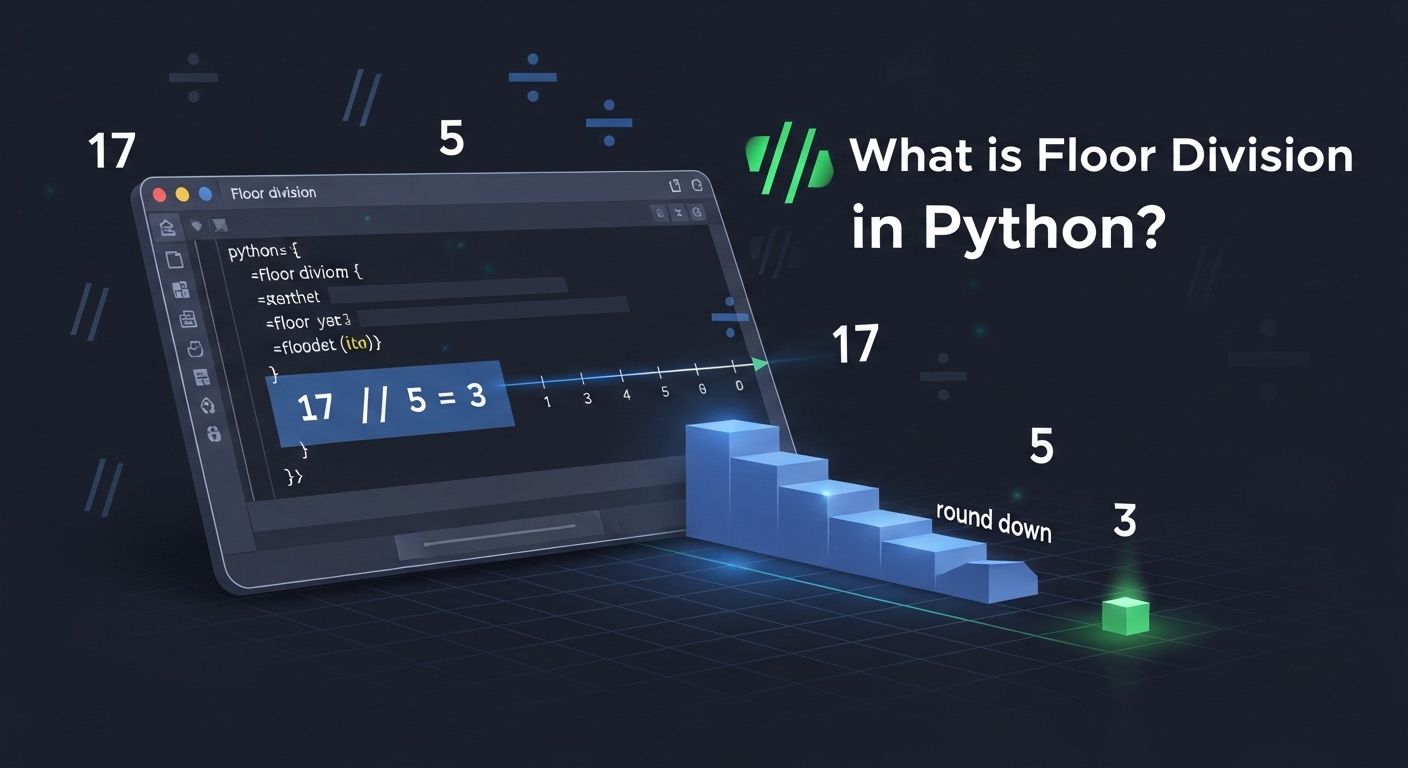 Programming
8 min read
What is Floor Division in Python? Complete Guide with Examples
Master floor division in Python operator //. Learn syntax, examples, differences from regular divisi...
Read ArticleReady to start HKDSE ICT: Programming and Exam Prep (Python and C++)?
Book a Priority Demo to see a full live class with a mentor reserved for you, today or tomorrow. Or choose a plan and enrol now.
Questions? WhatsApp +91 91233 66161 or email connect@modernagecoders.com