APP / YOUNG / 01
Block Coding App Development
A first working app, without typing.
Open the syllabusIreland · Mobile apps · Ages 8 to adult
Almost nobody learning to build apps ever sees a real one from the inside. Ireland is unusual here: when the State built its COVID Tracker app, it published the source code on GitHub on 26 June 2020, eleven days before the app itself appeared on the App Store and Google Play. Anyone can still read it. That single decision makes this country a better place to learn app development than most, because the gap between a tutorial app and a shipped one, the permissions, the privacy notices, the testing, the updates, the eventual retirement, is exactly where beginners are usually left guessing. This page uses two Irish public apps as worked examples, sets out what the national figures say about how people here actually use their phones, and explains how our classes take a learner from an idea to something published.
Live teaching since 2020 · 10,000+ students · apps finished, not just started
In short
App development is taught here as the whole job: decide what the app is for, design screens that make sense, write the code, test it on real devices, publish it, then keep it working. Children start with block-based apps, teenagers and adults build cross-platform apps with real data behind them. Ireland gives us unusually good material, because the code of a nationally used app is public and readable. Classes are live, in groups of five to ten at one level or one to one. The first is free, then USD 100 a month in a group or USD 150 a month one to one.
Start here
For younger builders, for teenagers, and for students and adults who want a professional stack. Each card opens the syllabus.
APP / 01
A complete phone app designed by the student, built over a few months and put in the hands of friends and family.
Open the syllabus →
APP / 02
For college students and adults: a cross-platform app with real data, proper navigation, testing and a release process.
Open the syllabus →
APP / 03
One codebase for Android and iOS, the approach many small teams choose when they cannot maintain two apps.
Open the syllabus →An Irish app in the open
It is the most widely used Irish app whose code is public, and it is a full course in itself. These are the facts as the State published them.
| Event or detail | What was published |
|---|---|
| Source code | Released on 26 June 2020 on a GitHub site under the HSEIreland organisation, before launch |
| Launch | 7 July 2020, on the App Store and Google Play |
| How it was built | React Native, targeting iOS and Android, with TypeScript as the repository's main language, under an MIT licence |
| Detection testing | Testing showed the app "was able to accurately detect 72% of close contacts using the Google Apple API" |
| Uptake | By 2 October 2020, "nearly 2 million" downloads and an active user base of 1.3 million, which the Department put at 34% of adults |
| Reuse abroad | The code was released as COVID Green through the Linux Foundation and used by other jurisdictions, including several US states |
| Retirement | Removed from the stores on 30 June 2023 and switched off completely at the start of August 2023 |
The Department framed it as transparency: the code "provides complete transparency in relation to how the app functions" for people who can read it. Being one of those people is a real form of citizenship.
The 72% detection figure is not a flaw hidden in a footnote. It is a measured limitation, published before launch. Students learn to look for that number in any system.
This one had a retirement date, a plan and an announcement. Most tutorials never mention that an app is a thing you must eventually switch off.
In class, learners read the repository rather than admire it: how screens are organised, where settings live, how the project is configured for two platforms from one codebase.
It is archived, so it is a 2020 codebase. Reading older code and saying what you would do differently now is a professional skill, and a satisfying one.
The server side of the same system was published separately and is covered on our full stack page.
One more detail worth noticing: before launch, the State reported that 82% of the population said they would be willing to install a contact tracing app. Stated intention and actual installs are different things, and comparing the two is a good lesson in reading claims about adoption.
Sources, read 16 September 2026: gov.ie, COVID Tracker app; publication of the source code, 26 June 2020; uptake and reuse, 2 October 2020; the repository HSEIreland/covid-tracker-app. We have no connection with the HSE or the Department of Health.
An app people use daily
The transport app most people in Ireland have on their phone shows a truth that no tutorial conveys: the code is rarely the difficult part.
TFI Live launched on 20 February 2023, replacing two earlier apps, and gives real-time departures across Bus Éireann, Dublin Bus, Go-Ahead Ireland, Luas and Iarnród Éireann, with journey planning across licensed operators. No account is needed to use those features.
Its own page displays over 1.5 million downloads, 400,000 daily users and more than 1,600 timetables and routes. Those figures carry no date on the page, so we quote them as displayed when we read it.
The same page says the app "is still reliant on information from numerous systems and business processes within transport operators", even on a more reliable platform than before.
That sentence is the whole lesson. An app that shows live information is a thin layer over other people's data, and its reputation depends on feeds it does not control. Students design for that: what does the screen show when a feed is late, missing or wrong?
Every screen gets three states in our classes: loading, empty and broken. Most student apps only ever get the happy path.
Irish commuters lose signal in tunnels and on trains. Caching and graceful failure are not advanced topics; they are the job.
The HSE Health App reported over 125,000 registrations and more than 210,000 downloads in January 2026, and is open to people aged 16 and over.
Sources: Transport for Ireland, TFI Live and its launch announcement; gov.ie on the HSE Health App, read 16 September 2026. We are not connected with either body.
Ireland on phones
Worth knowing before you design anything. These are the Central Statistics Office's figures, with their dates attached, because the device numbers are not annual.
| Measure | Figure | Year |
|---|---|---|
| Internet users aged 16 and over who used a mobile phone or smartphone to go online | 96% | 2023, the latest year in the device table |
| The same measure, aged 30 to 44 | 100% | 2023 |
| Aged 45 to 59 | 97% | 2023 |
| Aged 60 to 74 | 92% | 2023 |
| Households with internet access | 95%, mainly fixed broadband at 87%, with 29% using mobile broadband | 2025 |
| Internet users doing internet or mobile banking | 94%, up seven percentage points on 2024 | 2025 |
| Using social networking | 75% | 2025 |
The practical conclusion is blunt: in Ireland you design for a phone first, and for older users as much as younger ones, since even the 60 to 74 group was at 92% in 2023.
Note what we are not doing here. There is no 2024 or 2025 device figure published, so we date the 96% to 2023 rather than implying it is current. That habit matters in a portfolio too.
The banking and social figures include activity through apps, by the CSO's own definition, which is why they belong on a page about app development at all.
Younger users and their habits are covered on coding classes for teens, and the adult picture on coding classes for adults.
Sources: CSO tables ICA101 and ICA102; Internet Coverage and Usage in Ireland 2025; Household Digital Consumer Behaviour 2025, read 16 September 2026.
The rungs
Children move slowly and adults quickly, but nobody skips a rung. Publishing is part of the course, not an optional extra.
| Rung | What the learner does |
|---|---|
| 1. The idea, narrowed | Describes one thing the app does for one kind of person |
| 2. Screens that make sense | Sketches the flow before writing code, and cuts half of it |
| 3. It works | Builds the real screens, with data, on a real device |
| 4. It survives | Handles loading, empty and broken states, and slow connections |
| 5. It ships | Publishes or distributes it, then fixes what real users find |
Most learners build cross-platform, so one codebase serves Android and iOS. Learners aiming at a specific platform go native instead, and the free class helps decide.
How this fits with everything else is on the coding roadmap.
Publishing to a store needs a developer account, which costs money and, for under-18s, an adult. Many students distribute directly to friends and family instead, which teaches the same lessons.
We are honest about that from the start, so nobody is surprised at the end of a project.
The catalogue
By age and stage. The free first class decides where a learner begins.
APP / YOUNG / 01
A first working app, without typing.
Open the syllabusAPP / YOUNG / 02
A real phone app, designed and finished.
Open the syllabusAPP / YOUNG / 03
The web side, for younger makers.
Open the syllabusAPP / PRO / 01
Cross-platform apps with real data.
Open the syllabusAPP / PRO / 02
One codebase, both platforms.
Open the syllabusAPP / PRO / 03
Native building on Apple platforms.
Open the syllabusAPP / BACK / 01
The modern language of Android work.
Open the syllabusAPP / BACK / 02
The server and database an app needs.
Open the syllabusAPP / BACK / 03
Releases you can roll back.
Open the syllabusHow the classes run
Classes are live, taught from India at a weekly hour fixed in Irish time. Because India holds one clock all year and Ireland changes twice, our teachers are four and a half hours ahead through the Irish summer and five and a half in winter. Younger learners take after-school slots and adults evenings.
After school
Children and teenagers, Irish time.
Evening
College students and working adults.
Weekend
Longer sessions when a release is close.
You sketch an app idea with a teacher and build the first screen, then hear what building the rest involves.
Learners at one level who test each other's apps, which is how real bugs get found.
For a specific product, a deadline or a platform choice that differs from the group.
Apps run on the learner's own device early, because simulators hide the problems that matter.
Loading, empty and broken are designed alongside the happy path, every time.
Every course ends with an app somebody else can install and use, and a short write-up of how it works.
Student work
Four things our students built and published. There are many more on the student labs page.
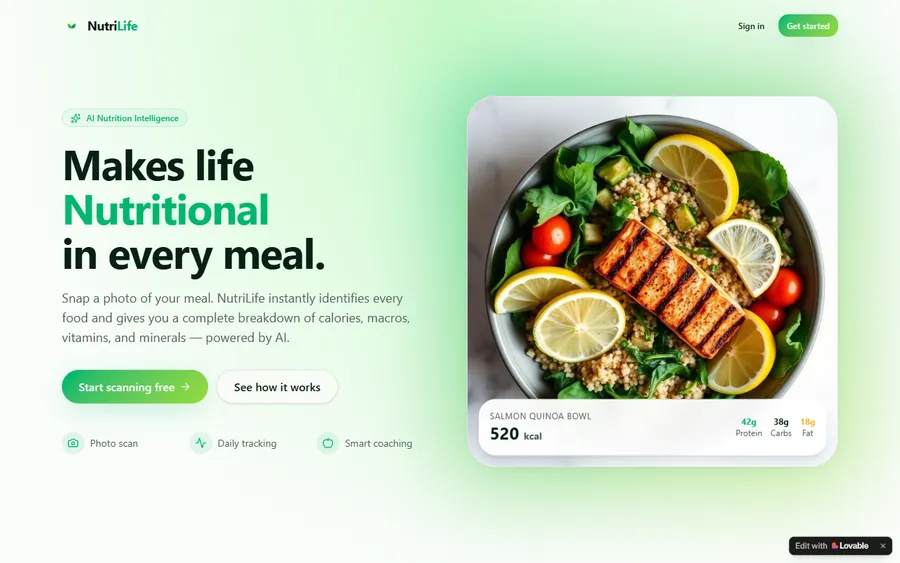
AI and ML
An AI nutrition coach that reads what you eat and works you toward a target.
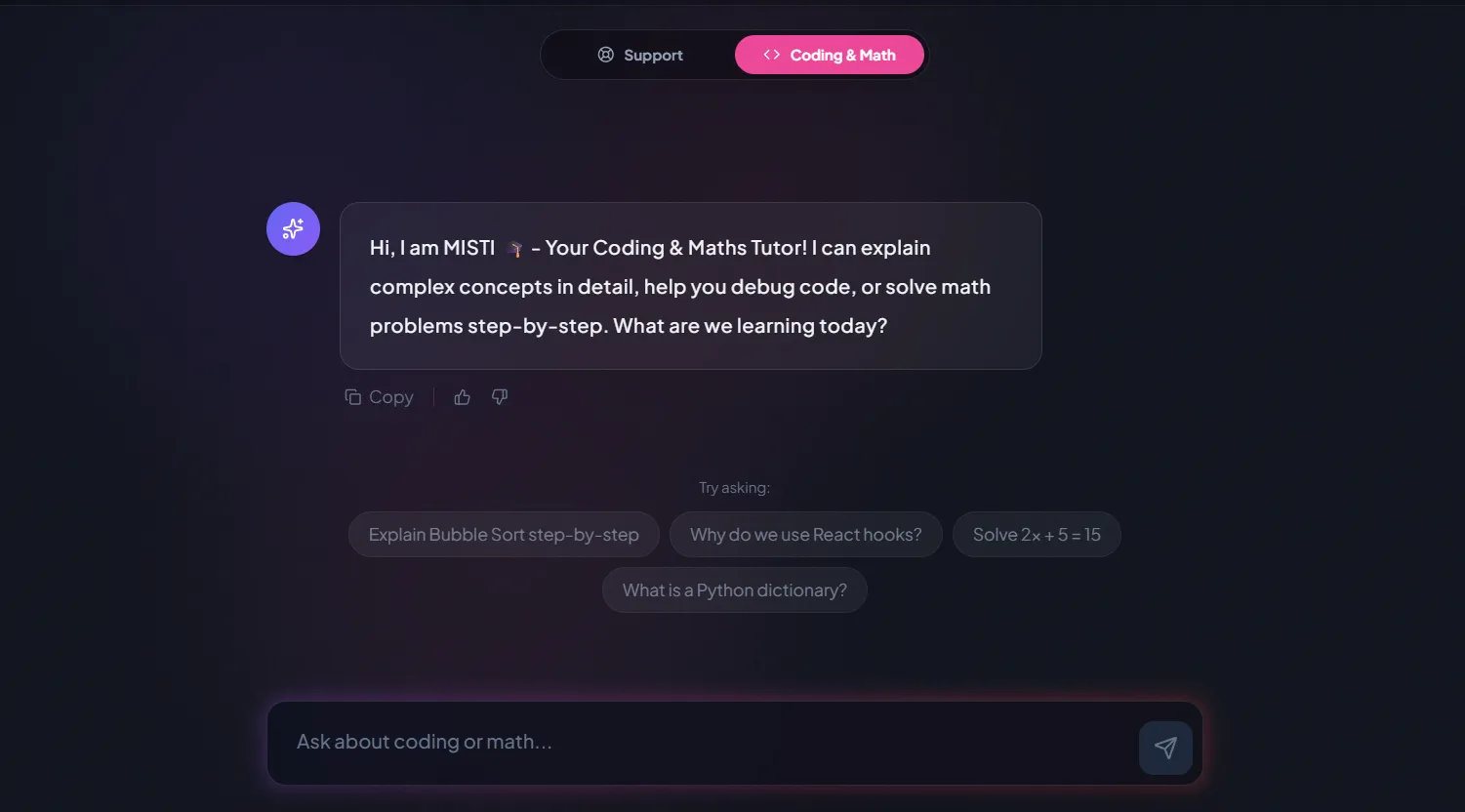
AI and ML
A chatbot that answers mathematics and programming questions, built and deployed by a student.
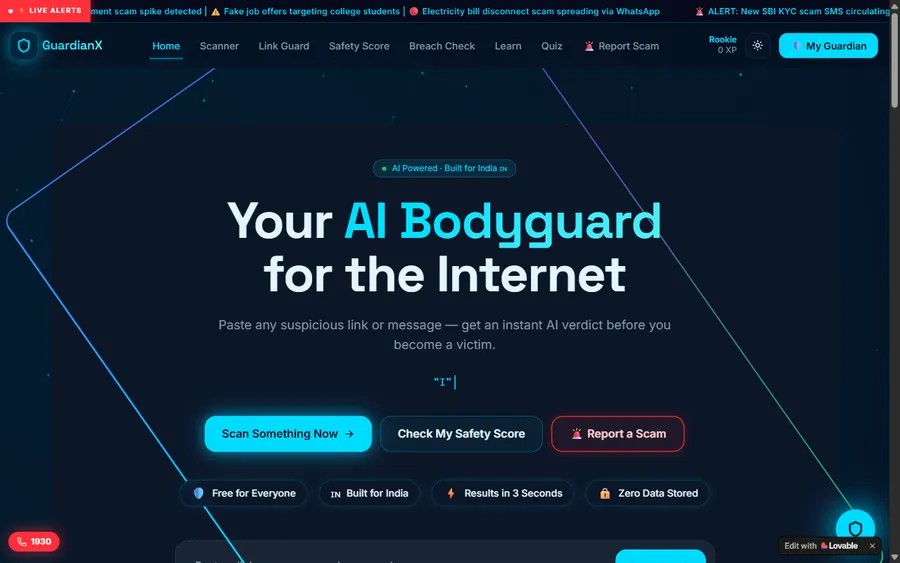
AI and ML
An assistant that helps a young person recognise unsafe situations online.
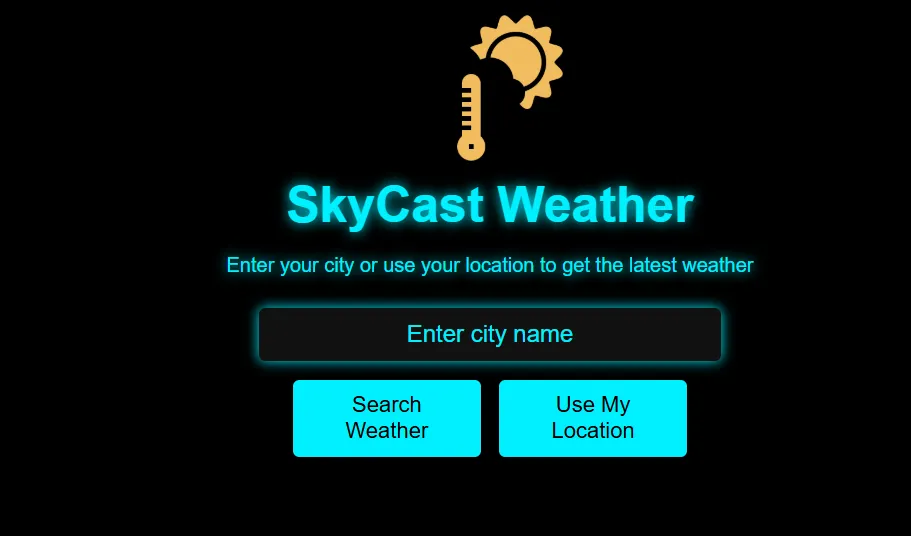
Web app
A weather forecasting site with live conditions for any location.
Fees
One monthly price in US dollars, the same in every country outside India, for any course here and any age. No enrolment fee, no annual commitment, and no charge for the first class.
Free first class
USD 0
no card required
Group batch
USD 100
a month, billed in US dollars
One to one
USD 150
a month, billed in US dollars
What families say
Google reviews from our students and parents, reproduced exactly as they were left.
★★★★★
"The one step solution for my son. Modern Age Coders make learning coding so simple that kids love it. The teachers explain complex concepts clearly with practical exercises and interactive content."
Ria Mukherjee
Parent
★★★★★
"Modern Age Coders has been a game-changer for me. I struggled to grasp IT concepts and coding before joining, but their classes transformed everything. I can now confidently write complex programs with ease."
Samriddha Mondal
Student
★★★★★
"One of the most wonderful education centres out there. Education is not limited to school syllabus but focuses on skill development."
Vansh Agarwal
Student
★★★★★
"My child Dhairya is really enjoying the Modern Age Coders classes. This is his first online class and he eagerly looks forward to it. I can already see his improvement, and the teachers are very cooperative."
Sonam Oswal
Parent of Dhairya
★★★★★
"Modern Age Coders have wonderful teachers who teach in a clear, easy and practical way. The teacher boosts students' confidence and inspires them to learn without hesitation."
Sonu Goyal
Parent
★★★★★
"I highly recommend this computer coding class! The teachers are incredibly knowledgeable and passionate about coding."
Ritu Kedia
Parent
Questions
From about eight with block-based tools, which produce a genuinely working app. Typed code usually starts around twelve or thirteen.
Most learners build cross-platform so one codebase covers both. If you must pick one, pick the phone you own, because testing on a real device matters more than the platform.
Not for cross-platform work or Android. Publishing to Apple's store does require a Mac at some point, and we will tell you before you choose that route.
It can, though both require a paid developer account, and under-18s need an adult to hold it. Many students distribute to friends and family instead.
Yes. The State published the COVID Tracker app's source code in June 2020 under an MIT licence. It is archived now, so read it as a 2020 codebase.
A small finished app usually takes two to four months of weekly lessons plus practice. The ideas can be built in a week; finishing takes longer.
Yes, and it is part of the course. Sketching screens before coding saves more time than any technical trick.
The first class is free. After that a group place is USD 100 a month and one-to-one lessons are USD 150 a month, billed in US dollars, with no enrolment fee.
After school, evenings or weekends, at a weekly hour agreed in the free class. Our teachers are four and a half hours ahead of Irish time in summer and five and a half in winter.
We ring at a sensible Irish hour and arrange the free class. Nothing is charged unless the learner continues.
Elsewhere on this site
What sits either side of an app.
The server an app talks to.
A route into Android work.
For secondary students.
An app as a TY project.
Starting later.
The national page.
Start here
Leave a number and we will ring at a time that suits you in Ireland. In the free class you describe the app you want, sketch its screens with a teacher and build the first one.
Prefer to read first? See how we teach, the course list, and apps and projects our students published.
WhatsApp us · +91 91233 66161 · contact@modernagecoders.com
WhatsApp reaches us fastest and is free from an Irish number. Ours is an Indian number, because our teachers are based in India, and there is no office in Ireland.