JV / SCHOOL / 01
Java for Teens
Objects and types for secondary students.
Open the syllabusIreland · Java · Teens, students and adults
There is a piece of folklore worth correcting before anyone spends a summer on it: Java is not the standard first language of Irish computing degrees. We read the module descriptors, and the picture is mixed. Trinity College Dublin does teach it in first year, in the second semester, where its Year 1 page says students write programs "in an object-oriented language (in this case Java)". Maynooth names it in its second first-year module. But the University of Galway states plainly that its students meet "C and Javascript in first year and then Java from second year onwards", Dublin City University's first programming modules are Python, and University College Dublin lists Introduction to Java as a second-level module. So Java matters in Irish computing, and it usually arrives once you can already program. This page sets out where it appears, and how we teach it to secondary students, college students and adults who need it for work.
Live teaching since 2020 · 10,000+ students · objects explained, not memorised
In short
Java is a strict, verbose, extremely well-established language, and it is worth learning for exactly those reasons: it forces you to say what you mean about types and structure. In Irish higher education it usually appears after a first language rather than as one, with Trinity a notable exception in first year and several universities introducing it in second year. We teach it live online, from the first class and object through collections, data structures and testing, to secondary students, college students and working adults. The first class is free, then USD 100 a month in a group of five to ten or USD 150 a month one to one.
Start here
One for secondary students, one for college level and adults, one for where Java leads on mobile. Each card opens its syllabus.
JAVA / 01
A first strict language for secondary students, where the compiler insists on precision and the student learns to give it.
Open the syllabus →
JAVA / 02
The full language for college students and adults: objects, collections, generics, exceptions, files and tests, built into real programs.
Open the syllabus →
JAVA / 03
The modern companion language on the same platform, widely used for Android work and increasingly on the server.
Open the syllabus →Java in Irish degrees
Read from the institutions' own catalogues and handbooks. Departments change their choices, so treat this as a snapshot and check your own descriptor.
| Institution | What the documents say | When |
|---|---|---|
| Trinity College Dublin | Introduction to Programming II teaches programs "in an object-oriented language (in this case Java)" | Year 1, Semester 2 |
| Maynooth University | Introduction to Computer Science II lists an outcome to "write simple programmes in jva", a typo for Java in the descriptor itself | First-year pair of modules |
| University of Galway | "The main languages covered are C and Javascript in first year and then Java from second year onwards" | From year 2 |
| Dublin City University | The first two programming modules are Python, with Python textbooks on the reading list | Java not in those modules |
| University College Dublin | Introduction to Java is a Level 2 module, described as building on prior programming | After a first language |
| ATU Galway | A Year 2 module introduces "advanced topics in the Java programming language", with Oracle certification offered in year 3 | Year 2 |
At the University of Limerick, the introduction to programming module names no language at all in its syllabus prose. Its prime text, though, is a Java textbook. That is worth stating precisely rather than turning into a claim: the module sets a Java book, and the descriptor does not say what language students write in.
Several other institutions publish no language for their first programming module, so we make no claim about them either.
If you are starting a degree, learn to program first and worry about the language second. The concepts carry over; the syntax takes a fortnight.
If you are heading into second year, or into a placement that uses Java, a focused course before term is genuinely useful, and that is when most of our Irish college students take one.
Sources, read 16 September 2026: Trinity, Integrated Computer Science Year 1; Maynooth CS162; University of Galway; DCU CA116; UCD COMP20250; UL CS4141. We are not affiliated with any of these institutions.
Java and school
Parents often ask whether a teenager should learn Java for school. The specifications answer that clearly.
The word Java does not appear anywhere in the specification. Searching the whole document for it as a standalone word returns nothing at all.
The same is true of both published versions of the short course specification: no mention of Java, with visual languages named among the resources instead.
Because of what comes after school. Java is where many Irish degrees go in second year, and it remains ordinary in Irish workplaces, particularly in finance and enterprise systems.
For a teenager, the honest advice is to learn one language well first. If that is Python, brilliant. Java as a second language then takes weeks rather than months, and the strictness teaches things Python lets you skip.
The reverse order also works. Students who start with Java tend to find dynamic languages easy afterwards, though they sometimes carry more ceremony than those languages need.
For school itself, our Leaving Cert Computer Science page covers the subject as it is actually assessed, and Junior Cycle Coding help covers the short course.
A caveat worth stating: a revised Coding short course was signalled for September 2026, and we could not find the new specification, so the statement above covers the published versions we could read.
Sources: Leaving Certificate Computer Science specification; Junior Cycle Coding short course, read 16 September 2026.
Learning it well
Java gets a reputation for being tedious, and badly taught it deserves one. Taught well it is the clearest way to learn how large programs are structured.
| Topic | The tedious version | How we teach it |
|---|---|---|
| Classes and objects | Copy a class definition and fill in blanks | Model something real, then discover why the fields need to be private |
| Inheritance | Animal, Dog, Cat, forever | Refactor working code where duplication actually hurts |
| Collections | Memorise the interface names | Choose a structure for a stated reason and measure the difference |
| Exceptions | Wrap everything in try and catch | Decide what should fail loudly and what should be handled |
| Tests | Mentioned at the end | Written from the second week, because Java makes them easy |
Java refuses to run until types line up. That feels hostile for a fortnight and then becomes the fastest feedback in programming.
Students learn a real environment, a build tool and version control, because Java projects in the wild are never a single file.
Java is a good language for a first serious data structures course, which is exactly why it turns up in second-year modules.
Where Java leads next depends on the learner. On mobile, Kotlin runs on the same platform and shares its libraries, which is why it appears in the catalogue below.
On the server, the same skills lead into large systems work. Our full stack page covers where that sits, and app development covers the mobile route.
Java is one of the few languages with a long-established certification path, and some Irish institutions build it in: ATU Galway tells students they may take a professional certification such as an Oracle Java qualification in third year.
Our own view is that a certificate helps at the margins, particularly for career changers with no degree in the field, and that a repository of finished work does more. We prepare students for certification when they want it, and say so plainly when we think their time is better spent building.
Java tends to sit where systems are large, long-lived and cannot be rewritten on a whim: banking and payments, insurance, enterprise software, public-sector systems. Those are steady places to work and they value people who write clear, testable code over people who know the newest framework.
It is also common in Android work alongside Kotlin, which is why mobile developers so often end up knowing both. The practical route through that is set out on our app development page.
The rungs
Learners with another language behind them usually take half the time, because only the syntax and the ceremony are new.
| Rung | The learner can |
|---|---|
| 1. Syntax and types | Write, compile and run small programs with confidence |
| 2. Objects | Design classes that hide their data and expose sensible behaviour |
| 3. Collections | Use lists, maps and sets deliberately, knowing what each costs |
| 4. Structure | Split a program across files and packages, with tests |
| 5. Real projects | Build and run something with a build tool, dependencies and version control |
For most beginners Python first, then Java. For students who already program, Java teaches structure faster than anything else.
The whole order of languages and subjects is on the coding roadmap.
Students preparing for a second-year Java module usually take a focused course over the summer or alongside the first weeks of term.
More on studying here is on coding for college students in Ireland.
The catalogue
By stage, with the languages and tools that sit closest to it. The free first class settles the level.
JV / SCHOOL / 01
Objects and types for secondary students.
Open the syllabusJV / SCHOOL / 02
The reasoning Java rewards.
Open the syllabusJV / SCHOOL / 03
Projects kept properly from the start.
Open the syllabusJV / COLLEGE / 01
Objects to generics, with tests throughout.
Open the syllabusJV / COLLEGE / 02
The second-year module, made clear.
Open the syllabusJV / COLLEGE / 03
The database most Java systems talk to.
Open the syllabusJV / NEAR / 01
The same platform, less ceremony.
Open the syllabusJV / NEAR / 02
Static types, on the web side.
Open the syllabusJV / NEAR / 03
For learners who want to go lower.
Open the syllabusHow the classes run
Teaching is live, from India, at one fixed hour each week set in Irish time. India keeps a single clock all year and Ireland switches twice, so our teachers are four and a half hours ahead of you in summer and five and a half in winter. Students and working adults usually take evening slots.
Weekday evening
The usual choice, Irish time.
Weekend
Longer project sessions.
Summer intensives
Before a second-year module starts.
You write and compile real Java with a teacher and get a clear view of the right starting rung.
Learners at one level, reading each other's classes and suggesting better designs.
For a deadline, a placement or a particular codebase at work.
A proper editor, a build tool and version control from early on, as used in any Java job.
Java makes automated tests straightforward, so students write them as a habit.
We do not write, edit or review anything being submitted for marks.
Student work
Four projects our students published, across several languages. The full set lives on the student labs page.
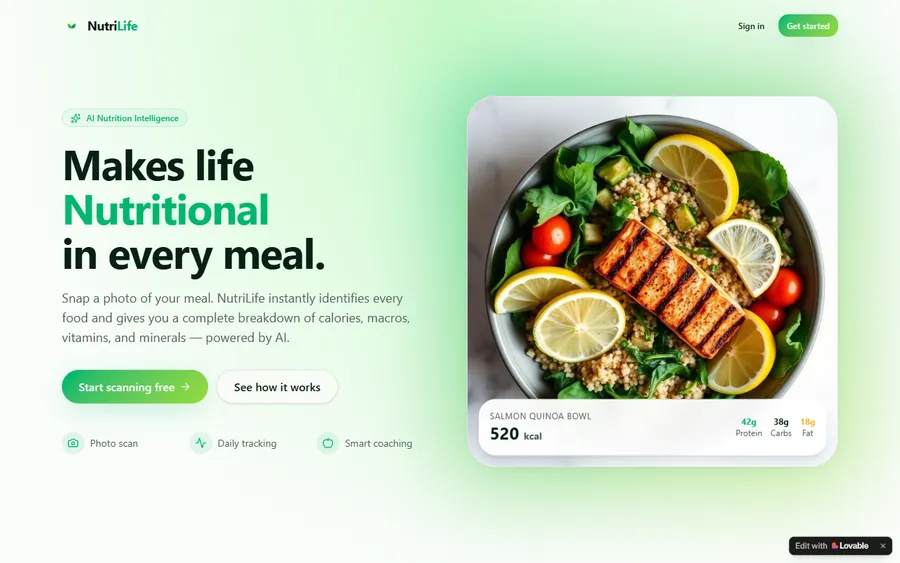
AI and ML
An AI nutrition coach that reads what you eat and works you toward a target.
AI and ML
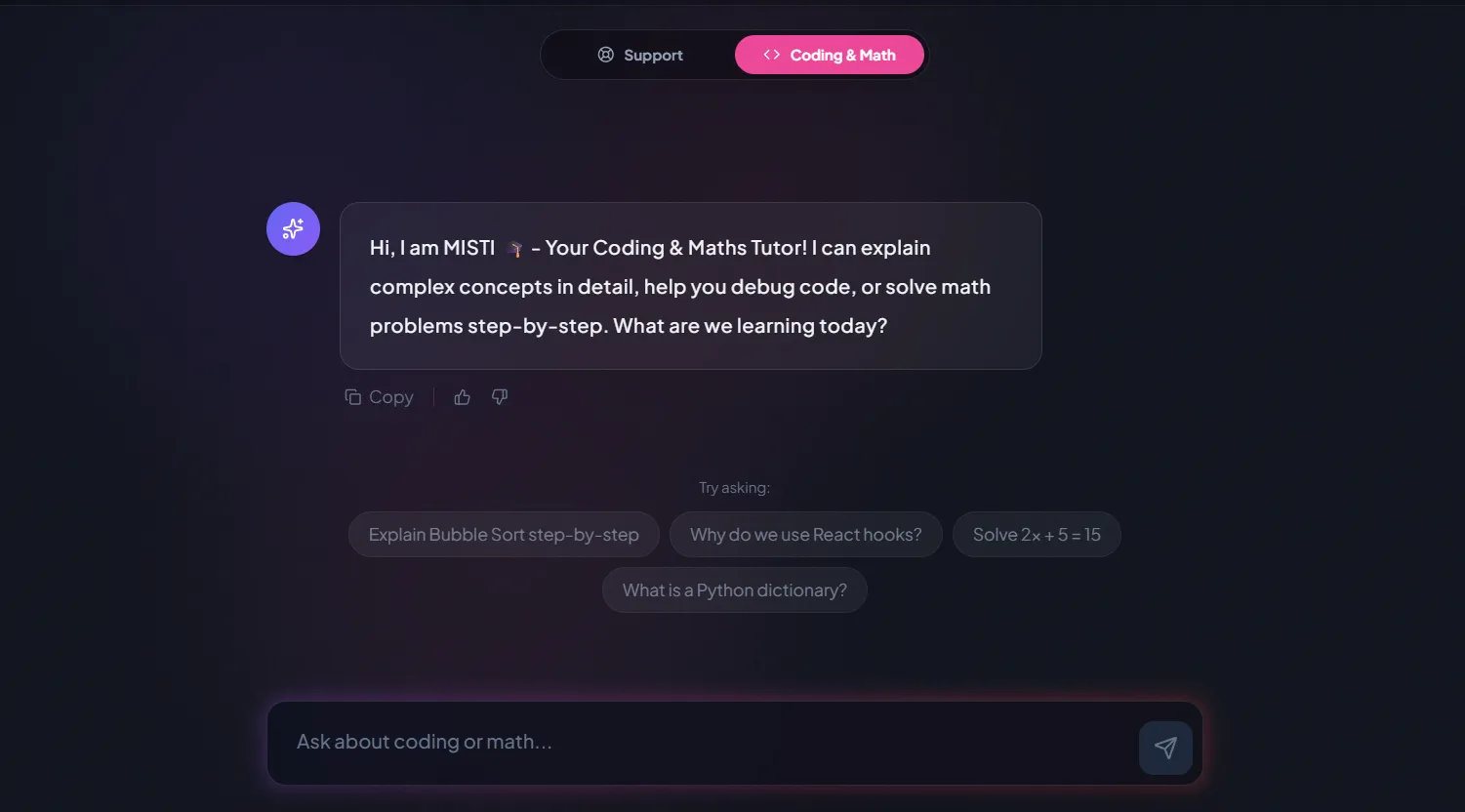
A chatbot that answers mathematics and programming questions, built and deployed by a student.
AI and ML
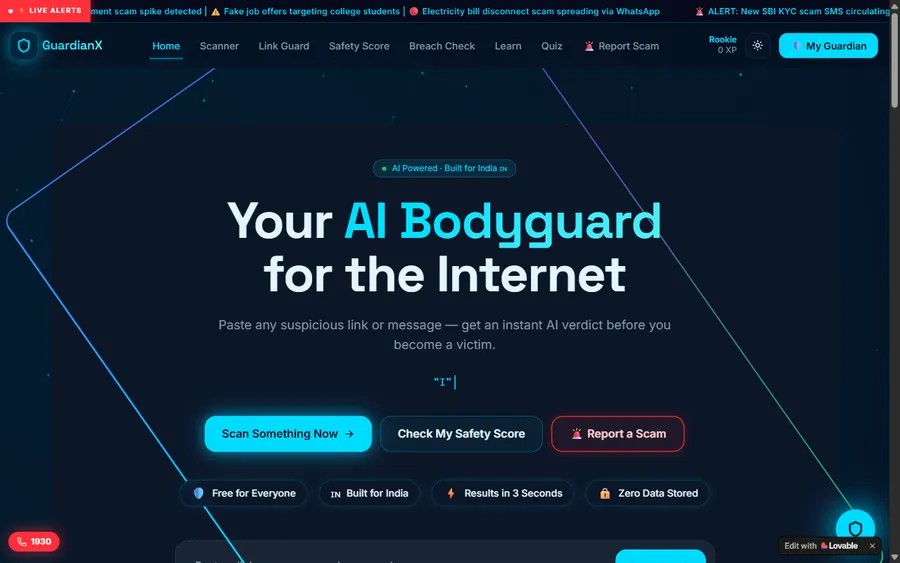
An assistant that helps a young person recognise unsafe situations online.
Web app
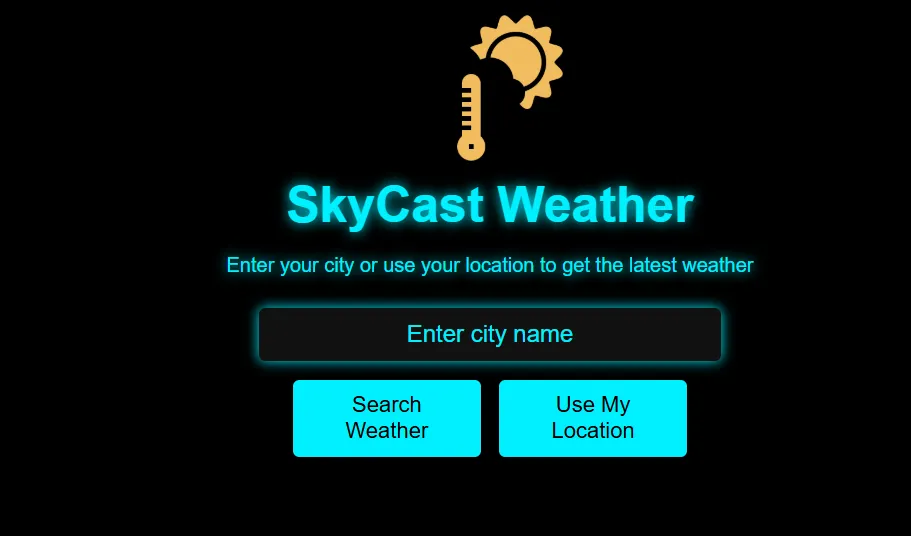
A weather forecasting site with live conditions for any location.
Fees
One monthly price in US dollars, the same in every country outside India and at every level. Nothing to pay to enrol, and no term or year to sign up for.
Free first class
USD 0
no card required
Group batch
USD 100
a month, billed in US dollars
One to one
USD 150
a month, billed in US dollars
What families say
Reviews as left on Google by our students and their families, unedited and unpaid.
★★★★★
"The one step solution for my son. Modern Age Coders make learning coding so simple that kids love it. The teachers explain complex concepts clearly with practical exercises and interactive content."
Ria Mukherjee
Parent
★★★★★
"Modern Age Coders has been a game-changer for me. I struggled to grasp IT concepts and coding before joining, but their classes transformed everything. I can now confidently write complex programs with ease."
Samriddha Mondal
Student
★★★★★
"One of the most wonderful education centres out there. Education is not limited to school syllabus but focuses on skill development."
Vansh Agarwal
Student
★★★★★
"My child Dhairya is really enjoying the Modern Age Coders classes. This is his first online class and he eagerly looks forward to it. I can already see his improvement, and the teachers are very cooperative."
Sonam Oswal
Parent of Dhairya
★★★★★
"Modern Age Coders have wonderful teachers who teach in a clear, easy and practical way. The teacher boosts students' confidence and inspires them to learn without hesitation."
Sonu Goyal
Parent
★★★★★
"I highly recommend this computer coding class! The teachers are incredibly knowledgeable and passionate about coding."
Ritu Kedia
Parent
Questions
Some do and many do not. Trinity names Java in a first-year module, while the University of Galway states that Java comes from second year onwards and DCU teaches Python first. Check your own module descriptor.
No. The word Java does not appear in the specification, and it does not appear in the Junior Cycle Coding short course either.
Python first for most beginners. Java afterwards is quick, and its strictness teaches structure that Python lets you postpone.
Yes, particularly in enterprise systems and financial services, and it remains a common language for large, long-lived codebases.
Kotlin runs on the same platform and works with the same libraries. It is widely used for Android work, and Java knowledge transfers to it easily.
Yes, and that is when most of our Irish college students come. We teach the skills, never the assessed work itself.
No. Any reasonably current laptop runs a Java development environment comfortably.
The first is free. After that a group place is USD 100 a month and one-to-one lessons are USD 150 a month, in US dollars, with no enrolment fee.
Evenings and weekends at a weekly hour agreed in the free class. Our teachers are four and a half hours ahead of Irish time in summer and five and a half in winter.
We ring at a reasonable Irish hour and arrange the free class. There is no charge unless you continue.
Elsewhere on this site
Where Java sits among everything else.
Modules, terms and portfolios.
The mobile route from here.
Where server languages live.
The school years.
The subject as assessed.
The national page.
Start here
Leave a number and we will ring at a time that suits you in Ireland. In the free class you write and compile real Java with a teacher, and find out honestly where to begin.
Want to look first? See how we teach, the course syllabuses, and what our students built.
WhatsApp us · +91 91233 66161 · contact@modernagecoders.com
WhatsApp is free from an Irish phone and usually quickest. The number is Indian, since our teachers work from India, and we have no Irish office.