UK / CC1 / 01
Scratch, complete
Far beyond the guides, with design at the centre.
Open the syllabusUK · Ages 9 to 13 · Community coding
Code Club started in the UK in 2012 and has since involved, by its own count, more than two million young people. It is free, it meets in schools, libraries and youth clubs, and it is run by teachers and volunteers, many of whom are not programmers; Code Club says plainly that "You don't need any coding experience to run a Code Club." Children work through step-by-step project guides at their own pace, and an independent evaluation by Durham University found they build real coding skills, confidence and a sense of belonging. That design is its strength. It is also why some children eventually outgrow it: they finish the guides, want to build something no guide describes, and need someone who can read their code and tell them what to try next. This page is about that moment, and what a sensible next step looks like.
Live teaching since 2020 · 10,000+ students · Built on the Raspberry Pi Foundation's published evidence
In short
Code Club is a free network of coding clubs, founded in the UK in 2012 and now part of the Raspberry Pi Foundation, where school-aged children work through step-by-step project guides with volunteer or teacher mentors. The Foundation's 2025 survey counted 7,494 clubs active in the previous two years, in 102 countries, and an independent 2024 evaluation by Durham University found that children who attend build coding skills, confidence, interest and a sense of belonging. Because clubs are free and run by mentors who need no coding experience, a child who finishes the guides and wants to build their own projects may need more: a teacher who reads and reviews their code, a move from Scratch to a typed language such as Python, and projects with no instructions to follow. Modern Age Coders offers that next step in small live groups. We are not connected with Code Club. The first lesson is free, then USD 100 a month in a group or USD 150 one to one.
Start here
Deeper Scratch for younger children, typed Python for the ready, and web pages for the curious. Each card opens its syllabus.
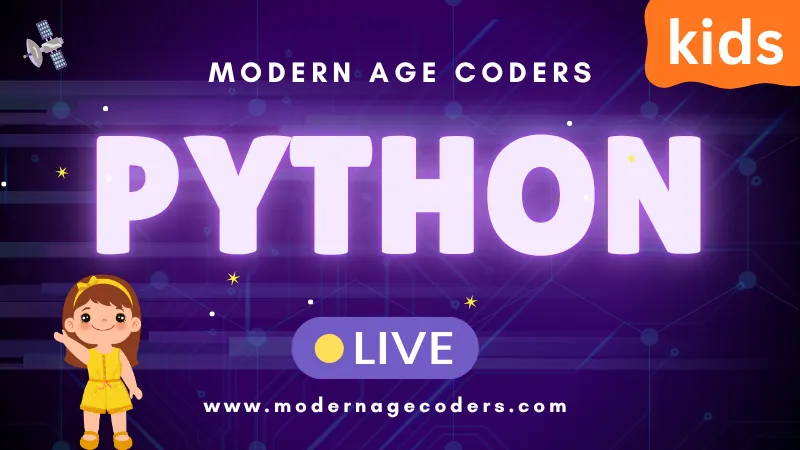
CC / 01
Typed Python for ages 10 to 13, the usual next language after Scratch.
Open the syllabus →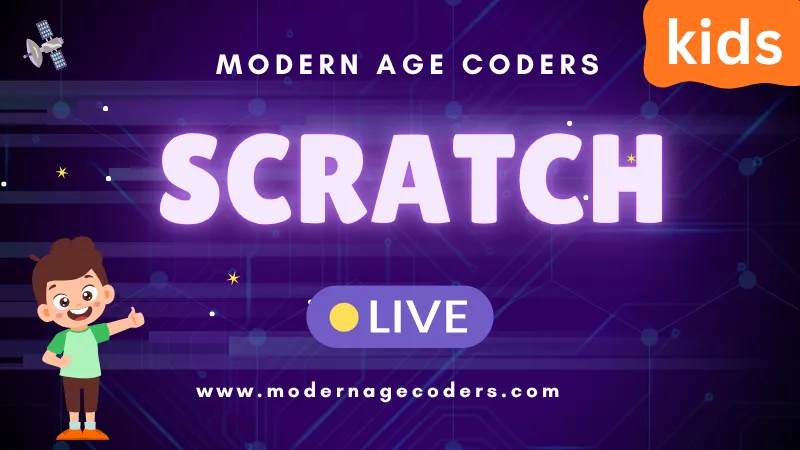
CC / 02
For younger children who want to go far beyond the project guides before changing language.
Open the syllabus →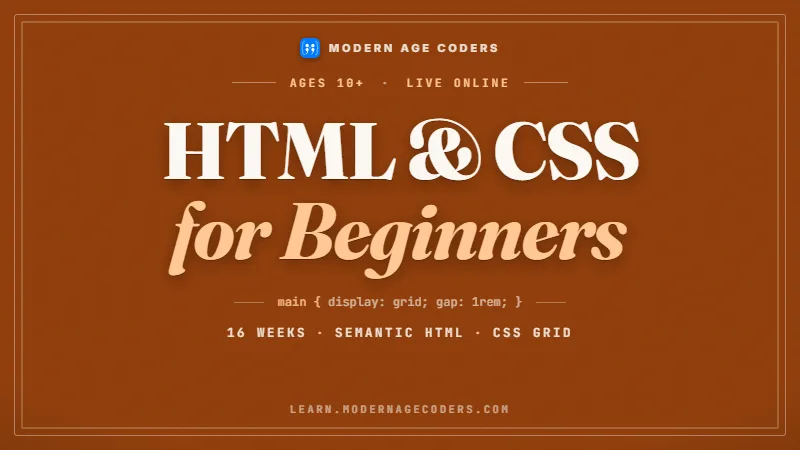
CC / 03
Real web pages, for children who enjoyed the web projects at club.
Open the syllabus →What clubs do well
From the Raspberry Pi Foundation's published survey and the independent evaluation it commissioned.
| Measure | Figure |
|---|---|
| Founded | In the UK, in 2012 |
| Young people involved | More than 2 million over its history, by Code Club's count |
| Clubs active in the last two years | 7,494, in 102 countries (2025 survey) |
| Creators in clubs | An estimated 257,000 (2025 survey) |
| Cost to families | Free |
In 2024 the Durham University Evidence Centre for Education evaluated Code Club independently. The Foundation reports that it found children "build their coding skills", "become more confident in learning coding, grow their interest in it, and develop a sense of belonging". The researchers also noted the structure behind that: "each young person has their individual projects to work on, which promote a sense of ownership and personalised learning", alongside chances to collaborate and celebrate each other's work.
Children pick projects and work at their own pace, so nobody is held back or left behind. The guides are written by specialist educators and are safe and age-appropriate.
The evaluation also found clubs can suit children who find ordinary classrooms hard, which is a real gift for some families.
Clubs are free and run by teachers, educators and volunteers from all walks of life. To make that possible, the guides carry the teaching, so mentors need no coding background.
That is exactly what lets Code Club reach so many children. It also sets a natural ceiling for a child who races ahead.
Source: Code Club and its About page, the Raspberry Pi Foundation's Learn page, and the Foundation's blog posts of 7 October 2024 (the Durham evaluation) and 10 June 2025 (the annual survey report). Survey figures come from mentors' responses and the Foundation's estimates. We have no connection with Code Club or the Foundation.
Signs of outgrowing
None of these means the club has failed. They mean it has done its job.
| What you notice | What it usually means |
|---|---|
| They finish projects in one session and ask what is next | The guides no longer stretch them |
| They change a project so much it no longer matches the guide | They want to design, not follow |
| They ask how a game they play was made | They are ready for concepts the guides only touch |
| They start building at home without instructions, and get stuck | They need someone who can read their code |
| They are bored by drag-and-drop blocks | They may be ready to type a language such as Python |
| A mentor says they know more than the mentor | The club's volunteer model has reached its limit for them |
One creator quoted in the Foundation's evaluation post put the joy and the frustration together: "Coding is really fun when I know what to do, but sometimes it is hard. But I always keep trying." The second half of that sentence is the moment that matters. When a child is stuck on their own idea, not a guide's, what helps is someone who can look at the actual code and ask the right question.
Outgrowing the guides is not a reason to leave. Many children keep the friendships and the fun of club while learning more elsewhere.
The next step should feel like more of what they love, a bigger project and a better tool, not like extra homework.
Children who have been choosing their own projects for years thrive when they keep choosing, with a teacher steering the skills.
The next step
Four things a child who has outgrown a club usually needs, and why each matters.
| At club | Next step | Why |
|---|---|---|
| Step-by-step project guides | Projects with no guide, designed by the child | Designing is the skill that follows, and guides cannot teach it |
| A mentor who may not code | A teacher who reads and reviews the code | Stuck children need someone who understands what they wrote |
| Sessions whenever the club meets | Regular lessons that build week on week | Concepts like variables, lists and functions need sequence |
| Mostly Scratch and guided web or Python | Typed Python, and HTML and CSS written from scratch | Typed languages open the next level of projects |
The table is not a criticism. Code Club is built for breadth: to reach as many children as possible for free, with volunteers. The next step is built for depth, for a smaller number of children who are ready to go further. Both are good; they do different jobs.
Small live groups of five to ten children at the same level, with a teacher who reads every child's code and gives specific feedback.
Projects the children choose, with the skills taught in order so each week builds on the last.
A replacement for Code Club, or connected with it. We are a separate paid service, and many of our students keep going to their club.
A shortcut. Progress still comes from a child writing code, getting it wrong and fixing it.
Scratch to Python
The change most families ask about, and how to make it without losing the fun.
| Carries straight over | New in Python |
|---|---|
| Sequences of instructions | Typing exactly, with spelling and indentation that matter |
| Loops and if-statements | Reading error messages and fixing them |
| Variables | Lists and dictionaries for storing lots of data |
| Making a game from an idea | Building programs in text files that grow over time |
Children who have made games in Scratch already understand loops, conditions and variables; they have used them for years. What is new is the typing, the precision and the error messages. We start Python with small programs that echo things children built in Scratch, so the ideas feel familiar while the tool changes, and we keep projects playful: quizzes, simple games, drawings with code.
For children in upper primary, the Key Stage 2 coding page covers what the curriculum expects. Children who own a micro:bit or a Raspberry Pi may like the page on the step after the micro:bit, and competitive children first competitions for primary children.
Progression
Placement follows what a child can build without a guide, which a first lesson shows quickly.
| Rung | Usually | What should be true |
|---|---|---|
| 1. Beyond the guides | Ages 9 to 11 | Scratch projects designed from scratch, with variables, broadcasts and clones used on purpose |
| 2. First typed code | Ages 10 to 12 | Short Python programs typed and debugged, reading error messages without panic |
| 3. Structures | Ages 11 to 13 | Lists, functions and simple files, used to build a program that grows |
| 4. Own projects | Ages 12 and up | A multi-week project planned, built and improved with a teacher's review |
Some children need a term of deeper Scratch before typing feels natural. That is time well spent.
The wider order of topics is on the coding roadmap.
A child who can plan and finish their own project has crossed from following to making.
From there, the path leads to GCSE computing and beyond.
The catalogue
Grouped by where a child is. The free lesson places them.
UK / CC1 / 01
Far beyond the guides, with design at the centre.
Open the syllabusUK / CC1 / 02
The first typed language, taught gently.
Open the syllabusUK / CC1 / 03
Bigger games than any club guide.
Open the syllabusUK / CC2 / 01
Websites written line by line.
Open the syllabusUK / CC2 / 02
From age 10, maths explored in code.
Open the syllabusUK / CC2 / 03
Logic puzzles that sharpen thinking.
Open the syllabusUK / CC3 / 01
From basics to real programs and apps.
Open the syllabusUK / CC3 / 02
Interactive web pages and games.
Open the syllabusUK / CC3 / 03
Real games in a professional engine.
Open the syllabusHow lessons work
Our teachers are in India, which keeps one time all year, so the UK is four and a half hours behind in summer and five and a half in winter. Lessons are arranged in UK time.
After school
Short, lively sessions for this age.
Early evening
Before tea, on a club-free day.
Weekend
Longer project time for keen builders.
Every child's program looked at by the teacher, with specific next steps.
Children choose what to build; the teacher chooses which skill it needs.
Variables, loops, lists and functions taught so each lesson builds on the last.
Getting stuck treated as the lesson, not a failure, with a question rather than an answer.
Children share what they made, as they did at club.
Five to ten children at one level, so everyone is seen.
Student work
Four projects from lessons, made by the children themselves. More in student labs.
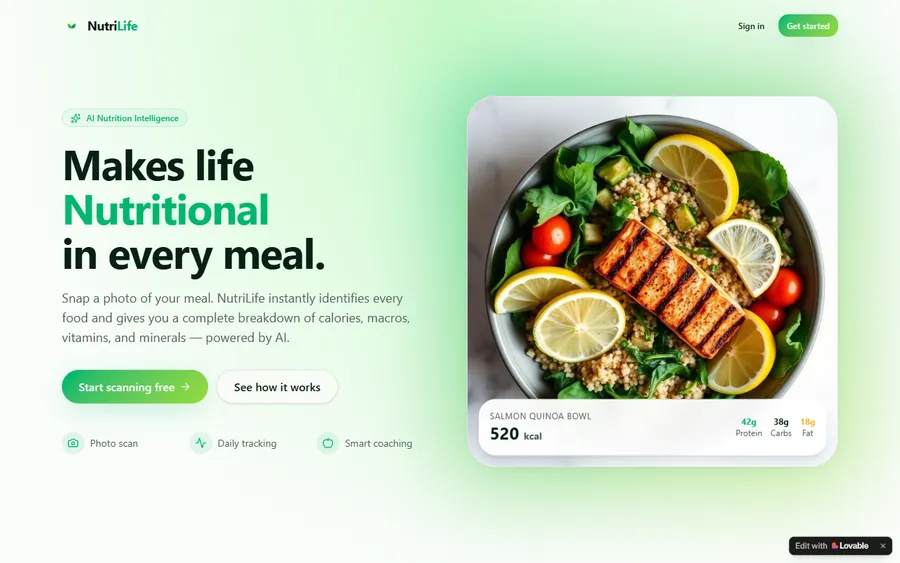
AI and ML
An AI nutrition coach that reads what you eat and works you toward a target.
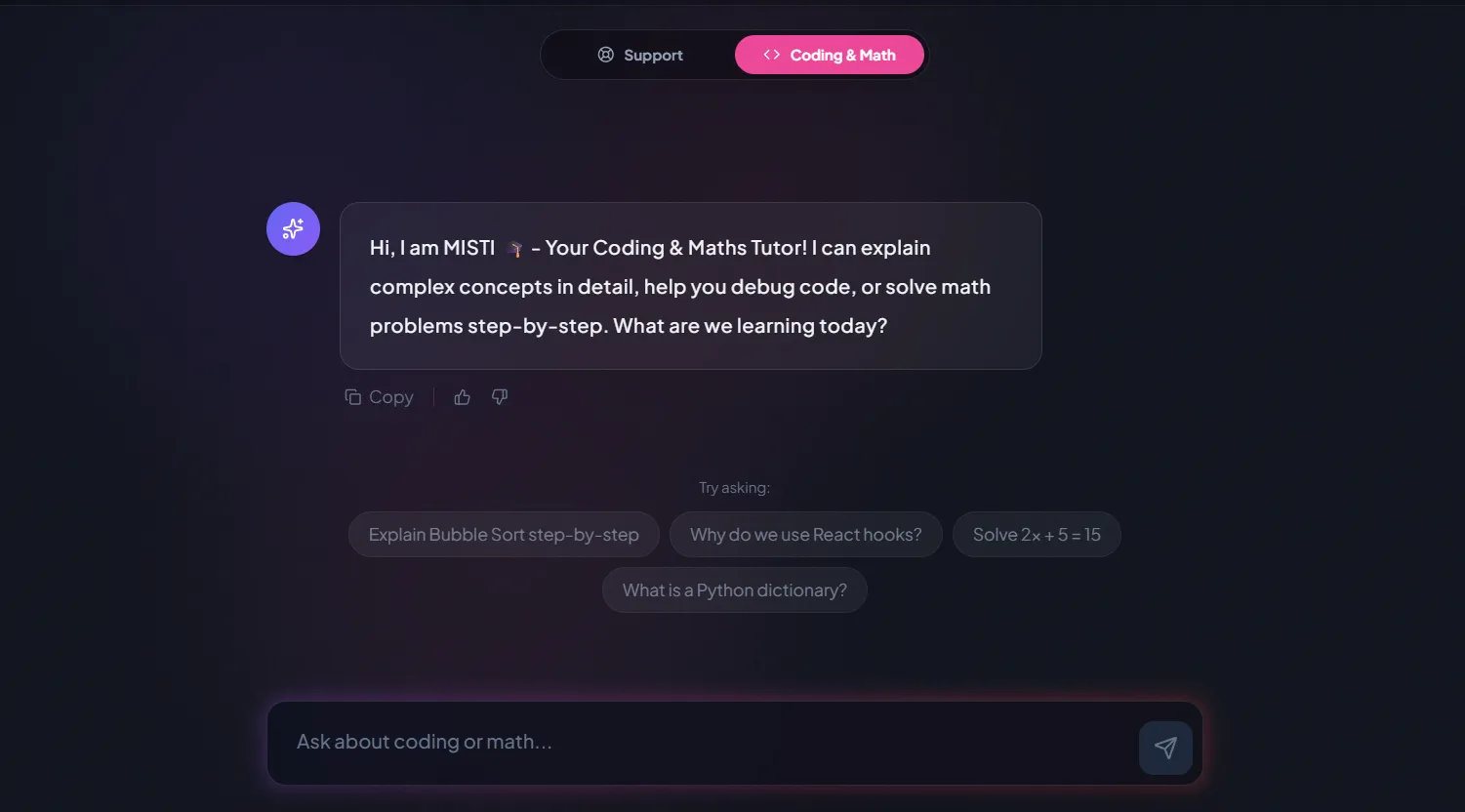
AI and ML
A chatbot that answers mathematics and programming questions, built and deployed by a student.
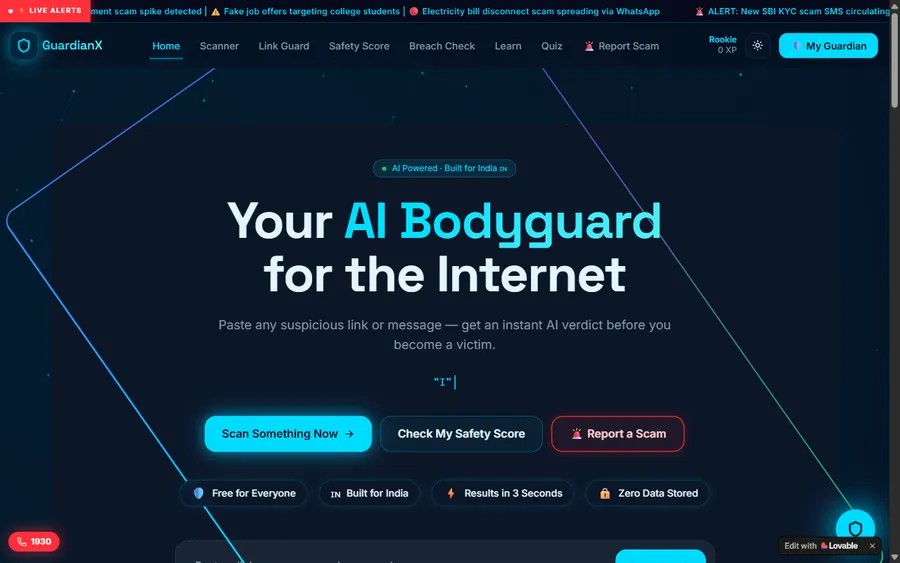
AI and ML
An assistant that helps a young person recognise unsafe situations online.
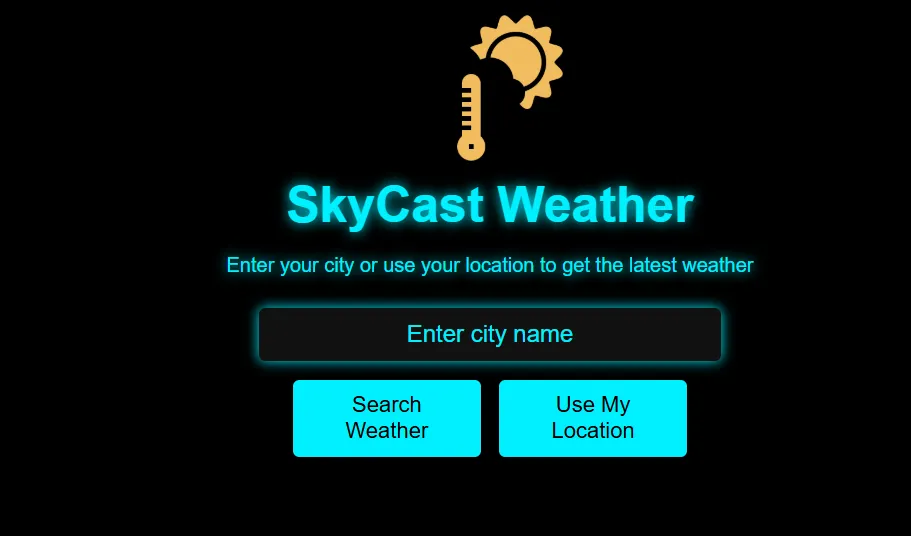
Web app
A weather forecasting site with live conditions for any location.
Fees
Unlike Code Club, this is a paid service. We charge monthly in US dollars, at a single rate for families outside India; a first lesson costs nothing, and invoices start only after you choose a course and a weekly slot.
Free first class
USD 0
no card required
Group batch
USD 100
a month, billed in US dollars
One to one
USD 150
a month, billed in US dollars
What families say
Parents' Google reviews, copied as written.
★★★★★
"The one step solution for my son. Modern Age Coders make learning coding so simple that kids love it. The teachers explain complex concepts clearly with practical exercises and interactive content."
Ria Mukherjee
Parent
★★★★★
"Modern Age Coders has been a game-changer for me. I struggled to grasp IT concepts and coding before joining, but their classes transformed everything. I can now confidently write complex programs with ease."
Samriddha Mondal
Student
★★★★★
"One of the most wonderful education centres out there. Education is not limited to school syllabus but focuses on skill development."
Vansh Agarwal
Student
★★★★★
"My child Dhairya is really enjoying the Modern Age Coders classes. This is his first online class and he eagerly looks forward to it. I can already see his improvement, and the teachers are very cooperative."
Sonam Oswal
Parent of Dhairya
★★★★★
"Modern Age Coders have wonderful teachers who teach in a clear, easy and practical way. The teacher boosts students' confidence and inspires them to learn without hesitation."
Sonu Goyal
Parent
★★★★★
"I highly recommend this computer coding class! The teachers are incredibly knowledgeable and passionate about coding."
Ritu Kedia
Parent
Questions about life after Code Club
A free network of coding clubs for school-aged children, founded in the UK in 2012 and part of the Raspberry Pi Foundation. Children work through step-by-step project guides with teacher or volunteer mentors.
The evidence says yes. An independent 2024 evaluation by Durham University found children build coding skills, confidence, interest and a sense of belonging.
Common signs are finishing projects too quickly, changing them beyond the guide, building at home and getting stuck, or being bored by blocks. None of these means the club failed; it did its job.
Not necessarily. Many children keep the friendships and fun of club while learning more elsewhere. The two do different jobs.
When blocks start to feel limiting and they can plan a project, often between 10 and 12. Some children benefit from more time in deeper Scratch first.
No. We are a separate, paid service with no connection to Code Club or the Raspberry Pi Foundation. We describe their programme from their own published material.
A teacher who reads and reviews each child's code, skills taught in sequence week by week, and support for projects no guide describes.
Children from about 6 upward, and for this next step mostly ages 9 to 13, grouped by what they can already build rather than by age alone.
Yes, live and online, in small groups or one to one, at UK times that fit around school and club.
Nothing for the first lesson. Lessons after that cost a monthly fee in US dollars, less in a group than one to one, with both amounts in the fees section; we never ask for payment up front.
Elsewhere on this site
The primary curriculum, hardware, and competitions to try.
The next step for children who loved school micro:bits.
What the curriculum expects from 7 to 11.
Gentle contests for primary children.
How we teach Python to a high standard.
What children can safely learn about AI.
Every UK page we publish.
Start here
Leave a number and we will call at a UK time that suits. Bring something your child made at club; the lesson starts from it and ends with a clear next step.
Curious before you call? Our courses each list a full syllabus, the teaching approach page explains what we do in lessons, and student labs gathers projects children have made.
WhatsApp us · +91 91233 66161 · contact@modernagecoders.com
Send a WhatsApp for the quickest answer; it is free from a UK phone. The team replying is in India, so the number opens with +91.