What are the best coding classes in County Wicklow?
Wicklow works from home more than almost anywhere: 25,839 people, 37% of the workforce, did at least one day a week at home in 2022, against 32% nationally. It is also well educated, with 48% of adults holding a third-level qualification against 45% across the country, and it is the one county in this part of Ireland where more commuters take a train than a bus. A household already used to working over video takes to a live online class easily. We teach ages 6 to 67 at a fixed weekly hour, in groups of five to ten matched by ability, or one to one. The opening lesson is free; continuing costs USD 100 a month in a group and USD 150 with a teacher to yourself.
Ask how many people live in Bray and the honest answer begins with a question of your own: which Bray? The town's built-up area is published as "Bray, Counties Wicklow and Dublin", 33,512 people, because it spills north across the county line into Dún Laoghaire-Rathdown. So that figure belongs to neither council on its own. If you want a number that is properly Wicklow's, you have to change the unit entirely and add the two Bray electoral areas, West and East, which lie wholly inside the county: 36,872 people. Bigger than the town figure, and measuring something different. Both numbers are correct and they are not comparable, and knowing which one answers your question is the entire skill. This page teaches that on a county where it matters, and where even the statistics office prints one of its own percentages two different ways.
Facts last verified 16 September 2026. Teaching is online; no County Wicklow branch is claimed.
The age band is a hint, not a rule; pick the thing the learner actually wants to make. Each card opens with a lesson that costs nothing and asks for no card.
Games and stories in Scratch, with a map where one town sits on a line and has to be drawn twice.
See the syllabus
Python across the school years, practised on tables where the unit of measurement is the first thing to check.
See the syllabus
Two correct figures for the same town, and a written answer about which question each one answers.
See the syllabus
For the county's many home workers: comparing figures that were never meant to be compared, and knowing when to stop.
See the syllabusBrowse the course atlas for more than one hundred options and use the coding roadmap to check prerequisites.
The four we are known for
These run underneath everything above. Every one is live and online, placed by ability rather than by age, and the first class is free.
Python, web and AI projects where the learner still owns the thinking.
See the syllabus
Automate the work you already do, then let AI carry part of it.
See the syllabus
Train a model, read what it learned, and be able to say why it is wrong.
See the syllabus
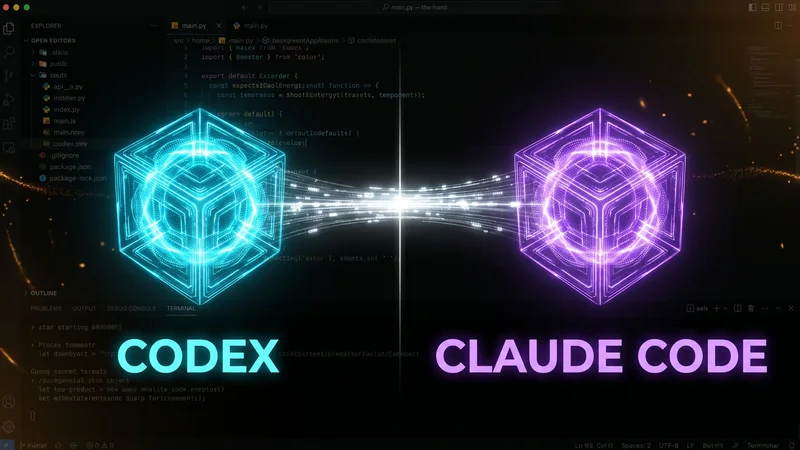
Run AI coding agents on real work without losing control of the codebase.
See the syllabusWicklow is the oldest of its neighbours by average age, the most likely to work from home, and the only one where the train beats the bus.
| Measure | Figure |
|---|---|
| Population | 155,851, up 9% or 13,426 since 2016 |
| Average age | 39.1 years, up from 37.2 in 2016 |
| Worked from home at least one day a week | 25,839 people, 37% of the workforce against 32% nationally |
| Third-level qualifications | Just over 49,100 people, 48% against 45% nationally, with 1,261 PhD holders |
| Travelling to work | 58,715 people, of whom 37,311 drove, 2,717 took a train and 2,568 a bus |
| Average journey time | 33.9 minutes, slightly shorter than the 34.5 minutes recorded in 2016 |
Greystones and Delgany together hold 22,009 people, which makes them larger than Arklow at 13,399 and considerably larger than Wicklow town itself at 12,957.
Wicklow at 32,593, Greystones at 30,479, Baltinglass at 28,041, Arklow at 27,866, Bray West at 19,144 and Bray East at 17,728, adding to exactly 155,851.
The densest of the county's 78 electoral divisions is Rathmichael, on the Bray side, with 7,441.1 people per square kilometre in an area of just 0.3 square kilometres.
One honest note about a figure on this page. The statistics office's diversity release states that non-Irish citizens accounted for 10% of the county's population, and names UK citizens as the largest group at 2,917, followed by Polish at 2,244, Romanian at 1,018 and Lithuanian at 680. Elsewhere in its own Wicklow material the share is rounded to 9%. We quote both rather than pick one, because a difference of a percentage point in a published source is exactly the sort of thing a careful reader should notice and report, not quietly resolve.
We searched the full list published by the Department in January 2018. Not one address is in County Wicklow.
When Leaving Certificate Computer Science began, no school in this county was among those named to teach it from September 2018. For a county with 48% third-level attainment, that is a striking absence.
The list describes 2018 and nothing else. No current official list of schools offering the subject exists, so nobody, including us, can tell you the position today from published sources.
Builds the programming, data work and problem solving the subject assumes, live and outside school hours, without ever touching work that will be marked.
The county is not short of places to learn other things. Wicklow Mountains National Park stretches across almost 23,000 hectares south of Dublin and is the largest of Ireland's national parks, as well as the only one in the east of the country. Inside it, at Glendalough, A98 HC80, sits the monastery founded in the sixth century by St Kevin, which the Office of Public Works describes as having become one of the most famous religious centres in Europe. A child who can read a landscape that old can certainly learn to read a dataset.
A county that already works remotely
With 37% of its workforce doing at least one day a week at home, the highest share among its neighbours, Wicklow households are unusually comfortable with the format a live online class uses. The equipment is already on the kitchen table and the habit is already there.
Every learner in the north of this county knows Bray. Very few know that the official figures for it measure three different things, and that only one of them is a Wicklow number.
| Figure | What it counts | Whose number it is |
|---|---|---|
| 33,512 | The built-up area of Bray, published as spanning Wicklow and Dublin | Neither council on its own |
| 19,144 | The Bray West electoral area | County Wicklow |
| 17,728 | The Bray East electoral area | County Wicklow |
| 36,872 | Those two electoral areas added together, which is our own arithmetic | County Wicklow, but a wider area than the town |
| 5,611 | Blessington, published as spanning Wicklow and Kildare | Neither county on its own |
Electoral areas are drawn for elections, not for towns, so they reach into countryside the built-up area never touches. Adding them gives a valid county figure and an invalid town one.
The built-up area crosses into the neighbouring local authority, so quoting all 33,512 as Wicklow's would claim people who are counted elsewhere.
Say which unit you used and why, every single time. A figure without its unit is a rumour with a decimal point.
It would be easy to subtract one figure from another and publish a tidy "Bray, Wicklow side" population. We have not, because the two numbers measure different shapes, and subtracting across incompatible units produces something that looks authoritative and means nothing. Where the arithmetic is sound, as with adding the two electoral areas, we do it and label it as ours. Where it is not, we stop and say so. Learning where that line falls is worth more than any single statistic on this page.
Students finish this project with a short table of their own, giving each figure, its unit, its source and the question it answers. It is the least exciting artefact imaginable and the one that stops a wrong number reaching a report.
Useful on census tables, and just as useful on sales figures, exam results and anything else where two sources describe the same thing.
| Question | What you check | What it prevents |
|---|---|---|
| Same unit? | That both count the same kind of area, group or period | Comparing a town with an electoral area |
| Same boundary? | That neither figure spills across a line the other respects | Claiming people counted somewhere else |
| Same date? | That both come from the same collection, not adjacent years | A change that is only a calendar |
| Same definition? | That words like worker, resident or student mean the same in both | A difference in wording read as a difference in fact |
| Same publisher's wording? | Whether the source itself states the figure more than one way | Repeating one rounding as though it were the only one |
A map game where a town sits on a border and the score depends on which side you decide to count it for.
The real tables in Python: pull all three Bray figures, label each with its unit and write the sentence that explains which to use.
The same discipline on work reporting, where most arguments about numbers turn out to be arguments about definitions.
We have no link to Wicklow County Council, the National Parks and Wildlife Service, the Office of Public Works or any school named here. Census figures are the Central Statistics Office's for 2022; the addition of the two Bray electoral areas is ours and is labelled that way throughout. Figures belonging to the neighbouring local authority north of Bray are deliberately left to the page that covers it.
Wicklow runs from the edge of Dublin to the Wexford border, which makes the practicalities of an evening class very different at its two ends.
It is the only county in this group where more people commute by train than by bus, 2,717 against 2,568, which is the coastal line doing its work.
Almost 23,000 hectares of national park sit between the county's two coasts of population, which is beautiful and does nothing for cross-county travel on a wet Tuesday.
Greystones and Delgany at 22,009, Arklow at 13,399 and Wicklow town at 12,957, with Kilcoole, Newtownmountkennedy, Rathnew and Baltinglass beneath them.
Why distance decides the format
A learner in Baltinglass is over an hour from Greystones by road. No evening class held in a room can serve both, which is precisely why a live online group, drawing learners from several countries, can put them in the same class at the same level.
Ages here are indicative. Where somebody starts is decided in the free lesson, by what they do rather than what year they are in.
Programs that decide which side of a line something belongs on, and say so clearly.
Scratch Coding for KidsCoding for KidsReading tables where two columns count different things, and labelling each before using it.
Python and AI for KidsMaths Through CodingPulling several figures for one place, matching units and defending the comparison in writing.
Data Science for TeensPython for TeensReconciling reports whose figures disagree because their definitions do.
Data and AI Analytics for Non-Programmers (Excel, Sheets, Power BI)Python Automation CourseBecause there are at least three correct answers and the tool will offer one of them without mentioning the others.
Ask a language model for Bray's population and it will produce a number, probably the built-up area figure, presented as simple fact. It will not usually volunteer that the area crosses a local authority boundary, that a second and larger figure exists for the electoral areas inside Wicklow, or that the two measure different shapes. None of that is hidden; it is just not the shape of answer a confident summary tends to give.
The habit that protects a learner is to ask what was counted before accepting how many. It costs one extra question and it is the difference between quoting a figure and understanding it, which is the difference a teacher can actually teach.
So the reason for a Wicklow child to learn to code in 2026 has little to do with any employer. It is that they will spend their adult life being handed numbers, and somebody has to be the person in the room who asks which Bray we mean. The longer argument is in why a child should still learn to code in 2026.
This county is long, hilly and split by a national park, so what suits it is a class that does not care where anybody lives.
Baltinglass and Bray are more than an hour apart by road and nought seconds apart in a live online group.
Junior Cycle, Transition Year, fifth and sixth year: our teachers use the words your school uses, which keeps everything simple.
Proper teaching on a proper task, closing with a level, a course and an hour, and no request for payment details.
Five to ten learners at one level, gathered from Wicklow and several other countries, which is how the right class exists at a sensible hour.
Two sessions in most weeks, about eight a month, at one fixed time, pausing for mid-terms, exams and holidays by agreement.
Indian time never shifts while Irish time does, so our teachers run four and a half hours ahead in summer and five and a half in winter.
The county that already logs in
With 25,839 people working from home at least weekly, video calls and shared screens are ordinary here. A live class is the same technology doing something more interesting, and it slots into a Wicklow week with almost no friction.
The entire price list, in three lines.
A complete lesson at no cost, finishing with a level named and a course suggested.
A month of classes, normally eight, shared with five to ten learners working at one speed.
The same month, the same eight or so classes, with the teacher attending to one learner.
Everything is charged monthly in US dollars on the one rate used outside India, which is why Arklow and Enniskerry pay the same and why there is no euro list. Nothing is billed until the free lesson has produced a course and a weekly hour, and the pricing page covers pauses, missed weeks and moving between group and private.
Rated 4.9 across 547 Google reviews. These are real reviews, reproduced as written.
★★★★★
"The one step solution for my son. Modern Age Coders make learning coding so simple that kids love it. The teachers explain complex concepts clearly with practical exercises and interactive content."
Ria Mukherjee
Parent
★★★★★
"Modern Age Coders has been a game-changer for me. I struggled to grasp IT concepts and coding before joining, but their classes transformed everything. I can now confidently write complex programs with ease."
Samriddha Mondal
Student
★★★★★
"One of the most wonderful education centres out there. Education is not limited to school syllabus but focuses on skill development."
Vansh Agarwal
Student
★★★★★
"My child Dhairya is really enjoying the Modern Age Coders classes. This is his first online class and he eagerly looks forward to it. I can already see his improvement, and the teachers are very cooperative."
Sonam Oswal
Parent of Dhairya
★★★★★
"Modern Age Coders have wonderful teachers who teach in a clear, easy and practical way. The teacher boosts students' confidence and inspires them to learn without hesitation."
Sonu Goyal
Parent
★★★★★
"I highly recommend this computer coding class! The teachers are incredibly knowledgeable and passionate about coding."
Ritu Kedia
Parent
The opening task is chosen to fit: a border-drawing game for a young child, a first table opened in code for the middle years, or the three Bray figures for a teenager.
What families here ask before booking.
Census 2022 counted 155,851, up 9% or 13,426 since 2016, with an average age of 39.1. Greystones and Delgany together form the largest settlement at 22,009.
It depends which Bray. The built-up area is 33,512 people across Wicklow and Dublin; the two Bray electoral areas inside County Wicklow hold 36,872 between them. They measure different shapes and are not comparable.
No. No County Wicklow address appears on the January 2018 first-phase list. That describes 2018 only, since no current official list is published.
Students collect every published figure for one town, work out what each one counts, and write a short table giving the figure, the unit, the source and the question it answers.
The statistics office's own Wicklow material states the non-Irish share as 10% in one release and rounds to 9% elsewhere. We quote both, because noticing and reporting that is better practice than silently choosing one.
Unusually so. 37% of the workforce works from home at least one day a week, the highest share among neighbouring counties, so most households already have the equipment and the habit.
Afternoons, evenings and weekend mornings. Our teachers are four and a half hours ahead of Irish time in summer and five and a half in winter, and the weekly hour is agreed in the free lesson.
No, and we never imply one. Every class is live over video, with no premises anywhere in Ireland. A learner needs a laptop or desktop, sound that works and a steady connection, and the number printed here is an Indian one.
The opening lesson is free. After it, sharing a class with five to ten others costs USD 100 a month and brings two live lessons a week, about eight monthly, while having the teacher to yourself on the same schedule costs USD 150 a month. Everything is agreed before payment.
Five at the least and ten at the most, grouped on ability, pace and ambition rather than age or address. Where nothing suitable meets at a workable hour, we teach one to one instead.
North of Bray the coast continues into Dún Laoghaire-Rathdown and on to Dublin; south lies County Wexford. For choosing between online schools, read best online coding classes in Ireland, and the Ireland coding page holds everything together.