DAP / LANG / 01
Python for Teens
Clear, readable, and used across software and data.
Open the syllabusEngland · Year 12, Year 13 and college · Software routes
A degree apprenticeship is a job first and a degree alongside it. On gov.uk's own description, an apprentice is an employee "earning a wage and getting holiday pay", with time for training and study of at least 20% of their normal working hours, and degree apprenticeships sit at levels 6 and 7, the equivalent of a bachelor's or master's degree. That changes who decides. There is no admissions tutor reading a personal statement: an employer is hiring. What makes an apprenticeship unusual, compared with a university place, is that the job is described in public before you apply. Skills England publishes the Digital and technology solutions professional standard, the level 6 integrated degree with a software engineering option, down to the individual skills it assesses, including "Initiate, design, code, test and debug a software component for a digital and technology solution." This page is for students in England in Year 12 or 13, or finishing a college course, who want to reach that point already able to code, with a finished project to talk about.
Live teaching since 2020 · 10,000+ students · projects you can explain to an employer
In short
In England, a degree apprenticeship is a paid job with training worth at least 20% of working hours, leading to a qualification at level 6 or 7, the equivalent of a bachelor's or master's degree. You must be 16 or over, living in England and not in full-time education to start, though you can apply while still at school. The employer decides who is taken on. For software roles, the Skills England Digital and technology solutions professional standard is a level 6 integrated degree with a typical duration of 48 months and a software engineering option, and it publishes the skills it assesses. In 2024/25 there were 60,350 apprenticeship starts at levels 6 and 7 in England. Modern Age Coders teaches students preparing for this route to code properly, finish a project and explain it, in live online lessons. We never write applications, sit online tests or touch NEA or T Level assessments. The first lesson is free, then USD 100 a month in a group or USD 150 one to one.
Start here
A first language taken seriously, the problem solving behind technical questions, and a real project. Each card opens the full syllabus.
DAP / 01
A complete route through Python, to the point of writing, testing and debugging real programs.
Open the syllabus →
DAP / 02
Breaking problems down and choosing data structures, the thinking under any technical task.
Open the syllabus →
DAP / 03
A complete application, front to back, to show and explain to an employer.
Open the syllabus →How the route works
The rules for England, from gov.uk's guide to becoming an apprentice. Scotland, Wales and Northern Ireland run apprenticeships through different organisations.
| Name | Level | Equivalent educational level |
|---|---|---|
| Intermediate | 2 | GCSE |
| Advanced | 3 | A level |
| Higher | 4, 5, 6 and 7 | Foundation degree and above |
| Degree | 6 and 7 | Bachelor's or master's degree |
A wage and holiday pay as an employee, work alongside experienced staff, and time to train and study related to the role of at least 20% of normal working hours. gov.uk says apprenticeships "can take from 8 months to 6 years to complete, depending on the type and level of the apprenticeship."
Some also carry an additional qualification. For degree apprenticeships, the qualification is the degree itself, earned while working.
You need to be 16 or over, living in England and not in full-time education. gov.uk adds: "You can apply for an apprenticeship while you're still at school but you'll need to be 16 or over by the end of the summer holidays to start the apprenticeship."
It also says "You can have a previous qualification, like a degree, and still start an apprenticeship." The route is not only for school leavers.
The practical consequence is the one this page is built on. A university place is decided by grades and an admissions process; a degree apprenticeship is decided by an employer filling a job. How each employer selects is up to that employer, and we make no claims about any particular process. What every employer is hiring for, though, is someone who can grow into the occupation described in the standard.
Sources, read 21 September 2026: gov.uk, Become an apprentice and Apply for an apprenticeship.
The standard
Every apprenticeship in England is built on a published occupational standard. For software, the one to read is the Digital and technology solutions professional standard on the Skills England site.
| Field | As published |
|---|---|
| Level | 6, integrated degree |
| Typical duration | 48 months |
| Options | Software engineering, IT consultant, business analyst, cyber security, computing data analyst and network engineering professional |
| Typical job titles | Business analyst, computing data analyst, cyber security professional, IT consultant, network engineer, software engineer |
| Professional recognition | British Computer Society, Registered IT Technician (RITTech) |
| This version from | 1 September 2023 |
| From the standard | What you can learn now |
|---|---|
| Skill: "Initiate, design, code, test and debug a software component for a digital and technology solution." | Write programs from scratch in one language, test them and fix them yourself |
| Knowledge: "Approaches to effective team work and the range of software development tools supporting effective teamwork. For example, configuration management, version control and release management." | Keep every project in Git from day one, with a history you can explain |
| Behaviour: "Interacts professionally with people from technical and non-technical backgrounds." | Practise describing your project to someone who does not code, in plain words |
The Software developer standard (ST0116) is a level 4 apprenticeship with a typical duration of 24 months, for roles such as web developer, application developer, mobile application developer and software developer.
It is a higher apprenticeship rather than a degree apprenticeship, and for some students it is the better first step.
A standard is long and written for employers and assessors, but it tells you in plain terms what the job is. Arriving able to talk about a few of its skills, with evidence, is a far stronger position than knowing only the title.
We use the standard to choose what to teach first. We do not claim that lessons shorten or replace any part of an apprenticeship.
Source, read 21 September 2026: Skills England, Digital and technology solutions professional (fields read from the standard's published data) and Software developer.
The numbers
From the Department for Education's Apprenticeships statistics for the 2024/25 academic year, full-year final data first published in November 2025. Figures cover England.
| Measure | Published figure |
|---|---|
| All apprenticeship starts | 353,500, up 4.1% on 2023/24 |
| Starts at levels 6 and 7 | 60,350, up from 50,110 |
| Share of all starts at levels 6 and 7 | 17.1% |
| Starts at level 6 | 26,780 |
| Starts at level 7 | 33,560, up 40.7% |
| Share of starts by under-19s | 21.2%, down from 23.2% |
| Share of starts by people aged 25 and over | 51.3% |
The DfE links much of the rise to an announcement that from January 2026, level 7 apprenticeships would be government-funded only for people aged 16 to 21, and for care leavers or those with an Education, Health and Care Plan who are under 25 at the start.
Level 7 is master's level. For a school leaver, the relevant software route is usually level 6 or level 4.
Under-19s made up 21.2% of all starts, and over half of starts were by people aged 25 and over. Many apprentices are adults already in work.
That is worth knowing as a sixth former: you may be applying alongside people with years of workplace experience, which makes a finished project and a clear explanation of it more valuable.
Source, read 21 September 2026: DfE, Apprenticeships, academic year 2024/25. Level 6 and level 7 figures are as published; totals are the DfE's own.
Not ready yet
Foundation apprenticeships, introduced for young people, include a digital route. gov.uk's toolkit for them was published on 2 September 2026.
The toolkit describes foundation apprenticeships as "entry-level, paid jobs with structured training designed for young people aged 16 to 21", and for 22 to 24 year olds in certain circumstances, adding: "No prior qualifications or experience are required." They are level 2, cover six sectors including digital, and have a typical duration of 8 months with a minimum of 187 hours of off-the-job learning. Anyone aged 25 or over cannot start one.
| Field | As published |
|---|---|
| Purpose | "To introduce apprentices to data handling and software support roles across all sectors." |
| What apprentices do | Collect, format, store and validate data; support software development and testing under guidance; help manage data and software functions |
| Included occupations | Data technician, software development technician, IT solutions technician, digital support technician, cyber security technician, information communications technician |
| Next steps listed | Same level apprenticeship, higher level apprenticeship, full-time employment, further study |
The toolkit notes that "The apprentice and employer may benefit from recognition of prior learning and experience" towards a next apprenticeship. That is a decision for the provider and employer; we make no claim that our lessons count towards it.
Source, read 21 September 2026: gov.uk, Foundation apprenticeships toolkit, published 2 September 2026. Funding amounts in the toolkit are left out here.
Preparing
Our own teaching advice, based on the standard's skills rather than any employer's selection process.
| Have ready | Why | Where we teach it |
|---|---|---|
| One language to a working level | The standard's first coding skill is to design, code, test and debug a component | Python or Java, taken past the basics |
| A finished project | Something concrete to discuss, start to finish | A web, data or game project you choose |
| A Git history | Version control is named in the standard's knowledge | Git and GitHub from the first lesson |
| Basic SQL | Data products and data management run through the standard | Databases for teens |
| A plain explanation | The standard asks for work with non-technical people | Explaining your code aloud in every lesson |
We do not write applications, CVs or answers to application questions, and we never sit or coach answers to any employer's online test. An application has to be yours.
We also never touch A level NEA projects or T Level assessments. Our pages on A level NEA and T Level digital explain those lines in detail.
Both lead to degrees and both suit people who like to code. A degree apprenticeship suits someone who wants to work from the start; university suits someone who wants time to study broadly first.
If university is the likelier path, coding for university students looks at what happens after a computing degree.
Stages
Year 12 is a sensible time to start; placement follows what you can already do.
| Stage | What should be true |
|---|---|
| 1. Working basics | You write and debug short programs in one language without help |
| 2. Structure | You break a problem into functions and choose sensible data structures |
| 3. A finished project | One project is complete, in Git, with a short README |
| 4. Ready to talk | You can explain the project and your choices to a technical and a non-technical listener |
A finished project turns interest into evidence.
The full sequence of topics is on the coding roadmap.
Lessons fit around school work and pause easily in exam season, as billing is monthly.
Nothing in a lesson overlaps with work you submit for assessment.
The catalogue
Grouped by stage. The free lesson settles where to begin.
DAP / LANG / 01
Clear, readable, and used across software and data.
Open the syllabusDAP / LANG / 02
Object-oriented programming, common in large organisations.
Open the syllabusDAP / LANG / 03
Algorithms and data structures, one step at a time.
Open the syllabusDAP / TOOL / 01
Version control, named in the standard itself.
Open the syllabusDAP / TOOL / 02
Databases and SQL from the ground up.
Open the syllabusDAP / TOOL / 03
Servers, APIs and the logic behind applications.
Open the syllabusDAP / PROJ / 01
For the software engineering option.
Open the syllabusDAP / PROJ / 02
For the computing data analyst option.
Open the syllabusDAP / PROJ / 03
For the cyber security option, taught defensively.
Open the syllabusHow lessons run
Teaching comes from India, which keeps the same clock all year. The UK is four and a half hours behind India in British Summer Time and five and a half behind in winter, so after-school and weekend slots in UK time are straightforward.
After school
Early evening on a weekday, UK time.
Saturday
A longer session for project work.
Sunday
For students with Saturday jobs.
We see where you are and suggest a route towards the option you are interested in.
Five to ten students at the same level.
For a faster pace or a specific deadline.
Your project, in your own GitHub account, so it stays yours.
A teacher reads your program and explains what to improve.
Nothing you submit for A levels or a T Level is ever worked on in a lesson.
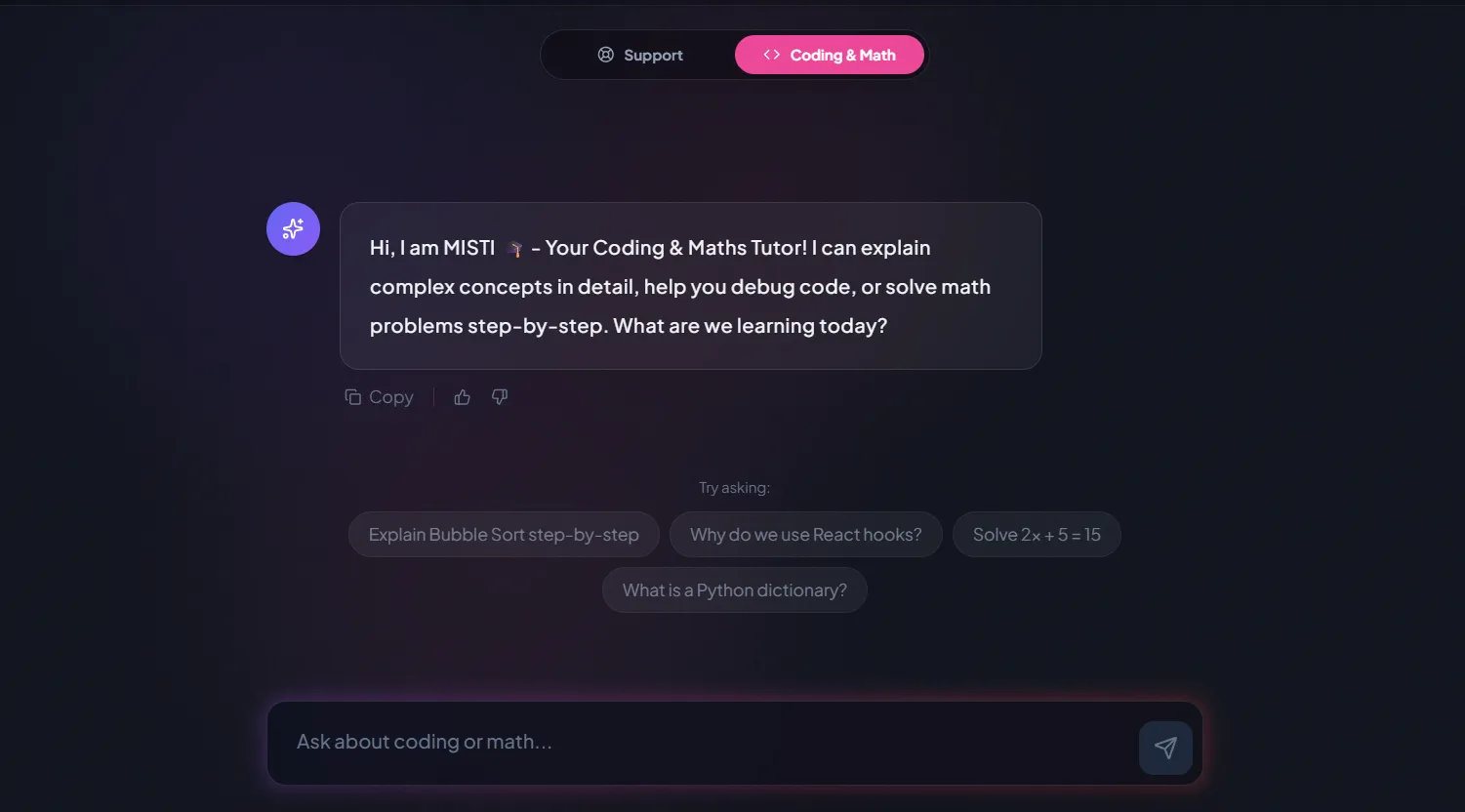
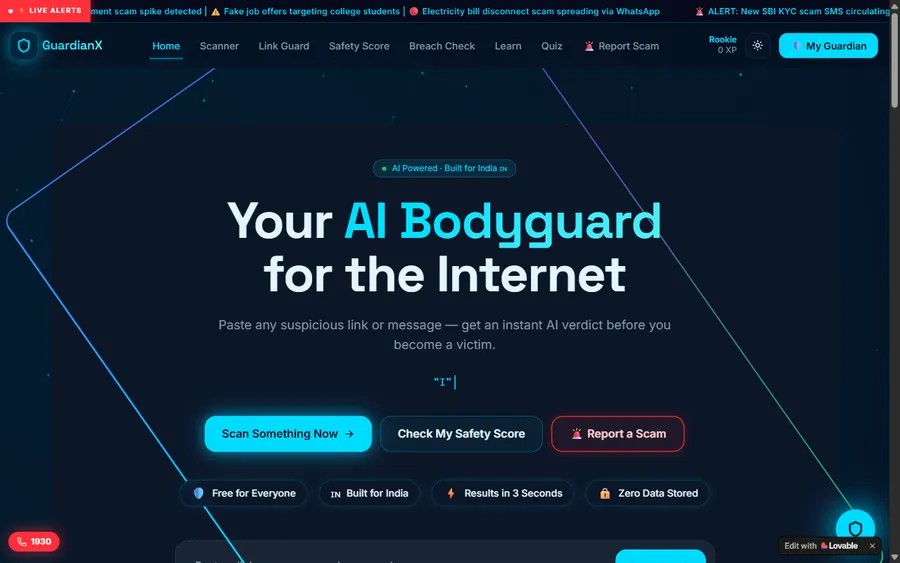
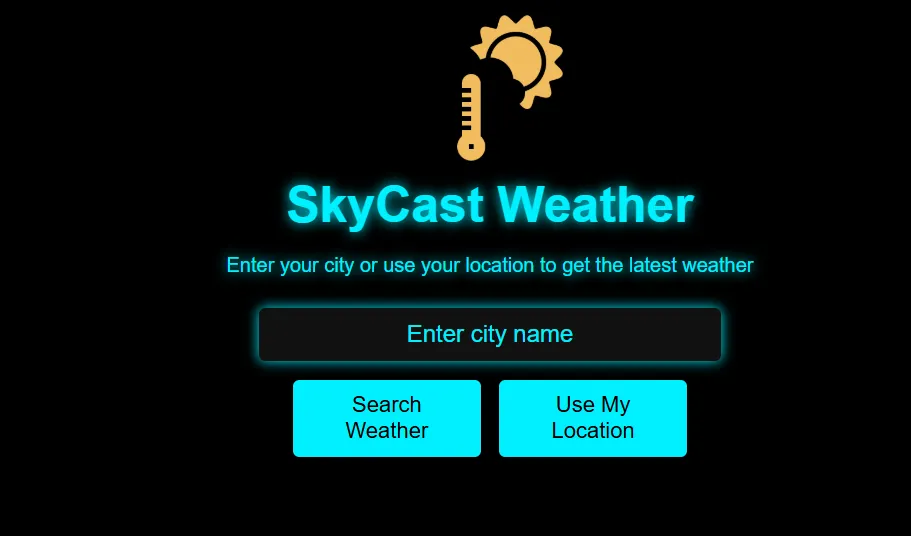
Student work
Four projects finished by our students. The wider collection is in student labs.
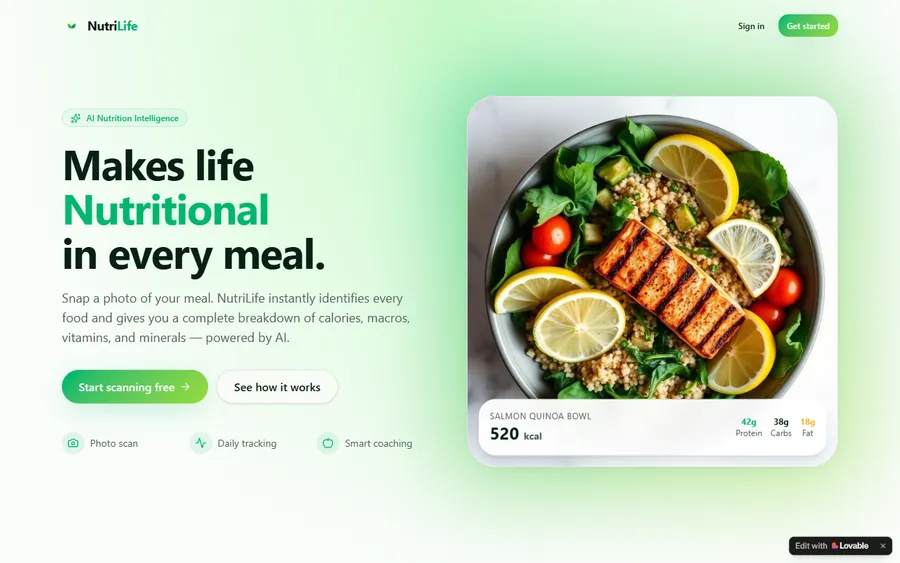
AI and ML
An AI nutrition coach that reads what you eat and works you toward a target.
AI and ML
A chatbot that answers mathematics and programming questions, built and deployed by a student.
AI and ML
An assistant that helps a young person recognise unsafe situations online.
Web app
A weather forecasting site with live conditions for any location.
Fees
One monthly fee in US dollars, the same outside India, with no enrolment fee and no commitment beyond the month, so lessons can stop for exams or a new job.
Free first class
USD 0
no card required
Group batch
USD 100
a month, billed in US dollars
One to one
USD 150
a month, billed in US dollars
What families say
From Google, unedited: reviews by our students and their parents.
★★★★★
"The one step solution for my son. Modern Age Coders make learning coding so simple that kids love it. The teachers explain complex concepts clearly with practical exercises and interactive content."
Ria Mukherjee
Parent
★★★★★
"Modern Age Coders has been a game-changer for me. I struggled to grasp IT concepts and coding before joining, but their classes transformed everything. I can now confidently write complex programs with ease."
Samriddha Mondal
Student
★★★★★
"One of the most wonderful education centres out there. Education is not limited to school syllabus but focuses on skill development."
Vansh Agarwal
Student
★★★★★
"My child Dhairya is really enjoying the Modern Age Coders classes. This is his first online class and he eagerly looks forward to it. I can already see his improvement, and the teachers are very cooperative."
Sonam Oswal
Parent of Dhairya
★★★★★
"Modern Age Coders have wonderful teachers who teach in a clear, easy and practical way. The teacher boosts students' confidence and inspires them to learn without hesitation."
Sonu Goyal
Parent
★★★★★
"I highly recommend this computer coding class! The teachers are incredibly knowledgeable and passionate about coding."
Ritu Kedia
Parent
Questions about degree apprenticeships
A paid job with training of at least 20% of working hours, leading to a qualification at level 6 or 7, which gov.uk equates to a bachelor's or master's degree.
Yes. gov.uk says you can apply while still at school, but you must be 16 or over by the end of the summer holidays to start.
The Digital and technology solutions professional standard, a level 6 integrated degree with a typical duration of 48 months, has a software engineering option. The Software developer standard is a level 4 alternative.
In England in 2024/25 there were 60,350 starts at levels 6 and 7, 17.1% of all apprenticeship starts, according to the DfE.
No. Under-19s made up 21.2% of starts in 2024/25, and over half were by people aged 25 and over.
No. We never write applications or sit or coach answers to any employer's tests. We teach the skills, and the application stays yours.
No. We never work on NEA or T Level assessments. Lessons use separate problems and projects.
Usually Python or Java to a working level, then a finished project kept in Git, then basic SQL. The free lesson will suggest an order for you.
The first lesson is free. After that it is USD 100 a month in a group or USD 150 a month one to one, with no enrolment fee.
The rules on this page are for England. The other nations run apprenticeships through their own organisations, though the coding skills are the same.
Elsewhere on this site
The other routes, and the assessment lines we hold.
The degree route, and what came after it for recent graduates.
For students on the college route.
Where we help, and where we never do.
How we teach teenagers.
The usual first language.
All our UK pages together.
Start here
Leave a number and we will call at a UK time that suits you or a parent. Tell us which option interests you; the lesson checks your level and ends with a plan for the months before you apply.
Reading first? The course pages list each syllabus, how we teach explains the method, and student labs shows what students finish.
WhatsApp us · +91 91233 66161 · contact@modernagecoders.com
WhatsApp from a UK number is the quickest way to reach us. We are based in India, so the number starts +91, and we have no UK office.