DS / START / 01
Data and AI Analytics for Non-Programmers
Answers from data, without a language first.
Open the syllabusIreland · Data science · Live online
Data science is taught almost everywhere as modelling, and practised almost everywhere as cleaning. The gap between those two is where beginners lose months. This course closes it by working on Ireland's own public data from the first week: the national portal lists more than twenty-two thousand datasets from government bodies, councils, agencies and the Central Statistics Office, and almost all of it is free to use if you follow the licence. Working with it teaches the things a tidy training dataset never can, starting with two questions every professional asks before writing a line of analysis. Am I allowed to publish anything derived from this? And does this column mean what its name suggests? This page shows both questions being answered on real Irish data, and explains how we teach the craft, live and in small groups, to teenagers, students and adults.
Live teaching since 2020 · 10,000+ students · taught on Ireland's own public data
In short
A data science course should spend its time where the work is: finding data, checking whether you may use it, understanding what each column means, cleaning it, and only then analysing. We teach that on Ireland's open data portal, which lists over twenty-two thousand datasets, most of them under a Creative Commons Attribution licence. Students learn Python and pandas, SQL, charts that do not mislead, and the statistics needed to say how sure they are. Classes are live, in groups of five to ten at one level or one to one. The first class is free, then USD 100 a month in a group or USD 150 a month with a teacher to yourself.
Start here
One full course, one for people who do not yet code, one for secondary students. Each card opens its syllabus.
DATA / 01
The complete path for students and adults: Python and pandas, cleaning, statistics, visualisation and a first machine learning model.
Open the syllabus →
DATA / 02
For people whose work is already full of spreadsheets and who need answers before they need a programming language.
Open the syllabus →
DATA / 03
Secondary students working with real public data, learning to question a figure before they chart it.
Open the syllabus →Ireland's open data
The national portal is the obvious starting point, and it contains a small lesson in careful counting before you have downloaded anything at all.
| Measure | Figure | Where it comes from |
|---|---|---|
| Datasets | 22,720 | Stated on the portal homepage |
| Datasets, counted through the portal's own API | 22,720 | The CKAN package search endpoint, which agrees exactly |
| Publishers | 143 | Stated on the portal homepage |
| Organisations listed by the API | 174 | The CKAN organisation list, which probably includes bodies with no datasets |
| Datasets when the current strategy was written | "almost 15,000" from "160 data publishers" | Open Data Strategy 2023 to 2027 |
The portal says 143 publishers; its own interface for machines lists 174 organisations. Neither is wrong. They count different things, and the gap is almost certainly bodies that have an account but have published nothing.
A student's first instinct is to pick the bigger number. The professional instinct is to say which count you used and why, in a footnote nobody will read but everybody would miss.
The government strategy that governs all this was published in 2023 and says the portal holds "almost 15,000" datasets from "160 data publishers". Today the portal itself says 22,720.
Quoting the strategy as current would understate the portal by about a third. Every document has a date, and the date is part of the fact.
Sources, read 16 September 2026: data.gov.ie and its CKAN API; Open Data Strategy 2023 to 2027. The strategy also states an aim of "Creating easy access to high quality government data, promoting trust and stimulating innovation."
Reading a licence
Open does not mean unconditional, and the conditions differ between publishers. This is a five-minute check that saves a project.
data.gov.ie states that data and metadata linked from it "will be associated with the Creative Commons Attribution (CC-BY) Licence, at a minimum", and that public bodies may waive copyright entirely where that is appropriate.
It even supplies the sentence to use: "Contains Irish Public Sector Data licensed under a Creative Commons Attribution 4.0 International (CC BY 4.0) licence". Attribution is the price of the data, and it costs one line.
Some registers published by Irish bodies sit outside that default. The Property Services Regulatory Authority, for example, allows free re-use of its property register subject to conditions including "Not use the information in a misleading way" and "Not use the information for the principal purpose of advertising or promoting a particular product or service".
That is a perfectly reasonable condition, and it is the reason no figure from that register appears anywhere on this page, even though it is one of the most interesting datasets in the country to analyse. Read the terms, then decide.
The licence is on the dataset page, not in the file. Two minutes there beats discovering a restriction after you have built something on it.
Note the download date and the file as it was that day. Public datasets are revised, and a result that cannot be reproduced is not a result.
Name the publisher, the dataset and the licence wherever a derived figure is published, and say whether you changed the data.
Sources: data.gov.ie open data licence; PSRA, re-use of public sector information, read 16 September 2026. Nothing here is legal advice; the licence on the dataset you download is the one that binds you.
One column, seven units
Table CPM01 holds Ireland's Consumer Price Index: 62,608 rows of monthly figures from November 1975 to December 2025. It has one column called value, and that column is not measuring one thing.
| Kind of row | What it is |
|---|---|
| Index, base December 2023 equals 100 | An index number, one of six different bases in the same column |
| Index, bases from November 1996 to December 2016 | Five further historical bases, all index numbers, none comparable with another |
| Percentage change over one month | A percentage, in the same column as the indices |
| Percentage change over twelve months | Another percentage, again in the same column |
For all items in December 2025 the table publishes eight values: 104.2, 126.2, 127.8, 133.4, 157.4, 186.1, then 0.5 and 2.8. The first six are the same month expressed against six different base years; the last two are percentage changes.
Average the whole column and you get 104.8. It is an average of index points and percentages together, which is like averaging a temperature and a shoe size.
The fix is one line: filter on the statistic label, or the unit, before any arithmetic. The habit behind it is bigger. Before averaging anything, ask what a single row means, and check that every row means the same thing.
Students do this with the real file, get the absurd number themselves, then rebuild the analysis properly. It is far more memorable than being warned about it.
Source: CSO table CPM01, Consumer Price Index, read 16 September 2026; the table was last updated on 15 January 2026. The arithmetic above is ours, and is the exercise students repeat. Nothing here is commentary on inflation.
The rungs
Notice how late modelling arrives. That ordering is deliberate, and it matches how the job is actually done.
| Rung | What the learner can do |
|---|---|
| 1. Find and check | Locate a dataset, read its licence, notes and units |
| 2. Clean | Load messy files, fix types, handle blanks and document each decision |
| 3. Join and aggregate | Combine sources and group without double counting |
| 4. Show | Make charts that answer a question without misleading |
| 5. Model and judge | Fit a model, measure it against a baseline, and state its limits |
Most working data scientists spend the bulk of their time on rungs one to three. A course that skips them produces people who can only work on data somebody else prepared.
How this connects to programming and AI is on the coding roadmap.
Python with pandas as the main tool, SQL for anything in a database, and plain charts. Spreadsheet users are welcome and often move fastest.
For learners who prefer a visual tool first, the Orange courses cover the same ideas without code.
The catalogue
By starting point. The free first class decides which course fits.
DS / START / 01
Answers from data, without a language first.
Open the syllabusDS / START / 02
Visual analysis, real concepts.
Open the syllabusDS / START / 03
Public data, questioned properly.
Open the syllabusDS / CRAFT / 01
Cleaning, analysis and a first model.
Open the syllabusDS / CRAFT / 02
Turning messy files into clear answers.
Open the syllabusDS / CRAFT / 03
SQL for data that lives in a database.
Open the syllabusDS / MORE / 01
Models trained and evaluated honestly.
Open the syllabusDS / MORE / 02
Machine learning you can see working.
Open the syllabusDS / MORE / 03
Running the analysis without you.
Open the syllabusHow the classes run
Lessons are live, with teachers working from India at a weekly hour set in Irish time. India keeps one clock all year while Ireland changes twice, so our teachers are four and a half hours ahead of you during Irish summer time and five and a half hours ahead through the winter. Most adults choose an evening slot.
Evening
Working adults and college students, Irish time.
Weekend
Longer analysis sessions.
After school
Secondary students on the teen courses.
You open a genuine dataset with a teacher and see what the first ten minutes of real work look like.
Learners at one level, comparing how each of them cleaned the same file.
For work projects, theses, or data you cannot share with a group.
Everything is done on datasets anyone can download, so every result can be checked.
Students learn to record source, licence and download date as a matter of habit.
Axes, baselines and scales are taught as ethics, not decoration.
Student work
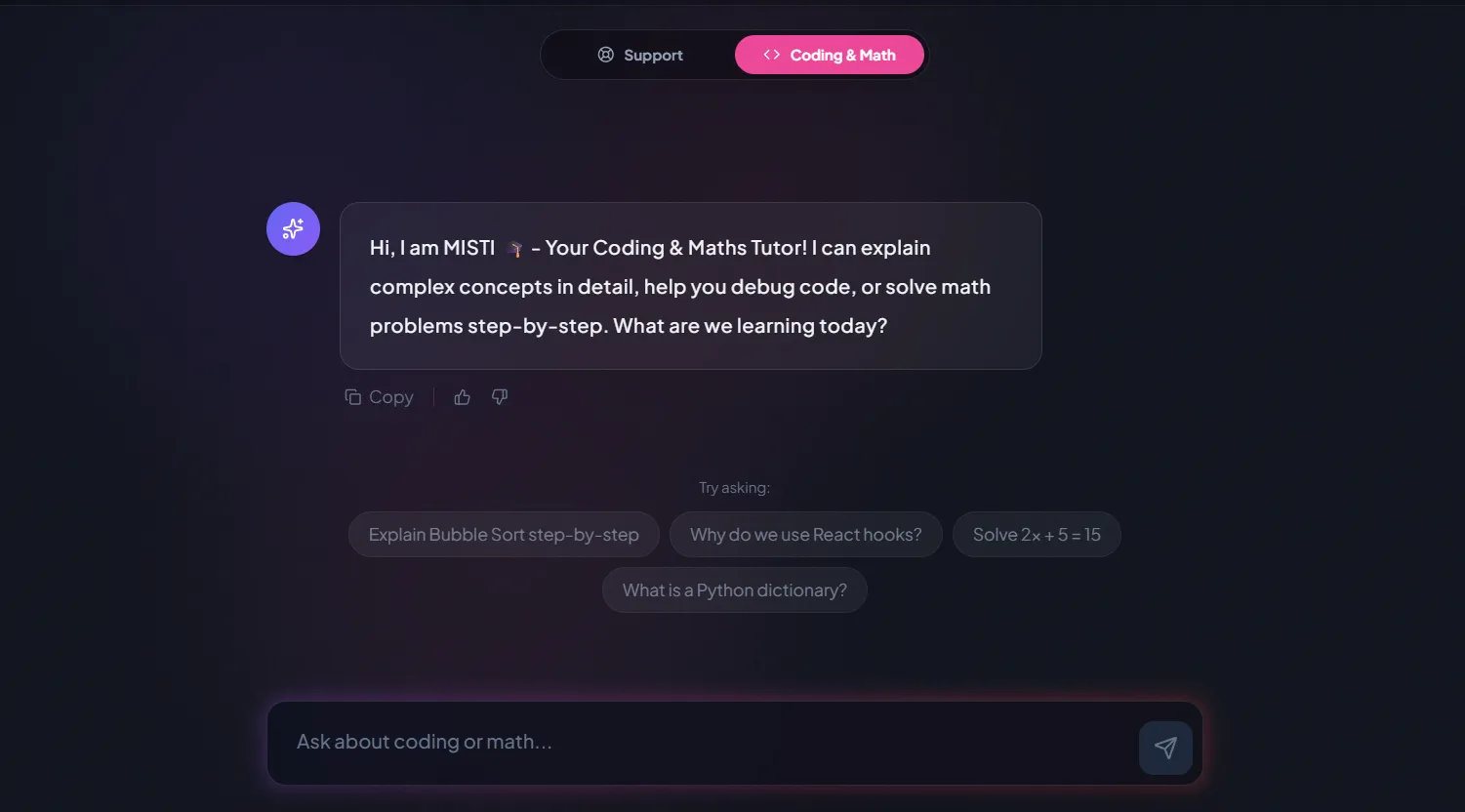
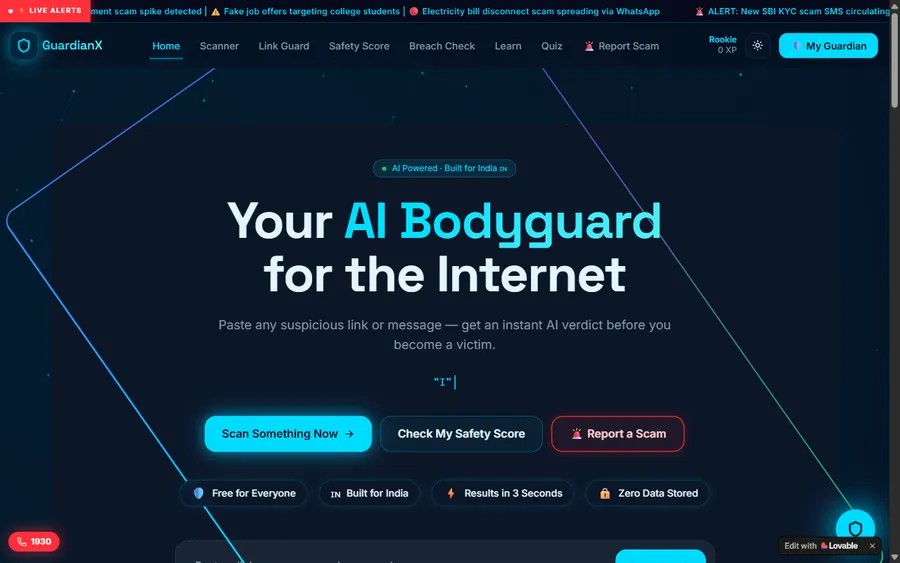
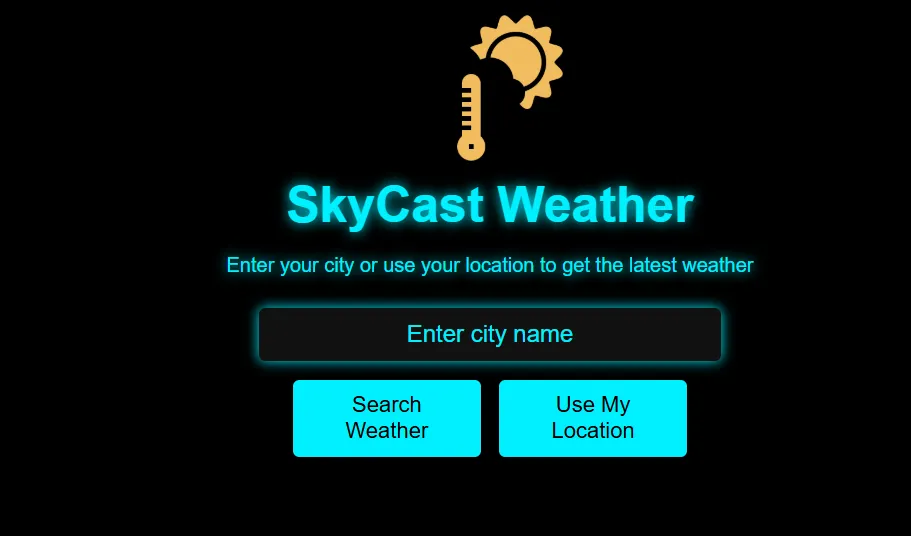
Four student projects, live online. More of them, across every subject we teach, are on the student labs page.
AI and ML
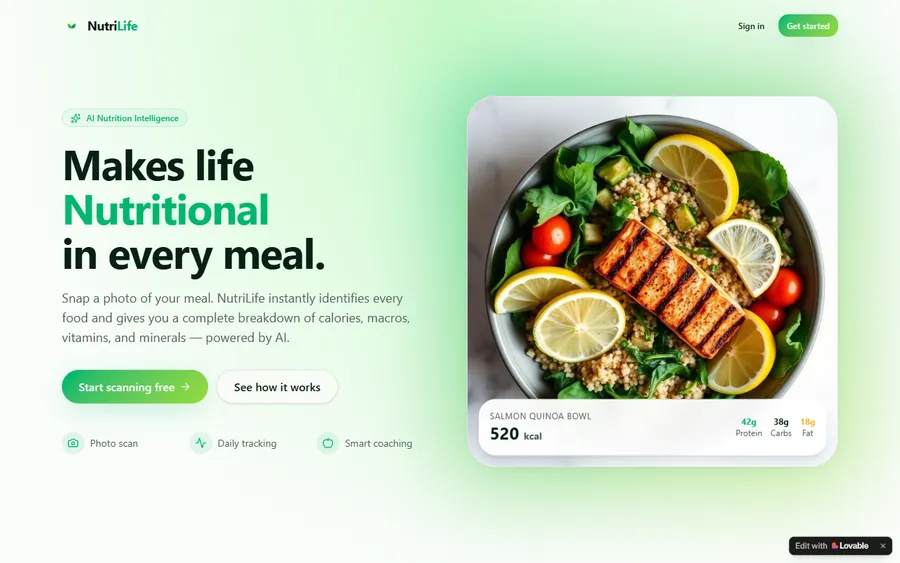
An AI nutrition coach that reads what you eat and works you toward a target.
AI and ML
A chatbot that answers mathematics and programming questions, built and deployed by a student.
AI and ML
An assistant that helps a young person recognise unsafe situations online.
Web app
A weather forecasting site with live conditions for any location.
Fees
One price a month in US dollars, the same in every country outside India, covering any course on this page. No enrolment charge, and no commitment past the month you are in.
Free first class
USD 0
no card required
Group batch
USD 100
a month, billed in US dollars
One to one
USD 150
a month, billed in US dollars
What families say
Reviews left on Google by our students and their families, published here word for word.
★★★★★
"The one step solution for my son. Modern Age Coders make learning coding so simple that kids love it. The teachers explain complex concepts clearly with practical exercises and interactive content."
Ria Mukherjee
Parent
★★★★★
"Modern Age Coders has been a game-changer for me. I struggled to grasp IT concepts and coding before joining, but their classes transformed everything. I can now confidently write complex programs with ease."
Samriddha Mondal
Student
★★★★★
"One of the most wonderful education centres out there. Education is not limited to school syllabus but focuses on skill development."
Vansh Agarwal
Student
★★★★★
"My child Dhairya is really enjoying the Modern Age Coders classes. This is his first online class and he eagerly looks forward to it. I can already see his improvement, and the teachers are very cooperative."
Sonam Oswal
Parent of Dhairya
★★★★★
"Modern Age Coders have wonderful teachers who teach in a clear, easy and practical way. The teacher boosts students' confidence and inspires them to learn without hesitation."
Sonu Goyal
Parent
★★★★★
"I highly recommend this computer coding class! The teachers are incredibly knowledgeable and passionate about coding."
Ritu Kedia
Parent
Questions
No. One of our courses is built for people who do not code at all, and the main masterclass teaches the Python you need as you go.
Less than people fear to start with. Averages, percentages and a feel for uncertainty carry you a long way; the rest is taught when a problem needs it.
The national portal at data.gov.ie lists over twenty-two thousand datasets, and the CSO publishes its statistical tables openly as well. Check each dataset's licence before publishing anything derived from it.
Usually, under Creative Commons Attribution, which is the portal's stated minimum. Some registers set extra conditions, so read the terms on the dataset page. This is not legal advice.
We teach Python, because it is what most Irish employers advertise for and because it carries on into automation and AI work.
Yes. Every student finishes an analysis on public data, with the code, the cleaning decisions and an honest write-up in their own repository.
Yes, from about thirteen on the teen course, which uses the same public data and the same habits at a gentler pace.
The first class is free. After that a group place is USD 100 a month and one-to-one lessons are USD 150 a month, in US dollars, with no enrolment fee.
Evenings, weekends or after school, at a weekly hour agreed in the free class. Our teachers are four and a half hours ahead of Irish time in summer and five and a half in winter.
We call you at a sensible Irish hour and set up the free class. Nothing is charged unless you decide to continue.
Elsewhere on this site
Before and after data science.
The language this runs on.
When the analysis becomes a model.
Training, properly evaluated.
Starting from scratch.
Where the data is stored.
The national page.
Start here
Leave a number and we will ring at a time that suits you in Ireland. In the free class you open a genuine Irish dataset with a teacher, find its first problem, and see how a professional handles it.
Want to read first? There is how we teach, the full course list, and work our students published.
WhatsApp us · +91 91233 66161 · contact@modernagecoders.com
WhatsApp costs nothing from an Irish number and tends to get the fastest reply. It is an Indian number, since our team is in India, and we have no premises in Ireland.