UK / OH1 / 01
Data structures and algorithms
Standard algorithms and complexity, worked on paper where both papers will ask for them.
Open the syllabusEngland · Cambridge OCR H446 · Years 12 and 13
Here is the fact that should shape two years of preparation, and it is easy to miss because it is an absence rather than a rule. At OCR, a candidate never types code in an examination. Component 01 is a written paper. Component 02 is a written paper. Both run two and a half hours, both carry 140 marks, and both are marked "no calculators allowed". The only place programming actually happens is the project, which is a portfolio produced in "an appropriate programming language of the learner's or teacher's choice". That is the opposite architecture to the other big English board, whose first paper is sat on screen, and it means the two A-levels reward almost opposite habits.
Teaching live since 2020 · 10,000+ students · Algorithms on paper, projects for real
In short
OCR H446 has three components and no on-screen exam. Component 01, Computer systems, is a written paper of two and a half hours worth 140 marks and 40 per cent, and the specification says it "contains the majority of the content". Component 02, Algorithms and programming, is another written paper of the same length and weight, and it "relates principally to problem solving skills needed by learners to apply the knowledge and understanding encountered in Component 01". Neither permits a calculator. The programming project is 70 marks and 20 per cent, submitted as a portfolio in whatever language the learner or teacher picks. So exam preparation means writing code by hand and reasoning on paper, while project preparation means actually building something. We teach both. The first lesson is free, then USD 100 a month in a group or USD 150 one to one.
Start here
Depth in a language for the project, algorithms for the papers, and the data work many projects turn out to need.
OCR A / 01
Standard algorithms, complexity and the computational thinking content, worked on paper because that is where they are examined.
Open the syllabus →
OCR A / 02
Depth well past GCSE, for a project that has to stand up to moderation.
Open the syllabus →
OCR A / 03
For projects with a database and a front end, which is where a lot of good H446 projects end up.
Open the syllabus →Two written papers
From the Cambridge OCR H446 specification, version 3.0. Read the assessment column and the absence is the striking part.
| Component | Assessment | Weight | What it covers |
|---|---|---|---|
| 01 Computer systems | 140 marks, 2 hours and 30 minutes written paper, no calculators allowed | 40 per cent | Contemporary processors, input, output and storage; software and software development; exchanging data; data types, data structures and algorithms; legal, moral, cultural and ethical issues |
| 02 Algorithms and programming | 140 marks, 2 hours and 30 minutes written paper, no calculators allowed | 40 per cent | Elements of computational thinking; problem solving and programming; algorithms to solve problems and standard algorithms |
| 03 or 04 Programming project | 70 marks, non-exam assessment, submitted by moderated upload or post | 20 per cent | Analysis of the problem, design of the solution, developing the solution, evaluation |
Eighty per cent of the qualification is written, so the decisive exam skill is expressing algorithms and reasoning clearly on paper, under time, without an editor to catch anything.
A student who prepares by programming in an IDE all year and never writes code by hand will find both papers harder than their actual ability warrants, which is a preparation problem rather than a knowledge one.
Both papers are explicitly non-calculator. Binary, hexadecimal, floating point and complexity arithmetic all have to be done by hand at speed, in papers already demanding on time.
That is a practice issue with no clever solution: repetition from the first term, until the arithmetic stops consuming thought.
Worth naming the contrast, because plenty of families choose a sixth form without knowing it exists. The other major English board sits its first A-level paper on screen, issuing a skeleton program in advance. The AQA 7517 page sets that out, and the preparation the two boards reward is genuinely different.
Source, read 20 September 2026: Cambridge OCR Level 3 Advanced GCE in Computer Science (H446) specification, version 3.0. Check the current version on OCR's site; your school will confirm which applies.
Knowledge and application
OCR does not split theory from programming. It splits knowing from applying, which is a subtler division and one that changes how to revise.
How the specification describes its own structure
Component 01 "contains the majority of the content of the specification and is assessed in a written paper recalling knowledge and understanding". Component 02 "relates principally to problem solving skills needed by learners to apply the knowledge and understanding encountered in Component 01".
Its own content list is short: computational thinking, problem solving and programming, and standard algorithms. What it has instead is demand, because the questions apply material from the other paper.
A student who has not secured Component 01 cannot really revise Component 02, because there is nothing yet to apply. Doing them in parallel from the start is the usual mistake.
The specification marks components 02, 03 and 04 with an asterisk for synoptic assessment. Questions can and will reach across the whole course.
| Component 01 | Component 02 | |
|---|---|---|
| What it rewards | Secure recall of a large body of content, expressed precisely | Applying that content to an unfamiliar problem on paper |
| Highest-value activity | Spaced retrieval across every topic, all year | Unseen problems, solved by hand, then marked by a person |
| Commonest mistake | Reading notes, which feels like revision and tests nothing | Revising it as though it were more content to memorise |
| Handwriting matters because | Extended answers are judged on how clearly they are argued | An algorithm nobody can follow cannot be credited |
The practical advice that follows is unglamorous. Write algorithms out by hand, every week, and have somebody read them who will say when they are unclear. That single habit improves both papers at once, and it is the thing students are least willing to do because typing is faster and feels more like progress.
The underlying skill, predicting what a program will do before running it, is the same one the statutory curriculum names at school level, and it is set out with the research behind it on the problem-solving page.
The project
The project is where the programming actually happens, and OCR leaves the choice of language and problem unusually open.
| Element | What it says |
|---|---|
| Weight | 70 marks, non-exam assessment, 20 per cent of the A level |
| Submission | Component 03 by moderated upload, or component 04 by moderated post |
| The task | "The learner will choose a computing problem to work through according to the guidance in the specification" |
| Who chooses | A task "chosen by the teacher or learner" |
| The language | Produced "in an appropriate programming language of the learner's or teacher's choice" |
| The four stages | Analysis of the problem, design of the solution, developing the solution, evaluation |
| Method | The specification notes learners may "include agile methods" |
Being able to choose any suitable language and almost any problem sounds like a gift and behaves like a trap. The commonest failure is a project too ambitious to finish and too vague to analyse, chosen in enthusiasm in September of Year 13.
The marks are spread across analysis, design, development and evaluation, so a brilliant program with thin analysis scores worse than a modest one documented properly.
Everything the four stages assume: interviewing a real user and turning that into requirements, designing before coding, testing systematically, and writing honestly about what did not work.
And the habit of keeping a decision log from day one, because evaluation written six months after the decisions is reconstruction rather than reflection.
Our line here does not move. We do not work on any candidate's project, we do not review it, and we will decline if asked. It is 20 per cent of an A level and it has to be the candidate's own. The A-level coursework page compares where the marks sit at both boards, and the page on declaring AI explains why identified AI content earns nothing even when it is properly acknowledged.
One useful consequence of the open language rule: a student can use the project to learn something their school does not teach. A candidate who wants to work in a language nobody in the department uses can, provided it suits the problem, and that is a genuine opportunity for a strong student.
Progression
Judged by what a student can write by hand and what they have actually built, in that order.
| Rung | When | What should be true |
|---|---|---|
| 1. Beyond GCSE in a language | The first term of sixth form | At ease with data structures, file handling and objects in whatever language suits the project |
| 2. Content secured | Across Year 12 | Component 01 material revisited by retrieval rather than by rereading |
| 3. Algorithms on paper | Year 12 into Year 13 | Unseen problems solved by hand, clearly enough for a stranger to follow |
| 4. A project that finishes | Year 13 | Scoped small enough to complete, with analysis and a decision log written as you go |
Eighty per cent of this A level is written, so a student who only ever programs in an editor is practising for the smallest part of it.
The sequence of topics past A level runs down the coding roadmap.
Ambition chosen in September becomes panic in February. A project scoped to finish beats a project designed to impress, every year.
We teach the skills the project assumes and never the project itself.
The catalogue
Grouped by which component they serve. The free lesson settles where to begin.
UK / OH1 / 01
Standard algorithms and complexity, worked on paper where both papers will ask for them.
Open the syllabusUK / OH1 / 02
The exchanging data and data types content done properly rather than skimmed.
Open the syllabusUK / OH1 / 03
Unseen problems under pressure, which is exactly what Component 02 asks for.
Open the syllabusUK / OH2 / 01
Depth enough for a project that will be moderated, in the language most candidates pick.
Open the syllabusUK / OH2 / 02
A database, a front end and a deployment, which is where many good projects land.
Open the syllabusUK / OH2 / 03
A decision history that writes itself, which makes the evaluation section far easier to write honestly.
Open the syllabusUK / OH3 / 01
Cleaning, modelling and measuring, for a candidate whose portfolio runs on live data.
Open the syllabusUK / OH3 / 02
A second language, which the open project rule makes genuinely available to a strong student.
Open the syllabusUK / OH3 / 03
Automating something real, and logging every suggestion a tool made along the way.
Open the syllabusHow lessons work
Teachers work from India on a clock that never shifts, leaving the UK five and a half hours behind from October and four and a half from March. Slots are agreed in UK time.
After sixth form
Where most H446 candidates settle in the week.
Late evening
Once training, a shift or a long commute is out of the way.
Saturday or Sunday
Room for a full 140-mark paper and then going through it.
By hand, every week, and read by somebody who will say when they are unclear. Both papers turn on this.
Binary, hex and floating point practised until they stop consuming thought, since neither paper allows one.
Component 01 is a large body of content, and the only revision that works on it is being asked.
Component 02 applies the other paper, so practice has to be on problems nobody has seen before.
We never work on it, review it or advise on its content. We teach the four stages it assumes.
Five to ten students at one stage, marking each other's handwritten algorithms.
Student work
Four projects from lessons, not one of them anybody's submitted coursework, and student labs carries the rest.
AI and ML
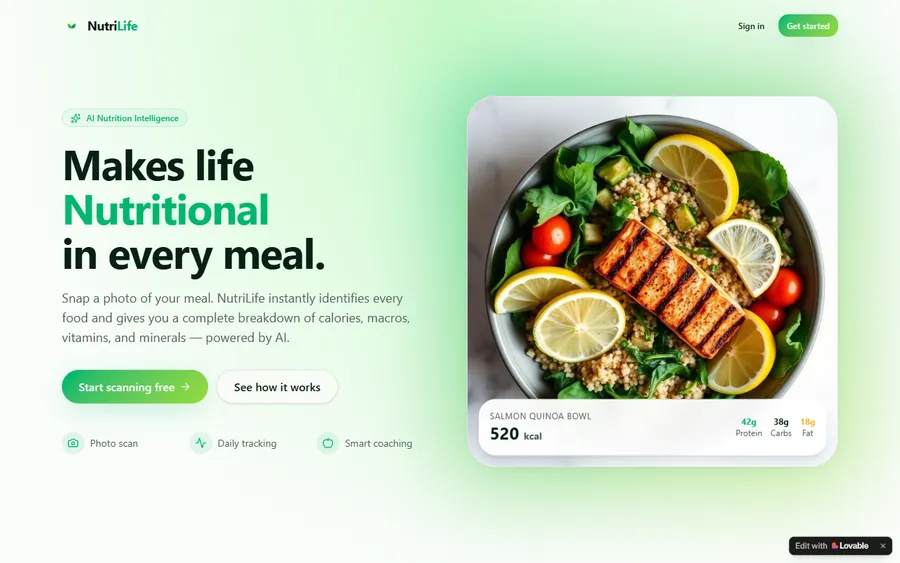
An AI nutrition coach that reads what you eat and works you toward a target.
AI and ML
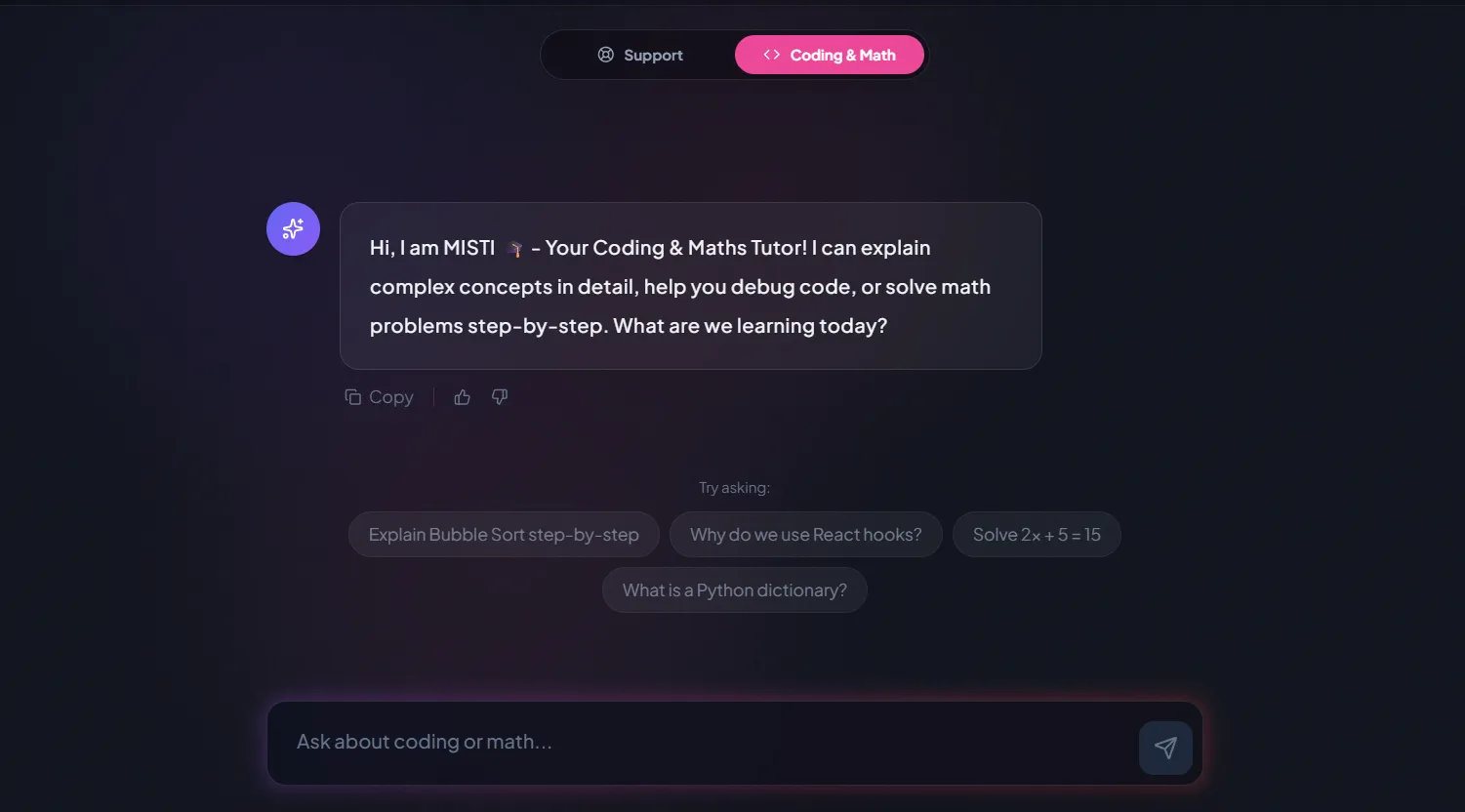
A chatbot that answers mathematics and programming questions, built and deployed by a student.
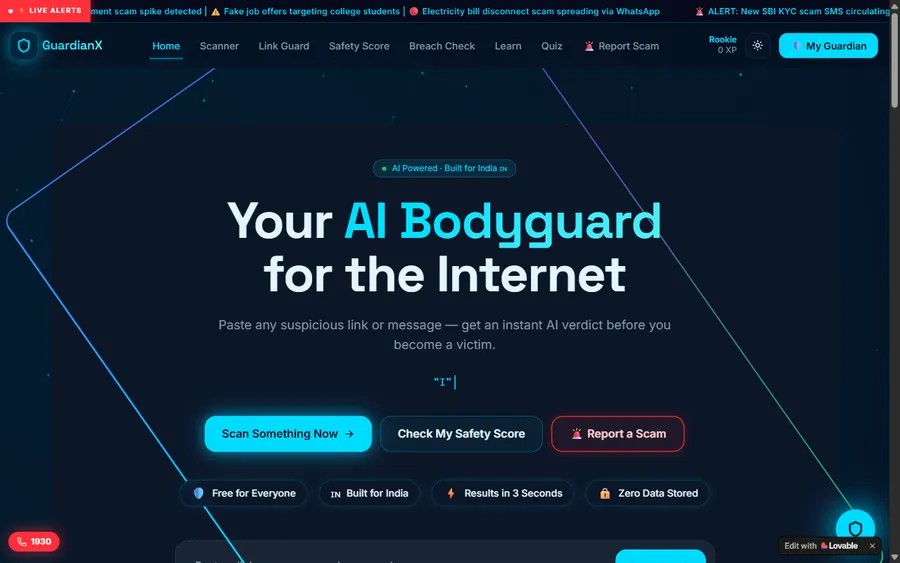
AI and ML
An assistant that helps a young person recognise unsafe situations online.
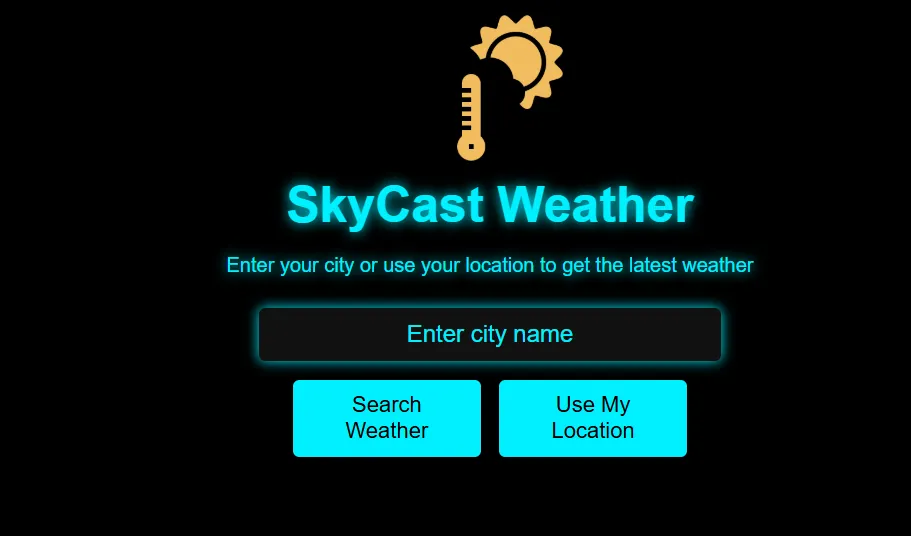
Web app
A weather forecasting site with live conditions for any location.
Fees
One figure a month, quoted in US dollars outside India. Nothing is taken until the free lesson has settled a course and a regular time.
Free first class
USD 0
no card required
Group batch
USD 100
a month, billed in US dollars
One to one
USD 150
a month, billed in US dollars
What families say
Straight from Google, exactly as families typed them.
★★★★★
"The one step solution for my son. Modern Age Coders make learning coding so simple that kids love it. The teachers explain complex concepts clearly with practical exercises and interactive content."
Ria Mukherjee
Parent
★★★★★
"Modern Age Coders has been a game-changer for me. I struggled to grasp IT concepts and coding before joining, but their classes transformed everything. I can now confidently write complex programs with ease."
Samriddha Mondal
Student
★★★★★
"One of the most wonderful education centres out there. Education is not limited to school syllabus but focuses on skill development."
Vansh Agarwal
Student
★★★★★
"My child Dhairya is really enjoying the Modern Age Coders classes. This is his first online class and he eagerly looks forward to it. I can already see his improvement, and the teachers are very cooperative."
Sonam Oswal
Parent of Dhairya
★★★★★
"Modern Age Coders have wonderful teachers who teach in a clear, easy and practical way. The teacher boosts students' confidence and inspires them to learn without hesitation."
Sonu Goyal
Parent
★★★★★
"I highly recommend this computer coding class! The teachers are incredibly knowledgeable and passionate about coding."
Ritu Kedia
Parent
Questions about OCR H446
Three components. Component 01 and Component 02 are each written papers of two and a half hours and 140 marks, worth 40 per cent each. The programming project is 70 marks and 20 per cent.
No. Both papers are written, and both are marked no calculators allowed. The only place programming happens is the project.
The specification says Component 01 contains the majority of the content and assesses recall of knowledge and understanding, while Component 02 relates principally to the problem solving skills needed to apply that knowledge.
Any suitable one. It is produced in an appropriate programming language of the learner's or teacher's choice, which is more open than the other major English board allows.
Four stages: analysis of the problem, design of the solution, developing the solution, and evaluation. A strong program with thin analysis does not score well.
As component 03 by moderated upload, or component 04 by moderated post.
Retrieval practice for Component 01 across all topics, and unseen problems solved by hand for Component 02, with somebody reading the handwriting and saying when it is unclear.
No. It is 20 per cent of the A level and must be the candidate's own. We teach the skills it assumes and decline any request to work on the project itself.
It should be finishable. Ambition chosen in September of Year 13 becomes panic in February, and the marks reward documentation as much as cleverness.
The opening lesson is free of charge. Afterwards a place in a group costs USD 100 a month, or USD 150 for private teaching, taken monthly and never in advance.
Elsewhere on this site
Four boards, one project and a lot of paper. These go deeper.
The other board, where Paper 1 is sat on screen from a skeleton program.
A stage-by-stage look at the project, written before this page existed.
The same board two years earlier, and its Not required column.
What the research says builds skill, and the claim we refuse to make.
The national round, for candidates who have run out of syllabus.
The national page, and the index of every UK page we publish.
Start here
Leave a number. We answer at a UK hour you pick, teach a real lesson on paper as the papers demand, and end by saying which of the three components is furthest behind.
Happier reading first? Syllabuses are on the course pages, the method and where it does not suit a learner is in how we teach, and topic order runs down the coding roadmap.
WhatsApp us · +91 91233 66161 · contact@modernagecoders.com
A WhatsApp message costs a UK handset nothing and is answered fastest. Our number belongs to the office in India, which we would rather print than have you spot.